With thanks to
Robin Good for curating this item
FlixMaster changes model; becomes Rapt — from bcbr.com by Joshua Lindenstein
Excerpts:
BOULDER – Highlighting a shift toward a new model for its interactive online video platform, Boulder-based FlixMaster Inc. this week announced that it is changing its name to Rapt Media Inc.
…
“When we founded FlixMaster, we set out to create the best toolset for video creators wanting to build interactive videos, and we succeeded in doing that that,” Rapt co-founder and chief executive Erika Trautman said in an email. “But as we partnered with really sophisticated companies (like HBO and Maybelline), we realized that our platform and the opportunity it posed was bigger than just interactive video. It was about improving online communication and storytelling through interactivity of all kinds, with video as the central component. Our company had already transitioned to this bigger vision, and we wanted a name that could reflect that vision.
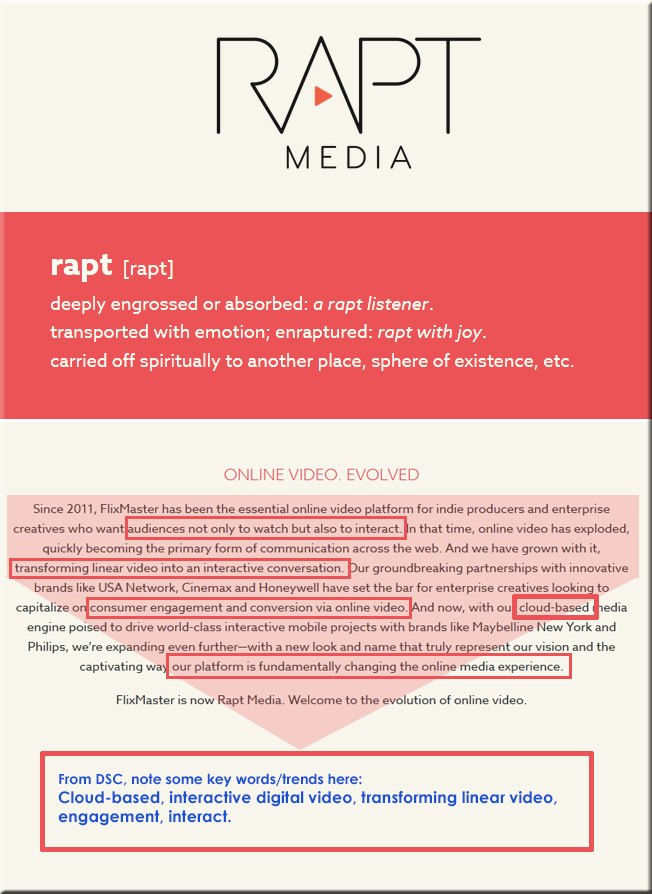
Additional thought from DSC:
This item relates to the convergence of the television, the computer, and the telephone that I’m pulse-checking. I’m hopeful that such a convergence will provide students in the future with 24×7, highly-engaging, interactive, customized/personalized content:
.
More choice. More control.
From DSC:
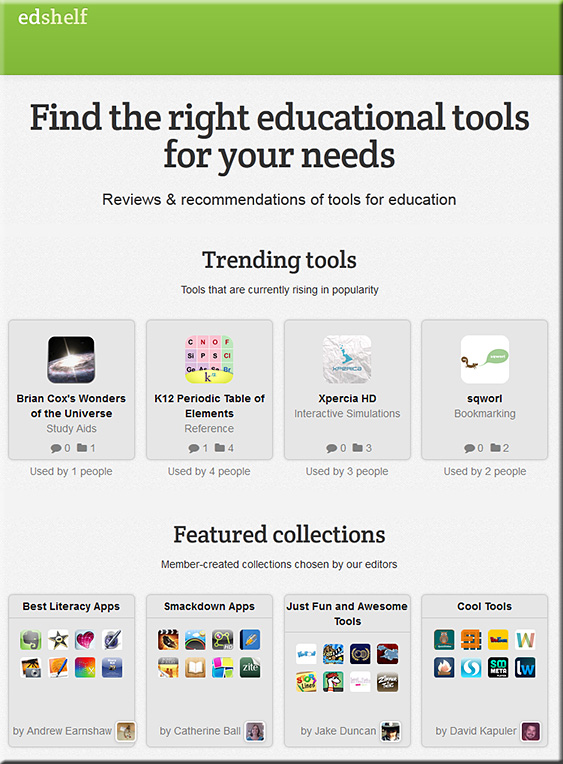
Some items that made me think of this posting:
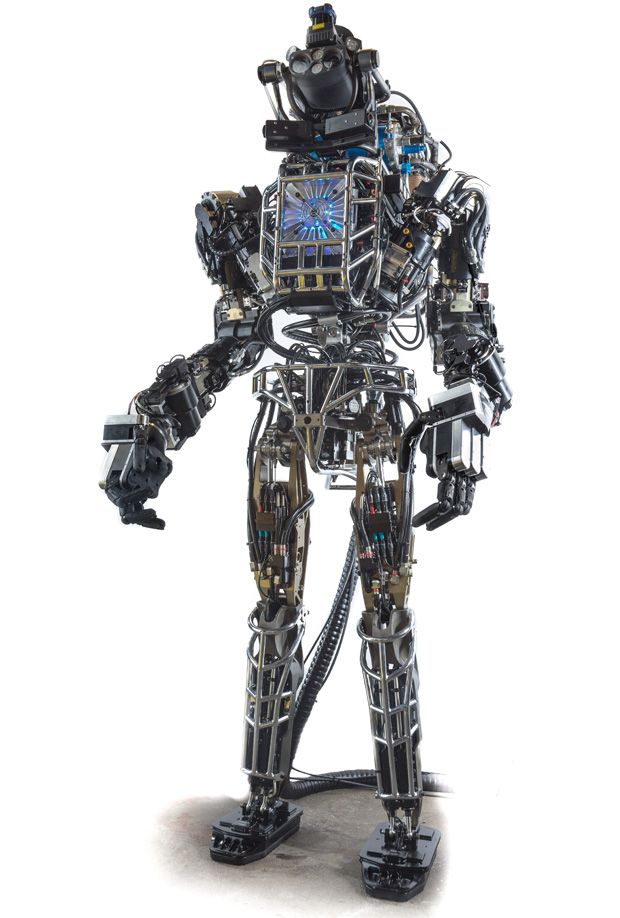
Specs:
Drone Home — from time.com by Lev Grossman — also see TIME: “Rise of the Robots” Special Issue
Excerpt:
Flying a drone, even just a Parrot, makes you realize what a radically new and deeply strange technology drones are. A drone isn’t just a tool; when you use it you see and act through it — you inhabit it. It expands the reach of your body and senses in much the same way that the Internet expands your mind. The Net extends our virtual presence; drones extend our physical presence. They are, along with smart phones and 3-D printing, one of a handful of genuinely transformative technologies to emerge in the past 10 years.
.
Bioengineers 3D print tiny functioning human liver — from wired.co.uk
Peek inside Tesla’s robotic factory — from wired.com

From DSC:
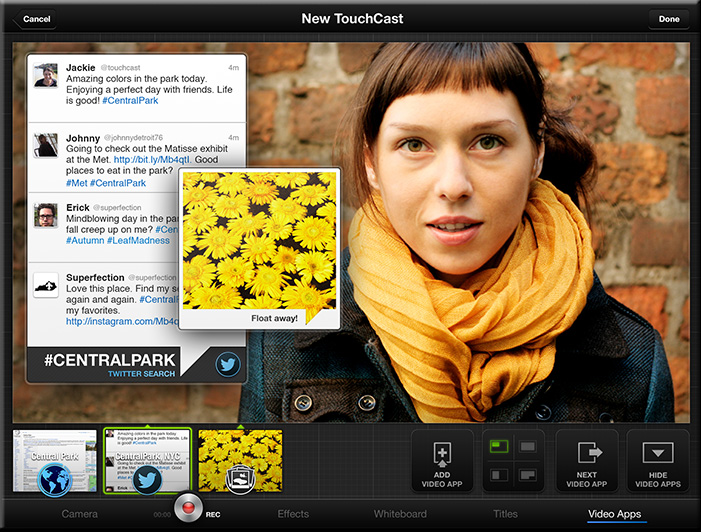
The way we interact with digital video may never be the same again. Consider the following developments/items:
.
.
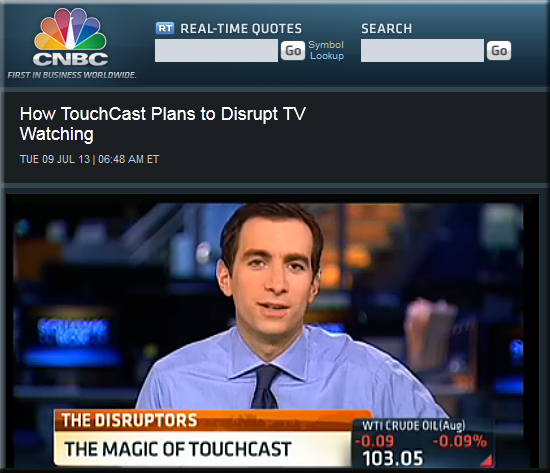
How TouchCast plans to disrupt TV watching
.
TouchCast: a television studio in your iPad — from agbeat.com by Jennifer Walpole .
.
.
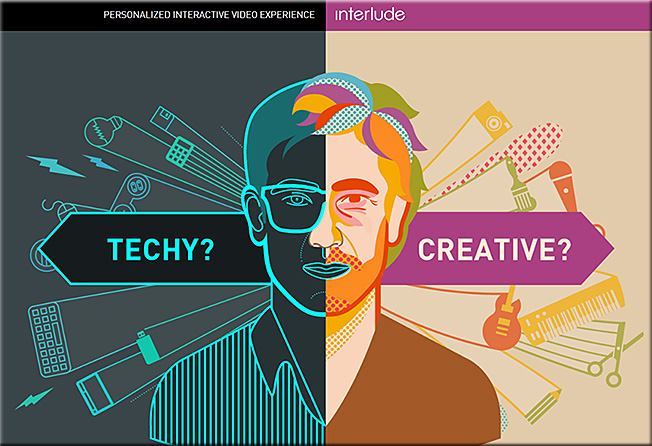
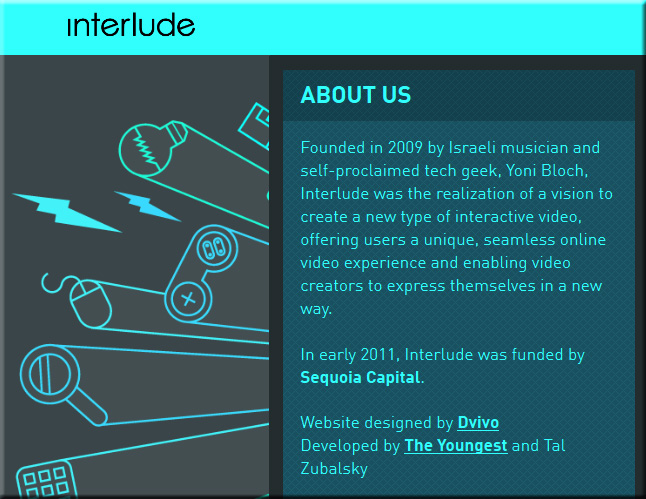
Interactive video startup Interlude raises $16m from Intel, Sequoia and other big names — from thenextweb.com by Robin Wauters
.
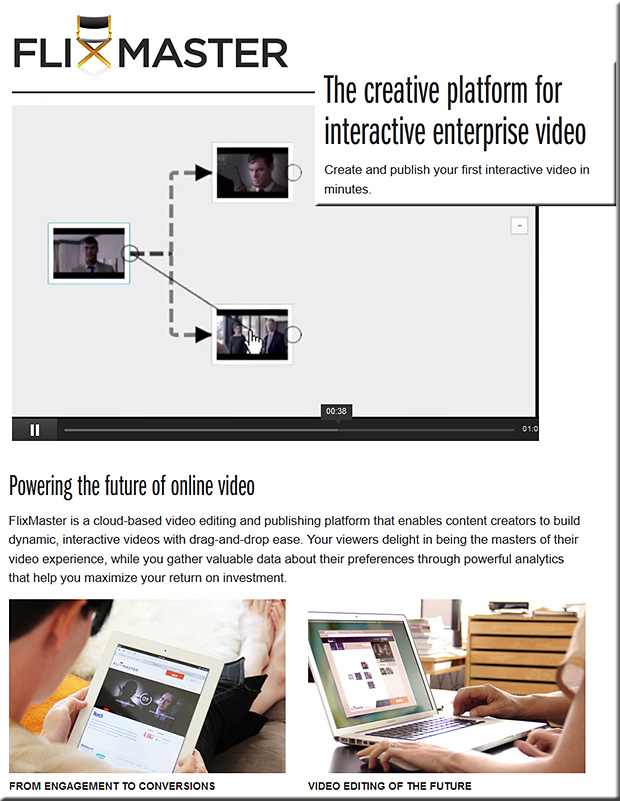
With Cinematique’s ‘touch-enabled’, shoppable videos, product placement might not be so bad — from techcrunch.com by Anthony Ha
From DSC:
I sure hope that we can use these sorts of tools, concepts, and technologies within the educational/training-related realms! More choice. More control. Participation. Interactivity. Engagement.
From DSC:
First, take a look at this interactive video from the Wall Street Journal:
.
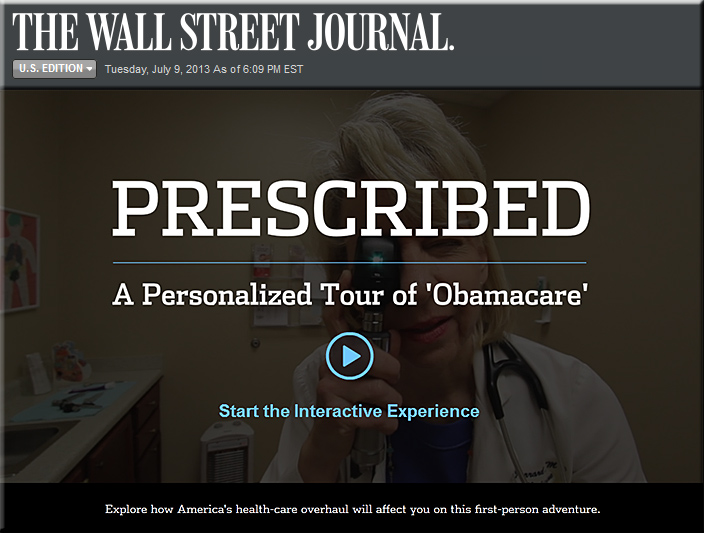
For further information on that video, you can also see:

.
From DSC:
Excellent, creative use of technology! Lifelong learners of the world, let me hear some noise! Your learning futures just got much more interesting, dynamic, and interactive!
You will be given more choice and more control than you’ve ever had before. You will be able to interact with digital videos, drill down, take some rights turns and come back again, and more.
For example, during the WSJ video, you can click on the radio within the digital video in order to “drill down” and listen to more about a certain topic — while the main presentation “holds on”…
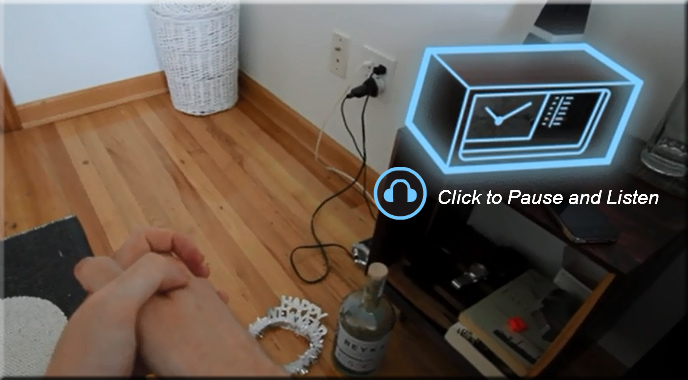
…you can jump ahead to the next marker…pause…rewind…click to get some further text-based information/details on a topic of interest:
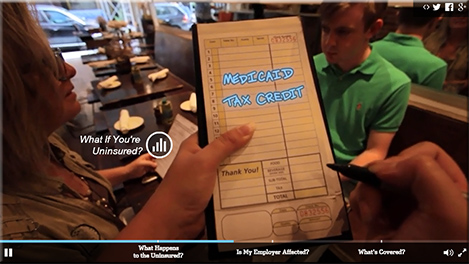
…and more. In other words, you have more choice, more control in your learning experience. This, at minimum, is a piece of online learning’s — and digital video’s — future.
But I hear you saying, so what? Flash has been doing this for a while now. And that, my friends, is the only downside I see in this implementation from the WSJ — it was done using Flash.
As Flash won’t fly on iOS-based devices, an HTML5-based solution needs to come into the picture…and this is where Touchcast shines!
.
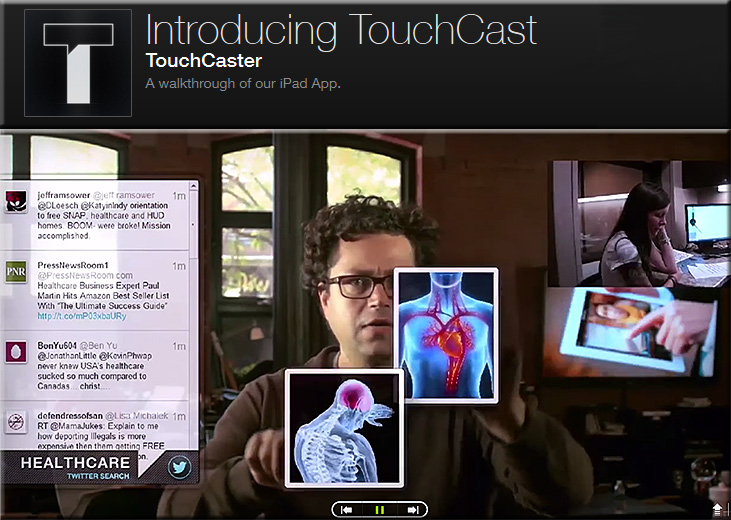
As Paul Sawers explains, you can add interactive, browsable layers onto your video and deliver it in an HTML5-based format.

.
An excerpt from Paul’s article:
Things start to get really interesting with video apps (vApps). TouchCast lets you create videos that are layered with live Web pages, video clips, maps, Twitter streams and other facets of the digital world. “We’re actually claiming that this is the future of the Web,” says Segal, TouchCasts’s CEO.
Indeed, TouchCast’s vApp library is ‘open’, so developers can create and customize their own vApps.
Bottom line:
“Digital textbooks” will never be the same again (not to mention learning modules, transmedia, ads, presentations, digital storytelling, and more)!
Also see:
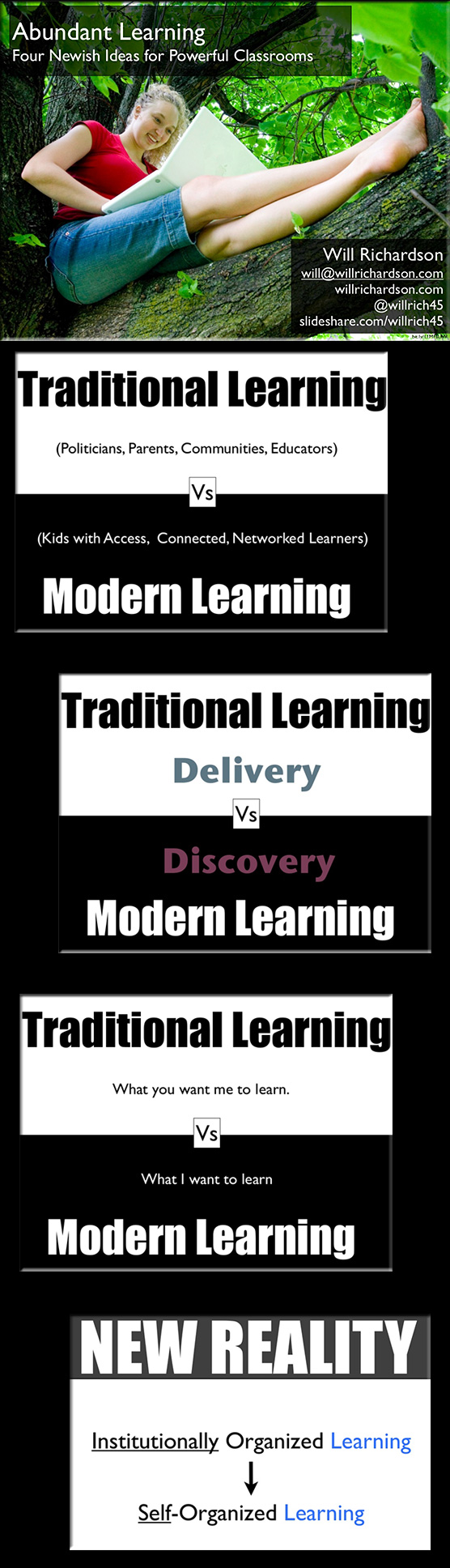
Example slides from
Will Richardson’s solid presentation at ISTE 2013, entitled ” Abundant Learning: Four newish ideas for powerful classrooms”
From DSC:
This idea of self-directed/owned learning is spot on — and not just for those in K-12, but also for those in higher education and for those in the corporate world as well! It unleashes an enormous amount of intrinsic energy, motivation, drive, grit.
Each person needs to own and build their learning ecosystem — identifying one’s gifts, talents, passions, interests and then going out and developing those things. If we each do what we do best, the whole world benefits. As we will need others along the way — a team-based approach, communities of practice, and several of the other things/skills Will alluded to will be very important as well.
Mobile devices as clickers: One Elon professor shares experiences — from by Heidi Hollingsworth, Assistant Professor in the Education Department
Excerpt:
I’ve been using an alternative to traditional student response system (clickers) this year: Socrative.com. Instead of giving students a clicker device, each student enters responses on her or his smartphone, iPad, or laptop.
Here are some of the ways I use Socrative…
From DSC:
Again, this ties in nicely with my earlier comments re: building/leveraging the power of an ecosystem. Those of us working with smart classrooms and learning spaces need to consider this type of thing.
Here’s why the TV apps economy will be a $14 billion business — from forbes.com by Michael Wolf

.
Excerpt:
According to new research published this week, the TV apps economy is forecasted to reach $14 billion by 2017.
…
Take for example today’s news that Apple will begin selling video advertisements served by iAd through iTunes Radio loaded on Apple TVs. This is only the first move for Apple in this space, and others like Samsung and Google are already investing heavily in connected TV app advertising.
From DSC:
Why post this? Because:
.
![The Living [Class] Room -- by Daniel Christian -- July 2012 -- a second device used in conjunction with a Smart/Connected TV](http://danielschristian.com/learning-ecosystems/wp-content/uploads/2012/07/The-Living-Class-Room-Daniel-S-Christian-July-2012.jpg)
From DSC:
And if this does take off,
$14 billion won’t begin to capture the profits from this new industry.
It will be far larger than that.
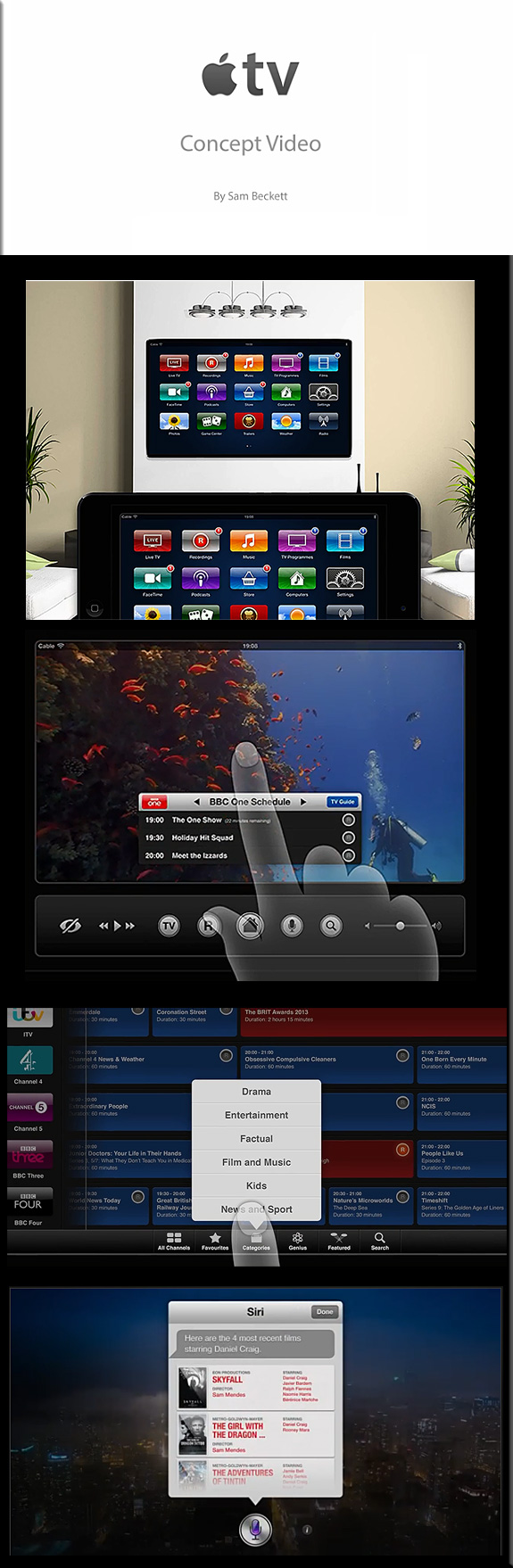
Relevant addendum on 6/27/13:

Via: [The Verge] Image Credits: [Venture Beat] [Home Theater]
.
From DSC:
Now picture this from the educational standpoint — and what MOOCs could morph into. The foundation for some serious learning power (from the living room) seems to be developing!
Streams of content/learning channels/cloud-based applications that each of us can create and make available.
Voice recognition, learning analytics, machine-to-machine communications, transmedia and more! Wow!
.
Below are some great resources re: creating your own e-books / streams of content — with thanks to Mr. Michael Haan, Technology Integration Specialist/Purchasing at Calvin College, for these resources
.
.
From DSC:
You might also want to check out Lynda.com for the relevant training materials.
.
.
Let’s create our own streams of content — always up-to-date — plus we could help our students save big $$! And, as Michael pointed out, such tools could also be used internally for training-related and communications-related purposes.
Thanks Michael!!!

Netflix CEO: ‘TV in the future will be like a giant iPad’ — from business.financialpost.com by Armina Ligaya
Excerpt (emphasis DSC):
Q: What do you think is going to happen over the next five or 10 years in internet video?
A: Well, you know, the fundamental thing is the internet has been getting faster. And now it’s video capable, which is really a last-five-years phenomenon. And, internet video will be very transformative across all societies for telemedicine, for online learning, for education. For communication of various sorts. And it brings, whether it’s person to person, or a recorded video like a movie or a TV show, to a person it will be very transformative.
And, TV in the future will be like a giant iPad. It will have a bunch of apps on it, each app will have a unique experience.
…
So we’re getting beyond just a stream of video, which is all broadcast technology can do, to really try to be innovative about the interaction.
.
.
.
.
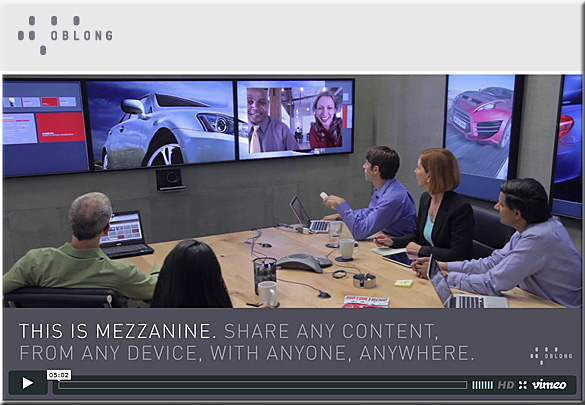
From the Oblong.com website:
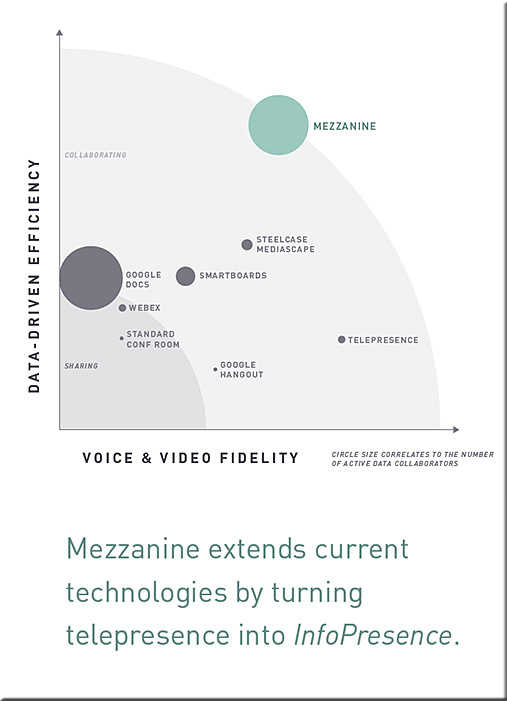
Mezzanine™ is a collaborative conference room solution that introduces multi-user, multi-screen, multi-device collaboration. This is next-generation communication: share any content from any device with anyone, anywhere.
Mezzanine transforms creative teamwork, executive meetings, and sales presentations into real-time, collaborative work sessions. Mezzanine expands on existing telepresence technology by providing what we call InfoPresence™—the incorporation of multiple users, multiple devices, and multiple streams of information in the collaboration environment. The future of conference room collaboration is here.
A Mezzanine workspace lets any person on a network bring their own device and share content and applications with any colleague, anywhere in the world, interactively. Mezzanine is a collaborative conference room solution combining presentation design and delivery, application sharing, whiteboard capture, and video conferencing, all within a framework of multi-participant control.
.
Also see:
Part 3: Transmedia is a mindset, not a science — from by Matt Doherty — thanks to the Scoop from siobhan-o-flynn at Tracking Transmedia
The end of TV as we know it & the rise of transmedia
.

.
Also see:
The end of TV as we know it & the birth of transmedia — slideshare by Ogilvy & Mather
Doug Scott, President, OgilvyEntertainment and Matt Doherty, Transmedia Architect, Ogilvy & Mather Worldwide presented The End of TV as We Know It & The Birth of Transmedia at the 21st Century Storytelling Conference: Content, Context and Conversations sponsored by Microsoft, Ogilvy & BrainJuicer on July 31, 2012 in Chicago.
Throughout history, we have told stories. Stories are what connect us across geographies, cultures and experiences; stories demonstrate that we share the same hope, dreams, fears, challenges and desires. Today’s complex, digtally connected consumer universe makes brand storytelling more challenging, but also creates opportunities for brands to tell their stories in new ways.
Doug Scott and Matt Doherty discussed how the idea of TV might be a thing of the past, but the stories that drive our content will always be our constant. Our variable? Telling. Telling has evolved due to the primary role of digital in our lives and disruptive innovation which has given us the ability to craft transmedia experiences. Transmedia has brought about a new set of creative tools and narratives that are rooted in content, formed by context and crossed by all things culture. Are you a story? Or are you a teller?
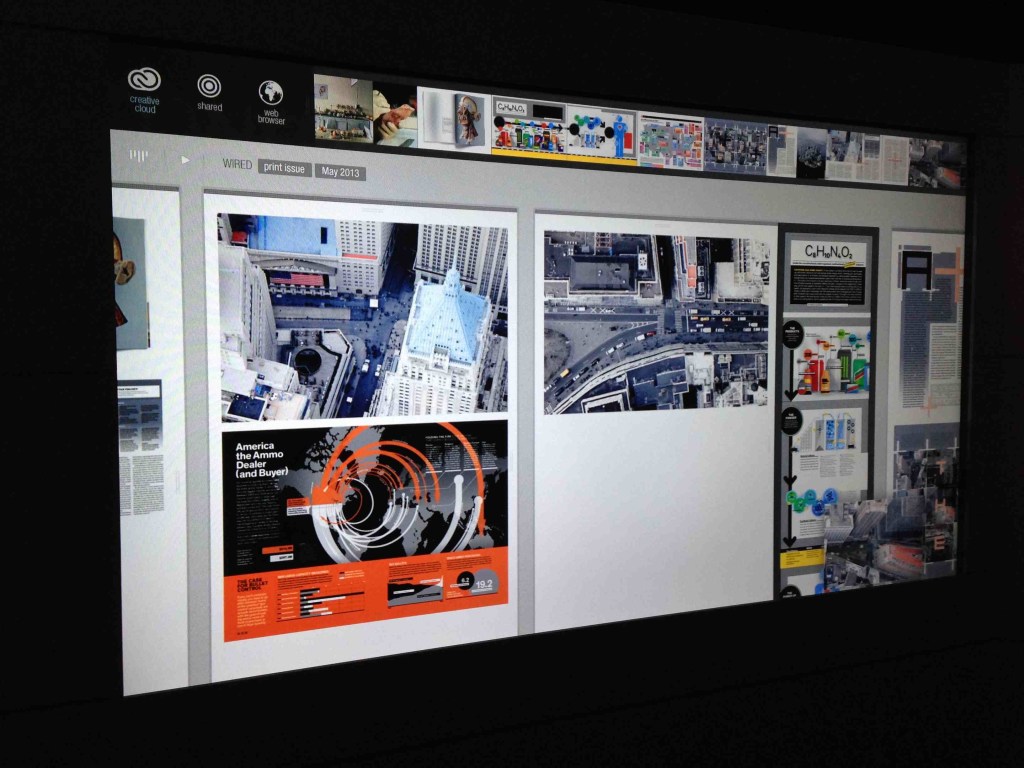
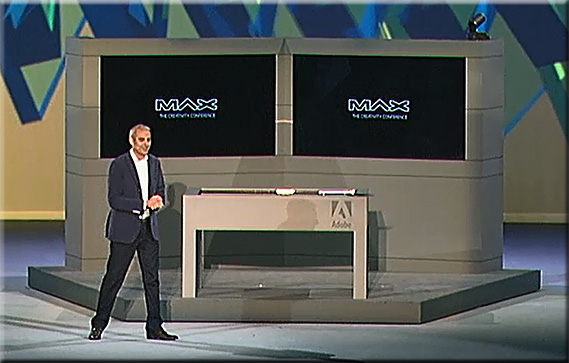
From DSC: re: Adobe’s Project Context:
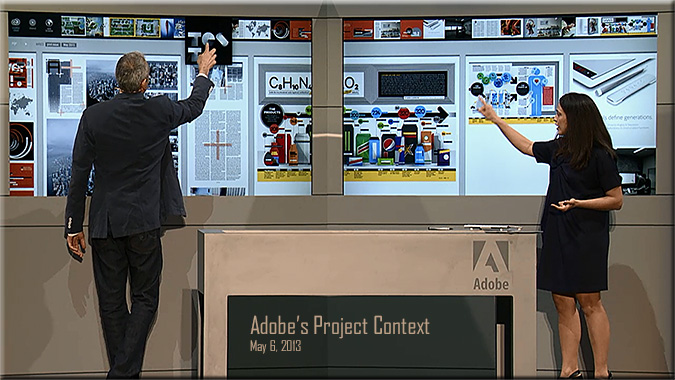
This is the type of hardware/software combination that I’ve been hoping for and envisioning! Excellent!
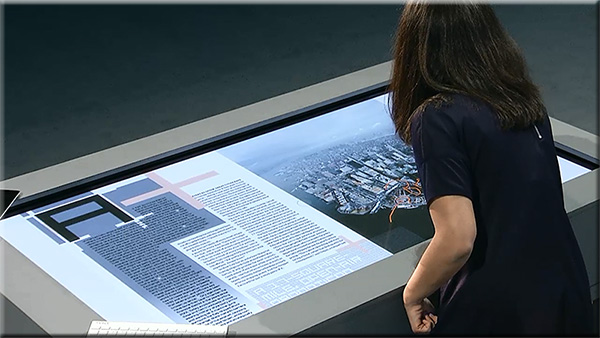
It appears to be the type of setup whereby students could quickly and easily collaborate with one another — in a face-to-face setting (and ideally in remote locations as well) — by not just displaying files but also being able to share files with one another. Files can be sent up to the interactive, multi-touch displays as well as to an interactive table. So it’s not just displaying files, but actually sharing files and being able to collaboratively work on a project.
Eventually, I see this being able to be done in your living room. What if MOOCs could integrate this type of web-based collaboration into their projects?
But for now, this is a HUGE step forward in this vision. Great work Adobe! This is innovative! Very helpful!
Example screenshots:
.
.
.
..
Also see:
.