FutureOfStorytellingGaskins-Oct2013


Excerpt:

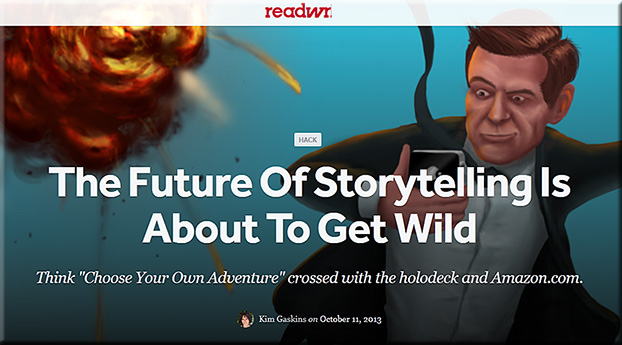
Many of us go about our lives constantly surrounded by screens, immersed in various “stories”: movies, TV shows, books, plot-driven video games, news articles, advertising, and more. Whether we realize it or not, we’re creating new behaviors, routines, mindsets, and expectations around what we watch, read or play—which in turn presents new challenges and opportunities for creators and marketers.

In other words, while the fundamentals of good storytelling remain the same, technology is changing how stories can be told. But what does that mean exactly?


From DSC:
There’s something here for classrooms/education — even for the living rooms of the future!


Little Mermaid Second Screen Live makes iPads part of the movie world — from gigaom.com by Liz Shannon Miller

Summary:

Disney advertises the Second Screen Live experience as a rebellion: “Break the rules — bring your iPad to the movies!” But it’s less a trip to the movies and more a fully interactive experience.

As the film began, so did the games. Most second-screen experiences I’ve tried have been largely passive, but Little Mermaid demanded the audience’s attention right from the beginning with games, trivia questions and other forms of interactivity for all ages.


lmssl trivia 1

The action on the big screen even froze from time to time for more complex games, and there were moments of seemingly new animation inserted at key plot points, as well.


Circle Twelve introduces new video conferencing and immersive multi-user collaboration system — from businesswire.com


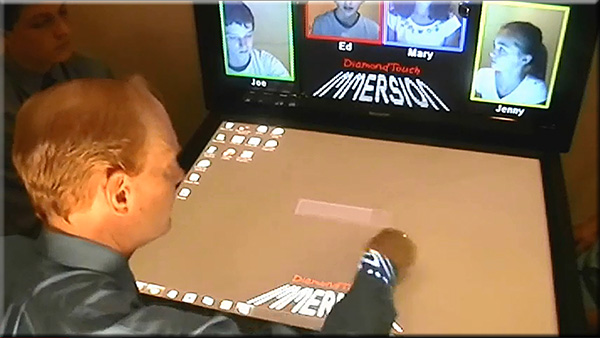
DiamondTouchImmersion-Sept2013

DiamondTouch Immersion is a new video conferencing system from Circle Twelve designed for connecting two remotely located teams. It combines a the multi-user DiamondTouch table with a second display for video conferencing. It features several patented technologies, including the multi-user DiamondTouch table hardware used for interacting with shared content and collaborative whiteboarding, a method for indicating which remote user is interacting (check out the virtual arms at 3:45), and a multi-camera system so you can see all the people at the remote table. More information at http://www.circletwelve.com/products/…


From DSC:
Can you imaging this type of web-based collaboration in blended learning environments?!!


Also see:


True personalization is the next big thing in multiscreen TV [Moulding]

True personalization is the next big thing in multiscreen TV — from .v-net.tv by John Moulding


From DSC:
Not a far stretch to see some applications of this in the future aimed at learning objects/learning agents/and personalized streams of content.


The Living [Class] Room -- by Daniel Christian -- July 2012 -- a second device used in conjunction with a Smart/Connected TV


Addendum:
(With thanks going out to Mr. Richard Byrne over at the Free Technology for Teachers blog for this item
)


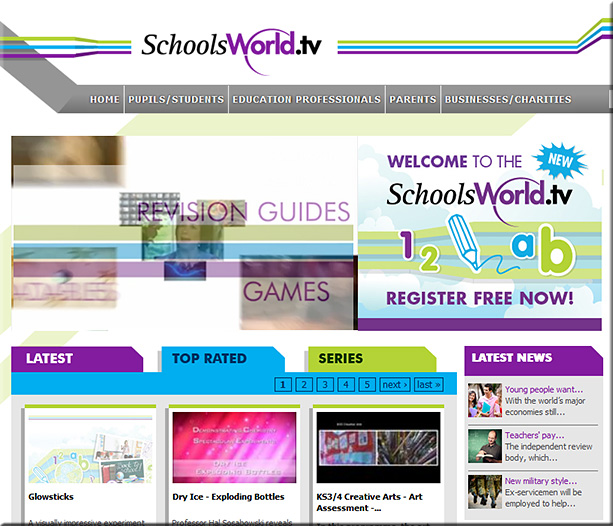
SchoolsWorldTV-Sept2013


ChemDraw ~ Favorite Things Series — from collegiatecareercoach.com by Mignon Brooks

Excerpt:

Imagine the capability of sitting in a chemistry classroom where a professor flicks information to the students, and the students flick their answers right back to the professor.

Also see:


From DSC:
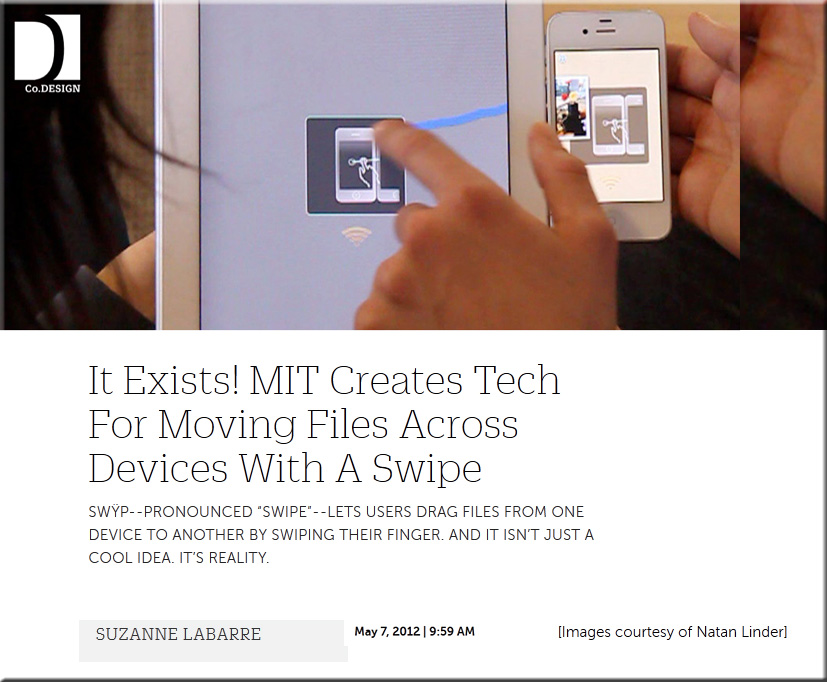
I couldn’t locate the relevant information for Flick-to-Share (or did they mean Flick and Share?); however, the idea of swiping to easily and efficiently share files most assuredly is part of the future Smart Classroom. see:

Swyp-March2012


IBM-WatsonAtWork-Sept2013


From DSC:
IBM Watson continues to expand into different disciplines/areas, which currently include:

  • Healthcare
  • Finance
  • Customer Service

But Watson is also entering the marketing and education/research realms.

I see a Watson-type-of-tool as being a key ingredient for future MOOCs and the best chance for MOOCs to morph into something very powerful indeed — offloading the majority of the workload to computers/software/intelligent tutoring/learning agents, while at the same time allowing students to connect with each other and/or to Subject Matter Experts (SME’s) as appropriate.

The price of education could hopefully come way down — depending upon the costs involved with licensing Watson or a similar set of technologies — as IBM could spread out their costs to multiple institutions/organizations.  This vision represents another important step towards the “Walmart of Education” that continues to develop before our eyes.

Taking this even one step further, I see this system being available to us on our mobile devices as well as in our living rooms — as the telephone, the television, and the computer continue to converge.  Blended learning on steroids.

What would make this really powerful would be to provide:

  • The ability to create narratives/stories around content
  • To feed streams of content into Watson for students to tap into
  • Methods of mining data and using that to tweak algorithms, etc. to improve the tools/learning opportunities

Such an architecture could be applied towards lifelong learning opportunities — addressing what we now know as K-12, higher education, and corporate training/development.

.


The Living [Class] Room -- by Daniel Christian -- July 2012 -- a second device used in conjunction with a Smart/Connected TV


TheAmazon-MarcosAntoniodeLimaFilho


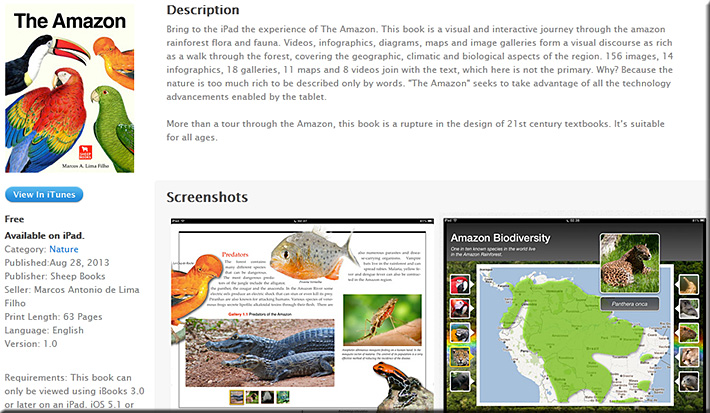
The Amazon
By Marcos Antonio de Lima Filho | Master in Design | Federal University of Pernambuco – Brazil

This is a free book which is available in iBooks 3.0+ on the iPad and/or using iTunes on your computer.  Marcos designed this book to take advantage of all the interaction enabled by iPads.

156 images, 14 infographics, 18 galleries, 11 maps and 8 videos join with the text, which here is not the primary. Why? Because the nature is much too rich to be described only by words.  The Amazon seeks to take advantage of all the technology advancements enabled by the tablet.

Great work Marcos! Nice interactivity, use of digital audio and video, graphics, and more. Check it out!


E-books could be the future of social media — from fastcolabs.com by Michael Grothaus

Excerpt (emphasis DSC):

Both Apple and Amazon were designing e-book readers by copying the 2,500-year-old idea of books as self-contained collections of words, completely missing how readers share and discuss content online today. While most e-readers allow you to share passages or links to the book you are reading, and sites like Goodreads let you share what you’ve read, their implementations treat the book and the discussions around them as separate collections. Worse, these apps force users to venture into the distracting world of the open Internet when they want to share, making it hard to stay focused on reading.

This didn’t sit well with Berggren, so he came up with an ingenious solution: Make each and every book its own self-contained social network.


From DSC:
When people urge us to do things differently due to the technologies at our disposal, this is a great example of that.  It rethinks what can be done now vs. how it has been done in the past.  I like the increased opportunities this type of big-thinking, innovative solution offers for increased participation, collaboration, and discussion.

Questions that come to my mind:

  • How might this affect what’s possible with digital storytelling? With transmedia?
  • Could each MOOC/course/stream of content be its own social network?
  • “The app itself is free, so the company makes money by selling anonymized data it collects about its users’ consumption habits to publishers.”  Will we see more of this type of business model?


Also see:

.
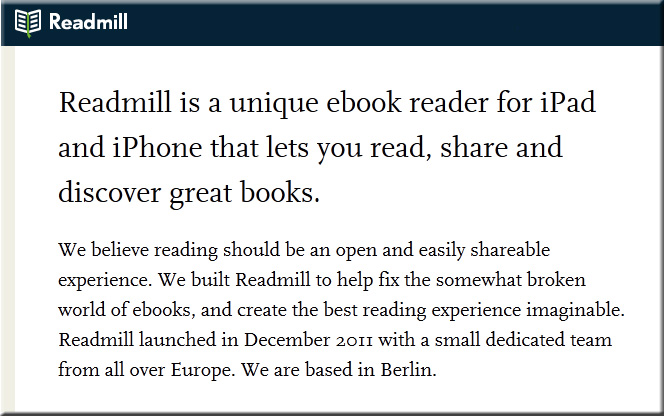
readmill-Sept2013


Also see:


Addendum on 9/10/13:

Content as a Service (CaaS) — from knowledgestarblog.wordpress.com by David Grebow

Excerpt:

The etextbook in 2018 will be dramatically different than the etextbook of today. It will be coupled to an app that will provide you with Content as a Service (CaaS). CaaS will include many of the following features (and more that have yet to be imagined):

Multimedia
Simulations
Educational Games
Animations
Pre- and post-tests
Formative and Summative Quizzes
Adaptive testing
Networked Social Learning
Study groups
Analytic Datasets
Virtual and Flipped classes
Communities of Learning and Practice
Virtual classes.


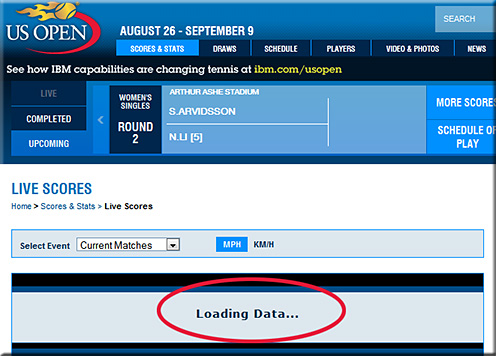
IBM and USTA captivate tennis fans with immersive second screen experience — from MarketWatch.com
Analytics, cloud, mobile and social computing technologies deliver US Open to fans’ fingertips


Excerpt:

The innovative digital US Open environment provides fans, players, broadcasters and media with access to a range of Big Data insights streaming from the courts, including stats, facts, videos, live scoring, and historical and real-time analysis of tennis data served to tablets, smartphones, PCs and other devices.


Also see:

USOpen-USTA-IBM-Aug2013


.

USOpen2-USTA-IBM-Aug2013


From DSC:
Questions I wonder about:

  • How might this sort of thing help us in education? What if, instead of a tennis match, it was a debate on X vs. Y…?
    .
  • Could we use it in educational gaming apps?
    .
  • If so, what sorts of apps that lean on social learning could we create?
    .
  • How could professional development/conferences use this type of immersive second screen experience? What sorts of opportunities for participation would open up?
    .
  • Could we develop things like this that help us learn things IN REAL TIME from the streams of content flowing by? (Do learning agents employ this sort of thing?)


Somewhat-related items:

College students bring targeted media to doctors’ waiting rooms — from entrepreneur.com by Michelle Goodman

Excerpt:

Their idea was to sell doctors’ offices prepackaged video segments containing tips on diet, exercise and other lifestyle tweaks patients could make to improve their health. A TV screen in the reception area would broadcast this programming, modeled after segments on shows such as Today, while patients waited for appointments.

To test the idea, Agarwal, Shah and classmate Derek Moeller bought TVs and DVD players, culled content from the internet and distributed the equipment and “shows” to 50 doctors in five states.

MOOCing the Liberal Arts? Technology and Relationship in Liberal Arts Education
The Thirteenth Annual Conversation on the Liberal Arts
February 13 – 15, 2014
 

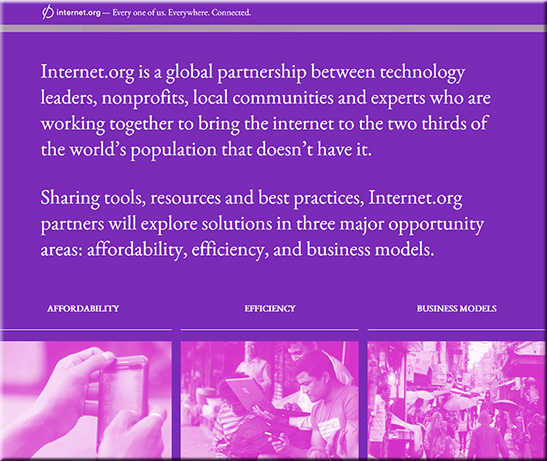
Is connectivity a human right? — by Mark Zuckerberg

Also see:


internetdotorg-august2013


From DSC:
The massive convergence of the telephone, the television, and the computer continues.  How that media gets to us is also changing (i.e. the cord cutting continues). 

What types of innovative learning experiences can be crafted as “TV” becomes more interactive, participatory, and engaging? What happens if technologies like WebRTC make their way into our browsers and we can videoconference with each other without having to download anything?

What doors open for for us when Google, Apple, or an Amazon.com delivers your “shows” vs. NBC/ABC/CBS/etc.?

 The items below cause me to reflect on those questions…


.

Streaming devices lead the way to Smart TV — from nytimes.com by Brian Stelter

Julia Yellow


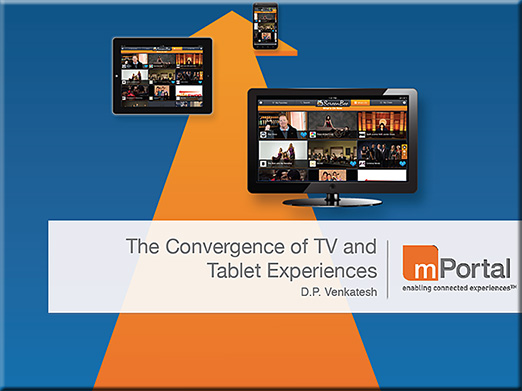
ConvergenceTVTablet-DPVenkatesh-Aug2013


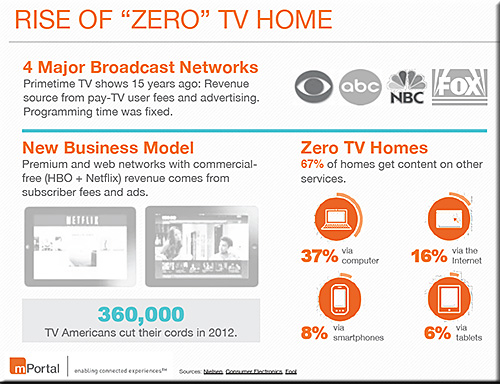
ConvergenceTVTablet2-DPVenkatesh-Aug2013


.

Is Google ready to buy its way into TV with an NFL deal? — from allthingsd.com by Peter Kafka

Excerpt:

Here’s a fun combination to ponder: The world’s most powerful media company and America’s most popular sport.

That could happen if Google buys the rights to the NFL’s Sunday Ticket package, the all-you-can-eat subscription-TV service currently owned by DirecTV.


Cord Cliff Coming: What happens to TV when Netflix streams live events? — from allthingsd.com by Ben Elowitz, CEO, Wetpaint


 Addendums on 8/22/13:


The tv of tomorrow and the living room of the future

by beutlerink.
Explore more infographics like this one on the web’s largest information design community – Visually.


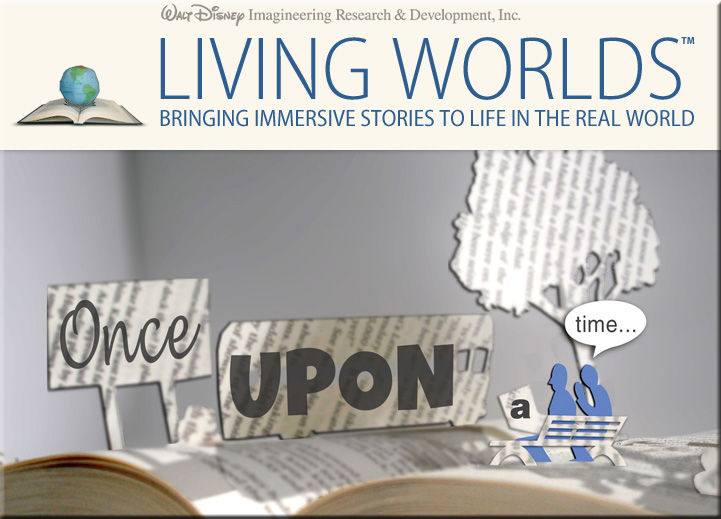
WaltDisneyImagineering-August2013

— from Walt Disney Imagineering Research & Development (“WDI R&D”)

From DSC:
Though it looks like the latest round appears to be done, what caught my eye here were the following items:

Blending the physical w/ the virtual and the platform:

  • The experience must take place simultaneously in a physical space and one of the following:
    • Interactive Website
    • Mobile (smartphone, tablet device, etc.)
    • Another physical location
  • Other media formats and platforms are encouraged as well. Use your imagination!

Immersion

Digital storytelling

Creativity

New media literacies

Interactivity

Participation

Imagination


Questions:

  • How might these concepts be used in modern K-12 courses? In higher education?
  • How could our “textbooks” incorporate these concepts?
  • Which disciplines should be involved in these cross-disciplinary endeavors?

 
© 2025 | Daniel Christian