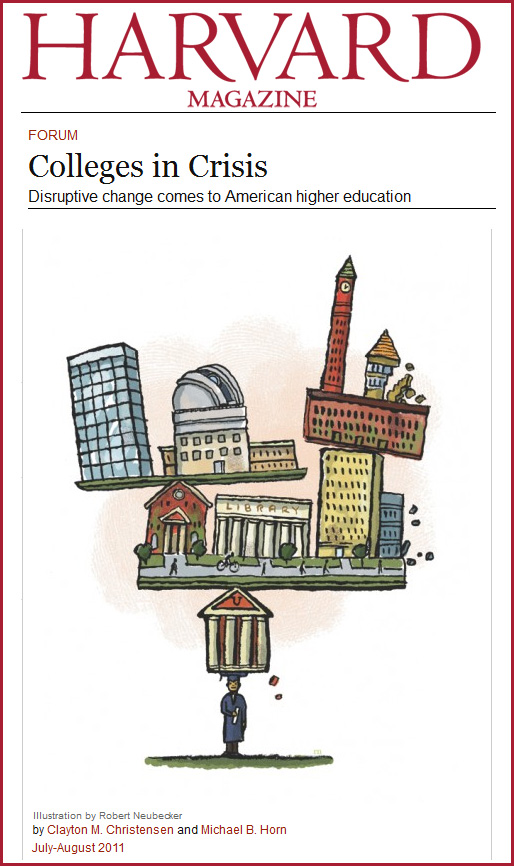
Colleges in Crisis - Harvard Magazine -- July-August 2011

Excerpt (emphasis DSC):

Surveys of the American public and of more than 1,000 college and university presidents, conducted this past spring by the Pew Research Center in association with the Chronicle of Higher Education, revealed significant concerns not only about the costs of such education, but also about its direction and goals.

More fundamentally, the business model that has characterized American higher education is at—or even past—its breaking point. Many institutions are increasingly beset by financial difficulties, and the meltdown since 2008 is but a shadow of what is to come. Undergraduate tuition has risen dramatically: at a 6.3 percent annual clip for nearly the last three decades—even faster than the much-decried 4.9 percent annual cost increases plaguing the healthcare industry. The full increase in the price of higher education has actually been hidden from many students and families over the years because gifts from alumni, earnings from private university endowments, subsidies from state tax revenues for public universities, and federal subsidies for students have been used to mitigate some costs. But universities are exhausting these mechanisms.


A Thriving, Disruptive Innovation
Just at the moment when these challenges to established higher education have arisen and compounded, another group of universities has arisen whose financial health is strong and enrollments have been booming. And yet the brands of these schools are weak and their campuses far from glamorous; sometimes the campuses are even nonexistent from the perspective of students, as online learning has largely driven their growth. How could this upstart group be so successful when the rest of higher education is treading water at best?
Stepping up to the Genius Bar — from CampusTechnology.com by John Waters
As they reconsider their role on campus, college bookstores take inspiration from the Apple Store.

Excerpt:

“The advent of this technology isn’t going to eliminate the need for college bookstores,” insists Isabella Hinds, director of digital strategies and products for Follett Higher Education Group. “It’s disruptive–or it will be, eventually–but the role of the bookstore is already evolving. The college bookstore of the future is likely to be a very different environment. The digital textbook is going to be one of a range of course-material offerings…delivered on a variety of devices. As these options proliferate, the expertise of the bookstore personnel will be much more important. They will become trusted advisers who can talk knowledgeably about the strengths and weaknesses of increasingly sophisticated and complex products.”

In other words, the college bookstore of the future is going to look a lot like an Apple Store.

The newsonomics of oblivion — from the Nieman Journalism Lab by Ken Doctor
Excerpt:

The threat of oblivion should be a powerful motivator, and we now see — finally — after a decade of decline, its specter moving us away from incremental, “experimental” tests to a fundamental restructuring of the business of news.

From DSC:
(I don’t mean to be full of doom and gloom here. However, a healthy respect of the disruption being caused by technology is warranted here I believe.)

I couldn’t help but think of higher education as an industry when I reviewed this particular blog posting.  Those of us working within higher education need to be highly aware of how other industries are dealing with the disruptions being caused by the Internet and other technologies. Why? Because the disruption has already begun within higher education.

Cal State University to cut enrollment, faculty, staff and more — from The L.A. Times by Carla Rivera
Facing an 18% cut in state funding, Cal State plans to reduce enrollment by 10,000, cut $11 million from the chancellor’s office and shrink campus funding by $281 million. No tuition hikes are planned, chancellor says.

Also see:

From DSC:
In my recent class at Capella University, one of the last discussion board questions asked:

  • Do you think learning theory should be more explicit in official discussions of policy?

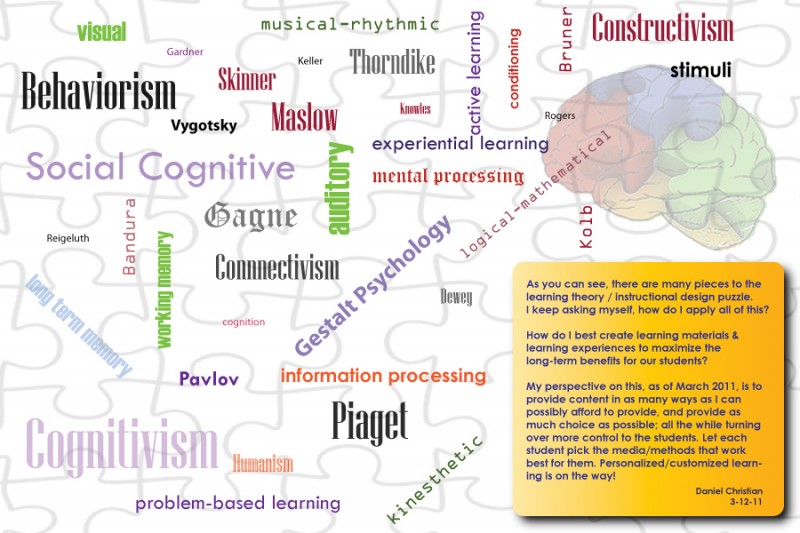
What a great question! My answer was yes, as it makes sense to me to guide educational reform by what is best for the students…for learning. Hopefully, we can make informed decisions. Though I’ve learned that there is no silver bullet when it comes to learning theories, each learning theory seems to be a piece of the puzzle for how we learn. Graphically speaking:


If viewing the above graphic on the Learning Ecosystems blog (vs. in an RSS feed/reader):
You may need to right-click on the above image and save it, then open it.

Such theories should have a place when policies are drafted, when changes are made. But I don’t often hear reference to the work of Thorndike, Bandura, Vygotsky, Gagne, Kolb, etc. when legislative bodies/school boards/or other forms of educational leadership are exploring future changes, directions, strategies. What is it that these people were trying to relay to us? What value can we gleam from them when we form our visions of the future? How does their work inform our selection of pedagogies, tools, organizational changes?


(CA) A Season for Turnaround — from Conditions of Education in California by Alan Daly
…the federal government offers four ‘turnaround’ models:

  • Turnaround:
    The Local Education Agency (LEA) replaces the principal and rehires no more than 50% of the staff; gives the principal greater autonomy; and implements other prescribed and recommended strategies.
  • Restart:
    The LEA converts or closes and reopens a school under a charter school operator, charter management organization, or education management organization.
  • School closure:
    The LEA closes the school and enrolls the students in other schools in the LEA that are higher achieving.
  • Transformation:
    The LEA replaces the principal; implements rigorous staff evaluation and development; institutes comprehensive instructional reform; increases learning time; and provides greater operational flexibility and support of the school.

In California the ‘transformation’ model is the one most frequently chosen.

(NY) Layoffs would hit some schools much harder — from WSJ

(MI) Michigan orders DPS to make huge cuts – Detroit News
Bobb told to consolidate services, close half of schools to end deficit


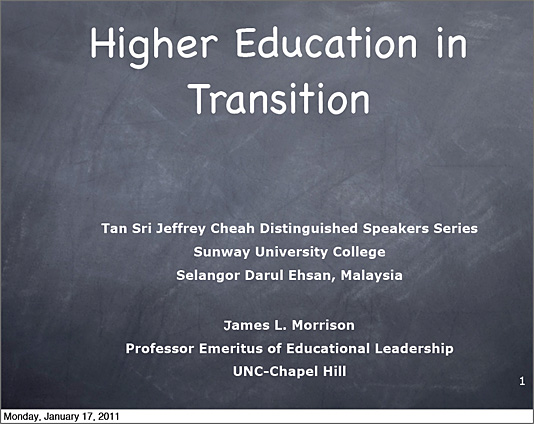
James Morrison -- Higher Education in Transition

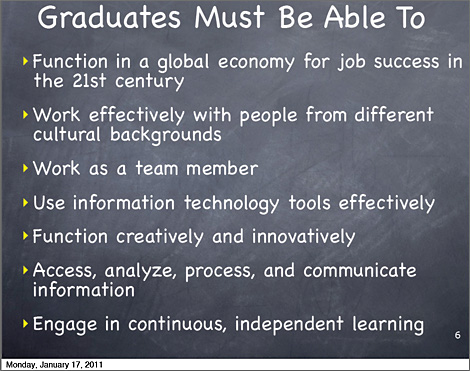
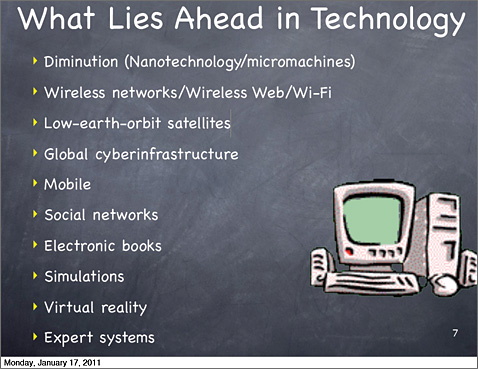
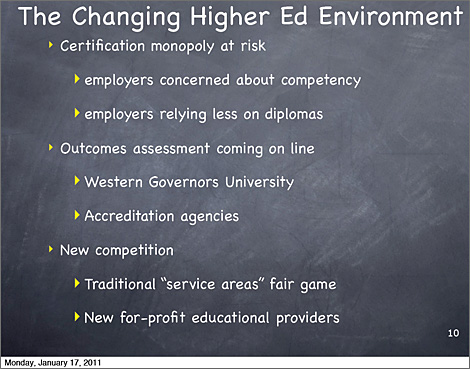
Example slides/excerpts:

.

.

.

.

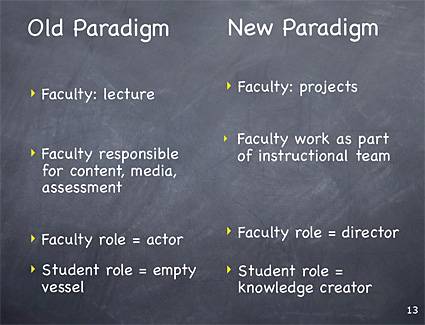
One example — of several great slides — regarding the old vs. the new paradigm:

.

.


.

From DSC:
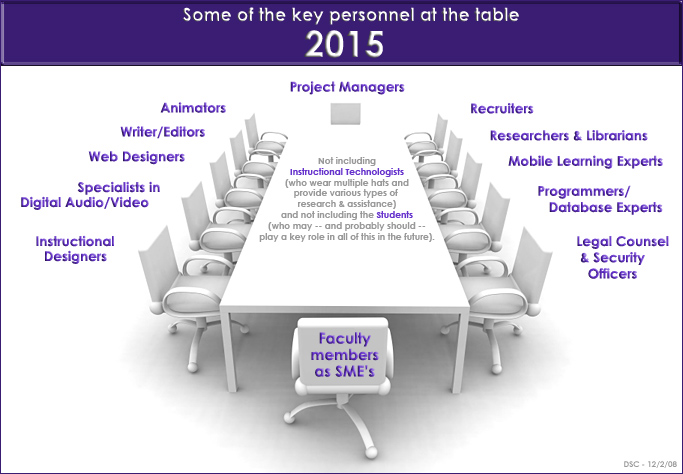
Re: one of the bullet points on the last slide — i.e. “Faculty work as part of instructional team” — here’s my take on what that team increasingly needs to look like in order to engage our students and to compete:

.


From DSC:
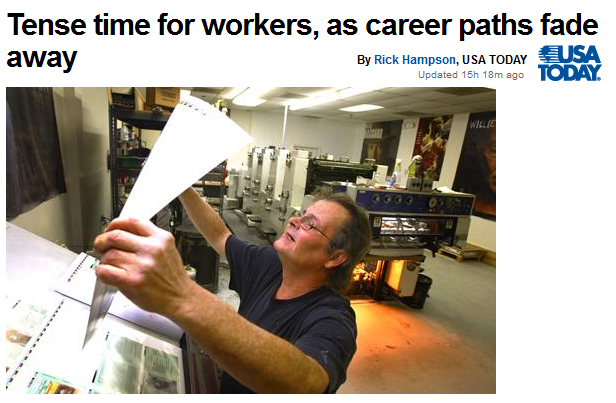
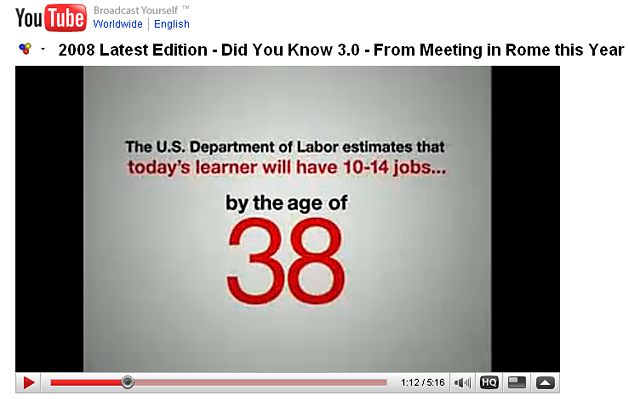
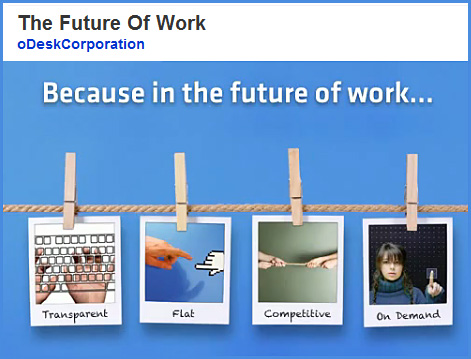
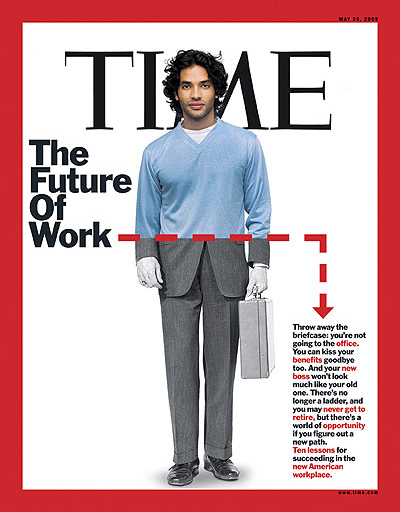
Below is a link to an article at USA Today — as well as a few graphics — to demonstrate the increasingly important requirement (nowadays) to constantly reinvent yourself and to stay marketable. Just as organizations need to do this, each of us as individuals in charge of our own careers need to do this.

.

Tense time for workers, as career paths fade away

.

.

The Future of Work -- presentation from December 2009 -- odesk.com

.

The academy in hard times

Also see:

40 for the next 40: A sampling of the drivers of change that will shape our world between now and 2050 — from gerdleonhard.typepad.com and Toffler Associates

From the foreword:

We are in the midst of an accelerating, revolutionary transformation. Change is happening everywhere – in technology, business, government, economics, organizational structures, values and norms – and consequently affects how we live, work and play. As industry and government leaders, we must acknowledge that this change demands new ways of governing and of running our organizations. The ways in which we communicate and interact with each other will be different. The methods through which we gain and process information will be different. The means by which we earn and spend money will be different. Through the culmination of these and other changes, organizations will be radically transformed.

This change is not unexpected. Forty years ago, Alvin and Heidi Toffler recognized that the pace of environmental change was rapidly accelerating and threatened to overwhelm the relatively slow pace of human response. Through Future Shock, the Tofflers persuaded us to consider the future by imagining drivers of change and preparing for a wide range of resulting future environments. Now as we look towards the next 40 years, we continue to use these time tested methodologies, our founders’ legacy to Toffler Associates, for understanding the forces of future change. We focus on the convergence and interdependence of seemingly orthogonal aspects to connect the dots and develop strategies for future success. In this way, we recognize, as the Tofflers did, that preparation is the best defense against the future (emphasis DSC).

Here is a sampling of 40 drivers of change that – we believe – will shape the future.

From DSC:
Includes sections on Politics, Technology, Social, Economics, and the Environment.

The Learning Ecosystem — from Chief Learning Officer by Mal Poulin

“Without a sustainable, user-friendly and easily implemented plan to capture and spread information between employees, technology is just hardware and software.”

.
From DSC:
Mal adds some nice, new dimensions to what constitutes a learning ecosystem, such as:
  • Environments, cultures, organizations, and methods that support workplace learning and performance. It’s not about the software; it’s about what they do with it.
  • Strategies, processes, and tools to enable learning in every aspect of the business or operation. The goal is to yield front-line performance improvements that result in customers who notice and come back for more products and services.

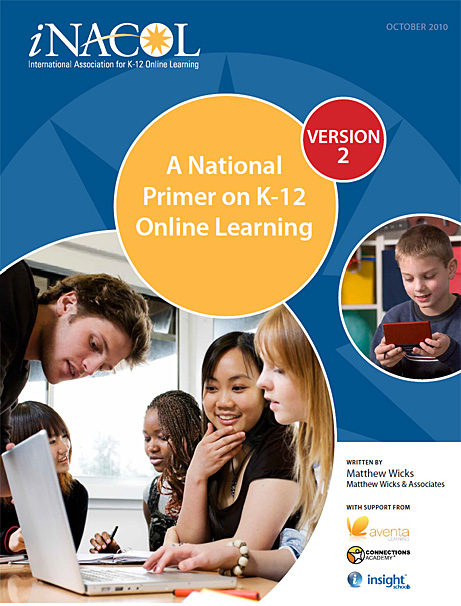
A National Primer on K-12 Online Learning — iNACOL

  • What does an online course look like?
  • How do students interact with their teacher?
  • What qualifications and training are required of teachers?
  • Does online learning really work?
  • What state or school district policies are needed to implement online learning?

The National Primer on K-12 Online Learning provides a comprehensive overview of online learning by examining the basics about online teaching and learning, evaluating academic success, professional development, technology and other topics.

Quote from W. Edwards Deming:
“It is not necessary to change.  Survival is not mandatory.”

— I saw this quote over at Edupunks, Distance Learning, and Biology

The Rise of the ‘Edupunk’ — from InsideHigherEd.com by Jack Stripling

NEW YORK — The “Edupunks” will inherit the Earth … or at least some attention.

Those in higher education who continue hand-wringing over the relative merits of online learning and other technology-driven platforms will soon find themselves left in the dust of an up-and-coming generation of students who are seeking knowledge outside academe. Such was an emerging consensus view here Monday, as college leaders gathered for the TIAA-CREF Institute’s 2010 Higher Education Leadership Conference.

“We’re still trying to fit the Web into our educational paradigm.… I just don’t think that’s going to work,” said Mary Spilde, president of Lane Community College, in Eugene, Ore.

Today’s students are “pretty bored with what we do,” she added.

In a notable acknowledgment of the tail wagging the dog, several panelists alluded here to the possibility that if colleges don’t change the way they do business, then students will change the way colleges do business.

College leaders don’t yet know how to credential the knowledge students are gaining on their own, but they may soon have to, said Mark David Milliron, deputy director for postsecondary improvement at the Bill & Melinda Gates Foundation. We are not far from the day when a student, finding unsatisfactory reviews of a faculty member on ratemyprofessors.com, will choose to take a class through open courseware online and then ask his home institution to assess him, Milliron said. Colleges need to prepare for that reality, he said.

.

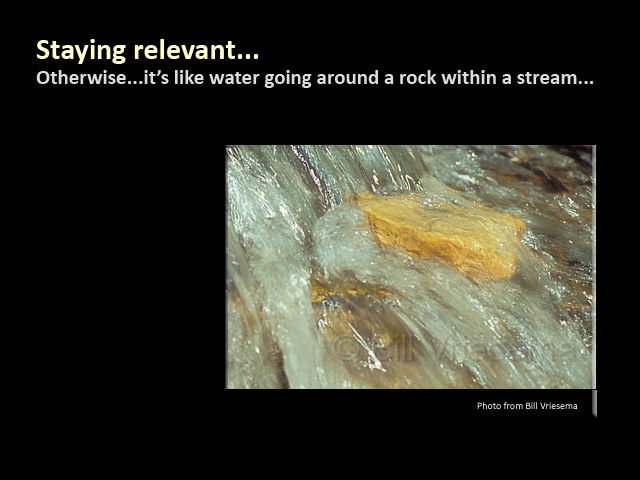
Staying Relevant

The university lacks capacity to change education — from George Siemens

Make no mistake, dramatic changes are occurring in education. These changes, due to the reluctance of the academy to map activities to the reality of the external world, are driven by external innovation. Quite simply, higher education is not in control of its fate as it has failed to develop the capacity to be self-reliant in times of change. I’ve seen universities (such as University of Manitoba) reach out to consulting and accounting firms to provide structural and funding change recommendations. I’ve seen universities begin to partner with online course providers such as StraighterLine to extend course offerings because they (the university) are simply not capable of fulfilling these roles themselves – they lack capacity to participate in this new space of learning. I used to think that higher education and open access would do away with the dominant role of traditional publishers. It looks like I was wrong. Publishers are now offering full course content packages that blend textbooks with faculty-produced materials (i.e. McGraw-Hill’s purchase of Tegrity – a lecture capture software). The university’s reliance on external offerings to fill their capacity gaps is a growing trend. For some (traditional liberal education advocates) it’s a concern. For others (entrepreneurs) it’s a blessing. And for still others (traditional publishers and content creators), it’s a way to stay relevant and perhaps even become more integrated with educational institutions than was possible with a textbook publishing model.

From DSC:
Sorry George, but I just have to post this in its entirety, as I think that you are right on the mark here!

From behind my “lenses” the way I “see” this is that:

  • Higher ed must become more nimble, willing to change, and work to address our shortcomings.
  • We must be responsive to changes outside of our control (which is the majority)
  • We must experiment with things and be willing to fail. Because…

…we are not nearly as in control of things as we suppose.


© 2025 | Daniel Christian