To future-proof a workforce, kill the perpetual hiring machine and embrace lifelong learning — from fortune.com by Clay Dillow

Excerpt:

A looming economic slowdown, the Great Resignation, a relentlessly expanding skills gap, and employees that would simply rather work from home. This week at Fortune’s CEO Initiative forum, a panel of company executives discussed the litany of challenges they face in developing and maintaining their workforces over the next several years.


From DSC:
Will this become a trend within higher education (i.e., more transparent, accurate pricing)?


Why so many colleges have been resetting their tuition — from highereddive.com by Lilah Burke
Colby-Sawyer College is reducing its prices by 60% so tuition more accurately reflects what students pay. Other institutions are doing the same.

Excerpt:

Starting next academic year, Colby-Sawyer College will be decreasing tuition, but it’s not just shaving a few hundred dollars off its sticker price. The college is cutting its price from $46,364 to $17,500, a drop of more than 60%.

The move, said President Susan Stuebner, is intended to make more students consider attending the private New Hampshire college.

“We really recognize the need for transparency in pricing and we’re trying to align the published price more closely with what students currently pay,” she said.

But for Stuebner at Colby-Sawyer, the choice was clear. 

“The pattern of higher education being on this trajectory of high-price, high-discount has just gotten so confusing for families. We’re really doing a disservice to them,” she said. “And they’re starting to push back.”


Wharton, Berkeley, NYU Offering Online M.B.A.s for the First Time — from wsj.com by Lindsay Ellis; with thanks to the GSV N2K Daily Newsletter for this resource
More elite business schools try virtual degrees to lure graduate students

Online M.B.A. students at Boston University watch live broadcasts
of professors and talk on a virtual forum.
PHOTO: CARLIN STIEHL FOR THE WALL STREET JOURNAL


From DSC, along the lines of online-based learning:


Are Microcredentials Finally Gaining Traction? — from insidehighered.com by Joshua Kim

Excerpt:

This month, the London School of Economics expanded its degree partnership with 2U to launch a series of edX microcredentials that provide learners with a flexible, stackable pathway towards pursuing a fully online undergraduate education. Wim Van der Stede, LSE’s new academic dean for extended education, graciously agreed to answer my questions about these new programs.

In that time, we’ve seen the power that online learning has to meet learners’ needs at every stage of their lives and careers.

The world around us is changing, rapidly, and we need to support professionals, alumni and students in refreshing and adapting their knowledge and skills, as and when they need, through evolving lives and careers. This is at the heart of LSE’s mission as a global social science hub of research and education, and plays a key role in achieving our mission to educate for impact by empowering students to develop the skills to solve society’s most pressing issues in an ever-changing world.


A side thought from DSC:
Speaking of Economics, I wonder if and how Artificial Intelligence (AI) will impact the field of Economics?


Coursera is Evolving into a Third-Wave EdTech Company — from eliterate.us by Michael Feldstein

Excerpts:

This is the vision of Coursera’s three-sided platform at scale, connecting learners, educators and institutions in a global learning ecosystem designed to keep pace with our rapidly changing world.

Coursera CEO Jeff Maggioncalda

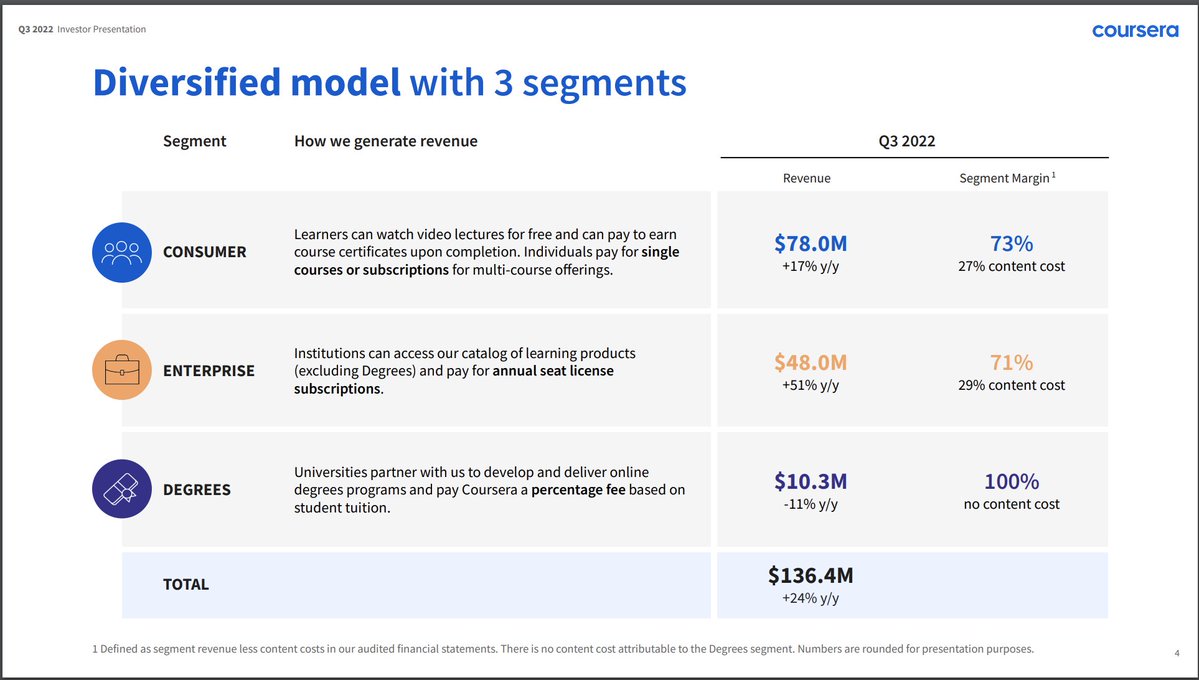
Coursera's diversified model with 3 segments -- consumer, enterprise, and degrees

The point of this slide is to show the diversification of Coursera’s business. Degree programs may be down, but enterprise licenses and direct-to-consumer certificates are up. But it also indicates Coursera’s ability to diversify revenue streams for its university content providers. The enterprise business provides a distribution channel between universities and employers. From what I can tell, it’s a Guild competitor, even though the two companies look very different on the surface. The consumer segment started as the MOOC business and has expanded into the “tweener” space between courses and degrees: certificates, microdegrees, whatever.


How to Stanch Enrollment Loss — from chronicle.com by Jeff Selingo
It’s time to stop pretending the problem will fix itself.

Excerpt:

The latest enrollment numbers from the National Student Clearinghouse Research Center, for the fall of 2022, paint an ominous picture for higher education coming out of the pandemic. Even in what many college leaders have called a “normal” fall on campuses, enrollment was down 1.1 percent across all sectors. And while the drop was smaller than the past two Covid-stricken fall semesters, colleges across every sector still have lost more than a million students since the fall of 2019.

At some point, colleges need to stop blaming the students who sat out the pandemic or the economic factors and social forces buffeting higher education for enrollment losses. Instead, institutions should look at whether the student experience they’re offering and the outcomes they’re promising provide students with a sense of belonging in the classroom and on campus and ultimately a purpose for their education.


The Key Podcast | Ep.91: The Pros and Cons of HyFlex Instruction — from insidehighered.com with Doug Lederman, Enilda Romero-Hall and Alanna Gillis

Excerpt:

During the pandemic, many colleges and universities embraced a form of blended learning called HyFlex, to mixed reviews. Is it likely to be part of colleges’ instructional strategy going forward?

This week’s episode of The Key explores HyFlex, in which students in a classroom learn synchronously alongside a cohort of peers studying remotely. HyFlex moved from a fringe phenomenon to the mainstream during the COVID-19 pandemic, and the experience was imperfect at best, for professors and students alike.

This conversation about the teaching modality features two professors who have both taught in the HyFlex format and done research on its impact.

From DSC:
When I worked for a law school, we had a Weekend Blended Learning Program.  Student evaluations of these courses constantly mentioned that these WBLP-based courses saved many students hundreds of dollars for each particular class that we offered online (i.e., cost savings in flights, hotels, meals, rental cars, parking fees, etc.).

Another thought/idea:

  • What if traditional institutions of higher education were to offer tiered pricing? That is, perhaps students participating remotely could listen in and even audit classes, but pay less.

Colleges should use K-12 performance assessments for course placement, report says — from highereddive.com by Jeremy Bauer-Wolf

Dive Brief:

  • Colleges should use K-12 performance assessments like capstone papers or portfolios for student course placements and advising, according to a recent report.
  • Typical methods of determining students’ placement in early college classes — like standardized tests — don’t fully illustrate their interests and academic potential, according to the report, which was published by postsecondary education access group Complete College America. Conversely, K-12 performance assessments ask students to demonstrate real-world skills, often in a way that ends with a tangible product.
  • The organizations recommend colleges and K-12 schools mesh their processes, such as by mutually developing a high school graduation requirement around performance assessments. This would help strengthen the K-12 school-college relationship and ease students’ transition from high school to college, the report states.

From DSC:
I post this particular item because I like the tighter integration that’s being recommended between K12 and higher education. It seems like better overall learning ecosystems design, design thinking, and on-ramping.

Along these lines, also see:

How Higher Ed Can Help Remedy K-12 Learning Losses — from insidehighered.com by Johanna Alonso
Low national scores have spurred discussion of how K-12 schools can improve student performance. Experts think institutions of higher education can help.

Excerpt:

Now educators at all levels are talking about ways to reverse the declines. Higher education leaders have already added supports for college students who suffered pandemic-related learning losses; many now aim to expand their efforts to help K-12 students who will eventually arrive on their campuses potentially with even more ground to make up.

It’s hard to tell yet what these supports will look like, but some anticipate they will involve strengthening the developmental education infrastructure that already exists for underprepared students. Others believe universities must play a role in the interventions currently ongoing at the K-12 level.


Also see:

CIN EdTech Student Survey | October 2022 — from wgulabs.org

Excerpt:

Our report shares three key takeaways:

  1. Students’ experiences with technology-enabled learning have improved since 2021.
  2. Students want online learning but institutions must overcome perceptions of lower learning quality.
  3. Students feel generally positive about an online-enabled future for higher education, but less so for themselves..

5 things colleges can do to help save the planet from climate change — from highereddive.com by Anthony Knerr
A strategy consultant explores ways colleges can improve sustainability.

Overwhelming demand for online classes is reshaping California’s community colleges — from latimes.com by Debbie Truongs; with thanks to Ray Schroeder out on LinkedIn for this resource

Excerpt:

Gallegos is among the thousands of California community college students who have changed the way they are pursuing higher education by opting for online classes in eye-popping numbers. The demand for virtual classes represents a dramatic shift in how instruction is delivered in one of the nation’s largest systems of public higher education and stands as an unexpected legacy of the pandemic.

Labster Hits Milestone of 300 Virtual Science Lab Simulations — from businesswire.com
Award-winning edtech pioneer adds new STEM titles and extensive product enhancements for interactive courseware for universities, colleges, and high schools

Excerpt:

Labster provides educators with the ability to digitally explore and enhance their science offerings and supplement their in-classroom activities. Labster virtual simulations in fields such as biology, biochemistry, genetics, biotechnology, chemistry, and physics are especially useful for pre- and post-lab assignments, so science department leads can fully optimize the time students spend on-site in high-demand physical laboratories.

AAA partners with universities to develop tech talent — from ciodive.com by Lindsey Wilkinson
Through tech internships and for-credit opportunities, the auto club established a talent pipeline that has led to new feature development.

5 enrollment trends to keep an eye on for fall 2022 — from highereddive.com by Natalie Schwartz
Although undergraduate and graduate enrollment are both down, some types of institutions saw notable increases, including HBCUs and online colleges.


How lawyers can unlock the potential of the metaverse — from abajournal.com by Victor Li

Excerpt:

One such firm is Grungo Colarulo, a personal injury law firm with offices in New Jersey and Pennsylvania. Last December, the firm announced that it had set up shop in the virtual world known as Decentraland.

Users can enter the firm’s virtual office, where they can interact with the firm’s avatar. They can talk to the avatar to see whether they might need legal representation and then take down a phone number to call the firm in the physical world. If they’re already clients, they can arrive for meetings or consultations.

Richard Grungo Jr., co-founder and name partner at Grungo Colarulo, told the ABA Journal in December 2021 that he could see the potential of the metaverse to allow his firm to host webinars, CLEs and other virtual educational opportunities, as well as hosting charity events.

Grungo joined the ABA Journal’s Victor Li to talk about how lawyers can use the metaverse to market themselves, as well as legal issues relating to the technology that all users should be aware of.

From DSC:
I post this to put this on the radars of legal folks out there. Law schools should join the legaltech folks in pulse-checking and covering/addressing emerging technologies. What the Metaverse and Web3 become is too early to tell. My guess is that we’ll see a lot more blending of the real world with the digital world — especially via Augmented Reality (AR).

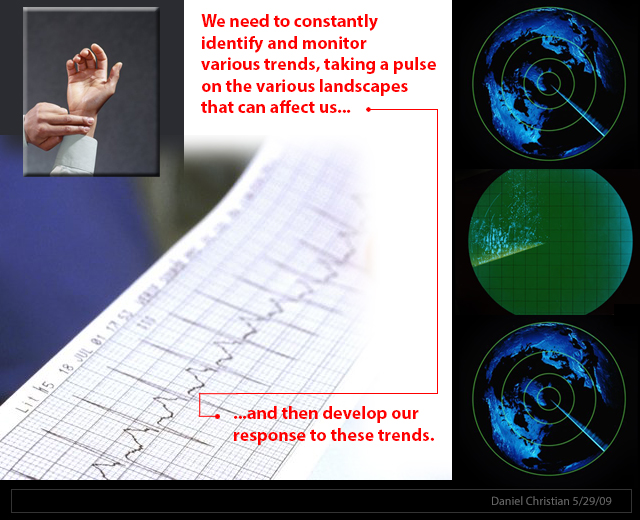
We need to constantly be pulse-checking the landscapes out there and developing scenarios and solutions to such trends


Deloitte State of AI Report 2022 calls out underachievers — from venturebeat.com by Sharon Goldman

Excerpt:

Deloitte released the fifth edition of its State of AI in the Enterprise research report today, which surveyed more than 2,600 global executives on how businesses and industries are deploying and scaling artificial intelligence (AI) projects.

Most notably, the Deloitte report found that while AI continues to move tantalizingly closer to the core of the enterprise – 94% of business leaders agree that AI is critical to success over the next five years – for some, outcomes seem to be lagging.

What is a surprise, she added, is how quickly the AI landscape is changing – to the point that what began as an every-other-year Deloitte report is now created annually. 

From DSC:
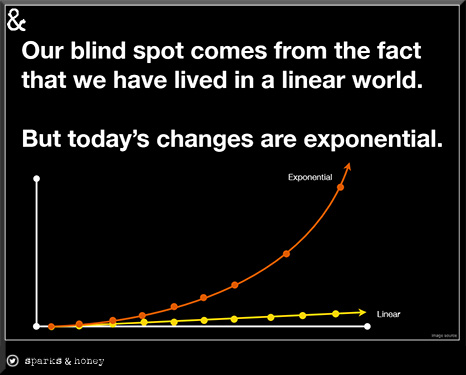
I’m reminded of some graphics here…


Also relevant/see:

‘State of AI in the Enterprise’ Fifth Edition Uncovers Four Key Actions to Maximize AI Value — from deloitte.com
Research reveals the key actions leaders can take to accelerate AI outcomes

Key takeaways

For Deloitte’s “State of AI in the Enterprise,” Fifth Edition, we surveyed 2,620 global business leaders representing six industry areas and dozens of sectors. Key findings include:

  • Ninety-four percent of business leaders surveyed agree that AI is critical to success over the next five years.
  • Seventy-nine percent of leaders say they have fully deployed three or more AI applications, compared to 62% last year.
  • There was a 29% increase in the number of respondents self-identifying as “underachievers,” suggesting that many organizations are struggling to achieve meaningful AI outcomes.
  • Top challenges associated with scaling according to respondents are managing AI-related risk (50%), lack of executive commitment (50%), lack of maintenance and post launch support (50%).
 

Higher Education in Motion: The Digital and Cultural Transformations Ahead — from er.educause.edu by John O’Brien

Excerpts (emphasis DSC):

In 2015 when Janet Napolitano, then president of the University of California, responded to what she saw as a steadily growing “chorus of doom” predicting the demise of higher education, she did so with a turn of phrase that captured my imagination and still does. She said that higher education is not in crisis. “Instead, it is in motion, and it always has been.”

A brief insert by DSC:
Yes. In other words, it’s a learning ecosystem — with constant morphing & changing going on.

“We insisted then, and we continue to insist now, that digital transformation amounts to deep and coordinated change that substantially reshapes the operations, strategic directions, and value propositions of colleges and universities and that this change is enabled by culture, workforce, and technology shifts.

The tidal movement to digital transformation is linked to a demonstrably broader recognition of the strategic role and value of technology professionals and leaders on campus, another area of long-standing EDUCAUSE advocacy. For longer than we have talked about digital transformation, we have insisted that technology must be understood as a strategic asset, not a utility, and that senior IT leaders must be part of the campus strategic decision-making. But the idea of a strategic role for technology had disappointing traction among senior campus leaders before 2020.

From DSC:
The Presidents, Provosts, CIO’s, board members, influential faculty members, and other members of institutions’ key leadership positions who didn’t move powerfully forward with online-based learning over the last two+ decades missed the biggest thing to hit societies’ ability to learn in 500+ years — the Internet. Not since the invention of the printing press has learning had such an incredible gust of wind put in its sails. The affordances have been staggering, with millions of people now being educated in much less expensive ways (MOOCs, YouTube, LinkedIn Learning, other). Those who didn’t move forward with online-based learning in the past are currently scrambling to even survive. We’ll see how many close their doors as the number of effective alternatives increases.

Instead of functioning as a one-time fix during the pandemic, technology has become ubiquitous and relied upon to an ever-increasing degree across campus and across the student experience.

Moving forward, best of luck to those organizations who don’t have their CIOs at the decision-making table and reporting directly to the Presidents — and hopefully those CIO’s are innovative and visionary to begin with. Best of luck to those institutions who refuse to look up and around to see that the world has significantly changed from the time they got their degrees.

The current mix of new realities creates an opportunity for an evolution and, ideally, a synchronized reimagination of higher education overall. This will be driven by technology innovation and technology professionals—and will be made even more enduring by a campus culture of care for students, faculty, and staff.

Time will tell if the current cultures within many traditional institutions of higher education will allow them to adapt/change…or not.


Along the lines of transformations in our learning ecosystems, also see:


OPINION: Let’s use the pandemic as a dress-rehearsal for much-needed digital transformation — from hechingerreport.org by Jean-Claude Brizard
Schools must get ready for the next disruption and make high-quality learning available to all

Excerpts:

We should use this moment to catalyze a digital transformation of education that will prepare schools for our uncertain future.

What should come next is an examination of how schools can more deeply and deliberately harness technology to make high-quality learning accessible to every learner, even in the wake of a crisis. That means a digital transformation, with three key levers for change: in the classroom, in schools and at the systems level.

Platforms like these help improve student outcomes by enhancing teachers’ ability to meet individual students’ needs. They also allow learners to master new skills at their own pace, in their own way.

As Digital Transformation in Schools Continues, the Need for Enterprising IT Leaders Grows — from edtechmagazine.com by Ryan Petersen

K-12 IT leaders move beyond silos to make a meaningful impact inside and outside their schools.According to Korn Ferry’s research on enterprise leadership, “Enterprise leaders envision and grow; scale and create. They go beyond by going across the enterprise, optimizing the whole organization and its entire ecosystem by leading outside what they can control. These are leaders who see their role as being a participant in diverse and dynamic communities.”


2022 EDUCAUSE Horizon Action Plan: Hybrid Learning — from library.educause.edu

Excerpts:

Building on the trends, technologies, and practices described in the 2022 Horizon Report: Teaching and Learning Edition, the panel crafted its vision of the future along with practical action items the teaching and learning community can employ to make this future a reality. Any stakeholder in higher education who teaches in or supports hybrid learning modalities will find this report helpful in preparing for the future of hybrid learning. The future we want is within reach, but only if we work together.

Asked to describe the goals and elements of hybrid learning that they would like to see 10 years from now, panelists collaboratively constructed their preferred future for institutions, students, instructors, and staff.

Institutions

  • Higher education is available on demand.
  • Learning is not measured by seat time.
  • Collaboration across institutions facilitates advancement.
  • College and university campuses are not the sole locations for learning spaces.

Students, Instructors, and Staff

  • Everything is hybrid.
  • Student equity is centered in all modalities.
  • Professional development is ongoing, integrated, and valued.
 

Utah’s reforms offer model for serving low-income and indigent people, report suggests — from abajournal.com by Matt Reynolds

Excerpt:

The Utah model of reform allowing nonlawyers to offer legal services could be “critical” to serving people who can’t afford them, according to a Stanford Law School study published Tuesday.

The 59-page report by the school’s Deborah L. Rhode Center on the Legal Profession offers an early look at how regulatory changes in Arizona and Utah have impacted the delivery of legal services. It also examined who is being served by innovations in those states.


Also relevant, see this upcoming webinar:

Upcoming webinar -- licensing legal paraprofessionals

Two neighboring states — Oregon and California — have recently come to different conclusions on whether to license paralegals to provide some legal services.

In July, the Oregon Supreme Court, with the support of the Oregon State Bar’s Board of Governors, approved a proposal to allow licensed paralegals to provide limited legal services in family law and landlord/tenant cases — two areas of law with large numbers of self-represented litigants. In August, the California legislature, after opposition from some lawyers’ groups, prohibited the State Bar of California from implementing, or even proposing, any loosening of existing restrictions on the unauthorized practice of law before 2025, effectively killing a proposal to permit licensing of paraprofessionals to provide limited legal services.

This webinar will explore how and why Oregon and California reached conflicting results and identify lessons learned from both experiences.

Register >>


Also relevant/see:

IAALS Panel Explores Alternative Paths to Legal Licensure — from iaals.du.edu

Redesigning Legal: Redesigning How We License New Lawyers from IAALS on Vimeo.


Also see the following items from Natalie Anne Knowlton (@natalalleycat) on Twitter


Megatrends | September 25, 2022 — by Michael Moe, Tim Juang, Owen Ritz, & Kit Royce

“The trend is your friend.” – Martin Zweig

“Follow the trend lines, not the headlines.” – Bill Clinton

“In order to be irreplaceable, one must always be different.” – Coco Chanel

“I don’t set the trends. I just find out what they are and exploit them.” – Dick Clark

Megatrends are powerful technological, economic, and social forces that develop from a groundswell (early adoption), move into the mainstream (mass market), and disrupt the status quo (mature market), driving change, productivity, and ultimately growth opportunities for companies, industries, and entire economies.


.

The metaverse is not a vertical trend; it’s a horizontal trend that will impact sectors ranging from healthcare, education, socialization, entertainment, commerce, and more.


New Directory of Innovative School Models Aims to Encourage Experimentation — from edsurge.com by Daniel Mollenkamp

Excerpt:

A new online library called the “Innovative Models Exchange,” unveiled Monday, hopes to give educators an easy place to quickly consider some possibilities. The exchange—developed by the nonprofit Transcend Education with funding from the Gates Foundation—allows schools to search through a database of “innovative” models that Transcend says are ready to be adopted by schools.

The nonprofit hopes that the database will shake up the education system.


The next chapter for Learning on YouTube — from blog.youtube by Jonathan Katzman

Next year, qualified creators can begin offering free or paid Courses to provide in-depth, structured learning experiences for viewers. Viewers who choose to buy a Course can watch the video ad-free and play it in the background.

…to help learners apply what they’ve learned, we’re introducing Quizzes — a new way for creators to help viewers test their knowledge.”

.


From DSC:
Now you’re talking! A team-based effort to deliver an Associate’s Degree for 1/3 of the price! Plus a job-ready certificate from Google, IBM, or Salesforce. Nice. 

Check these items out!


We started Outlier because we believe that students deserve better. So we worked from the ground up to create the best online college courses in the world, just for curious-minded learners like you.

The brightest instructors, available on-demand. Interactive materials backed by cognitive science. Flexible timing. And that’s just the beginning.

Outlier.org

MasterClass’s Co-Founder Takes on the Community-College Degree — from wsj.com by Lindsay Ellis
A new, online-only education model promises associate degrees via prerecorded lectures from experts at Yale, NASA and other prestigious institutions

Excerpts (emphasis DSC):

One of the founders of the celebrity-fueled, e-learning platform MasterClass is applying the same approach to the humble community-college degree—one based on virtual, highly produced lectures from experts at prestigious institutions around the country.

The two-year degrees—offered in applied computing, liberal studies or business administration—will be issued by Golden Gate University, a nonprofit institution in San Francisco. Golden Gate faculty and staff, not the lecturers, will be the ones to hold office hours, moderate virtual discussions and grade homework, said Outlier, which is announcing the program Wednesday and plans to start courses in the spring.

Golden Gate University and Outlier.org Reinvent Affordable College with Degrees+ — from prnewswire.com

Excerpt:

For less than one-third the price of the national average college tuition, students will earn an associate degree plus a job-ready certificate from Google, IBM, or Salesforce

NEW YORK, Sept. 7, 2022 /PRNewswire/ — Golden Gate University is launching Degrees+, powered by Outlier.org, with three associate degrees that reimagine the two-year degree for a rising generation of students that demand high quality education without the crushing cost. For annual tuition of $4,470 all-inclusive, students will earn a two-year degree that uniquely brings together the best of a college education with a career-relevant industry certificate.

Beginning today, students can apply to be part of the first class, which starts in Spring 2023.

“Imagine if everyone had the option to go to college with top instructors from HarvardYale, Google, and NASA via the highest-quality online classes. By upgrading the two-year degree, we can massively reduce student debt and set students up for success, whether that’s transferring into a four-year degree or going straight into their careers.”

Aaron Rasmussen, CEO and founder of Outlier.org
and co-founder of MasterClass

Outlier.org & Universities Call for Greater Credit Transfer Transparency — from articles.outliner.org

Excerpt:

“Outlier.org is working with leading institutions across the country to build a new kind of on-ramp to higher education,” said Aaron Rasmussen, CEO and Founder of Outlier.org. “By partnering with schools to build bridges from our courses into their degree programs, we can help students reduce the cost of their education and graduate faster.”


From DSC:
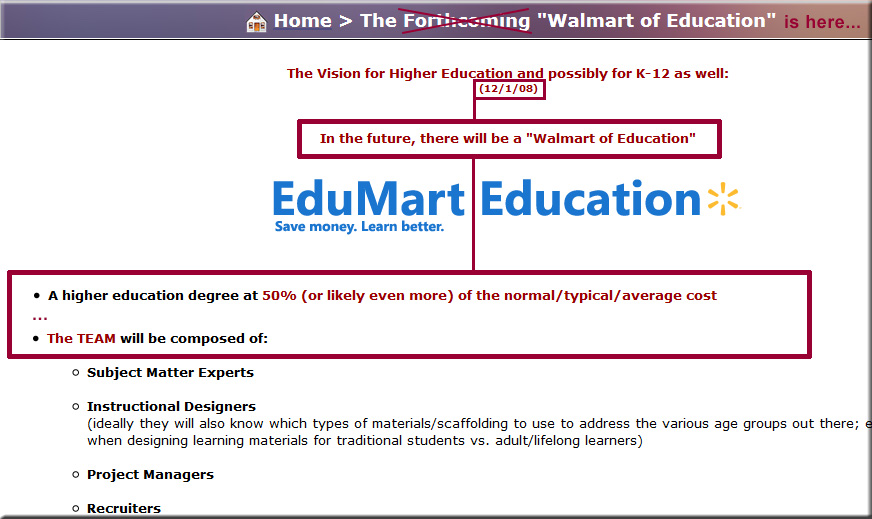
All of this reminds me of a vision I put out on my Calvin-based website at the time (To His Glory! was the name of the website.) The vision was originally called “The Forthcoming Walmart of Education” — which I renamed to “EduMart Education.”

By the way…because I’m not crazy about Walmart, I’m not crazy about that name. In today’s terms, it might be better called the new “Amazon.com of Higher Education” or something along those lines. But you get the idea. Lower prices due to new business models.

.


© 2025 | Daniel Christian