Per Adobe today (emphasis DSC):

And we’re live! Starting 9:30am pst on Adobe Live’s YouTube Channel

After years of partnering with the Creative Cloud YouTube channel to bring our community inspiration and advice, Adobe Live will be streaming to our own YouTube channel (+Behance!) starting 9/6! This gives the Adobe Live team an exciting opportunity to connect closely with YOU, our community, through tailored content, YouTube’s community tab and, of course, LIVE streams.

Make sure to subscribe to the Adobe Live channel NOW!
.

Adobe Live is now on YouTube -- as of 9-6-22


EdTech Giant Unacademy Launches 50 New Channels On YouTube To Democratise Online Education — from edtechreview.in by Shalini Pathak

Excerpt:

Unacademy, an Indian EdTech unicorn and one of the leading online learning platform, has recently launched 50 new education channels on Google-owned YouTube. The channels significantly help in increasing accessibility for millions of learners across academic and non-academic categories.

Few of these 50 channels are built on the existing content categories as offered by Unacademy. They mark Unacademy’s foray into newer terrains such as ‘Tick Tock Tax’- to simplify the direct and indirect tax concepts, and Life After IIT – a platform to crack JEE and discuss success stories of top rankers.


From DSC:
Below are some reflections based on an article entitled, Understanding learning transfer through Archwell Academies. It’s from chieflearningofficer.com and was written by Erin Donovan and Keith Keating.

Excerpt:

To capitalize on learning transfer and extend learning beyond traditional training periods, practitioners have established capability academies. According to Josh Bersin, capability academies are the evolution of traditional training and self-directed learning. Bersin posited:

Capability academies are business-driven, collaborative learning environments that facilitate learning retention. . . . Going beyond rote lessons, capability academies help companies prepare for transformation by helping employees develop complex skills and providing guidance on how to apply them in the context of the business.

The core concept of capability academies rests on the importance of collaboration between the trainers and the business. The intention is to provide learners with practice of conceptual understanding and comparative scenarios in the context and environment where they will ultimately apply their skills. Capability academies focus on providing training distinctly aligning with learners’ job responsibilities.

From DSC:
First of all, I have a lot of respect for the people that this article mentions, such as Josh Bersin and Will Thalheimer. So this article caught me eye.

It seems to me that the corporate world is asking for institutions of traditional higher education to deliver such “capability academies.” But that makes me wonder, could this even be done? Surely there aren’t enough resources to develop/deliver/maintain so many environments and contexts, right? It took Archwell, a global mortgage services outsourcing provider, an entire year to systematically design and develop such customized capability academies — just for their clients’ businesses. 

The article goes on:

The core concept of capability academies rests on the importance of collaboration between the trainers and the business. The intention is to provide learners with practice of conceptual understanding and comparative scenarios in the context and environment where they will ultimately apply their skills. Capability academies focus on providing training distinctly aligning with learners’ job responsibilities.

Context. Skills. Acquiring knowledge. Being able to apply that knowledge in a particular environment. Wow…that’s a lot to ask institutions of traditional higher education to deliver. And given the current setup, it’s simply not going to happen. Faculty members’ plates are already jammed-packed. They don’t have time to go out and collaborate with each business in their area (even with more sabbaticals…I don’t see it happening).

I’m sure many at community colleges could chime in here and would likely say that that’s exactly what they are doing. But I highly doubt that they are constantly delivering this type of customized offering for all of the businesses in each major city in their area.

I can hear those in corporate training programs saying that that’s what they are doing for their own business. But they don’t provide it for other businesses in their area.

So, what would it take for higher education to develop/offer such “capability academies?” Is it even possible?

We continue to struggle to design the ultimate learning ecosystem(s) — one(s) whereby we can provide personalized learning experiences for each person and business. We need to continue to practice design thinking here, as we seek to provide valuable, relevant/up-to-date, and cradle-to-grave learning experiences.

The problem is, the pace of change has changed. Institutions of traditional higher education can’t keep up. And frankly, neither can most businesses out there.

I keep wondering if a next-generation learning platform — backed up by AI but delivered with human expertise — will play a role in the future. The platform would offer products and services from teams of individuals — and/or from communities of practices — who can provide customized, up-to-date training materials and the learning transfers that this article discusses.

But such a platform would have to offer socially-based learning experiences and opportunities for accountability. Specific learning goals and learning cohorts help keep one on track and moving forward.


Fluid students flowing in and out of education are higher ed’s future. Here’s how colleges must adapt. — from highereddive.com by Anne Khademian
The Universities at Shady Grove’s executive director adapts the fluid fan idea reshaping the business of sports, shedding light on higher ed’s future.

We need less tweaking and more rethinking of how to deliver greater access, affordability and equity in higher education, and we must do it at scale. We need a new paradigm for the majority of students in higher education today that commits to meaningful employment and sustainable-wage careers upon completion of a degree or credential.

The challenge is the same for the business of higher education in serving future, more fluid students — and today’s nontraditional students. Many need to flow in and out of jobs and education, rather than pursue a degree in two or four years. Increasingly, they will seek to direct their educational experience toward personalized career opportunities, while stacking and banking credentials and experience into degrees.

From DSC:
Coming in and going out of “higher education” throughout one’s career and beyond…constant changes…morphing…hmm…sounds like a lifelong learning ecosystem to me.

#learningecosystems #learningfromthelivingclassroom
#highereducation #change #lifelonglearning

75% of master’s programs with high debt and low earnings are at private nonprofits — from highereddive.com by Lilah Burke
Urban Institute report undermines narrative that programs with poor student outcomes are all at for-profit colleges and in the humanities.

Although private nonprofit institutions accounted for 44% of all master’s programs in the data, they made up 75% of programs with high debt and low earnings.

Tuition increases, lower capital spending likely in store for higher ed as inflation persists, Fitch says — from highereddive.com by Rick Seltzer

The next inflation-driven worry: Rising college tuition — from washingtonpost.com by Nick Anderson and Danielle Douglas-Gabriel
Families are concerned about affordability of higher education

Spiraling rents are wreaking havoc on college students seeking housing for the fall — from by Jon Marcus
Big hikes are forcing students deeper into debt, risk pushing more out of school altogether

From DSC:
From someone who is paying for rent for a college student — along with tuition, books, fees, etc. —  this has direct application to our household. If there isn’t a perfect storm developing in higher ed, then I don’t know what that phrase means.

#costofhighereducation #inflation

HBCUs see a historic jump in enrollments — from npr.org with Michel Martin; with thanks to Marcela Rodrigues-Sherley and Julia Piper from The Chronicle for the resource

Also from that same newsletter:

What would Harvard University’s ranking be if the only criteria considered was economic mobility? According to The Washington Post, it would be 847th out of 1,320. First place would go to California State University at Los Angeles.

A New Vision for the Future of Higher Education: Prioritizing Engagement and Alignment — from moderncampus.com with Amrit Ahluwalia and Brian Kibby

Excerpt:

Change is a constant in higher ed, just as it is in the labor market. Staying up to date and flexible is more important than ever for colleges and universities, and through the pandemic, many relied on their continuing and workforce education divisions to support their agility. In fact, 56% of higher ed leaders said the role of their CE units expanded through the pandemic. 

The pandemic led to some of the biggest innovations in continuing ed in recent memory.  

Students Lobby Lawmakers to Improve College Experience for Neurodiverse Learners — from edsurge.com by Daniel Lempres

Excerpt:

Lobbying for more support for students with learning disabilities in higher education, the students called for increased funding for the National Center for Special Education Research and the Individuals with Disabilities Education Act (IDEA Act) — legislation which requires that children with disabilities be given a free and appropriate public education, and makes it possible for states and local educational agencies to provide federal funds to make sure that happens. They also encouraged lawmakers to pass the RISE Act, a bill designed to better support neurodiverse students in higher education.

What a Homework Help Site’s Move to Host Open Educational Resources Could Mean — from edsurge.com by Daniel Mollenkamp

How can leaders bridge the gap between higher ed and employers? — from highereddive.com by Lilah Burke

Dive Brief:

  • Partnerships between higher education institutions and employers can be difficult to create, often because of misalignment between the cultures, structures and values of the two groups, according to a July report from California Competes, a nonprofit policy organization focused on higher education.
  • Higher ed leaders could improve employer relations by making industry engagement an expected responsibility of both faculty and staff, said the report, which drew from 28 interviews with people at colleges and employers.
  • Robust employer engagement can strengthen enrollment and job outcomes for students, the authors argued, while also benefiting state and local economies.

Price-fixing lawsuit against 568 Group of top-ranked universities can continue, judge rules — from highereddive.com by Rick Seltzer

Termination of the Accrediting Council for Independent Colleges and Schools as an ED Recognized Accrediting Agency — from blog.ed.gov


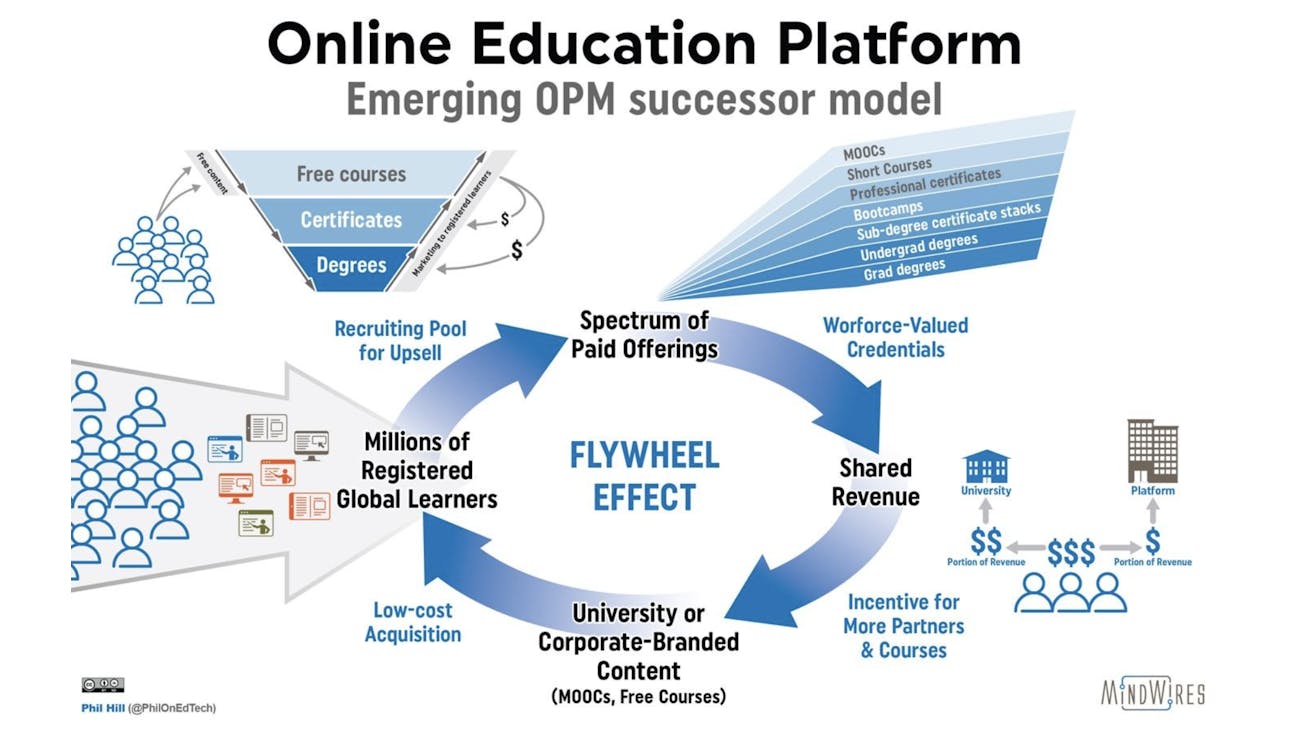
What a New Strategy at 2U Means for the Future of Online Higher Education — from edsurge.com by Phil Hill

Excerpt:

The acceleration is that 2U is going all in on the education platform strategy that started with the company’s acquisition of edX last year. The idea at the time was to rely on a flywheel effect, where edX can upsell to its tens of millions of registered learners taking free or low-cost online courses known as MOOCs, thus driving down the marketing costs required for the OPM business, while offering a spectrum of options—from free MOOCs to stackable certificates, to bootcamps and short courses, all the way to full degrees. The flywheel aspect is that the more the strategy succeeds, the more revenue is made by institutional partners and by the company, leading to more free courses and registered learners. It’s a self-reinforcing strategy that is the same one followed by Coursera.
.


2U announces layoffs and new approach to tuition-share agreements — from highereddive.com by Natalie Schwartz
The online program manager expects the restructuring will lead to about $70 million in annual cost savings.

Excerpt:

2U announced across-the-board layoffs and changes to its business strategy on Thursday, as it reorients the company around edX, a prominent MOOC platform it acquired last year.

2U officials announced the company is updating this part of the business model, saying it will offer tuition-share agreements starting at 35% of a program’s revenue — with higher rates available to colleges that want more services.


It’s Time to Rethink the ‘One Teacher, One Classroom’ Model — from edweek.org by Irene Chen & Stephanie Banchero
How to build a happier and more effective teaching force

Excerpt:

Let’s address this crisis by reenvisioning the traditional school staffing model, which has not changed in generations. We need innovative, differentiated staffing that creatively utilizes educators and plays to their strengths. This means schools must deploy adults to work collaboratively in response to the needs of individual students, rather than asking one teacher to meet the needs of all students in one classroom. This approach can address children’s specific skills gaps, while also diversifying the workforce, retaining the most effective teachers, and extending great teaching.


How will the Metaverse Influence Business and Legal Processes? — from jdsupra.com

Excerpt:

While some will be hesitant to use the metaverse and adoption is difficult to predict, it is not going away and will undoubtedly affect internal processes, business dealings, case strategy, and more. Organizations should start thinking about the possibilities now to be better prepared for future challenges. Below are some predictions on how the metaverse will influence operations, strategy, and investments across different areas of the enterprise.

Lawyers & the Metaverse — from joetechnologist.com by Elizabeth Beattie and Joseph Raczynski

Excerpt:

In a new Q&A interview, Thomson Reuters’ technologist and futurist Joseph Raczynski offers his insight about the Metaverse and how it will impact the legal industry.

I have likely spoken to thousands of lawyers over the last several years. They are extraordinarily bright, but with one limiting factor — their dedication to their craft. This means that they do not have the time to lift their heads to see what is coming. All these emerging technologies will impact their practices in some way, as well as the business of law. At a minimum, lawyers need the opportunity to focus on the big four: AI, blockchain, workflow, and the grab bag of general emerging technology. There are a multitude of places to learn about these things, but I would include some of the classics such as Google Alerts, Twitter threads on these topics, and magazines like Wired, which should be a staple for everyone.

These legal issues should be on college business officers’ radars — from highereddive.com by Rick Seltzer
A panel at the National Association of College and University Business Officers’ annual meeting covered legal questions spanning many offices on campus.

Let’s not presume that virtual hearings are the best solution in family law — from canadianlawyermag.com by John Silvester

Excerpts:

Proponents argue that virtual hearings are less expensive for clients, leading to enhanced access to justice for those who cannot afford to pay for their lawyers to travel to a courthouse and then sit and wait for hearings to commence. Sounds reasonable, right?

Not so fast.

Virtual hearings are advantageous in some scenarios, but there are at least three reasons why moving to an almost entirely virtual legal world may prove problematic.

LawNext Podcast: CALI Executive Director John Mayer on Using Tech to Advance Legal Education and Access to Justice — from lawnext.com by Bob Ambrogi and John Mayer

Excerpt:

In this episode of LawNext, Mayer joins host Bob Ambrogi to discuss the history and mission of CALI and to share his thoughts on the use of technology to enhance legal education. They also talk about how and why A2J Author was developed and how it is used by courts and legal services organizations to help those who are without legal representation. Mayer also shares his thoughts on the future of innovation in law and on the future of CALI.

Louisiana Approves Virtual Custody Services and Proposes Virtual Currency Business Licensing Rules — from natlawreview.com by Moorari Shah and A.J. S. Dhaliwal

Excerpt:

Recently, the Louisiana lawmakers and regulators have taken steps to legalize operations in the state involving virtual currencies. On June 15, the Louisiana governor signed a bill that, effective August 1, 2022, will allow financial institutions and trust companies to provide virtual currency custody services to their customers as long as they satisfy certain requirements on risk-management and compliance. On June 20, the Louisiana Office of Financial Institutions (OFI) published proposed rules on licensing and regulation of virtual currency businesses in the state pursuant to the Louisiana Virtual Currency Business Act, which went into effect on August 1, 2020.


From DSC:
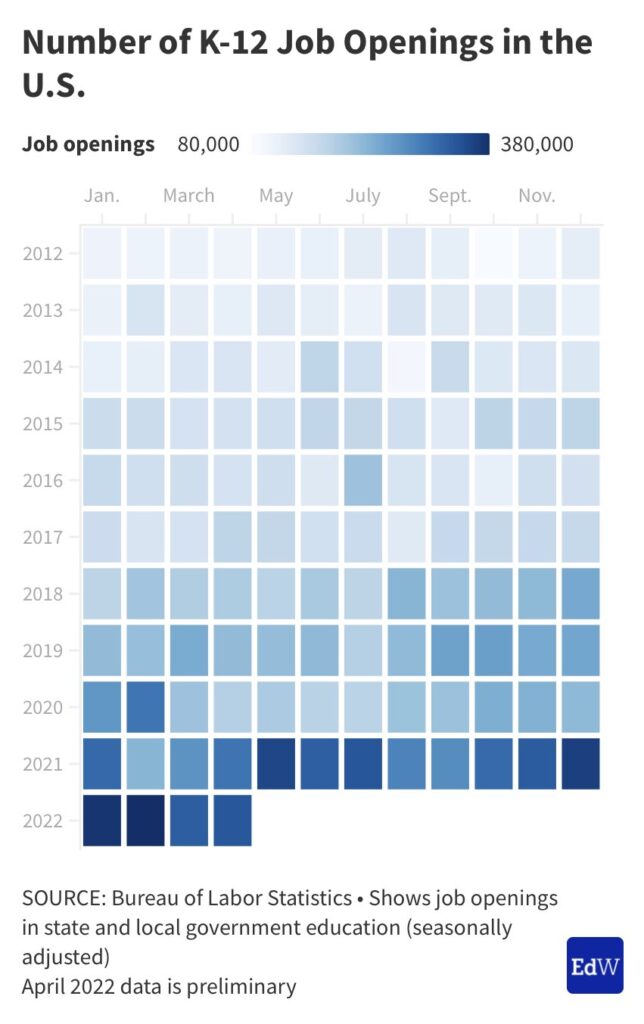
Is the use of virtual instructors going to be used more to fill vacancies within K12? Hmmm…time will tell. 

By the way, I think online-based learning works for many people, but certainly it isn’t for everyone (even with the likely unfair assumption that everyone has Internet access and the equipment/setup that they need). From what I’ve observed, it works best for very disciplined, motivated students — they need to be a bit more independent in their learning. But school systems should have backup plans in place if the exodus continues.


Education tech companies bring virtual teaching to the table as solution to teacher shortage — from thedenverchannel.com by Chloe Nordquist

Excerpts:

Education technology companies like Elevate K-12, which is a live streaming instruction platform, are growing. Especially in areas where hiring a teacher can be tough.

The company is seeing more interest from teachers in joining their platform. One is for schedule flexibility.


Also relevant/see:

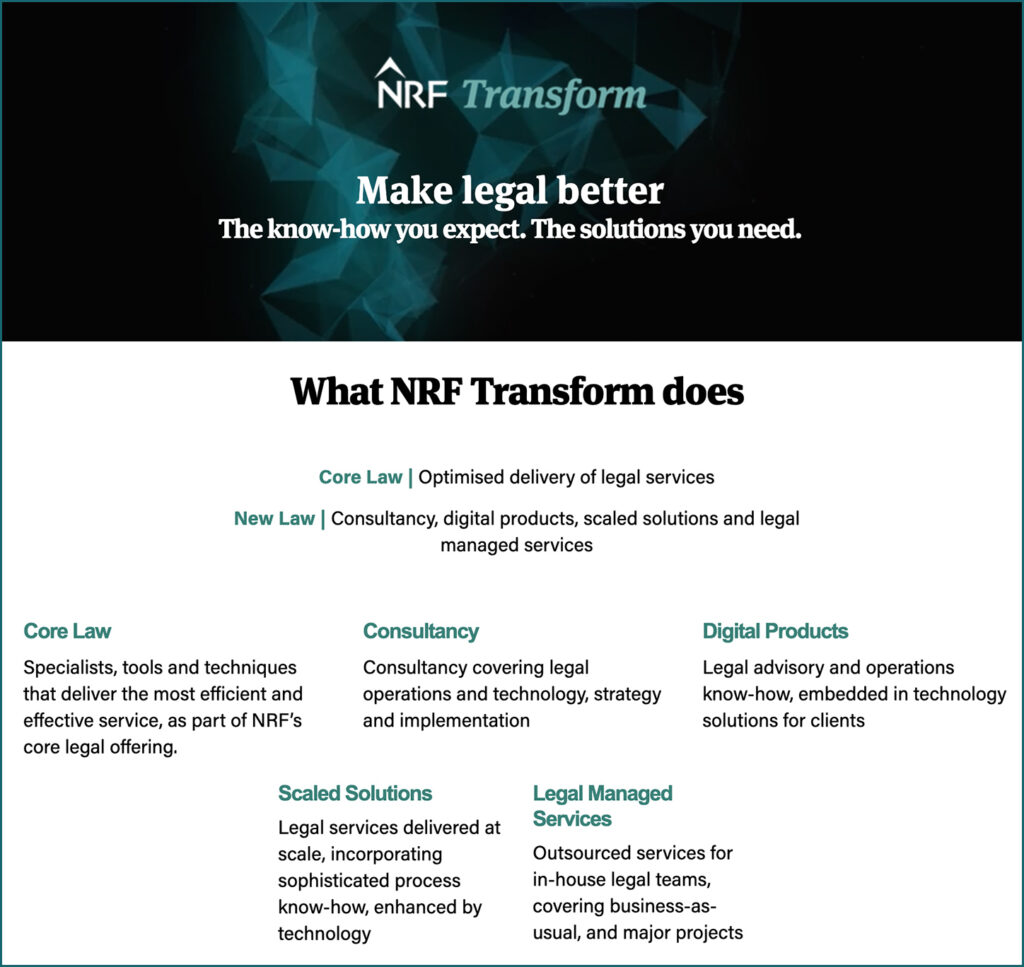
What is Norton Rose Fulbright’s LX Studio? — from artificiallawyer.com

Excerpts:

‘From tiny acorns, mighty oak trees grow’ so the saying goes, and it’s fair to say that US-based LX Studio, the new innovation project of global firm Norton Rose Fulbright (NRF), is very much still an acorn – but it has plenty of potential.

Artificial Lawyer spoke to Jeff Cody, Managing Partner for the US side of 3,700-lawyer NRF, which was formed by the merger of the UK’s Norton Rose and America’s Fulbright & Jaworski in 2013, to find out some more.

But, with a more optimistic outlook one might say that this is a beginning; and that although the US is home to many pioneering legal tech companies and ALSPs, the reality is that few law firms in the US have dedicated innovation groups which mirror the full range of what NRF has in the UK, for example.

NRF Transform -- global legal operations


The Post-Covid New Normal is Looking Bipolar — from philonedtech.com by Phil Hill

Excerpt:

I think it is important to deal with evidence on enrollment trends on their own terms and not just in the context of Covid recovery, and not just based on pre-Covid trends. The data we’re seeing recently have some big implications for the health of institutions, for online and hybrid education, and for alternative educational programs (and even alternative scheduling of programs).

The observation that higher education fortunes differ between elites and more open access institutions is not new, but what is becoming clear is that increasing separation cannot be explained away by Covid.


Also relevant/see:

Supporting Students and Faculty in the New Normal — from campustechnology.com by Thomas Hoover, Richard Shrubb, Donna Johnson
As classrooms evolve to accommodate the flexibility and innovation of new learning models, it’s important to provide ample training and resources for all constituents. Here are three key areas to consider.


Metaverse, NFTs, Web3 And Virtual Land In The Sandbox — from forbes.com by Bernard Marr

Excerpt (emphasis DSC):

So, what does Borget – undeniably one of the pioneers of the concept – think the metaverse actually is?

“For us, metaverse is really this myriad of worlds,” he tells me during our recent webinar conversation, “that users can experience through an avatar that becomes a 3D representation of themselves.”

These avatars are the key to unlocking “all sorts of new experiences … more creative, more immersive, unlike what we’ve seen before with traditional virtual worlds, where users can already socialize … here, what’s important is the ability of users to truly own their own identity, own their own belongings, digital assets, virtual land, houses … and are able to move that identity from one world to another without being constrained.”

“There will be millions of virtual worlds, places where users can take their avatars,” Borget continues. “What’s important is this ability to move from one to another while … keeping all their content they create in one and using it in others.”


Also see:

Metaverse Opportunities, risks and policy implications — from europarl.europa.eu by the European Parliamentary Research Service (EPRS)
Metaverse Opportunities, risks and policy implications

Summary:

One of the most talked about concepts in modern technology, the metaverse can be described as an immersive and constant virtual 3D world where people interact by means of an avatar to carry out a wide range of activities. Such activities can range from leisure and gaming to professional and commercial interactions, financial transactions or even health interventions such as surgery. While the exact scope and impact of the metaverse on society and on the economy is still unknown, it can already be seen that the metaverse will open up a range of opportunities but also a number of risks in a variety of policy areas.

Major tech companies are scaling up their metaverse activities, including through mergers and acquisitions. This has given impetus to a debate on how merger regulations and antitrust law should apply. Business in the metaverse is expected to be underpinned largely by cryptocurrencies and non-fungible tokens, raising issues of ownership, misuse, interoperability and portability. Furthermore, the huge volume of data used in the metaverse raises a number of data protection and cybersecurity issues (e.g. how to collect user consent or protect avatars against identity theft).

There is considerable scope for a wide range of illegal and harmful behaviours and practices in the metaverse environment. This makes it essential to consider how to attribute responsibility, inter alia, for fighting illegal and harmful practices and misleading advertising practices, and for protecting intellectual property rights. Moreover, digital immersion in the metaverse can have severe negative impacts on health, especially for vulnerable groups, such as minors, who may require special protection. Finally, the accessibility and inclusiveness of the metaverse remain areas where progress has still to be made in order to create an environment of equal opportunities.


Also see the following from the Legal Talk Network — with Dennis Kennedy and Tom Mighell

  • Metavisting the Metaverse – Dennis and Tom plunge into the metaverse—its trends, current tech, and possibilities for the future.
  • The Wild World of NFTs – Dennis and Tom dive into these unique digital objects (art, video, and much more) and outline the issues surrounding their current hype and value in the real world.


Denis Kennedy and Tom Mighell -- run the Legal Talk Network podcast


Conduct Your Own Virtual Orchestra In Maestro VR — from vrscout.com by Kyle Melnick

Niantic moves beyond games with Lightship AR platform and a social network — from theverge.com by Alex Heath
The maker of Pokémon Go is releasing its AR map for other apps and a location-based social network called Campfire

Excerpt:

Niantic made a name for itself in the mobile gaming industry through the enduring success of Pokémon Go. Now the company is hoping to become something else: a platform for other developers to build location-aware AR apps on top of.

disguise launches Metaverse Solutions division enabling next-level extended reality experiences — from etnow.com

Excerpt:

UK – disguise, the visual storytelling platform and market leader for extended reality (xR) solutions has launched its Metaverse Solutions division to enable the next generation of extraordinary live, virtual production and audiovisual location-based experiences for the metaverse.

The recent rise of real-time 3D graphics rendering capabilities in gaming platforms means that today’s audiences are craving richer, more immersive experiences that are delivered via the metaverse. While the metaverse is already defined as an $8 trillion dollar opportunity by Goldman Sachs, companies are still finding it challenging to navigate the technical elements needed to start building metaverse experiences.

On this item, also see:

disguise.one

disguise launches Metaverse Solutions division — from televisual.com by

Excerpt:

“Our xR technology combines key metaverse building blocks including real-time 3D graphics, spatial technologies and advanced display interfaces – all to deliver a one-of-a-kind gateway to the metaverse,” says disguise CXO and head of Metaverse Solutions Alex Wills.


Shifting Skills, Moving Targets, and Remaking the Workforce — from bcg.com by Matt Sigelman, Bledi Taska, Layla O’Kane, Julia Nitschke, Rainer Strack, Jens Baier, Frank Breitling, and Ádám Kotsis; with thanks to Ryan Craig for this resource
Our analysis of more than 15 million job postings reveals the future of work.

Excerpt (emphasis DSC):

Jobs do come and go, but even more significantly, jobs change. Day by day, skill by skill, the basic building blocks of a job are repositioned, until the role looks much different than it did just five years ago. Yet the job title—and the worker in the job—may remain the same.

But even company leaders may not realize how profoundly and rapidly the jobs throughout their business and industry are evolving. A comprehensive look at job listings from 2016 through 2021 reveals significant changes in requested skills, with new skills appearing, some existing skills disappearing, and other existing skills shifting in importance.

The challenge for employers and employees alike is to keep up—or, better yet, to get ahead of the trends.

Four Big Trends
We see four big trends in skill change:

    • Digital skills, like technical fluency and abilities including data analysis, digital marketing, and networking, aren’t limited to jobs in IT.
    • Soft skills, like verbal communication, listening, and relationship building, are needed in digital occupations.
    • Visual communication has become increasingly important even outside of traditional data occupations. Experience with tools such as Tableau, MS Power BI, and Adobe Analytics is in high demand.
    • Social media skills, such as experience with Facebook, LinkedIn, and Adobe Photoshop, are in demand in the current media climate.

Also from Ryan Craig, see:

How to Really Fix Higher Ed — from theatlantic.com by Ben Sasse
Rather than wiping the slate clean on student debt, Washington should take a hard look at reforming a broken system.

Excerpts:

Most young Americans never earn a college degree, and far too many of those who do are poorly served by sclerotic institutions that offer regularly overpriced degrees producing too little life transformation, too little knowledge transmission, and too little pragmatic, real-world value.

Far too often, higher education equates value with exclusivity, and not with outcomes. The paradigmatic schools that dominate higher-ed discussions in the pages of The New York Times, The Wall Street Journal, and The Washington Post measure themselves by how many high-school seniors they reject, rather than by how many they successfully launch, by how much they bolster the moral and intellectual development of the underprivileged, or even by a crude utilitarian calculus such as the average earnings of their recent graduates.

Each of these changes will depend on breaking up the accreditation cartels. College presidents tell me that the accrediting system, which theoretically aims to ensure quality and to prevent scammers from tapping into federal education dollars, actually stifles programmatic innovation inside extant colleges and universities aiming to serve struggling and underprepared students in new ways. 


One last item here:

Learning Should Be Like Cooking — from linkedin.com by Cali Koerner Morrison

Excerpt:

We need systems of record that are learner-owned, verifiable and travel across all types of learning recognition. 1EdTech is making great strides in this direction with the comprehensive learner record and the T3 Innovation Network with the LEROpen Skills Network and Credential Engine are making great strides to level the playing field on defining all elements of skills-based learning and credentialing. We need pathways that help guide learner-earners through their career progression so they are in a constant swirl of learning and earning, leveling up with each new achievement – from a microcredenial to a master’s degree.

 
© 2025 | Daniel Christian