WhitherLiberalArtsSymposium-eCampusNewsSpring2015


Liberal arts education is unique in its ability to develop independence of thought, to nurture wisdom, and to build both a deep empathy for others and broad context for decision making in uncertain situations.

— Gunnar Counselman


8 steps to 7 billion liberal arts degrees — from ecampusnews.com by Gunnar Counselman, the founder/CEO of Fidelis Education, a Learning Relationship Management (LRM) System.

Excerpt (emphasis DSC):

So being on the offensive about the liberal arts means reframing the conversation from a defense for the 40M people who participate in it today. Being on offensive means abandoning all tendency toward Ludditism and instead getting creative about using technology to scale effective learning in the liberal arts and pure sciences to the other 99.6 percent of people on the planet. And being on the offensive means we must stop worrying about jobs. There will be many more jobs educating 99.6 percent of the world’s population than there are educating the .4 percent (the percentage of the world population currently receiving a liberal arts degree), no matter how efficient we become with technology.

…

Let’s observe the ingredients of liberal education as they are today at places like Middlebury, Smith, Sarah Lawrence, and Union, honors programs at state universities, then imagine what it would look like scaled to 7 billion people.

…

This analysis makes it clear that liberal education is a relationship-generation machine built around personalized content. So our technology has to be a relationship-management machine, purpose-built to make sure that every single person in a learning community has peers, mentors, and advisors to collaborate to build strong learning pathways of content.


From DSC:
Though Gunnar likely has his LMS-influenced lenses on while sharing his thoughts here (as I often have my tech-tinted lenses/perspectives on as well), he still makes some valid points.  Those who support the liberal arts need “to stop hunkering down in a defensive posture. It’s time to go on the offensive…” he asserts.  I would second his thought that we need to creatively employ technology to help the liberal arts thrive in the 21st century.

In fact, I’m beginning to wonder more and more if online/digitally-based learning will turn out to be the very thing that saves the liberal arts as we make our way through the 21st century.  Getting a liberal arts degree at $5K a year is one thing.  Getting it at a price tag of $25K-$50+K per year is another thing.  When prices rise like that, expectations change.  The expectations of a solid ROI come to mind much more as the prices increase (and I would even use the word requirements for many of us now, not just expectations). 

If we want the liberal arts to continue to exist outside the top 5% of the income earners out there, we must find ways to bring the prices down again. The best way I know to do that is to go online — at least in part.  Setting up a new server or asking one’s vendor(s) to allocate more storage, bandwidth, applications, user accounts, etc. is far cheaper than maintaining physical campuses or developing new buildings on campuses across the land.  And you can still have excellent relationships, interactions, and communications via online/digitally-based means.

Also see:


Quote from Teaching to Learning: A New Paradigm for Undergraduate Education by Robert B. Barr and John Tagg (1995)


Buckminster Fuller used to say that you should never try to change the course of a great ship by applying force to the bow. You shouldn’t even try it by applying force to the rudder. Rather you should apply force to the trim-tab. A trim-tab is a little rudder attached to the end of the rudder. A very small force will turn it left, thus moving the big rudder to the right, and the huge ship to the left. The shift to the Learning Paradigm is the trim-tab of the great ship of higher education. It is a shift that changes everything.


So I would like to credit Buckminster Fuller with the idea of the trim-tab; as I put the following graphic together back in January 2014, I could not recall who had applied the words in that way…now I remember. (Perhaps applying the concept goes back prior to Buckminster, I’m not sure.)


TheTrimtabInHigherEducation-DanielChristian


And while I’m thinking of appropriate graphics for higher education, I’ll post this one that I did back in November of 2013 as well:


RealEstate-HigherEd-DanielSChristian11-1-13


Also see:

  • Uber, badging and higher ed — from by Joshua Kim
    Excerpt (emphasis DSC):
    What will happen to legacy higher education providers when the ownership society ceases to exist? We are in the midst of a reordering of our material world, a shift away from owning to renting, buying to consuming. How will this shift impact higher education?
    …
    The question is how should higher education evolve in the age of Uber and Airbnb? Is what we do in higher education really about credentialing, or is it about learning and individual development? Can we figure out ways that we can be more flexible, agile, and responsive – while not jettisoning our most closely cherished values and practices?Is higher education like the legacy taxi companies, with the taxi medallion analogous to the diploma?  Could the value of diplomas drop as quickly as the price of taxi medallions have been falling if badges ever take off?Can we experiment with micro-credentials and smaller units of educational delivery than the traditional 4-year degree?How will we adapt if alternative credentials such as badging gain widespread currency in employment markets?

    Could we see badges as an opportunity to offer educational opportunities throughout the full lifetime of learner, rather than as something that precedes (and ends with) employment?


Also see:


NPR-KevinCarey-FreeHigherEd-March2013


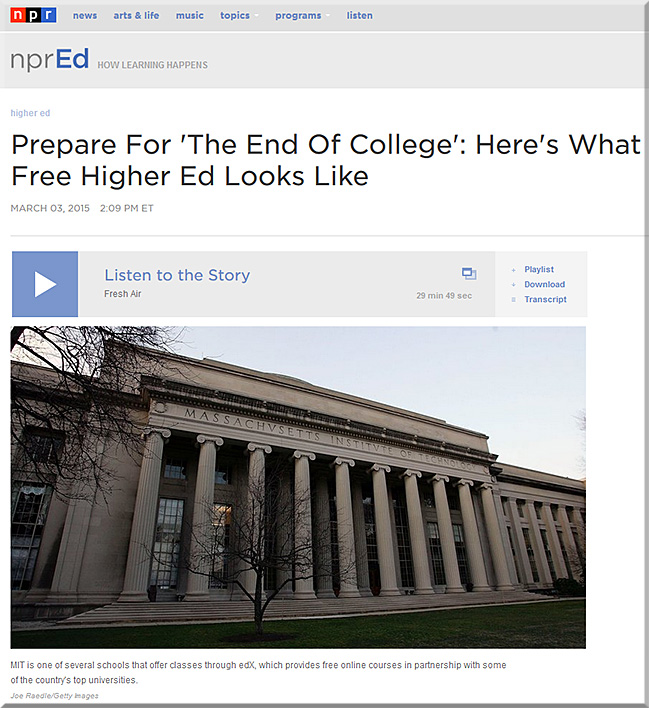
Interview: Kevin Carey, author of ‘The End Of College’ — from NPR Ed

Excerpt:

But author Kevin Carey argues that those problems might be overcome in the future with online higher education. Carey directs the Education Policy Program at the New America Foundation. In his new book, The End of College: Creating the Future of Learning and the University of Everywhere, Carey envisions a future in which “the idea of ‘admission’ to college will become an anachronism, because the University of Everywhere will be open to everyone” and “educational resources that have been scarce and expensive for centuries will be abundant and free.”

…

On the term “University of Everywhere”
The University of Everywhere is the university that I think my children and future generations will attend when they go to college. … They will look very different in some ways, although not in other ways, from the colleges that I went to and that many of us have become familiar with. This will be driven by advances in information technology: So whereas historically you went to college in a specific place and only studied with the other people who could afford to go [to] that place, in the future we’re going to study with people all over the world, interconnected over global learning networks and in organizations that in some cases aren’t colleges as we know them today, but rather 21st-century learning organizations that take advantage of all of the educational tools that are rapidly becoming available to offer great college experiences for much less money.


From DSC:
Though Kevin discusses various items in this interview, I wanted to focus on the topic of online learning and leveraging the Internet for lifelong learning.

Whether out of fear, self-preservation, or for some other reasons, there continues to exist within higher education a group of people who still discount the power of the Internet to offer opportunities for learning throughout one’s lifetime. They poo-poo online learning for example, looking down upon it and assert that such methods can’t measure up to the traditional face-to-face based learning experiences. Never mind that the majority of these folks — it not all of them — have never taught online nor have they taken a well-executed, formal online-based course. They don’t realize how far various technologies have come to provide powerful, effective, highly-convenient learning experiences. They just continue to poo-poo it:

Only 27.6% of chief academic officers reported that their faculty accepted online instruction in 2003. This proportion showed some improvement over time, reaching a high of 33.5% in 2007. The slow increase was short-lived, however. Today, the rate is nearly back to where it began; 28.0% of academic leaders say that their faculty accept the “value and legitimacy of online education.”

Grade Level: Tracking Online Education in the
United States by I. Elaine Allen and Jeff Seaman (2015)

Meanwhile, the world continues to change, pressing needs continue to amass, technologies continue to emerge and morph, and many outside of higher ed are starting to care less and less about what those stuck in traditional higher ed even have to say. They’re beginning to design other alternatives. See below for some examples.

With that said, there’s also a sizable group of us who are working hard to innovate and to leverage the power of the Internet — who seek to reduce the price of obtaining a degree, to make quality education more affordable and accessible to the masses, and who seek to provide a balance of the liberal arts/foundational skills with the skills that are needed out in the workplace.  Also see below for examples of this.


DSC:  I write these reflections down to urge those of us working within higher education NOT to be like the Smith Coronas of the world, NOT to be like the Blockbusters and Kodaks of the world — who, to their very dying day, clutched tightly to their beliefs/strategies/business plans, not seeing the tidal waves that were approaching them.


————–


The New Normal — from edtechdigest.wordpress.com by Victor Rivero
A dearth in practical technology skills calls for an online boot camp approach.

Excerpt:

The ecosystems of many companies are changing as baby boomers retire and workplaces are filled with a strange and not fully functioning blend of digital immigrants, with fresh new academic graduates. In many cases these graduates have invested considerable time and money in traditional offline learning and have come out overqualified yet drastically under skilled.
…
Many people who make the switch are ready for change and want it to happen quickly. Online training through technology boot camps for example, means they can pick up key technology skills, and as a result make a total career change; transitioning from being unemployed to becoming a busy productive freelancer in a matter of months. As a result, offline learning is losing ground while online learning is gaining traction by the second.


From DSC:
Can those of us working within higher ed offer such bootcamps?

Doing so would not only help learners of all ages but would also create new sources of (sorely-needed) revenue. Perhaps these sorts of bootcamps shouldn’t have to be vetted through the normal committees and mechanisms — as doing so will surely keep us from providing the level of responsiveness as the increasingly-fast-paced world now requires. Perhaps we leave those decisions up to the relevant, knowledgeable faculty members who can then team up with innovative staff and administrators to create and deliver these offerings.


————–


Udacity kicks off enrollment for its Swift-focused iOS developer ‘nanodegree’ — from techcrunch.com by Darrell Etherington

Excerpt:

If you’re looking for a way to gain the skills necessary to get a gig developing for iPhone and iPad, but unwilling to commit to a full-time college or university schedule, Udacity might have the answer. The online education platform debuted something called a “nanodegree” last year, and enrollment for the iOS developer edition of the same just opened to applicants today. Enrollment is open to anyone willing to spend $200 per month to participate (with a one-week free trial included) and closes at the end of March 10.


————–


IDEO Futures

C-Suite TV

Yyieldr

Lessons Go Where

Class Do

NYC Data Science Bootcamp

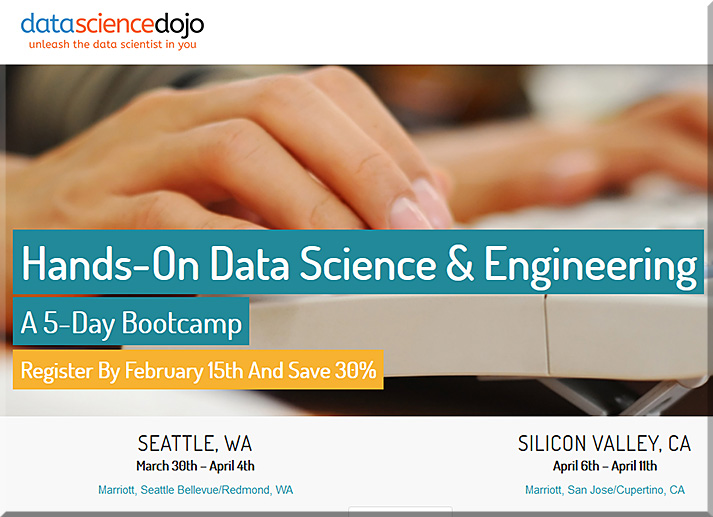
Hands-On Data Science & Engineering: A 5-Day Bootcamp

User Experience Design Immersive — A 10-Week, Full-Time Career Accelerator in Boston

Flatiron School

Python Programming for Beginners — set your own price

Eleven Fifty

Cybrary.it


————–


Re-imagining Learning & Credentialing in a Connected World — from etale.org by Bernard Bull

Excerpt (emphasis DSC):

What happens when we don’t think of these as three disconnected and unrelated learning pathways? What if we see this as representative of a city or region in which one travels on a lifelong learning journey? What possibilities does that create for us? Consider a model where credentials can be provided as people demonstrate competence through any of these stops along the way, whether it is the weekend workshop, the self-guided tour, the self-study stop, or a formal course. This is one of the interesting and exciting possibilities of micro-credentials and digital badges. Their affordances give us a greater ability to imagine such contexts, as evidenced by the cities of learning initiatives.


Screen Shot 2015-03-04 at 6.12.26 AM


Citiesoflearning


————–


ACE and Blackboard unveil research on alternative pathways to degree completion — from acenet.edu
Papers on Credit for Prior Learning and Competency-Based Education Practices to be Released

Excerpts:

New research released [on 2/20/15] will shed light on how two approaches to creating alternative pathways to college graduation for post-traditional students are working.
…
The first paper is “Credit for Prior Learning: Charting Institutional Practice for Sustainability,” which identifies and addresses some of the cultural barriers and successful strategies to institutions incorporating CPL.
…
The second paper is “The Currency of Higher Education: Credits and Competencies,” which explores the challenges in adapting the traditional credit hour to an information-age economy that relies on greater flexibility and productivity.


————–


Harvard Business School hopes to fundamentally change online education with its new $1,500 pre-MBA program — from businessinsider.com.au by Richard Feloni

Excerpt:

This week, Harvard Business School launched an innovative new online education program to the public that it thinks is so far ahead of free online courses that it’s worthy of a $US1,500 price tag.

The 11-week pre-MBA program called CORe accepts about 500 students and is taught in the school’s signature case-study method. The first official session started on Feb. 25, and applications are open for spring and summer sessions.

CORe is the flagship offering from HBS’s new digital platform, HBX, which aims to become a full-fledged branch of the school rather than a place to dump video recordings of classroom lectures.


————–


Constructionism 3.0 — from steve-wheeler.blogspot.com

Excerpt (emphasis DSC):

Listening to MIT’s Vijay Kumar speaking is always informative. Kumar has vast experience in research in online and digital learning environments, and he conveys his knowledge in an accessible style. He was keen to argue that the future of education has two fundamental characteristics – open and digital. His previously published book Opening Up Education explains the first in plenty of detail, but the second, digital, was uppermost in his keynote presentation at ELI 2015, the Saudi Arabian premier e-learning event. He said that it is at the intersection of digital and open that learning innovation occurs, and that education will be transformed if attention is paid to them both.


————–


Excerpts (emphasis DSC):

There are 37 million Americans like Joe who have some college but no degree. Many of them, like Joe, need to re-skill to be able to make a living. Many of them don’t have the time or money to be able to access a traditional certificate or degree program, even if it is online. In the language of disruption, they are non-consumers of traditional certificate and degree programs.
…
This emerging class of asynchronous online courses, both paid and free, is doing something similar by targeting primarily non-consumers—those not considering formal higher education (either again or for the first time). But these non-consumers are now improving their skills one competency at a time and certainly consuming education.
…
Traditional institutions of higher education are unlikely to fill this demand. Their institutions were not built to update and develop curriculum and short-term programs rapidly. Those best equipped to teach may be practitioners and real-world experts using online platforms that allow them to reach anyone instantly.
…
This is the sharing economy of education. Adults can choose the competencies they need, from pivot tables in Excel to training a new puppy, and learn them when they need them online, no longer tied to academic calendars or seminar dates.


————–


HEDLINE: Udemy’s Online Course Millionaires — from edukwest.com by Kirsten Winkler

Excerpt:

The top three Udemy instructors are currently:

Web Development – Rob Percival
Earnings: $2.8 million
Students: 120,000

Web Development – Victor Bastos
Earnings: $900,000
Students: 52,000

Personal Development – Alun Hill
Earnings: $650,000
Students: 47,000


————–
 

SchoolKeep-Oct2014


————–


LoudCloud Systems and FASTRAK: A non walled-garden approach to CBE — from mfeldstein.com by Phil Hill

Excerpt:

As competency-based education (CBE) becomes more and more important to US higher education, it would be worth exploring the learning platforms in use. While there are cases of institutions using their traditional LMS to support a CBE program, there is a new market developing specifically around learning platforms that are designed specifically for self-paced, fully-online, competency-framework based approaches.
…
…my interest here is not merely to review one company’s products, but rather to illustrate aspects of the growing CBE movement using the demo.


————–


As a whole new kind of college emerges, critics fret over standards — from hechingerreport.org by Matt Krupnick
Competency education offers credit for experience, but who decides? Critics worry whether competency-based education is growing too fast for standards to be set.


————–


Are prestigious private colleges worth the cost? — from The Wall Street Journal by Douglas Belkin
A high-school senior, a recruiting manager from Deloitte and a college professor weigh in

From DSC:
Even the very presence of this article in the Wall Street Journal should greatly concern those of us within higher education and this increasingly-common question should elicit a response at each of our institutions. It illustrates the pendulum swinging away from the strong public support of higher ed. Such support is weakening, as the price of higher ed has increased. And similar to the line in Jurassic Park, people will find a way.  If they can’t afford traditional higher education, alternatives are sure to appear. Several of the aforementioned items bear witness to this fact.


————–


How Google and Coursera may upend the traditional college degree — from brookings.edu by

Excerpt:

Recently, the online education firm Coursera announced a new arrangement with Google, Instagram and other tech firms to launch what some are calling “microdegrees” – a set of online courses plus a hands-on capstone project designed in conjunction with top universities and leading high-tech firms. Coursera is one of America’s leading MOOC developers (Massive Open Online Courses).
…
Why does this announcement suggest such a shakeup is likely? Several reasons. Here are just four:

  • MOOCs are moving from novel sideshow to serious competition.
  • The partnership between online education and employers is likely a game-changer.
  • Accreditation as a restriction on competition is eroding.
  • Microdegrees are likely the pathway to customized degree programs.


Also see:

Top companies work with university partners to help create capstone projects with real world applications — from blog.coursera.org

Excerpt:

Experts at top companies like Google and Instagram have joined Coursera to help develop the final projects — called “Capstones” — for Coursera Specializations.

Combining a curated series of courses with a final Capstone Project, Specializations help you master new skills with the best of university teaching and the real-time market perspective of top industry partners. Hundreds of thousands of learners have enrolled in Specializations since their launch in January 2014.


But partnerships like Coursera’s include employers actually certifying groups of courses as meeting industry’s standards for skills and knowledge – essentially an end-run around traditional accreditation as a measure of quality.


Also see:


From DSC:

First of all, that piece about the end-around traditional accreditation should make those of us working within higher ed veeeeerrrrry nervous — and much more responsive — as accreditation has been what’s kept traditional institutions of higher ed in the game. If that goes, well…hmmm…things could get very interesting.

Secondly, those who talk of the demise of MOOCs are waaayyy too premature in their assessment/conclusion. Technologies and vendors such as IBM (Watson), Apple (Siri), Google (Deepmind), and Microsoft (Cortana and Azure Machine Learning) could bake their products into MOOCs. Also, what happens if vendors involved with developing personalized learning platforms and/or those vendors specializing with big data start approaching MOOC providers? (See Will micro-credentialing be an example of the use of big data in education and training?) The resulting offerings could have an enormous impact on how people learn and make a living in the future. Again, if those types of technologies get baked into MOOCs, I’m pretty sure that people won’t be discounting MOOCs any longer.

Also, it’s because of items like those mentioned above that sometimes make me wonder if online education and digitally-related delivery mechanisms are what will save the liberal arts.  People could pick up courses in the liberal arts throughout their lifetimes — obtaining degrees…or not. (As a brief aside, I wonder to what extent faculty members will develop their own brands.)  Anyway, it’s getting to the point that many people can’t afford the campus experience.  But could they afford something online…? It could be…depending upon the pricing and associated business models involved. My guess is that those institutions who practice a team-based approach will survive and thrive — if they keep a steady eye on their pricing. 


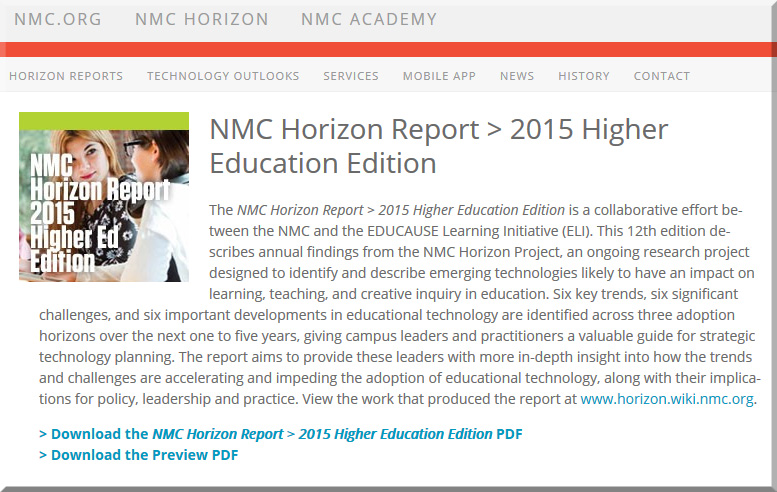
NMC Horizon Report > 2015 Higher Education Edition — from nmc.org

Excerpt:

What is on the five-year horizon for higher education institutions? Which trends and technologies will drive educational change? What are the challenges that we consider as solvable or difficult to overcome, and how can we strategize effective solutions? These questions and similar inquiries regarding technology adoption and educational change steered the collaborative research and discussions of a body of 56 experts to produce the NMC Horizon Report: 2015 Higher Education Edition, in partnership with the EDUCAUSE Learning Initiative (ELI). The NMC Horizon Report series charts the five-year horizon for the impact of emerging technologies in learning communities across the globe. With more than 13 years of research and publications, it can be regarded as the world’s longest-running exploration of emerging technology trends and uptake in education.


NMCHorizonReport-2015


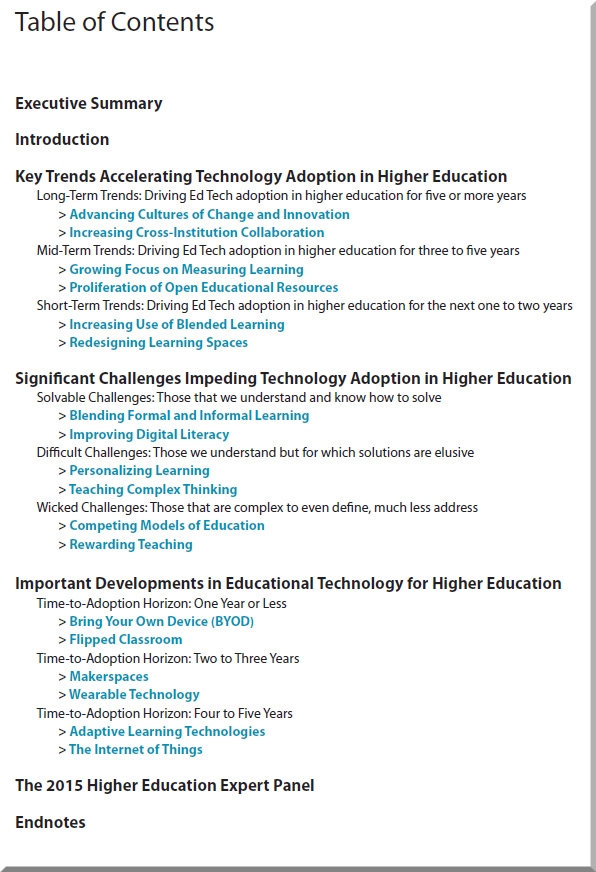
NMCHorizonReport-2015-toc


3 things academic leaders believe about online education — from chronicle.com by Steve Kolowich; with thanks to Mr. Rob Bobeldyk, Assistant Director Teaching & Learning, Calvin Information Technology, for the heads-up on this article

Excerpt (emphasis DSC):

The Babson Survey Research Group released its annual online-education survey on Thursday. The Babson surveyors, Jeffrey Seaman and I. Elaine Allen, have been tracking online higher education since 2002, soliciting responses from chief academic officers at thousands of institutions.

You can read this year’s report, based on a survey conducted in 2014, here. But if you don’t have the time, here are three things academic leaders believe about online education:

  1. Online education has become mission-critical, even at small colleges.
  2. “Hybrid” courses are at least as good as face-to-face courses.
  3.  Most professors still don’t think online courses are legit.


Also, an excerpt from the press release:

Babson Study: Distance Education Enrollment Growth Continues, But at Slowest Rate Ever
Multi-year trend shows growth in online enrollments is moderating, yet outpacing overall higher ed enrollments.

(Wellesley, MA) – The 2014 Survey of Online Learning conducted by the Babson Survey Research Group and co-sponsored by the Online Learning Consortium (OLC), Pearson and Tyton Partners, reveals the number of higher education students taking at least one distance education course in 2014 is up 3.7 percent from the previous year. While this represents the slowest rate of increase in over a decade, online enrollment growth far exceeded that of overall higher education.

“The study’s findings point to a competitive marketplace, in which traditional institutions are gaining ground on the for-profits in online and distance education,” said study co-author Jeff Seaman, co-director of the Babson Survey Research Group.  “While the rapid pace of online learning growth has moderated, it still accounts for nearly three-quarters of all US higher education’s enrollment increases last year.”

The study also reveals the challenges for institutions in realizing the long-term strategic value of online learning while addressing concerns such as retention rates and acceptance by faculty. The proportion of chief academic leaders reporting online learning is critical to their long-term strategy reached a new high of 70.8 percent. At the same time, only 28 percent of academic leaders say that their faculty accept the “value and legitimacy of online education.”


Google enters the collaborative economy in a big way — from web-strategist.com by Jeremiah Owyang

Excerpt:

[On 2/3/15], Google has entered the Collaborative Economy with a series of announcements that leave a casual reader scratching their [heads]. But placing the announcements line by line, you can see an organized attempt to enter this space traditionally dominated by early stage startups.

  1. Google is a major investor in Uber and Lending Club.
  2. Google plans to roll out self-driving cars, competing with car manufactures.
  3. Google now resells P2P loans, competing with banks.
  4. Google partners with Airbnb and Lyft, challenging hotels and taxis.
  5. Google is reportedly building a ride hailing app to compete with Uber.
 

From DSC:
It seems like there’s been an increase in the number of “boot camps” that I’m seeing — below are some examples:


12week-boot-camp-data-scientist


UX-10-WeekImmersiveTraining-OCt2014


FlatironSchool


.

PayWhatYouWantBootcamp-Jan2015


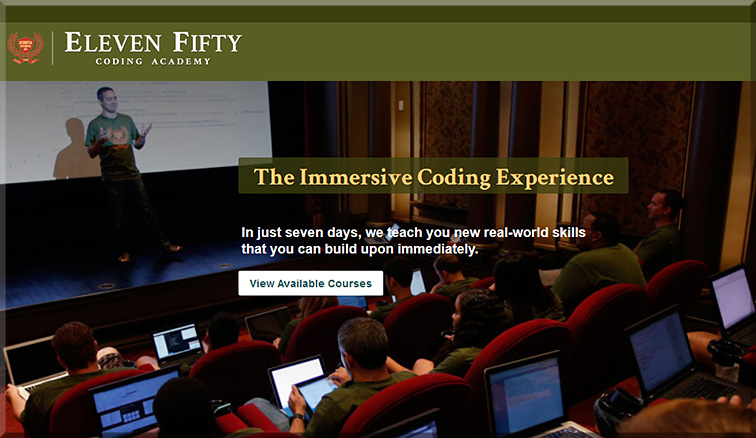
ElevenFifty-CodingAcademy-Jan2015


New MOOC Platform Provides Free IT Certification Courses — from campustechnology.com by Rhea Kelly


Cybrary-IT-Jan2015


People offering their own bootcamps / building their own brands; such as this Two Week Web Development Bootcamp for Beginners by Adam Stanford.


Some other approaches that are occurring:


Ideo U

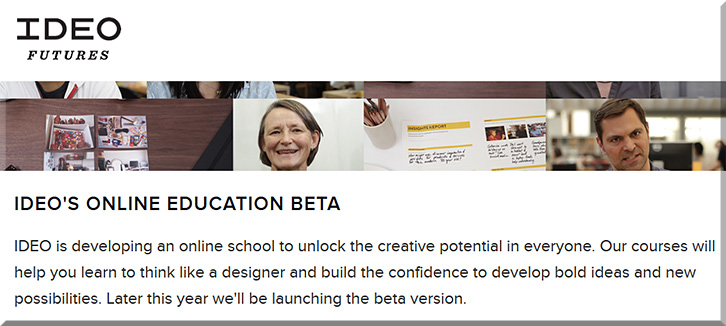
IDEO-Online-EducationBeta-Oct2014


Yieldr Academy

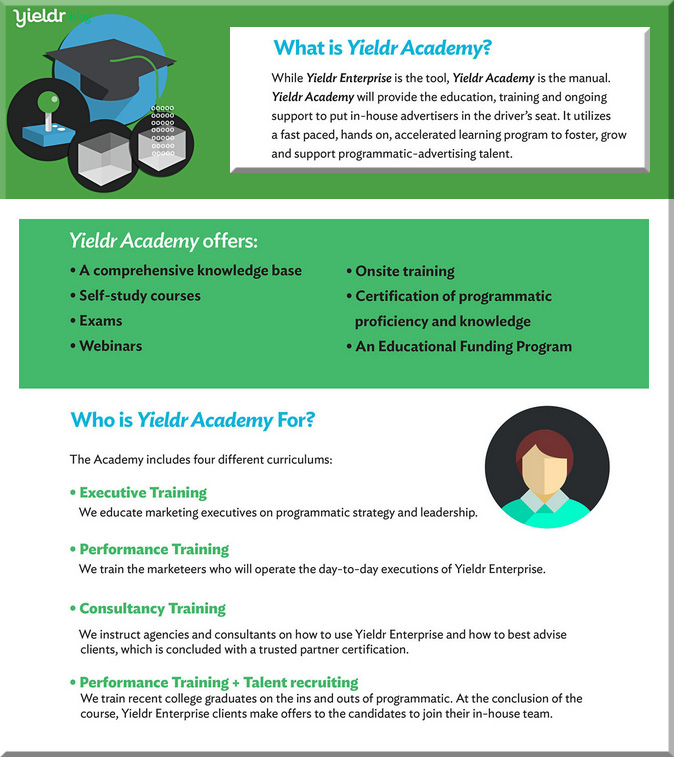
YieldrAcademy-Sept2014

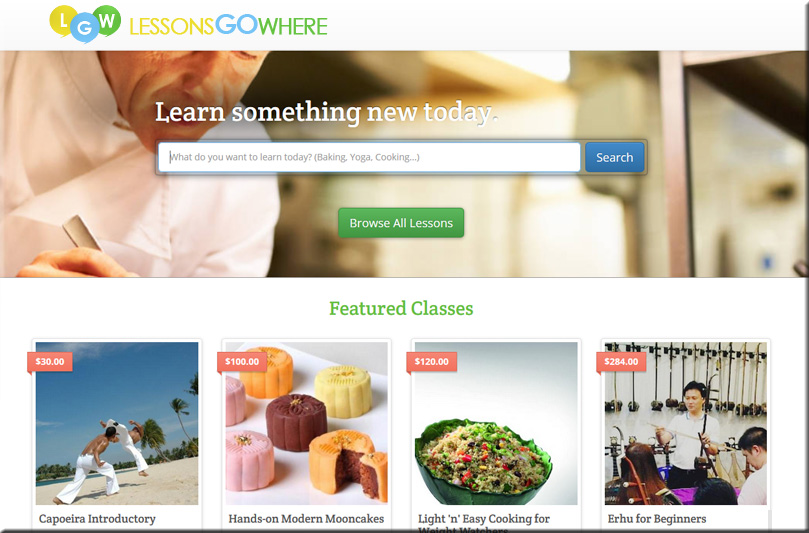
Lessons Go Where

LessonsGoWhere


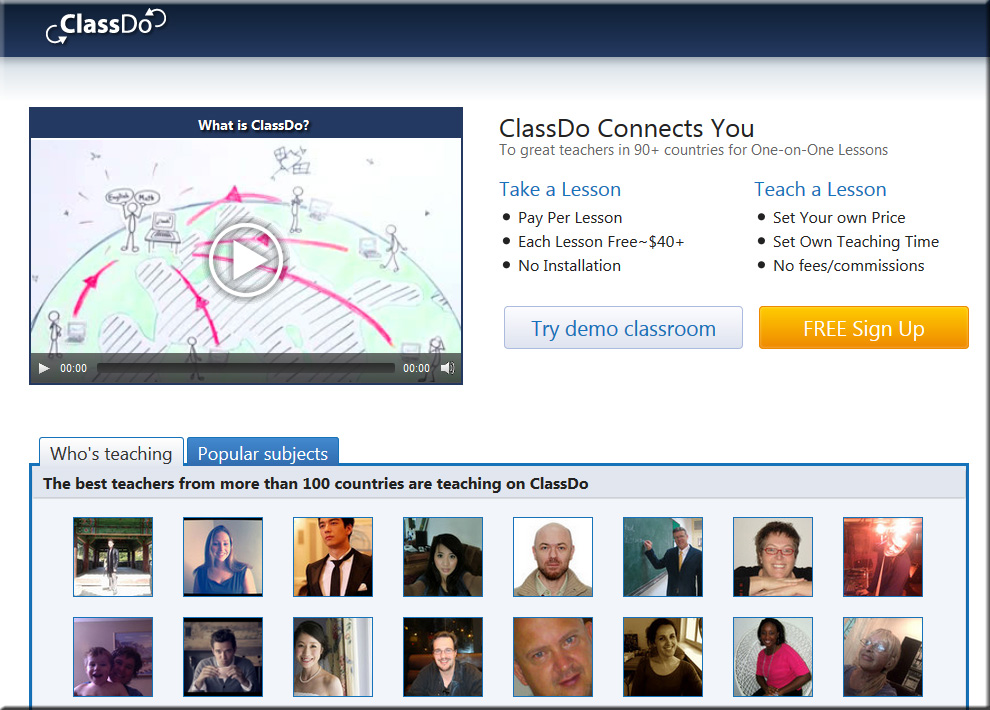
ClassDo

ClassDo


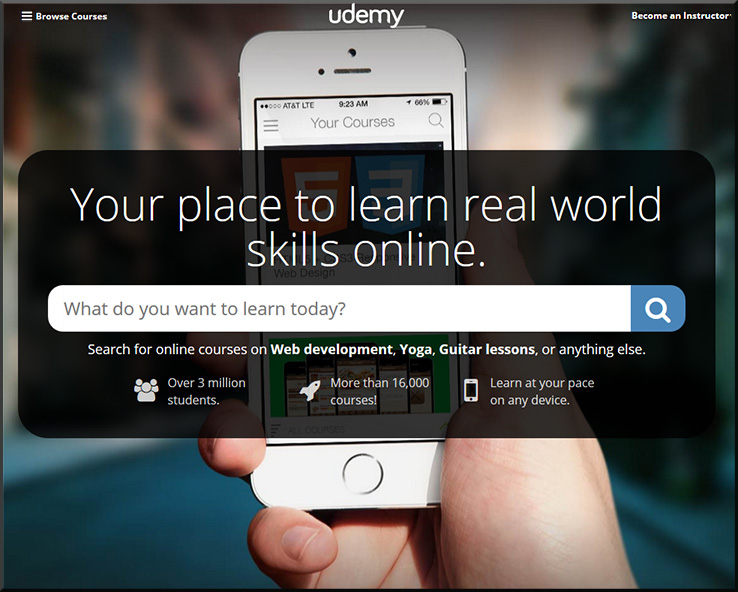
Udemy

udemy


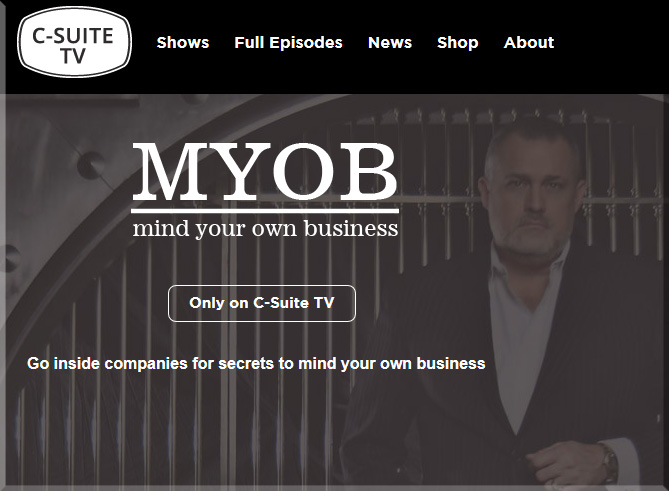
C-Suite TV.com

MYOB-July2014


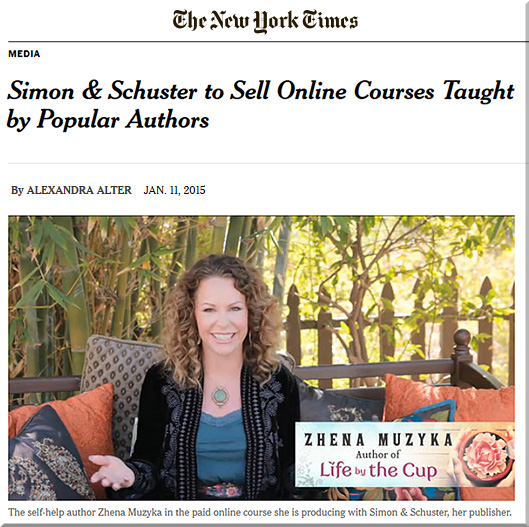
Simon & Schuster to sell online courses taught by popular authors — from nytimes.com by Alexandra Alter; with thanks to Sidneyeve Matrix for her Tweet on this

Excerpt:

Simon & Schuster is making a push into paid online video, with a new website offering online courses from popular health, finance and self-help authors.

The cost of the first batch of online courses ranges from $25 to $85, and includes workbooks and access to live question-and-answer sessions with three authors: Dr. David B. Agus, the best-selling author of “The End of Illness”; Zhena Muzyka, who wrote the self-help book “Life by the Cup”; and Tosha Silver, the author of the spiritual advice book “Outrageous Openness.” The courses will be available on the authors’ individual websites and on the company’s new site, SimonSays.

.


Simon-Schuster-OnlineCourses-Jan2015

But there is a new wave of online competency-based learning providers that has absolutely nothing to do with offering free, massive, or open courses. In fact, they’re not even building courses per se, but creating a whole new architecture of learning that has serious implications for businesses and organizations around the world.

It’s called online competency-based education, and it’s going to revolutionize the workforce.
…
The key distinction is the modularization of learning.
…
Here’s why business leaders should care: the resulting stackable credential reveals identifiable skillsets and dispositions that mean something to an employer. As opposed to the black box of the diploma, competencies lead to a more transparent system that highlights student-learning outcomes.


From DSC:
Though several of the items above have a slant towards IT/coding/programming, other disciplines may be impacted by these types of trends as well.

These developments are meant for consideration for those of us working within higher education. What do they mean for us? Should they inform more of our strategies? Our visions? Our responses?


Addendums on 2/17/15:


datasciencedojo-bootcamp-2015


Addendum on 3/27/15:


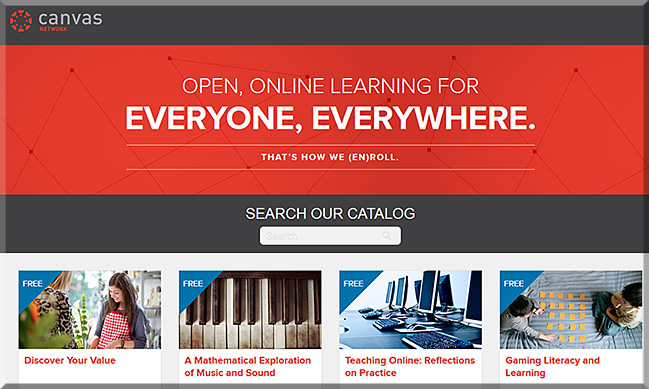
Addendum on 4/1/15 — with thanks to Mr. Cal Keen at Calvin College


CanvasDotNet-April2015


Addendum on 4/7/15:

  • Udemy alternatives for selling video courses online — from robcubbon.com
    Udemy is currently the leading online learning platform. Their top 10 instructors all made over $500,000 last year and the top earner makes over $8 million. I make $4000+ each month by selling courses on Udemy.


Addendum on 5/1/15:

worldacademy.tv

WorldAcademyDotTV-May2015


Addendum on 5/18/15:

  • 16 Startups Poised to Disrupt the Education Market — from inc.com by Ilan Mochari
    Colleges and universities are facing new competition for customers–students and their parents–from startups delivering similar goods (knowledge, credentials, prestige) more affordably and efficiently. Here’s a rundown of some of those startups.
 

Using Design Thinking in Higher Education — from educause.com b


Design thinking focuses on users and their needs, encourages brainstorming and prototyping, and rewards out-of-the-box thinking that takes “wild ideas” and transforms them into real-world solutions.


Excerpt:

Albert Einstein famously said, “No problem can be solved by the same kind of thinking that created it.” So, assuming we agree, what exactly are our alternatives? How can we go beyond our standard approach to problems in higher education and entertain new possibilities? One promising alternative is to engage in design thinking.

Design thinking offers a creative yet structured approach for addressing large-scale challenges. In September 2014, we conducted an EDUCAUSE webinar, Design Thinking: Education Edition, and offered examples from our Breakthrough Models Incubator (BMI).

Here, we offer a summary of that webinar, discussing design thinking principles and process, describing real-world examples of design thinking in action, and offering possibilities for how you might introduce the approach into your own organization.


Bias: Why Higher Education is Mired in Inaction — from insidetrack.com by Marcel Dumestre

This contribution can be accessed from insidetrack.com’s Leadership Series, but the actual PDF is here.

Excerpts:

He identifies four biases that short-circuit this process, which he terms as generalized empirical method. All of these biases are not only at play in our individual lives, they also can determine how well organizations operate, even universities.

The first bias is dramatic bias—a flight from the drama of everyday living, an inability or unwillingness to pay attention to experience.

The second bias is individual bias—egoism. Making intelligent decisions requires moving beyond the worldview created by oneself for oneself.

The third bias is group bias. This predisposition is particularly rampant in organizational life.

The fourth bias is general bias—the bias of common sense. This bias views common sense uncritically.

…
The deleterious effect of bias explains why very smart people don’t understand what seems obvious in hindsight. The disappearance of entire industries gives testimony to the destructive power of institutional blindness.
…
There is no magic formula, no uniform model to follow. Universities must do the hard work of analyzing the needs of whom they serve and recreate themselves as viable, exciting institutions suited for a new age.

The universities left standing decades from now will have gone through this enlightening, but painful, process and look in hindsight at the insight they achieved.


Addendum on 1/13/15:


YouTube’s Chief, Hitting a New ‘Play’ Button — from nytimes.com by Jonathan Mahler

Excerpt (emphasis DSC):

At one point, the moderator asked Ms. Wojcicki if she thought cable television would still be around in 10 years. She paused for a moment before answering, with a bit of a sly smile, “Maybe.” The crowd laughed, even though just about everyone in the packed auditorium knew she was only half-joking.

If cable TV is gone in a decade, Ms. Wojcicki and the global digital video empire over which she presides will be one of the main causes. YouTube, founded in 2005 as a do-it-yourself platform for video hobbyists — its original motto was “Broadcast Yourself” — now produces more hit programming than any Hollywood studio.

Smosh, a pair of 20-something lip-syncing comedians, have roughly 30 million subscribers to their various YouTube channels. PewDiePie, a 24-year-old Swede who provides humorous commentary while he plays video games, has a following of similar size. The list goes on and on. For the sake of perspective, successful network television shows like “NCIS: New Orleans” or “The Big Bang Theory” average a little more than half that in weekly viewership. The 46-year-old Ms. Wojcicki — who will soon give birth to her fifth child — has quietly become one of the most powerful media executives in the world.


The Living [Class] Room -- by Daniel Christian -- July 2012 -- a second device used in conjunction with a Smart/Connected TV


Also see:

  • Smart TV Alliance serves 58 million TV sets — from broadbandtvnews.com by The Smart TV Alliance development platform is now compatible with one-third of the global smart TV market. App developers who use the Alliance’s common developer portal can reach 58 million smart TVs in a single, integrated process. The brands served include LG Electronics, Panasonic, TP Vision and Toshiba
  • Roku-Connected Televisions And The Future Of The Smart TV Wars — from fastcompany.com by Chris Gayomali
    At CES, Roku announced new partnerships that will cram its platform inside more televisions. Built-in is the new box.
    .
  • Netflix Launches Smart TV Seal of Approval Program — from variety.com by Todd Spangler
    Sony, LG, Sharp, Vizo and makers of Roku TVs are expected to be first certified under ‘Netflix Recommended TV’ program
    Excerpt:
    Netflix — in a smart bid to get its brand affixed onto smart TVs — has announced the “Netflix Recommended TV” certification program under which it will give the thumbs up to Internet-connected television sets that deliver the best possible video-streaming experience for its service.


From DSC:
As you can see, BBBBBIIIIIGGGGG players are getting into this game.  And there will be BBBBBIIIIIGGGGG opportunities that open up via what occurs in our living rooms. Such affordances won’t be limited to the future of entertainment only.


Following up on yesterday’s posting, History Channel bringing online courses to higher ed, I wanted to thank Mr. Rob Kingyens, President at Qubed Education, for alerting me to some related work that Qubed Education is doing. Below is an example of that work:

The University of Southern California, Condé Nast and WIRED launch Master of Integrated Design, Business and Technology — from qubededucation.com
New Learning Model Combines Network and Access of WIRED with Academic Strength and Vision of the USC Roski School of Art and Design

Excerpt (emphasis DSC):

MARIN, Calif., October 1, 2014 – The University of Southern California, Condé Nast and WIRED today announced a partnership to create a new online Master’s degree in Integrated Design, Business and Technology. The partnership creates an unprecedented learning experience, combining the expertise of the editors, writers, and designers at WIRED with the academic rigor of USC, a leading research university known for its pioneering interdisciplinary programs. The aim of the 18-24 month degree is to educate creative thinkers and technologists to better equip them to transform the world of industry and enterprise. The first cohort is scheduled to begin in the 2015-2016 academic year.

…

“The pace of technology development requires higher education to continue to respond with programs that are flexible and adaptable, and that meet the needs of future cultural and business leaders,” said Dean Muhl.

“We’ve been thinking for years about what a university curriculum with WIRED would look like, and now we have a chance to build it with a terrific partner,” said Dadich. “Taking the best from USC and WIRED, we can teach discipline and disruption, business fundamentals, and the very latest innovation models from Silicon Valley. This is going to be thrilling.”

…

USC’s program development and build out will be powered by higher education partners Synergis Education and Qubed Education.


From Qubed’s website:

Qubed is the gateway for world-class, global brands to enter the education market with top tier universities.


From DSC:
I’ve long wondered if institutions of higher education will need to pool resources and/or form more partnerships and collaborations — either with other universities/colleges or with organizations outside of higher education. This reflection grows stronger for me when I:

  • Think that team-based content creation and delivery is pulling ahead of the pack
  • Hear about the financial situations of many institutions of higher education today (example1; example2)
  • See the momentum building up behind Competency Based Education (CBE)
  • Witness the growth of alternatives like Ideo Futures, Yieldr Academy, Lessons Go Where, ClassDo, Udemy, C-Suite TV.com and others
  • Hear about the potential advantages of learning analytics
  • See the pace of change accelerating — challenging higher education to keep up

For some institution(s) of higher education out there with deep pockets and a strong reputation, I could see them partnering up with an IBM (Watson), Google (Deepmind), Apple (Siri), Amazon (Echo), or Microsoft (Cortana) to create some next generation learning platforms. In fact, this is one of the areas I see occurring as lifelong learning/self-directed learning opportunities hit our living rooms. The underlying technologies these companies are working on could be powerful allies in the way people learn in the future — doing some heavy lifting to build the foundations in a variety of disciplines, and leaving the higher-order learning and the addressing of gaps to professors, teachers, trainers, and others.


History Channel bringing online courses to higher ed –from edtechmagazine.com by D. Frank Smith

Excerpt (emphasis DSC):

Television and higher education are being married through a new partnership between A&E Network’s History Channel and the University of Oklahoma.

The network has announced a 16-week, paid, online course focusing on U.S. history from 1865 to the present. The accredited course will involve video lectures produced by History Channel staff, quizzes, discussion groups and social interactions. The series is priced at $500 for college students, and $250 for lifelong learners.


Also from their press release (emphasis DSC):
History® Digital partners with the University of Oklahoma to offer the first TV network-branded online course for college credit — from  historychannel.ou.edu

New York, NY (October 28, 2014) – A+E Network®’s HISTORY® Channel will partner with the University of Oklahoma to offer the very first TV Network-branded online course for transcripted college credit or for the lifelong learner. HISTORY® Channel’s United States, 1865 to the Present course enrollment will launch on October 28 at History.com/courses and will be taught by award winning teacher, OU professor, and renowned historian Steve Gillon. The announcement was made today by Dan Suratt, EVP, Digital Media, A+E Networks and University of Oklahoma President David L. Boren.

…

The groundbreaking 16-week interactive, immersive course, which will be offered during the Spring Semester, officially begins on January 12, 2015. Utilizing the strengths of both HISTORY® Channel and OU, “United States, 1865 to the Present” has been rigorously designed by an academic team from OU and will be taught by Professor Steve Gillon, the scholar-in-residence at HISTORY®Channel and professor at OU. Combining professionally-produced and engaging video lectures with quizzes, discussion groups and social interactions between student and professor, as well as selectively integrated multimedia assets from HISTORY® Channel, this course has been created to offer a singular and collaborative learning experience to a wide range of students.


From DSC:
Interesting partnership/collaboration effort here…again, this endeavor gets at the idea of using teams of specialists to create and deliver content.  Also interesting here are the lower pricing structures and the idea of addressing lifelong learners.

The Living [Class] Room -- by Daniel Christian -- July 2012 -- a second device used in conjunction with a Smart/Connected TV


Finding New Business Models in Unsettled Times — from Educause.com by Paul J. LeBlanc
If the core crisis in higher education is one of sustainability, being focused on the job to be done and having a grasp of the forces shaping higher education gives institutional leaders a new way to think about recasting their future.

Excerpts:

“What to do?” is the question that so many college and university presidents struggle with right now. We seem to be sitting at the heart of a perfect storm where a lot of things are happening faster than our ability to predict and strategize. We can respond to this stormy weather as medieval farmers did to the next day’s weather: by simply waiting to see what arrives and then taking action, often inadequately. Or we can recognize that we actually have the tools, the technology, and the know-how to reinvent U.S. higher education in ways that will address its current failings.

…

Those established entities that survive are able to harness the innovations and rethink their business models to better serve their customers. Those that eventually disappear typically adopted one of two strategies: (1) hunker down and hope to ride out the storm by doing more of the same; or (2) try a little of everything. Neither strategy works very well, and as a result, once-great and seemingly unassailable companies have disappeared or, at best, survived as mere shadows of themselves. That’s the scenario that many current critics of traditional higher education posit and even welcome, often pointing to other industries that have seen enormous disruption—music, publishing, journalism, and retailing—to presage the impending doom for traditional higher education.

…

But there is no one higher education to reinvent, and colleges and universities do no one job. Higher education encompasses the following purposes:

  • A coming-of-age higher education that meets the needs of recent high school graduates, usually providing a purposeful living/learning community that provides ample opportunities for self-discovery and growing up
  • A workforce-development higher education that focuses on working adults and that provides job and career opportunities while creating a talent pipeline for employers in a local economy
  • A research higher education that seeks to add to the store of human knowledge, creating breakthrough, innovative solutions to a wide range of problems
  • A status higher education that provides a value-added network of peers, as well as access to and maintenance of privilege and social status
  • A civic-good higher education that works to produce a more just and responsible society
  • A cultural-improvement higher education that creates and/or supports the arts and humanities and instills in its graduates the taste and refinement to support and appreciate the arts

…

The need to reinvent underlying business models is increasingly urgent.

.


Other items from Educause:


Flexible Option: A Direct-Assessment Competency-Based Education Model
The University of Wisconsin Flexible Option CBE model focuses on assessment rather than credit hours, letting students undertake academic work at their own pace and prove mastery of required knowledge and skills through rigorous assessments.


A Tuition-Free College Degree (EDUCAUSE Review) — by

Excerpt:

First, brick-and-mortar institutions have expenses that virtual universities do not. So we don’t need to pass these expenses on to our students. We also don’t need to worry about capacity. There are no limits on the number of seats in a virtual university: nobody needs to stand at the back of the lecture hall. In addition, through the use of open educational resources and through the generosity of professors who are willing to make their materials accessible and available for free, our students do not need to buy textbooks. Even professors, the most expensive line in any university balance sheet, come free to our students. More than 3,000 higher education professionals—including presidents, vice chancellors, and academic advisors from top colleges and universities such as NYU, Yale, Berkeley, and Oxford—are on-board to help our students. Finally, we believe in peer-to-peer learning. We use this sound pedagogical model to encourage our students from all over the world to interact and to study together and also to reduce the time required from professors for class assignments.

…

Five years ago, University of the People was a vision. Today, it is a reality. In February 2014, we were awarded the ultimate academic endorsement of our model: University of the People is now fully accredited. With this accreditation, it is time for us to scale up. We have demonstrated that our model works. I now invite colleges and universities and, even more important, the governments of developing countries to replicate this model to ensure that the gates to higher education will open ever more widely. A new era is coming—an era that will witness the disruption of the current model of higher education, changing the model from one that is a privilege for the few to one that is a basic right, affordable and accessible for all.

See:

https://www.uopeople.edu/programs/online-bachelor-degree-programs/


Beyond the MOOC Model: Changing Educational Paradigms — by James G. Mazoue
Four trends – MOOC-based degrees, competency-based education, the formalization of learning, and regulatory reform – are shifting educational practice away from core tenets of traditional education, indicating not a transient phenomenon but rather a fundamental change to the status quo.

Excerpt:

According to Georgia Tech’s recent survey, initial reviews from the first cohort of OMS CS students are positive: 93 percent recommend the program to others and nearly two-thirds said their experience exceeds their expectations. If data from the OMS CS show that MOOC-based degrees are viable, others will follow with an array of offerings that will compete directly with on-campus programs.

Some may quibble that the $6,600 OMS CS is not modeled on real MOOCs because of its price tag. However, this misses the larger point: namely, that a quality online degree offered at scale for a nominal or greatly reduced cost is a more attractive alternative for many students than an on-campus degree. In deference to purists who might balk at calling a degree program that charges tuition a MOOC, we can call it a MOD (for Massive Online Degree). Whatever we call it, it will be bad news for on-campus degree programs. With competition, we can expect a MOD’s cost to go down; it is not unreasonable to think that it might go down to a negligible amount if cost recovery shifts from charging students for the acquisition of knowledge to a model based on learning assessment and credentialing. In the end, students — if we let them — will be the ones who decide whether a MOD’s value outweighs the additional cost of an on-campus degree.

…

Far from fading into oblivion, data show that MOOCs are in fact increasing in global popularity.  The case for dismissing MOOCs as an educational alternative, therefore, has yet to be made.


The University of Texas System makes bold move into competency-based education — from utsystem.edu

 Excerpt:

AUSTIN – The University of Texas System will be the first in the nation to launch a personalized, competency-based education program system-wide aimed at learners from high school through post-graduate studies.

What sets the UT System approach apart from other competency-based programs is a focus on offering personalized and adaptive degrees and certificates that are industry-aligned and – via technology developed by the UT System – can systematically improve success, access and completion rates in areas of high employment demand.

“Competency-based programs allow students to advance through courses, certifications and degrees based on their ability to master knowledge and skills rather than time spent in a classroom,” said Chancellor Francisco G. Cigarroa, M.D. “All students are held to clearly defined and rigorous expectations, but each follows a customized path to success that responds and adapts based on individual learning strengths, challenges and goals. And students can earn credit for prior learning and move at their own speed.”

…

To support and power its new competency-based educational pathway, the UT System is working with education technology innovators to create a state-of-the-art, “mobile-first” stack of technologies and services called TEx, which stands for Total Educational Experience.


.

From DSC:
First of all, I noted an interesting — and much needed within higher ed — title/position:  The chief innovation officer for the Institute of Transformational Learning.

Let’s break that one down a second.

In 20102, The University of Texas’ Board of Regents had a vision that learning needs to be transformed and they created an institute for it — supplying $50 million to support some key mandates:

  • To make a University of Texas-quality education more accessible and affordable.
  • To improve student learning outcomes and dramatically increase the number of Texans with a college degree and other advanced educational credentials.

So not only did this board show vision, but also boldness — they put their $$ where they mouth was to support their vision.  Innovation was key to this institute, so they created a CIO position, whereby the I stood for Innovation, not Information.

Surely, the level of willingness to experiment in the U of Texas system runs higher than at many other institutions of higher education.  So I congratulate them on their culture to be willing to experiment…to adapt…to change. If successful, such programs should help more people obtain the degrees they need to make a living, make a life, make a contribution.*


* A great slogan from Davenport University


Also see:

Excerpt:

LMS for Competency Based Education
Readers may not be too interested in reading about Learning Management System news; often LMSs are considered a necessary evil to faculty and teachers of education institutions. However, news last week shared by Phil Hill over at e-literate  is worthy of attention—the launch of a LMS platform geared to  competency based education (CBE) programs. The new LMS launched by Helix has a different approach than traditional LMS providers.  It’s not catering to an institution, but to a method of teaching and learning—CBE.  Interesting.

Insight: There is, and continues to be an emphasis and support ($$$) for creation of CBE programs by the Department of Education (Fain, 2014). This new LMS approach by Helix is another indicator. I predict that we’ll be hearing a lot more about CBE in the next few months with more institutions offering CBE options for students.  Why it’s significant, is because CBE is a radical departure from traditional education; it does not rely upon the credit-hour or ‘seat time’ as its often referred to, but upon mastery of units of instruction.

comp_assessment_examples

Several institutions are already basing their model on CBE, College for America, an offshoot of Southern New Hampshire University and Capella University for instance. Purdue University is planning on offering a competency-based degree in the near future. Other universities that incorporate CBE principles—Western Governors University and Kentucky Community and Technical College System for its 2-year degree program.

 
© 2025 | Daniel Christian