The Great Contraction Cuts alone will not be enough to turn colleges’ fortunes around. — from chronicle.com by Lee Gardner

Excerpts:

With higher education facing average revenue losses of 14 percent or more due to Covid-19, the pandemic presents an existential challenge for the hundreds, maybe thousands, of colleges that entered last March with already precarious finances. Every week or so seems to bring new headlines about institutions making jaw-dropping cuts.
…
But slashing budgets alone, experts agree, isn’t enough to survive. Struggling colleges must cut strategically and adapt to a new way of operating, in order to find a way to eventually grow and thrive.

From DSC:
As I mentioned to a friend who wondered about those two words –“grow” and “thrive” in the last sentence above…

For too long many colleges and some universities have not been experimenting with other business models. They didn’t pay attention to the surrounding landscapes and economic realities of the masses. I think some of the institutions out there will grow and thrive — but it will be far fewer institutions who see such growth. SNHU, Arizona State, Western Governors University, and the like have done well. But then again, they thought big as well and did so years ago. They have a major leg up on other institutions.

She has served as a college president for nearly 20 years, and in that time, she has watched students’ view of higher education shift to be predominantly about “the outcome of being prepared for a job,” she says.

Funny how that corresponds directly to the increase in tuition, fees, books, room and board, etc. that took place during that same time. 

 

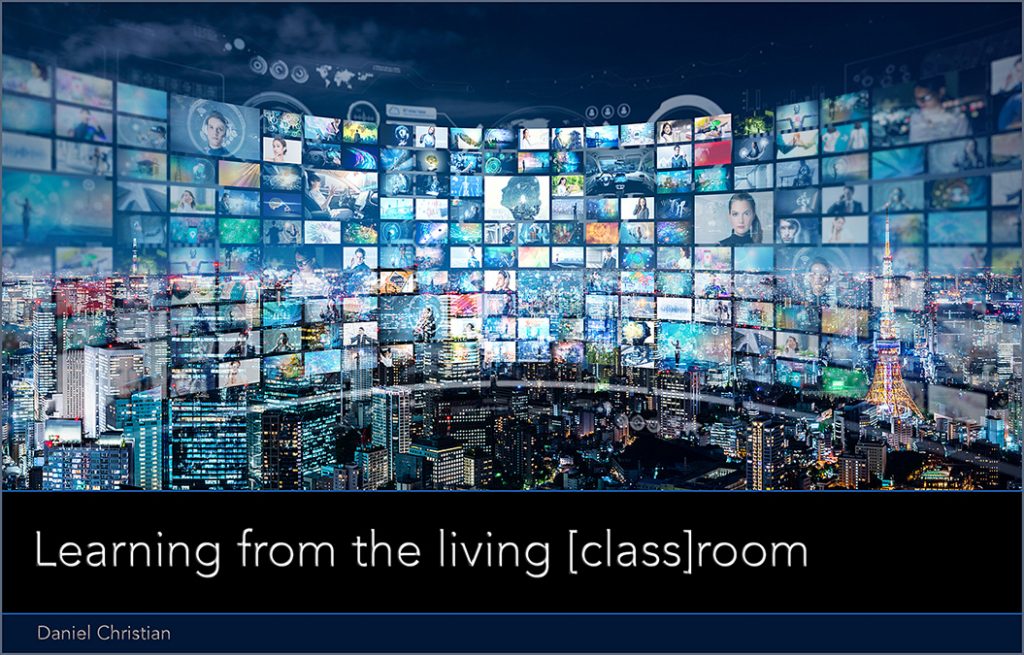
Learning from the Living [Class] Room: Adobe — via Behance — is already doing several pieces of this vision.

From DSC:
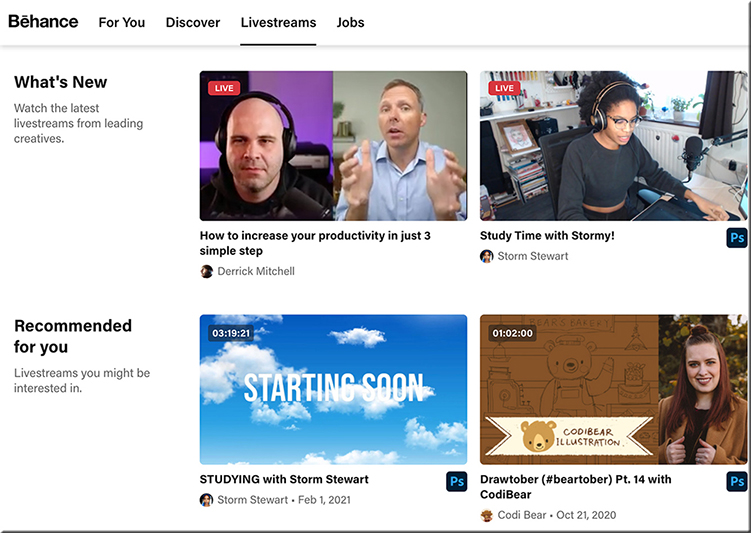
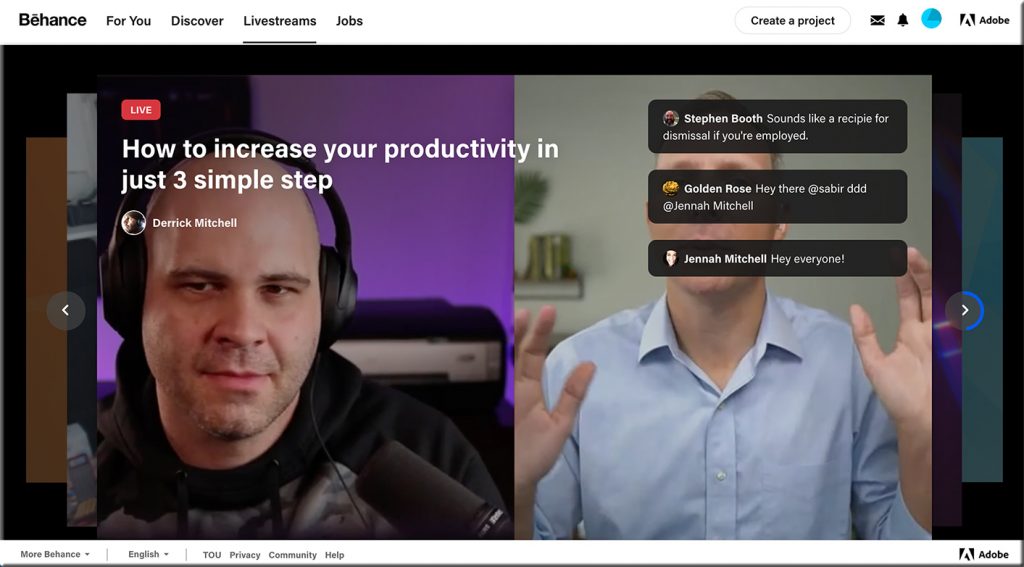
Talk about streams of content! Whew!

Streams of content

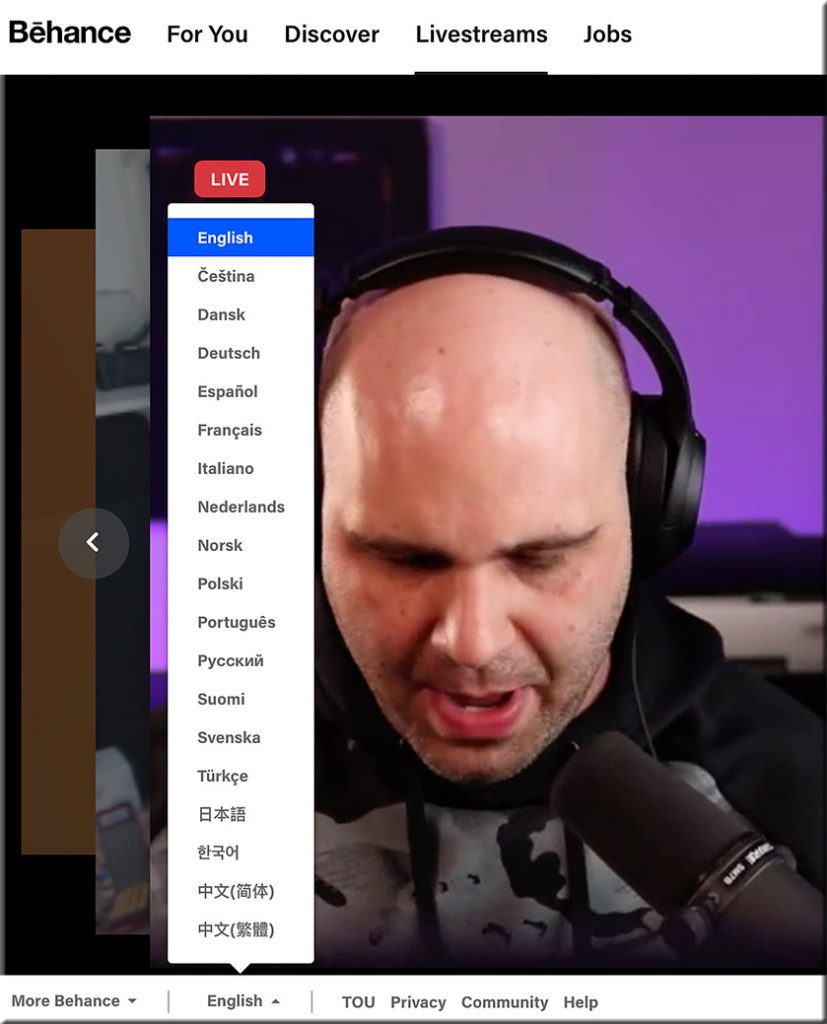
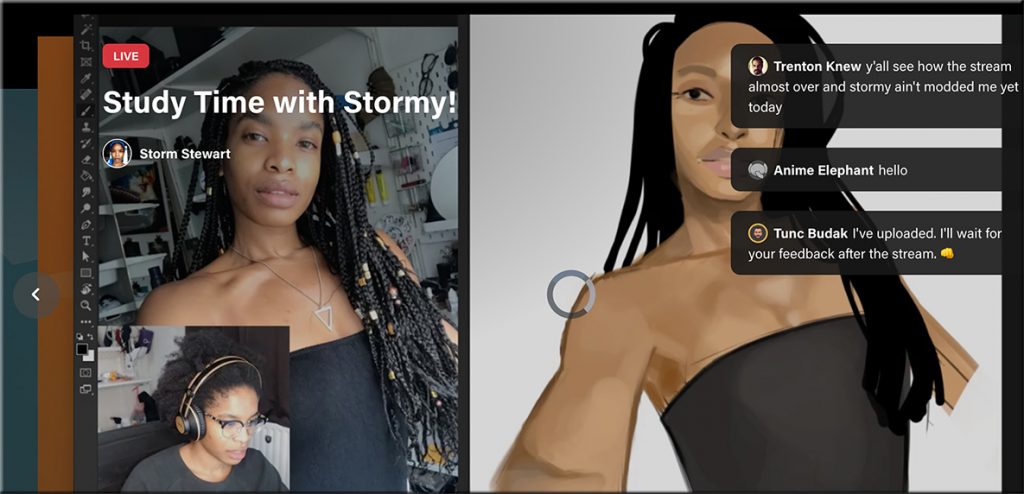
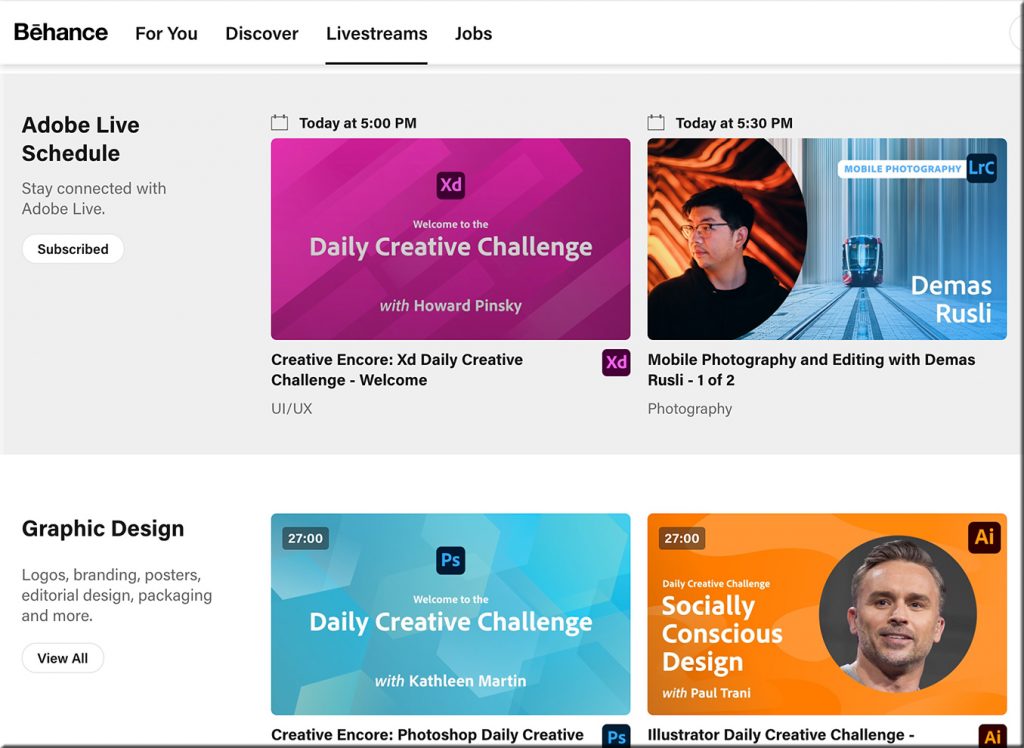
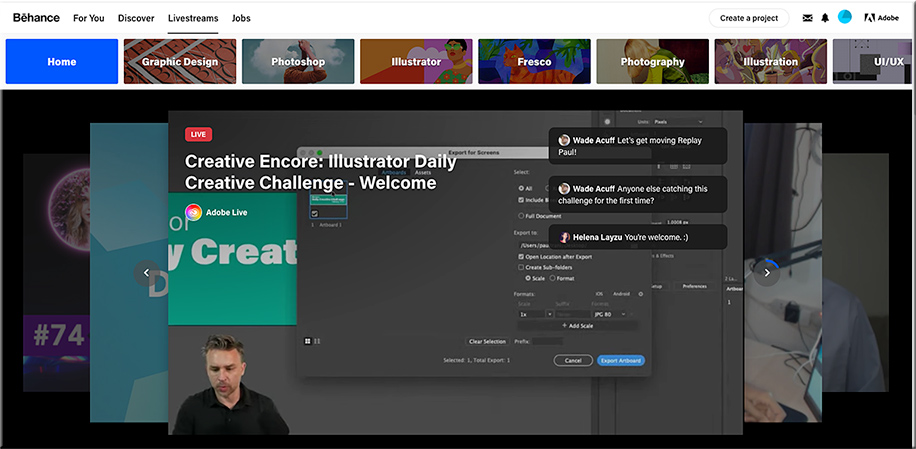
I received an email from Adobe that was entitled, “This week on Adobe Live: Graphic Design.”  (I subscribe to their Adobe Creative Cloud.) Inside the email, I saw and clicked on the following:

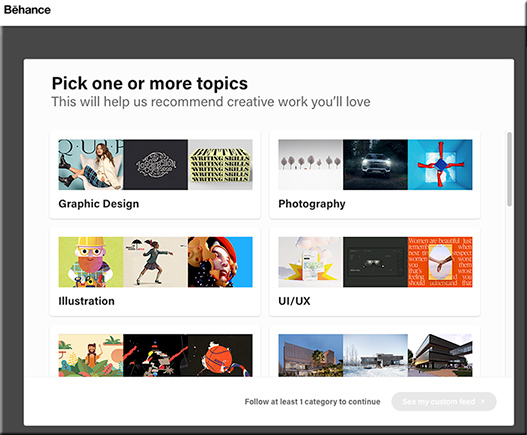
Below are some of the screenshots I took of this incredible service! Wow!


Adobe -- via Behance -- offers some serious streams of content


Adobe -- via Behance -- offers some serious streams of content


Adobe -- via Behance -- offers some serious streams of content


Adobe -- via Behance -- offers some serious streams of content


Adobe -- via Behance -- offers some serious streams of content

Adobe -- via Behance -- offers some serious streams of content

Adobe -- via Behance -- offers some serious streams of content


From DSC:
So Abobe — via Behance — is already doing several pieces of the “Learning from the Living [Class] Room” vision. I knew of Behance…but I didn’t realize the magnitude of what they’ve been working on and what they’re currently delivering. Very sharp indeed!

Churches are doing this as well — one device has the presenter/preacher on it (such as a larger “TV”), while a second device is used to communicate with each other in real-time.


Public Colleges Are Going After Adult Students Online. Are They Already Too Late? — from chronicle.com by Lee Gardner

Excerpts:

But competing with the established national players in online education presents a tall order. The so-called mega–universities have a huge head start and deep pockets, two advantages public universities are unlikely to overcome easily, if at all.
…
Mega-universities have spent more than a decade building and honing well-funded and sophisticated operations that function on a scale few start-ups can hope to match. They spend hundreds of millions of dollars each year marketing themselves nationwide to students.

Mega-universities have also developed recruitment and admissions operations designed to make things as easy as possible for working adults to enroll.


How to become a livestreaming teacher — from innovatemyschool.com by Bobbie Grennier

Excerpts:

What is an encoder?
The format that a video camera records content in has to be transcoded so that it can be livestreamed to a destination like Facebook Live, YouTube, Twitch and Periscope. This is accomplished using an encoder software. An encoder optimizes the video feed for the streaming platform. The key to using an encoder is to learn to set-up scenes.

From DSC:
It will be interesting to see how learning-related platforms develop in the future. I’m continually on the lookout for innovative ideas across the learning landscapes, especially due to the Learning from the Living [Class] Room vision that I’ve been tracking this last decade. The pieces continue to come together. This might be another piece to that puzzle.

An online-based teaching and learning marketplace — backed up by AI, cloud-based learning profiles, voice-driven interfaces, learning agents, and more. Feeds/streams of content into how to learn about any topic…supporting communities of practice as well as individuals. And people will be key in this platform — technology will serve the people, not the other way around.

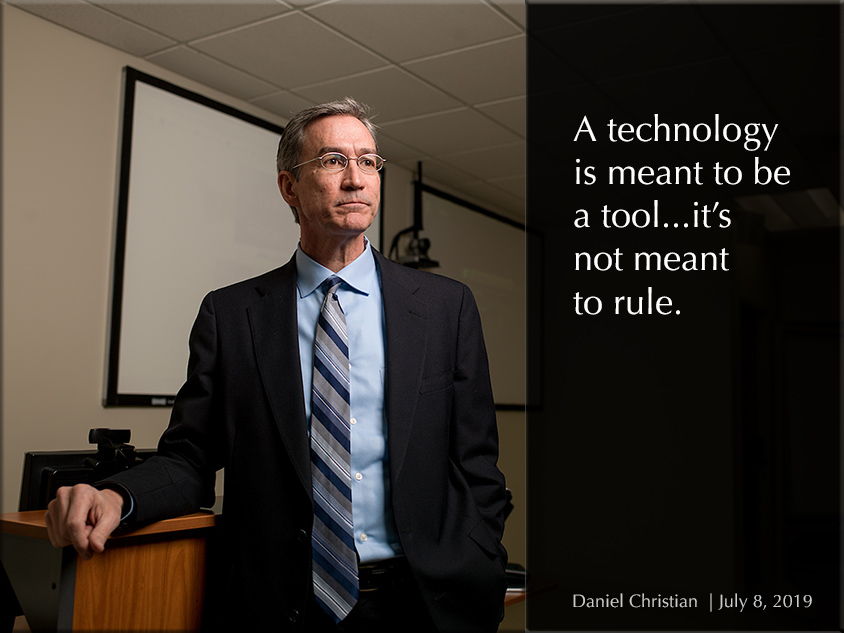
Daniel Christian -- A technology is meant to be a tool, it is not meant to rule.


Jeff Bezos Wants to Go to the Moon. Then, Public Education. — from edsurge.com by Dominik Dresel

Excerpts:

Jeff Bezos’ $2 billion investment to establish a Montessori-inspired network of preschools may be shrugged off by many as the world’s richest man dabbling in another playground. Instead, we should see it for what it is: the early days of Amazon’s foray into public education.
…
It would be easy to think that Amazon’s rapid expansion into industry after industry is just the natural, opportunistic path of a cash-flush company seeking to invest in new, lucrative markets. But Jeff Bezos, himself a graduate of a Montessori preschool, doesn’t think in short-term opportunities.

Yet, the world has had its first taste of the disentanglement of schooling from school buildings. Even though in 20 years we will still have school buildings—much like we still have bookstores—there is little doubt that the future will see more, not less, online instruction and content delivery.


3 Main Changes to Help Fill College Classrooms — from fierceeducation.com by Alison Diana

Excerpt:

Reducing Tuition:
Southern New Hampshire University last month announced it will cut the cost of its Fall 2021 campus-based programs to $15,000 or $10,000 per year and use “an increased focus on experiential and project-based learning; a new and more transparent financial aid process, shifting from merit-based to need-based financial aid awards to level the playing field for all students.”

This marks more than a 50% reduction of its fees, according to SNHU. The university also plans to increase its on-site campus enrollment to 4,500 students from 3,000, although it did not say how or if it expects to adapt faculty or administrative staffing.

SNHU is not alone in addressing tuition to encourage people to attend their schools.


As an alternative to a full master’s degree, edX and Coursera offer MicroMasters and MasterTrack certificate programs at a fraction of the cost of grad school — from businessinsider.com by Mara Leighton; with thanks to Ray Schroeder for sharing this resource

Excerpt:

  • edX and Coursera both offer cheap or free online graduate courses, many from top universities like MIT, Duke, and the University of Michigan.
  • edX MicroMasters and Coursera MasterTracks are bite-sized portions of master’s degree programs.
  • They can be used to build stand-alone skills to advance your career or as a stepping stone to a full master’s program.
  • We compared MicroMasters and MasterTracks for you here. Overall, the deciding factor will be the program itself. But generally, edX’s offerings are cheaper, have more options, and are more lenient than Coursera’s.
 

7 Digital Health Trends We’ll Keep An Eye On In 2021 — from The Medical Futurist

Excerpt:

Further expansion of telemedicine
Case: after 2020, 2021 will be about telemedicine becoming mainstream and widespread. Remote care will be the safe norm in more and more countries. It will also reach more rural regions, and we will see video consultations added to care options. Telemedicine will become more widespread in hospitals, GPs’ offices and in specialist clinics.

From DSC:
I’m pulse-checking how close telelegal is behind telehealth.


The Year TV Leaped Into The Future [Roettgers]

The Year TV Leaped Into The Future [Roettgers]

The Year TV Leaped Into The Future — from protocol.com by Janko Roettgers

The lockdowns this year have transformed our homes into offices, schools, concert halls, movie theaters and gyms. Our homes are working harder for us, but so is our technology. The device that is working the hardest is perhaps the TV—becoming our lifeline to a far more virtual world.

Addendums:

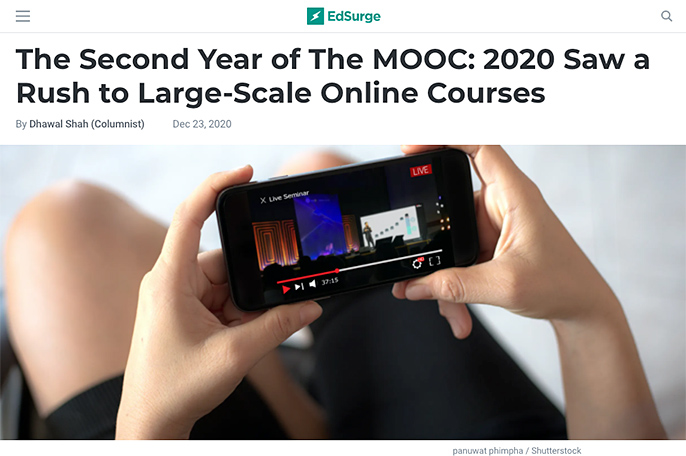
The Second Year of The MOOC: 2020 Saw a Rush to Large-Scale Online Courses

The Second Year of The MOOC: 2020 Saw a Rush to Large-Scale Online Courses — from edsurge.com by Dhawal Shah

Excerpt:

This was the year that more people learned what a MOOC is.

As millions suddenly found themselves with free time on their hands during the pandemic, many turned to online courses—especially, to free courses known as MOOCs, or Massive Open Online Courses. This phenomenon was compounded by media worldwide compiling lists of “free things to do during lockdown,” which tended to include MOOCs.

Within two months, Class Central had received over 10 million visits and sent over six million clicks to MOOC providers. These learners also turned out to be more engaged than usual. In April 2020, MOOC providers Coursera, edX and FutureLearn attracted as many new users in a single month as they did in the entirety of 2019.

.

From DSC:
The pieces continue to come together…

Learning from the living class room

...team-based content creation and delivery will dominate in the future (at least for the masses). It will offer engaging, personalized learning and the AI-based systems will be constantly scanning for the required/sought-after skills and competencies. The systems will then present a listing of items that will help people obtain those skills and competencies.

#AI #LearningProfiles #Cloud #LearningFromTheLivingClassRoom #LearningEcosystems #LearningSpaces #21stCentury #24x7x365 #Reinvent #Surviving #StayingRelevant #LifeLongLearning and many more tags/categories are applicable here.


A New School That Thinks Like a Kid — from gettingsmart.com

Excerpt:

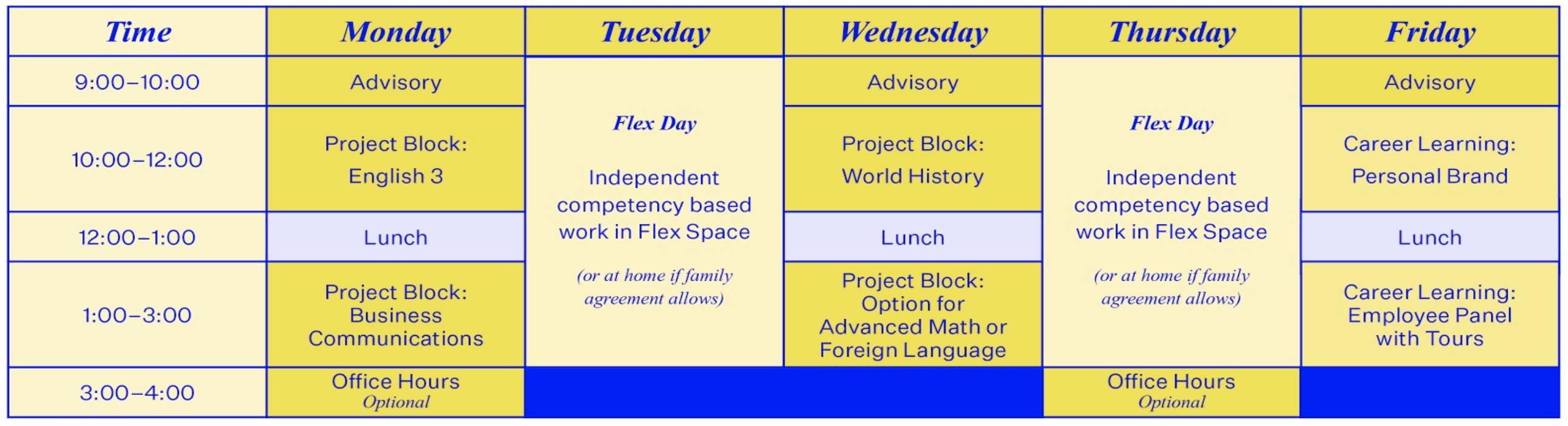
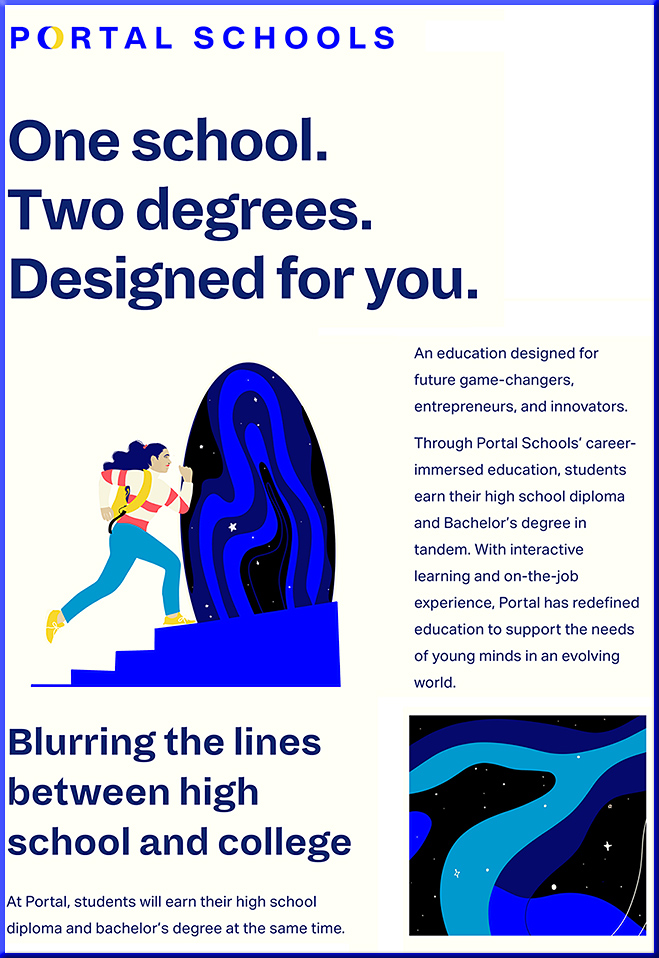
Portal Schools has a vision—to create a high school that allows students to simultaneously earn a high school diploma and a Bachelor’s degree in an environment that is fully designed for them. This ambitious, yet promising goal for this emerging network of micro-schools is using this approach to foster diverse relationships and provide career-immersive learning.

Partnering with Southern New Hampshire University (SNHU), students can customize their high school courses to fit their learning style, schedule, and interests. With Flex Days built into each week, students have time to engage in rigorous coursework, collaborate on real-world learning projects, and independently focus on their goals.

Also see:

Portal Schools: One school. Two Degrees. Designed for you.


The Future of Hybrid Learning — from techlearning.com by Erik Ofgang
HyFlex pioneer Dr. Brian Beatty discusses what’s working and what’s not in hybrid learning, and what’s to come

Excerpts (emphasis DSC):

When designing his own classes these days, Beatty tends to think about the asynchronous vs. synchronous experience rather than online vs. in-person. 
…
Beatty says instructors should attempt to create a reasonably good asynchronous version of a course but don’t need to build the perfect version. Instructors then need to block out time to respond to forum posts and other online components of the class the same way online students need to schedule time to work. He advises a mindset of, “I’m learning how to teach differently, and I’m reserving this time for that. So maybe I’m not going to be part of that committee.”

From DSC:
The teaching toolboxes throughout the continuum (PreK-12, higher ed, vocational programs, other alternatives to higher ed, corporate training & development) have been enhanced and expanded greatly during 2020. The ramifications of these larger toolboxes will benefit many for years to come. They should allows us to pivot and adapt much more quickly — while providing a greater array of teaching techniques/tools to choose from.

Enhancing our teaching toolboxes


Hundreds are seeking legal aid for eviction, unemployment and debt tied to pandemic. A new one-stop site provides free help — from friendly robot guides. — from chicagotribune.com by Darcel Rockett

Excerpts (emphasis DSC):

But the legal aid community knew the need for their help would be dire, as COVID-19 pummeled the economy and left people financially strapped, unemployed and unable to pay their rent. They’ve sounded the alarm, warning of what could be the worst housing crisis in U.S. history, with up to 43% of American renters facing eviction in the coming months.
…
At the end of November, the state’s legal aid system launched a new site, Illinois COVID H.E.L.P. (Housing and Economic Loss Prevention), for residents in need of help finding employment or with unemployment benefits assistance; aid with personal debt and bankruptcy; housing or disputes between tenants and landlords; and wills, estates and guardianship.

Also see:

  • Pandemic Pushes Corporate Law Department Upgrades, Study Finds — from news.bloomberglaw.com by Brian Baxter
    Excerpt: “The coronavirus pandemic is accelerating a transformation of corporate law departments, from technology use to staffing levels, said a survey released Thursday. Nearly 75% of departments significantly or moderately increased adoption of legal technology compared to last year, according to an HBR Consulting analysis.”
 

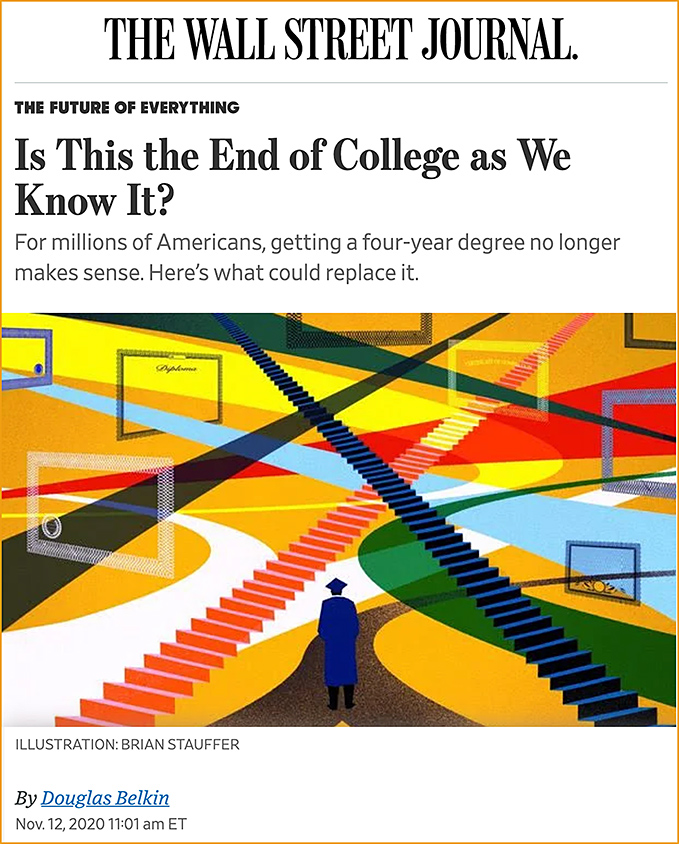
Wall Street Journal article entitled, Is this the end of college as we know it?

Americans aren’t turning their backs on education; they are reconsidering how to obtain it.

Is This the End of College as We Know It? — from wsj.com by Douglas Belkin
For millions of Americans, getting a four-year degree no longer makes sense. Here’s what could replace it.

Excerpt:

For traditional college students, the American postsecondary education system frequently means frontloading a lifetime’s worth of formal education and going into debt to do it. That is no longer working for millions of people, and the failure is clearing the way for alternatives: Faster, cheaper, specialized credentials closely aligned with the labor market and updated incrementally over a longer period, education experts say. These new credentials aren’t limited to traditional colleges and universities. Private industry has already begun to play a larger role in shaping what is taught and who is paying for it.

For more than a century, a four-year college degree was a blue-chip credential and a steppingstone to the American dream. For many millennials and now Gen Z, it has become an albatross around their necks.

What has embittered so many millennials is that they played by the rules and still got stuck. Ben Puckett, a 30-year-old pastor in Michigan, earned a B.S. in physical therapy before a Master’s degree in divinity. He is $95,000 in debt. 

“I went to college because I was told by parents, friends, teachers and counselors that it was the only way to ensure a good future,” Mr. Puckett says. “At 18 years old, how was I supposed to defy what my school, parents, society, friends were saying about going to college?”


“Stuck in it until I die”: Parents get buried by college debt too — from hechingerreport.org by Meredith Kolodner
ParentPlus loans have spiked, leading to financial disaster for many low- and middle-income families

Excerpt:

The couple’s original $40,000 loan to cover the cost of their son and daughter attending public universities in Indiana, where the family lived at the time, has snowballed in those 18 years, with interest rates as high as 8.5 percent. Their bill now stands at more than $100,000.

The Rifes would have lost their house if they had been forced to make the original monthly payment, so they negotiated with the federal government to get it down to $733. Still, it’s more than their mortgage, and it doesn’t cover the interest, so the amount owed has continued to grow.

From DSC:
I have fought for over a decade to bring the costs (involved with obtaining a degree) down. Through the years, I have tried to reach anyone who works within higher ed to listen…to change…to find ways to bring the price of obtaining a degree waaaaaay down. 

Before 2010, I had written about a future where the cost of obtaining a degree would be 50% less. And that has already happened with a handful of instances. But the future will likely look much different than the past.

Fast forward…and the perfect storm against higher ed continues to build. The backlash continues to build.

There will be change. Count on it. 100% bound to happen. In fact, it has to happen, or this nation is in big trouble otherwise. 


(11/24/20) An addendum from the Wall Street Journal:


The Non-Traditional Higher Ed Landscape with Amrit Ahluwalia — from trendingineducation.com

Excerpt:

Amrit shares what got him to where he is in his career as we explore why the pandemic may be increasing awareness of the importance of continuing education and the wide array of learners who engage with it. We conclude with Amrit’s perspectives on what’s on the horizon for non-traditional higher education and beyond.

Google “60-year curriculum.”

Also see:

  • S1E3 — School in 2025 & The Future of Work — from edcircuit.com
    In this episode of Future of School: The Podcast, you’ll hear predictions regarding the outlook for U.S. schools five years from now, the skills required to succeed in the future of work, why K-12 needs to innovate, and more.
  • How to Take Responsibility for the Future of Education — from gettingsmart.com by Thomas Hatch
    Excerpt:
    New technologies, artificial intelligence, and many other kinds of innovations can help to improve education. But those technical achievements will not accomplish much without the personal commitments and broader social movements that can transform our communities. If we are truly going to develop collective responsibility in education, then we have to develop collective responsibility for education. We have to hold ourselves, our elected officials, and our communities accountable for making the changes in our society that will end segregation and discrimination, create equitable educational opportunities, and provide the support that everyone needs to thrive.
 
© 2025 | Daniel Christian