The Gap Between What C-Suite Leaders Think And What HR Executives And Employees Know About Their Workplaces — from forbes.com by Kathy Caprino

Excerpt:

  • C-suite executives now rank organizational complexity, inadequate skills and employee burnout as the top 3 greatest challenges their businesses will face in the next 2 years, and 84% of CHROs say over the next two years they will prioritize agility and flexibility in the workforce. Yet only 19% of HR executives say their HR function has the proper business acumen or capabilities to do so
  •  74% of executives believe they’re helping their employees learn new skills needed to work during the pandemic yet only 38% of their employees believe the same
  • Despite nearly 80% of C-suite executives say they’re supporting the physical and emotional health of their workers right now, only 46% of employees agree
 

Top IT Issues, 2021: Emerging from the Pandemic — from educause.edu

Excerpt:

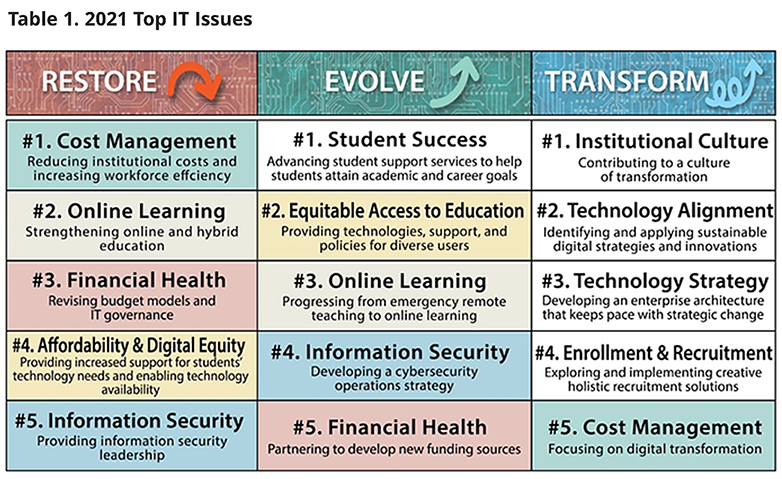
The EDUCAUSE Top IT Issues list has been refactored for 2021 to help higher education shape the role technology will play in the recovery from the pandemic. What different directions might institutional leaders take in their recovery strategy? How can technology help our ecosystem emerge stronger and fitter for the future?

The 2021 EDUCAUSE IT Issues project explores these questions using a very different approach from previous years. Anticipating potential ways institutions might emerge from the pandemic, this year we offer three Top IT Issues lists and examine the top 5 issues within three scenarios that may guide institutional leaders’ use of technology: restore, evolve, and transform.

Educause's Top IT Issues for 2021

Also see:


OPM Market Landscape and Dynamics: Fall 2020 updates — from philonedtech.com by Phil Hill; with thanks to Edsurge.com for this resource

Excerpt:

There has been growing interest in the Online Program Management (OPM) market, as more schools try to develop a strategy and revenue model for online programs (particularly for master’s level). In addition, there has been a broad question to what degree schools would turn to OPM partners to help out with the Covid-driven move to online education in 2020 and beyond. We’re in the middle of the chaotic period of the pandemic, so there are no clear answers yet, but the consistent message is that OPM vendors are seeing a marked increase in interest from colleges and universities this year.


From DSC:
In our future learning experiences, I wonder what taking a break might look and sound like…? That is, we’re going along learning something from/with others (virtually/digitally) and then the teacher, professor, Subject Matter Expert (SME), trainer, or whoever says to take a break. What could happen then?

In the online/digital/virtual-based realm, that could mean that you have the option to set your “break” setting to bring up Spotify, or Vimeo, or YouTube, or Pandora, some VR-based app, other. The lights in your “learning space” could dim and the music could come on. Or you reach for a VR headset and watch a sunset or position yourself by a picturesque brook. Or your favorite podcast/vodcast picks up where you left off.

Hmmm…should be some interesting innovation and affordances along these lines.


The State of AI in Higher Education — from campustechnology.com by Dian Schaffhauser
Both industry and higher ed experts see opportunities and risk, hype and reality with AI for teaching and learning.

Excerpts:

Kurt VanLehn, the chair for effective education in STEM in the School of Computing, Informatics and Decision Systems Engineering at Arizona State University, knows how challenging it can be people to come up with examples of effective AI in education. Why? “Because learning is complicated.”
…
Nuno Fernandes, president and CEO of Ilumno, an ed tech company in Latin America, isn’t ready to count adaptive learning out yet, if only because adaptivity has worked in other industries, such as social platforms like Netflix and Amazon, to identify what could work best for the user, based on previous activities and preferred formats of curriculum.

As Ilumno’s Fernandes asserted, AI won’t “substitute for faculty in any of our lifetimes. What it will do is give us tools to work better and to complement what is being done by humans.”

From DSC:
The article is a very balanced one. On one hand, it urges caution and points out that learning is messy and complex. On the other hand, it points out some beneficial applications of AI that already exist in language learning and in matching alumni with students for mentorship-related reasons.

From my perspective, I think AI-based systems will be used to help us scan job descriptions to see what the marketplace needs and is calling for. Such a system would be a major step forward in at least pointing out the existing hiring trends, needed skillsets, job openings, and more — and to do so in REAL-TIME!

Colleges, universities, and alternatives to traditional higher education could use this information to be far more responsive to the needs of the workplace. Then, such systems could match what the workplace needs with courses, microlearning-based feeds, apprenticeships, and other sources of learning that would help people learn those in-demand skills.

That in and of itself is HUGE. Again, HUGE. Given the need for people to reinvent themselves — and to do so quickly and affordably — that is incredibly beneficial.

Also, I do think there will be cloud-based learner profiles…data that each of us control and say who has access to it. Credentials will be stored there, for example. AI-based systems can scan such profiles and our desired career goals and suggest possible matches.

We can change our career goals. We don’t have to be locked into a particular track or tracks. We can reinvent ourselves. In fact, many of us will have to.


From DSC:
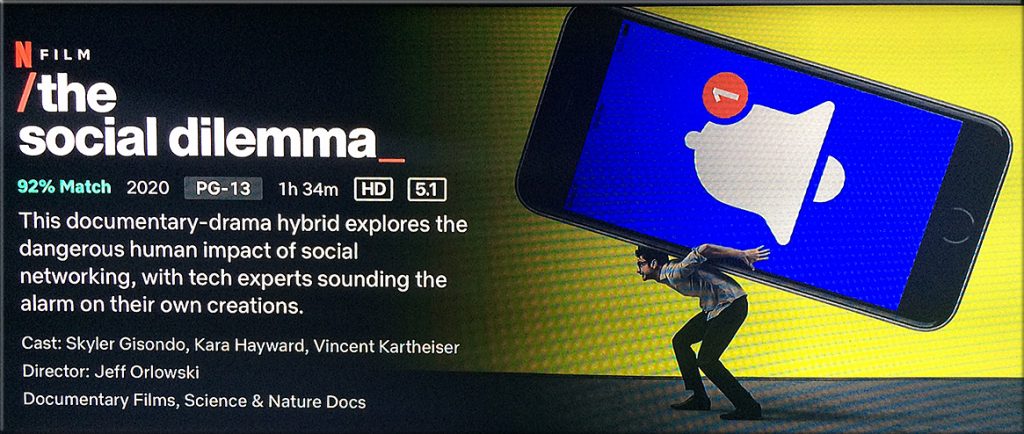
Who needs to be discussing/debating “The Social Dilemma” movie? Whether one agrees with the perspectives put forth therein or not, the discussion boards out there should be lighting up in the undergraduate areas of Computer Science (especially Programming), Engineering, Business, Economics, Mathematics, Statistics, Philosophy, Religion, Political Science, Sociology, and perhaps other disciplines as well. 

To those starting out the relevant careers here…just because we can, doesn’t mean we should. Ask yourself not whether something CAN be developed, but *whether it SHOULD be developed* and what the potential implications of a technology/invention/etc. might be. I’m not aiming to take a position here. Rather, I’m trying to promote some serious reflection for those developing our new, emerging technologies and our new products/services out there.

Who needs to be discussing/debating The Social Dilemna movie?


Technologies that enable legal and compliance leaders to spot innovations — from helpnetsecurity.com
COVID-19 has accelerated the push toward digital business transformation for most businesses, and legal and compliance leaders are under pressure to anticipate both the potential improvements and possible risks that come with new legal technology innovations, according to Gartner.

Excerpt:

To address this challenge, Gartner lists the 31 must-watch legal technologies to allow legal and compliance leaders to identify innovations that will allow them to act faster. They can use this information for internal planning and prioritization of emerging innovations.

Also see:
(with a shoutout to Nicola Shaver for this resource)

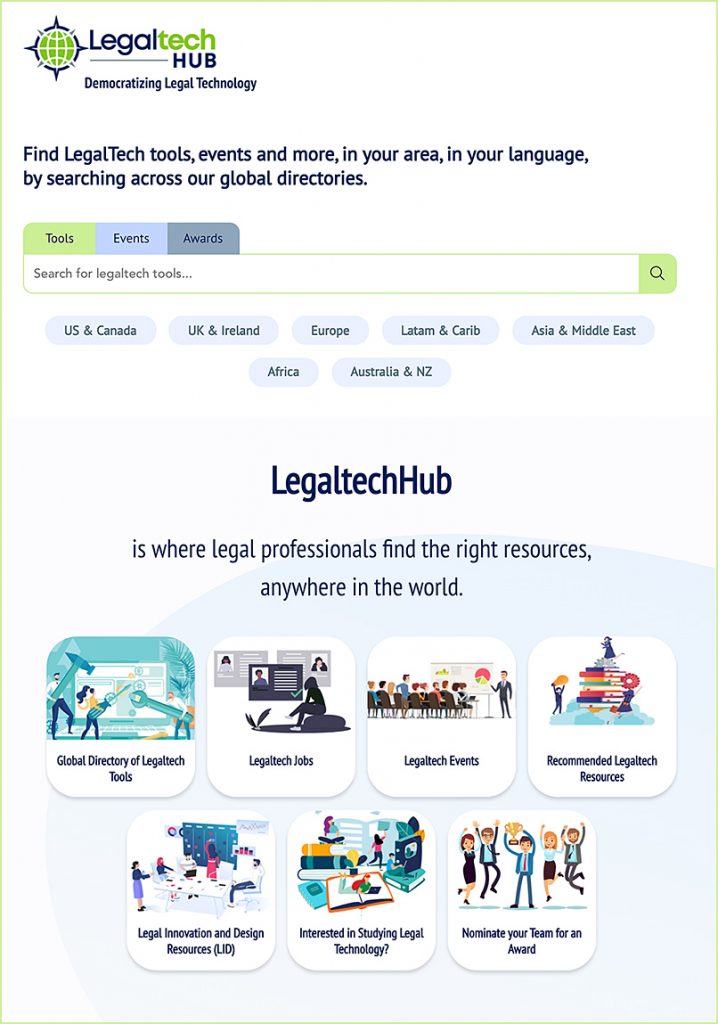
legaltechnology hub dot com

Also see:

Envisioning the future of law — from abovethelaw.com by Ken Crutchfield
We’ve seen a transformation underway within the legal industry for some time now, and the pandemic is continuing to accelerate these changes.

Excerpt:

We’ve seen a transformation underway within the legal industry for some time now, and the pandemic is continuing to accelerate these changes. From what we have observed in recent months, many of the technologies that were reshaping the practice of law have now become necessary, and resistance to digital workflows is no longer a viable option for many legal professionals. In the midst of this transformation, we can draw some observations about how the industry can cope with what’s next. 


The shift online has colleges looking to share courses — from educationdive.com by Alia Wong
Dozens of institutions have joined consortia for exchanging online classes since the pandemic began, and new options have sprung up.

Excerpts:

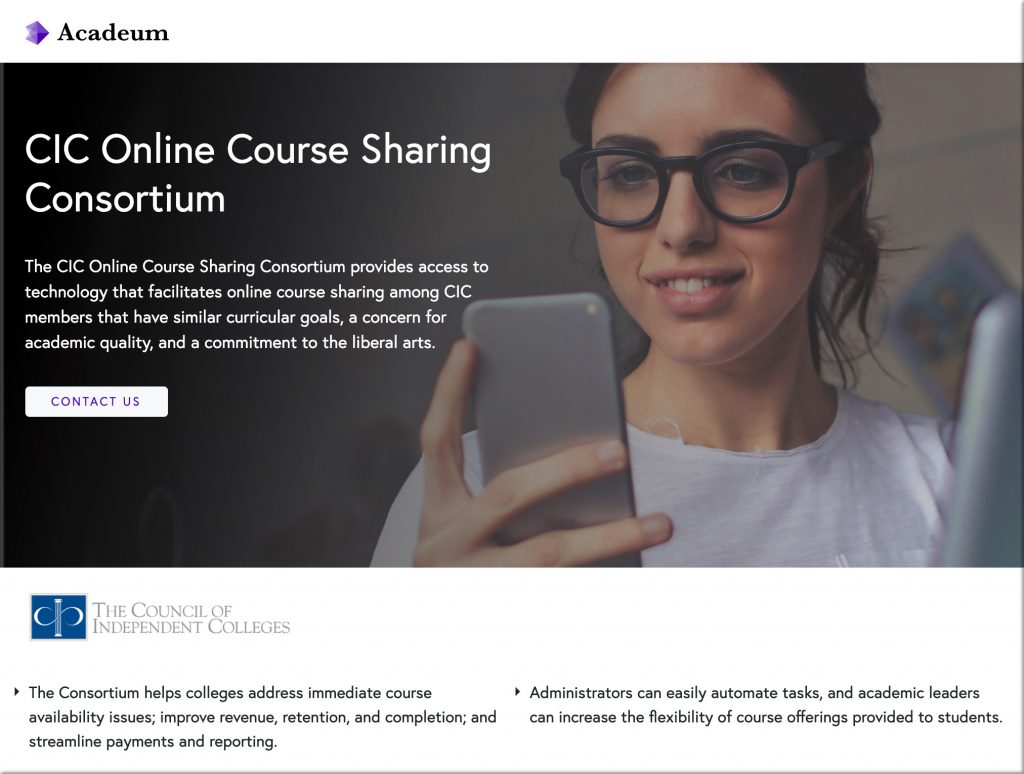
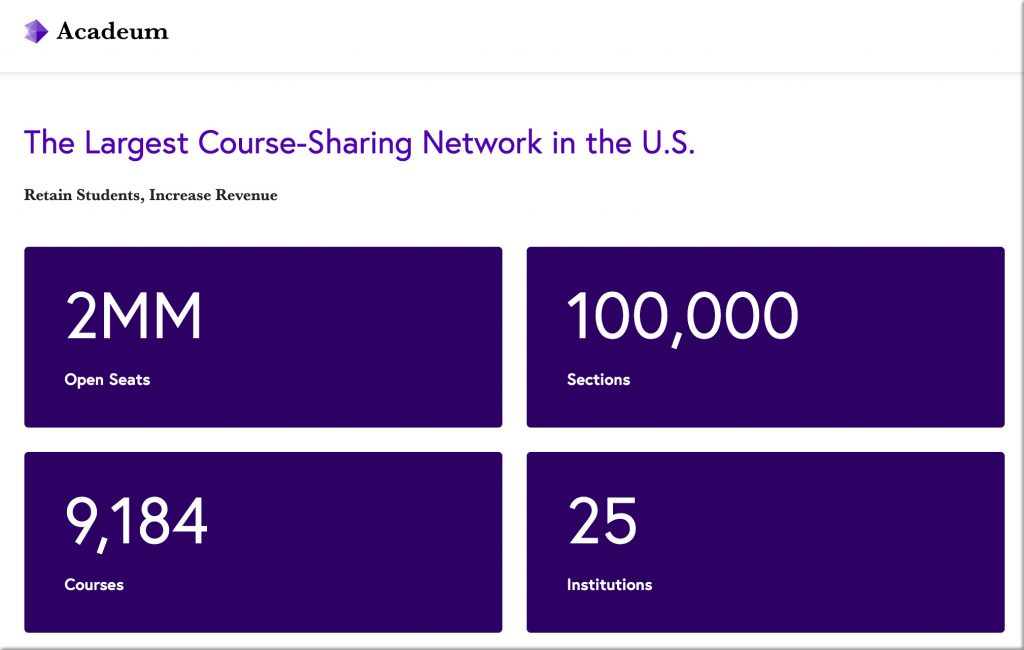
Dozens of other small, private institutions followed thanks to the Council of Independent Colleges’ (CIC’s) Online Course Sharing Consortium, which was formed in late 2018 and today is the largest of the dozen or so networks on Acadeum.

CIC Online Course Sharing Consortium


Course recovery consortium


Today’s awkward Zoom classes could bring a new era of higher education — from edsurge.com by Debra Spar

Excerpt:

Indeed, the forced march to Zoom has also forced colleges and universities to wrestle at last with the incipient promise of educational technologies; with the power that was evident, if not yet realized, in the early MOOCs. Much of that power has to do with scale–the ability to take a single course, even a single lecture, and share it across a vast universe of learners. But some also comes from the strange intimacy of the small screen, and from the possibilities of collapsing both time and space.

Office hours, for instance, migrate easily. Bringing in guest speakers works remarkably well, allowing faculty to introduce a wide range of voices into their classroom conversations. On the screen, everyone can see and hear and participate. 


Learning from the Living [Class] Room


From DSC:
For those folks looking for work, the article below relays some solid advice/tips to get you past the Applicant Tracking Systems out there. The last time I was searching for a position, I had no idea how prevalent these systems are out there. To quote from the article:

Because of the sheer volume, 99 percent of Fortune 500 companies use an Applicant Tracking System (ATS) to manage each step of the hiring process. 

If you haven’t looked for a job in a while, this will blow you away. To get your resume in front of an actual human being is a major accomplishment.

5 secrets to get you past the résumé-reading robots — from fastcompany.com by
Before your résumé gets to a recruiter, it’s read by an AI-driven Applicant Tracking System. A human resources exec advises how you can beat the robot.


From DSC:
…and by the way, this is very much relevant for faculty members and staff members out there. Consider this quote from Debora Spar, senior associate dean of Harvard Business School Online:

Many colleges and universities will suffer extreme financial stress; some – up to 345 colleges, according to one recent estimate – could be forced to close. Faculty are likely to face layoffs unprecedented in the history of U.S. higher education.


From DSC:
The perfect storm continues to build against traditional institutions of higher education. The backlash continues to build strength. And there WILL BE change — there’s no choice now. Alternatives to these traditional institutions of higher education continue to appear on the scene.

Over the last several decades, traditional institutions of higher education had the chance to step in and do something. They didn’t take nearly enough action. As in other industries, these days of the Coronavirus just hasten the changes that were already afoot. 

Also see:

  • Alternative Credentials on the Rise — from insidehighered.com by Paul Fain, with thanks to Ryan Craig for this resource
    Interest is growing in short-term, online credentials amid the pandemic. Will they become viable alternative pathways to well-paying jobs?


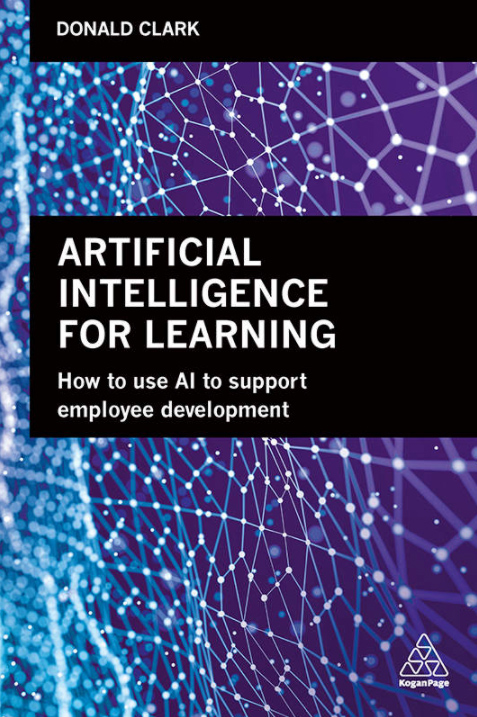
Artificial Intelligence for Learning: How to use AI to Support Employee Development [Donald Clark]

So what is the book about? — from donaldclarkplanb.blogspot.com by Donald Clark; which discusses his book entitled, Artificial Intelligence for Learning: How to use AI to Support Employee Development

Excerpt:

AI changes everything. It changes how we work, shop, travel, entertain ourselves, socialize, deal with finance and healthcare. When online, AI mediates almost everything – Google, Google Scholar, YouTube, Facebook, Twitter, Instagram, TikTok, Amazon, Netflix. It would be bizarre to imagine that AI will have no role to play in learning – it already has.

Both informally and formally, AI is now embedded in many of the tools real learners use for online learning – we search for knowledge using AI (Google, Google Scholar), we search for practical knowledge using AI (YouTube), Duolingo for languages, and CPD is becoming common on social media, almost all mediated by AI. It is everywhere, just largely invisible. This book is partly about the role of AI in informal learning but it is largely about its existing and potential role in formal learning – in schools, Universities and the workplace. AI changes the world, so it changes why we learn, what we learn and how we learn.

Also see:

  • Abandon lectures: increase attendance, attitudes and attainment — from donaldclarkplanb.blogspot.com by Donald Clark
    Excerpt:
    The groups were taught a module in a physics course, in three one hour sessions in one week. In short; attendance increased, measured attitudes were better (students enjoyed the experience (90%) and thought that the whole course would be better if taught this way (77%)). More importantly students in the experimental group outperformed the control group, doing more than twice as well in assessment than the control group.
 

From DSC:
I’ve heard many people mention that what we did throughout K-16 in the spring of 2020 was remote teaching — an emergency response to the Coronavirus. And I would agree with that assessment and verbiage — that was/is very true. It wasn’t online-based learning as many of us have come to know it over the last 20+ years. It didn’t offer a lot of the things that organizations like the Online Learning Consortium (OLC) and Quality Matters have been trying to promote and get us to achieve for years.

But then I hear the expectation that everything has been vastly improved over the summer and suddenly, almost overnight, all teachers, professors, trainers, adjunct faculty members, etc. have become highly proficient in matters involving online-based teaching and learning. In other words, the expectations say that:

  • Students should expect a top-notch experience now that summer is over.
  • Suddenly, Rome was built in a day!

But it wasn’t, and it isn’t.

It takes time and practice to become proficient in how to teach online. That’s the truth. It also takes a great deal of time and investments in hardware, software, tools, training/education/professional development, networking and telecommunications infrastructure, and more. It takes numerous skillsets to do it well. (By the way, that’s why I like to think in terms of team-based content creation and delivery.)

Also, often times, it takes MORE time to teach online than it does to teach in a face-to-face classroom. That is certainly the case for the first time that you will be teaching online. You need to know that going into it. You have to put your course together PLUS learn how to deliver it effectively in an online-based format. You need to learn a variety of tools and related ecosystems. Not a simple, overnight kind of task, I can assure you.

So students, don’t expect your faculty members to become professional online-based teachers overnight.  Again, it takes time and practice…just like anything we set out to do.

And for you student teachers and Education Departments/Programs out there, keep at it. Don’t dismiss this time as a brief period/phenomenon that will simply go away and we’ll get back to “normal.” Make the necessary adjustments to your curriculum, toolsets, “teacher placements,” and more. Let’s get prepared for the future, come what may.

For higher ed, if you want to continue to use adjunct faculty members to handle a significant amount of the teaching load out there, you will need to better address the training and the $$/reimbursements that you provide to them.

And for all of the teachers, trainers, faculty members — and now even parents and/or guardians — out there, cut yourself some slack, give yourself some grace, and keep trying. One step at a time. Don’t get discouraged.

Also relevant/see:

Build and accelerate beyond the pandemic: Consciously deliver a great online experience for lifelong learners — from evoLLLution.com by Philip Regier

Excerpt:

Today’s learners have high expectations as expert consumers in all aspects of their lives. Higher education needs to create an infrastructure that meets the needs of this tech-savvy demographic. Institutions need to recognize that the online environment is here to stay and is in need of a rebuild in order to deliver the best student experience possible, even post-pandemic. In this interview, Phil Regier discusses the today’s learners’ expectations, scaling a high-quality online environment, and how to build the right infrastructure to support learners in this new and digitized normal.

 
© 2025 | Daniel Christian