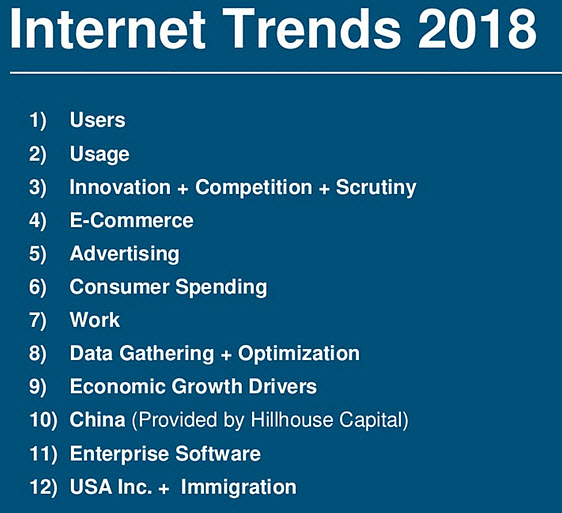
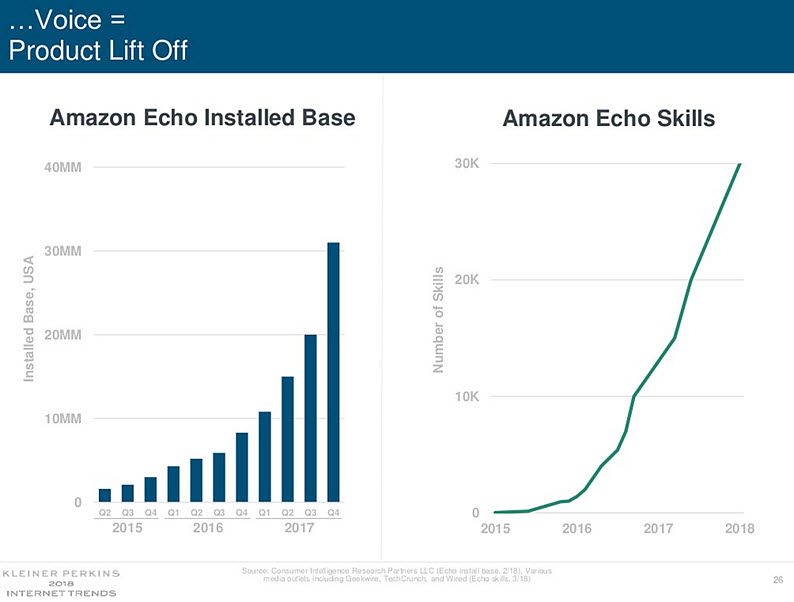
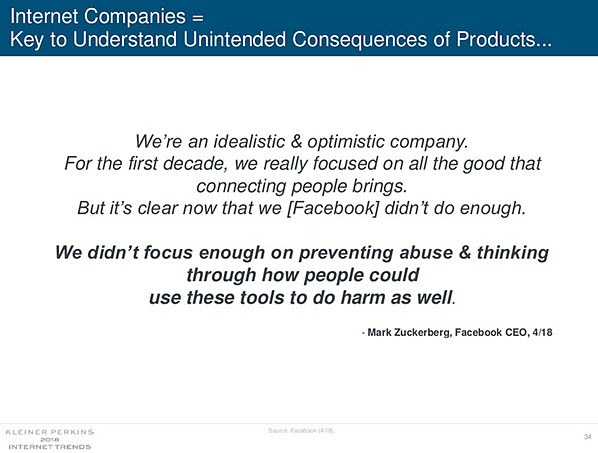
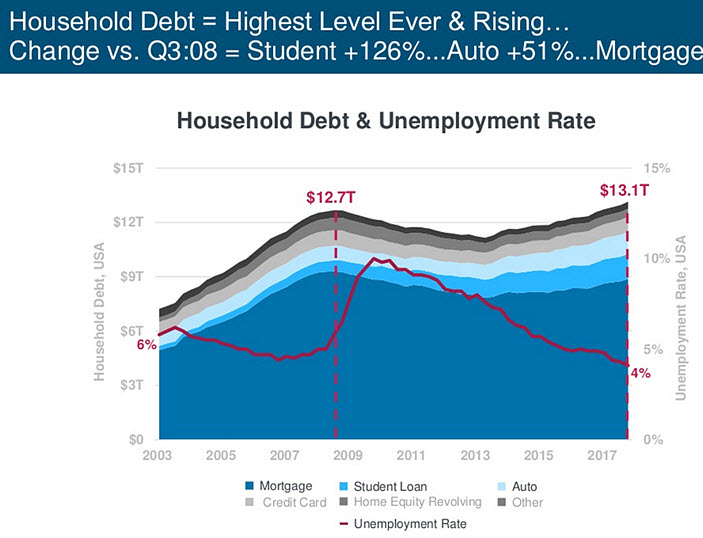
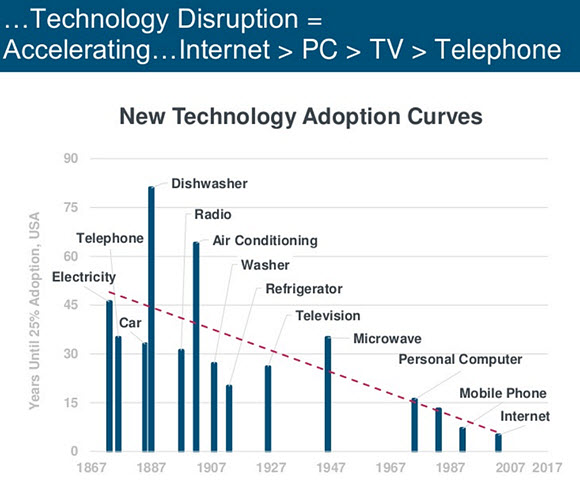
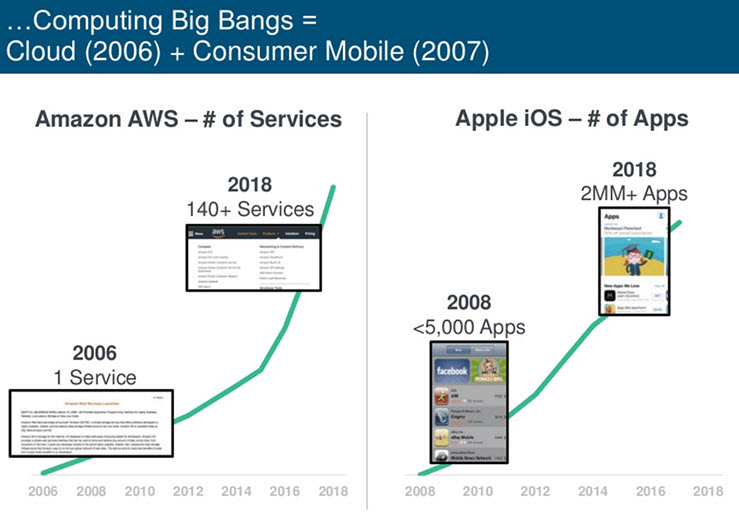
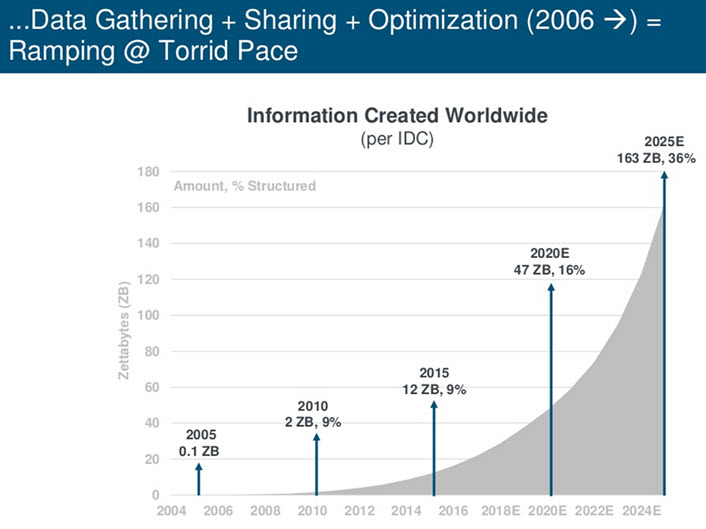
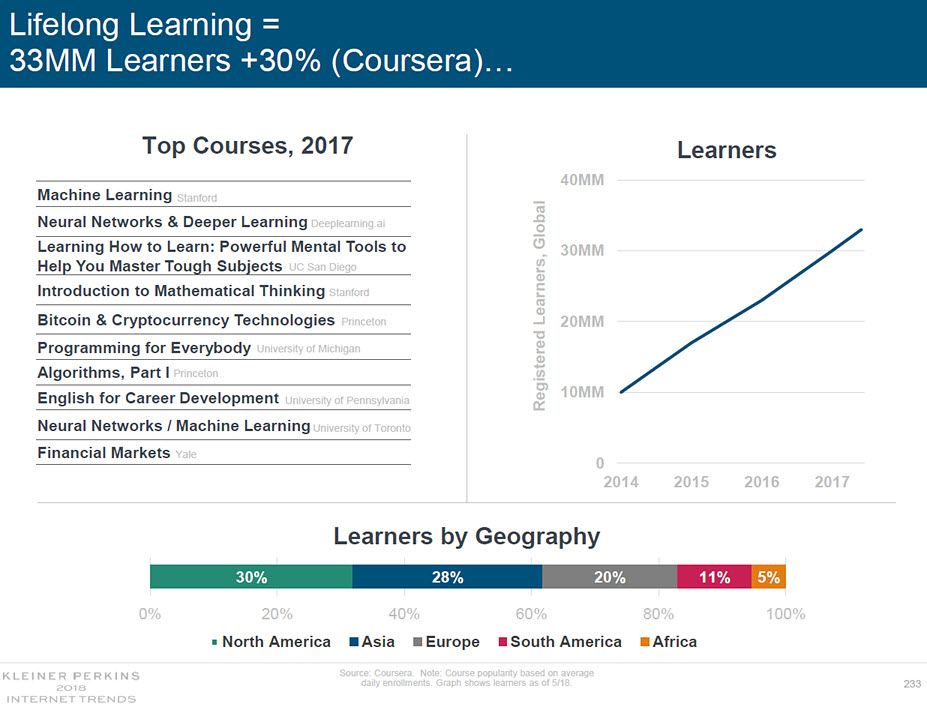
Below are some excerpted slides from her presentation…
Also see:
20 important takeaways for learning world from Mary Meeker’s brilliant tech trends – from donaldclarkplanb.blogspot.com by Donald Clark
Excerpt:
Mary Meeker’s slide deck has a reputation of being the Delphic Oracle of tech. But, at 294 slides it’s a lot to take in. Don’t worry, I’ve been through them all. It has tons on economic stuff that is of marginal interest to education and training but there’s plenty to to get our teeth into. We’re not immune to tech trends, indeed we tend to follow in lock-step, just a bit later than everyone else. Among the data are lots of fascinating insights that point the way forward in terms of what we’re likely to be doing over the next decade. So here’s a really quick, top-end summary for folk in the learning game.
“Educational content usage online is ramping fast” with over 1 billion daily educational videos watched. There is evidence that use of the Internet for informal and formal learning is taking off.
Click on the image to get a larger image in a PDF file format.
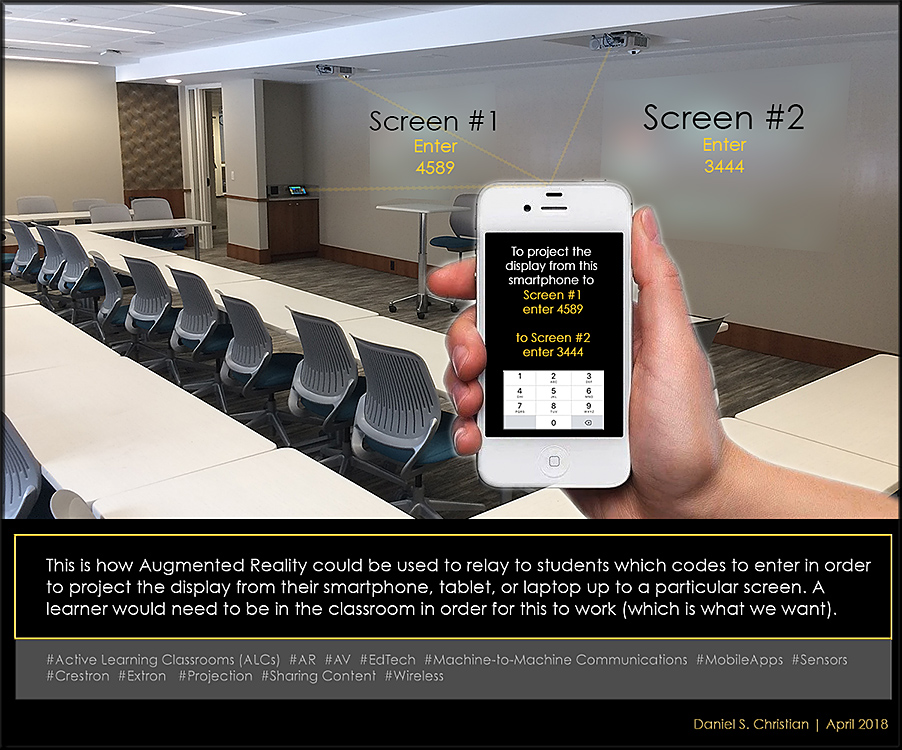
From DSC: So regardless of what was being displayed up on any given screen at the time, once a learner was invited to use their devices to share information, a graphical layer would appear on the learner’s mobile device — as well as up on the image of the screens (but the actual images being projected on the screens would be shown in the background in a muted/pulled back/25% opacity layer so the code would “pop” visually-speaking) — letting him or her know what code to enter in order to wirelessly share their content up to a particular screen. This could be extra helpful when you have multiple screens in a room.
For folks at Microsoft: I could have said Mixed Reality here as well.
From DSC:
This application looks to be very well done and thought out! Wow!
Check out the video entitled “Interactive Ink – Enables digital handwriting“ — and you may also wonder whether this could be a great medium/method of having to “write things down” for better information processing in our minds, while also producing digital work for easier distribution and sharing!
Wow! Talk about solid user experience design and interface design! Nicely done.
Below is an excerpt of the information from Bella Pietsch from anthonyBarnum Public Relations
Imagine a world where users interact with their digital devices seamlessly, and don’t suffer from lag and delayed response time. I work with MyScript, a company whose Interactive Ink tech creates that world of seamless handwritten interactivity by combining the flexibility of pen and paper with the power and productivity of digital processing.
According to a recent forecast, the global handwriting recognition market is valued at a trillion-plus dollars and is expected to grow at an almost 16 percent compound annual growth rate by 2025. To add additional context, the new affordable iPad with stylus support was just released, allowing users to work with the $99 Apple Pencil, which was previously only supported by the iPad Pro.
Check out the demo of Interactive Ink using an Apple Pencil, Microsoft Surface Pen, Samsung S Pen or Google Pixelbook Pen here.
Interactive Ink’s proficiencies are the future of writing and equating. Developed by MyScript Labs, Interactive Ink is a form of digital ink technology which allows ink editing via simple gestures and providing device reflow flexibility. Interactive Ink relies on real-time predictive handwriting recognition, driven by artificial intelligence and neural network architectures.
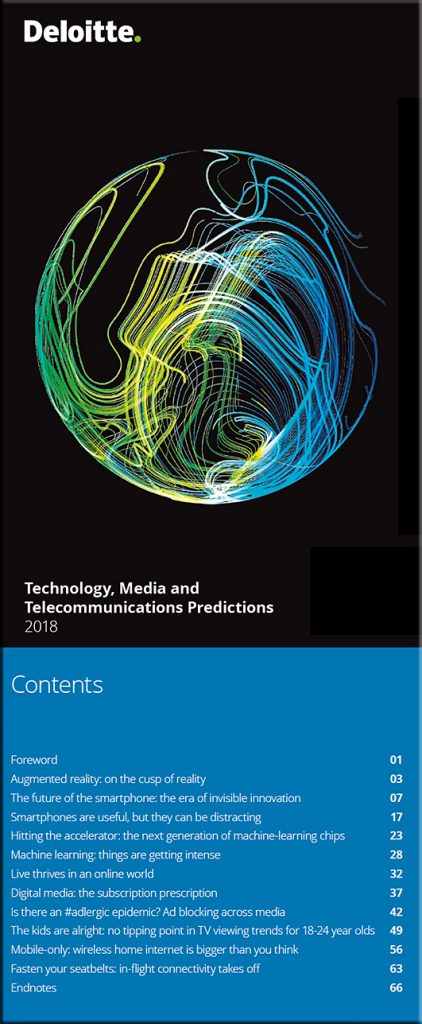
The technology, media and entertainment, and telecommunications ecosystem remains as fascinating as ever in 2018. Will augmented reality become mainstream? How will machine learning affect the enterprise? What’s the future of the smartphone? Deloitte Global invites you to read the latest Predictions report, designed to provide insight into transformation and growth opportunities over the next one to five years.
2018 TECH TRENDS REPORT— from the Future Today Institute Emerging technology trends that will influence business, government, education, media and society in the coming year.
Description:
The Future Today Institute’s 11th annual Tech Trends Report identifies 235 tantalizing advancements in emerging technologies—artificial intelligence, biotech, autonomous robots, green energy and space travel—that will begin to enter the mainstream and fundamentally disrupt business, geopolitics and everyday life around the world. Our annual report has garnered more than six million cumulative views, and this edition is our largest to date.
Helping organizations see change early and calculate the impact of new trends is why we publish our annual Emerging Tech Trends Report, which focuses on mid- to late-stage emerging technologies that are on a growth trajectory.
a calendar of events that will shape technology this year
detailed near-future scenarios for several of the technologies
a new framework to help organizations decide when to take action on trends
an interactive table of contents, which will allow you to more easily navigate the report from the bookmarks bar in your PDF reader
01 How does this trend impact our industry and all of its parts?
02 How might global events — politics, climate change, economic shifts – impact this trend, and as a result, our organization?
03 What are the second, third, fourth, and fifth-order implications of this trend as it evolves, both in our organization and our industry?
04 What are the consequences if our organization fails to take action on this trend?
05 Does this trend signal emerging disruption to our traditional business practices and cherished beliefs?
06 Does this trend indicate a future disruption to the established roles and responsibilities within our organization? If so, how do we reverse-engineer that disruption and deal with it in the present day?
07 How are the organizations in adjacent spaces addressing this trend? What can we learn from their failures and best practices?
08 How will the wants, needs and expectations of our consumers/ constituents change as a result of this trend?
09 Where does this trend create potential new partners or collaborators for us?
10 How does this trend inspire us to think about the future of our organization?
From DSC: Though this outlook report paints a rosier picture than I think we will actually encounter, there are several interesting perspectives in this report. We need to be peering out into the future to see which trends and scenarios are most likely to occur…then plan accordingly. With that in mind, I’ve captured a few of the thoughts below.
At its inception, very few people anticipated the pace at which the internet would spread across the world, or the impact it would have in remaking business and culture. And yet, as journalist Oliver Burkeman wrote in 2009, “Without most of us quite noticing when it happened, the web went from being a strange new curiosity to a background condition of everyday life.”1
In Dell’s Digital Transformation Index study, with 4,000 senior decision makers across the world, 45% say they are concerned about becoming obsolete in just 3-5 years, nearly half don’t know what their industry will look like in just three years’ time, and 73% believe they need to be more ‘digital’ to succeed in the future.
With this in mind, we set out with 20 experts to explore how various social and technological drivers will influence the next decade and, specifically, how emerging technologies will recast our society and the way we conduct business by the year 2030. As a result, this outlook report concludes that, over the next decade, emerging technologies will underpin the formation of new human-machine partnerships that make the most of their respective complementary strengths. These partnerships will enhance daily activities around the coordination of resources and in-the-moment learning, which will reset expectations for work and require corporate structures to adapt to the expanding capabilities of human-machine teams.
…
For the purpose of this study, IFTF explored the impact that Robotics, Artificial Intelligence (AI) and Machine Learning, Virtual Reality (VR) and Augmented Reality (AR), and Cloud Computing,will have on society by 2030. These technologies, enabled by significant advances in software, will underpin the formation of new human-machine partnerships.
… On-demand access to AR learning resources will reset expectations and practices around workplace training and retraining, and real-time decision-making will be bolstered by easy access to information flows. VR-enabled simulation will immerse people in alternative scenarios, increasing empathy for others and preparation for future situations. It will empower the internet of experience by blending physical and virtual worlds.
Already, the number of digital platforms that are being used to orchestrate either physical or human resources has surpassed 1,800.9 They are not only connecting people in need of a ride with drivers, or vacationers with a place to stay, but job searchers with work, and vulnerable populations with critical services. The popularity of the services they offer is introducing society to the capabilities of coordinating technologies and resetting expectations about the ownership of fixed assets.
Human-machine partnerships won’t spell the end of human jobs, but work will be vastly different. …
The U.S. Bureau of Labor Statistics says that today’s learners will have 8 to 10 jobs by the time they are 38. Many of them will join the workforce of freelancers. Already 50 million strong, freelancers are projected to make up 50% of the workforce in the United States by 2020.12 Most freelancers will not be able to rely on traditional HR departments, onboarding processes, and many of the other affordances of institutional work.
By 2030, in-the-moment learning will become the modus operandi, and the ability to gain new knowledge will be valued higher than the knowledge people already have.
From DSC: In this video, I look at how the pace of change has changed and I also provide some examples that back up this assertion. I end with a series of relevant questions, especially for those of us working within higher education.
What are we doing to get ready for the massive change that’s heading our way?
How to be an ed tech futurist— from campustechnology.com by Bryan Alexander While no one can predict the future, these forecasting methods will help you anticipate trends and spur more collaborative thinking.
Excerpts:
Some of the forecasting methods Bryan mentions are:
Trend analysis
Environmental scanning
Scenarios
Science fiction
From DSC: I greatly appreciate the work that Bryan does — the topics that he chooses to write about, his analyses, comments, and questions are often thought-provoking. I couldn’t agree more with Bryan’s assertion that forecasting needs to become more realized/practiced within higher education. This is especially true given the exponential rate of change that many societies throughout the globe are now experiencing.
We need to be pulse-checking a variety of landscapes out there, to identify and put significant trends, forces, and emerging technologies on our radars. The strategy of identifying potential scenarios – and then developing responses to those potential scenarios — is very wise.
We’re pleased to share this year’s Edtech Outlook, a data-rich dive into the state of education technology with case studies into emerging-frontier innovations.
…
Education technology spans a broad category of classroom tools, spanning corporate learning, language learning, digital learning content and more. We focus here on Reach Capital’s sweet spot: school-based education technology.
…
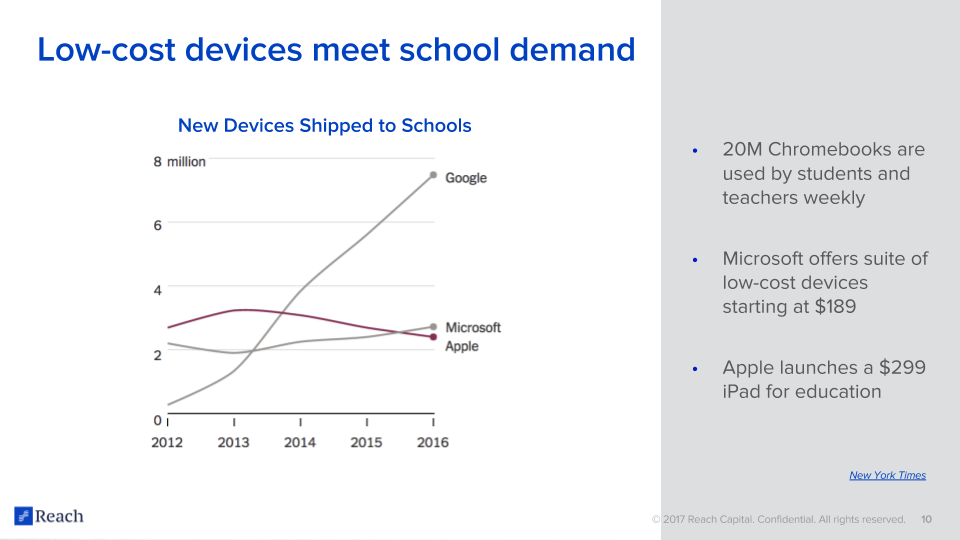
1:1 (one device per student) is at 60% and growing rapidly. Driven by online testing mandates, along with federal and state policies, we are moving quickly toward one device per child in our K-12 schools. Last year alone 20 million Chromebooks were used by teachers and students weekly. (There are 50 million students in US public schools).
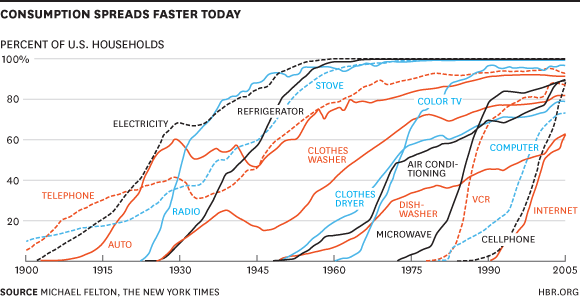
From DSC: Looking at the graphic from the New York Times below, and with an eye on the exponential pace of change that we are now on, note how quickly Google captured major market share in the edtech market.
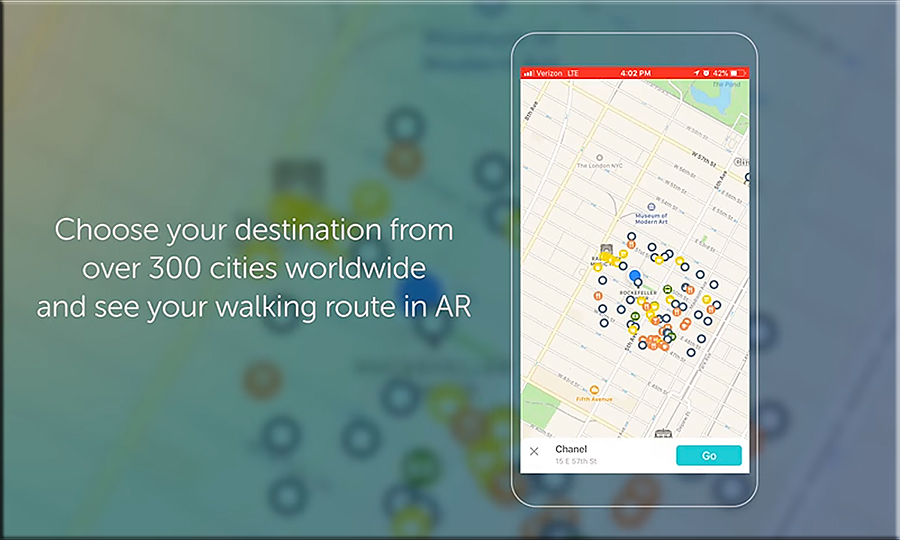
The ARKit is often mistaken as a single app, but it’s actually a tool for developers to create their own apps. Already, it has opened up the AR floodgates for newer Apple devices, and developers have been showcasing their new apps on social media using the hashtag #ARKit. The latest apps include technology that simulate realistic experiences, making AR more useful than ever in our daily lives.
…
While testing some apps before the release of iOS 11, I was overwhelmed with the educational potential and benefit for our students contained in this technology. I found some incredible apps that blew the roof off of our classroom walls, as well as some that provided minimal benefit.
Here, I’ve made my list of top 10 recommended ARKit apps (as of today) that can drastically transform our lessons and the interactions with content. While I’ve tried to explain the value of these tools, there are some instances where you simply need to see it to believe it, so I’ve included my experience on video using some of the apps to provide further insights whenever possible.
From DSC: I wonder if teams involved in creating/enhancing learning spaces might benefit from using magicplan (1 of the 10 apps mentioned) for quick floor plans and ideas:
The award winning magicplan app lets you create professional floor plans simply by taking pictures. Use magicplan to generate complete job estimates, view your space in 3D, plan DIY projects, or furnish your home. Create floor plans in minutes and edit them with ease. Add objects, photos, annotations, product price lists, tasks, and taxes in a single tap. Purchase your floor plans to get them in PDF, JPG, DXF, PNG, SVG, and CSV formats. Share them with any magicplan user. View them in 3D. Publish them as interactive floor plans on the web – or store them on the MagicPlan Cloud to view and edit them on multiple devices.
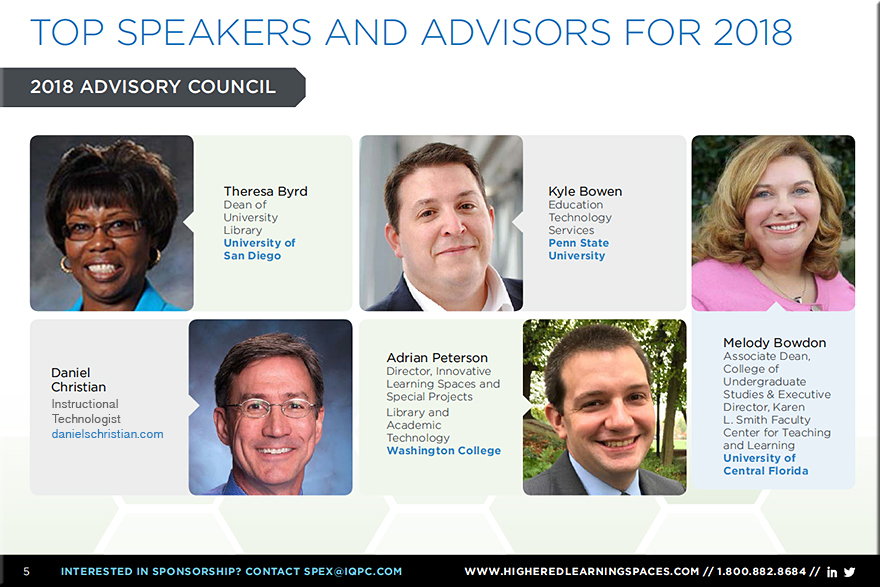
From DSC: I am honored to be currently serving on the 2018 Advisory Council for the Next Generation Learning Spaces Conference with a great group of people. Missing — at least from my perspective — from the image below is Kristen Tadrous, Senior Program Director with the Corporate Learning Network. Kristen has done a great job these last few years planning and running this conference.
NOTE:
The above graphic reflects a recent change for me. I am still an Adjunct Faculty Member
at Calvin College, but I am no longer a Senior Instructional Designer there.
My brand is centered around being an Instructional Technologist.
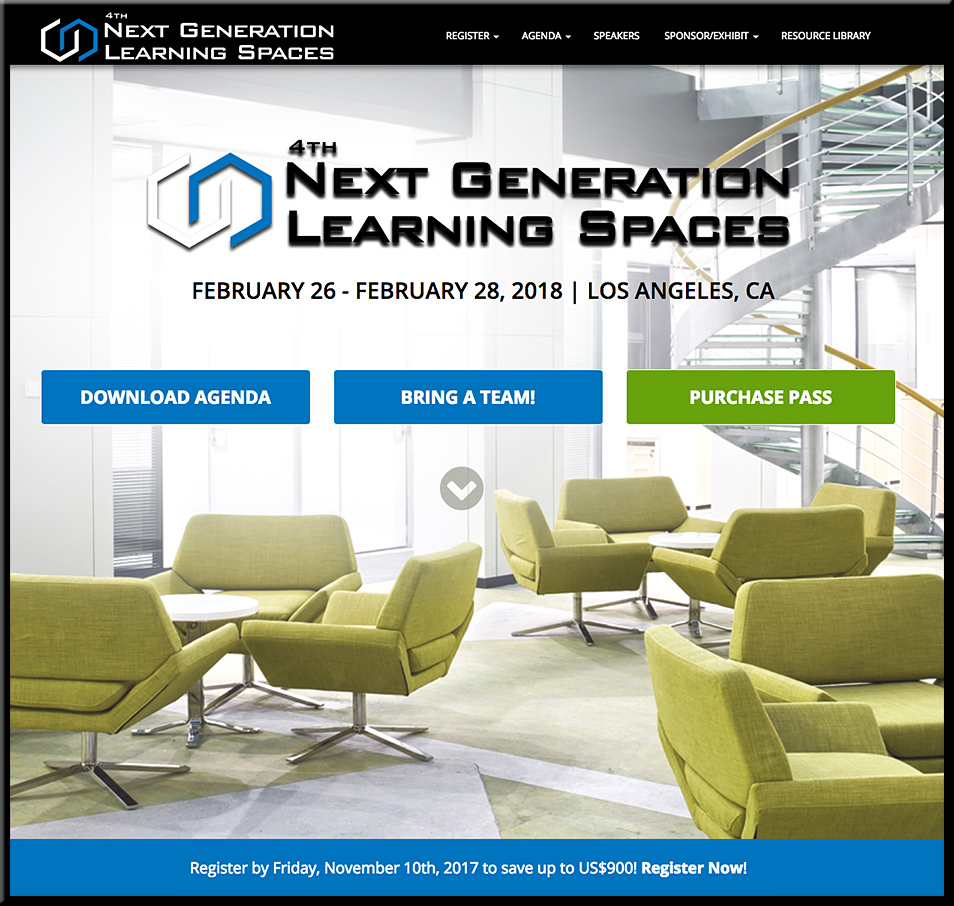
This national conference will be held in Los Angeles, CA on February 26-28, 2018. It is designed to help institutions of higher education develop highly-innovative cultures — something that’s needed in many institutions of traditional higher education right now.
I have attended the first 3 conferences and I moderated a panel at the most recent conference out in San Diego back in February/March of this year. I just want to say that this is a great conference and I encourage you to bring a group of people to it from your organization! I say a group of people because a group of 5 of us (from a variety of departments) went one year and the result of attending the NGLS Conference was a brand new Sandbox Classroom — an active-learning based, highly-collaborative learning space where faculty members can experiment with new pedagogies as well as with new technologies. The conference helped us discuss things as a diverse group, think out load, come up with some innovative ideas, and then build the momentum to move forward with some of those key ideas.
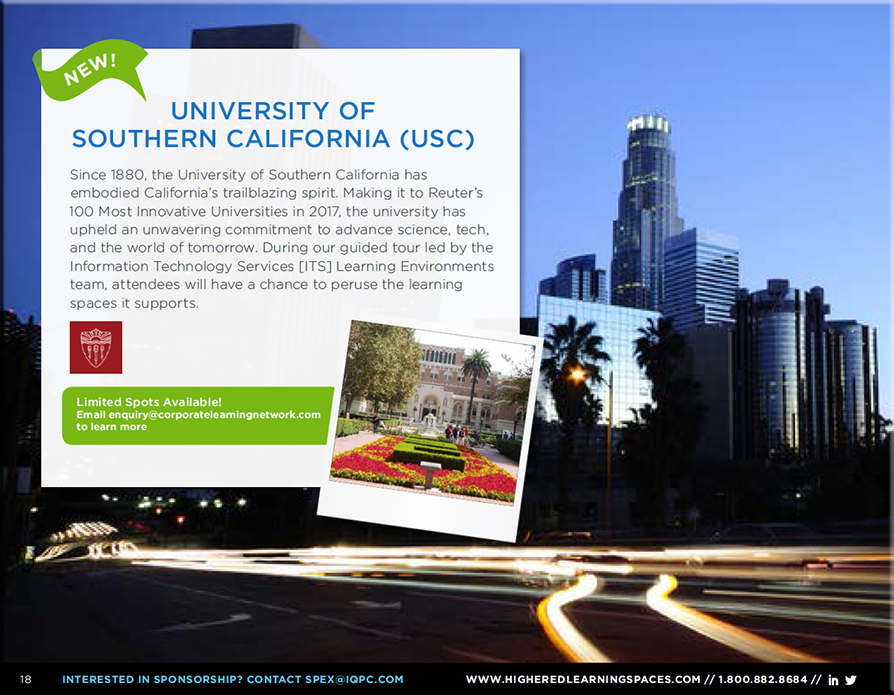
Per Kristen Tadrous, here’s why you want to check out USC:
A true leader in innovation: USC made it to the Top 20 of Reuter’s 100 Most Innovative Universities in 2017!
Detailed guided tour of leading spaces led by the Information Technology Services Learning Environments team
Benchmark your own learning environments by getting a ‘behind the scenes’ look at their state-of-the-art spaces
There are only 30 spots available for the site tour
Building Spaces to Inspire a Culture of Innovation — a core theme at the 4th Next Generation Learning Spaces summit, taking place this February 26-28 in Los Angeles. An invaluable opportunity to meet and hear from like-minded peers in higher education, and continue your path toward lifelong learning. #ngls2018 http://bit.ly/2yNkMLL
Emerging social VR platforms are experimenting with new ways of democratizing access and ownership of content and information.
VR has often been considered something of a solitary experience, but that’s changing fast. Social VR platforms are on the rise, and as the acquisition of AltspaceVR by Microsoft shows, major players in that space are taking notice.
…
This shows how momentum is building around social VR, and although it’s unlikely that such platforms will replace social media in terms of popularity overnight, the question is certainly being asked about who will emerge as “Facebook of VR.”
…
“We believe virtual reality will flourish once users have a more prominent role in controlling their creations. Currently, the companies that create the virtual worlds own all of the content built by the users. They are the ones who profit, reap the benefits from the network effects, and have the power to undo, change or censor what happens within the world itself. The true potential of VR might be realized, and certainly surpass what already exists, if this power were put into the hands of the users instead,” believes Ariel Meilich, founder of blockchain-based virtual platform Decentraland.
A blockchain is a digitized, decentralized public ledger of cryptocurrency transactions. Essentially each ‘block’ is like an individual bank statement. Completed ‘blocks’ (the most recent transactions) are added in chronological order allowing market participants to keep track of the transactions without the need for central record keeping. Just as Bitcoin eliminates the need for a third party to process or store payments, and isn’t regulated by a central authority, users in any blockchain structure are responsible for validating transactions whenever one party pays another for goods or services.
From DSC: As this article reminded me, it’s the combination of two or more emerging technologies that will likely bring major innovation our way. Here’s another example of that same idea/concept.
Online glasses retailer Warby Parker built its reputation by selling fashionable yet affordable eyeglasses, so it perhaps a surprise that it’s one of the first developers to take advantage of the technology in the least affordable iPhone yet.
While other developers are making adjusting to their apps to account for the infamous camera notch, Warby Parker decided to update its Glasses app to directly leverage the Face ID facial recognition system. Now, in the updated version of the app, Glasses can measure the user’s face to estimate which frames will fit best.
Apple Inc., seeking a breakthrough product to succeed the iPhone, aims to have technology ready for an augmented-reality headset in 2019 and could ship a product as early as 2020.
Unlike the current generation of virtual reality headsets that use a smartphone as the engine and screen, Apple’s device will have its own display and run on a new chip and operating system, according to people familiar with the situation. The development timeline is very aggressive and could still change, said the people, who requested anonymity to speak freely about a private matter.
“The power is that we can take the user anywhere in the entire universe throughout all of time for historical experiences like this.” (source)
Ask a robot to do the same and you’ll either get a blank stare or a crumpled object in the cold, cold grasp of a machine. Because robots are good at repetitive tasks that require a lot of strength, but they’re still bad at learning how to manipulate novel objects. Which is why today a company called Embodied Intelligence has emerged from stealth mode to fuse the strengths of robots and people into a new system that could make it far easier for regular folk to teach robots new tasks. Think of it like a VR videogame—only you get to control a hulking robot.
From DSC: To remain up-to-date, Engineering Departments within higher ed have their work cut out for them — big time! Those Senior Engineering Teams have many new, innovative pathways and projects to pursue these days.
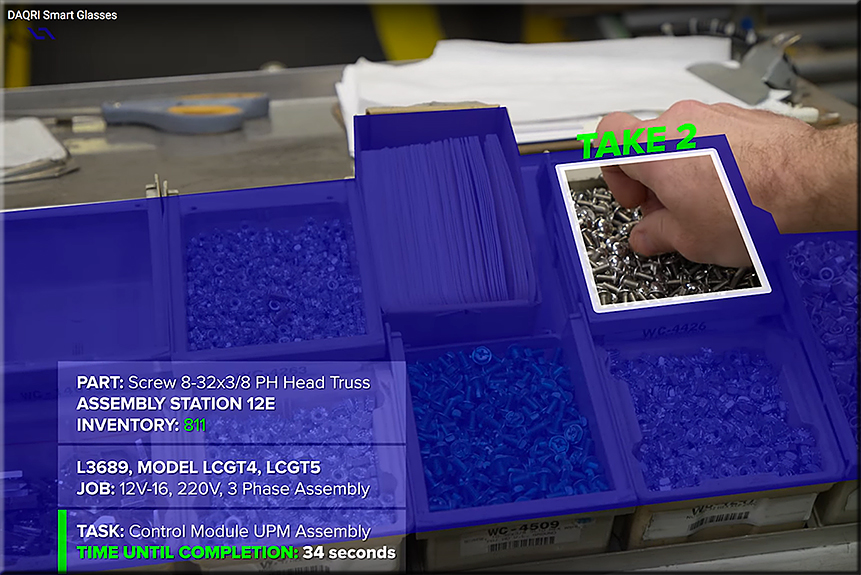
Daqri has begun shipping its augmented reality smart glasses for the workplace.
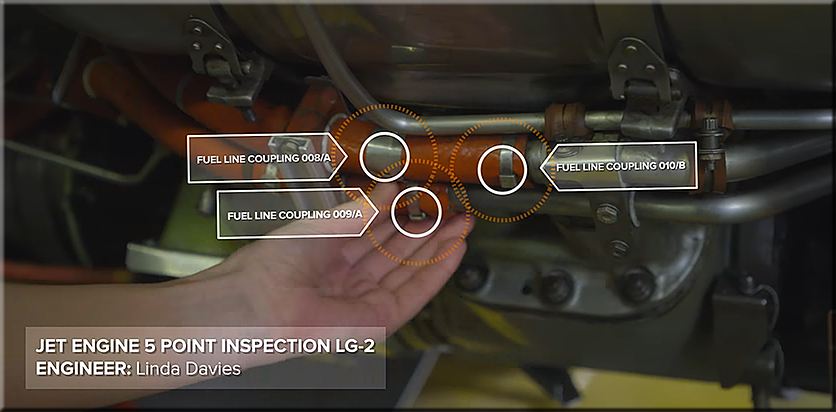
Los Angeles-based Daqri is betting that AR — a technology that overlays digital animations on top of the real world — will take off first in the enterprise, where customers are willing to pay a higher price in order to solve complex problems. The idea is to help people solve real-world problems, like fixing a jet engine or piecing together an assembly. Daqri argues that the gains in productivity and efficiency make up for the initial cost.
At $4,995, the system is not cheap, but it is optimized to present complex workloads and process a lot of data right on the glasses themselves. It is available for direct purchase from Daqri’s web site and through channel partners. Daqri is targeting customers across manufacturing, field services, maintenance and repair, inspections, construction, and others.
The NBA really wants you to watch games in VR— from cnet.com by Terry Collins The basketball league has now struck two partnerships to broadcast games in virtual reality. Are fans willing to watch them?
Excerpt:
What’s keeping you from watching NBA games in VR?
Is it the bulky headsets? Is it the slow camera switches that don’t follow the players quickly enough? Is it too expensive?
The NBA is betting that one reason is it just doesn’t have enough partnerships yet. So, the league is teaming up with Turner Sports and Intel TrueVR to air weekly games on TNT in VR starting with the All-Star weekend festivities from Los Angeles in February.
russell-westbrook-alley-oop.jpg
NBA fans will soon be able to see more of MVP Russell Westbrook in virtual reality.
NBAE/Getty Images
This partnership represents a doubling down of NBA’s VR efforts, despite indications it isn’t actually working. Last year, the NBA began airing games with NextVR as part of a multiyear deal.
At the Microsoft Future Decoded conference in London, executives from the tech giant offered a vision for integrating Microsoft 365, Microsoft HoloLens, Windows Mixed Reality, and 3D capabilities into modern workplaces to aid digital transformation.
Firstline workers and information workers will likely be the first to benefit from mixed reality in the workplace, using the technology for collaboration, training, and more.
Microsoft has made a number of moves into the mixed reality space recently, including expanding its HoloLens headset into new European markets.
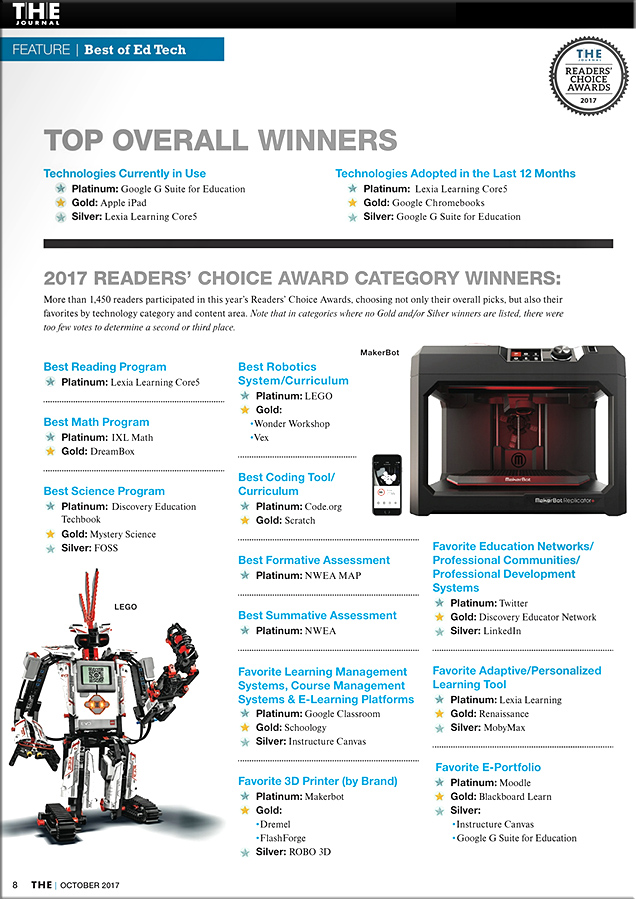
In an open-ended question asking for educators’ favorite technologies currently in use at their schools, respondents overwhelmingly chose Google’s G Suite for Education as their top overall pick.
…
The top overall categories were:
Mobile devices
Interactive whiteboards/displays/projectors
eLearning/learning management systems and reading software — Lexia Learning’s Core5 scored big in the reading software area, while Google Classroom, Schoology, Moodle, Canvas, and Blackboard Learn were often mentioned in the LMS area
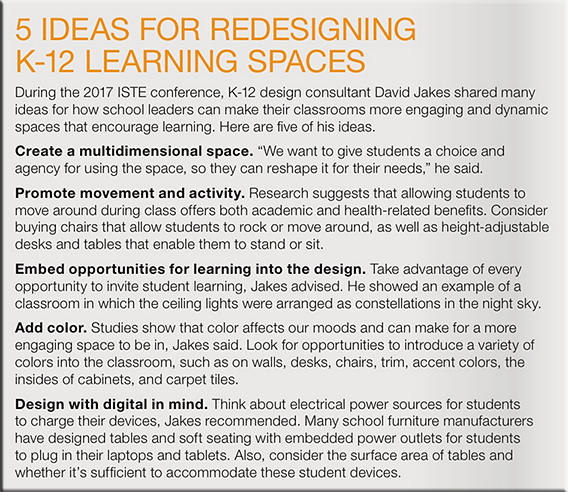
Also, there was an article in there on learning spaces. Some ideas mentioned include:
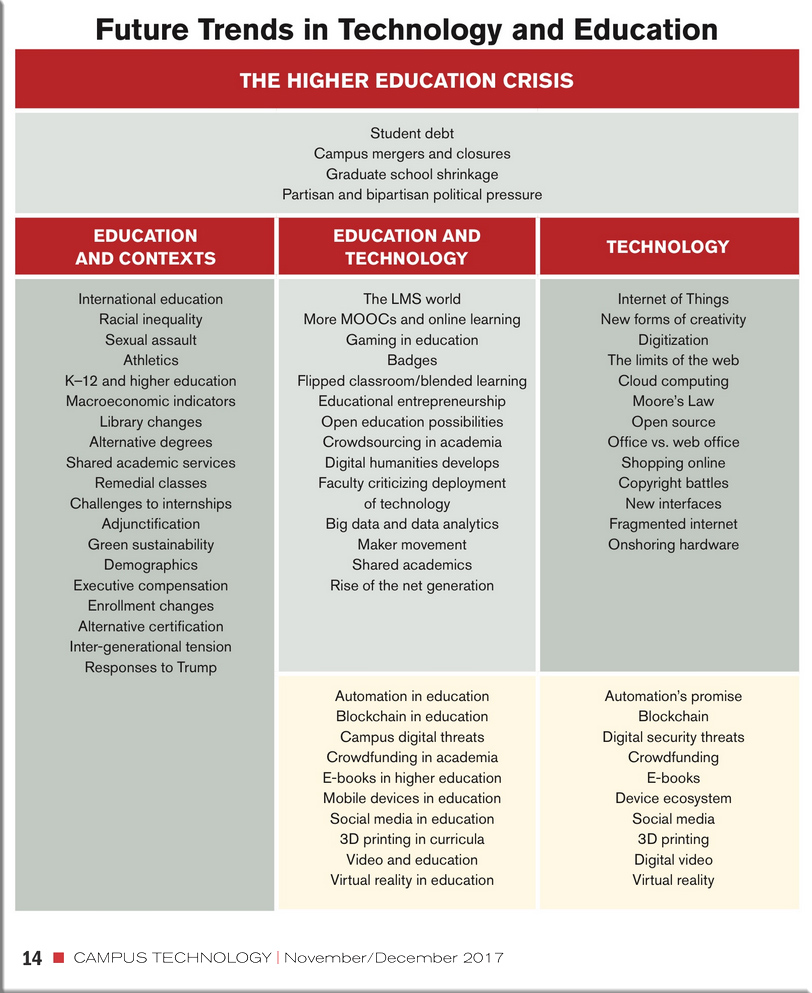
From DSC: Some of the largest waves of change that are hitting the beaches of numerous societies throughout the globe are coming from technological changes such as:
Artificial intelligence (which includes things like machine learning, deep learning, natural language processing, personal assistants, bots, algorithms, and the like)
Big data and analytics
Robotics
The digital transformation of businesses
New forms of human computer interaction such as virtual reality, augmented reality and mixed reality
Mobile computing
Cloud computing
The Internet of Things
Wearables
…and more
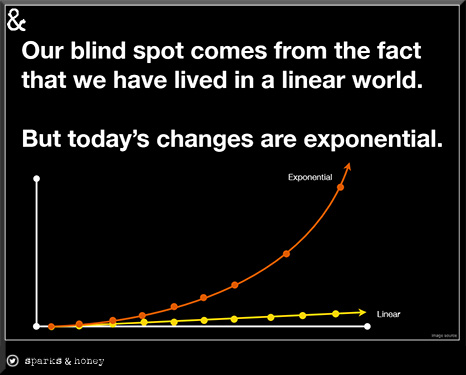
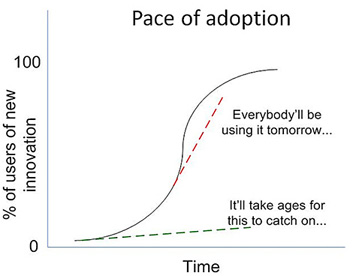
But in all of these developments, what is common amongst them is that the pace of change has changed. It’s much faster now. In fact, we are no longer on a linear path of slow, steady, incremental changes. We are now on an exponential trajectory – or pace – of change.
This new pace of change is starting to have profound implications for societies, individuals, institutions of higher education, and workforces throughout the globe. Some of these ramifications include:
Profound modifications to the existing workforce; in some cases, staff reductions
New fields, new positions
New skillsets that require highly-educated individuals as well as a massive amount of additional training for existing employees
New methods of learning and the requirement for lifelong, constant learning from here on out
The need to become more responsive and nimble
The need to pulse-check a variety of landscapes to ascertain the best potential strategies to pursue (in light of the potential upcoming scenarios)
Yet the changes aren’t just arising from technological changes. For institutions of higher education, there have been other areas of change that bring with them significant impact, such as:
Decreases in state funding
The increasing costs of healthcare and benefits for faculty, staff, and administrators
Headwinds from demographic-related declines (depending upon one’s geographic location)
Aging facilities and infrastructures
…and more.
Navigating these rough waters is not easy. But the key questions now are:
Is your institution poised to ride the waves of change or is it about to get crushed by these same waves?
Is someone at your organization looking out for these oncoming waves? That is, is someone pulse-checking a variety of landscapes to ascertain the trends that are developing, trends that could significantly impact your institution and/or your students?
What are some of the ways that your organization could respond to these waves of change to positively impact the following parties?
Your organization What new programs could be offered at your institution? How is the level of responsiveness at your institution to these changes?
Your students Many jobs that your students will have in their futures haven’t even been invented yet. How can you best develop them to be ready for the new, exponential pace of change? How are you helping your graduates who (increasingly) need to come back to your institution and reinvent themselves – quickly, conveniently, and cost-effectively?
Your employees Given all of this change, the professional growth of your own faculty members, staff, and members of your administration is extremely important. How are you looking after their growth?
Would you use the word “innovative” to describe the culture of your organization? That is, is your institution willing to experiment and take some calculated risks? To take no action or risks in the current environment is likely the biggest risk of all.
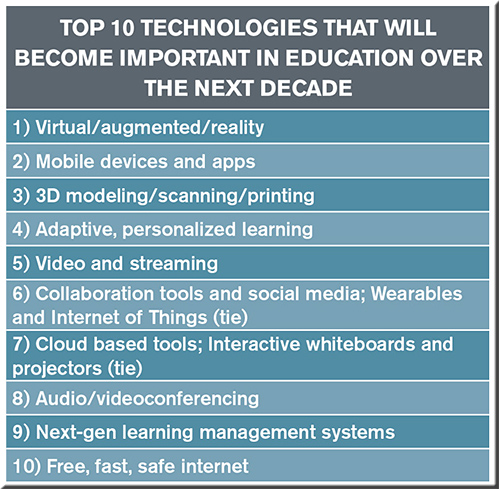
What technologies do faculty think will be important in education over the next decade? The most popular answer to that question by far was virtual/augmented/mixed reality, garnering 81 percent of responses (it topped the list last year as well). Mobile devices and apps, 3D modeling/scanning/printing, adaptive/personalized learning and video/streaming all rounded out the top five.
From DSC: Great to see several of these items made the list. I would also add:
The use of Natural Language Processing (NLP) to allow more voice-enabled and voice-driven applications
Learning agents/bots (for example, a learning-related bot could go find out the top 50-100 jobs that employers are hiring for and present a list of potential digital playlists from a variety of providers that would help potential employees be able to do the work in those positions)
Blockchain and the use of web-based learner profiles
Artificial Intelligence / cognitive computing (which could be argued is already mentioned in the item re: adaptive, personalized learning)
Moving towards providing up-to-date streams of content (for purposes of lifelong learning and microlearning)
Finally, it was great to see #9 on the list as I, too, believe that a next gen learning platform is needed:


![The Living [Class] Room -- by Daniel Christian -- July 2012 -- a second device used in conjunction with a Smart/Connected TV](http://danielschristian.com/learning-ecosystems/wp-content/uploads/2012/07/The-Living-Class-Room-Daniel-S-Christian-July-2012.jpg)