A pilot project designed to test the potential of artificial intelligence tools at McCarthy Tétrault LLP showed that certain types of applications for the legal profession seemed to work better than others, panellists told attendees to the recent Canadian Lawyer Legal Tech Summit.
“I would say that the results were mixed,” David Cohen, senior director of client service delivery for the firm. During the panel, moderated by University of Calgary assistant professor Gideon Christian, Cohen spoke about a pilot of about 40 lawyers from different practices at the firm who used an AI platform with only public data.
The group [testing the platform] said it needs to get better before we start using this for research,” he said. However, he said, when it came to tasks like generating documents, reviewing 100-page cases “and summarizing and analyzing them,” the AI platforms did much better.
To help with this, our Client Success Team have summarised the eight key legal technology trends in the market, as well as the themes discussed at recent legal technology events and conferences including the British Legal Technology Forum and iManage ConnectLive Virtual 2023, both of which we were proud to sponsor.
On a somewhat related note, also see:
Designing the Law Office of the Future — from workdesign.com by Deborah Nemeth Deborah Nemeth of SmithGroup shares how inspiration from higher education and hospitality can help inform the next evolution of the law office.
“The proposed transaction will complement Thomson Reuters existing AI roadmap and builds on its recent initiatives, including a commitment to invest more than $100 million annually on AI capabilities, the development of new generative AI experiences across its product suite, as well as a new plugin with Microsoft and Microsoft 365 Copilot for legal professionals,” TR’s announcement said.
From DSC: I post this to show how AI continues to make inroads into the legal realm — and how serious vendors are about it. I believe AI-enabled applications will eventually increase access to justice for the citizens of the United States of America.
Below is an addendum on 6/28/23 that further illustrates how serious vendors are about AI:
Databricks announced it will pay $1.3 billion to acquire MosaicML, an open source startup with neural networks expertise that has built a platform for organizations to train large language models and deploy generative AI tools based on them.
— Daniel Christian (he/him/his) (@dchristian5) June 23, 2023
.
On giving AI eyes and ears— from oneusefulthing.org by Ethan Mollick AI can listen and see, with bigger implications than we might realize.
Excerpt:
But even this is just the beginning, and new modes of using AI are appearing, which further increases their capabilities. I want to show you some examples of this emerging world, which I think will soon introduce a new wave of AI use cases, and accompanying disruption.
We need to recognize that these capabilities will continue to grow, and AI will be able to play a more active role in the real world by observing and listening. The implications are likely to be profound, and we should start thinking through both the huge benefits and major concerns today.
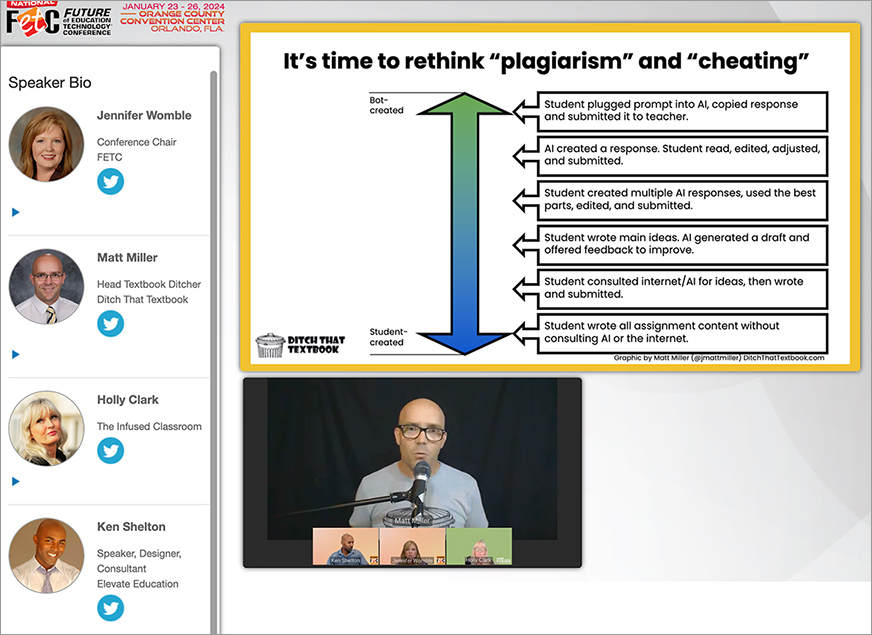
Even though generative AI is a new thing, it doesn’t change why students cheat. They’ve always cheated for the same reason: They don’t find the work meaningful, and they don’t think they can achieve it to their satisfaction. So we need to design assessments that students find meaning in.
Tricia Bertram Gallant
Caught off guard by AI— from chonicle.com by Beth McMurtrie and Beckie Supiano Professor scrambled to react to ChatGPT this spring — and started planning for the fall
Excerpt:
Is it cheating to use AI to brainstorm, or should that distinction be reserved for writing that you pretend is yours? Should AI be banned from the classroom, or is that irresponsible, given how quickly it is seeping into everyday life? Should a student caught cheating with AI be punished because they passed work off as their own, or given a second chance, especially if different professors have different rules and students aren’t always sure what use is appropriate?
…OpenAI built tool use right into the GPT API with an update called function calling. It’s a little like a child’s ability to ask their parents to help them with a task that they know they can’t do on their own. Except in this case, instead of parents, GPT can call out to external code, databases, or other APIs when it needs to.
Each function in function calling represents a tool that a GPT model can use when necessary, and GPT gets to decide which ones it wants to use and when. This instantly upgrades GPT capabilities—not because it can now do every task perfectly—but because it now knows how to ask for what it wants and get it. .
.
How ChatGPT can help disrupt assessment overload— from timeshighereducation.com by David Carless Advances in AI are not necessarily the enemy – in fact, they should prompt long overdue consideration of assessment types and frequency, says David Carless
Excerpt:
Reducing the assessment burden could support trust in students as individuals wanting to produce worthwhile, original work. Indeed, students can be co-opted as partners in designing their own assessment tasks, so they can produce something meaningful to them.
A strategic reduction in quantity of assessment would also facilitate a refocusing of assessment priorities on deep understanding more than just performance and carries potential to enhance feedback processes.
If we were to tackle assessment overload in these ways, it opens up various possibilities. Most significantly there is potential to revitalise feedback so that it becomes a core part of a learning cycle rather than an adjunct at its end. End-of-semester, product-oriented feedback, which comes after grades have already been awarded, fails to encourage the iterative loops and spirals typical of productive learning. .
Since AI in education has been moving at the speed of light, we built this AI Tools in Education database to keep track of the most recent AI tools in education and the changes that are happening every day.This database is intended to be a community resource for educators, researchers, students, and other edtech specialists looking to stay up to date. This is a living document, so be sure to come back for regular updates.
These claims conjure up the rosiest of images: human resource departments and their robot buddies solving discrimination in workplace hiring. It seems plausible, in theory, that AI could root out unconscious bias, but a growing body of research shows the opposite may be more likely.
…
Companies’ use of AI didn’t come out of nowhere: For example, automated applicant tracking systems have been used in hiring for decades. That means if you’ve applied for a job, your resume and cover letter were likely scanned by an automated system. You probably heard from a chatbot at some point in the process. Your interview might have been automatically scheduled and later even assessed by AI.
From DSC:
Here was my reflection on this:
DC: Along these lines, I wonder if Applicant Tracking Systems cause us to become like typecast actors and actresses — only thought of for certain roles. Pigeonholed.
— Daniel Christian (he/him/his) (@dchristian5) June 23, 2023
In June, ResumeBuilder.com surveyed more than 1,000 employees who are involved in hiring processes at their workplaces to find out about their companies’ use of AI interviews.
The results:
43% of companies already have or plan to adopt AI interviews by 2024
Two-thirds of this group believe AI interviews will increase hiring efficiency
15% say that AI will be used to make decisions on candidates without any human input
More than half believe AI will eventually replace human hiring managers
Watch OpenAI CEO Sam Altman on the Future of AI — from bloomberg.com Sam Altman, CEO & Co-Founder, OpenAI discusses the explosive rise of OpenAI and its products and what an AI-laced future can look like with Bloomberg’s Emily Chang at the Bloomberg Technology Summit.
The implementation of generative AI within these products will dramatically improve educators’ ability to deliver personalized learning to students at scale by enabling the application of personalized assessments and learning pathways based on individual student needs and learning goals. K-12 educators will also benefit from access to OpenAI technology…
Why it matters: The best AI assistants will be the ones that require the least prompting. They’ll get to know who you are, what you need, and your modus operandi. Profiles are a good starting point, but we believe the game-changer will be larger context windows (that’s nerd-speak for the amount of context ChatGPT can handle). .
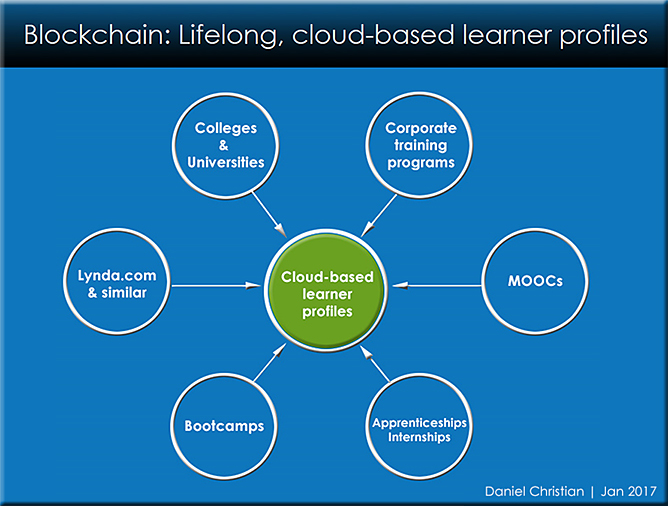
From DSC: And how about taking this a step further and remembering — or being able to access — our constantly updated Cloud-Based Learning Profiles?
My hypothesis and research suggest that as bar associations and the ABA begin to recognize the on-going systemic issues of high-cost legal education, growing legal deserts (where no lawyer serves a given population), on-going and pervasive access to justice issues, and a public that is already weary of the legal system – alternative options that are already in play might become more supported.
What might that look like?
The combination of AI-assisted education with traditional legal apprenticeships has the potential to create a rich, flexible, and engaging learning environment. Here are three scenarios that might illustrate what such a combination could look like:
Scenario One – Personalized Curriculum Development
Scenario Two – On-Demand Tutoring and Mentoring
Scenario Three – AI-assisted Peer Networks and Collaborative Learning:
We know that there are challenges – a threat to human jobs, the potential implications for cyber security and data theft, or perhaps even an existential threat to humanity as a whole. But we certainly don’t yet have a full understanding of all of the implications. In fact, a World Economic Forum report recently stated that organizations “may currently underappreciate AI-related risks,” with just four percent of leaders considering the risk level to be “significant.”
A survey carried out by analysts Baker McKenzie concluded that many C-level leaders are over-confident in their assessments of organizational preparedness in relation to AI. In particular, it exposed concerns about the potential implications of biased data when used to make HR decisions.
AI & lawyer training: How law firms can embrace hybrid learning & development — thomsonreuters.com A big part of law firms’ successful adaptation to the increased use of ChatGPT and other forms of generative AI, may depend upon how firmly they embrace online learning & development tools designed for hybrid work environments
Excerpt:
As law firms move forward in using of advanced artificial intelligence such as ChatGPT and other forms of generative AI, their success may hinge upon how they approach lawyer training and development and what tools they enlist for the process.
One of the tools that some law firms use to deliver a new, multi-modal learning environment is an online, video-based learning platform, Hotshot, that delivers more than 250 on-demand courses on corporate, litigation, and business skills.
Ian Nelson, co-founder of Hotshot, says he has seen a dramatic change in how law firms are approaching learning & development (L&D) in the decade or so that Hotshot has been active. He believes the biggest change is that 10 years ago, firms hadn’t yet embraced the need to focus on training and development.
From DSC: Heads up law schools. Are you seeing/hearing this!?
Are we moving more towards a lifelong learning model within law schools?
If not, shouldn’t we be doing that?
Are LLM programs expanding quickly enough? Is more needed?
IAALS, the Institute for the Advancement of the American Legal System at the University of Denver, announced today the release of its new report, Allied Legal Professionals: A National Framework for Program Growth. As part of IAALS’ Allied Legal Professionals project—which is generously supported by the Sturm Family Foundation—this report includes multiple research-informed recommendations to help standardize a new tier of legal professionals across states, with the goal of increasing the options for accessible and affordable legal help for the public.
“To hire a lawyer, people either need considerable money or have an income low enough to qualify for the limited legal aid available. The problem is that the majority of people in the middle class don’t fit into either of those categories, making access to legal services incredibly difficult,” says IAALS Director of Special Projects Michael Houlberg. “Even if every lawyer took on pro bono clients, it wouldn’t come close to addressing the need. And IAALS’ research shows that people who need legal help are open to receiving it from qualified and authorized providers who are not lawyers.”
We have a massive opportunity to transform law and legal services to better serve society. We MUST AUTOMATE the majority of what lawyers do today so that we can expand access to the law and justice for EVERYONE in the future.
From DSC: I put the following comment on Dan’s posting:
I couldn’t agree more Dan. Millions of people could benefit from the considered, careful research of — and eventual application of — technologies to significantly improve/impact access to justice (#A2J).
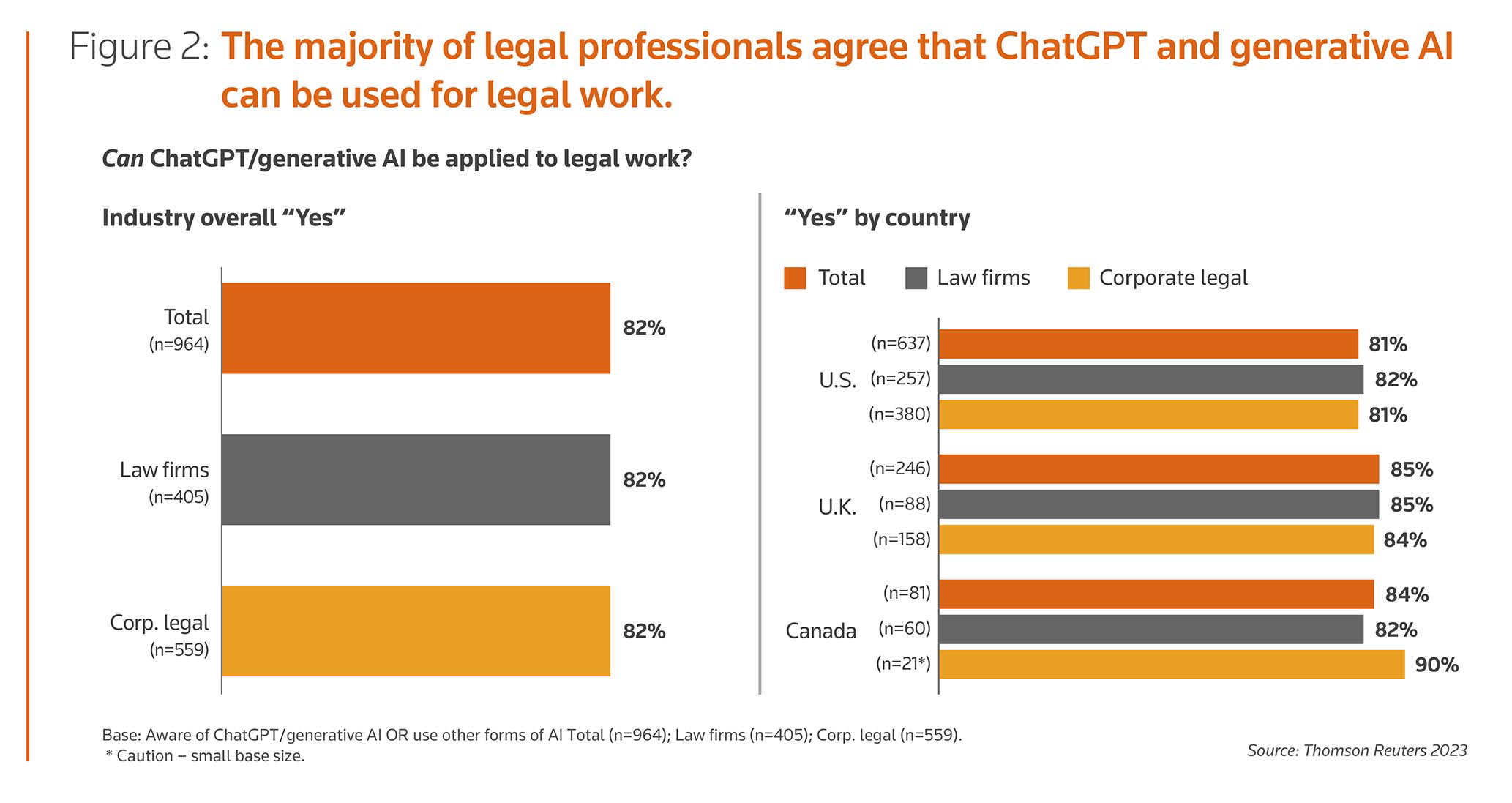
According to a recent report from Goldman Sachs, a bank, 44% of legal tasks could be performed by AI, more than in any occupation surveyed except for clerical and administrative support. Lawyers spend an awful lot of time scrutinising tedious documents—the sort of thing that AI has already demonstrated it can do well. Lawyers use AI for a variety of tasks, including due diligence, research and data analytics. These applications have largely relied on “extractive” AI, which, as the name suggests, extracts information from a text, answering specific questions about its contents.
Ultimately this will be good news for clients. “People who go to lawyers don’t want lawyers: they want resolutions to their problems or the avoidance of problems altogether,” explains Mr Susskind. If AI can provide those outcomes then people will use AI. Many people already use software to do their taxes rather than rely on professionals; “Very few of them are complaining about the lack of social interaction with their tax advisers.”
From DSC: Dr. Nino makes several solid points in this article. The article won’t let me copy/paste some excerpts for you, but I would encourage you to look at it.
I would add a few things:
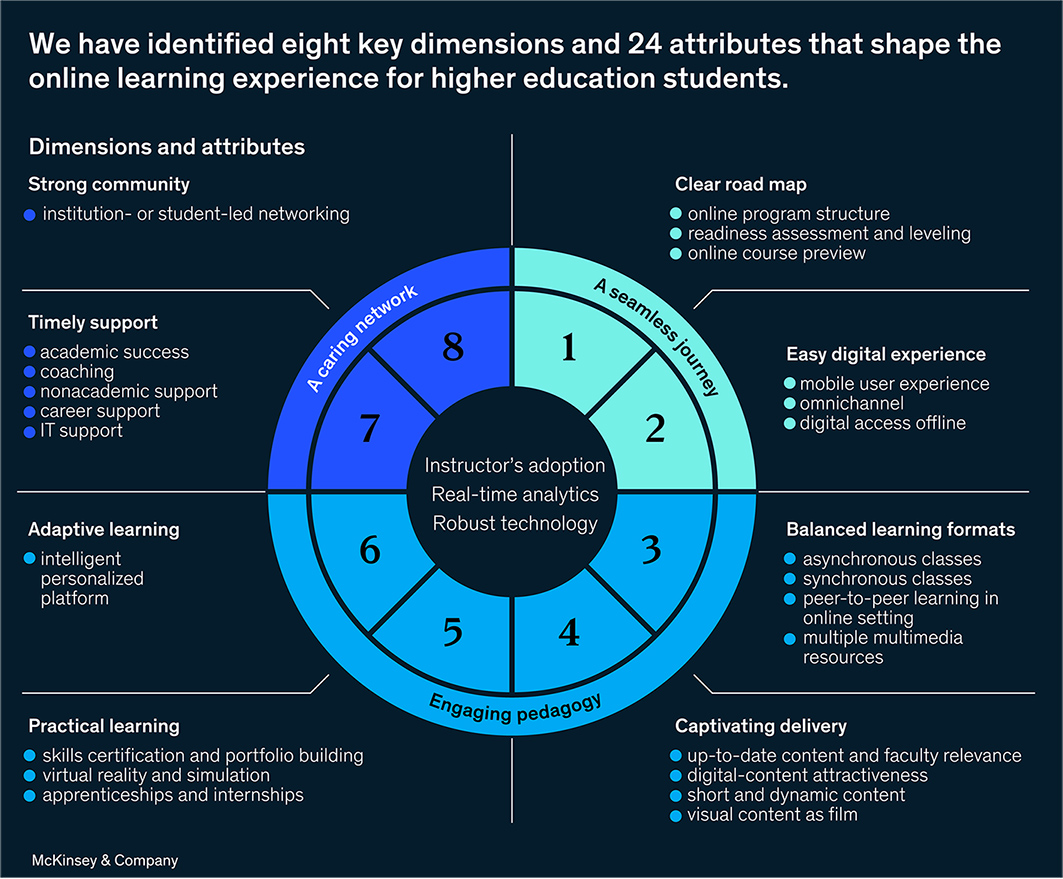
The huge advantage of online-based learning is that a significant amount of learning-related data is automatically captured and doesn’t need to be manually entered (if such manually entered data ever does get entered…which most of it doesn’t).
Learners have much more control over the pacing within the digital realm — i.e., which media they want to use as well as stopping/fast-forwarding/rewinding certain kinds of media.
Most people are now required to be lifelong learners — where convenience and time-savings become very important factors in continuing one’s education
And finally, as AI and other technologies continue to make their way forward, it will be hard to beat online-based and/or hybrid-based learning.
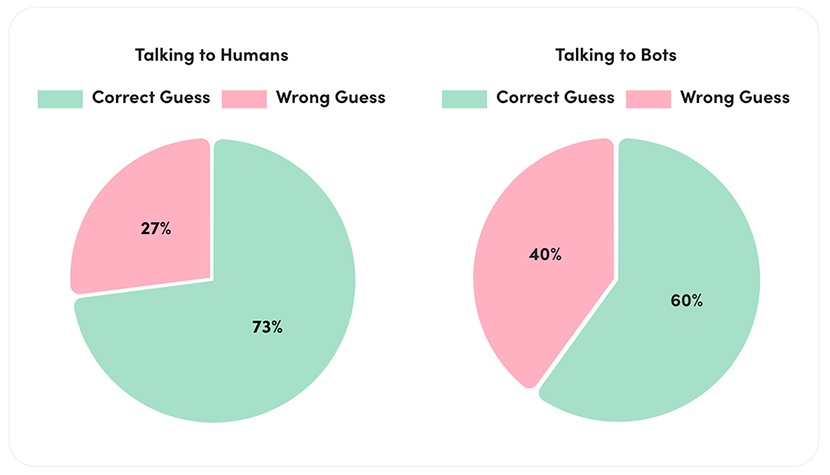
AI21 Labs concludes largest Turing Test experiment to date — from ai21.com As part of an ongoing social and educational research project, AI21 Labs is thrilled to share the initial results of what has now become the largest Turing Test in history by scale. .
The perils of consulting an Electric Monk — from jordanfurlong.substack.com by Jordan Furlong Don’t blame ChatGPT for the infamous incident of the made-up cases. And don’t be too hard on the lawyer, either. We’re all susceptible to a machine that tells us exactly what we want to hear.
Excerpt:
But then the “ChatGPT Lawyer” story happened, and all hell broke loose on LawTwitter and LawLinkedIn, and I felt I needed to make three points, one of which involves an extra-terrestrial robot.
My first two points are pretty straightforward:
The tsunami of gleeful overreaction from lawyers on social media, urging bans on the use of ChatGPT and predicting prison time for the hapless practitioner, speaks not only to their fear and loathing of generative AI, but also to their desperate hope that it’s all really nothing but hype and won’t disturb their happy status quo. Good luck with that.
The condemnation and mockery of the lawyer himself, who made a bad mistake but who’s been buried by an utterly disproportionate avalanche of derision, speaks to the lack of compassion in this profession, whose members should pray that their worst day as a lawyer never makes it to the front page of The New York Times. There but for the grace of God.
Are you looking for evidence to support the side that’s hired you? Or are you looking for the truth? Choosing the first option has never been easier. It’s also never been more dangerous.
As referenced topic-wise by Jordan above, also see:
What I learned at CLOC 2023 — from alexofftherecord.com by Alex Su This week I attended the premier legal operations conference. Here’s what I heard.
Excerpt:
Theme 1: Generative AI isn’t going anywhere
This was a huge theme throughout the conference. Whether it was vendors announcing GPT integrations, or panels discussing how to use AI, there was just an enormous amount of attention on generative AI. I’m certainly no stranger to all this hype, but I’d always wondered if it was all from my Silicon Valley bubble. It wasn’t.
What was driving all this interest in AI? Well, the ubiquity of ChatGPT. Everyone’s talking about it and trying to figure out how to incorporate it into the business. And not just in the U.S. It’s a worldwide trend. Word on the street is that it’s a CEO-level priority. Everywhere. So naturally it trickles down to the legal department.
Personal experience and anecdotal evidence indicate that LLMs’ current state provides impressive output in various legal tasks. Specifically, they provide extraordinary results on the following:
Drafting counterarguments.
Exploring client fact inquiries (e.g., “How did you lose money?”).
Ideating voir dire questions (and rating responses).
New legal tech tools showcased at CLOC 2023 — from legaldive.comRobert Freedman Innovations include a better way to evaluate law firm proposals, centralize all in-house legal requests in a single intake function and analyze agreements.
Typically, Legalweek has always been focused on eDiscovery, while CLOC was focused on matter management and contracts management. This time I noticed more balance in the vendor hall and sessions, with a broader range of services providers than before, including staffing providers, contracts management vendors and other new entrants in addition to eDiscovery vendors.
One theme dominated the show floor conversations: Over and over, the legal operators I talked with said if their technologies and vendors were able to develop better workflows, achieve more cost savings and report on the metrics that mattered to their GC, the GC could function as more of a business advisor to the C-suite.
While ChatGPT and the use of algorithms in social media get lots of attention, an important area where AI promises to have an impact is law.
The idea of AI deciding guilt in legal proceedings may seem far-fetched, but it’s one we now need to give serious consideration to.
That’s because it raises questions about the compatibility of AI with conducting fair trials. The EU has enacted legislation designed to govern how AI can and can’t be used in criminal law.
Over the last semester, I’ve been teaching two classes at Michigan State University College of Law, one called AI and the Law and the other called New Technologies and the Law, and a class at University of Michigan Law School called Legal Technology Literacy and Leadership. All three classes pushed me to keep up-to-date with the nearly-daily developments in AI, ChatGPT, and LLMs. I also did quite a lot of experiments, primarily with ChatGPT, especially GPT-4, and with Notion AI.
Below, you’ll learn about many of the solutions currently available. Keep in mind that this overview is not exhaustive. There are other similar tools currently available and the number of products in this category will undoubtedly increase in the months to come.
This week we’ll hear from someone who has deep experience in assessing and regulating potentially harmful uses of automation and artificial intelligence—valuable skills at a moment when many people, including lawmakers, are freaking out about the chaos that the technology could cause.
Law school students can now take up to half of their classes online following a recent policy change by the American Bar Association.
ABA’s accrediting body voted last week to raise the ceiling on the number of credits students can earn online for their J.D., up from one-third.
It also struck down a prohibition on first-year law students taking no more than 10 credit hours remotely.
From DSC: It’s almost June of 2023 and matters/impacts of Artificial Intelligence (AI) are increasingly popping up throughout our society. But WOW! Look at this recent piece of news from the American Bar Association: Law school students can now take up to 50% of their credits online! (It used to be just 30%.)
At a time when we need many more lawyers, judges, legislators, politicians, and others to be more informed about emerging technologies — as well as being more tech-savvy themselves — I don’t think the ABA should be patting themselves on the back for this policy change. It’s a step in the right direction, but why it’s not 100% is mind-boggling to me.
A New Dawn of Legal Technology — from globalbankingandfinance.com Is the legal function finally ready to embrace legal tech and unlock tangible business value?
Excerpt:
In the mid-1980s, a bright red computer terminal that provided lawyers with online access to case law was an iconic status symbol. The UBIQ terminal hooked lawyers up to the Lexis service, at the time one of the first legal technology systems, using full-text search capabilities to provide rapid access to information.
…
It is extraordinary to consider what the legal industry could have achieved if the early adoption of legal tech had not stalled. Sadly, rather than being innovative and embracing the potential of digital records, the industry has underinvested in both legal technology and good data management for the past three decades. Generation after generation of lawyers have failed to take advantage of the power of legal tech to improve client services, reduce risk and enhance efficiency.
Microcredentials Can Make a Huge Difference in Higher Education — from newthinking.com by Shannon Riggs The Ecampus executive director of academic programs and learning innovation at Oregon State University believes that shorter form, low-cost courses can open up colleges to more people.
That so much student loan debt exists is a clear signal that higher education needs to innovate to reduce costs, increase access and improve students’ return on investment. Microcredentials are one way we can do this.
As the Supreme Court weighs President Joe Biden’s student loan forgiveness plan, college tuition keeps climbing.
This year’s incoming freshman class can expect to borrow as much as $37,000 to help cover the cost of a bachelor’s degree, according to a recent report.
College is only getting more expensive. Tuition and fees plus room and board at four-year, in-state public colleges rose more than 2% to $23,250, on average, in the 2022-23 academic year; at four-year private colleges, it increased by more than 3% to $53,430, according to the College Board, which tracks trends in college pricing and student aid.
Many students now borrow to cover the tab, which has already propelled collective student loan debt in the U.S. past $1.7 trillion.
Leaders of colleges and universities face unprecedented challenges today. Tuition has more than doubled over the past two decades as state and federal funding has decreased. Renewed debates about affirmative action and legacy admissions are roiling many campuses and confusing students about what it takes to get accepted. Growing numbers of administrators are matched by declining student enrollment, placing new financial pressures on institutions of higher learning. And many prospective students and their parents are losing faith in the ROI of such an expensive investment and asking the simple question: Is it all worth it? Join distinguished leaders from public and private institutions for this panel discussion on how they are navigating these shifts and how they see the future of higher education.
This year’s lists also offer a hint of how widespread the rankings revolt was. Seventeen medical schools and 62 law schools — nearly a third of the law schools U.S. News ranks — didn’t turn in data to the magazine this year.(It’s not clear what nonparticipation rates have been in the past. Reached by email to request historical context, a spokesperson for U.S. News pointed to webpages that are no longer online. U.S. News ranked law and medical schools that didn’t cooperate this year by using publicly available and past survey data.)
Student loan borrowers who would stand to benefit the most from income-driven repayment plans, or IDRs, are less likely to know about them, according to a new report from left-leaning think tank New America.
Around 2 in 5 student-debt holders earning less than $30,000 a year reported being unfamiliar with the repayment plans. Under a proposed plan from the U.S. Education Department, IDR minimum monthly loan payments for low-income earners, such as this group, could drop to $0.
Just under half of borrowers in default had not heard of IDRs, despite the plans offering a pathway to becoming current on their loans, the report said. Only one-third of currently defaulted borrowers had ever enrolled in IDR.