For Wiese, it was all a big, expensive gamble — and, in one form or another, is one millions of people with criminal records take every year as they pursue education and workforce training on their way to jobs that require a license. Yet that effort might be wasted thanks to the nearly 14,000 laws and regulations that can restrict individuals with arrest and conviction histories from getting licensed in a given field.
Citing ‘political challenges’ within the ABA, its Center for Innovation cancelled an op-ed advocating for regulatory reform. I have the op-ed and full details of what happened. This comes as the ABA annual meeting convenes in Denver. @ABAesq#ABAAnnualhttps://t.co/xLFtTUIbqjpic.twitter.com/y1tqAaMvMj
@ABAesq is supposed to be the great facilitator of debate and discourse to steer the profession. To create an environment that facilitates the censorship of varying opinions is the opposite of what the organization is charged with by its members.
I was once part of the Center’s staff. I know many current ABA staff members personally. This is a situation that forces these servants of the profession to defend their existence and livelihoods because they are encouraging debate. I will defend my friends. Try me.
. A Center for Innovation that can’t honestly discuss innovation in a profession that desperately needs it. Disgusting. And the truth is innovation is good for attys. Protecting a 120yo biz model is not good for lawyers or the public.
This is equal parts disappointing and infuriating. The ABA is cutting the legs out from under its one truly forward-looking, people-focussed initiative. It’s a shameful sellout to the rising protectionist wave in the legal profession, and history will judge it accordingly.
The marriage of technology expertise with the license to practice law is in high demand and essential to the efficient handling of large-scale and complex antitrust and white-collar investigations and litigation. This is no longer a discretionary skill set designed to benefit those who respond to ESI requests, but rather a necessary proficiency needed to navigate the eDiscovery landscape.
July 28 (Reuters) – A week after The University of Michigan Law School banned the use of popular artificial intelligence tools like ChatGPT on student applications, at least one school is going in the other direction.
The Sandra Day O’Connor College of Law at Arizona State University said on Thursday that prospective students are explicitly allowed to use generative artificial intelligence tools to help draft their applications.
Are we on the frontier of unveiling an unseen revolution in education? The hypothesis is that this quiet upheaval’s importance is far more significant than we imagine. As our world adjusts, restructures, and emerges from a year which launched an era of mass AI, so too does a new academic year dawn for many – with hope and enthusiasm about new roles, titles, or simply just a new mindset. Concealed from sight, however, I believe a significant transformative wave has started and will begin to reshape our education systems and push us into a new stage of innovative teaching practice whether we desire it or not. The risk and hope is that the quiet revolution remains outside the regulator’s and ministries’ purview, which could risk a dangerous fragmentation of education policy and practice, divorced from the actualities of the world ‘in and outside school’.
“This goal can be achieved through continued support for introducing more new areas of study, such as ‘foresight and futures’, in the high school classroom.”
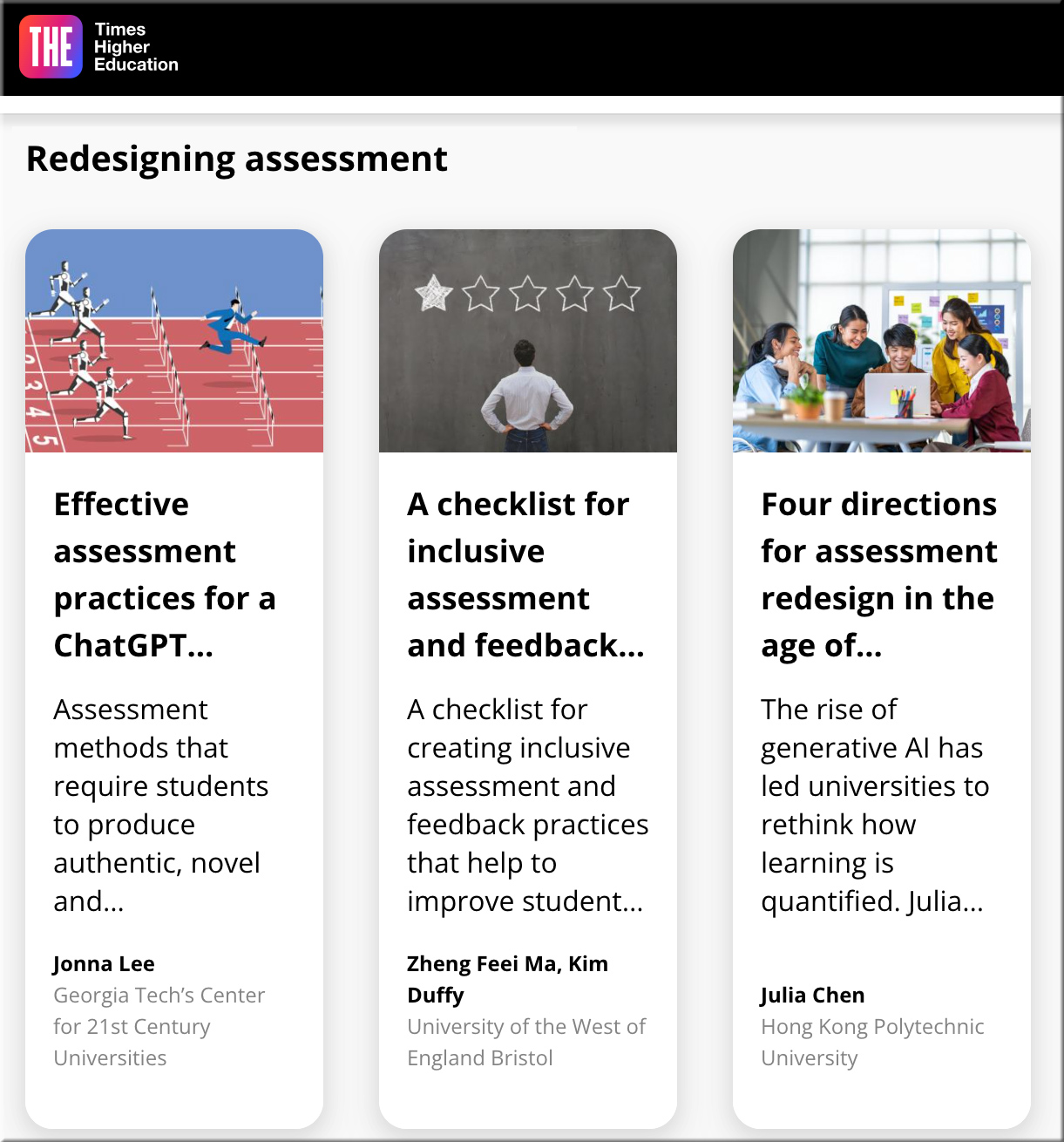
Four directions for assessment redesign in the age of generative AI— from timeshighereducation.com by Julia Chen The rise of generative AI has led universities to rethink how learning is quantified. Julia Chen offers four options for assessment redesign that can be applied across disciplines
Direction 1: From written description to multimodal explanation and application
Direction 2: From literature review alone to referencing lectures
Direction 3: From presentation of ideas to defence of views
Direction 4: From working alone to student-staff partnership
If you are just back from vacation and still not quite sure what to do about AI, let me assure you that you are not the only one. My advice for you today is this: fill your LinkedIn-feed and/or inbox with ideas, inspirational writing and commentary on AI. This will get you up to speed quickly and is a great way to stay informed on the newest movements you need to be aware of.
My personal recommendation for you is to check out these bright people who are all very active on LinkedIn and/or have a newsletter worth paying attention to. I have kept the list fairly short – only 15 people – in order to make it as easy as possible for you to begin exploring.
Understanding the nature of generative AI is crucial for educators to navigate the evolving landscape of teaching and learning. In a new report from the Next Level Lab, Lydia Cao and Chris Dede reflect on the role of generative AI in learning and how this pushes us to reconceptualize our visions of effective education. Though there are concerns of plagiarism and replacement of human jobs, Cao and Dede argue that a more productive way forward is for educators to focus on demystifying AI, emphasizing the learning process over the final product, honoring learner agency, orchestrating multiple sources of motivation, cultivating skills that AI cannot easily replicate, and fostering intelligence augmentation (IA) through building human-AI partnerships.
Have you used chatbots to save time this school year? ChatGPT and generative artificial intelligence (AI) have changed the way I think about instructional planning. Today on the blog, I have a selection of ChatGPT prompts for ELA teachers.
You can use chatbots to tackle tedious tasks, gather ideas, and even support your work to meet the needs of every student. In my recent quick reference guide published by ISTE and ASCD, Using AI Chatbots to Enhance Planning and Instruction, I explore this topic. You can also find 50 more prompts for educators in this free ebook.
Professors Craft Courses on ChatGPT With ChatGPT — from insidehighered.com by Lauren Coffey While some institutions are banning the use of the new AI tool, others are leaning into its use and offering courses dedicated solely to navigating the new technology.
Maynard, along with Jules White at Vanderbilt University, are among a small number of professors launching courses focused solely on teaching students across disciplines to better navigate AI and ChatGPT.
The offerings go beyond institutions flexing their innovation skills—the faculty behind these courses view them as imperative to ensure students are prepared for ever-changing workforce needs.
That’s a solid report card for a freshman in college, a respectable 3.57 GPA. I recently finished my freshman year at Harvard, but those grades aren’t mine — they’re GPT-4’s.
…
Three weeks ago, I asked seven Harvard professors and teaching assistants to grade essays written by GPT-4 in response to a prompt assigned in their class. Most of these essays were major assignments which counted for about one-quarter to one-third of students’ grades in the class. (I’ve listed the professors or preceptors for all of these classes, but some of the essays were graded by TAs.)
Here are the prompts with links to the essays, the names of instructors, and the grades each essay received…
The impact that AI is having on liberal-arts homework is indicative of the AI threat to the career fields that liberal-arts majors tend to enter. So maybe what we should really be focused on isn’t, “How do we make liberal-arts homework better?” but rather, “What are jobs going to look like over the next 10–20 years, and how do we prepare students to succeed in that world?”
The great assessment rethink — from timeshighereducation.com by How to measure learning and protect academic integrity in the age of ChatGPT
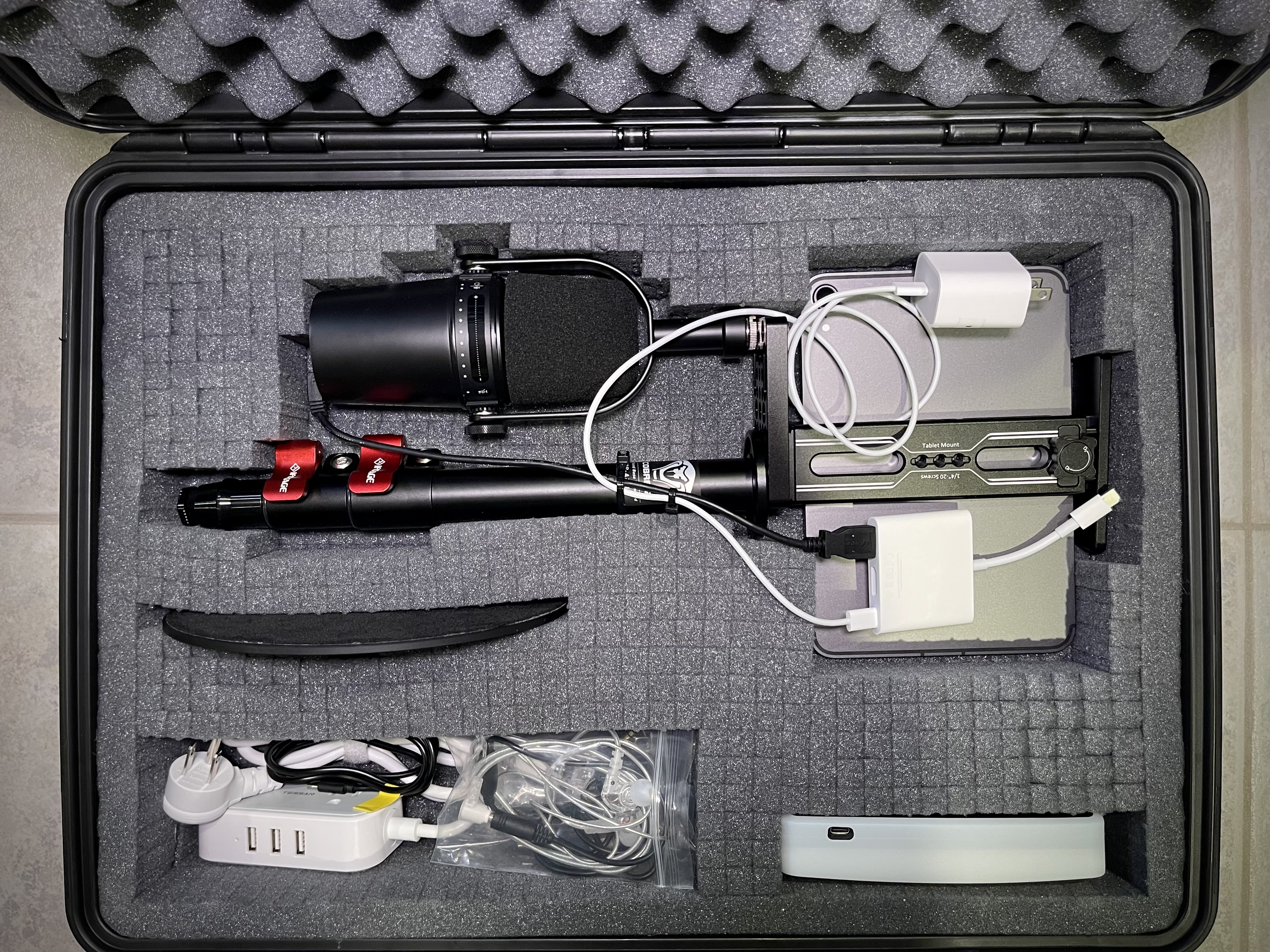
Inspired by my recent Review: Shure MV7 dynamic hybrid studio microphone – near, far and beyond, Beaker Films of Fairfield, Connecticut, US has developed and deployed a first batch of 10 kits to capture remote conversations from different locations worldwide. Beaker Films is frequently contracted to record remote interviews or testimonials from medical professionals. For this project, Beaker Films’ clients wanted consistent, high quality audio and video, but with 3 additional challenges: they preferred to have no visible microphone in the shot, they needed a teleprompter function and the whole kit needed to be as simple as possible for non-technical guests.
West Suffolk College in the UK has opened its Extended Reality Lab (XR Lab), the facilities comprise of four distinct areas: an Immersion Lab, a Collaboration Theatre, a Green Room, and a Conference Room. The project was designed by architects WindsorPatania for Eastern Colleges Group.
Systems integrator CJP Broadcast Service Solutions, has won a tender to build a virtual production environment for Solent University in the UK.
The new facilities, converted from an existing studio space, will provide students on the film production courses with outstanding opportunities to develop their creative output.
We’ve known for a long time that higher education can play a huge role in helping people who serve time in prison get back on their feet. Research shows that higher-ed attainment is directly correlated with a lower likelihood of being reincarcerated, as is stable employment.
But people getting out of prison face many obstacles in finding jobs, and lack of educational opportunities is just part of the issue. A patchwork of more than 14,000 federal, state and local laws and regulations restricts individuals who have arrest and conviction histories from getting licensed in certain fields. Here’s some of what my reporting found about how pervasive this problem is and why it matters:
Over 90% of in-house counsel and three quarters of private practice lawyers said that the legal sector is slow to embrace data, technology and new delivery models – a significant increase on the 64% who felt the same way last year.
In terms of the disconnect, 96% of in-house counsel agreed with the statement that what law firms provide is out of kilter with what clients expect. The majority (78%) of private practice lawyers also largely agreed.
AUSTIN, Tex. — ndaOK, an innovator in AI-powered legal technology, today announces the launch of its next-generation non-disclosure agreement (NDA) review system. This advanced solution leverages OpenAI’s GPT-4 large multimodal model, a first among legal technology companies, offering unprecedented performance and efficiency in reviewing NDAs.
Capitalizing on the computational power and versatility of GPT-4, ndaOK accurately reviews and edits documents based on a user’s pre-determined requirements without the need for human assistance or input. This unique capability makes ndaOK faster and easier to deploy than any other AI-based contract review solution.
And here are two relevant postings that I missed a while back:
As law firms, businesses, and their clients adapt to the new realities of the legal and business worlds, law schools must prepare students in new ways—beyond traditional law school curricula and teaching methods—to give students an experience and education that better prepares them for their post-graduation careers.
Bloomberg Law launched its inaugural Law School Innovation Program as a means of promoting, acknowledging, and connecting the law schools that are innovating in the legal education space and providing their students with new ways of learning the law.
The demand for good lawyers is nothing new and, each year, law schools churn out graduates equipped with virtually the same skills as decades of law students before them. But one school is trying to change that.
The University of Richmond’s Legal Business Design Hub has students focus on the strategy, design, and operations of legal services in addition to their regular coursework, applying what the program calls “an entrepreneur’s mind” to their studies.
It’s time for a Legal Moonshot — from jordanfurlong.substack.com by Jordan Furlong All the challenges facing the legal sector today are systemic and entrenched. To solve them, we have to make a radical commitment to accomplish what we once believed impossible.
Here are three Legal Moonshots that the legal profession could take the lead on.
Establish universal access to justice.
Someday, this will be reality. Everyone will know their basic legal rights and can easily exercise them. Legal remedies will be free or extremely low-cost. Courts will be integrated into communities with simple entry and guided assistance, delivering clear and swift justice. AI-driven online services will render business agreements and settle everyday disputes. Everyone will have a last will and testament. Nobody will have to represent themselves. Justice will be real. That is all possible, and lawyers can lead the way there. It’s our Holy Grail. Let’s make it actually happen.
Adriana explains the differences between case management software, document management platforms, and practice management software. She also touches on the importance of document assembly software and how to maximize the use of data captured during the various stages of a legal matter. She closes out the discussion explaining why many in legal are missing out when they don’t use CRMs–Client and Customer Relationship Management platforms.
Given these intrinsic advantages, it should come as no surprise that virtual law firms are on the rise. The shutdown and disruptions caused by Covid have provided a further impetus to this trend. For example, it would take an attorney the whole day to drive to the courthouse, park, wait for the judge to call their case, argue the matter, then drive back to the office. Now the same matter can be handled through Zoom and court filings can be filed online. However, after these measures were instituted, I’ve seen how the opposition to such virtual measures has eroded as the real savings in time and money to all parties concerned have become very clear.
LOS ANGELES, July 21, 2023 (GLOBE NEWSWIRE) — Legal Soft, a pioneering company in legal technology, is leveraging the power of artificial intelligence (AI) to revolutionize the development of training materials for law firms. Committed to advancing legal education and professional development, Legal Soft’s innovative AI-driven platform is transforming the training landscape for legal professionals.
AI legal case analysis refers to the use of AI algorithms to analyze legal cases, identify patterns, predict outcomes, and provide insights that can aid in legal decision-making. This technology has the potential to revolutionize the way lawyers approach case strategy, conduct legal research, and even interact with clients.
One of the most significant benefits of AI legal case analysis is its ability to process vast amounts of data quickly and accurately. Traditional legal research is a time-consuming process that involves sifting through hundreds, if not thousands, of cases to find relevant precedents. AI can automate this process, analyzing thousands of cases in a fraction of the time it would take a human. This not only saves time but also increases the accuracy of the research reducing the risk of human error.
…
Moreover, AI can identify patterns and trends in case law that might be overlooked human researchers. For instance, AI can analyze the decisions of a particular judge or court to determine how they typically rule on certain issues. This information can be invaluable in formulating a case strategy or predicting the outcome of a case.
From DSC: I’m not sure how I feel about this yet…but I have to admit that I’m very tentative and a bit suspect at this point.
Lawyers’ jobs will be different and new roles have and will continue to emerge, such as the legal technologist. I believe further momentum will come with the growth of future lawyers.
I would like to see AI support the people via perhaps a chatbot that can offer reliable and accurate guidance to support individuals and services to help mitigate the pain relating to basic but fundamental legal matters to fill this void. Issues such as homelessness, debt, asylum, slavery etc. would be examples of such areas to prioritise.
Law firms that want to use AI-powered legal tech should first adopt the mindset that AI is there to supplement their attorneys’ roles, not replace those roles. They must come to view AI-driven legal tech as a means to complete their jobs more efficiently and better address their clients’ needs.
LexisNexis Legal & Professional (on 13 July) released a new report entitled “Generative AI and the future of the legal profession”, which highlights the at times surprising expectations of in-house counsel and law firms when it comes to generative AI adoption.
Forty nine percent of in-house counsel expect their law firms to be using generative AI in the next 12 months, including 11% who say they expect firms to be already using the technology. Only 8% didn’t want AI used on their work. In contrast, 24% of firms believe their clients would not want them to use AI.
The survey, conducted among 1,175 UK legal professionals from May to June 2023, finds 87% of legal professionals are aware of generative AI tools and of that group, 95% agree these tools will have an impact on the practice of law (38% said it will have a significant impact,11% said it will be transformative and 46% thought it would have “some impact”).
Suddenly the most urgent in-house legal conversations centered on which new technology to install next. And while I’m glad to see more legal departments shift their mindsets, I still preach caution. Budgets are tight, change is difficult and selecting the right tool at the wrong moment can prove counterproductive.
So before starting the search for innovative or new legal tech, it’s always best to assess your readiness with a few quick criteria.
“…what if generative AI could provide every instructor with a genuine teaching assistant – a teaching assistant that actually assisted instructors with their teaching?”
For my cryptography course, Mollick’s first option would probably mean throwing out all my existing reading questions. My intent with these reading questions was noble, that is, to guide students to the big questions and debates in the field, but those are exactly the kinds of questions for which AI can write decent answers. Maybe the AI tools would fare worse in a more advanced course with very specialized readings, but in my intro to cryptography course, they can handle my existing reading questions with ease.
What about option two? I think one version of this would be to do away with the reading response assignment altogether.
Generative AI imagines new protein structures — from news.mit.edu by Rachel Gordon; resource from Sunday Signal MIT researchers develop “FrameDiff,” a computational tool that uses generative AI to craft new protein structures, with the aim of accelerating drug development and improving gene therapy.
Ready to Sing Elvis Karaoke … as Elvis? The Weird Rise of AI Music — from rollingstone.com by Brian Hiatt; resource from Misha da Vinci From voice-cloning wars to looming copyright disputes to a potential flood of nonhuman music on streaming, AI is already a musical battleground
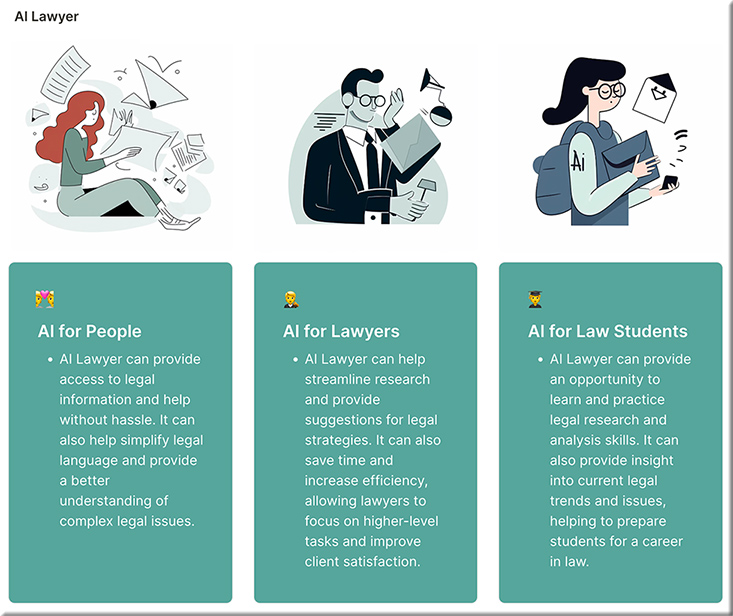
Improving Access to Justice: One significant advantage of AI in the legal profession is its potential to improve access to justice. The high costs associated with legal services have traditionally created barriers for individuals with limited financial means. However, AI-powered solutions can help bridge this gap by providing affordable and accessible legal information and guidance. Virtual legal assistants and chatbots can assist individuals with legal queries, empowering them to navigate legal processes more effectively and make informed decisions. By leveraging AI, the legal profession can become more inclusive and ensure that legal services are available to a broader segment of society.
Also relevant/see:
Law Unlimited: Welcome to the re-envisioned legal profession — from jordanfurlong.substack.com by Jordan Furlong Will Generative AI destroy law firms? Only if lawyers are too fixed in their ways to see the possibilities that lie beyond who we’ve always been and what we’ve always done.
Excerpt:
The immediate impact of Gen AI on legal services will be to introduce unprecedented efficiency to the production of countless legal documents and processes. For most of the last century, lawyers have personally performed this work, spending and billing hours or parts of hours to accomplish each task. Law firms have used this production method to provide on-the-job training for inexperienced lawyers and have leveraged those hours to generate profits for their partners. But LLMs can now do the same work in seconds, as effectively as lawyers can today and much better in the near future. This is, among other things, a very serious problem for law firms’ business models and talent development practices, not to mention a real challenge to lawyer education and training and potentially a revolution in access to justice.
A quick note: When I refer to neurodivergent (ND) students, I mean people whose mental or neurological function is different from what is considered typical. This includes not only students with ADHD or autism, but also those with anxiety, depression, or other mental-health disorders. Crucially, I’m also writing here about the many college students who are struggling with their mental health for whatever reason, and need our understanding and care to prevent them from doing poorly, dropping out, or facing something much, much worse.
Two key messages underlie all of the advice that follows: More communication. Less suspicion.
Also from Katie Rose Guest Pryal out at The Chronicle, of Higher Education, see:
Chatbots, data scientists, software engineers. As clients demand more for less, law firms are hiring growing numbers of staff who’ve studied technology not tort law to try and stand out from their rivals.
Law firms are advertising for experts in artificial intelligence “more than ever before,” says Chris Tart-Roberts, head of the legal technology practice at Macfarlanes, describing a trend he says began about six months ago.
Law firm leaders and consultants are unsure of how AI use will ultimately impact the legal workforce.
Consults are advising law firms and attorneys alike to adapt to the use of generative AI, viewing this as an opportunity for attorneys to learn new skills and law firms to take a look at their business models.
Split between foreseeing job cuts and opportunities to introduce new skills and additional efficiencies into the office, firm leaders and consultants remain uncertain about the impact of artificial intelligence on the legal workforce.
However, one thing is certain: law firms and attorneys need to adapt and learn how to integrate this new technology in their business models, according to consultants.
Are you overwhelmed by countless cases, complex legal concepts, and endless readings? Law School AI is here to help. Our cutting-edge AI chatbot is designed to provide law students with an accessible, efficient, and engaging way to learn the law. Our chatbot simplifies complex legal topics, delivers personalized study guidance, and answers your questions in real-time – making your law school journey a whole lot easier.
Job title of the future: metaverse lawyer— from technologyreview.com by Amanda Smith Madaline Zannes’s virtual offices come with breakout rooms, an art gallery… and a bar. .
Excerpt:
Lot #651 on Somnium Space belongs to Zannes Law, a Toronto-based law firm. In this seven-level metaverse office, principal lawyer Madaline Zannes conducts private consultations with clients, meets people wandering in with legal questions, hosts conferences, and gives guest lectures. Zannes says that her metaverse office allows for a more immersive, imaginative client experience. She hired a custom metaverse builder to create the space from scratch—with breakout rooms, presentation stages, offices to rent, an art gallery, and a rooftop bar.
Greg spoke with an AI guest named Justis for this episode. Justis, powered by OpenAI’s GPT-4, was able to have a natural conversation with Greg and provide insightful perspectives on the use of generative AI in the legal industry, specifically in law firms.
In the first part of their discussion, Justis gave an overview of the legal industry’s interest in and uncertainty around adopting generative AI. While many law firm leaders recognize its potential, some are unsure of how it fits into legal work or worry about risks. Justis pointed to examples of firms exploring AI and said letting lawyers experiment with the tools could help identify use cases.
Putting Humans First: Solving Real-Life Problems With Legal Innovation— from abovethelaw.com by Olga Mack Placing the end-user at the heart of the process allows innovators to identify pain points and create solutions that directly address the unique needs and challenges individuals and businesses face.