Is Thomas Frey right? “…by 2030 the largest company on the internet is going to be an education-based company that we haven’t heard of yet.”

From a fairly recent e-newsletter from edsurge.com — though I don’t recall the exact date (emphasis DSC):

New England is home to some of the most famous universities in the world. But the region has also become ground zero for the demographic shifts that promise to disrupt higher education.

This week saw two developments that fit the narrative. On Monday, Southern Vermont College announced that it would shut its doors, becoming the latest small rural private college to do so. Later that same day, the University of Massachusetts said it would start a new online college aimed at a national audience, noting that it expects campus enrollments to erode as the number of traditional college-age students declines in the coming years.

“Make no mistake—this is an existential threat to entire sectors of higher education,” said UMass president Marty Meehan in announcing the online effort.

The approach seems to parallel the U.S. retail sector, where, as a New York Times piece outlines this week, stores like Target and WalMart have thrived by building online strategies aimed at competing with Amazon, while stores like Gap and Payless, which did little to move online, are closing stores. Of course, college is not like any other product or service, and plenty of campuses are touting the richness of the experience that students get by actually coming to a campus. And it’s not clear how many colleges can grow online to a scale that makes their investments pay off.


“It’s predicted that over the next several years, four to five major national players with strong regional footholds will be established. We intend to be one of them.”

University of Massachusetts President Marty Meehan


From DSC:
That last quote from UMass President Marty Meehan made me reflect upon the idea of having one or more enormous entities that will provide “higher education” in the future. I wonder if things will turn out to be that we’ll have more lifelong learning providers and platforms in the future — with the idea of a 60-year curriculum being an interesting idea that may come into fruition.

Long have I predicted that such an enormous entity would come to pass. Back in 2008, I named it the Forthcoming Walmart of Education. But then as the years went by, I got bumbed out on some things that Walmart was doing, and re-branded it the Forthcoming Amazon.com of Higher Education. We’ll see how long that updated title lasts — but you get the point. In fact, the point aligns very nicely with what futurist Thomas Frey has been predicting for years as well:

“I’ve been predicting that by 2030 the largest company on the internet is going to be an education-based company that we haven’t heard of yet,” Frey, the senior futurist at the DaVinci Institute think tank, tells Business Insider. (source)

I realize that education doesn’t always scale well…but I’m thinking that how people learn in the future may be different than how we did things in the past…communities of practice comes to mind…as does new forms of credentialing…as does cloud-based learner profiles…as does the need for highly efficient, cost-effective, and constant opportunities/means to reinvent oneself.

Also see:


Addendum:

74% of consumers go to Amazon when they’re ready to buy something. That should be keeping retailers up at night. — from cnbc.com

Key points (emphasis DSC)

  • Amazon remains a looming threat for some of the biggest retailers in the country — like Walmart, Target and Macy’s.
  • When consumers are ready to buy a specific product, nearly three-quarters of them, or 74 percent, are going straight to Amazon to do it, according to a new study by Feedvisor.
  • By the end of this year, Amazon is expected to account for 52.4 percent of the e-commerce market in the U.S., up from 48 percent in 2018.


“In New England, there will be between 32,000 and 54,000 fewer college-aged students just seven years from now,” Meehan said. “That means colleges and universities will have too much capacity and not enough demand at a time when the economic model in higher education is already straining under its own weight.” (Marty Meehan at WBUR)
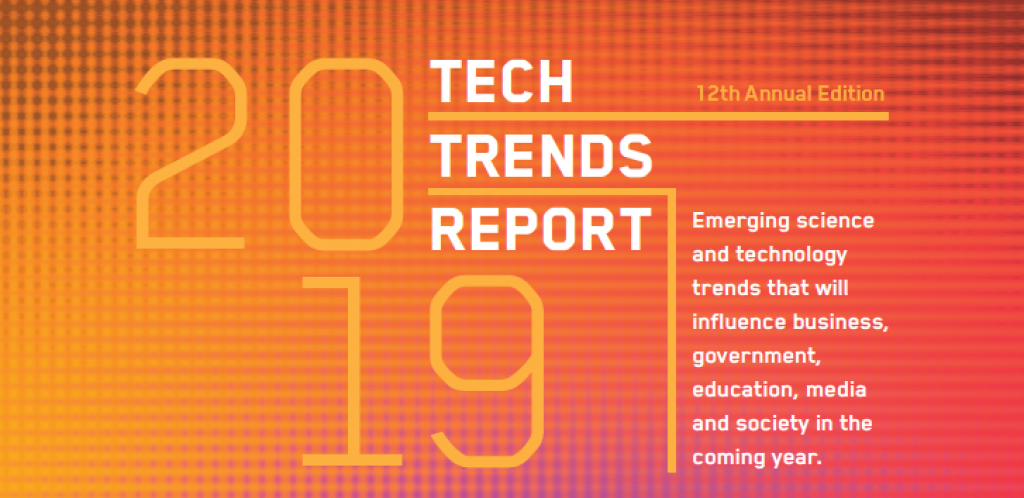


The Future Today Institute’s 12th Annual Emerging Tech Trends Report — from futuretodayinstitute.com

Excerpts:

At the Future Today Institute, we identify emerging tech trends and map the future for our clients. This is FTI’s 12th annual Tech Trends Report, and in it we identify 315 tantalizing advancements in emerging technologies — artificial intelligence, biotech, autonomous robots, green energy and space travel — that will begin to enter the mainstream and fundamentally disrupt business, geopolitics and everyday life around the world. As of the publication date, the annual FTI Tech Trend Report report has garnered more than 7.5 cumulative views.

Key findings for 2019 (emphasis DSC)

  • Privacy is dead. (DC: NOT GOOD!!! If this is true, can the situation be reversed?)
  • Voice Search Optimization (VSO) is the new SEO.
  • The Big Nine.
  • Personal data records are coming. (DC: Including cloud-based learner profiles I hope.)
  • China continues to ascend, and not just in artificial intelligence.
  • Lawmakers around the world are not prepared to deal with new challenges that arise from emerging science and technology.
  • Consolidation continues as a key theme for 2019.


How MIT’s Mini Cheetah Can Help Accelerate Robotics Research — from spectrum.ieee.org by Evan Ackerman
Sangbae Kim talks to us about the new Mini Cheetah quadruped and his future plans for the robot


From DSC:
Sorry, but while the video/robot is incredible, a feeling in the pit of my stomach makes me reflect upon what’s likely happening along these lines in the militaries throughout the globe…I don’t mean to be a fear monger, but rather a realist.


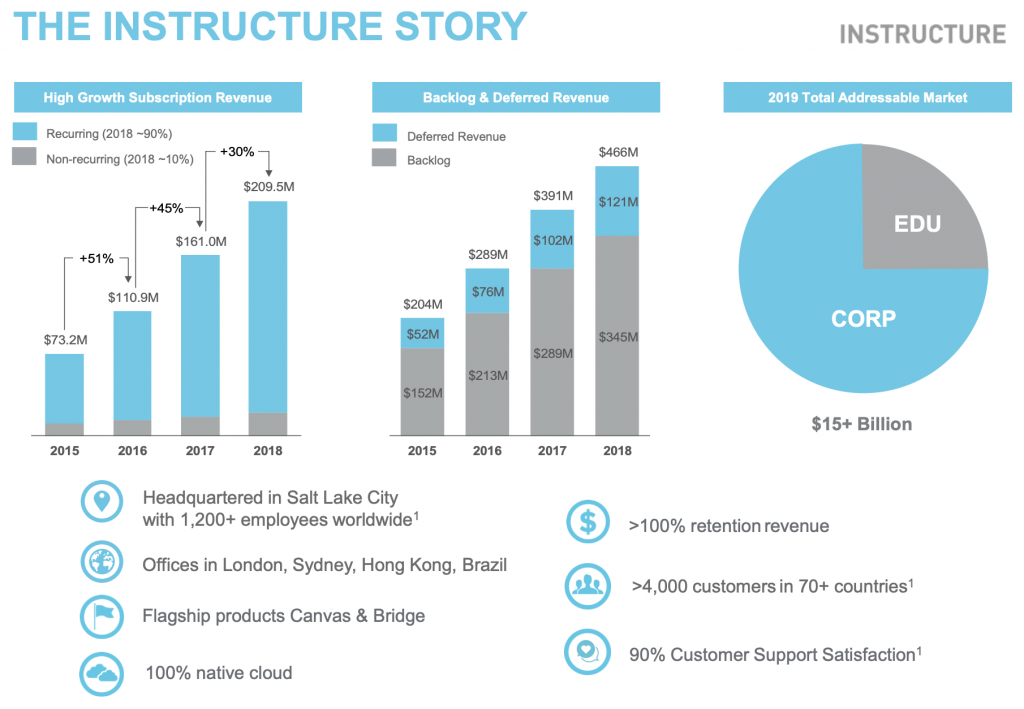
Instructure: Plans to expand beyond Canvas LMS into machine learning and AI — from mfeldstein.com by Phill Hill

Excerpts:

On the same day as Instructure’s earnings call and release of FY2018 financial results, the company announced the acquisition of Portfolium for $43 million, a small startup focusing on “ePortfolio network, student-centered assessment, job matching capabilities, and academic and co-curricular pathways”.
…
Instructure now views itself as a company with a suite of products, and they are much more open to using corporate M&A to build this portfolio.
…

We already have analytical capabilities in our Canvas platform. I want to be really clear and delineate the difference between an analytics and reporting capability, and a machine learning and AI platform.
…
We have the most comprehensive database on the educational experience in the globe. So given that information that we have, no one else has those data assets at their fingertips to be able to develop those algorithms and predictive models.
…

What’s even more interesting and compelling is that we can take that information, correlate it across all sorts of universities, curricula, etc, and we can start making recommendations and suggestions to the student or instructor in how they can be more successful. Watch this video, read this passage, do problems 17-34 in this textbook, spend an extra two hours on this or that. When we drive student success, we impact things like retention, we impact the productivity of the teachers, and it’s a huge opportunity. That’s just one small example. Our DIG initiative, it is first and foremost a platform for ML and AI, and we will deliver and monetize it by offering different functional domains of predictive algorithms and insights. Maybe things like student success, retention, coaching and advising, career pathing, as well as a number of the other metrics that will help improve the value of an institution or connectivity across institutions.


Why AI is a threat to democracy — and what we can do to stop it — from technologyreview.com by Karen Hao and Amy Webb

Excerpt:

Universities must create space in their programs for hybrid degrees. They should incentivize CS students to study comparative literature, world religions, microeconomics, cultural anthropology and similar courses in other departments. They should champion dual degree programs in computer science and international relations, theology, political science, philosophy, public health, education and the like. Ethics should not be taught as a stand-alone class, something to simply check off a list. Schools must incentivize even tenured professors to weave complicated discussions of bias, risk, philosophy, religion, gender, and ethics in their courses.

One of my biggest recommendations is the formation of GAIA, what I call the Global Alliance on Intelligence Augmentation. At the moment people around the world have very different attitudes and approaches when it comes to data collection and sharing, what can and should be automated, and what a future with more generally intelligent systems might look like. So I think we should create some kind of central organization that can develop global norms and standards, some kind of guardrails to imbue not just American or Chinese ideals inside AI systems, but worldviews that are much more representative of everybody.

Most of all, we have to be willing to think about this much longer-term, not just five years from now. We need to stop saying, “Well, we can’t predict the future, so let’s not worry about it right now.” It’s true, we can’t predict the future. But we can certainly do a better job of planning for it.


From DSC:
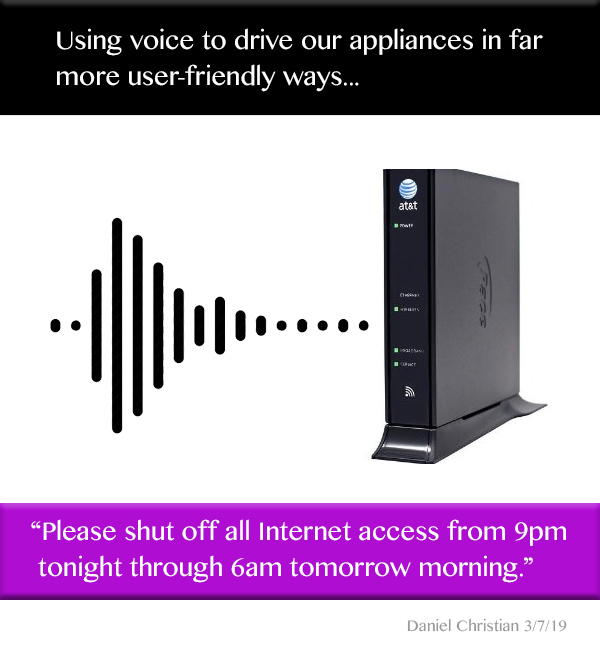
Our family uses AT&T for our smartphones and for our Internet access. What I would really like from AT&T is to be able to speak into an app — either located on a smartphone or have their routers morph into Alexa-type of devices — to be able to speak to what I want my router to do:

“Turn off Internet access tonight from 9pm until 6am tomorrow morning.”
“Only allow Internet access for parents’ accounts.”
“Upgrade my bandwidth for the next 2 hours.”

Upon startup, the app would ask whether I wanted to setup any “admin” types of accounts…and, if so, would recognize that voice/those voices as having authority and control over the device.

Would you use this type of interface? I know I would!

P.S. I’d like to be able to speak to our
thermostat in that sort of way as well.


The 10+ best real-world examples of augmented reality — from forbes.com by Bernard Marr

Excerpt:

Augmented reality (AR) can add value, solve problems and enhance the user experience in nearly every industry. Businesses are catching on and increasing investments to drive the growth of augmented reality, which makes it a crucial part of the tech economy.


As referenced by Bernard in his above article:


From DSC:
Along these lines, I really appreciate the “translate” feature within Twitter. It helps open up whole new avenues of learning for me from people across the globe. A very cool, practical, positive, beneficial feature/tool!!!


India Just Swore in Its First Robot Police Officer — from futurism.com by Dan Robitzski
RoboCop, meet KP-Bot.

Excerpt:

RoboCop
India just swore in its first robotic police officer, which is named KP-Bot.

The animatronic-looking machine was granted the rank of sub-inspector on Tuesday, and it will operate the front desk of Thiruvananthapuram police headquarters, according to India Today.


From DSC:
Whoa….hmmm…note to the ABA and to the legal education field — and actually to anyone involved in developing laws — we need to catch up. Quickly.

My thoughts go to the governments and to the militaries around the globe. Are we now on a slippery slope? How far along are the militaries of the world in integrating robotics and AI into their weapons of war? Quite far, I think.

Also, at the higher education level, are Computer Science and Engineering Departments taking their responsibilities seriously in this regard? What kind of teaching is being done (or not done) in terms of the moral responsibilities of their code? Their robots?


For a next gen learning platform: A Netflix-like interface to check out potential functionalities / educationally-related “apps” [Christian]

From DSC:
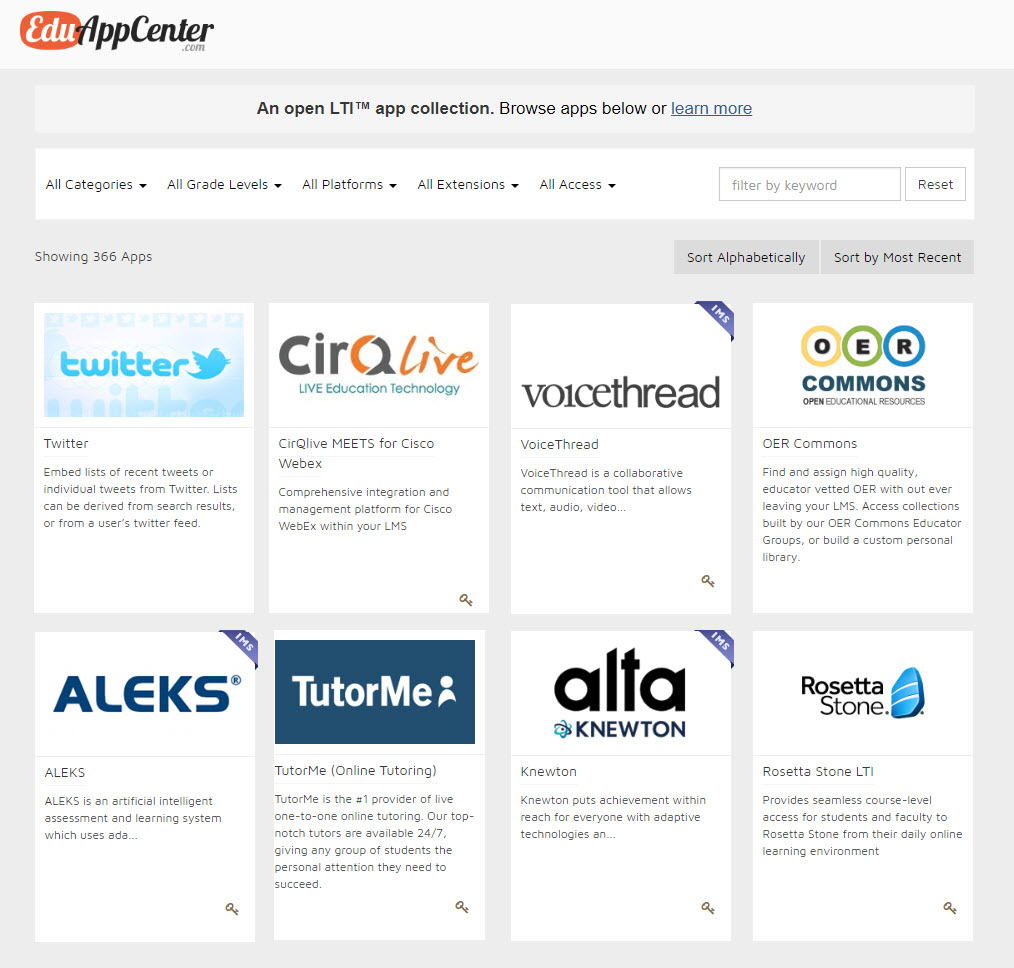
In a next generation learning system, it would be sharp/beneficial to have a Netflix-like interface to check out potential functionalities that you could turn on and off (at will) — as one component of your learning ecosystem that could feature a setup located in your living room or office.

For example, put a Netflix-like interface to the apps out at eduappcenter.com (i.e., using a rolling interface at first, then going to a static page/listing of apps…again…similar to Netflix).


A Netflix-like interface to check out potential functionalities / educationally-related apps


AI bias: 9 questions leaders should ask — from enterprisersproject.com by Kevin Casey
Artificial intelligence bias can create problems ranging from bad business decisions to injustice. Use these questions to fight off potential biases in your AI systems.

Excerpt:

People questions to ask about AI bias
1. Who is building the algorithms?
2. Do your AI & ML teams take responsibility for how their work will be used?
3. Who should lead an organization’s effort to identify bias in its AI systems?
4. How is my training data constructed?

Data questions to ask about AI bias
5. Is the data set comprehensive?
6. Do you have multiple sources of data?

Management questions to ask about AI bias
7. What proportion of resources is appropriate for an organization to devote to assessing potential bias?
8. Have you thought deeply about what metrics you use to evaluate your work?
9. How can we test for bias in training data?


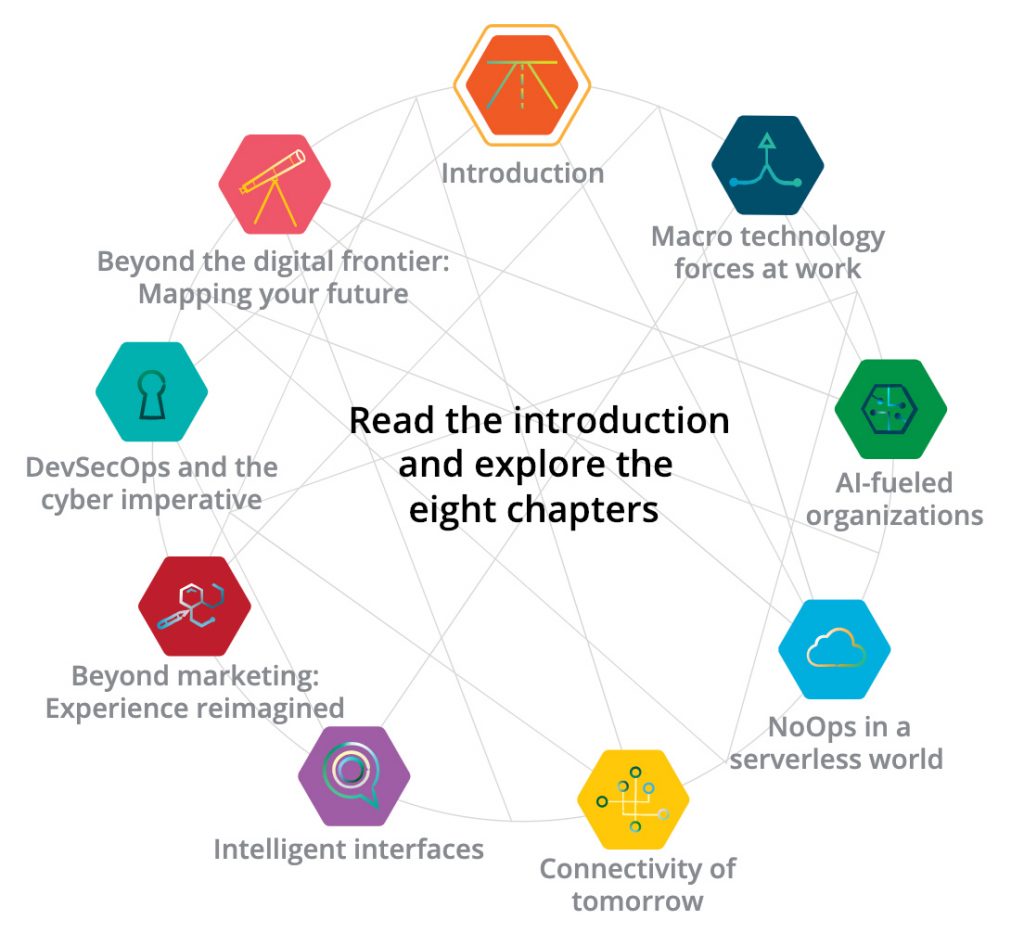
Emerging technology trends can seem both elusive and ephemeral, but some become integral to business and IT strategies—and form the backbone of tomorrow’s technology innovation. The eight chapters of Tech Trends 2019 look to guide CIOs through today’s most promising trends, with an eye toward innovation and growth and a spotlight on emerging trends that may well offer new avenues for pursuing strategic ambitions.


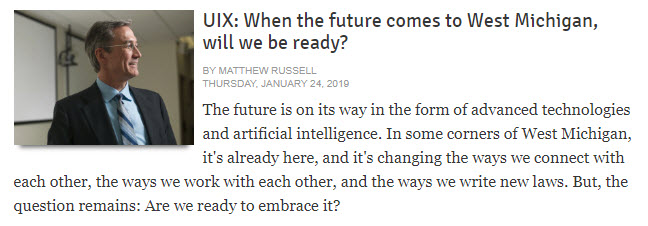
When the future comes to West Michigan, will we be ready?


UIX: When the future comes to West Michigan, will we be ready? — from rapidgrowthmedia.com by Matthew Russell

Excerpts (emphasis DSC):

“Here in the United States, if we were to personify things a bit, it’s almost like society is anxiously calling out to an older sibling (i.e., emerging technologies), ‘Heh! Wait up!!!'” Christian says. “This trend has numerous ramifications.”

Out of those ramifications, Christian names three main points that society will have to address to fully understand, make use of, and make practical, future technologies.

  1. The need for the legal/legislative side of the world to close the gap between what’s possible and what’s legal
  2. The need for lifelong learning and to reinvent oneself
  3. The need to make pulse-checking/futurism an essential tool in the toolbox of every member of the workforce today and in the future


When the future comes to West Michigan, will we be ready?

Photos by Adam Bird


From DSC:
The key thing that I was trying to relay in my contribution towards Matthew’s helpful article was that we are now on an exponential trajectory of technological change. This trend has ramifications for numerous societies around the globe, and it involves the legal realm as well. Hopefully, all of us in the workforce are coming to realize our need to be constantly pulse-checking the relevant landscapes around us. To help make that happen, each of us needs to be tapping into the appropriate “streams of content” that are relevant to our careers so that our knowledgebases are as up-to-date as possible. We’re all into lifelong learning now, right?

Along these lines, increasingly there is a need for futurism to hit the mainstream. That is, when the world is moving at 120+mph, the skills and methods that futurists follow must be better taught and understood, or many people will be broadsided by the changes brought about by emerging technologies. We need to better pulse-check the relevant landscapes, anticipate the oncoming changes, develop potential scenarios, and then design the strategies to respond to those potential scenarios.


What does it say when a legal blockchain eBook has 1.7M views? — from legalmosaic.com by Mark A. Cohen

Excerpts (emphasis DSC):

“Blockchain For Lawyers,” a recently-released eBook by Australian legal tech company Legaler, drew 1.7M views in two weeks. What does that staggering number say about blockchain, legal technology, and the legal industry? Clearly, blockchain is a hot legal topic, along with artificial intelligence (AI), and legal tech generally.
…
Legal practice and delivery are each changing. New practice areas like cryptocurrency, cybersecurity, and Internet law are emerging as law struggles to keep pace with the speed of business change in the digital age. Concurrently, several staples of traditional practice–research, document review, etc.– are becoming automated and/or no longer performed by law firm associates. There is more “turnover” of practice tasks, more reliance on machines and non-licensed attorneys to mine data and provide domain expertise used by lawyers, and more collaboration than ever before. The emergence of new industries demands that lawyers not only provide legal expertise in support of new areas but also that they possess intellectual agility to master them quickly. Many practice areas law students will encounter have yet to be created. That means that all lawyers will be required to be more agile than their predecessors and engage in ongoing training.


Amazon has 10,000 employees dedicated to Alexa — here are some of the areas they’re working on — from businessinsider.com by Avery Hartmans

Summary (emphasis DSC):

  • Amazon’s vice president of Alexa, Steve Rabuchin, has confirmed that yes, there really are 10,000 Amazon employees working on Alexa and the Echo.
  • Those employees are focused on things like machine learning and making Alexa more knowledgeable.
  • Some employees are working on giving Alexa a personality, too.


From DSC:
How might this trend impact learning spaces? For example, I am interested in using voice to intuitively “drive” smart classroom control systems:

  • “Alexa, turn on the projector”
  • “Alexa, dim the lights by 50%”
  • “Alexa, open Canvas and launch my Constitutional Law I class”


© 2025 | Daniel Christian