Watch Salvador Dalí Return to Life Through AI — from interestingengineering.com by
The Dalí Museum has created a deepfake of surrealist artist Salvador Dalí that brings him back to life.

Excerpt:

The Dalí Museum has created a deepfake of surrealist artist Salvador Dalí that brings him back to life. This life-size deepfake is set up to have interactive discussions with visitors.

The deepfake can produce 45 minutes of content and 190,512 possible combinations of phrases and decisions taken by the fake but realistic Dalí. The exhibition was created by Goodby, Silverstein & Partners using 6,000 frames of Dalí taken from historic footage and 1,000 hours of machine learning.


From DSC:
While on one hand, incredible work! Fantastic job! On the other hand, if this type of deepfake can be done, how can any video be trusted from here on out? What technology/app will be able to confirm that a video is actually that person, actually saying those words?

Will we get to a point that says, this is so and so, and I approved this video. Or will we have an electronic signature? Will a blockchain-based tech be used? I don’t know…there always seems to be pros and cons to any given technology. It’s how we use it. It can be a dream, or it can be a nightmare.



From DSC:
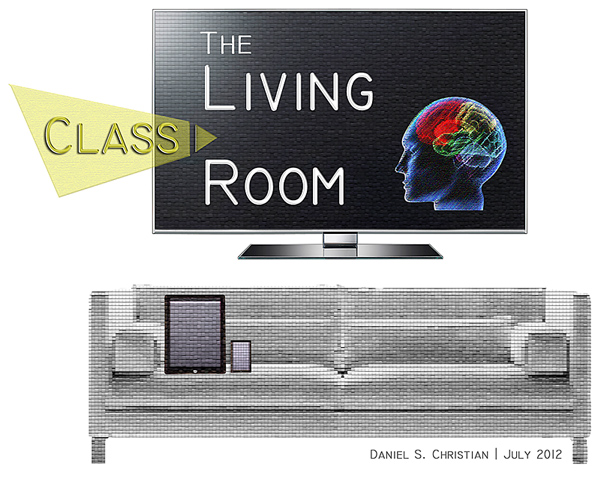
Re: the Learning from the Living [Class] Room vision of a next gen learning platform…


Learning from the Living Class Room


…wouldn’t it be cool if you could use your voice to ask your smart/connected “TV” type of device:

“Show me the test questions for Torts I from WMU-Cooley Law School. Cooley could then charge $0.99 for these questions.”

Then, the system knows how you did on answering those questions. The ones you got right, you don’t get asked to review as often as the ones you got wrong. As you get a question right more often, the less you are asked to answer it.

You sign up for such streams of content — and the system assesses you periodically. This helps a person keep certain topics/information fresh in their memory. This type of learning method would be incredibly helpful for students trying to pass the Bar or other types of large/summative tests — especially when a student has to be able to recall information that they learned over the last 3-5 years.

Come to think of it…this method could help all of us in learning new disciplines/topics throughout our lifetimes. Sign up for the streams of content that you want to learn more about…and drop the (no-longer relevant) subscriptions as needed..


We need to tap into streams of content in our next gen learning platform


Lawmakers want to stop a future filled with smart devices and bad security — from cnet.com by Alfred Ng
“Unsecured IoT devices will be like the new asbestos.”

Excerpts:

Before smart devices fill up millions of homes, a Senate hearing on Tuesday looked to figure out how to keep them safe from hackers.

“Sound security practices must keep pace with the expansion of the internet of things in order to mitigate these threats,” Sen. Dan Sullivan said in his opening statement. Sullivan, a Republican from Alaska, is chairman of the commerce committee’s subcommittee on security.
…
“While IoT holds a promise of revolutionizing the way we live and we work, we should also be wary, because IoT also stands for the internet of threats,” said Sen. Ed Markey, a Democrat from Massachusetts.

“Unsecured IoT devices will be like the new asbestos,” Geiger said. “We will build them into our environments, only to have to rip them back out years later, and wonder why our predecessors did not have the forethought to ensure basic security from the start.”


The finalized 2019 Horizon Report Higher Education Edition (from library.educause.edu) was just released on 4/23/19.

Excerpt:

Key Trends Accelerating Technology Adoption in Higher Education:

Short-Term—Driving technology adoption in higher education for the next one to two years

  • Redesigning Learning Spaces
  • Blended Learning Designs

Mid-Term—Driving technology adoption in higher education for the next three to five years

  • Advancing Cultures of Innovation
  • Growing Focus on Measuring Learning

Long-Term—Driving technology adoption in higher education for five or more years

  • Rethinking How Institutions Work
  • Modularized and Disaggregated Degrees


Legal Services Innovation Index


Legal Services Innovation Index

Excerpts:

“This index should also be a resource for law schools and law students. It will help law schools better understand the evolution of the legal landscape, which will help them better prepare their students for the future. Law students can use this index to learn more about how the profession is changing and the knowledge and skills that they should develop for long-term success. The index also aims to provide law students information about the law firms recruiting them as well as a framework for assessing each law firm’s strategies for the future. Again, I caution that this index is simply an initial attempt to measure indicators of innovation and various weaknesses have been acknowledged. That said, the index and this initial information provides a starting point for very important discussions.”


“The problem to be solved is the lack of access to legal services. Experts estimate that approximately 80 percent of the impoverished and 50 percent of the middle class lack access to legal services.”


AI’s white guy problem isn’t going away — from technologyreview.com by Karen Hao
A new report says current initiatives to fix the field’s diversity crisis are too narrow and shallow to be effective.

Excerpt:

The numbers tell the tale of the AI industry’s dire lack of diversity. Women account for only 18% of authors at leading AI conferences, 20% of AI professorships, and 15% and 10% of research staff at Facebook and Google, respectively. Racial diversity is even worse: black workers represent only 2.5% of Google’s entire workforce and 4% of Facebook’s and Microsoft’s. No data is available for transgender people and other gender minorities—but it’s unlikely the trend is being bucked there either.

This is deeply troubling when the influence of the industry has dramatically grown to affect everything from hiring and housing to criminal justice and the military. Along the way, the technology has automated the biases of its creators to alarming effect: devaluing women’s résumés, perpetuating employment and housing discrimination, and enshrining racist policing practices and prison convictions.


Along these lines, also see:

‘Disastrous’ lack of diversity in AI industry perpetuates bias, study finds — from by theguardian.com by Kari Paul
Report says an overwhelmingly white and male field has reached ‘a moment of reckoning’ over discriminatory systems

Excerpt:

Lack of diversity in the artificial intelligence field has reached “a moment of reckoning”, according to new findings published by a New York University research center. A “diversity disaster” has contributed to flawed systems that perpetuate gender and racial biases found the survey, published by the AI Now Institute, of more than 150 studies and reports.

The AI field, which is overwhelmingly white and male, is at risk of replicating or perpetuating historical biases and power imbalances, the report said. Examples cited include image recognition services making offensive classifications of minorities, chatbots adopting hate speech, and Amazon technology failing to recognize users with darker skin colors. The biases of systems built by the AI industry can be largely attributed to the lack of diversity within the field itself, the report said.


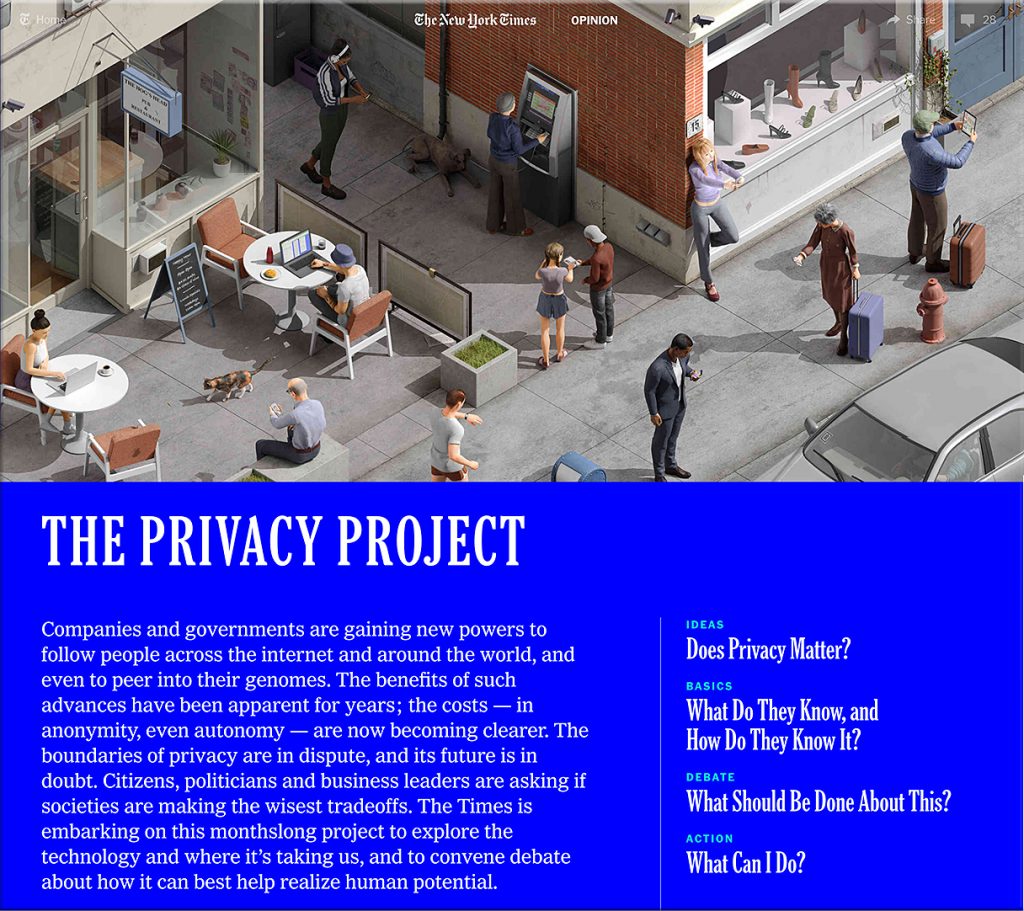
Example articles from the Privacy Project:

  • James Bennet: Do You Know What You’ve Given Up?
  • A. G. Sulzberger: How The Times Thinks About Privacy
  • Samantha Irby: I Don’t Care. I Love My Phone.
  • Tim Wu: How Capitalism Betrayed Privacy


From DSC:
First of all, an article:

The four definitive use cases for AR and VR in retail — from forbes.com by Nikki Baird

AR in retail

Excerpt (emphasis DSC):

AR is the go-to engagement method of choice when it comes to product and category exploration. A label on a product on a shelf can only do so much to convey product and brand information, vs. AR, which can easily tap into a wealth of digital information online and bring it to life as an overlay on a product or on the label itself.


From DSC:
Applying this concept to the academic world…what might this mean for a student in a chemistry class who has a mobile device and/or a pair of smart goggles on and is working with an Erlenmeyer flask? A burette? A Bunsen burner?

Along these lines...what if all of those confused students — like *I* was struggling through chem lab — could see how an experiment was *supposed to be done!?*

That is, if there’s only 30 minutes of lab time left, the professor or TA could “flip a switch” to turn on the AR cloud within the laboratory space to allow those struggling students to see how to do their experiment.

I can’t tell you how many times I was just trying to get through the lab — not knowing what I was doing, and getting zero help from any professor or TA. I hardly learned a thing that stuck with me…except the names of a few devices and the abbreviations of a few chemicals. For the most part, it was a waste of money. How many students experience this as well and feel like I did?

Will the terms “blended learning” and/or “hybrid learning” take on whole new dimensions with the onset of AR, MR, and VR-related learning experiences?

#IntelligentTutoring #IntelligentSystems #LearningExperiences
#AR #VR #MR #XR #ARCloud #AssistiveTechnologies
#Chemistry #BlendedLearning #HybridLearning #DigitalLearning


Also see:


“It is conceivable that we’re going to be moving into a world without screens, a world where [glasses are] your screen. You don’t need any more form factor than [that].”

(AT&T CEO)


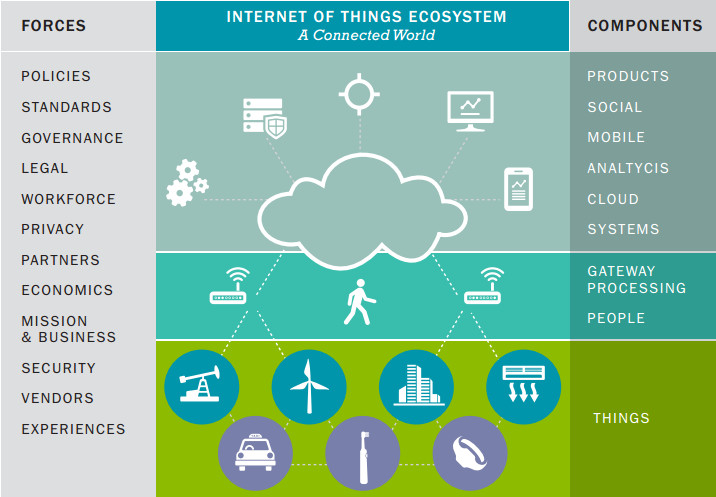
10 predictions for the future of the IoT — from bbntimes.com by Ahmed Banafa


Also see:

  • How Artificial Intelligence will kickstart the Internet of Things — from bbntimes.com by Ahmed Banafa
    Excerpt:
    Examples of such IoT data: 

    • Data that helps cities predict accidents and crimes
    • Data that gives doctors real-time insight into information from pacemakers or biochips
    • Data that optimize productivity across industries through predictive maintenance on equipment and machinery
    • Data that creates truly smart homes with connected appliances
    • Data that provides critical communication between self-driving cars


Video: Chatbots’ History and Future — from which-50.com by Joseph Brookes

Excerpt:

What’s Next For Chatbots?
One area where chatbots will have an increasing impact in the future is language, according to Kraeutler. He argues the further integration of language services from the likes of Google will bring down processing times in multilingual scenarios.

“Having a chatbot where a consumer can very easily speak in their native tongue and use services like Google to provide real-time translation — and increasingly very accurate real-time translation. That allows the bot to respond to the consumer, again, very accurately, but also in their native tongue.”

That translation feature, Kraeutler says, will also be vital in assisted conversations — where bots assist human agents to provide next-best actions — allowing the two human parties to converse in near real time in their native languages.


From DSC:
This is much more than a Voice Response Unit (VRU) Phase II…the educational realm should watch what happens with chatbots…as they could assist with doing some heavy lifting in the learning world.


Gartner: Top 10 Strategic Technologies Impacting Higher Ed in 2019 — from campustechnology.com by Rhea Kelly

Excerpt:

  • Artificial intelligence conversational interfaces. Gartner defines these as “a subset of conversational user interfaces (CUIs), in which user and machine interactions occur in the user’s spoken or written natural language.” The benefit for higher ed insitutions: “CUIs place responsibility on the machine interface to learn what the user wants, rather than the user having to learn the software, saving user time, increasing student satisfaction, and being available to use 24/7.”
  • Smart campus. This is “a physical or digital environment in which humans and technology-enabled systems interact to create more immersive and automated experiences for university stakeholders.” While smart campus initiatives are still in the early stages, there has been a rising interest across higher ed institutions, according to Gartner. “The smart campus will drive growth in markets like robotic process automation solutions and augmented and virtual reality in the higher education space. Campus efficiency will be enhanced and student learning will be enriched with the new capabilities they bring. It’s a win all-around, except for the data security implications that come with most technology initiatives today,” said Morgan.
    …
  • Digital credentialing technologies. “Students, faculty and the higher education institutions they are a part of are starting to expect the ability to quickly and freely exchange credentials to enhance the verification and recruitment process,” noted Gartner. Technologies such as blockchain and data encryption are driving change in this area. “In many ways, credentials issued by an education institution are the only tangible evidence of higher education. They should be considered the currency of the education ecosystem,” said Morgan. “These technologies really enable universities to leverage technology to improve the student experience by giving them more control over their information. The only hurdle is a general lack of understanding of digital credentialing technologies and risk-averseness in the high-stakes nature of the higher education market.”


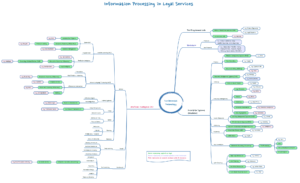
Map of fundamental technologies in legal services — from remakinglawfirms.com by Michelle Mahoney

Excerpt:
The Map is designed to help make sense of the trends we are observing:

  • an increasing number of legal technology offerings;
  • the increasing effectiveness of legal technologies;
  • emerging new categories of legal technology;
  • the layering and combining of fundamental technology capabilities; and
  • the maturation of machine learning, natural language processing and deep learning artificial intelligence.

Given the exponential nature of the technologies, the Fundamental Technologies Map can only depict the landscape at the current point in time.


Information processing in legal services (PDF file)


Also see:
Delta Model Update: The Most Important Area of Lawyer Competency — Personal Effectiveness Skills — from legalexecutiveinstitute.comby Natalie Runyon

Excerpt:

Many legal experts say the legal industry is at an inflection point because the pace of change is being driven by many factors — technology, client demand, disaggregation of matter workflow, the rise of Millennials approaching mid-career status, and the faster pace of business in general.

The fact that technology spend by law firms continues to be a primary area of investment underscores the fact that the pace of change is continuing to accelerate with the ongoing rise of big data and workflow technology that are greatly influencing how lawyering gets done. Moreover, combined with big unstructured data, artificial intelligence (AI) is creating opportunities to analyze siloed data sets to gain insights in numerous new ways.


HBS Online: Why Harvard Business School’s digital rebrand is big news for online learning — from businessbecause.com by Seb Murray
Name change from HBX to Harvard Business School Online symbolizes a maturing market. We speak to Patrick Mullane, executive director of HBS Online, to find out more

Excerpt:

At first glance, it may have seemed like an inconsequential name change: Harvard Business School’s digital learning platform HBX would be called HBS Online.

But commentators have billed the recent rebrand as having the potential for a big impact on online education. For one, the makeover could help to further legitimize the market.

Online learning was initially considered second-rate to campus study, due to concerns about teaching quality and interactivity online. Nitin Nohria, the dean of HBS, saying in 2010 that the school would never go online in his lifetime, appeared to confirm the scepticism.

But he has since admitted he ‘misjudged the potential of online education’ and is…


From DSC:
This is very old hat…but those who haven’t taught online should not judge online teaching and learning. If I gave you the writeups from my students from a class that I have taught in both a face-to-face format as well as in an online format — where I ask them what they learned during the class — I swear that you could not tell which documents represented those courses taught online vs. those taught face-to-face. I guarantee it. So as the saying goes…don’t judge it if you haven’t tried it.

Oh…and by the way, many of the innovations in teaching and learning are happening in the digital/virtual realm. Not all, but many. And we haven’t seen anything yet. 


MIT has just announced a $1 billion plan to create a new college for AI — from technologyreview.com

Excerpt:

One of the birthplaces of artificial intelligence, MIT, has announced a bold plan to reshape its academic program around the technology. With $1 billion in funding, MIT will create a new college that combines AI, machine learning, and data science with other academic disciplines. It is the largest financial investment in AI by any US academic institution to date.


From this page:

The College will:

  • reorient MIT to bring the power of computing and AI to all fields of study at MIT, allowing the future of computing and AI to be shaped by insights from all other disciplines;
  • create 50 new faculty positions that will be located both within the College and jointly with other departments across MIT — nearly doubling MIT’s academic capability in computing and AI;
  • give MIT’s five schools a shared structure for collaborative education, research, and innovation in computing and AI;
  • educate students in every discipline to responsibly use and develop AI and computing technologies to help make a better world; and
  • transform education and research in public policy and ethical considerations relevant to computing and AI.


Collaboration technology is fueling enterprise transformation – increasing agility, driving efficiency and improving productivity. Join Amy Chang at Enterprise Connect where she will share Cisco’s vision for the future of collaboration, the foundations we have in place and the amazing work we’re driving to win our customers’ hearts and minds. Cognitive collaboration – technology that weaves context and intelligence across applications, devices and workflows, connecting people with customers & colleagues, to deliver unprecedented experiences and transform how we work – is at the heart of our efforts. Join this session to see our technology in action and hear how our customers are using our portfolio of products today to transform the way they work.


© 2025 | Daniel Christian