What is 5G? Everything you need to know — from techradar.com by Mike Moore
The latest news, views and developments in the exciting world of 5G networks.

Excerpt:

What is 5G?
5G networks are the next generation of mobile internet connectivity, offering faster speeds and more reliable connections on smartphones and other devices than ever before.

Combining cutting-edge network technology and the very latest research, 5G should offer connections that are multitudes faster than current connections, with average download speeds of around 1GBps expected to soon be the norm.

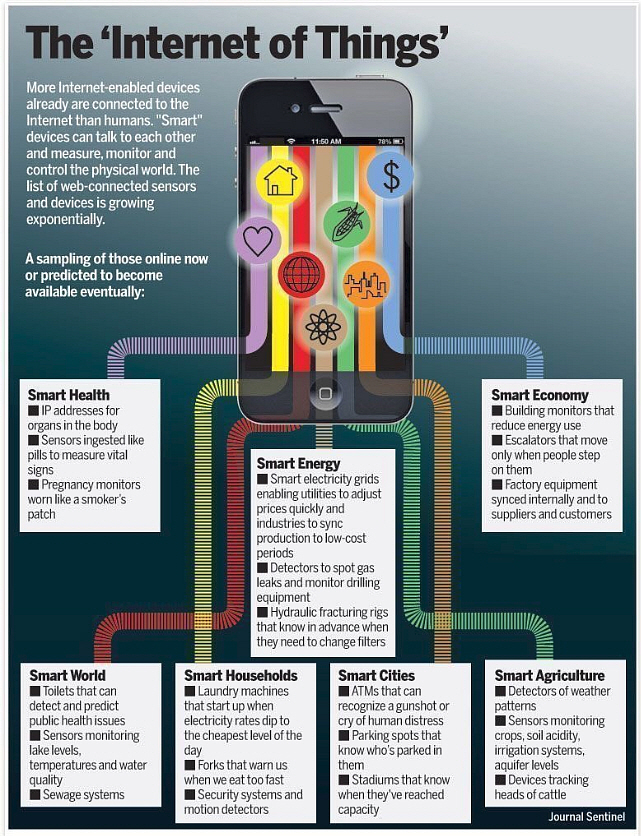
The networks will help power a huge rise in Internet of Things technology, providing the infrastructure needed to carry huge amounts of data, allowing for a smarter and more connected world.

With development well underway, 5G networks are expected to launch across the world by 2020, working alongside existing 3G and 4G technology to provide speedier connections that stay online no matter where you are.

So with only a matter of months to go until 5G networks are set to go live, here’s our run-down of all the latest news and updates.


From DSC:
I wonder…

  • What will Human Computer Interaction (HCI) look like when ~1GBps average download speeds are the norm?
  • What will the Internet of Things (IoT) turn into (for better or for worse)?
  • How will Machine-to-Machine (M2M) Communications be impacted?
  • What will that kind of bandwidth mean for XR-related technologies (AR VR MR)?


From DSC:
In this posting, I discussed an idea for a new TV show — a program that would be both entertaining and educational. So I suppose that this posting is a Part II along those same lines. 

The program that came to my mind at that time was a program that would focus on significant topics and issues within American society — offered up in a debate/presentation style format.

I had envisioned that you could have different individuals, groups, or organizations discuss the pros and cons of an issue or topic. The show would provide contact information for helpful resources, groups, organizations, legislators, etc. These contacts would be for learning more about a subject or getting involved with finding a solution for that problem.

OR

…as I revist that idea today…perhaps the show could feature humans versus an artificial intelligence such as IBM’s Project Debater:


Project Debater is the first AI system that can debate humans on complex topics. Project Debater digests massive texts, constructs a well-structured speech on a given topic, delivers it with clarity and purpose, and rebuts its opponent. Eventually, Project Debater will help people reason by providing compelling, evidence-based arguments and limiting the influence of emotion, bias, or ambiguity.


Ten HR trends in the age of artificial intelligence — from fortune.com by Jeanne Meister
The future of HR is both digital and human as HR leaders focus on optimizing the combination of human and automated work. This is driving a new HR priority: requiring leaders and teams to develop fluency in artificial intelligence while they re-imagine HR to be more personal, human, and intuitive.

Excerpt from 21 More Jobs Of the Future (emphasis DSC):

Voice UX Designer: This role will leverage voice as a platform to deliver an “optimal” dialect and sound that is pleasing to each of the seven billion humans on the planet. The Voice UX Designer will do this by creating a set of AI tools and algorithms to help individuals find their “perfect voice” assistant.

Head of Business Behavior: The head of business behavior will analyze employee behavioral data such as performance data along with data gathered through personal, environmental and spatial sensors to create strategies to improve employee experience, cross company collaboration, productivity and employee well-being.

The question for HR leaders is: What are new job roles in HR that are on the horizon as A.I. becomes integrated into the workplace?

Chief Ethical and Humane Use Officer: This job role is already being filled by Salesforce announcing its first Chief Ethical and Humane Officer this month. This new role will focus on developing strategies to use technology in an ethical and humane way. As practical uses of AI have exploded in recent years, we look for more companies to establish new jobs focusing on ethical uses of AI to ensure AI’s trustworthiness, while also helping to diffuse fears about it.

A.I. Trainer: This role allows the existing knowledge you have about a job to be ready for A.I. to use.  Creating knowledge for an A.I. supported workplace requires individuals to tag or “annotate” discrete knowledge nuggets so the correct data is served up in a conversational interface. This role is increasingly important as the role of a recruiter is augmented by AI.


Also see:

  • Experts Weigh in on Merits of AI in Education — from by Dian Schaffhauser
    Excerpt:
    Will artificial intelligence make most people better off over the next decade, or will it redefine what free will means or what a human being is? A new report by the Pew Research Center has weighed in on the topic by conferring with some 979 experts, who have, in summary, predicted that networked AI “will amplify human effectiveness but also threaten human autonomy, agency and capabilities.”
    …
    These same experts also weighed in on the expected changes in formal and informal education systems. Many mentioned seeing “more options for affordable adaptive and individualized learning solutions,” such as the use of AI assistants to enhance learning activities and their effectiveness.


Top six AI and automation trends for 2019 — from forbes.com by Daniel Newman

Excerpt:

If your company hasn’t yet created a plan for AI and automation throughout your enterprise, you have some work to do. Experts believe AI will add nearly $16 trillion to the global economy by 2030, and 20 % of companies surveyed are already planning to incorporate AI throughout their companies next year. As 2018 winds down, now is the time to take a look at some trends and predictions for AI and automation that I believe will dominate the headlines in 2019—and to think about how you may incorporate them into your own company.


Also see — and an insert here from DSC:

Kai-Fu has a rosier picture than I do in regards to how humanity will be impacted by AI. One simply needs to check out today’s news to see that humans have a very hard time creating unity, thinking about why businesses exist in the first place, and being kind to one another…


How AI can save our humanity 


Big tech may look troubled, but it’s just getting started — from nytimes.com by David Streitfeld

Excerpt:

SAN JOSE, Calif. — Silicon Valley ended 2018 somewhere it had never been: embattled.

Lawmakers across the political spectrum say Big Tech, for so long the exalted embodiment of American genius, has too much power. Once seen as a force for making our lives better and our brains smarter, tech is now accused of inflaming, radicalizing, dumbing down and squeezing the masses. Tech company stocks have been pummeled from their highs. Regulation looms. Even tech executives are calling for it.
…
The expansion underlines the dizzying truth of Big Tech: It is barely getting started.


“For all intents and purposes, we’re only 35 years into a 75- or 80-year process of moving from analog to digital,” said Tim Bajarin, a longtime tech consultant to companies including Apple, IBM and Microsoft. “The image of Silicon Valley as Nirvana has certainly taken a hit, but the reality is that we the consumers are constantly voting for them.”


Big Tech needs to be regulated, many are beginning to argue, and yet there are worries about giving that power to the government.
…
Which leaves regulation up to the companies themselves, always a dubious proposition.


The world is changing. Here’s how companies must adapt. — from weforum.org by Joe Kaeser, President and Chief Executive Officer, Siemens AG

Excerpts (emphasis DSC):

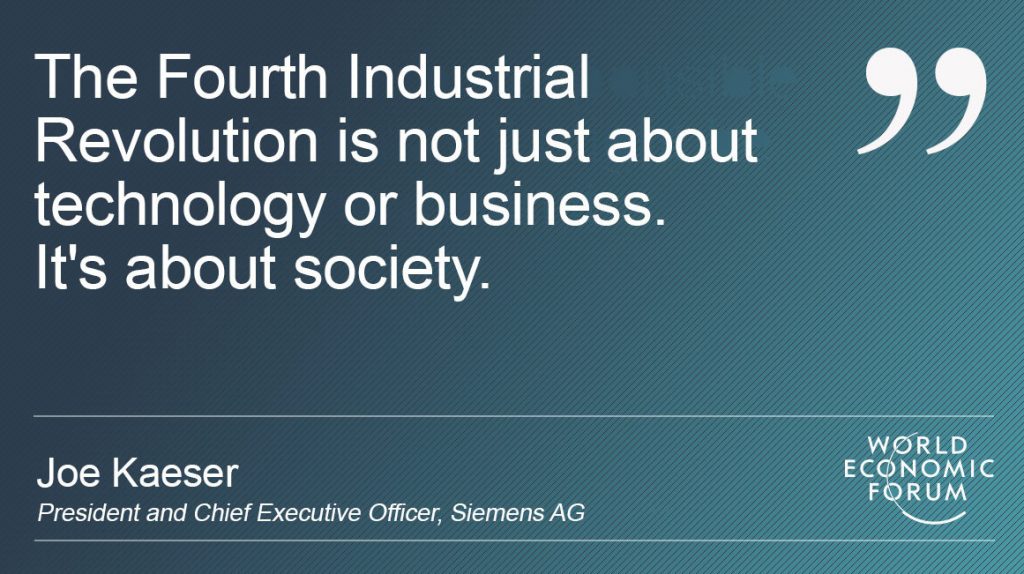
Although we have only seen the beginning, one thing is already clear: the Fourth Industrial Revolution is the greatest transformation human civilization has ever known. As far-reaching as the previous industrial revolutions were, they never set free such enormous transformative power.

The Fourth Industrial Revolution is transforming practically every human activity...its scope, speed and reach are unprecedented.
…
Enormous power (Insert from DSC: What I was trying to get at here) entails enormous risk. Yes, the stakes are high. 


“And make no mistake about it: we are now writing the code that will shape our collective future.” CEO of Siemens AG


…

Contrary to Milton Friedman’s maxim, the business of business should not just be business. Shareholder value alone should not be the yardstick. Instead, we should make stakeholder value, or better yet, social value, the benchmark for a company’s performance.

Today, stakeholders…rightfully expect companies to assume greater social responsibility, for example, by protecting the climate, fighting for social justice, aiding refugees, and training and educating workers. The business of business should be to create value for society.

…

This seamless integration of the virtual and the physical worlds in so-called cyber-physical systems – that is the giant leap we see today. It eclipses everything that has happened in industry so far. As in previous industrial revolutions but on a much larger scale, the Fourth Industrial Revolution will eliminate millions of jobs and create millions of new jobs.


“…because the Fourth Industrial Revolution runs on knowledge, we need a concurrent revolution in training and education.
…
If the workforce doesn’t keep up with advances in knowledge throughout their lives, how will the millions of new jobs be filled?” 

Joe Kaeser, President and Chief Executive Officer, Siemens AG


From DSC:
At least three critically important things jump out at me here:

  1. We are quickly approaching a time when people will need to be able to reinvent themselves quickly and cost-effectively, especially those with families and who are working in their (still existing) jobs. (Or have we already entered this period of time…?)
  2. There is a need to help people identify which jobs are safe to reinvent themselves to — at least for the next 5-10 years.
  3. Citizens across the globe — and their relevant legislatures, governments, and law schools — need to help close the gap between emerging technologies and whether those technologies should even be rolled out, and if so, how and with which features.


What freedoms and rights should individuals have in the digital age?

Joe Kaeser, President and Chief Executive Officer, Siemens AG


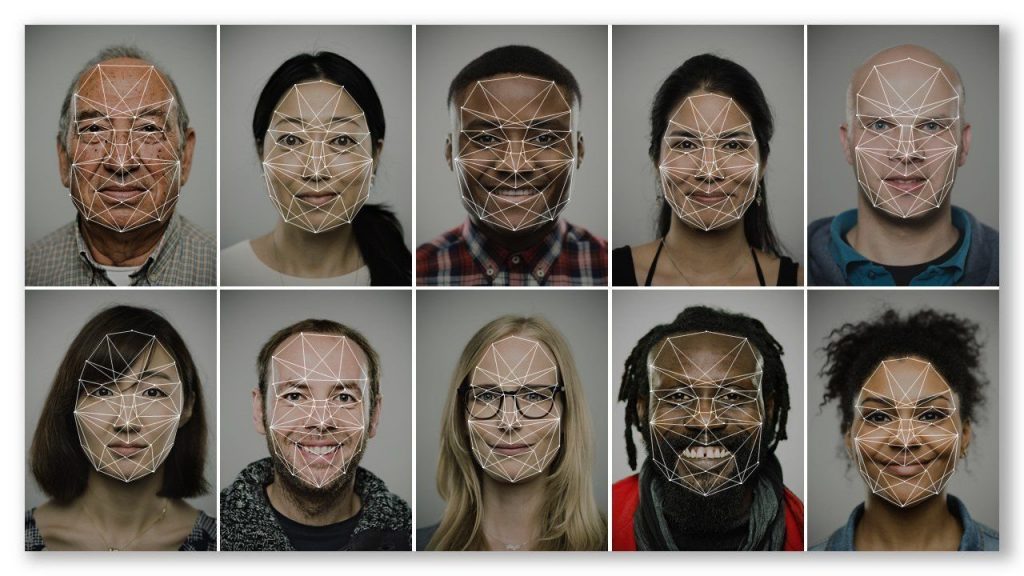
Facial recognition has to be regulated to protect the public, says AI report — from technologyreview.com by Will Knight
The research institute AI Now has identified facial recognition as a key challenge for society and policymakers—but is it too late?

Excerpt (emphasis DSC):

Artificial intelligence has made major strides in the past few years, but those rapid advances are now raising some big ethical conundrums.

Chief among them is the way machine learning can identify people’s faces in photos and video footage with great accuracy. This might let you unlock your phone with a smile, but it also means that governments and big corporations have been given a powerful new surveillance tool.

A new report from the AI Now Institute (large PDF), an influential research institute based in New York, has just identified facial recognition as a key challenge for society and policymakers.


Also see:

EXECUTIVE SUMMARY
At the core of the cascading scandals around AI in 2018 are questions of accountability: who is responsible when AI systems harm us? How do we understand these harms, and how do we remedy them? Where are the points of intervention, and what additional research and regulation is needed to ensure those interventions are effective? Currently there are few answers to these questions, and the frameworks presently governing AI are not capable of ensuring accountability. As the pervasiveness, complexity, and scale of these systems grow, the lack of meaningful accountability and oversight – including basic safeguards of responsibility, liability, and due process – is an increasingly urgent concern.

Building on our 2016 and 2017 reports, the AI Now 2018 Report contends with this central
problem and addresses the following key issues:

  1. The growing accountability gap in AI, which favors those who create and deploy these
    technologies at the expense of those most affected
  2. The use of AI to maximize and amplify surveillance, especially in conjunction with facial
    and affect recognition, increasing the potential for centralized control and oppression
  3. Increasing government use of automated decision systems that directly impact individuals and communities without established accountability structures
  4. Unregulated and unmonitored forms of AI experimentation on human populations
  5. The limits of technological solutions to problems of fairness, bias, and discrimination

Within each topic, we identify emerging challenges and new research, and provide recommendations regarding AI development, deployment, and regulation. We offer practical pathways informed by research so that policymakers, the public, and technologists can better understand and mitigate risks. Given that the AI Now Institute’s location and regional expertise is concentrated in the U.S., this report will focus primarily on the U.S. context, which is also where several of the world’s largest AI companies are based.


From DSC:
As I said in this posting, we need to be aware of the emerging technologies around us. Just because we can, doesn’t mean we should. People need to be aware of — and involved with — which emerging technologies get rolled out (or not) and/or which features are beneficial to roll out (or not).

One of the things that’s beginning to alarm me these days is how the United States has turned over the keys to the Maserati — i.e., think an expensive, powerful thing — to youth who lack the life experiences to know how to handle such power and, often, the proper respect for such power. Many of these youthful members of our society don’t own the responsibility for the positive and negative influences and impacts that such powerful technologies can have (and the more senior execs have not taken enough responsibility either)!

If you owned the car below, would you turn the keys of this ~$137,000+ car over to your 16-25 year old? Yet that’s what America has been doing for years. And, in some areas, we’re now paying the price.

 

If you owned this $137,000+ car, would you turn the keys of it over to your 16-25 year old?!


The corporate world continues to discard the hard-earned experience that age brings…as they shove older people out of the workforce. (I hesitate to use the word wisdom…but in some cases, that’s also relevant/involved here.) Then we, as a society, sit back and wonder how did we get to this place?

Even technologists and programmers in their 20’s and 30’s are beginning to step back and ask…WHY did we develop this application or that feature? Was it — is it — good for society? Is it beneficial? Or should it be tabled or revised into something else?

Below is but one example — though I don’t mean to pick on Microsoft, as they likely have more older workers than the Facebooks, Googles, or Amazons of the world. I fully realize that all of these companies have some older employees. But the youth-oriented culture in American today has almost become an obsession — and not just in the tech world. Turn on the TV, check out the new releases on Netflix, go see a movie in a theater, listen to the radio, cast but a glance at the magazines in the check out lines, etc. and you’ll instantly know
what I mean.

In the workplace, there appears to be a bias against older employees as being less innovative or tech-savvy — such a perspective is often completely incorrect. Go check out LinkedIn for items re: age discrimination…it’s a very real thing. But many of us over the age of 30 know this to be true if we’ve lost a job in the last decade or two and have tried to get a job that involves technology.


Microsoft argues facial-recognition tech could violate your rights — from finance.yahoo.com by Rob Pegoraro

Excerpt (emphasis DSC):

On Thursday, the American Civil Liberties Union provided a good reason for us to think carefully about the evolution of facial-recognition technology. In a study, the group used Amazon’s (AMZN) Rekognition service to compare portraits of members of Congress to 25,000 arrest mugshots. The result: 28 members were mistakenly matched with 28 suspects.

The ACLU isn’t the only group raising the alarm about the technology. Earlier this month, Microsoft (MSFT) president Brad Smith posted an unusual plea on the company’s blog asking that the development of facial-recognition systems not be left up to tech companies.

Saying that the tech “raises issues that go to the heart of fundamental human rights protections like privacy and freedom of expression,” Smith called for “a government initiative to regulate the proper use of facial recognition technology, informed first by a bipartisan and expert commission.”

But we may not get new laws anytime soon.

 

just because we can does not mean we should


Just because we can…

 

just because we can does not mean we should


5 influencers predict AI’s impact on business in 2019 — from martechadvisor.com by Christine Crandell

Excerpt:

With Artificial Intelligence (AI) already proving its worth to adopters, it’s not surprising that an increasing number of companies will implement and leverage AI in 2019. Now, it’s no longer a question of whether AI will take off. Instead, it’s a question of which companies will keep up. Here are five predictions from five influencers on the impact AI will have on businesses in 2019, writes Christine Crandell, President, New Business Strategies.


Should we be worried about computerized facial recognition? — from newyorker.com by David Owen
The technology could revolutionize policing, medicine, even agriculture—but its applications can easily be weaponized.


Facial-recognition technology is advancing faster than the people who worry about it have been able to think of ways to manage it. Indeed, in any number of fields the gap between what scientists are up to and what nonscientists understand about it is almost certainly greater now than it has been at any time since the Manhattan Project. 


From DSC:
This is why law schools, legislatures, and the federal government need to become much more responsive to emerging technologies. The pace of technological change has changed. But have other important institutions of our society adapted to this new pace of change?


Andrew Ng sees an eternal springtime for AI — from zdnet.com by Tiernan Ray
Former Google Brain leader and Baidu chief scientist Andrew Ng lays out the steps companies should take to succeed with artificial intelligence, and explains why there’s unlikely to be another “AI winter” like in times past.


Google Lens now recognizes over 1 billion products — from venturebeat.com by Kyle Wiggers with thanks to Marie Conway for her tweet on this

Excerpt:

Google Lens, Google’s AI-powered analysis tool, can now recognize over 1 billion products from Google’s retail and price comparison portal, Google Shopping. That’s four times the number of objects Lens covered in October 2017, when it made its debut.

Aparna Chennapragada, vice president of Google Lens and augmented reality at Google, revealed the tidbit in a retrospective blog post about Google Lens’ milestones.


Amazon Customer Receives 1,700 Audio Files Of A Stranger Who Used Alexa — from npr.org by Sasha Ingber

Excerpt:

When an Amazon customer in Germany contacted the company to review his archived data, he wasn’t expecting to receive recordings of a stranger speaking in the privacy of a home.

The man requested to review his data in August under a European Union data protection law, according to a German trade magazine called c’t. Amazon sent him a download link to tracked searches on the website — and 1,700 audio recordings by Alexa that were generated by another person.

“I was very surprised about that because I don’t use Amazon Alexa, let alone have an Alexa-enabled device,” the customer, who was not named, told the magazine. “So I randomly listened to some of these audio files and could not recognize any of the voices.”


From DSC:
When a professor walks into the room, the mobile device that the professor is carrying notifies the system to automatically establish his or her preferred settings for the room — and/or voice recognition allows a voice-based interface to adjust the room’s settings:

  • The lights dim to 50%
  • The projector comes on
  • The screen comes down
  • The audio is turned up to his/her liking
  • The LMS is logged into with his/her login info and launches the class that he/she is teaching at that time of day
  • The temperature is checked and adjusted if too high or low
  • Etc.
 

Guide to how artificial intelligence can change the world – Part 3 — from intelligenthq.com by Maria Fonseca and Paula Newton
This is part 3 of a Guide in 4 parts about Artificial Intelligence. The guide covers some of its basic concepts, history and present applications, possible developments in the future, and also its challenges as opportunities.

Excerpt:

Artificial intelligence is considered to be anything that gives machines intelligence which allows them to reason in the way that humans can. Machine learning is an element of artificial intelligence which is when machines are programmed to learn. This is brought about through the development of algorithms that work to find patterns, trends and insights from data that is input into them to help with decision making. Deep learning is in turn an element of machine learning. This is a particularly innovative and advanced area of artificial intelligence which seeks to try and get machines to both learn and think like people.


Also see:


Also see:

LinkedIn’s 2018 U.S. emerging jobs report — from economicgraph.linkedin.com

Excerpt (emphasis DSC):

Our biggest takeaways from this year’s Emerging Jobs Report:

  • Artificial Intelligence (AI) is here to stay. No, this doesn’t mean robots are coming for your job, but we are likely to see continued growth in fields and functions related to AI. This year, six out of the 15 emerging jobs are related in some way to AI, and our research shows that skills related to AI are starting to infiltrate every industry, not just tech. In fact, AI skills are among the fastest-growing skills on LinkedIn, and globally saw a 190% increase from 2015 to 2017.


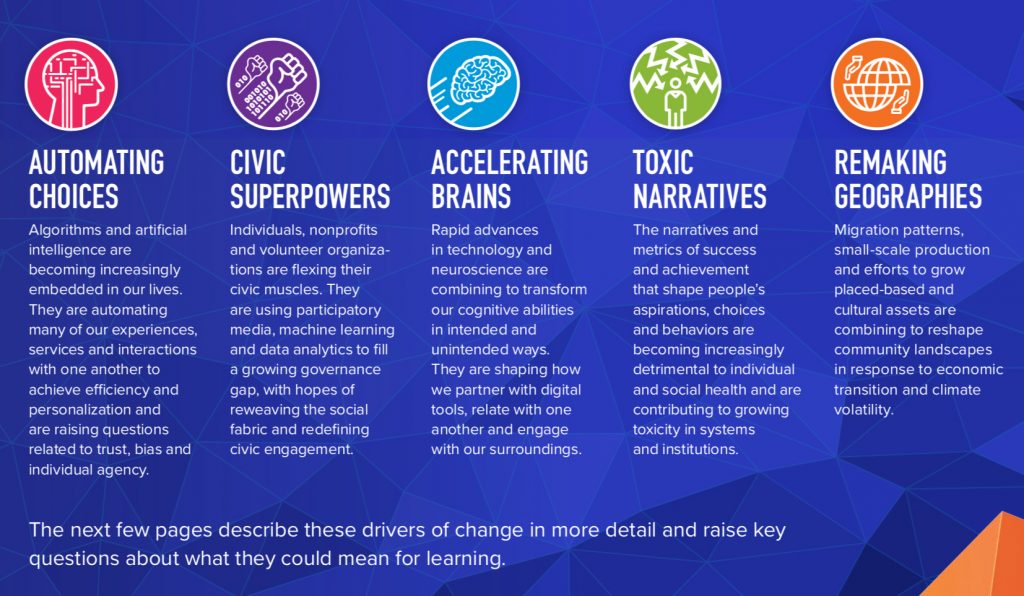
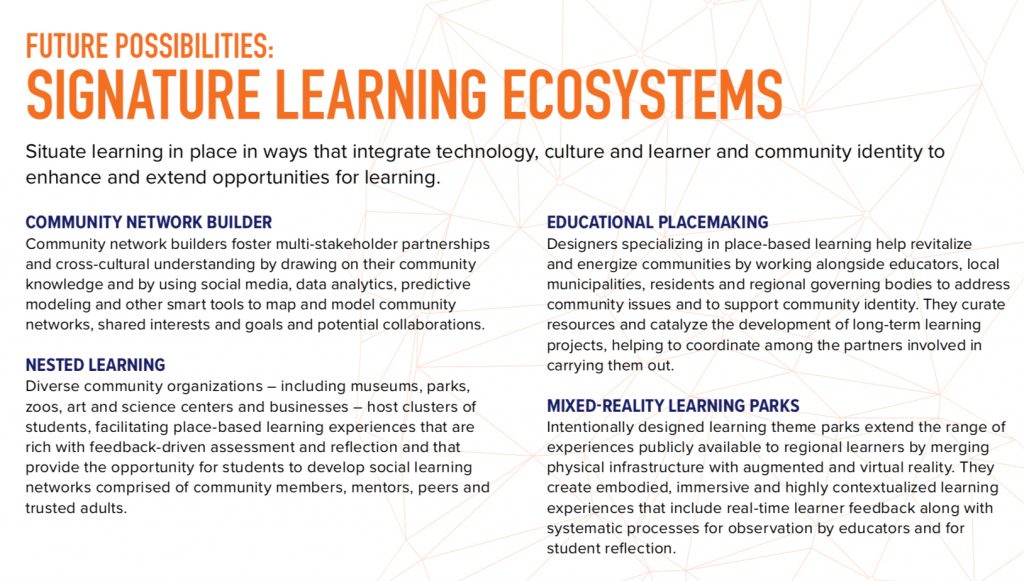
Forecast 5.0 – The Future of Learning: Navigating the Future of Learning  — from knowledgeworks.org by Katherine Prince, Jason Swanson, and Katie King
Discover how current trends could impact learning ten years from now and consider ways to shape a future where all students can thrive.


AI Now Report 2018 | December 2018  — from ainowinstitute.org

Meredith Whittaker , AI Now Institute, New York University, Google Open Research
Kate Crawford , AI Now Institute, New York University, Microsoft Research
Roel Dobbe , AI Now Institute, New York University
Genevieve Fried , AI Now Institute, New York University
Elizabeth Kaziunas , AI Now Institute, New York University
Varoon Mathur , AI Now Institute, New York University
Sarah Myers West , AI Now Institute, New York University
Rashida Richardson , AI Now Institute, New York University
Jason Schultz , AI Now Institute, New York University School of Law
Oscar Schwartz , AI Now Institute, New York University

With research assistance from Alex Campolo and Gretchen Krueger (AI Now Institute, New York University)

Excerpt (emphasis DSC):

Building on our 2016 and 2017 reports, the AI Now 2018 Report contends with this central problem, and provides 10 practical recommendations that can help create accountability frameworks capable of governing these powerful technologies.

  1. Governments need to regulate AI by expanding the powers of sector-specific agencies to oversee, audit, and monitor these technologies by domain.
  2. Facial recognition and affect recognition need stringent regulation to protect the public interest.
  3. The AI industry urgently needs new approaches to governance. As this report demonstrates, internal governance structures at most technology companies are failing to ensure accountability for AI systems.
  4. AI companies should waive trade secrecy and other legal claims that stand in the way of accountability in the public sector.
  5. Technology companies should provide protections for conscientious objectors, employee organizing, and ethical whistleblowers.
  6.  Consumer protection agencies should apply “truth-in-advertising” laws to AI products and services.
  7. Technology companies must go beyond the “pipeline model” and commit to addressing the practices of exclusion and discrimination in their workplaces.
  8. Fairness, accountability, and transparency in AI require a detailed account of the “full stack supply chain.”
  9. More funding and support are needed for litigation, labor organizing, and community participation on AI accountability issues.
  10. University AI programs should expand beyond computer science and engineering disciplines. AI began as an interdisciplinary field, but over the decades has narrowed to become a technical discipline. With the increasing application of AI systems to social domains, it needs to expand its disciplinary orientation. That means centering forms of expertise from the social and humanistic disciplines. AI efforts that genuinely wish to address social implications cannot stay solely within computer science and engineering departments, where faculty and students are not trained to research the social world. Expanding the disciplinary orientation of AI research will ensure deeper attention to social contexts, and more focus on potential hazards when these systems are applied to human populations.


Also see:

After a Year of Tech Scandals, Our 10 Recommendations for AI — from medium.com by the AI Now Institute
Let’s begin with better regulation, protecting workers, and applying “truth in advertising” rules to AI


Also see:

Excerpt:

As we discussed, this technology brings important and even exciting societal benefits but also the potential for abuse. We noted the need for broader study and discussion of these issues. In the ensuing months, we’ve been pursuing these issues further, talking with technologists, companies, civil society groups, academics and public officials around the world. We’ve learned more and tested new ideas. Based on this work, we believe it’s important to move beyond study and discussion. The time for action has arrived.

We believe it’s important for governments in 2019 to start adopting laws to regulate this technology. The facial recognition genie, so to speak, is just emerging from the bottle. Unless we act, we risk waking up five years from now to find that facial recognition services have spread in ways that exacerbate societal issues. By that time, these challenges will be much more difficult to bottle back up.

In particular, we don’t believe that the world will be best served by a commercial race to the bottom, with tech companies forced to choose between social responsibility and market success. We believe that the only way to protect against this race to the bottom is to build a floor of responsibility that supports healthy market competition. And a solid floor requires that we ensure that this technology, and the organizations that develop and use it, are governed by the rule of law.


From DSC:
This is a major heads up to the American Bar Association (ABA), law schools, governments, legislatures around the country, the courts, the corporate world, as well as for colleges, universities, and community colleges. The pace of emerging technologies is much faster than society’s ability to deal with them! 

The ABA and law schools need to majorly pick up their pace — for the benefit of all within our society.


The information below is from Heather Campbell at Chegg
(emphasis DSC)


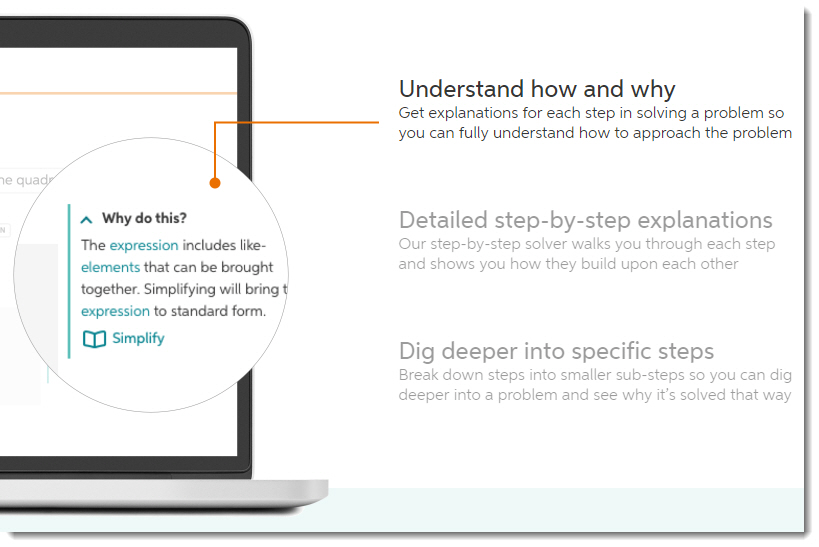
Chegg Math Solver is an AI-driven tool to help the student understand math. It is more than just a calculator – it explains the approach to solving the problem. So, students won’t just copy the answer but understand and can solve similar problems at the same time. Most importantly,students can dig deeper into a problem and see why it’s solved that way. Chegg Math Solver.

In every subject, there are many key concepts and terms that are crucial for students to know and understand. Often it can be hard to determine what the most important concepts and terms are for a given subject, and even once you’ve identified them you still need to understand what they mean. To help you learn and understand these terms and concepts, we’ve provided thousands of definitions, written and compiled by Chegg experts. Chegg Definition.


From DSC:
I see this type of functionality as a piece of a next generation learning platform — a piece of the Living from the Living [Class] Room type of vision. Great work here by Chegg!

Likely, students will also be able to take pictures of their homework, submit it online, and have that image/problem analyzed for correctness and/or where things went wrong with it.


10 predictions for tech in 2019 — from enterprisersproject.com by Carla Rudder
IT leaders look at the road ahead and predict what’s next for containers, security, blockchain, and more

Excerpts:

We asked IT leaders and tech experts what they see on the horizon for the future of technology. We intentionally left the question open-ended, and as a result, the answers represent a broad range of what IT professionals may expect to face in the new year. Let’s dig in…

3. Security becomes must-have developer skill.
Developers who have job interviews next year will see a new question added to the usual list.

5. Ethics take center stage with tech talent
Robert Reeves, CTO and co-founder, Datical: “More companies (prompted by their employees) will become increasingly concerned about the ethics of their technology. Microsoft is raising concerns of the dangers of facial recognition technology; Google employees are very concerned about their AI products being used by the Department of Defense. The economy is good for tech right now and the job market is becoming tighter. Thus, I expect those companies to take their employees’ concerns very seriously. Of course, all bets are off when (not if) we dip into a recession. But, for 2019, be prepared for more employees of tech giants to raise ethical concerns and for those concerns to be taken seriously and addressed.”’

7. Customers expect instant satisfaction
“All customers will be the customer of ‘now,’ with expectations of immediate and personalized service; single-click approval for loans, sales quotes on the spot, and deliveries in hours instead of days. The window of opportunity for customer satisfaction will keep closing and technology will evolve to keep pace. Real-time analytics will become faster and smarter as data that is external to the organization, such as social, news and weather, will be included for more insights. The move to the cloud will accelerate with the growing adoption of open-source vendors.”


From DSC:
Regarding #7 above…as the years progress, how do you suppose this type of environment where people expect instant satisfaction and personalized service will impact education/training?


© 2025 | Daniel Christian