The global education market is set to reach at least $10T by 2030 as population growth in developing markets fuels a massive expansion and technology drives unprecedented re-skilling and up-skilling in developed economies. The next decade will see an additional 350 million post secondary graduates and nearly 800 million more K12 graduates than today. Asia and Africa are the driving force behind the expansion. The world needs to add 1.5 million teachers per year on average, approaching 100 million in total in order to keep pace with the unprecedented changes ahead in education around the world.
OpenAI has built the best Minecraft-playing bot yet by making it watch 70,000 hours of video of people playing the popular computer game. It showcases a powerful new technique that could be used to train machines to carry out a wide range of tasks by binging on sites like YouTube, a vast and untapped source of training data.
The Minecraft AI learned to perform complicated sequences of keyboard and mouse clicks to complete tasks in the game, such as chopping down trees and crafting tools. It’s the first bot that can craft so-called diamond tools, a task that typically takes good human players 20 minutes of high-speed clicking—or around 24,000 actions.
The result is a breakthrough for a technique known as imitation learning, in which neural networks are trained to perform tasks by watching humans do them.
…
The team’s approach, called Video Pre-Training (VPT), gets around the bottleneck in imitation learning by training another neural network to label videos automatically.
“Most language learning software can help with the beginning part of learning basic vocabulary and grammar, but gaining any degree of fluency requires speaking out loud in an interactive environment,” Zwick told TechCrunch in an email interview. “To date, the only way people can get that sort of practice is through human tutors, which can also be expensive, difficult and intimidating.”
Speak’s solution is a collection of interactive speaking experiences that allow learners to practice conversing in English. Through the platform, users can hold open-ended conversations with an “AI tutor” on a range of topics while receiving feedback on their pronunciation, grammar and vocabulary.
It’s one of the top education apps in Korea on the iOS App Store, with over 15 million lessons started annually, 100,000 active subscribers and “double-digit million” annual recurring revenue.
If you last checked in on AI image makers a month ago & thought “that is a fun toy, but is far from useful…” Well, in just the last week or so two of the major AI systems updated.
You can now generate a solid image in one try. For example, “otter on a plane using wifi” 1st try: pic.twitter.com/DhiYeVMEEV
So, is this a cool development that will become a fun tool for many of us to play around with in the future? Sure. Will people use this in their work? Possibly. Will it disrupt artists across the board? Unlikely. There might be a few places where really generic artwork is the norm and the people that were paid very little to crank them out will be paid very little to input prompts. Look, PhotoShop and asset libraries made creating company logos very, very easy a long time ago. But people still don’t want to take the 30 minutes it takes to put one together, because thinking through all the options is not their thing. You still have to think through those options to enter an AI prompt. And people just want to leave that part to the artists. The same thing was true about the printing press. Hundreds of years of innovation has taught us that the hard part of the creation of art is the human coming up with the ideas, not the tools that create the art.
A quick comment from DSC: Possibly, at least in some cases. But I’ve seen enough home-grown, poorly-designed graphics and logos to make me wonder if that will be the case.
How to Teach With Deep Fake Technology — from techlearning.com by Erik Ofgang Despite the scary headlines, deep fake technology can be a powerful teaching tool
Excerpt:
The very concept of teaching with deep fake technology may be unsettling to some. After all, deep fake technology, which utilizes AI and machine learning and can alter videos and animate photographs in a manner that appears realistic, has frequently been covered in a negative light. The technology can be used to violate privacy and create fake videos of real people.
However, while these potential abuses of the technology are real and concerning that doesn’t mean we should turn a blind eye to the technology’s potential when using it responsibly, says Jaime Donally, a well-known immersive learning expert.
From DSC: I’m still not sure about this one…but I’ll try to be open to the possibilities here.
Recently, we spoke with three more participants of the AI Explorations program to learn about its ongoing impact in K-12 classrooms. Here, they share how the program is helping their districts implement AI curriculum with an eye toward equity in the classroom.
A hitherto stealth legal AI startup emerged from the shadows today with news via TechCrunch that it has raised $5 million in funding led by the startup fund of OpenAI, the company that developed advanced neural network AI systems such as GPT-3 and DALL-E 2.
The startup, called Harvey, will build on the GPT-3 technology to enable lawyers to create legal documents or perform legal research by providing simple instructions using natural language.
The company was founded by Winston Weinberg, formerly an associate at law firm O’Melveny & Myers, and Gabriel Pereyra, formerly a research scientist at DeepMind and most recently a machine learning engineer at Meta AI.
Associate Professor Constantinos Coursaris, Associate Professor Camille Grange, Pierre-Majorique Léger, Dr. Annemarie Lesage, and Professor Sylvain Sénécal, UX Design and Evaluation, HEC Montréal
Is GoodCourse the future of corporate learning? — from businesscloud.co.uk by Jonathan Symcox Micro-learning platform’s short-form content and TikTok-style explainer videos have the potential to transform development in the workplace
“The reason TikTok is so popular is because it’s short-form and engaging; the opposite to the usual two-hour training course.
“Spacing out micro-learning chunks across the course of a year gives you a much better chance of retaining it and actually acting on it. That’s why GoodCourse is built to engage a Gen Z workforce.”
November 13, 2022 Projections show the global population will surpass 8 billion people on November 15, and in 2023, India is expected to surpass China to become the world’s most populous nation. It was only 11 years ago that the world reached the last billion; these milestones generate considerations of resource allocation, food security, climate change, and more. Already, one in nine people can’t get enough to eat every day, even while 33 to 40 percent of our food is lost or wasted each year, according to research from senior partners Clarisse Magnin and Björn Timelin. As we continue to grow, how can we support an unprecedented population while raising the quality of life for all? Explore our insights to learn more about how to avoid a food crisis, common misconceptions around global migration, the future of an aging population, and more.
This week on Tuesday, it’s projected that a baby will be born somewhere on Planet Earth that brings the population to 8 billion people. Notably, the global population reached 7 billion people just eleven years ago. When I was born, in 1962, there was 3 billion people, and the United States had a population of 180 million versus roughly 335 million today.
.
What we know from Nobel Laureate Economist James Heckman out of the University of Chicago is that $1 invested in early childhood education produces a $7 return in economic gain. Moreover, while investment in education produces a compelling return at all stages, the earlier you invest in education, the higher the return.
As the metaverse becomes a fully realized, interoperable and persistent platform, the need for a codified and clearly defined system of applicable laws will be tremendous.
…
The applicability and sufficiency of existing intellectual property laws are being tested as we speak in the metaverse. Heavyweight companies such as Walmart, Hermès, Nike and Roblox are all actively seeking judicial determinations as to their respective trademark rights in the metaverse.
Why does this matter to you? If you buy a music album and receive a digital file, is this a purchase of digital goods? What if you listen to the same album on a streaming service? If you buy virtual sneakers for your metaverse avatar, is this a purchase of digital goods or just a part of the service provided by the metaverse operator? As purchasing habits increasingly move online or into the digital space, and especially with the rise in popularity of “metaverses”, the need for clarity and regulation in this area will become more and more apparent.
Building a virtual world often involves just that—buildings. But developers of metaverse properties may not know which legal rights are at issue. Can a virtual world incorporate a rendition of a real-life building without infringing on the rights of real-life property owners? Does the architect, owner, or user of a brick-and-mortar building have any rights to assert against a twin building in the metaverse? How does the developer of a virtual building take the building from one virtual world to another?
The answer depends on—and may vary based on—who is asserting the rights, whether copyrights or trademarks are at issue, and whether any of these rights have been assigned to another party.
…
These questions all remain unsettled in the context of the metaverse, so developers should proceed with caution until courts put their own stake in the ground on these issues.
HundrED Global Collection 2023 — from hundred.org Meet the 100 most impactful innovations that are changing the face of education in a post-COVID world.
Excerpt:
The year 2022 has been a year to look to the future, as the global education conversation moves again toward themes of education transformation and the futures of education. The 100 innovations selected for this year’s global collection are impacting the lives of over 95 million students worldwide. The collection highlights the important role of teachers in education innovation; the continued need for students to develop 21st century skills, including social and emotional learning; an increasing focus on student wellbeing and mental health; and equity in education.
For more information, download the full Global Collection 2023 report.
You can also browse the innovation pages of the selected innovators here. .
From DSC: Here’s an excerpt of the email I received today from EducationHQ out of Australia — though I think it applies here in the United States as well:
Not much entices a second grader to skip out on recess to get back to schoolwork. But excitement around a classroom-run business can do just that, especially when it means creating candles out of crayons and selling them in the local community.
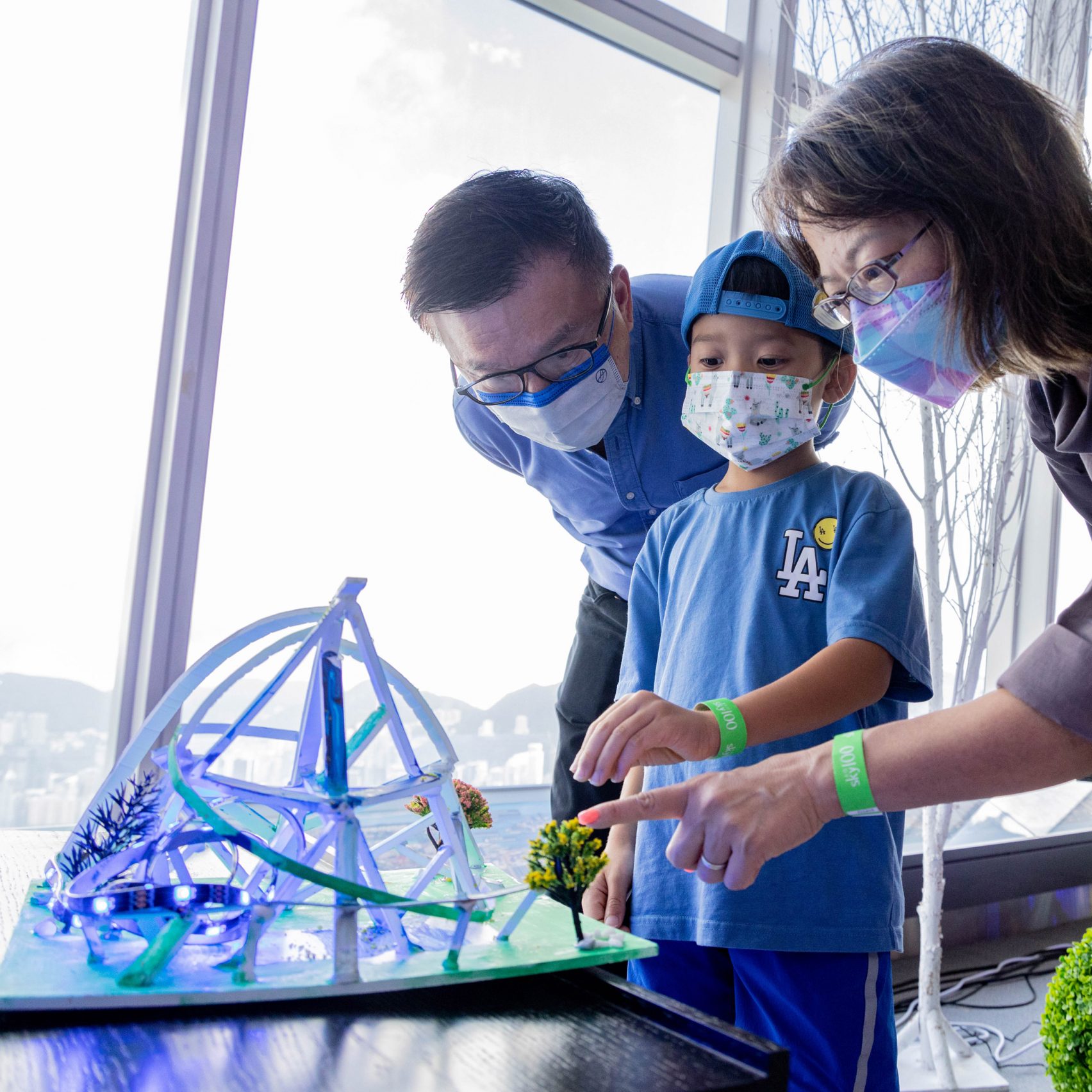
Promotion: fifty-two students presented digital designs and architectural models of their ideal home as part of Hong Kong-based education institute My ArchiSchool’s latest exhibition. As part of the exhibition, My ArchiSchool students were asked to design their ideal home within an urban environment. The exhibition, which took place on 2 October 2022 at the Sky100 on the 100th floor of the International Commerce Centre in Hong Kong, showcased photomontages of digital designs presented alongside physical models.
We need to create opportunities for students to become more digitally aware and literate, and to be responsible when using technology. There are many ways to do this, depending on our content area and grade level. We can model best practices for our students, bring in a specific digital citizenship curriculum to guide them through their learning, or use digital tools and resources available to have students explore and create.
Helping students learn to safely navigate what has become a highly digital world is something that we are all responsible for. Students need to be aware of the impact of their posts online, how to create and manage social accounts and protect their information, and how to properly access and use resources they obtain through technology.
School and district leaders can—and should—be using social media in their work.
That’s the message shared by Stephanie McConnell, a superintendent in the Hawkins Independent School District in Texas, and Salome Thomas-El, a K-8 principal in Delaware, during an Education Week K-12 Essentials forum on Oct. 13.
At the event, McConnell and Thomas-El provided insights and advice for school leaders who are hesitant to post on certain social platforms or unsure how to use them.
Satellite Billboards Are a Dystopian Future We Don’t Need — from gizmodo.com by George Dvorsky; with thanks to Laura Goodrich for this resource Brightly lit ads in orbit are technologically and economically viable, say Russian scientists. But can we not?
South Korea plans to provide digital identities encrypted by blockchain with smartphones to citizens in 2024 to facilitate its economic development., Bloomberg reported Monday.
The South Korean government stated that with the expansion of the digital economy, the ID embedded in the smartphone is an indispensable emerging technology to support the development of data.
From DSC: Interesting to see blockchain show up in the first item above on healthcare and also on this item coming out of South Korea for digital identities.
The Bruce Willis Deepfake Is Everyone’s Problem — from wired.com by Will Bedingfield; with thanks to Stephen Downes for this resource There’s a fight brewing over how Hollywood stars can protect their identities. But it’s not just actors who should be paying attention.
Excerpts:
Yet the question of “who owns Bruce Willis,” as Levy put it, isn’t only a concern for the Hollywood star and his representatives. It concerns actors unions across the world, fighting against contracts that exploit their members’ naivety about AI. And, for some experts, it’s a question that implicates everyone, portending a wilder, dystopian future—one in which identities are bought, sold, and seized.
“This is relevant not just to AI contracts [for synthetic performances], but any contract involving rights to one’s likeness and voice,” says Danielle S. Van Lier, assistant general counsel, intellectual property and contracts at SAG-AFTRA. “We have been seeing contracts that now include ‘simulation rights’ to performers’ images, voices, and performances. These contract terms are buried deep in the boilerplate of performance agreements in traditional media.”
The Singapore-based company Genius Group has turned some of its attention to the U.S. edtech market recently.
…
While some companies have seen layoffs, the Genius Group lifelong learningplatform is growing among users at a rate of greater than 50 percent, they claim. Currently, it has 2.7 million students across 200 countries, according to its website.
…
But we decided that rather than looking to solve the problem for just some, if we could be one of the companies that was looking to solve it for all, that would be a great market opportunity for us. And at the same time, it would be something which would enable us to attract the best educators, and the best content creators from around the world as well.
[The intent was] to really tackle the full, lifelong learning journey that we’re on, and to put in place a pathway, and more importantly, a platform that would enable anyone to be able to come and take their curriculum, bring it on board, and in the same way that YouTube allows anyone to be a creator.
Also from Edsurge.com, see:
Inventing a Job-Skills Machine — by Rebecca Koenig A free tool makes it easy to design credentials around job skills. Are colleges ready?
The global law firm has launched a series of free workshops exploring how lawyers help clients navigate novel legal and regulatory issues relating to techy-topics including the metaverse, non-fungible tokens (NFTs), robotics and artificial intelligence (AI).
From DSC: This kind of thing needs to happen in law schools across many countries.
Megatrends | September 25, 2022 — by Michael Moe, Tim Juang, Owen Ritz, & Kit Royce
“The trend is your friend.” – Martin Zweig
“Follow the trend lines, not the headlines.” – Bill Clinton
“In order to be irreplaceable, one must always be different.” – Coco Chanel
“I don’t set the trends. I just find out what they are and exploit them.” – Dick Clark
Megatrends are powerful technological, economic, and social forces that develop from a groundswell (early adoption), move into the mainstream (mass market), and disrupt the status quo (mature market), driving change, productivity, and ultimately growth opportunities for companies, industries, and entire economies.
.
The metaverse is not a vertical trend; it’s a horizontal trend that will impact sectors ranging from healthcare, education, socialization, entertainment, commerce, and more.
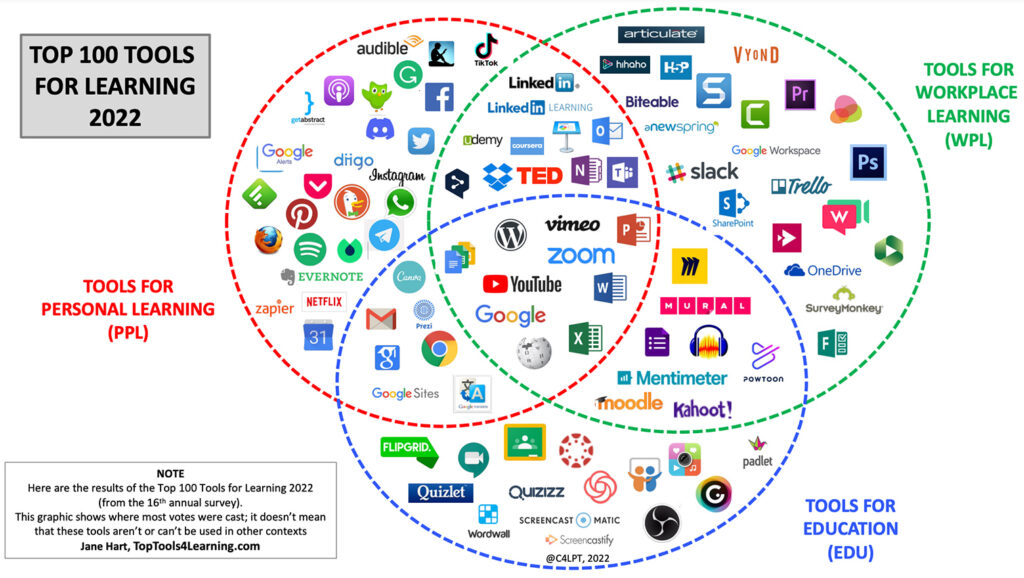
In fact, it has become clear that whilst 2021 was the year of experimentation – with an explosion of tools being used as people tried out new things, 2022 has been the year of consolidation – with people reverting to their trusty old favourites. In fact, many of the tools that were knocked off their perches in 2021, have now recovered their lost ground this year.
This annual report represents the collective voice of the global employee. In this edition, the pandemic and its aftershock continued to disrupt the workplace. Check out the most recent employee data and workplace trends in the State of the Global Workplace: 2022 Report.
Explore Key Findings The pulse of the global workplace is low, but it’s still beating. Our findings depict a difficult 2021, but leave much room for leaders to ask, “How am I creating a thriving workplace for my employees today?”
The job market continues to boom, with millions of workers still leaving their jobs each month despite talk of a slowing economy and recession.
Also booming, according to Gallup polling, worker disengagement and unhappiness.
This is not just an HR issue but a bottom line one as well: business units with engaged workers have 23% higher profit, while employees who are not engaged cost the world $7.8 trillion in lost productivity, equal to 11% of global GDP.
The Backlash Against Quiet Quitting Is Getting Loud — from wsj.com by Kathryn DillFollow and Angela YangFollow First came the viral phenomenon. Now critics are taking to task those who advocate for coasting on the job.
What’s happening: This is a rebellion against the “rise and grind” ethos.
The rising approach is to work to live, instead of live to work. Don’t leave your job — but focus on fun, fulfilling activities outside of work while staying on the payroll.
Business leaders are seemingly optimistic right now. More than 83% of CEOs are focusing business strategy on growth as just 30% see recession as a serious risk within the next year, according to a recent PwC survey of over 700 executives in the U.S. It’s a cautious optimism — companies are still preparing for economic risks. About 50% of CEOs plan on reducing company headcount and 44% plan on rescinding job offers. Despite potential cuts, 64% of execs said they plan on raising salaries for current employees.








/2022/08/22/image/png/wSxqwE19L3sKdFwuPdKfsfzJ5ixmzUJWXJ8Ox6Ir.png)