Top 50 Legal Employers Hiring Now: Where the Opportunities Are in 2025 — from jdjournal.com by Fatima E

For lawyers, paralegals, compliance professionals, and legal tech specialists, 2025 is shaping up to be a strong hiring year. According to a new LawCrossing report, the Top 50 Legal Employers Hiring Now highlights a wave of open positions across law firms, corporations, government agencies, and universities — a snapshot of where demand is highest and where job-seekers should be focusing their efforts.

The Types of Employers on the List
The Top 50 Legal Employers Hiring Now spans a diverse set of organizations:

  • Corporate Legal Departments: …
  • Law Firms: …
  • Government Agencies: …
  • Universities and Nonprofits: …

This diversity means opportunities exist for professionals at many career stages, whether you are a new graduate seeking entry-level work, a mid-career attorney looking for stability, or a seasoned litigator hoping to move in-house.


Also see:

Law StudentsRecord-Breaking Law School Enrollment as Applicant Boom Reshapes Legal Education — from jdjournal.com by Fatima E
.

Record-Breaking Law School Enrollment as Applicant Boom Reshapes Legal Education

.
U.S. law schools are experiencing a surge unlike anything seen in over a decade, with first-year J.D. classes hitting record sizes this fall. The unprecedented boom follows an 18 % year-over-year jump in applications, fueled by a mix of economic uncertainty, political engagement, and strong job prospects for recent graduates.


Also see:

Lawyers Council Explores Legal Innovation with Arizona Chief Justice Timmer — from iaals.du.edu

On September 16, members of the IAALS Lawyers Council gathered in downtown Denver to discuss the growing momentum of alternative business structures with Arizona Chief Justice Ann A. Scott Timmer and Jess Bednarz, IAALS’ Director of Legal Services and the Profession.

Arizona is on the frontlines of this movement, and Chief Justice Timmer talked about how alternative business structures have led to meaningful innovations in how lawyers in Arizona provide legal services.

Chief Justice Timmer credits a culture of innovation in Arizona for providing the ability for lawyers and businesses to try new ways of delivering legal services. She emphasized that lawyers are still at the heart of the practice of law in these alternative business structures, and that the structures allow lawyers to have added resources to innovate and reach more clients. This creativity has led to businesses and innovations that make the legal system easier to access, like financial planners and lawyers combining businesses or an app that helps people start the process of expunging criminal records.


What today’s students really want — and what that means for higher ed — from highereddive.com by Ellucian

Cost is too high. Pathways are unclear. Options feel limited. For many prospective, current, or former students, these barriers define their relationship with higher education. As colleges and universities face the long-anticipated enrollment cliff, the question isn’t just how to recruit—it’s how to reimagine value, access, and engagement across the entire student journey.

Ellucian’s 2025 Student Voice Report offers one of the most comprehensive views into that journey to date. With responses from over 1,500 learners across the U.S.—including high school students, current undergrads, college grads, stop-outs, and opt-outs—the findings surface one clear mandate for institutions: meet students where they are, or risk losing them entirely.

What Are Learners Asking For?
Across demographics, four priorities rose to the top:
Affordability. Flexibility. Relevance. Clarity.

Students aren’t rejecting education—they’re rejecting systems that don’t clearly show how their investment leads to real outcomes. 


Workday Acquires Sana To Transform Its Learning Platform And Much More— from joshbersin.com by Josh Bersin

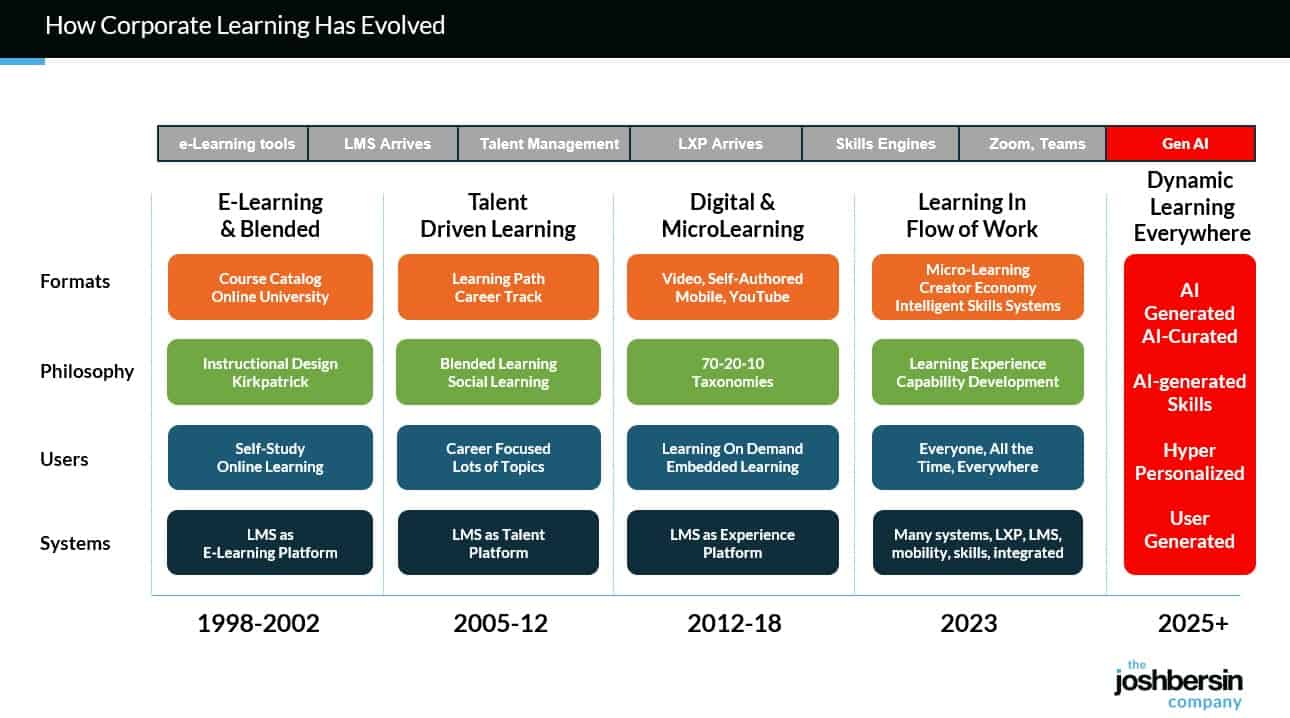
Well now, as the corporate learning market shifts to AI, (read the details in our study “The Revolution in Corporate Learning” ), Workday can jump ahead. This is because the $400 billion corporate training market is moving quickly to an AI-Native dynamic content approach (witness OpenAI’s launch of in-line learning in its chatbot). We’re just finishing a year-long study of this space and our detailed report and maturity model will be out in Q4.
.

.
With Sana, and a few other AI-native vendors (Uplimit, Arist, Disperz, Docebo), companies can upload audios, videos, documents, and even interviews with experts and the system build learning programs in minutes. We use Sana for Galileo Learn (our AI-powered learning academy for Leadership and HR), and we now have 750+ courses and can build new programs in days instead of months.

And there’s more; this type of system gives every employee a personalized, chat-based experience to learn. 


Provosts Are a ‘Release Valve’ for Campus Controversy — from insidehighered.com by Emma Whitford
According to former Western Michigan provost Julian Vasquez Heilig, provosts are stuck driving change with few, if any, allies, while simultaneously playing crisis manager for the university.

After two years, he stepped down, and he now serves as a professor of educational leadership, research and technology at Western Michigan. His frustrations with the provost role had less to do with Western Michigan and more to do with how the job is designed, he explained. “Each person sees the provost a little differently. The faculty see the provost as administration, although, honestly, around the table at the cabinet, the provost is probably the only faculty member,” Heilig said. “The trustees—they see the provost as a middle manager below the president, and the president sees [the provost] as a buffer from issues that are arising.”

Inside Higher Ed sat down with Heilig to talk about the provost job and all he’s learned about the role through years of education leadership research, conversations with colleagues and his own experience.


Brandeis University launches a new vision for American higher education, reinventing liberal arts and emphasizing career development — from brandeis.edu

Levine unveiled “The Brandeis Plan to Reinvent the Liberal Arts,” a sweeping redesign of academic structures, curricula, degree programs, teaching methods, career education, and student support systems. Developed in close partnership with Brandeis faculty, the plan responds to a rapidly shifting landscape in which the demands on higher education are evolving at unprecedented speed in a global, digital economy.

“We are living through a time of extraordinary change across technology, the economy, and society,” Levine said. “Today’s students need more than knowledge. They need the skills, experiences, and confidence to lead in a world we cannot yet predict. We are advancing a new model. We need reinvention. And that’s exactly what Brandeis is establishing.”

The Brandeis Plan transforms the student experience by integrating career preparation into every stage of a student’s education, requiring internships or apprenticeships, sustaining career counseling, and implementing a core curriculum built around the skills that employers value most. The plan also reimagines teaching. It will be more experiential and practical, and introduce new ways to measure and showcase student learning and growth over time.


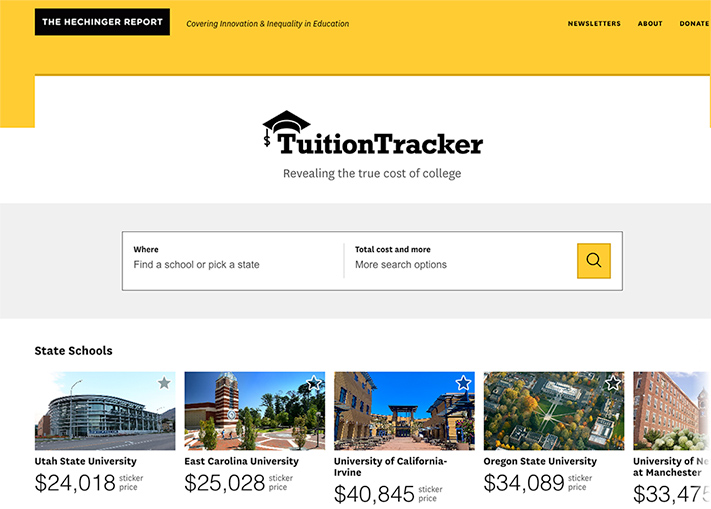
Tuition Tracker from the Hechinger Report


3 Work Trends – Issue 87 — from the World Economic Forum

1. #AI adoption is delivering real results for early movers
Three years into the generative AI revolution, a small but growing group of global companies is demonstrating the tangible potential of AI. Among firms with revenues of $1 billion or more:

  • 17% report cost savings or revenue growth of at least 10% from AI.
  • Almost 80% say their AI investments have met or exceeded expectations.
  • Half worry they are not moving fast enough and could fall behind competitors.

The world’s first AI cabinet member — from therundown.ai by Zach Mink, Rowan Cheung, Shubham Sharma, Joey Liu & Jennifer Mossalgue
PLUS: Startup produces 3,000 AI podcast episodes weekly

The details:

  • Prime Minister Edi Rama unveiled Diella during a cabinet announcement this week, calling her the first member “virtually created by artificial intelligence”.
  • The AI avatar will evaluate and award all public tenders where the government contracts private firms.
  • Diella already serves citizens through Albania’s digital services portal, processing bureaucratic requests via voice commands.
  • Rama claims the AI will eliminate bribes and threats from decision-making, though the government hasn’t detailed what human oversight will exist.

The Rundown AI’s article links to:


Anthropic Economic Index report: Uneven geographic and enterprise AI adoption — from anthropic.com

In other words, a hallmark of early technological adoption is that it is concentrated—in both a small number of geographic regions and a small number of tasks in firms. As we document in this report, AI adoption appears to be following a similar pattern in the 21st century, albeit on shorter timelines and with greater intensity than the diffusion of technologies in the 20th century.

To study such patterns of early AI adoption, we extend the Anthropic Economic Index along two important dimensions, introducing a geographic analysis of Claude.ai conversations and a first-of-its-kind examination of enterprise API use. We show how Claude usage has evolved over time, how adoption patterns differ across regions, and—for the first time—how firms are deploying frontier AI to solve business problems.


How human-centric AI can shape the future of work — from weforum.org by Sapthagiri Chapalapalli

  • Last year, use of AI in the workplace increased by 5.5% in Europe alone.
  • AI adoption is accelerating, but success depends on empowering people, not just deploying technology.
  • Redesigning roles and workflows to combine human creativity and critical thinking with AI-driven insights is key.

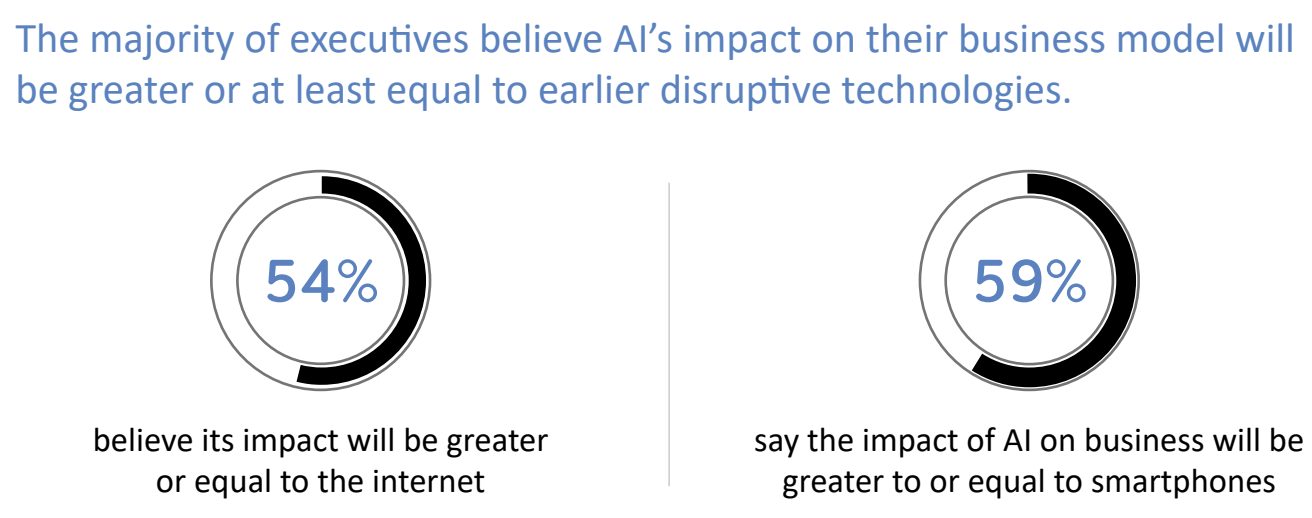
The transformative potential of AI on business

Organizations are having to rapidly adapt their business models. Image: TCS


Using ChatGPT to get a job — from linkedin.com by Ishika Rawat


GRCC students to use AI to help businesses solve ‘real world’ challenges in new course — from www-mlive-com.cdn.ampproject.org by Brian McVicar; via Patrick Bailey on LinkedIn

GRAND RAPIDS, MI — A new course at Grand Rapids Community College aims to help students learn about artificial intelligence by using the technology to solve real-world business problems.

In a release, the college said its grant application was supported by 20 local businesses, including Gentex, TwistThink and the Grand Rapids Public Museum. The businesses have pledged to work with students who will use business data to develop an AI project such as a chatbot that interacts with customers, or a program that automates social media posts or summarizes customer data.

“This rapidly emerging technology can transform the way businesses process data and information,” Kristi Haik, dean of GRCC’s School of Science, Technology, Engineering and Mathematics, said in a statement. “We want to help our local business partners understand and apply the technology. We also want to create real experiences for our students so they enter the workforce with demonstrated competence in AI applications.”

As Patrick Bailey said on LinkedIn about this article:

Nice to see a pedagogy that’s setting a forward movement rather than focusing on what could go wrong with AI in a curriculum.


Forecast for Learning and Earning in 2025-2026 report — from pages.asugsvsummit.com by Jennifer Lee and Claire Zau

In this look ahead at the future of learning and work, we aim to define:

  • Major thematic observations
  • What makes this moment an inflection point
  • Key predictions (and their precedent)
  • Short- and long-term projected impacts


The LMS at 30: From Course Management to Learning Management (At Last) — from onedtech.philhillaa.com; a guest post from Matthew Pittinsky, Ph.D.

As a 30 year observer and participant, it seems to me that previous technology platform shifts like SaaS and mobile did not fundamentally change the LMS. AI is different. We’re standing at the precipice of LMS 2.0, where the branding change from Course Management System to Learning Management System will finally live up to its name. Unlike SaaS or mobile, AI represents a technology platform shift that will transform the way participants interact with learning systems – and with it, the nature of the LMS itself.

Given the transformational potential of AI, it is useful to set the context and think about how we got here, especially on this 30th anniversary of the LMS.

LMS at 30 Part 2: Learning Management in the AI Era — from onedtech.philhillaa.com; a guest post from Matthew Pittinsky, Ph.D.

Where AI is disruptive is in its ability to introduce a whole new set of capabilities that are best described as personalized learning services. AI offers a new value proposition to the LMS, roughly the set of capabilities currently being developed in the AI Tutor / agentic TA segment. These new capabilities are so valuable given their impact on learning that I predict they will become the services with greatest engagement within a school or university’s “enterprise” instructional platform.

In this way, by LMS paradigm shift, I specifically mean a shift from buyers valuing the product on its course-centric and course management capabilities, to valuing it on its learner-centric and personalized learning capabilities.


AI and the future of education: disruptions, dilemmas and directions — from unesdoc.unesco.org

This anthology reveals how the integration of AI in education poses profound philosophical, pedagogical, ethical and political questions. As this global AI ecosystem evolves and becomes increasingly ubiquitous, UNESCO and its partners have a shared responsibility to lead the global discourse towards an equity- and justice-centred agenda. The volume highlights three areas in which UNESCO will continue to convene and lead a global commons for dialog and action particularly in areas on AI futures, policy and practice innovation, and experimentation.

  1. As guardian of ethical, equitable human-centred AI in education.
  2. As thought leader in reimagining curriculum and pedagogy
  3. As a platform for engaging pluralistic and contested dialogues

AI, copyright and the classroom: what higher education needs to know — from timeshighereducation.com by Cayce Myers
As artificial intelligence reshapes teaching and research, one legal principle remains at the heart of our work: copyright. Understanding its implications isn’t just about compliance – it’s about protecting academic integrity, intellectual property and the future of knowledge creation. Cayce Myers explains


The School Year We Finally Notice “The Change” — from americanstogether.substack.com by Jason Palmer

Why It Matters
A decade from now, we won’t say “AI changed schools.” We’ll say: this was the year schools began to change what it means to be human, augmented by AI.

This transformation isn’t about efficiency alone. It’s about dignity, creativity, and discovery, and connecting education more directly to human flourishing. The industrial age gave us schools to produce cookie-cutter workers. The digital age gave us knowledge anywhere, anytime. The AI age—beginning now—gives us back what matters most: the chance for every learner to become infinitely capable.

This fall may look like any other—bells ringing, rows of desks—but beneath the surface, education has begun its greatest transformation since the one-room schoolhouse.


How should universities teach leadership now that teams include humans and autonomous AI agents? — from timeshighereducation.com by Alex Zarifis
Trust and leadership style are emerging as key aspects of teambuilding in the age of AI. Here are ways to integrate these considerations with technology in teaching

Transactional and transformational leaderships’ combined impact on AI and trust
Given the volatile times we live in, a leader may find themselves in a situation where they know how they will use AI, but they are not entirely clear on the goals and journey. In a teaching context, students can be given scenarios where they must lead a team, including autonomous AI agents, to achieve goals. They can then analyse the situations and decide what leadership styles to apply and how to build trust in their human team members. Educators can illustrate this decision-making process using a table (see above).

They may need to combine transactional leadership with transformational leadership, for example. Transactional leadership focuses on planning, communicating tasks clearly and an exchange of value. This works well with both humans and automated AI agents.


From Content To Capability: How AI Agents Are Redefining Workplace Learning — from forbes.com by Nelson Sivalingam

Real, capability-building learning requires three key elements: content, context and conversation. 

The Rise Of AI Agents: Teaching At Scale
The generative AI revolution is often framed in terms of efficiency: faster content creation, automated processes and streamlined workflows. But in the world of L&D, its most transformative potential lies elsewhere: the ability to scale great teaching.

AI gives us the means to replicate the role of an effective teacher across an entire organization. Specifically, AI agents—purpose-built systems that understand, adapt and interact in meaningful, context-aware ways—can make this possible. These tools understand a learner’s role, skill level and goals, then tailor guidance to their specific challenges and adapt dynamically over time. They also reinforce learning continuously, nudging progress and supporting application in the flow of work.

More than simply sharing knowledge, an AI agent can help learners apply it and improve with every interaction. For example, a sales manager can use a learning agent to simulate tough customer scenarios, receive instant feedback based on company best practices and reinforce key techniques. A new hire in the product department could get guidance on the features and on how to communicate value clearly in a roadmap meeting.

In short, AI agents bring together the three essential elements of capability building, not in a one-size-fits-all curriculum but on demand and personalized for every learner. While, obviously, this technology shouldn’t replace human expertise, it can be an effective tool for removing bottlenecks and unlocking effective learning at scale.


Expanding economic opportunity with AI — from openai.com; via The Neuron Daily

First, we’re working to build out the OpenAI Jobs Platform.

If you’re a business looking to hire an AI-savvy employee, or you just need help with a specific task, finding the right person can be hit-or-miss. The OpenAI Jobs Platform will have knowledgeable, experienced candidates at every level, and opportunities for anyone looking to put their skills to use. And we’ll use AI to help find the perfect matches between what companies need and what workers can offer.

We also realize that anyone looking to hire, whether it’s through the Jobs Platform or elsewhere, needs to trust that candidates are actually fluent in AI. Most businesses, including small businesses, think AI is the key to their future. And most of the companies we talk to want to make sure their employees know how to use our tools.

That’s the idea behind our new OpenAI Certifications.

Studies show? that AI-savvy workers are more valuable, more productive, and are paid more than workers without AI skills. That’s why, earlier this year, we launched the OpenAI Academy, a free, online learning platform that has helped connect more than 2 million people with the resources, workshops, and communities they need to master AI tools.


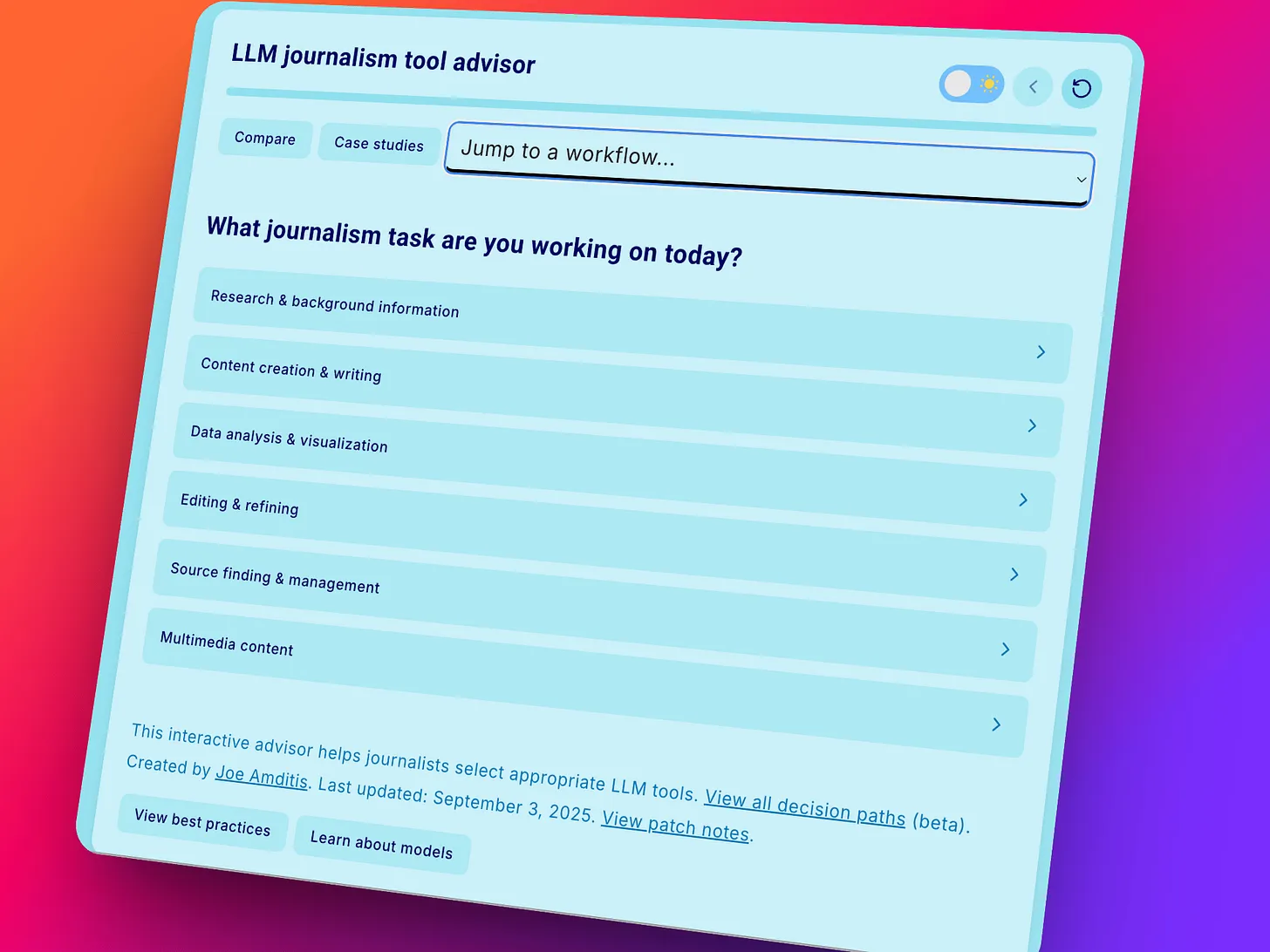
A Journalist’s Toolkit for the AI Era — from wondertools.substack.com by Jeremy Caplan and Joe Amditis
A guest expert shares his practical tools

As news organizations scramble to update their digital toolkits, I invited one of the most tech savvy journalism advisors I know to share his guidance.

In the guest post below, Joe Amditis shares a bunch of useful resources. A former CUNY student of mine, Joe now serves as associate director of operations at the Center for Cooperative Media at Montclair State University.


The Jobs and Degrees Underemployed College Graduates Have — from stlouisfed.org by Heather Hennerich; via Ryan Craig

Economist Oksana Leukhina, an economic policy advisor at the Federal Reserve Bank of St. Louis, sat down for a conversation about underemployment, including:

  • The effects it has on college graduates’ income and careers
  • The kinds of degrees underemployed grads are more likely to have
  • The job amenities underemployed graduates have

On a somewhat-related note, also see:


Workers disagree with executives on outlook as labor market stall continues — from linkedin.com by Kory Kantenga

In this month’s edition of the State of the Labor Market, we dive deeper into recent hiring trends, including revisiting entry-level work. This edition also examines labor market churn and its importance to the overall health of a dynamic labor market. We end by taking a closer look at the growing divide between worker and executive sentiment.


How HR is adapting as AI agents join the workforce — from hrexecutive.com by Jill Barth

Business leaders across the world are grappling with a reality that would have seemed like science fiction just a few decades ago: Artificial intelligence systems dubbed AI agents are becoming colleagues, not just tools. At many organizations, HR pros are already developing balanced and thoughtful machine-people workforces that meet business goals.

At Skillsoft, a global corporate learning company, Chief People Officer Ciara Harrington has spent the better part of three years leading digital transformation in real time. Through her front-row seat to CEO transitions, strategic pivots and the rapid acceleration of AI adoption, she’s developed a strong belief that organizations must be agile with people operations.

‘No role that’s not a tech role’
Under these modern conditions, she says, technology is becoming a common language in the workplace. “There is no role that’s not a tech role,” Harrington said during a recent discussion about the future of work. It’s a statement that gets at the heart of a shift many HR leaders are still coming to terms with.

But a key question remains: Who will manage the AI agents, specifically, HR leaders or someone else?


Introducing the 2025 State of the L&D Industry Report — from community.elearningacademy.io

What’s changing is not the foundation—it’s the ecosystem. Teams are looking to create more flexible, scalable, and diverse learning experiences that meet people where they are.

What Did We Explore?
Everyone seems to have a take on what’s happening in L&D these days. From bold claims about six-figure roles to debates over whether portfolios or degrees matter more, everyone seems to have a take. So, we wanted to get to the heart of it by exploring five of the biggest, most debated areas shaping our work today:

  • Salaries: Are compensation trends really keeping pace with the value we deliver?
  • Hiring: What skills are managers actually looking for—and are those ATS horror stories true?
  • Portfolios: Are portfolios helping candidates stand out, and what are hiring managers actually looking for?
  • Tools & Modalities: What types of training are teams building, and what tools are they using to build it?
  • Artificial Intelligence: Who’s using it, how, and what concerns still exist?

These five areas are shaping the future of instructional design—not just for job seekers, but for team leaders, hiring managers, and the entire ecosystem of L&D professionals.

The takeaway? A portfolio is more than a collection of projects—it’s a storytelling tool. The ones that stand out highlight process, decision-making, and results—not just pretty screens.


Artificial Intelligence in Vocational Education — from leonfurze.com by Leon Furze

The vocational education sector is incredibly diverse, covering everything from trades like building and construction, electrical, plumbing and automotive through to allied health, childcare, education, the creative arts and the technology industry. In Canberra, we heard from people representing every corner of the industry, including education, retail, tourism, finance and digital technologies. Every one of these industries is being impacted by the current AI boom.

A theme of the day was that whilst the vocational education sector is seen as a slow-moving beast with its own peculiar red tape, it is still possible to respond to emerging technologies like artificial intelligence, and there’s an imperative to do so.

Coming back to GenAI for small business owners, a qualified plumber running their own business, either as a solo operator or as manager of a team, probably doesn’t have many opportunities to keep up to date with the rapid developments of digital technologies. They’re far too busy doing their job.

So vocational education and training can be an initial space to develop some skills and understanding of the technology in a way which can be beneficial for managing that day-to-day job.


And speaking of the trade schools/vocational world…

Social media opens a window to traditional trades for young workers — from washingtonpost.com by Taylor Telford; this is a gifted article
Worker influencers are showing what life is like in fields such as construction, plumbing and manufacturing. Trade schools are trying to make the most of it.

Social media is increasingly becoming a destination for a new generation to learn about skilled trades — at a time when many have grown skeptical about the cost of college and the promise of white-collar jobs. These posts offer authentic insight as workers talk openly about everything from their favorite workwear to safety and payday routines.

The exposure is also changing the game for trade schools and employers in such industries as manufacturing and construction, which have long struggled to attract workers. Now, some are evolving their recruiting tactics by wading into content creation after decades of relying largely on word of mouth.


© 2025 | Daniel Christian