FutureOfStorytellingGaskins-Oct2013


Excerpt:

Many of us go about our lives constantly surrounded by screens, immersed in various “stories”: movies, TV shows, books, plot-driven video games, news articles, advertising, and more. Whether we realize it or not, we’re creating new behaviors, routines, mindsets, and expectations around what we watch, read or play—which in turn presents new challenges and opportunities for creators and marketers.

In other words, while the fundamentals of good storytelling remain the same, technology is changing how stories can be told. But what does that mean exactly?


Hacking the classroom: Purdue U’s approach to augmented learning — from campustechnology.com by Mary Grush
A Q&A with Kyle Bowen

Excerpt:

A term more familiar in the competitive world of the television industry, “second screen” offers a simple way for viewers to access additional information relevant to a TV program. At Purdue University, researchers aim to put the concept to work in the classroom — making an enriched and interactive learning experience with classroom apps easier. Here, Kyle Bowen, Purdue’s director of informatics explores his latest research on “hacking the classroom”: how to leverage the second screen concept to help instructors and students negotiate the realm of multiple and varied classroom apps.


From DSC:
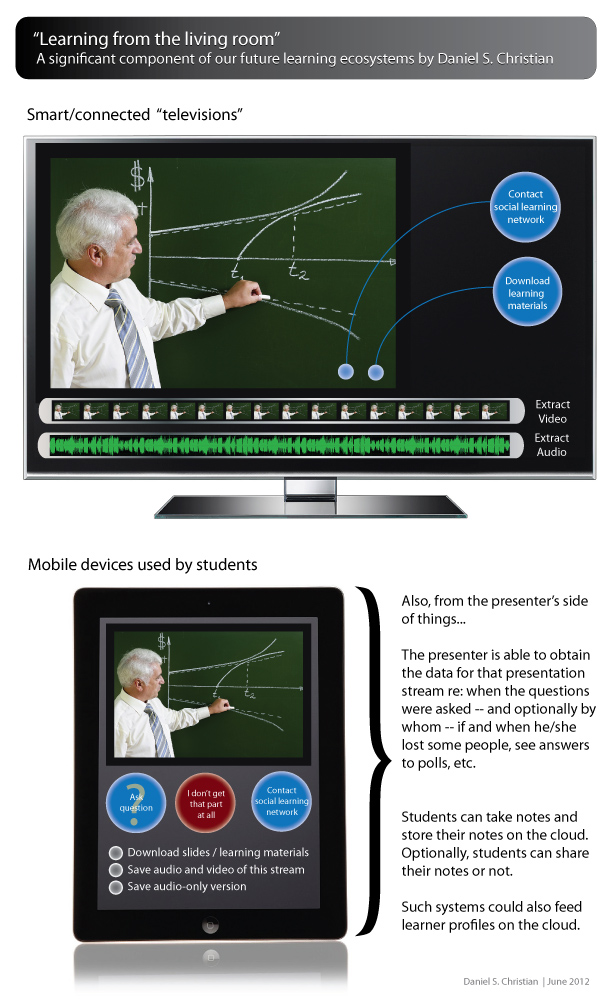
Reminds me of the underlying vision that I was trying to get at here:


Learning from the living room -- a component of our future learning ecosystems -- by Daniel S. Christian, June 2012


True personalization is the next big thing in multiscreen TV — from .v-net.tv by John Moulding


From DSC:
Not a far stretch to see some applications of this in the future aimed at learning objects/learning agents/and personalized streams of content.


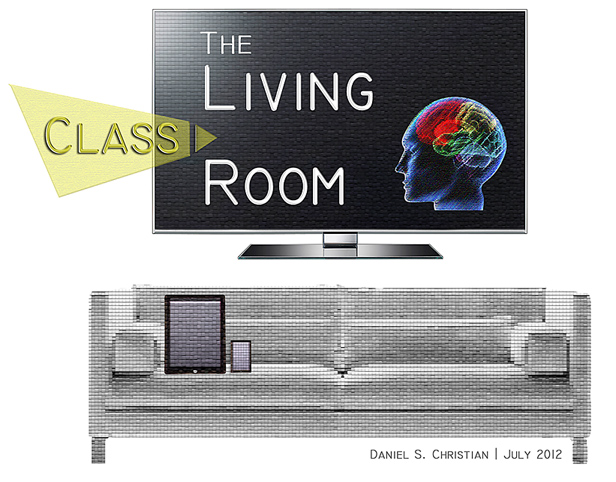
The Living [Class] Room -- by Daniel Christian -- July 2012 -- a second device used in conjunction with a Smart/Connected TV


Addendum:
(With thanks going out to Mr. Richard Byrne over at the Free Technology for Teachers blog for this item
)


SchoolsWorldTV-Sept2013


From DSC:
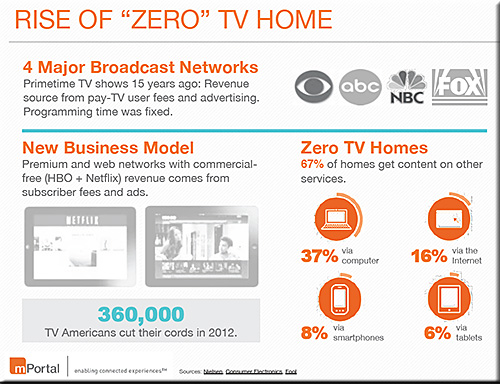
The massive convergence of the telephone, the television, and the computer continues.  How that media gets to us is also changing (i.e. the cord cutting continues). 

What types of innovative learning experiences can be crafted as “TV” becomes more interactive, participatory, and engaging? What happens if technologies like WebRTC make their way into our browsers and we can videoconference with each other without having to download anything?

What doors open for for us when Google, Apple, or an Amazon.com delivers your “shows” vs. NBC/ABC/CBS/etc.?

 The items below cause me to reflect on those questions…


.

Streaming devices lead the way to Smart TV — from nytimes.com by Brian Stelter

Julia Yellow


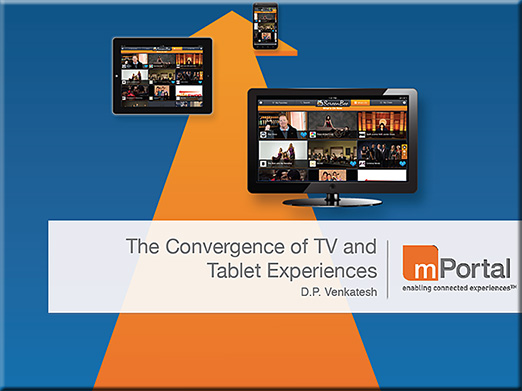
ConvergenceTVTablet-DPVenkatesh-Aug2013


ConvergenceTVTablet2-DPVenkatesh-Aug2013


.

Is Google ready to buy its way into TV with an NFL deal? — from allthingsd.com by Peter Kafka

Excerpt:

Here’s a fun combination to ponder: The world’s most powerful media company and America’s most popular sport.

That could happen if Google buys the rights to the NFL’s Sunday Ticket package, the all-you-can-eat subscription-TV service currently owned by DirecTV.


Cord Cliff Coming: What happens to TV when Netflix streams live events? — from allthingsd.com by Ben Elowitz, CEO, Wetpaint


 Addendums on 8/22/13:


The tv of tomorrow and the living room of the future

by beutlerink.
Explore more infographics like this one on the web’s largest information design community – Visually.


From DSC:
I love multimedia because it enables me to craft a message using audio, video, text, graphics, and even animations.  The Internet extends the power of this communication by allowing that message to go forth 24 x 7 x 365 in multi-directional ways — even allowing others to join in the conversations and participate.

The following item made me reflect upon on how important this is becoming to business:

Excerpt:

How (and why) is Marketing Changing?
The first thing to understand about marketing today is that it’s all about shared experience. Consumer behavior is radically changing with respect to content consumption. No longer are people consuming most of their content on the TV, a newspaper, or even their computer. Rather, they are using a combination of channels:


From DSC:

  • Won’t this trend also impact students’ expectations/hopes/engagement?
  • What do we need to do to help youth build these skillsets?


Also related/see:

  • The rise, implications & benefits of the second screen — from newsworks.org.uk by Mark Challinor
    Telegraph Media Group’s director of mobile Mark Challinor says in this new era of second screens, news companies must create content that helps consumers to multi-task on multiple platforms with multiple devices.

Excerpt:
Watching television – or even reading a newspaper – with a smartphone and/or tablet device is becoming one of the most popular leisure activities of this “mobile age”. In turn, publishers such as ourselves are trying to find ways to capitalise on this somewhat new consumer behaviour of real-time interaction, which, more often than not, includes social media. This type of interaction, referred to as “the second screen” or “the companion device”, has become not just a latest hot topic of discussion all over social media blogs; it is a huge development for the mobile app industry and a target-rich environment for our advertisers.

  • Emerging markets’ second-screen boost with 1BN smart devices by 2014 — from rapidtvnews.com by Joseph O’Halloran
    Excerpt:
    New research by IDC has revealed that it won’t just be Western Europe and North America forming happy hunting grounds for second-screen services and applications. The analyst says it is clear that demand for smart connected devices is quickly shifting from developed to emerging markets and that by the end of 2014, global shipments of smart connected devices such as PCs, tablets, and smartphones will exceed surpass 1.7 billion units, with roughly one billion units delivered to emerging markets. The emerging markets are expected to grow at a compound annual growth rate (CAGR) of 17% over the 2012-2017 forecast period, compared to the 7% CAGR expected in developed markets.
 

60 beautiful examples of websites with full-blown video backgrounds — from hongkiat.com by Nancy Young

.

From DSC:
Yes, you read that right. Video-based backgrounds — motion pictures. Another great example of the convergence that’s been happening with the TV, the telephone, and the computer.


From DSC:

  • What if you want to allow some remote students to come on into your face-to-face classroom?
    .
  • What if you want to allow those remote students to be seen and communicated with at eye level?
    .
  • What if you want Remote Student A to join Group 1, and Remote Student B to join Group 2?
    .

Well…how about using one of these devices  in order to do so!


New video collaboration robot: TelePresence gets moving — from cisco.com by Dave Evans

Excerpt:

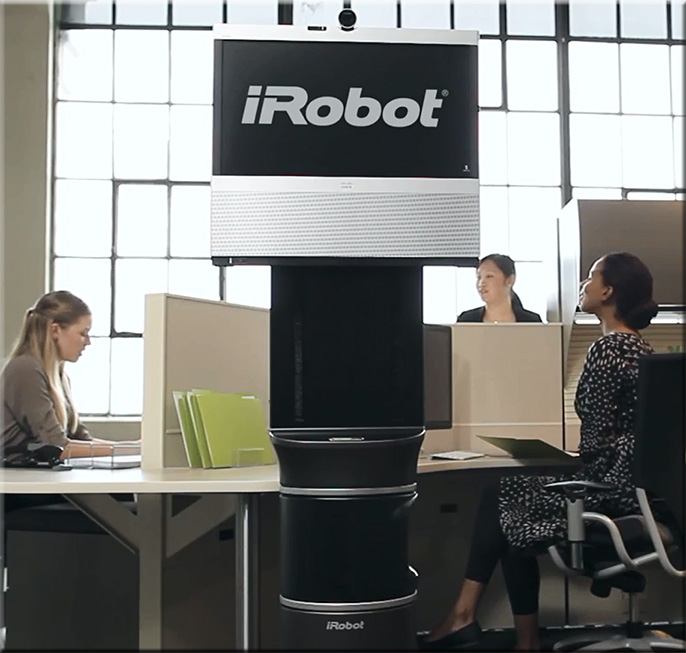
That is why Cisco’s new joint effort with iRobot—demonstrated publicly this week for the first time—is so exciting: We’ve created a mobile Cisco TelePresence unit that brings collaboration to you—or, conversely, brings you to wherever you need to collaborate. Called iRobot Ava 500, this high-definition video collaboration robot combines Cisco TelePresence with iRobot’s mobility and self-navigation capabilities, enabling freedom of movement and spontaneous interactions with people thousands of miles away.

.

irobot-june-10-2013
.

iRobot Ava™ 500 Video Collaboration Robot — published on Jun 10, 2013
iRobot and Cisco have teamed to bring the Ava 500 video collaboration robot to market. The robot blends iRobot’s autonomous navigation with Cisco’s TelePresence to enable people working off-site to participate in meetings and presentations where movement and location spontaneity are important. The new robot is also designed to enable mobile visual access to manufacturing facilities, laboratories, customer experience centers and other remote facilities.


.

Double Robotics Double

http://www.doublerobotics.com/img/use-office.jpg


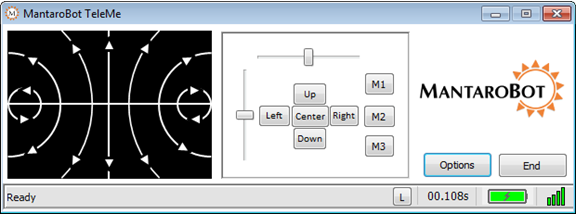
MantaroBot™ TeleMe


From Attack of the Telepresence Robots! — from BYTE  by Rick Lehrbaum

.

Kubi

http://twimgs.com/informationweek/byte/reviews/2013-Jan/robotic-telepresence/kubi.jpg


MantaroBot “TeleMe” VGo Communications “VGo” Anybots “QB” Suitable Technologies “Beam”


.

RP-7i ROBOT

RP-7i Remote Presence Robot


Also see:


The New Storytelling Frontier — from huffingtonpost.ca by Katherine Brodsky

Excerpts (emphasis DSC):

Long gone are the days of static content. Consumers are looking for more and transmedia storytelling offers an increasingly popular approach for creating property-based universes. Transmedia content itself is also evolving. It’s becoming more dynamic, more interactive, offering greater opportunities to engage audiences with creative user-generated content that adds to the storytelling experience. It is becoming more communal.

…

Although traditional models allow for greater control of content, strategies that can engage fans more actively and allow them to express themselves and even contribute to the development of a show, get them more involved and, ultimately, more willing to buy in.


From DSC:
As the use of storytelling is a powerful tool for learning, I can’t help but wonder…

  • What might be some creative possibilities arising from the developing world of transmedia that students and/or educational organizations could develop?
  • In what ways could we build more interactivity and social networking into our “digital textbooks” and mobile-based applications?
  • Would transmedia-based content help maintain interest, engagement, attention?
  • Would it help establish longer term memories/recall?
  • How might it help build students creativity and foster more experimentation/play/participation?
  • What roles might students play? (Writer, videographer, sound designer, actress, programmer, game designer, project manager, entrepreneur, etc.)
  • What tools and skills would students need to create their own transmedia-based experiences?
  • What new forms of storytelling might evolve from these efforts?
  • Could transmedia work its way into blended learning models?
  • Are new opportunities for immersing oneself in a particular subject matter becoming more available through transmedia-based experiences?
  • Could streams of content be wrapped in transmedia-based experiences?


TV apps: A dive into fragmentation — from appmarket.tv by

Excerpt:

Suppose you wanted to build an app for TV, where would you start? Admittedly, there is an enormous number of variables to consider for an app developer on where they might start the journey, even before that journey starts. These include areas like skill sets, funding, previous development, and relationships. This article is the first in a series that aims to shed some light on the current state of TV app development, as well as the exciting ecosystem that is forming around the connected TV. If you’ve identified an opportunity where developing a TV app makes sense, read on!

…

At this point, suppose you want to cover the market and develop for all devices and middleware platforms. That’s at least 72 middleware/OS, 122 devices, and 3 screen resolutions, which equates to managing over 26,352 experiences. A little overwhelming, right? Luckily, the picture isn’t quite this grim and in practice, no developer has gone to these lengths (we hope!). The next article in this series will go into how some of this fragmentation is being dealt with and some best practices that we’ve discovered along the way.

.

itv-image


.


The Living [Class] Room -- by Daniel Christian -- July 2012 -- a second device used in conjunction with a Smart/Connected TV

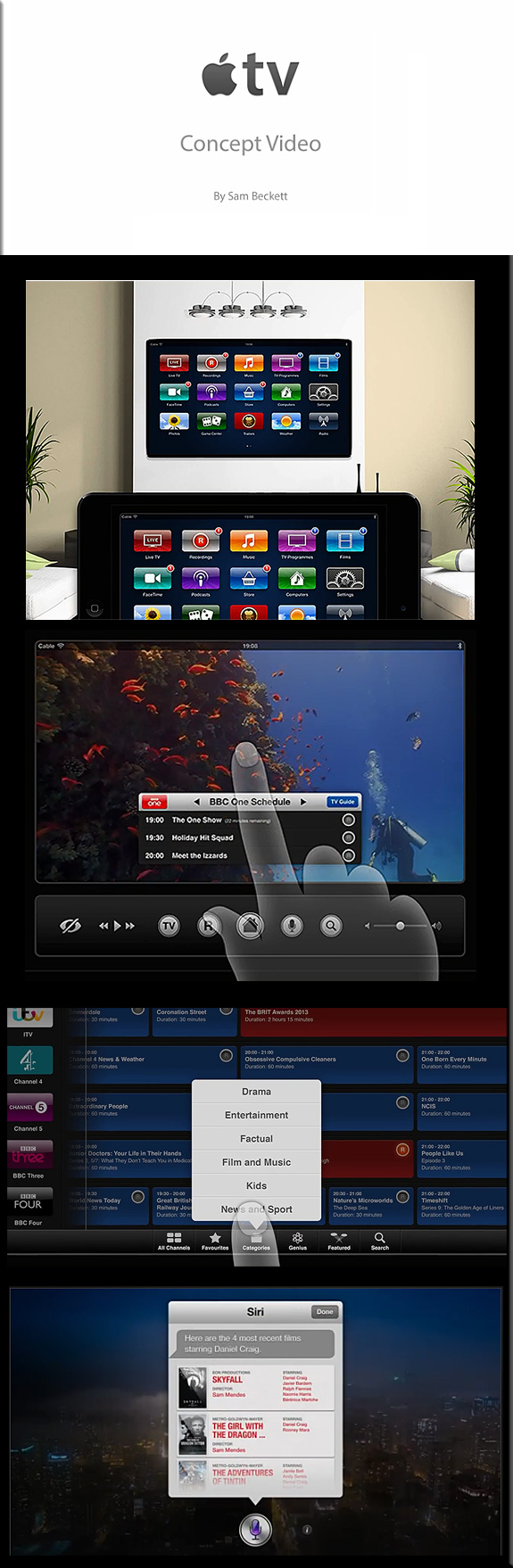
Heads up Jony Ive! You need to see this brilliant concept for the Apple TV! Superb work by Sam Beckett!

BrilliantTVConceptBySamBeckett-May2013


.

From DSC:
Now picture this from the educational standpoint — and what MOOCs could morph into.  The foundation for some serious learning power (from the living room) seems to be developing!

Streams of content/learning channels/cloud-based applications that each of us can create and make available.

Voice recognition, learning analytics, machine-to-machine communications, transmedia and more!  Wow!


.


The Living [Class] Room -- by Daniel Christian -- July 2012 -- a second device used in conjunction with a Smart/Connected TV


Microsoft unveils Xbox One: the ultimate all-in-one home entertainment system — from microsoft.com

Excerpt:

REDMOND, Wash. — May 21, 2013 — A new vision for the future comes to life today as Microsoft Corp. unveils Xbox One , the all-in-one gaming and entertainment system created for today and the next generation. At Microsoft headquarters in Redmond, Wash., the company showcased how Xbox One puts you at the center of all your games, TV, movies, music, sports and Skype.

“Xbox One is designed to deliver a whole new generation of blockbuster games, television and entertainment in a powerful, all-in-one device,” said Don Mattrick, president, Interactive Entertainment Business at Microsoft. “Our unique, modern architecture brings simplicity to the living room and, for the first time ever, the ability to instantly switch across your games and entertainment.”

…

With Xbox One, games push the boundaries of realism, and TV obeys your commands. Say “Xbox On” to launch your personalized Xbox One Home screen, discover what is popular on TV or see friends’ latest gaming achievements all using the most natural interface — your voice. The more you interact with Xbox One, the more it gets to know you and learns what you like.


From DSC:
Here’s the item I find particularly interesting (emphasis DSC):

  • Skype for Xbox One.
    Specially designed for Xbox One, talk with friends on your TV in stunning HD, or for the first time ever, hold group Skype calls on your TV.


Netflix CEO: ‘TV in the future will be like a giant iPad’ [Ligaya ]

Netflix CEO: ‘TV in the future will be like a giant iPad’ — from business.financialpost.com by Armina Ligaya

Excerpt (emphasis DSC):

Q: What do you think is going to happen over the next five or 10 years in internet video?

A: Well, you know, the fundamental thing is the internet has been getting faster. And now it’s video capable, which is really a last-five-years phenomenon. And, internet video will be very transformative across all societies for telemedicine, for online learning, for education. For communication of various sorts. And it brings, whether it’s person to person, or a recorded video like a movie or a TV show, to a person it will be very transformative.

And, TV in the future will be like a giant iPad. It will have a bunch of apps on it, each app will have a unique experience.

…

So we’re getting beyond just a stream of video, which is all broadcast technology can do, to really try to be innovative about the interaction.

.

The Living [Class] Room -- by Daniel Christian -- July 2012 -- a second device used in conjunction with a Smart/Connected TV


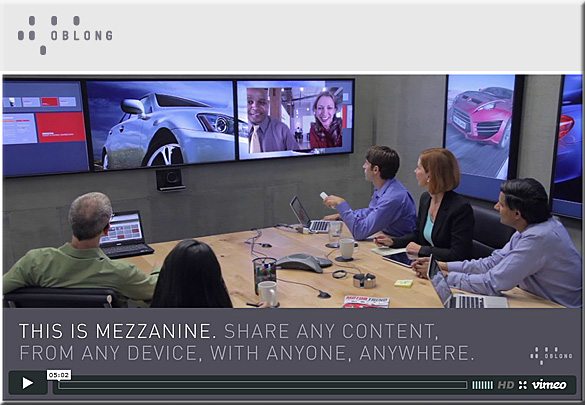
Mezzanine-from-Oblong-May2013


.

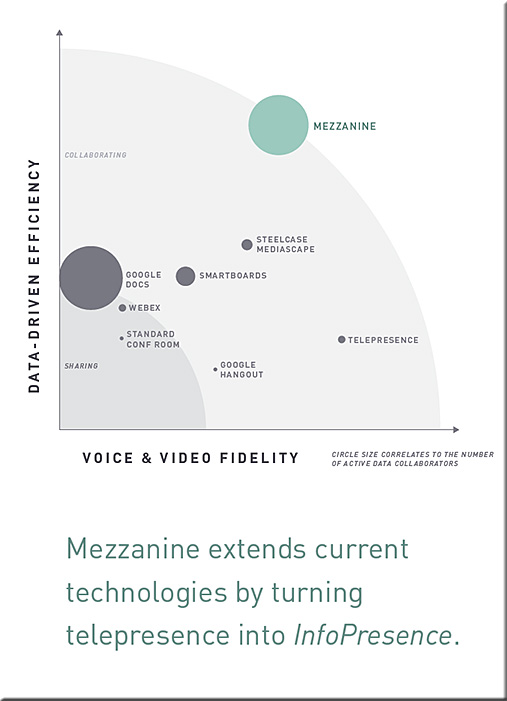
Mezzanine2-from-Oblong-May2013

.

.

From the Oblong.com website:

Mezzanine™ is a collaborative conference room solution that introduces multi-user, multi-screen, multi-device collaboration. This is next-generation communication: share any content from any device with anyone, anywhere.

Mezzanine transforms creative teamwork, executive meetings, and sales presentations into real-time, collaborative work sessions. Mezzanine expands on existing telepresence technology by providing what we call InfoPresence™—the incorporation of multiple users, multiple devices, and multiple streams of information in the collaboration environment. The future of conference room collaboration is here.

A Mezzanine workspace lets any person on a network bring their own device and share content and applications with any colleague, anywhere in the world, interactively. Mezzanine is a collaborative conference room solution combining presentation design and delivery, application sharing, whiteboard capture, and video conferencing, all within a framework of multi-participant control.

.

Also see:

  • Oblong Technovates with LA High School
    .
  • Oblong at OME
    Oblong Industries recently participated at OME, a summit hosted by UC San Francisco.  The two-day summit focused on charting the future of precision medicine—an emerging field combining big data with clinical research and patient care to deliver insights and advances in treatment that is more targeted and enables improved patient outcomes.


The folks needed to create the next generation of learning: Computers can’t touch this. [Christian]

From DSC:
What we need is a major hackathon — or an organization with deep pockets — that can bring together folks from a variety of disciplines including:

  • Subject Matter Experts
  • Instructional Designers
  • Cognitive Psychologists
  • Computer Scientists and/or those exerienced with learning analytics/data mining, Artificial Intelligence (AI)
  • Those gifted in film/media/videography/photography
  • Great storytellers/writers (including writing for transmedia-based learning experiences)
  • Folks who can create engaging, educational games
  • Designers
    • Web
    • Graphic
    • Interface
    • User experience
    • User interaction
    • Those gifted in creating multimedia-based content
  • Musicians
  • Human Computer Interaction (HCI) experts
  • Mobile learning experts
  • Those knowledgeable with second screens/M2M communications
  • Animators
  • Illustrators
  • Social media experts
  • Accessibility experts
  • Researchers
  • Those gifted in creating augmented reality-based apps
  • Legal/copyright experts
  • & others

We need for these specialists to collaborate in order to create the next generation of learning.  Anyone who can bring these skillsets together and experiment with creating materials will have significantly contributed something to the current generations and to future generations! 

And, in the words of M.C. Hammer,  computers “can’t touch this!”  Why? Because “learning is messy!”

What fields did I miss?
Please leave your thoughts and
feedback in the comments section.


BII REPORT: Here’s why the “second screen” industry is set to explode — BusinessInsider.com

BII REPORT: Here’s why the “second screen” industry is set to explode — BusinessInsider.com

Excerpt:

Here’s why the second screen industry will ultimately succeed:

  • Usage is growing rapidly
  • And mass acceptance isn’t even necessary
  • Second screen isn’t really a new activity
  • Second screen apps and sites are bridges


From DSC:
As this article alludes to, I wouldn’t rule the living room out in terms of where interactive, multimedia-based, educationally-related, second screen-based applications will turn up (apps backed up by data mining, AI, and opportunities for social learning). This area is poised for some serious growth. 


The Living [Class] Room -- by Daniel Christian -- July 2012 -- a second device used in conjunction with a Smart/Connected TV

 
© 2025 | Daniel Christian