Talk to Me: NVIDIA and Partners Boost People Skills and Business Smarts for AI Agents  — from blogs.nvidia.com by Adel El Hallak
NVIDIA Enterprise AI Factory validated design and latest NVIDIA AI Blueprints help businesses add intelligent AI teammates that can speak, research and learn to their daily operations.

Call it the ultimate proving ground. Collaborating with teammates in the modern workplace requires fast, fluid thinking. Providing insights quickly, while juggling webcams and office messaging channels, is a startlingly good test, and enterprise AI is about to pass it — just in time to provide assistance to busy knowledge workers.

To support enterprises in boosting productivity with AI teammates, NVIDIA today introduced a new NVIDIA Enterprise AI Factory validated design at COMPUTEX. IT teams deploying and scaling AI agents can use the design to build accelerated infrastructure and easily integrate with platforms and tools from NVIDIA software partners.

NVIDIA also unveiled new NVIDIA AI Blueprints to aid developers building smart AI teammates. Using the new blueprints, developers can enhance employee productivity through adaptive avatars that understand natural communication and have direct access to enterprise data.


NVIDIA CEO Envisions AI Infrastructure Industry Worth ‘Trillions of Dollars’ — from blogs.nvidia.com by Brian Caulfield
In his COMPUTEX keynote, Huang unveiled a sweeping vision for an AI-powered future, showcasing new platforms and partnerships.

“AI is now infrastructure, and this infrastructure, just like the internet, just like electricity, needs factories,” Huang said. “These factories are essentially what we build today.”

“They’re not data centers of the past,” Huang added. “These AI data centers, if you will, are improperly described. They are, in fact, AI factories. You apply energy to it, and it produces something incredibly valuable, and these things are called tokens.”

More’s coming, Huang said, describing the growing power of AI to reason and perceive. That leads us to agentic AI — AI able to understand, think and act. Beyond that is physical AI — AI that understands the world. The phase after that, he said, is general robotics.


Everything Revealed at Nvidia’s 2025 Computex Press Conference in 19 Minutes — from mashable.com
Nvidia is creating Omniverse Digital Twins of factories including humanoid robots

Watch all the biggest announcements from Nvidia’s keynote address at Computex 2025 in Taipei, Taiwan.


Dell unveils new AI servers powered by Nvidia chips to boost enterprise adoption — from reuters.com

May 19 (Reuters) – Dell Technologies (DELL.N), opens new tab on Monday unveiled new servers powered by Nvidia’s (NVDA.O), opens new tab Blackwell Ultra chips, aiming to capitalize on the booming demand for artificial intelligence systems.

The servers, available in both air-cooled and liquid-cooled variations, support up to 192 Nvidia Blackwell Ultra chips but can be customized to include as many as 256 chips.


Nvidia announces humanoid robotics, custom AI infrastructure tech at Computex 2025 — from finance.yahoo.com by Daniel Howley

Nvidia (NVDA) rolled into this year’s Computex Taipei tech expo on Monday with several announcements, ranging from the development of humanoid robots to the opening up of its high-powered NVLink technology, which allows companies to build semi-custom AI servers with Nvidia’s infrastructure.

During the event on Monday, Nvidia revealed its Nvidia Isaac GR00T-Dreams, which the company says helps developers create enormous amounts of training data they can use to teach robots how to perform different behaviors and adapt to new environments.


Addendums on 5/22/25:


Ephesians 4:32

Be kind and compassionate to one another, forgiving each other, just as in Christ God forgave you.

11 Why, my soul, are you downcast?
    Why so disturbed within me?
Put your hope in God,
    for I will yet praise him,
    my Savior and my God.


Welcome to Planet Money

The current economic upheaval has a lot of us scratching our heads and scrambling to look up terms like “trade deficit” and “reserve currency.” If only there was a place you could go where friendly voices break down what’s going on in a way that’s fun and easy to understand. There is a place. It’s called Planet Money.

On each episode of the Planet Money podcast, the hosts tell a sometimes quirky, often surprising story that helps explain a topic you might be hearing about in the news, from tariffs to GDP to memecoins.

They walk you through complex concepts using examples from everyday life, like Tupperware and scratch-off lotto tickets, and people you can relate to, like a guy who’s just looking for a fair way to distribute his chickens’ wares during the current egg shortage.

And when someone else’s story isn’t enough to illustrate an economic principle, the hosts take matters into their own hands. In the process, they’ve shot a satellite into space, started a record label, made their own vodka, and shorted the entire stock market – all to help you grasp how the things you see every day came to be.

Visit Planet Money twice a week and you won’t only better understand money – you’ll better understand the world.


New tools for ultimate character consistency — from heatherbcooper.substack.com by Heather B. Cooper
Plus simple & effective video prompt tips

We have some new tools for character, objects, and scene consistency with Runway and Midjourney.


Multimodal AI = multi-danger — from theneurondaily.com by Grant Harvey

According to a new report from Enkrypt AI, multimodal models have opened the door to sneakier attacks (like Ocean’s Eleven, but with fewer suits and more prompt injections).

Naturally, Enkrypt decided to run a few experiments… and things escalated quickly.

They tested two of Mistral’s newest models—Pixtral-Large and Pixtral-12B, built to handle words and visuals.

What they found? Yikes:

    • The models are 40x more likely to generate dangerous chemical / biological / nuclear info.
    • And 60x more likely to produce child sexual exploitation material compared to top models like OpenAI’s GPT-4o or Anthropic’s Claude 3.7 Sonnet.

Rise of AI-generated deepfake videos spreads misinformation — from iblnews.org


“Student Guide to AI”; “AI Isn’t Just Changing How We Work — It’s Changing How We Learn”; + other items re: AI in our LE’s

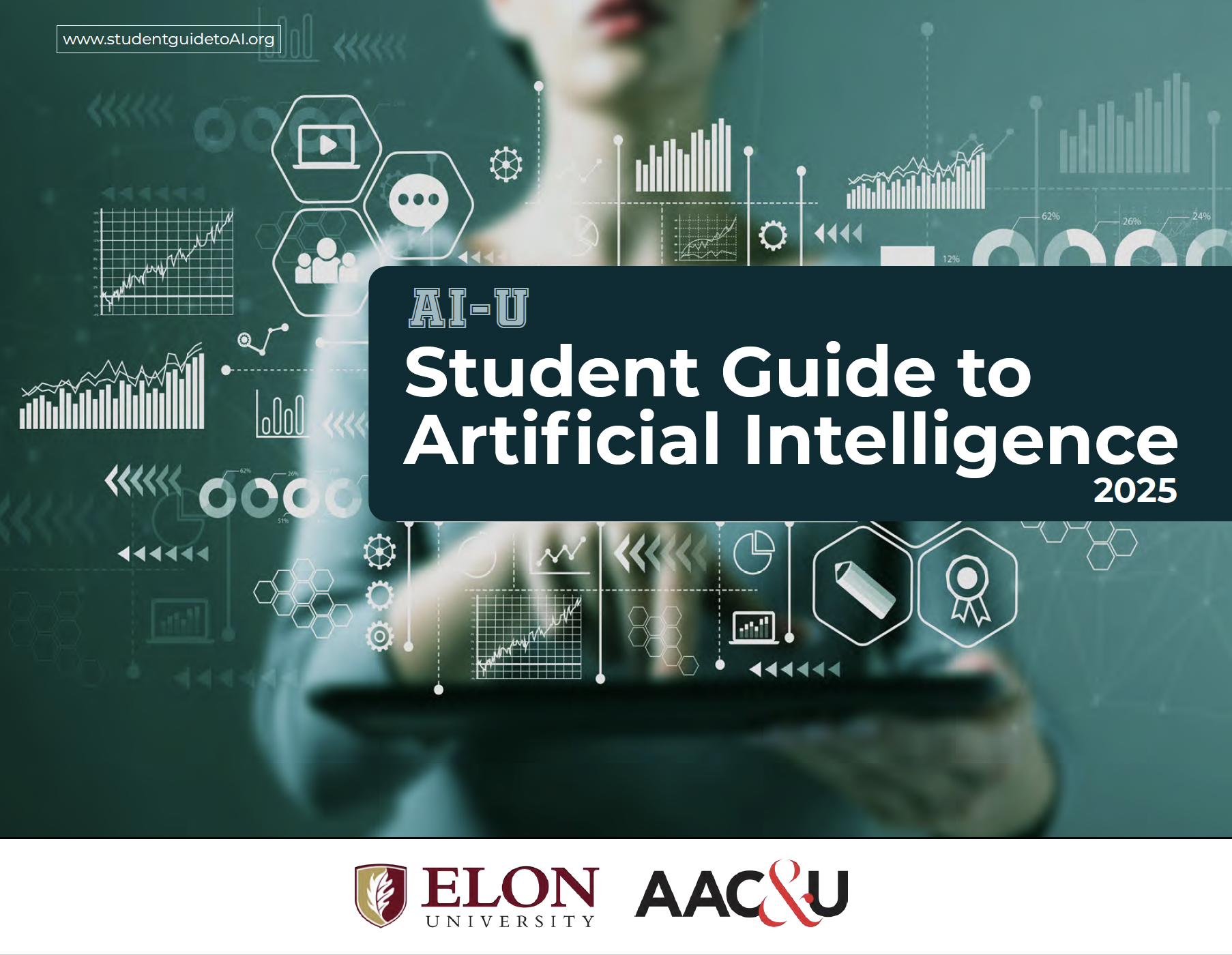
.Get the 2025 Student Guide to Artificial Intelligence — from studentguidetoai.org
This guide is made available under a Creative Commons license by Elon University and the American Association of Colleges and Universities (AAC&U).
.


AI Isn’t Just Changing How We Work — It’s Changing How We Learn — from entrepreneur.com by Aytekin Tank; edited by Kara McIntyre
AI agents are opening doors to education that just a few years ago would have been unthinkable. Here’s how.

Agentic AI is taking these already huge strides even further. Rather than simply asking a question and receiving an answer, an AI agent can assess your current level of understanding and tailor a reply to help you learn. They can also help you come up with a timetable and personalized lesson plan to make you feel as though you have a one-on-one instructor walking you through the process. If your goal is to learn to speak a new language, for example, an agent might map out a plan starting with basic vocabulary and pronunciation exercises, then progress to simple conversations, grammar rules and finally, real-world listening and speaking practice.

For instance, if you’re an entrepreneur looking to sharpen your leadership skills, an AI agent might suggest a mix of foundational books, insightful TED Talks and case studies on high-performing executives. If you’re aiming to master data analysis, it might point you toward hands-on coding exercises, interactive tutorials and real-world datasets to practice with.

The beauty of AI-driven learning is that it’s adaptive. As you gain proficiency, your AI coach can shift its recommendations, challenge you with new concepts and even simulate real-world scenarios to deepen your understanding.

Ironically, the very technology feared by workers can also be leveraged to help them. Rather than requiring expensive external training programs or lengthy in-person workshops, AI agents can deliver personalized, on-demand learning paths tailored to each employee’s role, skill level, and career aspirations. Given that 68% of employees find today’s workplace training to be overly “one-size-fits-all,” an AI-driven approach will not only cut costs and save time but will be more effective.


What’s the Future for AI-Free Spaces? — from higherai.substack.com by Jason Gulya
Please let me dream…

This is one reason why I don’t see AI-embedded classrooms and AI-free classrooms as opposite poles. The bone of contention, here, is not whether we can cultivate AI-free moments in the classroom, but for how long those moments are actually sustainable.

Can we sustain those AI-free moments for an hour? A class session? Longer?

Here’s what I think will happen. As AI becomes embedded in society at large, the sustainability of imposed AI-free learning spaces will get tested. Hard. I think it’ll become more and more difficult (though maybe not impossible) to impose AI-free learning spaces on students.

However, consensual and hybrid AI-free learning spaces will continue to have a lot of value. I can imagine classes where students opt into an AI-free space. Or they’ll even create and maintain those spaces.


Duolingo’s AI Revolution — from drphilippahardman.substack.com by Dr. Philippa Hardman
What 148 AI-Generated Courses Tell Us About the Future of Instructional Design & Human Learning

Last week, Duolingo announced an unprecedented expansion: 148 new language courses created using generative AI, effectively doubling their content library in just one year. This represents a seismic shift in how learning content is created — a process that previously took the company 12 years for their first 100 courses.

As CEO Luis von Ahn stated in the announcement, “This is a great example of how generative AI can directly benefit our learners… allowing us to scale at unprecedented speed and quality.”

In this week’s blog, I’ll dissect exactly how Duolingo has reimagined instructional design through AI, what this means for the learner experience, and most importantly, what it tells us about the future of our profession.


Are Mixed Reality AI Agents the Future of Medical Education? — from ehealth.eletsonline.com

Medical education is experiencing a quiet revolution—one that’s not taking place in lecture theatres or textbooks, but with headsets and holograms. At the heart of this revolution are Mixed Reality (MR) AI Agents, a new generation of devices that combine the immersive depth of mixed reality with the flexibility of artificial intelligence. These technologies are not mere flashy gadgets; they’re revolutionising the way medical students interact with complicated content, rehearse clinical skills, and prepare for real-world situations. By combining digital simulations with the physical world, MR AI Agents are redefining what it means to learn medicine in the 21st century.


4 Reasons To Use Claude AI to Teach — from techlearning.com by Erik Ofgang
Features that make Claude AI appealing to educators include a focus on privacy and conversational style.

After experimenting using Claude AI on various teaching exercises, from generating quizzes to tutoring and offering writing suggestions, I found that it’s not perfect, but I think it behaves favorably compared to other AI tools in general, with an easy-to-use interface and some unique features that make it particularly suited for use in education.


2025 EDUCAUSE Horizon Report | Teaching and Learning Edition — from library.educause.edu

Higher education is in a period of massive transformation and uncertainty. Not only are current events impacting how institutions operate, but technological advancement—particularly in AI and virtual reality—are reshaping how students engage with content, how cognition is understood, and how learning itself is documented and valued.

Our newly released 2025 EDUCAUSE Horizon Report | Teaching and Learning Edition captures the spirit of this transformation and how you can respond with confidence through the lens of emerging trends, key technologies and practices, and scenario-based foresight.

#teachingandlearning #highereducation #learningecosystems #learning #futurism #foresight #trends #emergingtechnologies #AI #VR #gamechangingenvironment #colleges #universities #communitycolleges #faculty #staff #IT


Nearly half of Gen Z and millennials say college was a waste of money—AI has already made degrees obsolete — from fortune.com by Preston Fore

College is often advertised as the best four years of one’s life, but many Americans now have regrets.

More than a third of all graduates now say their degree was a “waste of money,” according to a new survey by Indeed. This frustration is especially pronounced among Gen Z, with 51% expressing remorse—compared to 41% of millennials and just 20% of baby boomers.

Overall, a growing share of college-educated workers are questioning the return on investment (ROI) of their degree, Kyle M.K., a career trend expert at Indeed, told Fortune. It’s something that’s not all too surprising considering that the average cost of a bachelor’s degree has doubled in the last two decades to over $38,000, and total student loan debt has ballooned to nearly $2 trillion.

“Another 38% feel student loans have limited their career growth more than their diploma has accelerated it,” M.K. said.

“AI won’t invalidate a solid education, but it will reward those who keep upgrading their toolkit.”


Average Cost of College & Tuition — from educationdata.org
Last Updated: March 8, 2025

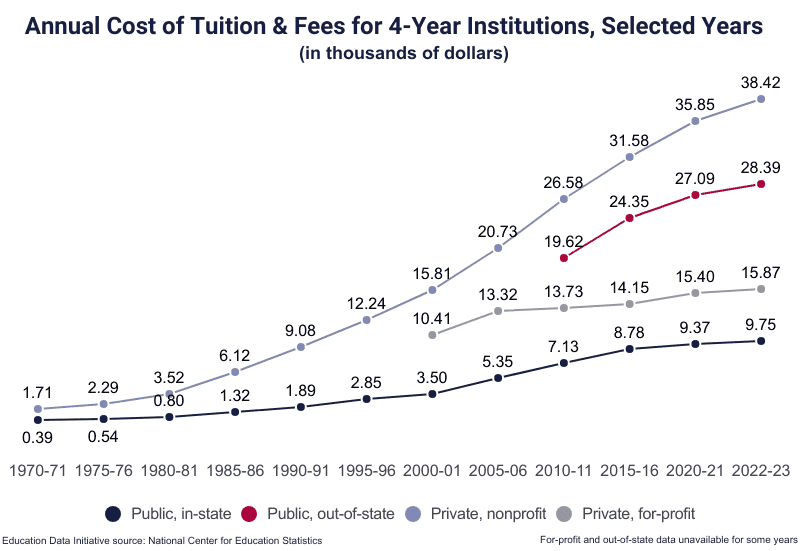
Report Highlights. The average cost of college* in the United States is $38,270 per student per year, including books, supplies, and daily living expenses.

  • The average cost of college has more than doubled in the 21st century; the compound annual growth rate (CAGR) of tuition is 4.04%.
  • The average in-state student attending a public 4-year institution and living on-campus spends $27,146 for one academic year.
  • The average cost of in-state tuition alone is $9,750; out-of-state tuition averages $28,386.
  • The average private, nonprofit university student spends $58,628 per academic year living on campus, $38,421 of it on tuition and fees.
  • Considering student loan interest and loss of income, investing in a bachelor’s degree can ultimately cost in excess of $500,000.

.


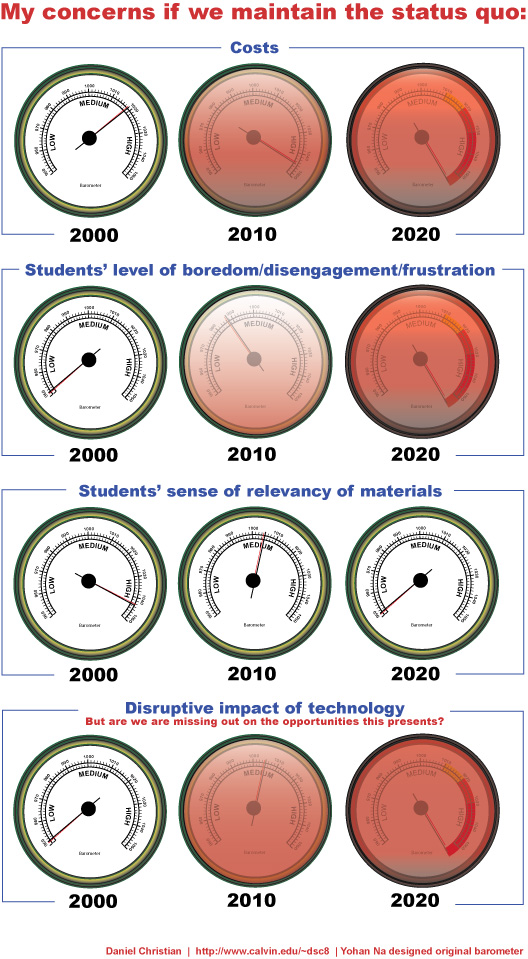
From DSC:
Reminds me of a graphic that Yohan Na and I created back in 2009:
.


Sam Altman’s Eye-Scanning Orb Is Now Coming to the US — from wired.com by Lauren Goode
At a buzzy event in San Francisco, World announced a series of Apple-like stores, a partnership with dating giant Match Group, and a new mini gadget to scan your eyeballs.

The device-and-app combo scans people’s irises, creates a unique user ID, stores that information on the blockchain, and uses it as a form of identity verification. If enough people adopt the app globally, the thinking goes, it could ostensibly thwart scammers.

The bizarre identity verification process requires that users get their eyeballs scanned, so Tools for Humanity is expanding its physical footprint to make that a possibility.

But World is also a for-profit cryptocurrency company that wants to build a borderless, “globally inclusive” financial network. And its approach has been criticized by privacy advocates and regulators. In its early days, World was explicitly marketing its services to countries with a high percentage of unbanked or underbanked citizens, and offering free crypto as an incentive for people to sign up and have their irises scanned.


From DSC:
If people and governments could be trusted with the level of power a global ID network/service could bring, this could be a great technology. But I could easily see it being abused. Heck, even our own President doesn’t listen to the Judicial Branch of our government! He’s in contempt of court, essentially. But he doesn’t seem to care. 


We Visited Rumeysa Ozturk in Detention. What We Saw Was a Warning to Us All. — from nytimes.com by Edward J. Markey, Jim McGovern, and Ayanna Pressley. This is a gifted article.

When we met Ms. Ozturk in Basile, she told us she feared for her life when she was taken off the streets of her neighborhood, not knowing who had grabbed her or where they were taking her. She said that at each step of her transit — from Massachusetts to New Hampshire to Vermont to Louisiana — her repeated requests to contact her lawyer were denied. Inside the detention center, she was inadequately fed, kept in facilities with extremely cold temperatures and denied personal necessities and religious accommodations. She suffered asthma attacks for which she lacked her prescribed medication. Despite all this — and despite being far away from her loved ones — we were struck by her unwavering spirit.

Why did the Trump administration target her? By all accounts, it’s because she was one of the authors of an opinion essay for The Tufts Daily criticizing her university’s response to resolutions that the Tufts student senate passed regarding Israel and Gaza.

This is not immigration enforcement. This is repression. This is authoritarianism.
.

.


2025: The Year the Frontier Firm Is Born — from Microsoft

We are entering a new reality—one in which AI can reason and solve problems in remarkable ways. This intelligence on tap will rewrite the rules of business and transform knowledge work as we know it. Organizations today must navigate the challenge of preparing for an AI-enhanced future, where AI agents will gain increasing levels of capability over time that humans will need to harness as they redesign their business. Human ambition, creativity, and ingenuity will continue to create new economic value and opportunity as we redefine work and workflows.

As a result, a new organizational blueprint is emerging, one that blends machine intelligence with human judgment, building systems that are AI-operated but human-led. Like the Industrial Revolution and the internet era, this transformation will take decades to reach its full promise and involve broad technological, societal, and economic change.

To help leaders understand how knowledge work will evolve, Microsoft analyzed survey data from 31,000 workers across 31 countries, LinkedIn labor market trends, and trillions of Microsoft 365 productivity signals. We also spoke with AI-native startups, academics, economists, scientists, and thought leaders to explore what work could become. The data and insights point to the emergence of an entirely new organization, a Frontier Firm that looks markedly different from those we know today. Structured around on-demand intelligence and powered by “hybrid” teams of humans + agents, these companies scale rapidly, operate with agility, and generate value faster.

Frontier Firms are already taking shape, and within the next 2–5 years we expect that every organization will be on their journey to becoming one. 82% of leaders say this is a pivotal year to rethink key aspects of strategy and operations, and 81% say they expect agents to be moderately or extensively integrated into their company’s AI strategy in the next 12–18 months. Adoption is accelerating: 24% of leaders say their companies have already deployed AI organization-wide, while just 12% remain in pilot mode.

The time to act is now. The question for every leader and employee is: how will you adapt?


On a somewhat related note, also see:

Exclusive: Anthropic warns fully AI employees are a year away — from axios.com by Sam Sabin

Anthropic expects AI-powered virtual employees to begin roaming corporate networks in the next year, the company’s top security leader told Axios in an interview this week.

Why it matters: Managing those AI identities will require companies to reassess their cybersecurity strategies or risk exposing their networks to major security breaches.

The big picture: Virtual employees could be the next AI innovation hotbed, Jason Clinton, the company’s chief information security officer, told Axios.


Values in the wild: Discovering and analyzing values in real-world language model interactions — from anthropic.com

In the latest research paper from Anthropic’s Societal Impacts team, we describe a practical way we’ve developed to observe Claude’s values—and provide the first large-scale results on how Claude expresses those values during real-world conversations. We also provide an open dataset for researchers to run further analysis of the values and how often they arise in conversations.

Per the Rundown AI

Why it matters: AI is increasingly shaping real-world decisions and relationships, making understanding their actual values more crucial than ever. This study also moves the alignment discussion toward more concrete observations, revealing that AI’s morals and values may be more contextual and situational than a static point of view.

Also from Anthropic, see:

Anthropic Education Report: How University Students Use Claude


Adobe Firefly: The next evolution of creative AI is here — from blog.adobe.com

In just under two years, Adobe Firefly has revolutionized the creative industry and generated more than 22 billion assets worldwide. Today at Adobe MAX London, we’re unveiling the latest release of Firefly, which unifies AI-powered tools for image, video, audio, and vector generation into a single, cohesive platform and introduces many new capabilities.

The new Firefly features enhanced models, improved ideation capabilities, expanded creative options, and unprecedented control. This update builds on earlier momentum when we introduced the Firefly web app and expanded into video and audio with Generate Video, Translate Video, and Translate Audio features.

Per The Rundown AI (here):

Why it matters: OpenAI’s recent image generator and other rivals have shaken up creative workflows, but Adobe’s IP-safe focus and the addition of competing models into Firefly allow professionals to remain in their established suite of tools — keeping users in the ecosystem while still having flexibility for other model strengths.


Teens, Social Media and Mental Health — from pewresearch.org by Michelle Faverio, Monica Anderson, and Eugenie Park
Most teens credit social media with feeling more connected to friends. Still, roughly 1 in 5 say social media sites hurt their mental health, and growing shares think they harm people their age

Rising rates of poor mental health among youth have been called a national crisis. While this is often linked to factors like the COVID-19 pandemic or poverty, some officials, like former Surgeon General Vivek Murthy, name social media as a major threat to teenagers.

Our latest survey of U.S. teens ages 13 to 17 and their parents finds that parents are generally more worried than their children about the mental health of teenagers today.

And while both groups call out social media’s impact on young people’s well-being, parents are more likely to make this connection.1

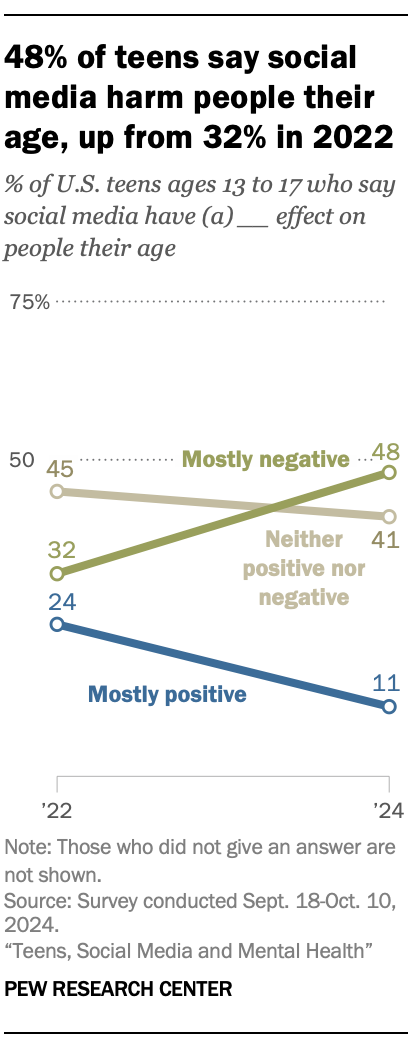
Still, teens are growing more wary of social media for their peers. Roughly half of teens (48%) say these sites have a mostly negative effect on people their age, up from 32% in 2022. But fewer (14%) think they negatively affect them personally.


Fight the Trump Administration’s Defiance of the Constitution and Courts — from 5calls.org

On April 14th, the Trump administration openly defied a unanimous order from the Supreme Court by refusing to bring back a person they knowingly sent to a torture prison in El Salvador by mistake.

Since Day 1, the Trump administration has been consistently eroding the constitutional separation of powers and system of checks and balances. They have…


From DSC:
Be more like Harvard.

Harvard sues the Trump administration in escalating confrontation — from washingtonpost.com by Susan Svrluga and Danielle Douglas-Gabriel
Lawsuit argues that government actions, including freezing $2.2 billion in federal funding, violated the First Amendment and didn’t follow legal procedures.

Harvard University sued the Trump administration in federal court Monday, the latest move in the escalating feud between the nation’s wealthiest school and the White House.

The lawsuit, filed in U.S. District Court in Massachusetts against multiple federal agencies, seeks to block the Trump administration from withholding federal funding “as leverage to gain control of academic decision making at Harvard.”

Alan M. Garber, the president of Harvard, said in a message to the university community Monday that the Trump administration’s actions are unlawful and beyond the government’s authority.

From DSC:
Trump has WAAAAY overstepped his jurisdiction and has crossed boundaries left and right. He has single-handedly wreaked havoc across the world — especially with the trade wars and by undermining the Federal Reserve. But he has also trampled on the rights of people living in America. Perhaps we need to write or revisit the job description of a President of the USA. But that’s not really going to help. He wouldn’t listen to it or read it anyway.


Another ‘shock’ is coming for American jobs — from washingtonpost.com by Heather Long. DSC: This is a gifted article
Millions of workers will need to shift careers. Our country is unprepared.

The United States is on the cusp of a massive economic shift due to AI, and it’s likely to cause greater change than anything President Donald Trump does in his second term. Much good can come from AI, but the country is unprepared to grapple with the need for millions — or perhaps tens of millions — of workers to shift jobs and entire careers.

“There’s a massive risk that entry-level, white-collar work could get automated. What does that do to career ladders?” asked Molly Kinder, a fellow at the Brookings Institution. Her research has found the jobs of marketing analysts are five times as likely to be replaced as those of marketing managers, and sales representative jobs are three times as likely to be replaced as those of sales managers.

Young people working in these jobs will need to be retrained, but it will be hard for them to invest in new career paths. Consider that many college graduates already carry a lot of debt (an average of about $30,000 for those who took student loans).What’s more, the U.S. unemployment insurance system covers only about 57 percent of unemployed workers and replaces only a modest amount of someone’s pay.

From DSC:
This is another reason why I think this vision here is at least a part of our future. We need shorter, less expensive credentials.

  • People don’t have the time to get degrees that take 2+ years to complete (after they have already gone through college once).
  • They don’t want to come out with more debt on their backs.
  • With inflation going back up, they won’t have as much money anyway.
  • Also, they may already have enough debt on their backs.
 

4 ways community colleges can boost workforce development — from highereddive.com by Natalie Schwartz
Higher education leaders at this week’s ASU+GSV Summit gave advice for how two-year institutions can boost the economic mobility of their students.

SAN DIEGO — How can community colleges deliver economic mobility to their students?

College leaders at this week’s ASU+GSV Summit, an annual education and technology conference, got a glimpse into that answer as they heard how community colleges are building support from business and industry and strengthening workforce development.

These types of initiatives may be helping to boost public perception of the value of community colleges vs. four-year institutions.

 
© 2025 | Daniel Christian