Last week I attended the 20th Annual Online Learning Consortium International Conference.  While there, I was inspired by an excellent presentation entitled, “A Disruptive Innovation: MSU’s Surviving the Coming Zombie Apocalypse – Are You Ready to Survive a New Way of Learning?“   The four team members from Michigan State University included:

  • Glenn R. Stutzky | Course Instructor
  • Keesa V. Muhammad | Instructional Designer
  • Christopher Irvin | Instructional Designer
  • Hailey Mooney | Course Librarian

Check out the intro clip on the website about the course:
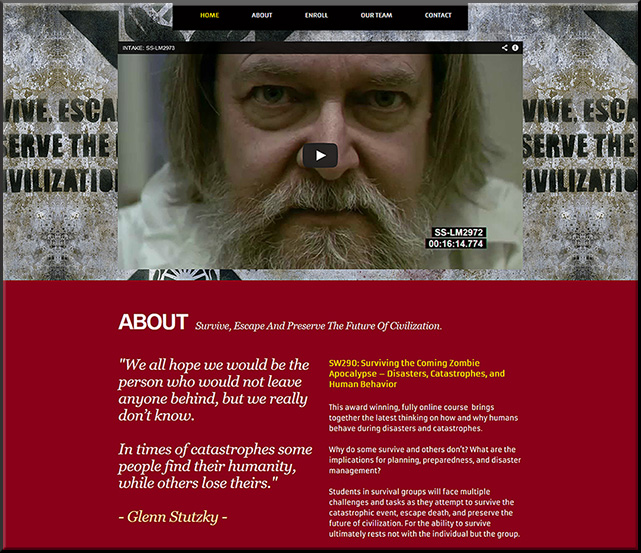
 

MSUZombie-Oct2014


From the description for the presentation:

This session highlights MSU’s award winning, groundbreaking online course that fuses social theory, filmmaking, social media, and viral marketing while students survive an apocalyptic event. http://zombie.msu.edu/

MSU created and used powerful digital storytelling and multimedia to overlay real, experiential, immersive learning. Important content was relayed, but in a way that drew upon your emotions, your ability to solve problems and navigate in a world where you didn’t have all of the information, your ability to work with others, and more.

“This innovative course integrates current research and science on catastrophes and human behavior together with the idea of a zombie apocalypse. In doing so, we actively engage with students as they think about the nature, scope, and impact of catastrophic events on individuals, families, societies, civilizations, and the Earth itself.”

“Our innovative approach to teaching and learning features: students as active participants, the instructor becomes the facilitator, storytelling replaces lectures, zombies become the catalyst of teaching, a “zombrarian” (librarian) drives research, and the students emerge as digital storytellers as a way of assessing their own learning.”

Others outside MUS have found out about the course and have requested access to it. As a result of this, they’ve opened it up to non-credit seeking participants and now various people from police forces, Centers for Disease Control, and others are able to take the course. To make this learning experience even more accessible, the cost has been greatly reduced: from $1600+ to just $500. (So this talented team is not only offering powerful pedagogies, but also significant monetary contributions to the university as well.)

For me, the key thing here is that this course represents what I believe is the direction that’s starting to really pull ahead of the pack and, if done well, will likely crush most of the other directions/approaches.  And that is the use of teams to create, deliver, teach, and assess content – i.e., team-based learning approaches.

So many of the sessions involved professional development for professors and teachers – and much of this is appropriate. However, in the majority of cases, individual efforts aren’t enough anymore.  Few people can bring to the table what a talented, experienced group of specialists are able to bring.  Individual efforts aren’t able to compete with team-based content creation and delivery anymore — and this is especially true online, whereby multiple disciplines are immediately invoked once content hits the digital realm.

In this case, the team was composed of:

  • The professor
  • Two Instructional Designers
  • and a librarian

The team:

  • Developed websites
  • Designed their own logo
  • Marketed the course w/ a zombie walking around campus w/ brochures and a walking billboard
  • Used a Twitter stream
  • Used a tool called Pensu for their students’ individual journals
  • Made extensive use of YouTube and digital storytelling
  • Coined a new acronym called MOLIE – multimedia online learning immersive experience
  • Used game-like features, such as the development of a code that was found which revealed key information (which was optional, but was very helpful to those who figured it out).  The team made it so that the course ended differently for each group, depending upon what the teams’ decisions were through the weeks
  • Used some 3D apps to make movies more realistic and to create new environments
  • Continually presented new clues for students to investigate.  Each team had a Team Leader that posted their team’s decisions on YouTube.

They encouraged us to:
THINK BIG!  Get as creative as you can, and only pull back if the “suits” make you!  Step outside the box!  Take risks!  “If an idea has life, water it. Others will check it out and get involved.”

In their case, the idea originated with an innovative, risk-taking professor willing to experiment – and who started the presentation with the following soliloquy:

Syllabi are EVIL

Syllabi are EVIL and they must die!
Listen to me closely and I’ll tell you why.
Just want students to know what is known?
See what’s been seen?
Go – where we’ve been going?
Then the Syllabus is your friend,
cuz you know exactly where you’ll end.
But if you want to go somewhere new,
see colors beyond Red, Green, and Blue.
Then take out your Syllabus and tear-it-in-half,
now uncertainty has become your path.
Be not afraid because you’ll find,
the most amazing things from Creative Minds,
who have been set free to FLY,
once untethered from the Syllabi.

Glenn Stutzky
Premiered at the 2014
Online Learning Consortium International Conference
October 29, 2014


They started with something that wasn’t polished, but it’s been an iterative approach over the semesters…and they continue to build on it.

I congratulated the team there — and do so again here. Excellent, wonderful work!


By the way, what would a creative movie-like trailer look like for your course?


Stephen Downes: ‘This is the next era of learning’ — from online-educa.com

Excerpts:

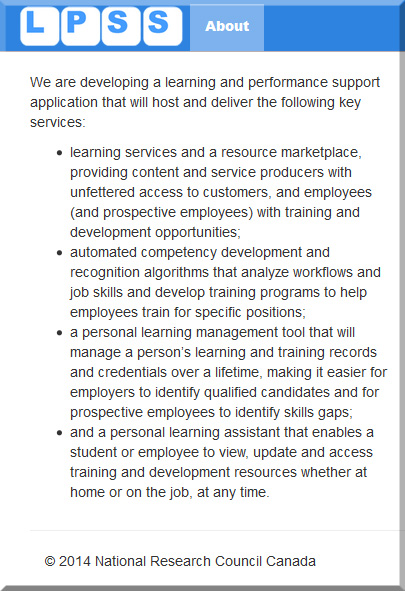
This year we are building on work we have undertaken over the last few years to develop and deploy the next generation of learning technologies, which we are calling ‘learning and performance support systems’. This is the outcome of an internal prototype called Plearn – ‘Personal Learning Environment and Research Network’ – and develops the idea of learning support based on personal and individual needs. This is not simply ‘personalised’ learning, it is a step beyond that. Rather than offering a customised version of some generic offering, we propose to enable each learner to develop their own custom programme from the ground up.

Our application, which launches in a limited beta September 30, provides individual learners with the tools and support necessary to access learning from any number of providers – not just educational institutions, but also their friends and mentors, their current and future employers, community and social programmes, and much more. Built on current and evolving learning technology standards, it provides access to MOOCs, to traditional learning management systems, to stand-alone courses and software, and even to the world of the Internet of things.

At the core of LPSS is a system we call the ‘personal learning record’ (PLR). A person’s LPSS system keeps track of everything related to learning – exercises followed, tests taken, games and simulations attempted, work read – and stores that all in a single location. In this way, unlike a learning management system, it combines data from the learning environment, the work environment and even the social environment, thus enabling adaptive learning software to close the loop between learning and performance. The PLR is also combined with a learner’s personal library and their personal e-portfolio, and links to credentials offered by and stored by learning institutions, employers, and social network activities, such as badges.


Also see:


LPSS-Sept2014


With a shout out to
Ana Cristina Pratas for her Scoop on this


Also see:

online-educa-berlin-2014


2014 Student and Faculty Technology Research Studies — from  educause.edu / ECAR

From the ECAR RESEARCH HUB
This hub contains the 2014 student and faculty studies from the EDUCAUSE Technology Research in the Academic Community research series. In 2014, ECAR partnered with 151 college/university sites yielding responses from 17,451 faculty respondents across 13 countries. ECAR also collaborated with 213 institutions to collect responses from more than 75,306 undergraduate students about their technology experiences.

Key Findings

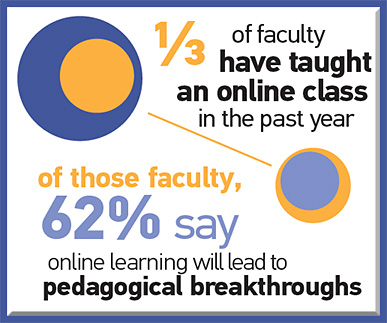
  • Faculty recognize that online learning opportunities can promote access to higher education but are more reserved in their expectations for online courses to improve outcomes.
  • Faculty interest in early-alert systems and intervention notifications is strong.
  • The majority of faculty are using basic features and functions of LMSs but recognize that these systems have much more potential to enhance teaching and learning.
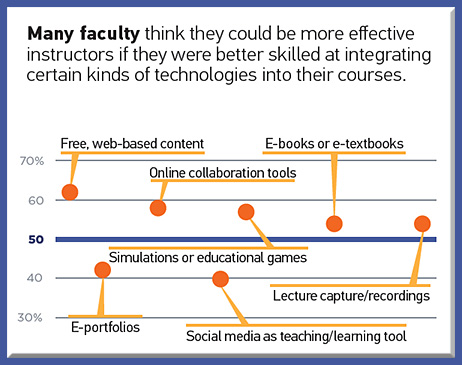
  • Faculty think they could be more effective instructors if they were better skilled at integrating various kinds of technology into their courses.
  • Faculty recognize that mobile devices have the potential to enhance learning.


Excerpts from infographic:


ThirdTaughtOnlineLastYr-EducauseRpt-8-2014


EducauseRpt-8-2014


Living social: How second screens are helping TV make fans — from nielsensocial.com

Excerpt (emphasis DSC):

Television viewing used to be an experience strictly between viewer and show, with water cooler talk coming the day after. The rise of social TV has changed that relationship, and according to a study by Nielsen, more and more Americans are quickly warming up to this new behavior. With tablets, smartphones and laptops at their side, TV viewers can follow their favorite shows, share content and connect with fellow fans before, during and after a program.


From DSC:
Instead of TV/entertainment-oriented programs, how about a service that offers cloud-based, scaffolded streams of content that are more educational/training-related in nature, complete with digital playlists of interactive content that can be offered up on the main display, while lifelong learners interact and discuss the content via their PLNs, cohorted groups of learners within their learning hubs, etc.?


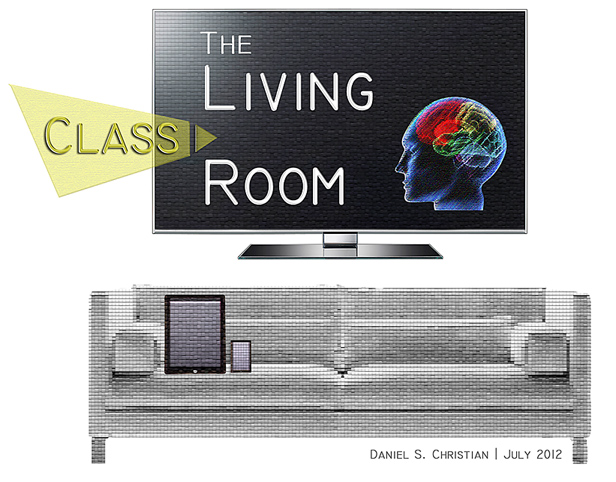
The Living [Class] Room -- by Daniel Christian -- July 2012 -- a second device used in conjunction with a Smart/Connected TV


Reflections on “C-Suite TV debuts, offers advice for the boardroom” [Dreier]

C-Suite TV debuts, offers advice for the boardroom — from streamingmedia.com by Troy Dreier
Business leaders now have an on-demand video network to call their own, thanks to one Bloomberg host’s online venture.

Excerpt:

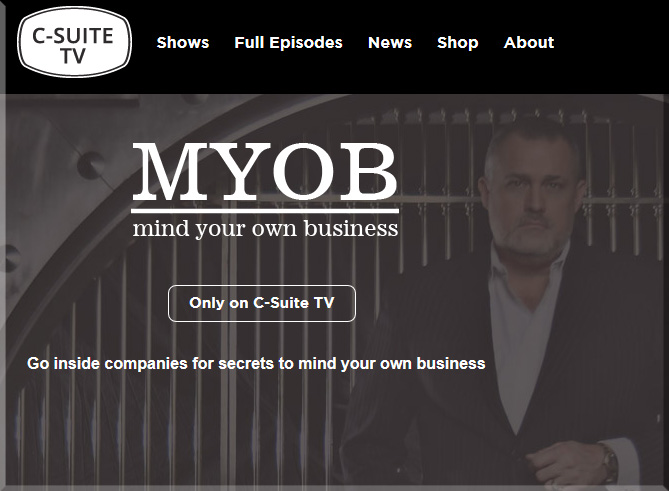
Bringing some business acumen to the world of online video, C-Suite TV is launching today. Created by Bloomberg TV host and author Jeffrey Hayzlett, the on-demand video network offers interviews with and shows about business execs. It promises inside information on business trends and the discussions taking place in the biggest boardrooms.


MYOB-July2014


The Future of TV is here for the C-Suite — from hayzlett.com by Jeffrey Hayzlett

Excerpt:

Rather than wait for networks or try and gain traction through the thousands of cat videos, we went out and built our own network.


See also:

  • Mind your own business
    From the About page:
    C-Suite TV is a web-based digital on-demand business channel featuring interviews and shows with business executives, thought leaders, authors and celebrities providing news and information for business leaders. C-Suite TV is your go-to resource to find out the inside track on trends and discussions taking place in businesses today. This online channel will be home to such shows as C-Suite with Jeffrey Hayzlett, MYOB – Mind Your Own Business and Bestseller TV with more shows to come.


From DSC:
The above items took me back to the concept of Learning from the Living [Class] Room.

Many of the following bullet points are already happening — but what I’m trying to influence/suggest is to bring all of them together in a powerful, global, 24 x 7 x 365, learning ecosystem:

  • When our “TVs” become more interactive…
  • When our mobile devices act as second screens and when second screen-based apps are numerous…
  • When discussion boards, forums, social media, assignments, assessments, and videoconferencing capabilities are embedded into our Smart/Connected TVs and are also available via our mobile devices…
  • When education is available 24 x 7 x 365…
  • When even the C-Suite taps into such platforms…
  • When education and entertainment are co-mingled…
  • When team-based educational content creation and delivery are mainstream…
  • When self-selecting Communities of Practice thrive online…
  • When Learning Hubs combine the best of both worlds (online and face-to-face)…
  • When Artificial Intelligence, powerful cognitive computing capabilities (i.e., IBM’s Watson), and robust reporting mechanisms are integrated into the backends…
  • When lifelong learners have their own cloud-based profiles…
  • When learners can use their “TVs” to tap into interactive, multimedia-based streams of content of their choice…
  • When recommendation engines are offered not just at Netflix but also at educationally-oriented sites…
  • When online tutoring and intelligent tutoring really take off…

…then I’d say we’ll have a powerful, engaging, responsive, global education platform.


The Living [Class] Room -- by Daniel Christian -- July 2012 -- a second device used in conjunction with a Smart/Connected TV


Social learning: Getting from “we push” to “you pull” — from hrtimesblog.com (Deloitte) by Jennifer Stempel and Amy A. Titus

Excerpts (emphasis DSC):

It’s tempting to think that social learning is about technology — after all, social media platforms and the Web 2.0 technologies that enable them are virtually inseparable. But as our recent overview (Social Learning: Empowering employees to learn from one another) points out, social learning is different: more about people than technology. Specifically, social learning is about people sharing knowledge to learn from and with one another. Technology might be involved, or it might not. A more important characteristic is that it provides learners the ability to pull the information they need, when and where they need it. That’s the ideal “teachable moment” and when learning can be most valuable and productive.

This “pull” way of learning is quite a departure from traditional learning and development (L&D) offerings that push learning out via classes, eLearning, or other types of training events. But it directly reflects the way people get information in general today, thanks to the Web and the proliferation of ways to access it from anywhere, anytime.

…

Rather than focusing solely on creating and pushing content to learners, L&D is having to figure out how to enable and encourage the free-flowing exchange of information among learners.


The new lifelong learners — from slate.com by Jeff Selingo

Excerpt (emphasis DSC):

But do the numbers of students in college really tell us that we’re on our way to living in a less educated country? Not at all. The official higher-education enrollment figures fail to capture a shift in how more of us are locating educational opportunities every day in short spurts, online or face to face, and for hundreds of dollars or at no cost.

…

At a time when the economy is changing at a rapid pace, education has truly become a lifelong pursuit—not just for your own edification, but by necessity. And in a hyper-connected, wireless, mobile world, learning happens everywhere, at anytime. We can’t expect to go to college at 18, graduate at 22, and then remain employed for the next 40-plus years with that foundation of knowledge alone.


DanielChristian-No-longer-running-sprints--but-marathons


Added later on:


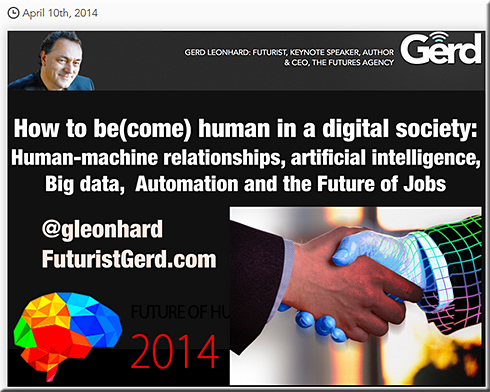
HowToBeHumanInADigitalSociety-April2014


 Excerpt:

‘Intelligent machines’ are increasingly interconnecting. The Internet of Things is imminent, with sensor networks and mobile devices connecting everyone and everything everywhere in the near future., Singularity’ – the moment of when machines become as capable as humans – is quickly becoming a buzzword that rivals Social Media. Artificial Intelligence (AI) is certain to play a role everywhere, and robots are dropping in price dramatically while gaining quickly in functionality and skills. Exponential technological progress is evident everywhere – but how will we – as linear beings – cope with this increasing empowerment of software and machines, the tremendous gain in the flow of real-time information, and the far-reaching implications that these developments will have? How will we keep up with thousands of real-time datafeeds, the ever-increasing volume, variety and depth of input, the tsunami of incoming communications and the rapidly improving smartness – and increasingly deep intelligence – of software, devices and machines? Will humans need to be ‘augmented’, soon, in order to keep up, and if so, where will this take us? What will happen to our ethics in a world of ultra-smart intelligent agents, artificial intelligence and the coming ‘trans-humanism’?


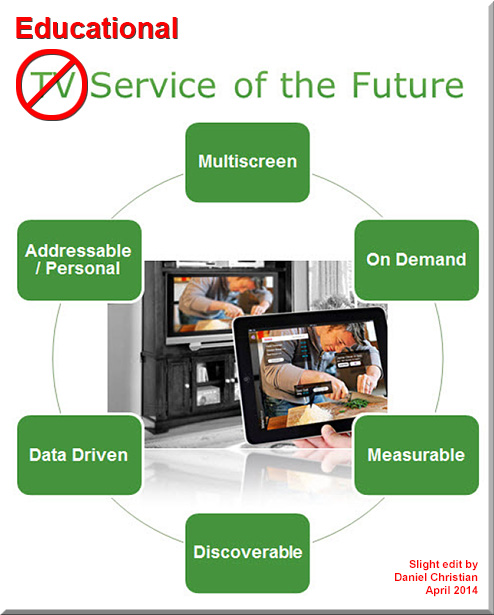
What educationally-related affordances might we enjoy from these TV-related developments?

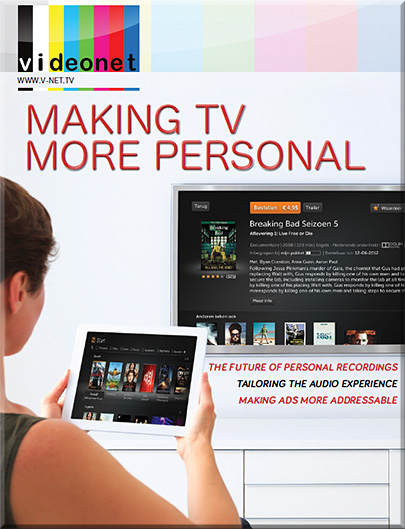
MakingTVMorePersonal-V-NetTV-April2014


EducationServiceOfTheFutureApril2014


CONTENTS

  • Content discovery and synchronization
    With access to rich data about their subscribers and what they do, operators can improve recommendation, encourage social TV and exploit second screen synchronization.
  • Recordings get more personal
    One of the next big steps in multiscreen TV is giving people access to their personal recordings on every screen. This is the moment for nPVR to finally make its entrance.
  • Evolving the User Experience
    As service providers go beyond household level and address individuals, the role of log-ins or context will become important. There is a place for social TV and big data.
  • The role of audio in personalization
    Audio has a huge impact on how much we enjoy video services. Now it can help to personalize them. ‘Allegiance’ based audio choices are one possibility.
  • Making advertising more targeted
    Addressable advertising is in its infancy but has a bright future, helping to fund the growth of on-demand and multiscreen viewing.


Some excerpts from this report:

Good content should be matched by good content discovery , including recommendations. The current state-of -the-art is defined by Netflix.

…

Today’s TV experience is worlds apart from the one we were talking about even five years ago. We’ve witnessed exponential growth in services such as HD and have moved from a model in which one screen is watched by many, to many screens (and devices) being available to the individual viewer, what is today called TV Everywhere.  Having multiscreen access to content is driving the demand for a more personalised experience, in which the viewer can expect to see what they want, where, and when. While video on-demand (VOD) has been a great method for delivering compelling content to viewers, it is not always a truly seamless TV-like experience, and traditionally has been limited to the living room. The growing demand for the personalised experience is driving seismic change within the TV industry, and we’ve seen great strides made already, with time-shifted TV and nPVR as just two examples of how we in the industry can deliver content in the ways viewers want to watch. The next step is to move towards more advanced content discovery, effectively creating a personalised channel or playlist for the individual user.

…

As the tools become available to deliver personalized experiences to consumers, content owners can better create experiences that leverage their content. For example, for sports with multiple points of action, like motor racing, multiple camera angles and audio feeds will allow fans to follow the action that is relevant to their favourite racing team. And for movies, access to additional elements such as director’s commentaries, which have been available on Blu-ray discs for some time, can be made available over broadcast networks.


From DSC:
Some words and phrases that come to my mind:

  • Personalization.
  • Data driven.
  • Content discovery and recommendation engines (which could easily relate to educational playlists)
  • Training on demand
  • Learning agents
  • Web-based learner profiles
  • Learning hubs
  • What MOOCs morph into
  • More choice. More control.
  • Virtual tutoring
  • Interactivity and participation
  • Learning preferences
  • Lifelong learning
  • Reinventing oneself
  • Streams of content
  • Learning from The Living [Class] Room


The Living [Class] Room -- by Daniel Christian -- July 2012 -- a second device used in conjunction with a Smart/Connected TV


streams-of-content-blue-overlay


DIY and IDEO Inspire the Next Generation of Innovators — from IDEO.com

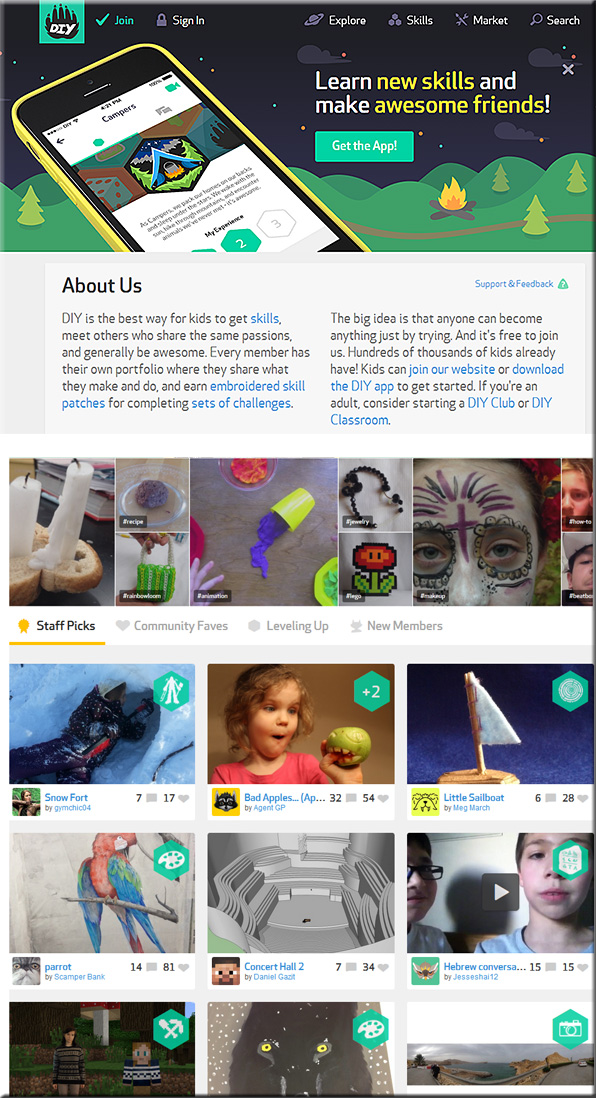
The ultimate summer camp. The perfect snack for a picky eater? Why are we designing things for our kids when only they can truly know what they want? DIY and IDEO ask kids to tackle these challenges and more, to develop their inner innovator. Bonus: they get a Scout-style patch for their efforts.

DIY is a place for kids to go online to learn new skills and meet others who share their interests. Kids take photos or videos of the stuff they make, assemble personal portfolios on the site, and ultimately build their creative confidence.

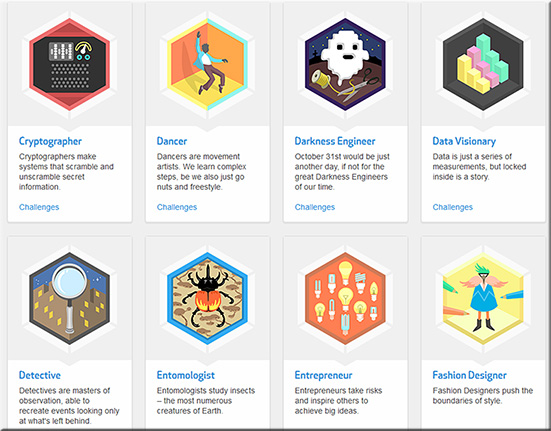
IDEO is proud to have collaborated with DIY to launch the “Innovator” skill: 12 challenges that help kids understand people, identify problems, and create novel solutions. We hope these challenges help inspire a new generation of design thinkers. Posted: March 21, 2014


DIY-March2014


DIY2-March2014


From DSC:
A brief review of this site turns up several interesting things:

  1. Students can explore areas, disciplines, topics that they are passionate about — or they might discover some things that turn into a passion for them;  this could be hugely helpful as students see “what’s out there” for them to head towards (career-wise).
  2. Students can submit their own creations
  3. The format of the site is very visual, enticing…drawing one in to see what’s behind each area and to see what other students have contributed
  4. It employs social learning
  5. It employs badging — students can earn badges on their way to mastering a topic
  6. Students can build their own portfolios and show those portfolios to the world!

Some recent postings on their blog:


24h Jerusalem: A new transmedia project by ARTE and BR — from vast-media.com

Excerpt:

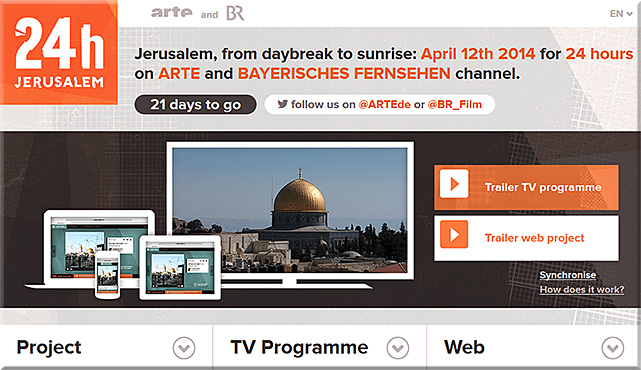
On the web, 24hjerusalem.tv will enrich the users’ TV experience before and during the broadcast with synchronized extra content such as texts, interviews, Vine videos and more. Users will be able to explore information, share content and discuss about the program. The platform can also be accessed on mobile devices.


24h Jerusalem: a new transmedia project by ARTE and BR


Also see:


24hJerusalem-March2014


Also see:


A series re: The Learning Flow — by Jane Hart

(1) Beyond the Course: The Learning Flow – a new framework for the social learning era

(2) The Learning Flow and the User Experience

(3) Three Types of Learning Flow 

(4) The role of the Guide in a Learning Flow

 Excerpt:

  • S/he needs to be a knowledgeable expert in the relevant domain.
  • S/he needs to be a curator – but more than a curator.
  • S/he needs to able to pick out key resources and materials from the mass of material shared online. In other words s/he needs to be able to extract the “signal from the noise”.
  • S/he needs to be able to “join the dots” between resources – and show how one relates to the other.
  • S/he needs to be able to contextualize resources and make them relevant to the participants – drawing out the salient point(s) of the resources s/he shares.
  • S/he needs to be able to model good knowledge sharing skills.
  • S/he needs to “think small” – and create short manageable micro-learning activities.
  • S/he needs to “think social”- and how she can inspire and encourage short social learning experiences.
  • S/he needs to “think flexible”  – and how she can support autonomy and choice in users’ participation.


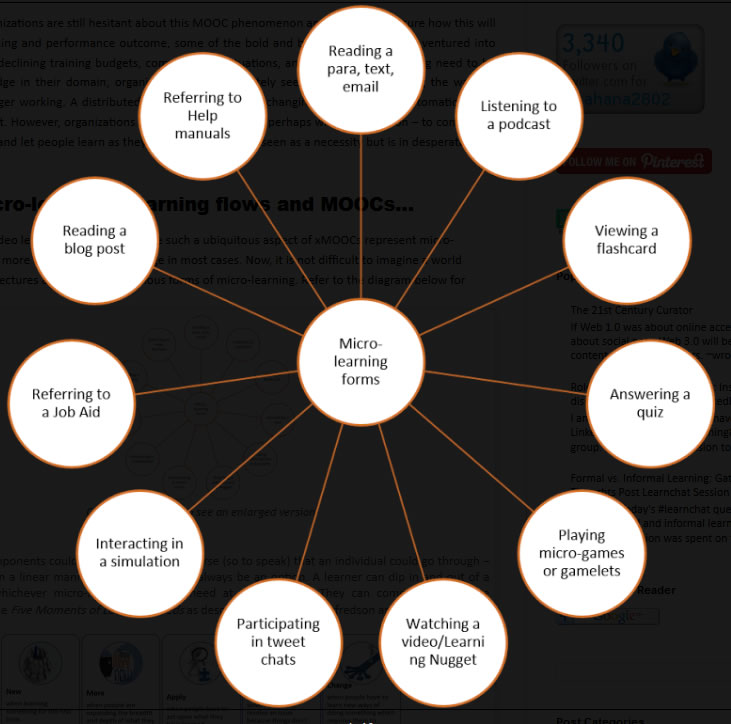
From Micro-Learning to Corporate MOOCs — from idreflections.blogspot.com by Sahana Chattopadhyay

Excerpt:

I see MOOC as a dissemination model that offer a unique opportunity to integrate both—micro-learning and learning flows. It is an approach that – if done right – can integrate all aspects of the Pervasive Learning model – Formal, Informal and Social – popularized by Dan Pontefract in the book, Flat Army. I will discuss this in a later post. In this post, I am going to focus my attention on how micro-learning and learning flows can be an integral part of a MOOC and how this may benefit the corporate world.


Sahana Chattopadhyay-LearningFlowsMarch2014


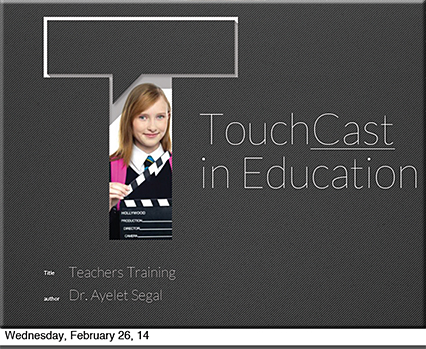
Bringing the Wonder of the Web to Video (emphasis DSC)
Our mission is to usher in a new age of expression.

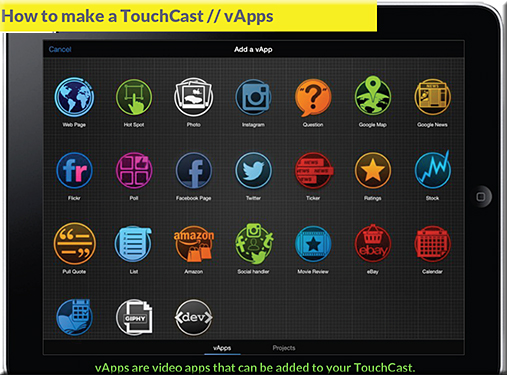
Anyone can easily create professional-quality videos combined with all the interactivity you expect to find inside a browser. We call these TouchCasts, a new medium that looks like video, but feels like the web.

— Per TouchCast.com


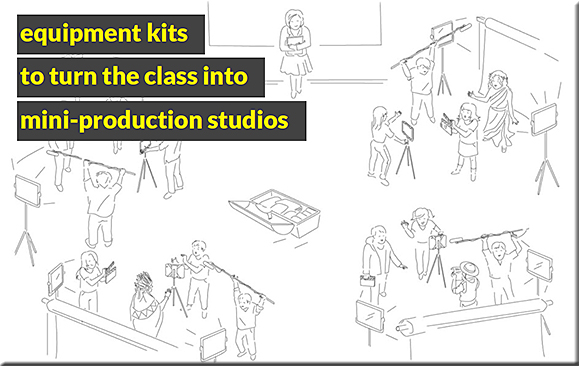
TouchCast in Education


TouchCast-in-Education1


TouchCast-in-Education2


TouchCast-in-Education3


Also see:


Beyond the Course: The Learning Flow – a new framework for the social learning era — from janeknight.typepad.com by Jane Hart

Excerpts:

But in the age of Facebook and Twitter, and now Enterprise Social Networks (ESNs) like Yammer and Jive – where at the heart lies an activity stream that is used for a continuous stream of knowledge exchange, there is a place for a new learning framework –  one that lies between the formal, instructionally designed course and the unstructured knowledge sharing of teams, groups and communities. We call this a Learning Flow.

A Learning Flow is a continuous steady stream of social micro-learning activities – accessible from the web and mobile devices

Let’s look at each of the elements of that sentence, that describe a Learning Flow

  • continuous – ongoing (ie no end date)
  • steady – daily (or probably more likely, weekdaily)
  • micro-learning – short – ie taking no longer than 15-20 minutes to undertake
  • activities – that involve reading (watching or listening to) something and doing something
  • social – that invite and encourage active participation and contribution
  • stream  –  that are organised and structured in the Flow in weekly themes
  • accessible from web and mobile devices – to ensure that  learning can take place anywhere and at anytime


From DSC:
Jane’s posting gets at what I’ve been trying to get at with the graphic below; and that is, we need to be consistently dipping our feet into streams of relevant content (i.e. relevant to our own learning ecosystems and what each of us needs to know to get and stay marketable).


What's the best way to deal with ever-changing streams of content? When information has shrinking half-lives?


Where would I be without Twitter? — from dontwasteyourtime.co.uk by David Hopkins

Excerpt:

For me [David] Twitter has …

  • been somewhere I could share my thoughts and reflections, from this blog, to a wider audience.
  • resulted in invitations to present at UK and European conferences.
  • opened my eyes to critical thinking and reflection through examples and the work that other people share through Twitter.
  • enabled real time help and support when tech failed me (or I could help someone else who had had their tech fail them).
  • made some real and valuable friends that started off as 140 character online conversations and has matured and grown through face-to-face contact at events and conferences.
  • helped me focus and concentrate on what is professionally important – here I’m thinking about implication and application of an ‘appropriate’ technological implementation, making sure it’s something that will add value or increase efficiency rather than the “ooh, it’s shiny and new” approach.

Also see David’s:


Tweetchat for Org-learning — from sundertrg.tumblr.com

Excerpt:

Tweet-chats are fairly popular in the twitter world and if you’re an active Twitter user, you may have heard of or participated in a tweet chat event. These are live discussions that take place on Twitter about a pre-determined theme. The idea is to get perspectives from a cross section of audience.


22 Effective Ways To Use Twitter In The Classroom — from edudemic.com by Jeff Dunn

twitter bloom's taxonomy

Classroom tech: UD faculty use Twitter to enhance classroom experience — from udel.edu

Excerpts:

  • “It’s a good way to source material for classroom discussions”
  • …search for, follow, or post messages about a specific topic or interest.
  • …creating news feeds with links to news articles.
  • …create a laundry list of articles for them.”
  • Pictures can also be tweeted when encountering relevant marketing situations while shopping.
  • The articles and topics raised in Twitter then become part of their in-class discussions.


Addendum on 3/4/14:


Addendums on 3/5/14:


TVs are becoming the next app battleground — from by Emily Adler

Excerpt:

The app store phenomenon, centered on smartphones and tablets, has been the biggest story in software for the past five years.

Its next logical destination: the living room, via smart TVs and set-top boxes connected to the Internet.

…

  • The smart TV app revolution is inevitable: People spend four hours in front of their TVs in the U.S., and 63% of all global ad spending goes to TVs. The old guard, represented by cable and entertainment conglomerates, will not be able to fend off improvements like those that apps are bringing to mobile phones.
    .
  • The smart TV revolution will not just be led by new TVs with built-in Internet connections, it will also result from consumer adoption of less expensive game consoles or set-top boxes like Roku and Apple TV, which transform traditional TVs into smart TVs with access to app stores. At least 20% of U.S. consumers already have their TVs connected in one of these ways.


From DSC:

  1. Keep an eye on the convergence of the telephone, the television, and the computer.
    .
  2. Start thinking of ways that you could provide learning/educationally-based experiences with second screen apps. What would that experience look and act like?
    .
  3. If such “channels” come to fruition — and happen to coincide with MOOCs and advances in cognitive computing (such as IBM’s Watson) — the word disruption comes to mind.
    .
  4. The trick, then, will be to offer streams of content that are relevant, and up-to-date.
    .
  5. Such a platform could be used in learning hubs throughout the world, as well as in hybrid/blended classrooms — while also addressing lifelong learners from their living rooms.
    .
  6. Such a platform could take Communities of Practice to an entirely new level.


The Living [Class] Room -- by Daniel Christian -- July 2012 -- a second device used in conjunction with a Smart/Connected TV


streams-of-content-blue-overlay


Addendum/also see:


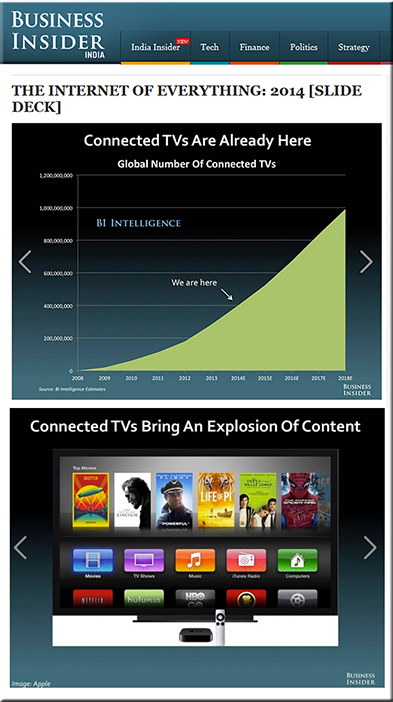
IoE-SmartTVs-Feb2014


© 2025 | Daniel Christian