In Silicon Valley, designers emerge as rock stars — from Reuters.com by Gerry Shih

Excerpt:

The new breed of “user experience” designers – part sketch artist, part programmer, with a dash of behavioral scientist thrown in – are some of the most sought-after employees in technology. Entry-level interactive designers at startups are commanding salaries easily topping $80,000, almost twice the median pay for primarily print designers of about $45,000, according to a recent survey by the American Institute of Graphic Arts.

From DSC:
From my experience with Internet-related work and careers, most people are either gifted in the front end of things (interface design, graphic design, web design, etc.) or in the back end of things (programming, databases, scripting, e-commerce, security, etc.). I have seen individuals who can do both…but it’s rare that someone is deeply versed in both sides of the coin.

What are we doing in higher ed to foster more cross-disciplinary skills/assignments/projects/teams like this?
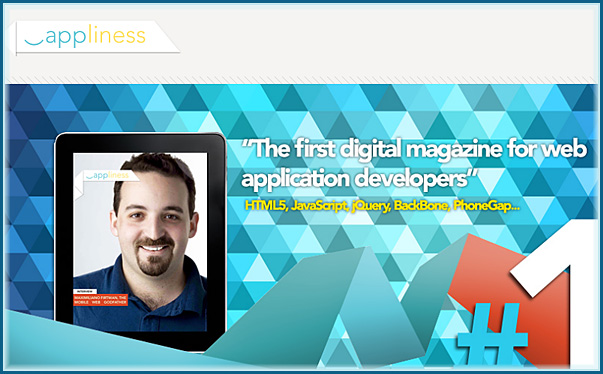
 

appliness – the first digital magazine for web application developers

.

Addendum on 4/13/12:

  • Java leads programming language popularity – measured by book sales — from readwriteweb.com by Joe Brockmeier
    Excerpt:
    How do you calculate the popularity of various programming languages? The TIOBE folks try to rank programming language popularity by searching the Web. The RedMonk team pulls data from GitHub and Stack Overflow. But O’Reilly has a unique method: It measures book sales as an indicator of technology trends. By that measure, at least, Java and JavaScript come out on top. Mike Hendrickson, O’Reilly’s vice president of content strategy, has been taking a deep dive into the state of the computer book market in a series of posts beginning on March 29th. The most recent is a look specifically at programming language popularity related to sales.
Tagged with: • • •  

Code wars: PHP vs Ruby vs Python – Who reigns supreme? [Infographic from Udemy]
programming languages, infographic
Source: Udemy Blog

Tagged with: •  

KidsRuby is for underage programmers — from etechmag.com by Sara Williams 

.

Excerpt:

Computer programming is very tough no doubt but it is very interesting when you see your work is appreciated on a big platform. If you’re a kid by yourself or have kids who want to be programmers but wondering from where to start this early career then Ruby is your answer.

Tagged with: • •  

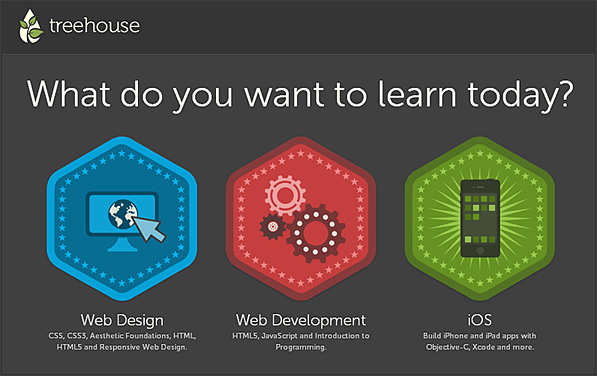
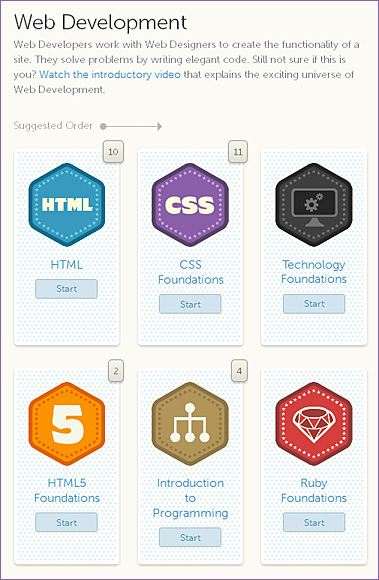
treehouse.com -- learn web design, web development, and iOS development

.


.


.


Learn the Basics of Coding — from  lifehacker.com

Greenfoot.org

Greenfoot teaches object orientation with Java. Create ‘actors’ which live in ‘worlds’ to build games, simulations, and other graphical programs.  Greenfoot is visual and interactive. Visualisation and interaction tools are built into the environment. The actors are programmed in standard textual Java code, providing a combination of programming experience in a traditional text-based language with visual execution.

Scott Hanselman’s 2011 Ultimate Developer and Power Users Tool List for Windows

Juixe.com/techknow

OReilly.com’s blogs

Best of the Web Blogs re: Programming


Tagged with:  

Marc Andreessen: Predictions for 2012 (and beyond)  — from cnet.com by Paul Sloan

Excerpt:

Software has chewed up music and publishing. It’s eaten away at Madison Avenue. It’s swallowed up retail outlets like Tower Records. The list goes on.

No area is safe–and that’s why Andreessen sees so much opportunity.

Fueling his optimism: ubiquitous broadband, cloud computing, and, above all, the smartphone revolution. In the 1990s, the Internet led to crazy predictions that simply weren’t yet possible. Now they are.

5 things to know about the future of Computer Science — from emmaus.patch.com by Peggy Heminitz

  1. Computer science is key to solving the world’s most crucial problems — environmental sustainability, poverty, hunger and homeland security.
  2. The U.S. Department of Labor predicts that computing-based jobs will be among the fastest-growing and highest-paying over the next decade.
  3. By the year 2018, there will be 1.4 million computer specialist jobs available, but only enough college graduates to fill a fraction of them.
  4. Kindergarten through grade 12 education has fallen behind in preparing students with the fundamental computer science knowledge they need for 21st century careers.
  5. Computer science needs more people and more diversity.

Sixth-grade developer teaches students how to make apps –– from good.is by Liz Dwyer

Excerpt:

Why isn’t an app club standard fare at schools like French or drama clubs? It would allow students to learn both problem-solving skills and programming basics in a practical, fun way. Let’s hope Suarez’s app club idea spreads so that more kids can make the transition from app user to app developer.

IBM sends Watson supercomputer to business school – from wired.com by Eric Smalley


IBM's Watson takes on Harvard and MIT students.

Excerpt:

There have been four waves of technological innovation that disrupted the labor market over the last two and a half centuries starting with the Industrial Revolution, and we’re beginning the fifth, said IBM Chief Economist Martin Fleming. “We’re now beginning to enter into, in my view, a period where the economy is beginning to open up opportunities for the deployment of very significant innovation … We’re going to see many new industries get created, radical new technologies being deployed, but being deployed in the context of new business models,” he said.

“This will have significant implications from an income and income distribution point of view.”

The MIT economists generally agree that we’re at the beginning of a technology-driven shift in the economy and ultimately the labor market will adjust. But no one had any good news for workers in the middle of economy during the transition. “The future is already here in many ways, in terms of what technology can do,” Brynjolfsson said. “But right now the benefits are not very evenly distributed.”

Lessons from a review of JavaScript code — from smashingmagazine.com by Addy Osmani

Excerpt:

Today we’ll look at where to get your code reviewed, how to structure your requests, and what reviewers look for. I was recently asked to review some code for a new JavaScript application, and thought I’d like to share some of my feedback, because it covers some JavaScript fundamentals that are always useful to bear in mind.

Tagged with: •  

SingularitySummit.com — conference website

Excerpt:

The Singularity Summit is the premier dialog on the Singularity. The first Singularity Summit was held at Stanford in 2006 to further understanding and discussion about the Singularity concept and the future of human technological progress. It was founded as a venue for leading thinkers to explore the subject, whether scientist, enthusiast, or skeptic. The goal of the Summit is to improve people’s thinking about the future and increasing public awareness of radical technologies under development today and of the transformative implications of such technologies understood as part of a larger process.

Singularity Summit 2011 — from the nextbigfuture.com

Singularity Summit 2011 videos — from the nextbigfuture.com

What you missed at Singularity Summit 2011 — from technoverseblog.com

Excerpt:

  • David Brin (scientist and sci-fi novelist)
  • Ray Kurzweil (inventor, restless genius, and author of The Singularity is Near)
  • Stephen Wolfram (physicist, developer of Mathematica and Wolfram Alpha, genius)
  • Dimitry Itskov (founder of Russia 2045)
  • Michael Shermer (contrarian and founder of Skeptic magazine)
  • Riley “Red Balloons” Crane (post doctoral fellow at MIT Media Lab and winner of DARPA’s balloon challenge)
  • Sharon Bertsch McGrayne (writer, author of “The Theory That Wound not Die”)
  • Tyler Cowen (economist, George Mason University)
  • Jaan Tallinn (founder of Skype)
  • Ken Jennings (Jeopardy champion and loser to Watson)
  • Dan Cerutti (IBM executive charged with marketing Watson)


Addendum on 10/20/11:

Unlikely state is tops in tech job hiring — from TechNewsDaily by Samantha Murphy

Tech Expert

Excerpt:

A report by the TechAmerica Foundation revealed that Michigan added the most technology jobs last year, bringing in 2,700 high-tech jobs between 2009 and 2010, a nearly 2 percent increase from the year before. Michigan now boasts 155,100 technology employees.

Some items on this:

© 2025 | Daniel Christian