


How apps are changing the way surgeons operate and communicate with patients — from betakit.com by Abigail Keeso
On 11/28/2012,
in 21st century, cloud-based computing / apps / other cloud-related, computer science, health, innovation, nursing, programming,
by Daniel Christian
HTML5DevConf – October 2012 — Recordings
Excerpt:
What is the HTML5 Developer Conference?
The HTML5 Developer Conference has become the largest JavaScript and HTML5 developers conference in the world! With a number of varying and expanding approaches, tools, best practices, and advice to be had, there’s a lot of new information to wrap your head around.
We provide tracks on Javascript, HTML5, Apps & Games, client, server, mobile, and more. See leading edge sessions given by renowned speakers…
On 11/21/2012,
in A/V -- audio/visual, art, Asia, computer science, creativity, human-computer interaction (HCI), innovation, mathematics, music, programming,
by Daniel Christian
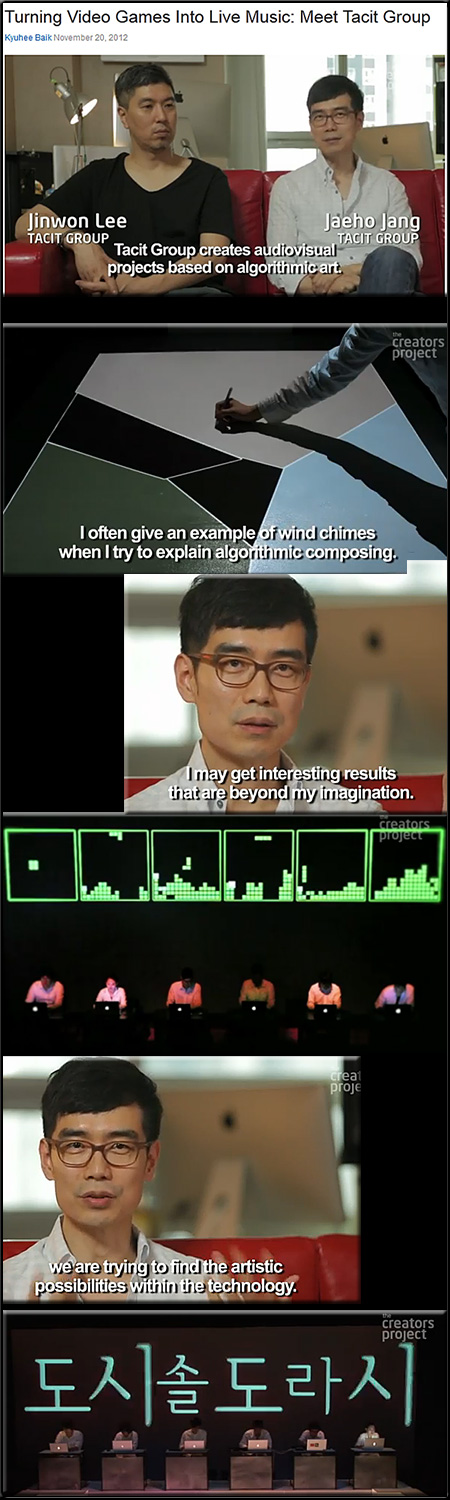
From DSC:
Some serious cross-disciplinary work/fun/experimentation going on here!
On 11/13/2012,
in cloud-based computing / apps / other cloud-related, computer science, mobile technologies, programming,
by Daniel Christian
On 11/08/2012,
in 21st century, business, change, computer science, corporate / business world, corporate universities / corporate training, Daniel S. Christian, economics, emerging technologies, engineering, future of higher education, game-changing environment, global, pace of change, programming, reinvent, robotics,
by Daniel Christian
.
.
.
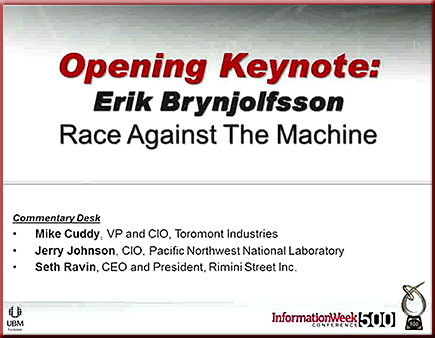
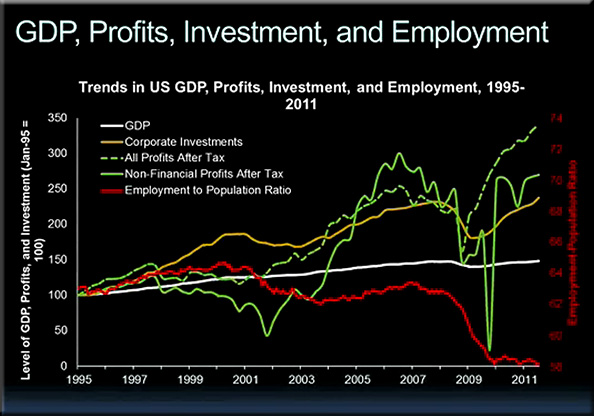
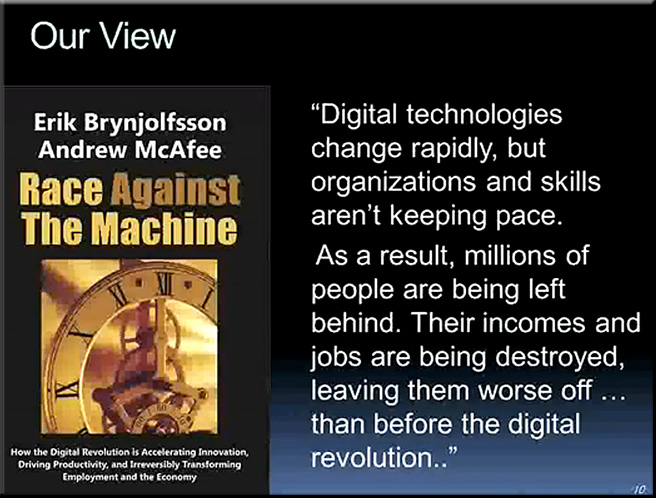
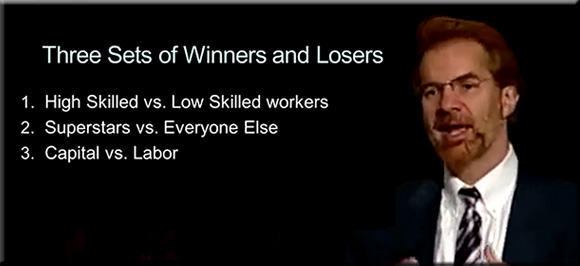
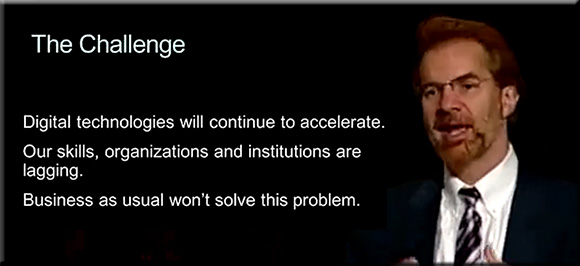
Digital Revolution’s Winners And Losers — from Information Week by John Foley
Workers with in-demand digital skills benefit most as computers increasingly take over
everyday tasks. In this InformationWeek 500 video, MIT’s Erik Brynjolfsson discusses
how this trend could affect your enterprise.
.
.
From DSC:
I agree with Erik that a large swath of people are being left behind, mainly because of technological changes and the pace of those changes. Again I ask, can you hear the engines roar? How can we re-train folks to take advantage of the 3+million open jobs out there? How can we reinvent ourselves as quickly as possible?
I agree with Erik that a large swath of people are being left behind, mainly because of technological changes and the pace of those changes. Again I ask, can you hear the engines roar? How can we re-train folks to take advantage of the 3+million open jobs out there? How can we reinvent ourselves as quickly as possible?
.

.
Addendums:
- Andrew McAfee: Are droids taking our jobs?
Robots and algorithms are getting good at jobs like building cars, writing articles, translating — jobs that once required a human. So what will we humans do for work? Andrew McAfee walks through recent labor data to say: We ain’t seen nothing yet. But then he steps back to look at big history, and comes up with a surprising and even thrilling view of what comes next. - America’s jobs gap: 9 million — from cnn.com by Tami Luhby
On 11/06/2012,
in Artificial Intelligence/Agents/LLMs/and Related, business, change, changing business models, cloud-based computing / apps / other cloud-related, computer science, dangers of the status quo, Daniel S. Christian, digital learning, disruption, education technology, educational games / serious games, emerging technologies, future, future of higher education, game-changing environment, human-computer interaction (HCI), innovation, Learning from the Living [Class] Room, multimedia, online learning, programming, reinvent, staying relevant, technologies for your home, trends, TVs, vendors, vision/possibilities,
by Daniel Christian
Yahoo! and Samsung form multi-year partnership to deliver Interactive TV — from dailyfinance.com by Business Wirevia The Motley Fool
Partnership to provide real-time, enhanced entertainment and advertising to homes across the United States
Excerpt:
SUNNYVALE, Calif. & RIDGEFIELD PARK, N.J.–(BUSINESS WIRE)– Yahoo! (NAS: YHOO) and Samsung today announced an expanded multi-year partnership to integrate Yahoo!’s Broadcast Interactivity platform into Samsung 2012 Smart TVs. Yahoo! Broadcast Interactivity, powered by its automatic content recognition (ACR) technology, SoundPrintTM, will be deployed in Samsung’s SyncPlus platform, enabling new opportunities for intelligent content discovery, advertising and engagement, bringing an unprecedented level of interactivity in the living room.
.
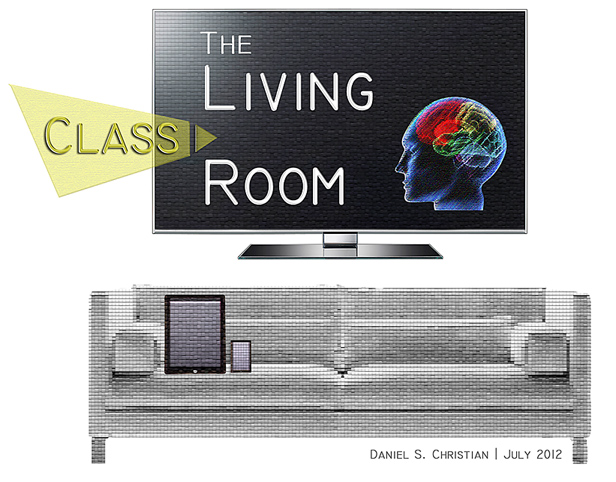
From DSC:
Another steps towards:
.
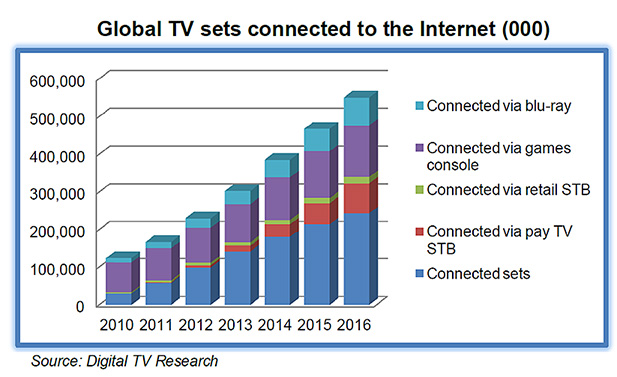
A fifth of TV sets connected to the Internet by 2016 — from digitaltvresearch.com
.
.
Welcome to Star Scholar U., where a personal brand is the credential — from The Chronicle by By Jeffrey R. Young
.
Keri Rasmussen for The Chronicle
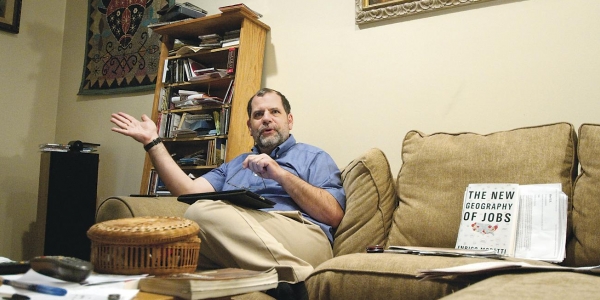
Tyler Cowen, an economics professor at George Mason U., helped build an online-education site, Marginal Revolution U, based on a blog he runs with Alex Tabarrok. “In part we did it just to show it could be done—that you can have a Web site which looks nice and works,” Mr. Cowen said.
Excerpt:
A new kind of university has begun to emerge: Call it Star Scholar U.
Professors with large followings and technical prowess are breaking off to start their own online institutions, delivering courses with little or no backing from traditional campuses.
Founding a university may sound dramatic, but in an era of easy-to-use online tools it can be done as a side project—akin to blogging or writing a textbook. Soon there could be hundreds of Star Scholar U’s.
.
5 perspectives on the future of the human interface — from techcrunch.com by Alex Williams
Excerpt:
The next generation of apps will require developers to think more of the human as the user interface. It will become more about the need to know how an app works while a person stands up or with their arms in the air more so than if they’re sitting down and pressing keys with their fingers.
Also see:

.
Rethinking carrots: A new method for measuring what players find most rewarding and motivating about your game — from gamasutra.com by Scott Rigby, Richard Ryan
Excerpt:
The Player Experience of Need Satisfaction model (PENS) outlines three basic psychological needs, those of competence, autonomy, and relatedness, that we have demonstrated lie at the heart of the player’s fun, enjoyment, and valuing of games. By collecting players’ reports of how these needs are being satisfied, the PENS model can strongly and significantly predict positive experiential and commercial outcomes, in many cases much more strongly than more traditional measures of fun and enjoyment. And despite the simplicity of the model conceptually, it shows promise as a “unified theory” of the player experience by demonstrating predictive value regardless of genre, platform, or even the individual preferences of players.
.
Pearson project will let professors mix free and paid content in e-textbooks — from The Chronicle by Alisha Azevedo
Excerpt:
Pearson, a major textbook publisher, continued its push into digital education on Monday by introducing a service that allows instructors to create e-textbooks using open-access content and Pearson material.
.
A river of data — from educationnext.org by Bror Saxberg
Making the learning experience more effective
.
How should teaching change in the age of Siri? –– from MindShift
Excerpt:
Short of banning smartphones (a short-term solution, at best), the evolution of artificial intelligence services like Siri means that there will be a shift from a focus on finding the answer as the endpoint to a greater focus on analysis. You have the answer, but so what? What does that answer mean in a real-life situation?
.
Degreed launches crowdfunding campaign for reimagined ‘digital diploma’ — from gigaom.com by Ki Mae Heussner
San Francisco startup Degreed is challenging the traditional college diploma with an online service that tracks and scores educational achievements from established institutions as well as new online learning platforms. Ahead of a public launch in 2013, Degreed this week began a crowd funding campaign.
.
A capitalist’s dilemma, whoever wins on Tuesday — from the New York Times by Clayton Christensen
Excerpt (emphasis DSC):
In a way, this mirrors the microeconomic paradox explored in my book “The Innovator’s Dilemma,” which shows how successful companies can fail by making the “right” decisions in the wrong situations. America today is in a macroeconomic paradox that we might call the capitalist’s dilemma. Executives, investors and analysts are doing what is right, from their perspective and according to what they’ve been taught. Those doctrines were appropriate to the circumstances when first articulated — when capital[From DSC: or from an educational perspective, we could use the word information] was scarce.
But we’ve never taught our apprentices that when capital is abundant and certain new skills are scarce, the same rules are the wrong rules. Continuing to measure the efficiency of capital prevents investment in empowering innovations that would create the new growth we need because it would drive down their RONA, ROCE and I.R.R.
.
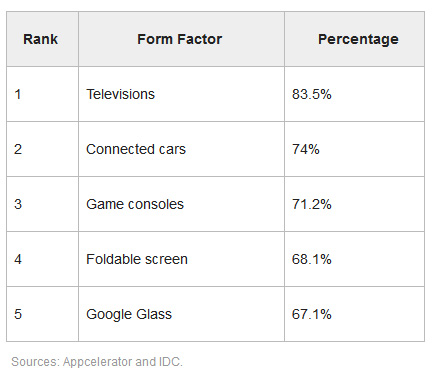
Gartner sees 821M unit smart device mkt in 2012; 1.2B 2013 — from forbes.com by Eric Savitz
.
On 10/16/2012,
in career development, computer science, corporate / business world, disruption, marketing/social marketing, programming,
by Daniel Christian
Software is eating marketing — from Inc.com by Jeff Bussgang
One VC argues that software is disrupting several industries in the 21st century, including marketing.
One VC argues that software is disrupting several industries in the 21st century, including marketing.
.

.
Excerpt:
Within the $1 trillion marketing industry, the impact of software eating marketing has now reached the board room. With the explosion of digital marketing, it is clear that technology is radically transforming the marketing function and the role of the marketing professional.
On 09/27/2012,
in computer science, emerging technologies, human-computer interaction (HCI), innovation, mobile learning, mobile technologies, programming, TVs,
by Daniel Christian
On 07/19/2012,
in design, entrepreneurship, programming, web design and production,
by Daniel Christian
Andreessen Horowitz’s $100 million bet on developers — from cnn.money.com
Excerpt:
In simple terms, GitHub is an online repository for developers to store and collaborate on code. It’s been called a “Facebook for geeks.” Managers can also log in and track changes that are made along the software development process. But while GitHub has implications for non-programming needs, it’s mainly a tool for developers. In other words, if you can’t tell code from gibberish it’s probably not on your radar.
GitHub pours energies into enterprise – raises $100 million from power VC Andreessen Horowitz — from techcrunch.com by Alex Williams
Excerpt:
Andreessen Horowitz is investing an eye-popping $100 million into GitHub, the ever popular repository for developers to post code and collaborate.
It’s GitHub’s first infusion of venture capital.Co- founder Tom Preston-Warner said the round will go to developing GitHub Enterprise, a server side version of GitHub.com. Reports state GitHub has been valued at $750 million.
What language should you build your app with? — from Mashable.com by Grace Handy
Excerpt:
Mobile developers across the globe have developed and released more than 650,000 iPhone apps, 400,000 iPad apps, and 600,000 apps for Android. Are you thinking about building an app? A key step in the process is choosing the right programming language, which depends on how scrappy you’re willing to be.
Make sure you’ve researched cross-platform app design and reviewed the common pitfalls of developing your app. Decide on your audience and what platform you’ll use, and then weigh your options to select a language.
Playcraft Labs launches HTML5 dev tools, aiming at games and beyond — from techcrunch.com by Billy Gallagher

.
Hey developers: This real-time coding environment could take social code to the next level — from thenextweb.com by Harrison Weber
Excerpt:
Created by the folks at Chaos Collective, “Space” is an internal project that takes social coding to the next level with a real-time collaborative editor baked right into your browser. Right now, we’ve only seen the tool in use and haven’t played with it ourselves, but boy does it look impressive.
Here’s the interesting part: since Space is an internal project, the creators are trying to decide how to share it with the public. They company is asking if they should open source the entire project, or if they should build, maintain and support it as a full-on service.
Successful businesses will be those that optimize the mix of humans, robots, and algorithms — from nextbigfuture.com by Brian Wang
Addendum on 7/13/12 — see also:
- MobileAdvantage from infragistics.com
“Deliver the most amazing user experiences across mobile devices with the new MobileAdvantage bundle. With toolsets for HTML5, iOS, and Windows Phone, you get every UI control you need to create the most performant, vibrant, and consistent applications for decision makers on the move.”
On 06/26/2012,
in A/V -- audio/visual, analytics, Apple, cloud-based computing / apps / other cloud-related, computer science, convergence, emerging technologies, Google, mobile technologies, programming, social learning / networks, TVs,
by Daniel Christian

Introducing App Cloud Core – Build and Deploy Mobile Apps for Free
.

.
Also see:

Also see:
- Brightcove PLAY is a global gathering of Brightcove customers, partners and industry leaders at the forefront of the digital media revolution. On June 25-27, hundreds of media companies, marketers and developers from around the world will convene in Boston for three action-packed days of hands-on learning, in-depth strategy sessions, next-generation product demos, all-star keynotes, and networking.
Computer programming for all: A new standard of literacy — from readwriteweb.com by Dan Rowinski
From DSC:
Dan Rowinski brings up some solid questions and points here, and I’ve heard others wrestle with the question whether we should require all students to take programming courses.
I’ve taken some computer programming courses and I’ve had some experience with scripting.
Bottom line:
I find it to be a very different way of thinking. Programmers have their shortcuts which are intuitive to them and work very well for them. But the syntax loses many of the rest of us:
- What happened to that variable?
- Why did you make it a local vs. a global variable?
- What occurs in this loop?
- Why did (blank) not make it into the array?
- Where do I have to declare this variable?
- Why is the syntax written like this?
- Is (blank) a reserved word of the programming language’s syntax or can I use it?
The reason programmers make a pretty good coin is because most people don’t like programming and don’t want to do it. The manner of thinking doesn’t work for them. It’s highly-detailed and very unforgiving. Along these lines and by way of example, I find that people in the web world fall into 1 or 2 camps: either they are web developers (i.e. the back end world of programming, databases, infrastructure, etc.) or they are web designers (i.e. the front end world of graphic design and layout, interface design, interaction design, etc.). It is a rare person who excels at both the front and back ends.
If we are going to make programming required, we had better do a better job with providing higher-level languages that are more intuitive for the masses. Or we’ll just discourage many who try their hand at it. And it’s not that I don’t value programming — I do! In fact, I wish that manner of thinking came much easier to me. But it doesn’t.