ScreenChampsAwards-Techsmith2012


Excerpt:

Description:

Enter up to three (3) screencast videos. Videos will be assigned a category based on the information you provide (so please be as detailed as possible!). Categories are: Education (videos with a focus on teaching and/or schools, at any level); Tutorial/Training (videos with a focus on training or tutorial content); Sales and Marketing (videos made to sell or persuade); and Wildcard (videos that don’t fit in the previous categories).

The future of augmented reality — by Hidden Creative on behance.net

.

From DSC:
Some reflections on New platform lets professors set prices for their online courses — from InsideHigherEd.com by Jeffrey R. Young

Excerpt:

Professors typically don’t worry about what price point a course will sell at, or what amenities might attract a student to pick one course over another. But a new online platform, Professor Direct, lets instructors determine not only how much to charge for such courses, but also how much time they want to devote to services like office hours, online tutorials, and responding to students’ e-mails.

The new service is run by StraighterLine, a company that offers online, self-paced introductory courses. Unlike massive open online courses, or MOOC’s, StraighterLine’s courses aren’t free. But tuition is lower than what traditional colleges typically charge—the company calls its pricing “ultra-affordable.” A handful of colleges accept StraighterLine courses for transfer credit.
.

StraighterLine-ProfsDirectlyToStudents-12-12-12


From DSC:
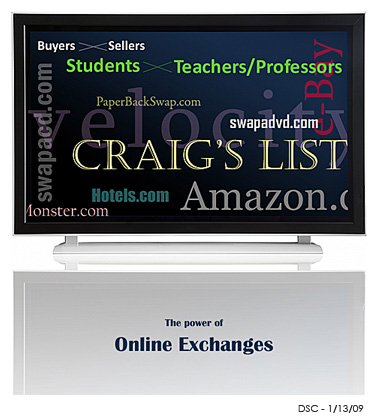
The power of online-based marketplaces. We’ve seen it in other industries.  Are we now going to see more of this within higher education as the unbundling of higher education seems to be a possibility?  Will there be an increased importance of professors’ individual brands? Could be.

The Power of Online Exchanges

.

DanielChristian-The-unbundling-of-higher-education


From DSC:
Congrats Burck & Co. on your continued innovative thinking and business models! Way to help keep a college education accessible to many!


Also see the following items from Genius:

  • The New Consumer Agenda:
    From authentic collaboration to small indulgences … what consumers want in 2013 and beyond, and how brands are responding.
  • Marketing Trends 2013+:
    From black marketing to crowd creatives, brand gaming to urban formats, solomo and diffusion … what will be big in marketing in 2013


Additional notes from DSC:

  • With thanks going out to Mr. Jim Woods (@hyperinnovation) on twitter for this resource
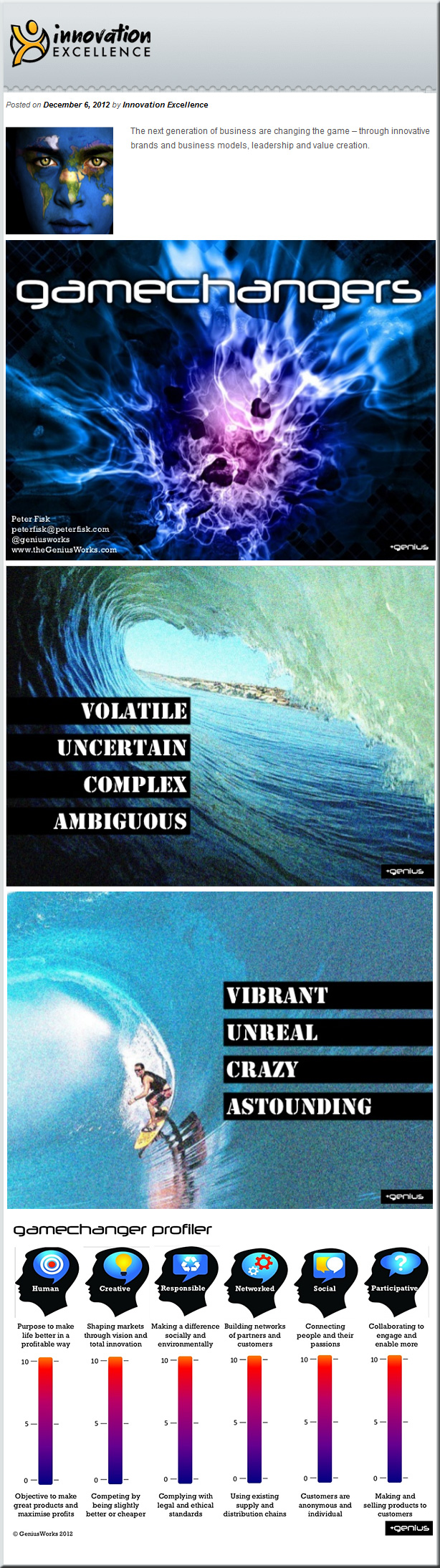
  • The wave-related graphics above are very appropriate for our times — and I’d rather be surfing the waves then being crushed by them!


American Express launches the largest ever Interactive TV advertising campaign — from marketwatch.com
New branded channel will serve as “always on” brand hub

Excerpt:

NEW YORK, Nov 21, 2012 (BUSINESS WIRE) — American Express and BrightLine announced today the rollout of the largest Interactive TV campaign ever executed, including an “always-on”, unified destination point that can be accessed by multiple cable and satellite providers. The AMEX Channel will enable American Express Cardmembers and prospects to have an interactive on-demand viewing experience that matches consumers’ evolving TV viewing behaviors.

The nationwide interactive TV channel will reach more than 50 million households in the United States. Viewers can access it through various gateways including clickable overlays that will air alongside some American Express commercials, dedicated channel positions, channel guide listings, interactive banners and more. The AMEX Channel has been designed to function as an evolving resource for Cardmembers and prospects by enabling them to visually explore the American Express experience via shared member stories, games, special offers and more on the big screen. The channel will have a consistent presence and frequently update to keep the American Express community informed, entertained and connected.


American Express Interactive Channel is set to reach 50 million homes — from The New York Times by Sturart Elliott

Excerpt:

American Express is promoting its wares to cardholders and potential cardholders through an interactive branded channel under a new agreement with BrightLine. American Express is promoting its wares to cardholders and potential cardholders through an interactive branded channel under a new agreement with BrightLine.

American Express is taking another step toward the new world of television that is always on, making a deal with BrightLine for a yearlong campaign centered on an interactive branded channel.

.


From DSC:
Further exploration/experimentation such as this is excellent; this is another pulse check on the Smart/Connected TV situation — and machine-to-machine communications and the use of second screen-based apps may be relevant here as well.


Software is eating marketing — from Inc.com by Jeff Bussgang
One VC argues that software is disrupting several industries in the 21st century, including marketing.
.

Computer Code

.

Excerpt:

Within the $1 trillion marketing industry, the impact of software eating marketing has now reached the board room.  With the explosion of digital marketing, it is clear that technology is radically transforming the marketing function and the role of the marketing professional.


Smart TV is the future — from guardian.co.uk by Dan Brilot
The take-up of smart TV is low now, but a time will come when owning a single device that meets all of our home entertainment needs is norm, says Dan Brilot

Excerpt:

The future of media and technology may lie then in the convergence of what we love the most: television, film, music and social networking, [DSC insert here *], even shopping, all from the comfort of our own living room. Smart TV could soon become the one device to rule them all.

* DSC insert –> I would add teaching and taking courses as well!!!


BrightLine releases nearly a decade of interactive television advertising metrics with the relaunch of www.brightline.tv — from .bloomberg.com

Is transmedia storytelling the new digital marketing? — from jasonthibeault.com


[Report] Developer Economics 2012 – The new app economy – from visionmobile.com

Excerpt:

Here’s just a sample of the key insights and graphs from the report – download the full report for more!

The new pyramid of handset maker competition.
In the new pyramid of handset maker competition, Apple leads innovators, Samsung leads fast-followers, ZTE leads assemblers and Nokia leads the feature phone market. Apple has seized almost three quarters of industry profits by delivering unique product experiences and tightly integrating hardware, software, services and design. Samsung ranks second to Apple in total industry profits. As a fast follower, its recipe for success is to reach market first with each new Android release. It produces its own chipsets and screens – the two most expensive components in the hardware stack – ensuring both profits and first-to-market component availability.

Tablets are now a mainstream screen for developers.
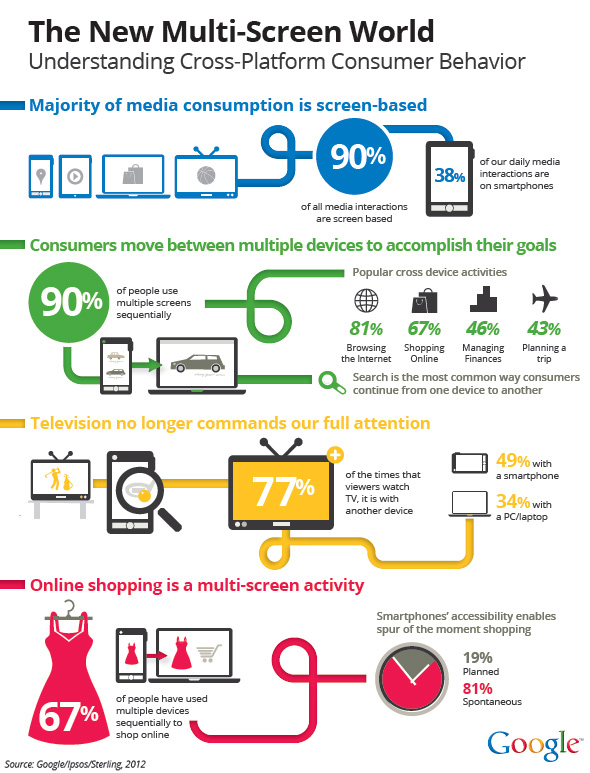
Developers are rapidly responding to the rising popularity of tablets: our Developer Economics 2012 survey found that, irrespective of platform, more than 50% of developers are now targeting tablets, with iOS developers most likely (74%) to do so. This is a massive increase over last year, when just a third of developers (34.5%) reported targeting tablets. On the other end of the spectrum are TVs and game consoles, with fewer than 10% of developers targeting those screens.

Survival of the fittest has played out within 12 months.
Whereas 2011 was the era of developer experimentation, 2012 is shaping up as the era of ecosystem consolidation around iOS and Android. Developer Mindshare is at an all-time-high 76% for Android and 66% for iOS. Darwin’s “survival of the fittest” model explains how BlackBerry, BREW, and Bada (Samsung) have lost Mindshare by failing to compete in terms of user reach, which is by far and consistently the top platform selection criterion for developers. In 2012, developers used on average 2.7 platforms in parallel, vs 3.2 in 2011, a clear sign of consolidation. The trend is further evidenced by declining IntentShare scores for most platforms – apart from mobile web and Windows Phone.

The potential of cloud-based education marketplaces — from evoLLLution.com (LifeLong Learning) by Daniel Christian; PDF-based version here

Excerpt:

Such organizations are being impacted by a variety of emerging technologies and trends – two of which I want to highlight here are:

  • Online-based marketplaces – as hosted on “the cloud”
  • The convergence of the television, telephone, and the computer

One of the powerful things that the Internet provides is online-based marketplaces. Such exchanges connect buyers with sellers and vice versa. You see this occurring with offerings like Craig’s List, e-Bay, PaperBackSwap.com, and others.


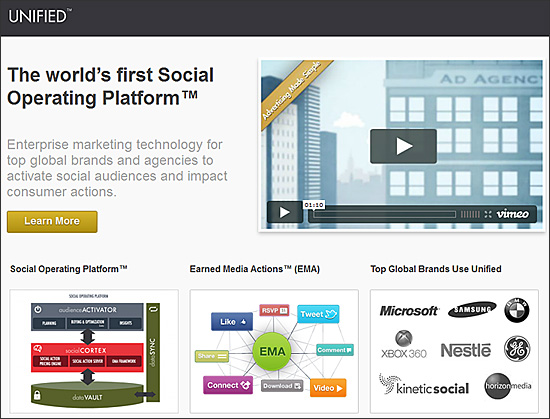
Unified opens an online university for social media marketers — from TechCruch.com by Anthony Ha


unifiedsocial.com

Services > Unified University

The social media landscape is complex and constantly evolving, leaving top global brands and agencies with the challenge of staying on top of the latest trends and best practices. Unified University is a first of its kind – an all-encompassing training, continuing education and certification program, complete with access to the industry leading best practices knowledge base. Unified University is designed to help marketing and agency executives become experts and internal thought leaders on social strategies, platform insights, earned media measurement, and more.

Through Unified University’s comprehensive training program, a social team can get certified on the Unified Social Operating Platform and learn about the latest advances in social advertising. Certification ensures that a team is up to date on the latest options within the social web, including the benefits of advertising across social ecosystems including Facebook, Twitter, LinkedIn, Google+, StumbleUpon and more.

Teams learn that brands may require very different strategies to ultimately achieve similar results. Unified University assures that teams know how to strategically represent brands across all social options while delivering high quality results and maximum ROI.

From DSC:
Is this a part of the future? If higher ed doesn’t respond more forcefully, I’d say so.

Along these lines, from page 408 of the Steve Jobs book:

One of Job’s business rules was to never be afraid of cannibalizing yourself. “If you can’t cannibalize yourself, someone else will,” he said.

Innovate. Reinvent. Staying relevant. This goes for the accreditation agencies as well.

 Also see:


.

Staying Relevant


.

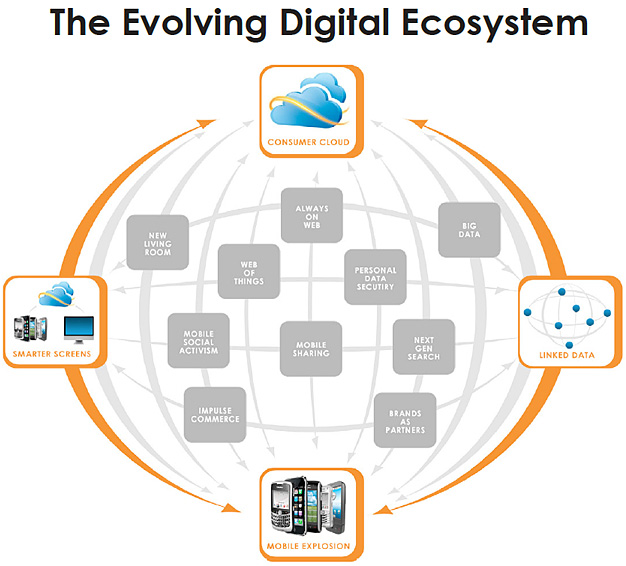
The Evolving Digital Ecosystem - from Moxie's Trends for 2012

  • The Always On Web
  • Web of Things
  • Big Data
  • Next Gen Search
  • Mobile Sharing
  • Mobile Social Activism
  • Impulse Commerce
  • Brands As Partners
  • The New Living Room  <– From DSC: This is one of those key areas that I’m trying to keep a pulse check on for re: our learning ecosystems of the future 
  • Personal Data Security


Also see:


How ‘big data’ is transforming business — from McKinseyQuarterly.com

Excerpt:

Right now at your own company, it’s quite possible that sensors in process machinery are collecting operational data, marketers are using location data from smartphones to demystify teenagers’ buying quirks, and data exchanges are creating networks with your supply chain partners. As an explosion of data transforms processes, corporate ecosystems, and approaches to innovation, it’s important to remember that new technologies and tools raise productivity not only because companies adopt them but also, more critically, because they enable new management practices and organizational structures. So in this month’s newsletter, we highlight a package of articles that can help executives navigate the era of big data.


© 2025 | Daniel Christian