GRCC students to use AI to help businesses solve ‘real world’ challenges in new course — from www-mlive-com.cdn.ampproject.org by Brian McVicar; via Patrick Bailey on LinkedIn

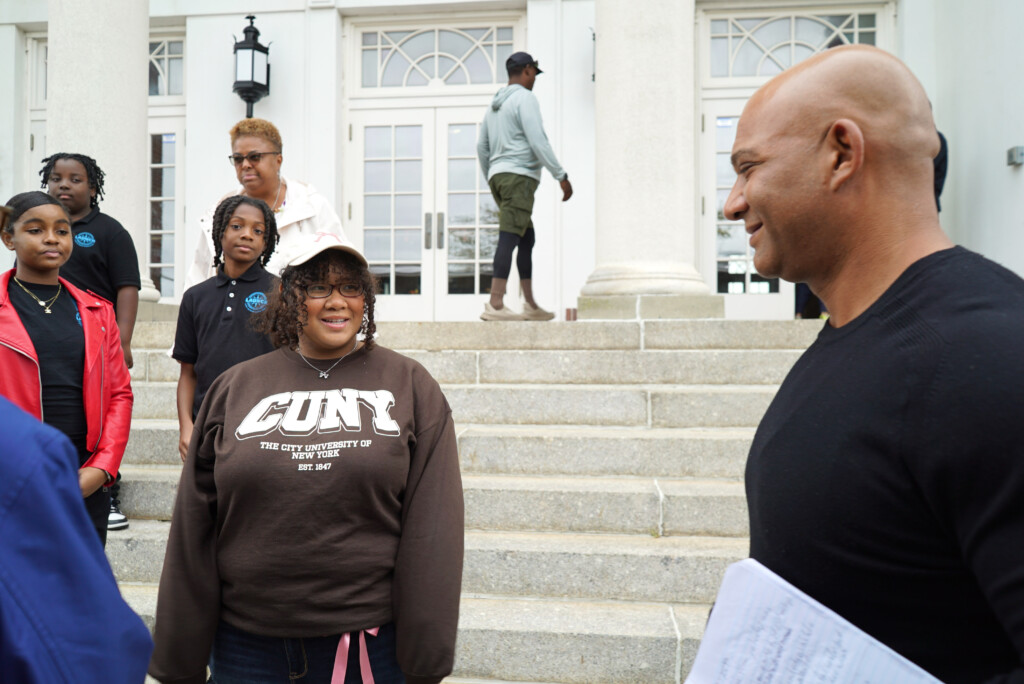
GRAND RAPIDS, MI — A new course at Grand Rapids Community College aims to help students learn about artificial intelligence by using the technology to solve real-world business problems.

In a release, the college said its grant application was supported by 20 local businesses, including Gentex, TwistThink and the Grand Rapids Public Museum. The businesses have pledged to work with students who will use business data to develop an AI project such as a chatbot that interacts with customers, or a program that automates social media posts or summarizes customer data.

“This rapidly emerging technology can transform the way businesses process data and information,” Kristi Haik, dean of GRCC’s School of Science, Technology, Engineering and Mathematics, said in a statement. “We want to help our local business partners understand and apply the technology. We also want to create real experiences for our students so they enter the workforce with demonstrated competence in AI applications.”

As Patrick Bailey said on LinkedIn about this article:

Nice to see a pedagogy that’s setting a forward movement rather than focusing on what could go wrong with AI in a curriculum.


Forecast for Learning and Earning in 2025-2026 report — from pages.asugsvsummit.com by Jennifer Lee and Claire Zau

In this look ahead at the future of learning and work, we aim to define:

  • Major thematic observations
  • What makes this moment an inflection point
  • Key predictions (and their precedent)
  • Short- and long-term projected impacts


The LMS at 30: From Course Management to Learning Management (At Last) — from onedtech.philhillaa.com; a guest post from Matthew Pittinsky, Ph.D.

As a 30 year observer and participant, it seems to me that previous technology platform shifts like SaaS and mobile did not fundamentally change the LMS. AI is different. We’re standing at the precipice of LMS 2.0, where the branding change from Course Management System to Learning Management System will finally live up to its name. Unlike SaaS or mobile, AI represents a technology platform shift that will transform the way participants interact with learning systems – and with it, the nature of the LMS itself.

Given the transformational potential of AI, it is useful to set the context and think about how we got here, especially on this 30th anniversary of the LMS.

LMS at 30 Part 2: Learning Management in the AI Era — from onedtech.philhillaa.com; a guest post from Matthew Pittinsky, Ph.D.

Where AI is disruptive is in its ability to introduce a whole new set of capabilities that are best described as personalized learning services. AI offers a new value proposition to the LMS, roughly the set of capabilities currently being developed in the AI Tutor / agentic TA segment. These new capabilities are so valuable given their impact on learning that I predict they will become the services with greatest engagement within a school or university’s “enterprise” instructional platform.

In this way, by LMS paradigm shift, I specifically mean a shift from buyers valuing the product on its course-centric and course management capabilities, to valuing it on its learner-centric and personalized learning capabilities.


AI and the future of education: disruptions, dilemmas and directions — from unesdoc.unesco.org

This anthology reveals how the integration of AI in education poses profound philosophical, pedagogical, ethical and political questions. As this global AI ecosystem evolves and becomes increasingly ubiquitous, UNESCO and its partners have a shared responsibility to lead the global discourse towards an equity- and justice-centred agenda. The volume highlights three areas in which UNESCO will continue to convene and lead a global commons for dialog and action particularly in areas on AI futures, policy and practice innovation, and experimentation.

  1. As guardian of ethical, equitable human-centred AI in education.
  2. As thought leader in reimagining curriculum and pedagogy
  3. As a platform for engaging pluralistic and contested dialogues

AI, copyright and the classroom: what higher education needs to know — from timeshighereducation.com by Cayce Myers
As artificial intelligence reshapes teaching and research, one legal principle remains at the heart of our work: copyright. Understanding its implications isn’t just about compliance – it’s about protecting academic integrity, intellectual property and the future of knowledge creation. Cayce Myers explains


The School Year We Finally Notice “The Change” — from americanstogether.substack.com by Jason Palmer

Why It Matters
A decade from now, we won’t say “AI changed schools.” We’ll say: this was the year schools began to change what it means to be human, augmented by AI.

This transformation isn’t about efficiency alone. It’s about dignity, creativity, and discovery, and connecting education more directly to human flourishing. The industrial age gave us schools to produce cookie-cutter workers. The digital age gave us knowledge anywhere, anytime. The AI age—beginning now—gives us back what matters most: the chance for every learner to become infinitely capable.

This fall may look like any other—bells ringing, rows of desks—but beneath the surface, education has begun its greatest transformation since the one-room schoolhouse.


How should universities teach leadership now that teams include humans and autonomous AI agents? — from timeshighereducation.com by Alex Zarifis
Trust and leadership style are emerging as key aspects of teambuilding in the age of AI. Here are ways to integrate these considerations with technology in teaching

Transactional and transformational leaderships’ combined impact on AI and trust
Given the volatile times we live in, a leader may find themselves in a situation where they know how they will use AI, but they are not entirely clear on the goals and journey. In a teaching context, students can be given scenarios where they must lead a team, including autonomous AI agents, to achieve goals. They can then analyse the situations and decide what leadership styles to apply and how to build trust in their human team members. Educators can illustrate this decision-making process using a table (see above).

They may need to combine transactional leadership with transformational leadership, for example. Transactional leadership focuses on planning, communicating tasks clearly and an exchange of value. This works well with both humans and automated AI agents.


The 2025 Changing Landscape of Online Education (CHLOE) 10 Report — from qualitymatters.org; emphasis below from DSC

Notable findings from the 73-page report include: 

  • Online Interest Surges Across Student Populations: 
  • Institutional Preparedness Falters Amid Rising Demand: Despite accelerating demand, institutional readiness has stagnated—or regressed—in key areas.
  • The Online Education Marketplace Is Increasingly Competitive: …
  • Alternative Credentials Take Center Stage: …
  • AI Integration Lacks Strategic Coordination: …

Just 28% of faculty are considered fully prepared for online course design, and 45% for teaching. Alarmingly, only 28% of institutions report having fully developed academic continuity plans for future emergency pivots to online.


Also relevant, see:


Great Expectations, Fragile Foundations — from onedtech.philhillaa.com by Glenda Morgan
Lessons about growth from the CHLOE & BOnES reports

Cultural resistance remains strong. Many [Chief Online Learning Officers] COLOs say faculty and deans still believe in-person learning is “just better,” creating headwinds even for modest online growth. As one respondent at a four-year institution with a large online presence put it:

Supportive departments [that] see the value in online may have very different levels of responsiveness compared to academic departments [that] are begrudgingly online. There is definitely a growing belief that students “should” be on-ground and are only choosing online because it’s easy/ convenient. Never mind the very real and growing population of nontraditional learners who can only take online classes, and the very real and growing population of traditional-aged learners who prefer online classes; many faculty/deans take a paternalistic, “we know what’s best” approach.


Ultimately, what we need is not just more ambition but better ambition. Ambition rooted in a realistic understanding of institutional capacity, a shared strategic vision, investments in policy and infrastructure, and a culture that supports online learning as a core part of the academic mission, not an auxiliary one. It’s time we talked about what it really takes to grow online learning , and where ambition needs to be matched by structure.

From DSC:
Yup. Culture is at the breakfast table again…boy, those strategies taste good.

I’d like to take some of this report — like the graphic below — and share it with former faculty members and members of a couple of my past job families’ leadership. They strongly didn’t agree with us when we tried to advocate for the development of online-based learning/programs at our organizations…but we were right. We were right all along. And we were LEADING all along. No doubt about it — even if the leadership at the time said that we weren’t leading.

The cultures of those organizations hurt us at the time. But our cultivating work eventually led to the development of online programs — unfortunately, after our groups were disbanded, they had to outsource those programs to OPMs.


Arizona State University — with its dramatic growth in online-based enrollments.


Collaborative innovation — from marketoonist.com

Disney alum Paul Williams once shared the brainstorming method developed by Walt Disney. Disney used to separate the act of coming up with and executing ideas into three distinct steps (and associated mindsets): The Dreamer, The Realist, and The Spoiler.

As Paul wrote:

“By compartmentalizing the stages, Walt didn’t let reality get in the way of the dream step. The realist was allowed to work without the harsh filter of a spoiler. And, the spoiler spends time examining a well-thought idea… something with a bit more structure.

“When we brainstorm alone and in groups – too often – we tend to fill the room with a dreamer or two, a few realists, and a bunch of spoilers. In these conditions, dream ideas don’t stand a chance.”

The Dreamer mentality specializes in blue sky thinking without constraints, the Realist mentality puts practical structure to the ideas, and the Spoiler asks the hard questions and kicks the tires. We need all three mindsets. But we need those mindsets at the right time and in the right way.


From DSC:
How true this is! I’m the Dreamer in the room…and have been shut down more times than I can count. For all of you Visionaries and Dreamers out there, keep trying! And consider establishing something like Walt Disney did.


1 in 2 graduates believe their college major didn’t prepare them for today’s market — from hrdive.com by Carolyn Crist
Respondents said they felt unprepared in numerous ways, especially finding a job after graduation and navigating student debt and personal finances.

As today’s college graduates struggle to start a steady career, 1 in 2 Americans say their college major didn’t prepare them for the job market, according to a June 18 report from Preply.

Beyond that, 1 in 6 Americans who went to college said they regret it. When thinking about their college experience, college graduates said their top regrets included taking out student loans, not networking more and not doing internships.

College graduates said they felt unprepared in numerous ways, especially finding a job after graduation and navigating student debt and personal finances. 

From DSC:
The Career Placement Office at Northwestern University did not help build my skills to get a job, at all. I had no clue what I was doing. I had no idea what networking was even about, nor the power of it, and why it would be useful throughout my career. They provided conference rooms for interviews to occur…and that was about it, at least in my experience. In terms of my education, I didn’t get any real-world experience (such as apprenticeships, internships, capstone courses, etc.), nor did I pick up many practical or technical skills. 


Driving Culture Change in Higher Education — from jeffselingo.com by Jeff Selingo

The call for transformation in higher education has never been louder, yet the path forward remains unclear for many institutions. Leaders often struggle with the “how” of meaningful change. This five-part playbook by higher education author and strategist Jeff Selingo as well as other experts draws on proven methodologies to provide clear, actionable guidance from mapping current institutional culture to sustaining long-term momentum.


Employers’ emphasis on skilled trades lost on Gen Z: Harris poll — from facilitiesdive.com
Young workers don’t realize going into the trades can offer good pay more quickly than pursuing a college-based career, the report says.

A mismatch exists between the importance employers are putting on skilled trades and how the generation that’s newly joining the workforce views those jobs, a Harris poll finds.

Gen Z, the oldest members of which are 28, is the age cohort least focused on skilled trades, in part because they’re misinformed about the jobs, says the report based on 2,200 respondents to survey questions posted online in June.

“Only 38% of Gen Z says skilled trades offer the best job opportunities today” and “only 36% strongly agree skilled trades offer a faster and more affordable path to a good career,” the report says.


One-size-fits-all learning is about to become completely obsolete. — from linkedin.com by Allie Miller


AI in the University: From Generative Assistant to Autonomous Agent This Fall — from insidehighered.com by
This fall we are moving into the agentic generation of artificial intelligence.

“Where generative AI creates, agentic AI acts.” That’s how my trusted assistant, Gemini 2.5 Pro deep research, describes the difference.

Agents, unlike generative tools, create and perform multistep goals with minimal human supervision. The essential difference is found in its proactive nature. Rather than waiting for a specific, step-by-step command, agentic systems take a high-level objective and independently create and execute a plan to achieve that goal. This triggers a continuous, iterative workflow that is much like a cognitive loop. The typical agentic process involves six key steps, as described by Nvidia:


AI in Education Podcast — from aipodcast.education by Dan Bowen and Ray Fleming


The State of AI in Education 2025 Key Findings from a National Survey — from Carnegie Learning

Our 2025 national survey of over 650 respondents across 49 states and Puerto Rico reveals both encouraging trends and important challenges. While AI adoption and optimism are growing, concerns about cheating, privacy, and the need for training persist.

Despite these challenges, I’m inspired by the resilience and adaptability of educators. You are the true game-changers in your students’ growth, and we’re honored to support this vital work.

This report reflects both where we are today and where we’re headed with AI. More importantly, it reflects your experiences, insights, and leadership in shaping the future of education.


Instructure and OpenAI Announce Global Partnership to Embed AI Learning Experiences within Canvas — from instructure.com

This groundbreaking collaboration represents a transformative step forward in education technology and will begin with, but is not limited to, an effort between Instructure and OpenAI to enhance the Canvas experience by embedding OpenAI’s next-generation AI technology into the platform.

IgniteAI announced earlier today, establishes Instructure’s future-ready, open ecosystem with agentic support as the AI landscape continues to evolve. This partnership with OpenAI exemplifies this bold vision for AI in education. Instructure’s strategic approach to AI emphasizes the enhancement of connections within an educational ecosystem comprising over 1,100 edtech partners and leading LLM providers.

“We’re committed to delivering next-generation LMS technologies designed with an open ecosystem that empowers educators and learners to adapt and thrive in a rapidly changing world,” said Steve Daly, CEO of Instructure. “This collaboration with OpenAI showcases our ambitious vision: creating a future-ready ecosystem that fosters meaningful learning and achievement at every stage of education. This is a significant step forward for the education community as we continuously amplify the learning experience and improve student outcomes.”


Faculty Latest Targets of Big Tech’s AI-ification of Higher Ed — from insidehighered.com by Kathryn Palmer
A new partnership between OpenAI and Instructure will embed generative AI in Canvas. It may make grading easier, but faculty are skeptical it will enhance teaching and learning.

The two companies, which have not disclosed the value of the deal, are also working together to embed large language models into Canvas through a feature called IgniteAI. It will work with an institution’s existing enterprise subscription to LLMs such as Anthropic’s Claude or OpenAI’s ChatGPT, allowing instructors to create custom LLM-enabled assignments. They’ll be able to tell the model how to interact with students—and even evaluate those interactions—and what it should look for to assess student learning. According to Instructure, any student information submitted through Canvas will remain private and won’t be shared with OpenAI.

Faculty Unsurprised, Skeptical
Few faculty were surprised by the Canvas-OpenAI partnership announcement, though many are reserving judgment until they see how the first year of using it works in practice.


These 40 Jobs May Be Replaced by AI. These 40 Probably Won’t — from inc.com by Bruce Crumley
A new Microsoft report ranks 80 professions by their risk of being replaced by AI tools.

A new study measuring the use of generative artificial intelligence in different professions has just gone public, and its main message to people working in some fields is harsh. It suggests translators, historians, text writers, sales representatives, and customer service agents might want to consider new careers as pile driver or dredge operators, railroad track layers, hardwood floor sanders, or maids — if, that is, they want to lower the threat of AI apps pushing them out of their current jobs.

From DSC:
Unfortunately, this is where the hyperscalers are going to get their ROI from all of the capital expenditures that they are making. Companies are going to use their services in order to reduce headcount at their organizations. CEOs are even beginning to brag about the savings that are realized by the use of AI-based technologies: (or so they claim.)

“As a CEO myself, I can tell you, I’m extremely excited about it. I’ve laid off employees myself because of AI. AI doesn’t go on strike. It doesn’t ask for a pay raise. These things that you don’t have to deal with as a CEO.”

My first position out of college was being a Customer Service Representative at Baxter Healthcare. It was my most impactful job, as it taught me the value of a customer. From then on, whoever I was trying to assist was my customer — whether they were internal or external to the organization that I was working for. Those kinds of jobs are so important. If they evaporate, what then? How will young people/graduates get their start? 

Also related/see:


Microsoft’s Edge Over the Web, OpenAI Goes Back to School, and Google Goes Deep — from thesignal.substack.com by Alex Banks

Alex’s take: We’re seeing browsers fundamentally transition from search engines ? answer engines ? action engines. Gone are the days of having to trawl through pages of search results. Commands are the future. They are the direct input to arrive at the outcomes we sought in the first place, such as booking a hotel or ordering food. I’m interested in watching Microsoft’s bet develop as browsers become collaborative (and proactive) assistants.


Everyone’s an (AI) TV showrunner now… — from theneurondaily.com by Grant Harvey

Amazon just invested in an AI that can create full TV episodes—and it wants you to star in them.

Remember when everyone lost their minds over AI generating a few seconds of video? Well, Amazon just invested in a company called Fable Studio whose system called Showrunner can generates entire 22-minute TV episodes.

Where does this go from here? Imagine asking AI to rewrite the ending of Game of Thrones, or creating a sitcom where you and your friends are the main characters. This type of tech could create personalized entertainment experiences just like that.

Our take: Without question, we’re moving toward a world where every piece of media can be customized to you personally. Your Netflix could soon generate episodes where you’re the protagonist, with storylines tailored to your interests and sense of humor.

And if this technology scales, the entire entertainment industry could flip upside down. The pitch goes: why watch someone else’s story when you can generate your own? 


The End of Work as We Know It — from gizmodo.com by Luc Olinga
CEOs call it a revolution in efficiency. The workers powering it call it a “new era in forced labor.” I spoke to the people on the front lines of the AI takeover.

Yet, even in this vision of a more pleasant workplace, the specter of displacement looms large. Miscovich acknowledges that companies are planning for a future where headcount could be “reduced by 40%.” And Clark is even more direct. “A lot of CEOs are saying that, knowing that they’re going to come up in the next six months to a year and start laying people off,” he says. “They’re looking for ways to save money at every single company that exists.”

But we do not have much time. As Clark told me bluntly: “I am hired by CEOs to figure out how to use AI to cut jobs. Not in ten years. Right now.”


AI Is Coming for the Consultants. Inside McKinsey, ‘This Is Existential.’ — from wsj.com by Chip Cutter; behind a paywall
If AI can analyze information, crunch data and deliver a slick PowerPoint deck within seconds, how does the biggest name in consulting stay relevant?


ChatGPT users shocked to learn their chats were in Google search results — from arstechnica.com by Ashley Belanger
OpenAI scrambles to remove personal ChatGPT conversations from Google results

Faced with mounting backlash, OpenAI removed a controversial ChatGPT feature that caused some users to unintentionally allow their private—and highly personal—chats to appear in search results.

Fast Company exposed the privacy issue on Wednesday, reporting that thousands of ChatGPT conversations were found in Google search results and likely only represented a sample of chats “visible to millions.” While the indexing did not include identifying information about the ChatGPT users, some of their chats did share personal details—like highly specific descriptions of interpersonal relationships with friends and family members—perhaps making it possible to identify them, Fast Company found.


Character.AI Launches World’s First AI-Native Social Feed — from blog.character.ai

Today, we’re dropping the world’s first AI-native social feed.

Feed from Character.AI is a dynamic, scrollable content platform that connects users with the latest Characters, Scenes, Streams, and creator-driven videos in one place.

This is a milestone in the evolution of online entertainment.

For the last 10 years, social platforms have been all about passive consumption. The Character.AI Feed breaks that paradigm and turns content into a creative playground. Every post is an invitation to interact, remix, and build on what others have made. Want to rewrite a storyline? Make yourself the main character? Take a Character you just met in someone else’s Scene and pop it into a roast battle or a debate? Now it’s easy. Every story can have a billion endings, and every piece of content can change and evolve with one tap.


From DSC:
Forgive us world for our current President, who stoops to a new low almost every day. Below is yet another example of that. He’s an embarrassment to me and to many others in our nation. He twists truths into lies, and lies into “truths” (such as he does on “Truth” Social). Lies are his native tongue. (To those who know scripture, this is an enlightening and descriptive statement.)

And speaking of matters of faith, I think God is watching us closely, as numerous moral/ethical tests are presented to our society and to our culture. How will we and our leadership respond to these tests?

For examples:

  • Are we joining the mockery of justice in our country, or are we fighting against these developments?
  • Do we support it when Trump makes a fake video of a former President, or do we find it reprehensible? Especially when we realize it’s yet another attempt at deflecting our attention away from where Trump does NOT want our attention to be –> i.e., away from Trump’s place within the Epstein files.

Trump Posts Fake Video Showing Obama Arrest — from nytimes.com by Matthew Mpoke Bigg; this is a gifted article
President Trump shared what appeared to be an A.I.-generated video of former President Barack Obama being detained in the Oval Office.

President Trump reposted a fake video showing former President Barack Obama being arrested in the Oval Office, as Trump administration officials continue to accuse Mr. Obama of trying to harm Mr. Trump’s campaign during the 2016 election, and the president seeks to redirect conversation from the Epstein files.

The short video, which appears to have been generated by artificial intelligence and posted on TikTok before being reposted on Mr. Trump’s Truth Social account on Sunday…

The fake video purports to show F.B.I. agents bursting into the meeting, pushing Mr. Obama into a kneeling position and putting him in handcuffs as Mr. Trump looks on smiling, while the song “Y.M.C.A.” by the Village People plays. Later, the fake video shows Mr. Obama in an orange jumpsuit pacing in a cell. 

Also relevant/see:

Trump Talks About Anything but Epstein on His Social Media Account — from nytimes.com by Luke Broadwater; this is a gifted article
On Truth Social, the president railed against Democrats and shared a wacky video.

Dogged for weeks over his administration’s refusal to release the Epstein files, President Trump spent the weekend posting on social media about, well, anything else.

On Sunday, the president railed against Senator Adam Schiff, Democrat of California, long a prime target. He attacked Samantha Power, the former administrator of U.S.A.I.D. He posted a fake video of former President Barack Obama being arrested and a fake photo of Mr. Obama and members of his administration in prison garb. He threatened to derail a deal for a new football stadium for the Washington Commanders if the team did not take back its old name, the Redskins.


In Iowa, Trump Begins Task of Selling His Bill to the American Public — from nytimes.com by Tyler Pager
President Trump has spent days cajoling Republicans to support his spending bill. He will also have to sell it to a skeptical public as Democrats focus on all the ways it helps the wealthy.

President Trump took a victory lap on Thursday night after the House passed his sprawling domestic policy bill, which he muscled through Congress even as many in his party fear it will leave them vulnerable to political attacks ahead of next year’s midterm elections. (From DSC: Which it likely will do just that, and very possibly way beyond the midterm elections also.)

Just 29 percent of voters support the legislation, according to a recent Quinnipiac University poll. Roughly two-thirds of Republicans supported the bill in that poll, a relatively low figure from the president’s own party for his signature legislation, and independents opposed it overwhelmingly.


From DSC:
Did you get that? Just ***29%*** of voters supported the legislation. But it passed anyway. I’m left thinking…so much for democracy. And I’m also disheartened by the caving of the other two branches of our government. The lack of leadership is staggering. But I guess when you remove all leaders that oppose your way of thinking, you have only Yes men/followers and Yes women/followers left. It’s taken years for the Republican Party to carefully orchestrate the ownership of those other branches. (BTW, I celebrate the handful of Republican leaders in the Senate like Sen. Thom Tillis and in the House who did not cave to Trump and Johnson, but instead voted with their own hearts and minds. They showed true strength of conviction and courage. It will likely cost them, but they can look in the mirror and feel good about themselves and what they’ve done.)

Look out Republicans (and I’ve voted for both Republican and Democrat Presidents in the past). Perhaps July 4th, 2025 will mark the downfall of the Republican Party in America. Time will tell. But I’m hopeful that we can find more common ground.

Regardless, it says a lot about who we, as Americans, are these days — that he’s even in the presidency. I highly doubt he would have been there even a generation or two ago. We’re a nation in decline. It’s been hard to watch this through the years. I’m no saint, but I’m also not the President.

Speaking of matters of faith…I can’t help but wonder what the LORD is doing in this. Is He humbling America or is it something far worse…? He’s justified in whatever He has decided to do. Americans have been dissing Him for decades, while refusing to give Him the credit due His Name. Time will tell my friends…time will tell.


Also see:

The House passed a sweeping bill to extend tax cuts and slash social safety net programs. The budget office reported the measure would increase U.S. national debt by at least $3.4 trillion over a decade.

Kenny Holston/The New York Times

Also see:

To get his bill over the line in time for a self-imposed Friday deadline, Trump pressured Republican lawmakers to set aside their concerns about the political consequences of yanking benefits from voters while adding trillions to the federal deficit.


Transform Public Speaking with Yoodli: Your AI Coach — from rdene915.com by Paula Johnson

Yoodli is an AI tool designed to help users improve their public speaking skills. It analyzes your speech in real-time or after a recording and gives you feedback on things like:

    • Filler words (“um,” “like,” “you know”)
    • Pacing (Are you sprinting or sedating your audience?)
    • Word choice and sentence complexity
    • Eye contact and body language (with video)
    • And yes, even your “uhhh” to actual word ratio

Yoodli gives you a transcript and a confidence score, plus suggestions that range from helpful to brutally honest. It’s basically Simon Cowell with AI ethics and a smiley face interface.


[What’s] going on with AI and education? — from theneuron.ai by Grant Harvey
With students and teachers alike using AI, schools are facing an “assessment crisis” where the line between tool and cheating has blurred, forcing a shift away from a broken knowledge economy toward a new focus on building human judgment through strategic struggle.

What to do about it: The future belongs to the “judgment economy,” where knowledge is commoditized but taste, agency, and learning velocity become the new human moats. Use the “Struggle-First” principle: wrestle with problems for 20-30 minutes before turning to AI, then use AI as a sparring partner (not a ghostwriter) to deepen understanding. The goal isn’t to avoid AI, but to strategically choose when to embrace “desirable difficulties” that build genuine expertise versus when to leverage AI for efficiency.

The Alpha-School Program in brief:

    • Students complete core academics in just 2 hours using AI tutors, freeing up 4+ hours for life skills, passion projects, and real-world experiences.
    • The school claims students learn at least 2x faster than their peers in traditional school.
    • The top 20% of students show 6.5x growth. Classes score in the top 1-2% nationally across the board.
    • Claims are based on NWEA’s Measures of Academic Progress (MAP) assessments… with data only available to the school. Hmm…

Austen Allred shared a story about the school, which put it on our radar.


Featured Report:  Teaching for Tomorrow: Unlocking Six Weeks a Year With AI — from gallup.com
.

.
In the latest installment of Gallup and the Walton Family Foundation’s research on education, K-12 teachers reveal how AI tools are transforming their workloads, instructional quality and classroom optimism. The report finds that 60% of teachers used an AI tool during the 2024–25 school year. Weekly AI users report reclaiming nearly six hours per week — equivalent to six weeks per year — which they reinvest in more personalized instruction, deeper student feedback and better parent communication.

Despite this emerging “AI dividend,” adoption is uneven: 40% of teachers aren’t using AI at all, and only 19% report their school has a formal AI policy. Teachers with access to policies and support save significantly more time.

Educators also say AI improves their work. Most report higher-quality lesson plans, assessments and student feedback. And teachers who regularly use AI are more optimistic about its benefits for student engagement and accessibility — mirroring themes from the Voices of Gen Z: How American Youth View and Use Artificial Intelligence report, which found students hesitant but curious about AI’s classroom role. As AI tools grow more embedded in education, both teachers and students will need the training and support to use them effectively.

Also see:

  • 2-Hour Learning
    • What if children could crush academics in 2 hours, 2x faster? 
    • What if children could get back their most valuable resource, which is time?
    • What if children could pursue the things they want during their afternoons and develop life skills?

Amira Learning: Teaching With The AI-Powered Reading Tool — from techlearning.com by Erik Ofgang
Amira Learning is a research-backed AI reading tutor that incorporates the science of reading into its features.

What Is Amira Learning?
Amira Learning’s system is built upon research led by Jack Mostow, a professor at Carnegie Mellon who helped pioneer AI literacy education. Amira uses Claude AI to power its AI features, but these features are different than many other AI tools on the market. Instead of focusing on chat and generative response, Amira’s key feature is its advanced speech recognition and natural language processing capabilities, which allow the app to “hear” when a student is struggling and tailor suggestions to that student’s particular mistakes.

Though it’s not meant to replace a teacher, Amira provides real-time feedback and also helps teachers pinpoint where a student is struggling. For these reasons, Amira Learning is a favorite of education scientists and advocates for science of reading-based literacy instruction. The tool currently is used by more than 4 million students worldwide and across the U.S.


How Do You Build a Learner-Centered Ecosystem? — from gettingsmart.com by Bobbi Macdonald and Alin Bennett

Key Points

  • It’s not just about redesigning public education—it’s about rethinking how, where and with whom learning happens. Communities across the United States are shaping learner-centered ecosystems and gathering insights along the way.
  • What does it take to build a learner-centered ecosystem? A shared vision. Distributed leadership. Place-based experiences.  Repurposed resources. And more. This piece unpacks 10 real-world insights from pilots in action.
    .

We believe the path forward is through the cultivation of learner-centered ecosystems — adaptive, networked structures that offer a transformed way of organizing, supporting, and credentialing community-wide learning. These ecosystems break down barriers between schools, communities, and industries, creating flexible, real-world learning experiences that tap into the full range of opportunities a community has to offer.

Last year, we announced our Learner-Centered Ecosystem Lab, a collaborative effort to create a community of practice consisting of twelve diverse sites across the country — from the streets of Brooklyn to the mountains of Ojai — that are demonstrating or piloting ecosystemic approaches. Since then, we’ve been gathering together, learning from one another, and facing the challenges and opportunities of trying to transform public education. And while there is still much more work to be done, we’ve begun to observe a deeper pattern language — one that aligns with our ten-point Ecosystem Readiness Framework, and one that, we hope, can help all communities start to think more practically and creatively about how to transform their own systems of learning.

So while it’s still early, we suspect that the way to establish a healthy learner-centered ecosystem is by paying close attention to the following ten conditions:


From DSC:
And regarding this weekend, what an incredible waste of money to put the military on display (for his own birthday).  This smacks of what arrogant dictators do. It’s big-time ugly.

If our justice system had done its job, this arrogant lawbreaker and convicted criminal would be in jail right now. No wonder he has no regard for the legal system, the Constitution, or the law — those things don’t serve his interests. They impede his interests. And thank God for that! In fact, may true leaders rise up within the Legislative and Judicial Branches of our government. The latter is our best chance of keeping our democracy, as the Republican Party has ceded all of their power — and responsibility — over to Donald Trump. They are not leaders in any sense of the word.

But whatever happens, ultimately, there WILL be justice.

Is America being humbled? Or is it being destroyed?

Trump Is Getting the Military Parade He Wanted in His First Term — from nytimes.com by Helene Cooper
There will be 28 Abrams tanks, 6,700 soldiers, 50 helicopters, 34 horses, two mules and a dog, according to the Army’s plans for the June 14 event.

In President Trump’s first term, the Pentagon opposed his desire for a military parade in Washington, wanting to keep the armed forces out of politics.

But in Mr. Trump’s second term, that guardrail has vanished. There will be a parade this year, and on the president’s 79th birthday, no less.

The current plan involves a tremendous scene in the center of Washington: 28 M1A1 Abrams tanks (at 70 tons each for the heaviest in service); 28 Stryker armored personnel carriers; more than 100 other vehicles; a World War II-era B-25 bomber; 6,700 soldiers; 50 helicopters; 34 horses; two mules; and a dog.


Navigating Career Transitions — from er.educause.edu by Jay James, Mike Richichi, Sarah Buszka, and Wes Johnson

In this episode, we hear from professionals at different stages of their career journeys as they reflect on risk, resilience, and growth. They share advice on stepping into leadership roles, recognizing when it may be time for a change, and overcoming imposter syndrome.

.


.


Mary Meeker AI Trends Report: Mind-Boggling Numbers Paint AI’s Massive Growth Picture — from ndtvprofit.com
Numbers that prove AI as a tech is unlike any other the world has ever seen.

Here are some incredibly powerful numbers from Mary Meeker’s AI Trends report, which showcase how artificial intelligence as a tech is unlike any other the world has ever seen.

  • AI took only three years to reach 50% user adoption in the US; mobile internet took six years, desktop internet took 12 years, while PCs took 20 years.
  • ChatGPT reached 800 million users in 17 months and 100 million in only two months, vis-à-vis Netflix’s 100 million (10 years), Instagram (2.5 years) and TikTok (nine months).
  • ChatGPT hit 365 billion annual searches in two years (2024) vs. Google’s 11 years (2009)—ChatGPT 5.5x faster than Google.

Above via Mary Meeker’s AI Trend-Analysis — from getsuperintel.com by Kim “Chubby” Isenberg
How AI’s rapid rise, efficiency race, and talent shifts are reshaping the future.

The TLDR
Mary Meeker’s new AI trends report highlights an explosive rise in global AI usage, surging model efficiency, and mounting pressure on infrastructure and talent. The shift is clear: AI is no longer experimental—it’s becoming foundational, and those who optimize for speed, scale, and specialization will lead the next wave of innovation.


Also see Meeker’s actual report at:

Trends – Artificial Intelligence — from bondcap.com by Mary Meeker / Jay Simons / Daegwon Chae / Alexander Krey


The Rundown: Meta aims to release tools that eliminate humans from the advertising process by 2026, according to a report from the WSJ — developing an AI that can create ads for Facebook and Instagram using just a product image and budget.

The details:

  • Companies would submit product images and budgets, letting AI craft the text and visuals, select target audiences, and manage campaign placement.
  • The system will be able to create personalized ads that can adapt in real-time, like a car spot featuring mountains vs. an urban street based on user location.
  • The push would target smaller companies lacking dedicated marketing staff, promising professional-grade advertising without agency fees or skillset.
  • Advertising is a core part of Mark Zuckerberg’s AI strategy and already accounts for 97% of Meta’s annual revenue.

Why it matters: We’re already seeing AI transform advertising through image, video, and text, but Zuck’s vision takes the process entirely out of human hands. With so much marketing flowing through FB and IG, a successful system would be a major disruptor — particularly for small brands that just want results without the hassle.


“The AI-enhanced learning ecosystem” [Jennings] + other items re: AI in our learning ecosystems

The AI-enhanced learning ecosystem: A case study in collaborative innovation — from chieflearningofficer.com by Kevin Jennings
How artificial intelligence can serve as a tool and collaborative partner in reimagining content development and management.

Learning and development professionals face unprecedented challenges in today’s rapidly evolving business landscape. According to LinkedIn’s 2025 Workplace Learning Report, 67 percent of L&D professionals report being “maxed out” on capacity, while 66 percent have experienced budget reductions in the past year.

Despite these constraints, 87 percent agree their organizations need to develop employees faster to keep pace with business demands. These statistics paint a clear picture of the pressure L&D teams face: do more, with less, faster.

This article explores how one L&D leader’s strategic partnership with artificial intelligence transformed these persistent challenges into opportunities, creating a responsive learning ecosystem that addresses the modern demands of rapid product evolution and diverse audience needs. With 71 percent of L&D professionals now identifying AI as a high or very high priority for their learning strategy, this case study demonstrates how AI can serve not merely as a tool but as a collaborative partner in reimagining content development and management.
.


How we use GenAI and AR to improve students’ design skills — from timeshighereducation.com by Antonio Juarez, Lesly Pliego and Jordi Rábago who are professors of architecture at Monterrey Institute of Technology in Mexico; Tomas Pachajoa is a professor of architecture at the El Bosque University in Colombia; & Carlos Hinrichsen and Marietta Castro are educators at San Sebastián University in Chile.
Guidance on using generative AI and augmented reality to enhance student creativity, spatial awareness and interdisciplinary collaboration

Blend traditional skills development with AI use
For subjects that require students to develop drawing and modelling skills, have students create initial design sketches or models manually to ensure they practise these skills. Then, introduce GenAI tools such as Midjourney, Leonardo AI and ChatGPT to help students explore new ideas based on their original concepts. Using AI at this stage broadens their creative horizons and introduces innovative perspectives, which are crucial in a rapidly evolving creative industry.

Provide step-by-step tutorials, including both written guides and video demonstrations, to illustrate how initial sketches can be effectively translated into AI-generated concepts. Offer example prompts to demonstrate diverse design possibilities and help students build confidence using GenAI.

Integrating generative AI and AR consistently enhanced student engagement, creativity and spatial understanding on our course. 


How Texas is Preparing Higher Education for AI — from the74million.org by Kate McGee
TX colleges are thinking about how to prepare students for a changing workforce and an already overburdened faculty for new challenges in classrooms.

“It doesn’t matter if you enter the health industry, banking, oil and gas, or national security enterprises like we have here in San Antonio,” Eighmy told The Texas Tribune. “Everybody’s asking for competency around AI.”

It’s one of the reasons the public university, which serves 34,000 students, announced earlier this year that it is creating a new college dedicated to AI, cyber security, computing and data science. The new college, which is still in the planning phase, would be one of the first of its kind in the country. UTSA wants to launch the new college by fall 2025.

But many state higher education leaders are thinking beyond that. As AI becomes a part of everyday life in new, unpredictable ways, universities across Texas and the country are also starting to consider how to ensure faculty are keeping up with the new technology and students are ready to use it when they enter the workforce.


In the Room Where It Happens: Generative AI Policy Creation in Higher Education — from er.educause.edu by Esther Brandon, Lance Eaton, Dana Gavin, and Allison Papini

To develop a robust policy for generative artificial intelligence use in higher education, institutional leaders must first create “a room” where diverse perspectives are welcome and included in the process.


Q&A: Artificial Intelligence in Education and What Lies Ahead — from usnews.com by Sarah Wood
Research indicates that AI is becoming an essential skill to learn for students to succeed in the workplace.

Q: How do you expect to see AI embraced more in the future in college and the workplace?
I do believe it’s going to become a permanent fixture for multiple reasons. I think the national security imperative associated with AI as a result of competing against other nations is going to drive a lot of energy and support for AI education. We also see shifts across every field and discipline regarding the usage of AI beyond college. We see this in a broad array of fields, including health care and the field of law. I think it’s here to stay and I think that means we’re going to see AI literacy being taught at most colleges and universities, and more faculty leveraging AI to help improve the quality of their instruction. I feel like we’re just at the beginning of a transition. In fact, I often describe our current moment as the ‘Ask Jeeves’ phase of the growth of AI. There’s a lot of change still ahead of us. AI, for better or worse, it’s here to stay.


AI-Generated Podcasts Outperform Textbooks in Landmark Education Study — form linkedin.com by David Borish

A new study from Drexel University and Google has demonstrated that AI-generated educational podcasts can significantly enhance both student engagement and learning outcomes compared to traditional textbooks. The research, involving 180 college students across the United States, represents one of the first systematic investigations into how artificial intelligence can transform educational content delivery in real-time.


What can we do about generative AI in our teaching?  — from linkedin.com by Kristina Peterson

So what can we do?

  • Interrogate the Process: We can ask ourselves if we I built in enough checkpoints. Steps that can’t be faked. Things like quick writes, question floods, in-person feedback, revision logs.
  • Reframe AI: We can let students use AI as a partner. We can show them how to prompt better, revise harder, and build from it rather than submit it. Show them the difference between using a tool and being used by one.
  • Design Assignments for Curiosity, Not Compliance: Even the best of our assignments need to adapt. Mine needs more checkpoints, more reflective questions along the way, more explanation of why my students made the choices they did.

Teachers Are Not OK — from 404media.co by Jason Koebler

The response from teachers and university professors was overwhelming. In my entire career, I’ve rarely gotten so many email responses to a single article, and I have never gotten so many thoughtful and comprehensive responses.

One thing is clear: teachers are not OK.

In addition, universities are contracting with companies like Microsoft, Adobe, and Google for digital services, and those companies are constantly pushing their AI tools. So a student might hear “don’t use generative AI” from a prof but then log on to the university’s Microsoft suite, which then suggests using Copilot to sum up readings or help draft writing. It’s inconsistent and confusing.

I am sick to my stomach as I write this because I’ve spent 20 years developing a pedagogy that’s about wrestling with big ideas through writing and discussion, and that whole project has been evaporated by for-profit corporations who built their systems on stolen work. It’s demoralizing.

 
© 2025 | Daniel Christian