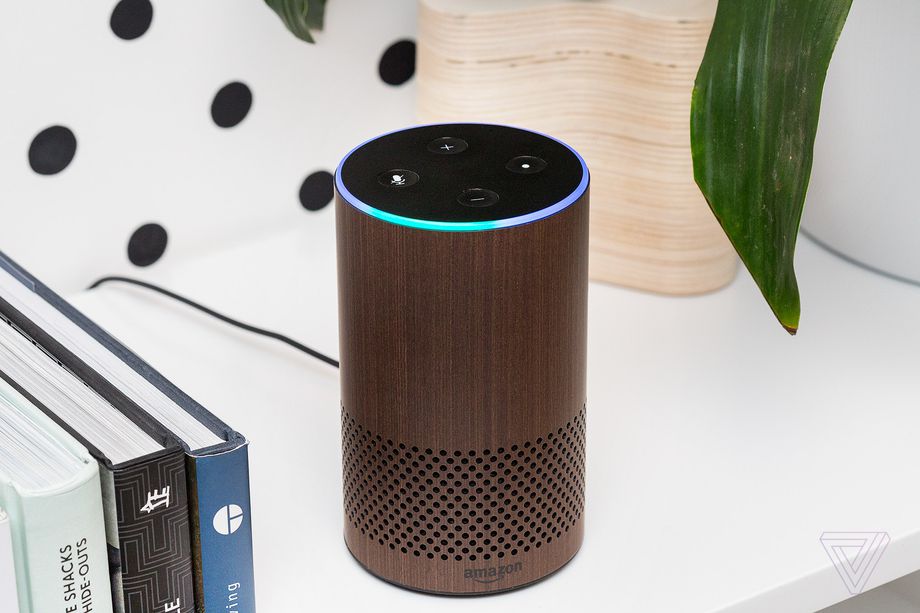
Home Voice Control — See Josh Micro in Action!


From DSC:
Along these lines, will faculty use their voices to control their room setups (i.e., the projection, shades, room lighting, what’s shown on the LMS, etc.)?

Or will machine-to-machine communications, the Internet of Things, sensors, mobile/cloud-based apps, and the like take care of those items automatically when a faculty member walks into the room?


An AI Bot for the Teacher — with thanks to Karthik Reddy for this resource

Artificial intelligence is the stuff of science fiction – if you are old enough, you will remember those Terminator movies a good few years ago, where mankind was systematically being wiped out by computers.

The truth is that AI, though not quite at Terminator level yet, is already a fact and something that most of us have encountered already. If you have ever used the virtual assistant on your phone or the Ask Google feature, you have used AI.

Some companies are using it as part of their sales and marketing strategies. An interesting example is Lowe’s Home Improvement that, instead of chatbots, uses actual robots into their physical stores. These robots are capable of helping customers locate products that they’re interested in, taking a lot of the guesswork out of the entire shopping experience.

Of course, there are a lot of different potential applications for AI that are very interesting. Imagine an AI teaching assistant, for example. They could help grade papers, fact check and assist with lesson planning, etc., all to make our harassed teachers’ lives a little easier.

Chatbots could be programmed as tutors to help kids better understand core topics if they are struggling with them, ensuring that they don’t hold the rest of the class up. And, for kids who have a real affinity with the subject, help them learn more about what they are interested in.

It could also help enhance long distance training.  Imagine if your students could get instant answers to basic questions through a simple chatbot. Sure, if they were still not getting it, they would come through to you – the chatbot cannot replace a real, live, teacher after all. But it could save you a lot of time and frustration.

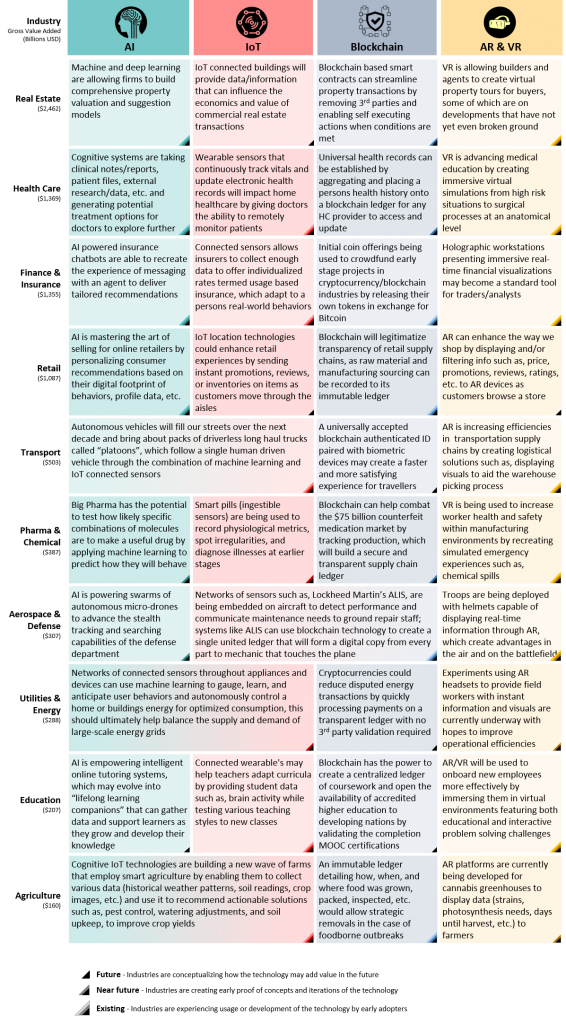
Here, of course, we have only skimmed the surface of what artificial intelligence is capable of. Why not look through this infographic to see how different brands have been using this tech, and see what possible applications of it we might expect.


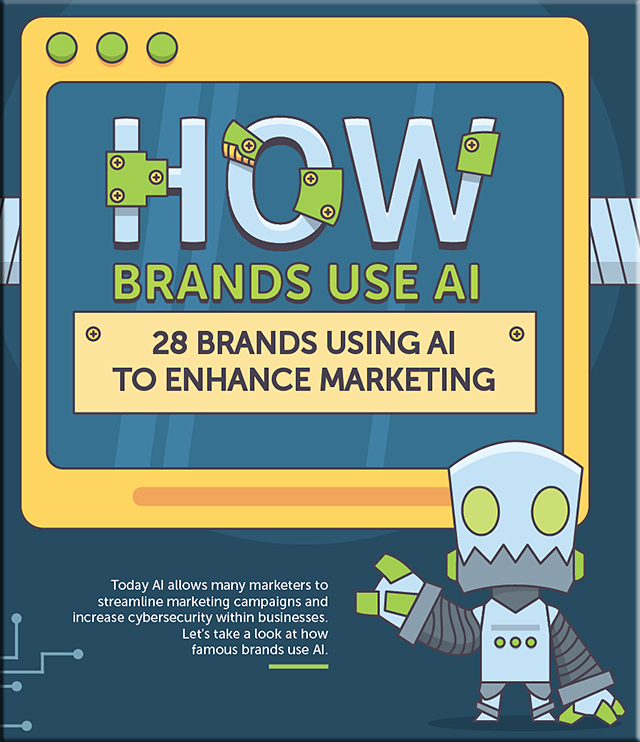
Brands that use AI to enhance marketing (infographic) 2018
From 16best.net with thanks to Karthik Reddy for this resource


The Law Firm Disrupted: Walmart Won’t Pay You to Cut and Paste — from law.com by Roy Strom
The world’s largest retailer, locked in a battle over the future of its business, has developed a tool to help make its many outside lawyers more efficient.

Excerpt (emphasis DSC):

Earlier this week, Walmart Inc. announced it would be rolling out 500 more giant vending machines in its stores to deliver online orders in seconds. The tool is designed to compete with online delivery services from Amazon.com Inc.

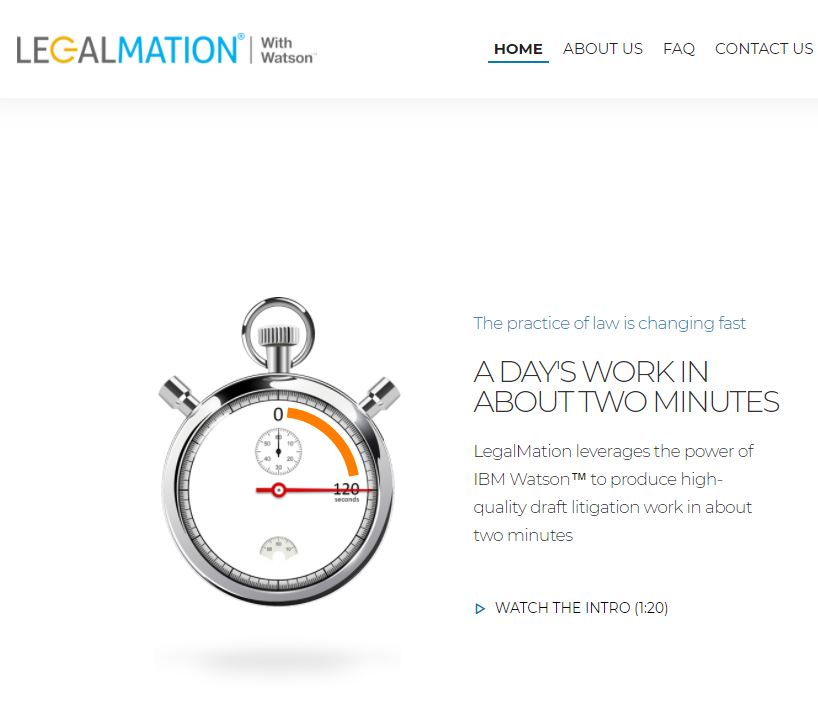
The world’s largest retailer also announced this week a tool that will compete (in some sense) with its outside counsel. Walmart has licensed a product from LegalMation that automatically drafts responses and initial discovery requests for employment and slip-and-fall suits filed in California. By this fall, the product should cover those cases in all 50 states.

LegalMation says it takes under two minutes to drag and drop a PDF of a suit into its product and receive a response to that case, in addition to a set of targeted requests for documents, form interrogatories and special interrogatories. That work has traditionally been handled by junior lawyers at Walmart’s outside firms, and LegalMation claims it can take them up to 10 hours to do. The savings on preparing an answer to these complaints is as much as 80 percent, LegalMation said.

“You’re still reviewing the outcome and reviewing the affirmative defenses,” said LegalMation co-founder Thomas Suh, a longtime legal technology advocate. “You’re eliminating the brainless cutting and pasting.”


About six months after the Harvard program, Lee and Suh had drilled down on where to apply AI, and they teamed up with IBM’s Watson to build their product. They also had to develop their own neural network that they said is the “secret sauce” to LegalMation’s ability to parse legalese.  “We would not be able to do this without an AI engine like Watson, and likewise I don’t think a product like this would be doable without our neural network,” Lee said.


Also see:


Also see:

Automation in the Legal Industry: How Will It Affect Recent Law School Grads? — from nationaljurist.com by Martin Pritikin

Excerpt:

A 2017 study by McKinsey Global Institute found that roughly half of all work activities globally have the potential to be automated by technology. A follow-on study (also from McKinsey in 2017) concluded that up to one-third of work activities could be displaced by 2030. What, if any, impacts do these eye-popping findings have on the future on the legal profession, especially for recent law school graduates embarking on their careers?

Recently, it was announced that ROSS, a legal research artificial intelligence platform powered in part by IBM’s Watson technology, was unveiling a new product, EVA, which will not only find applicable cases, but quality check case citations and history. As usual, this latest development has gotten people worried that human lawyers—and, in particular, recent law grads who have traditionally been tasked with legal research—may be on a path to extinction.

Obviously, no one can predict the future with certainty. But if history is any guide, these new technological developments will shift the type of work new lawyers are expected to do, but won’t necessarily eliminate it.

…

We may not be facing a future without lawyers. But it is going to be a future that requires lawyers to learn how to utilize technology effectively to serve their clients—something we should all welcome, not fear.


College of Law Announces the Launch of the Nation’s First Live Online J.D. Program — from law.syr.edu

Excerpt:

The American Bar Association has granted the Syracuse University College of Law a variance to offer a fully interactive online juris doctor program. The online J.D. program will be the first in the nation to combine real-time and self-paced online classes, on-campus residential classes, and experiential learning opportunities.

…
The online J.D. was subject to intense scrutiny and review by legal education experts before the College was granted the variance. Students in the online program will be taught by College of Law faculty, will be held to the same high admission and academic standards as students in the College’s residential program, and will take all courses required by its residential J.D. program.


Also see:


Per Catie Chase from BestColleges.com:

As you know, online education is rapidly expanding. At BestColleges.com we believe it’s important to evaluate the latest trends in distance education and measure the impact to both students and academic institutions. This is an industry that evolves quickly and these results offer relevant, current insights we are excited to learn from and share with the online learning community.

To keep up with these trends, we surveyed 1,800 online students and university administrators and published two reports based on our findings:

  • 2018 Online Education Trends Report – Synthesizing all of the data we gathered in our study, this academic report provides a holistic look at the current state of online education and offers predictions for where it’s headed.
  • The Student’s Guide to Online Education – Most students we spoke with wished they’d known more about online education and how to choose a quality online program prior to enrolling. We built this guide as a launching point for prospective students to gain that knowledge and make informed decisions on their education.


In an effort to develop a broader understanding of how common perceptions of online education are changing, we added several questions for both students and school administrators to the study this year. A majority of students (79%) felt that online learning is either “better than” or “equal to” on-campus learning. They felt their employers (61%), future employers (61%), and the general public (58%) also had a similarly positive perception of online learning.


From DSC:
It is highly likely that in the very near future, the question won’t even be asked anymore what employers think of online-based learning and whether they will hire someone that’s taken a significant portion of their coursework online. They won’t have a choice. This is especially true if and when more advanced technologies and capabilities get further baked into online-based learning — i.e., truly personalized/customized learning (which most faculty members — including myself — and teachers can’t deliver), virtual reality, artificial intelligence, chatbots, personal digital assistants, Natural Language Processing (NLP), and more. 

The better question could become:

To what extent will campus-based learning be impacted when truly personalized/customized learning is offered via online-based means?

My guess?  There will continue to be a significant amount of people who want to learn in a physical campus-based setting — and that’s great! But the growth of online learning will grow even more (a lot more) if truly personalized learning occurs via online-based means.


99% of administrators found that demand for online education has increased or stayed the same over the past few years. Almost 40% of respondents plan to increase their online program budgets in the next year.


This year, 34% of schools reported that their online students are younger than in previous years, falling into the “traditional” college age range of 18-25, and even younger as high school students take college courses before graduating. Several schools noted that recent high school graduates are entering the workforce while also pursuing a college education.


From DSC:
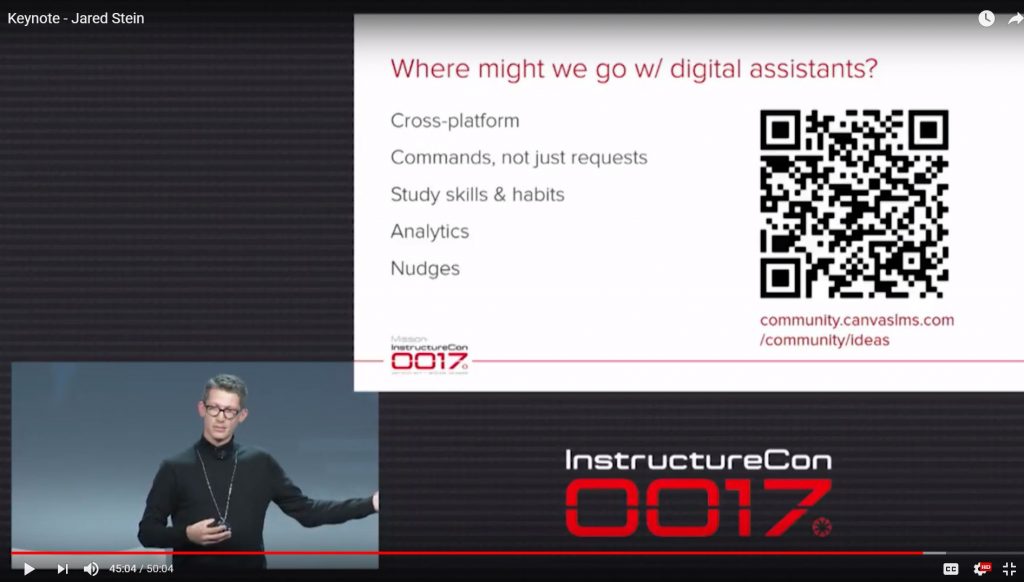
Check out the 2 items below regarding the use of voice as it pertains to using virtual assistants: 1 involves healthcare and the other involves education (Canvas).


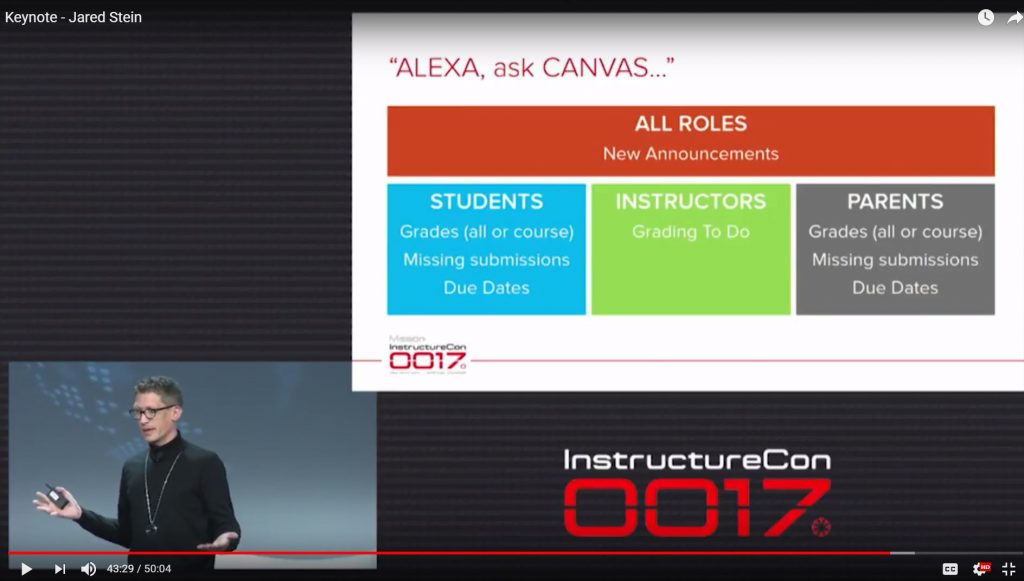
1) Using Alexa to go get information from Canvas:

“Alexa Ask Canvas…”

Example questions as a student:

  • What grades am I getting in my courses?
  • What am I missing?

Example question as a teacher:

  • How many submissions do I need to grade?

See the section on asking Alexa questions…roughly between http://www.youtube.com/watch?v=e-30ixK63zE &t=38m18s through http://www.youtube.com/watch?v=e-30ixK63zE &t=46m42s


2) Why voice assistants are gaining traction in healthcare — from samsungnext.com by Pragati Verma

Excerpt (emphasis DSC):

The majority of intelligent voice assistant platforms today are built around smart speakers, such as the Amazon Echo and Google Home. But that might change soon, as several specialized devices focused on the health market are slated to be released this year.

One example is ElliQ, an elder care assistant robot from Samsung NEXT portfolio company Intuition Robotics. Powered by AI cognitive technology, it encourages an active and engaged lifestyle. Aimed at older adults aging in place, it can recognizing their activity level and suggest activities, while also making it easier to connect with loved ones.

Pillo is an example of another such device. It is a robot that combines machine learning, facial recognition, video conferencing, and automation to work as a personal health assistant. It can dispense vitamins and medication, answer health and wellness questions in a conversational manner, securely sync with a smartphone and wearables, and allow users to video conference with health care professionals.

“It is much more than a smart speaker. It is HIPAA compliant and it recognizes the user; acknowledges them and delivers care plans,” said Rogers, whose company created the voice interface for the platform.

Orbita is now working with toSense’s remote monitoring necklace to track vitals and cardiac fluids as a way to help physicians monitor patients remotely. Many more seem to be on their way.

“Be prepared for several more devices like these to hit the market soon,” Rogers predicted.


From DSC:

I see the piece about Canvas and Alexa as a great example of where a piece of our future learning ecosystems are heading towards — in fact, it’s been a piece of my Learning from the Living [Class] Room vision for a while now. The use of voice recognition/NLP is only picking up steam; look for more of this kind of functionality in the future. 


The Living [Class] Room -- by Daniel Christian -- July 2012 -- a second device used in conjunction with a Smart/Connected TV


AWS unveils ‘Transcribe’ and ‘Translate’ machine learning services — from business-standard.com

Excerpts:

  • Amazon “Transcribe” provides grammatically correct transcriptions of audio files to allow audio data to be analyzed, indexed and searched.
  • Amazon “Translate” provides natural sounding language translation in both real-time and batch scenarios.


Google’s ‘secret’ smart city on Toronto’s waterfront sparks row — from bbc.com by Robin Levinson-King BBC News, Toronto

Excerpt:

The project was commissioned by the publically funded organisation Waterfront Toronto, who put out calls last spring for proposals to revitalise the 12-acre industrial neighbourhood of Quayside along Toronto’s waterfront.

Prime Minister Justin Trudeau flew down to announce the agreement with Sidewalk Labs, which is owned by Google’s parent company Alphabet, last October, and the project has received international attention for being one of the first smart-cities designed from the ground up.

But five months later, few people have actually seen the full agreement between Sidewalk and Waterfront Toronto.

As council’s representative on Waterfront Toronto’s board, Mr Minnan-Wong is the only elected official to actually see the legal agreement in full. Not even the mayor knows what the city has signed on for.

“We got very little notice. We were essentially told ‘here’s the agreement, the prime minister’s coming to make the announcement,'” he said.

“Very little time to read, very little time to absorb.”

Now, his hands are tied – he is legally not allowed to comment on the contents of the sealed deal, but he has been vocal about his belief it should be made public.

“Do I have concerns about the content of that agreement? Yes,” he said.

“What is it that is being hidden, why does it have to be secret?”

From DSC:
Google needs to be very careful here. Increasingly so these days, our trust in them (and other large tech companies) is at stake.


Addendum on 4/16/18 with thanks to Uros Kovacevic for this resource:
Human lives saved by robotic replacements — from injuryclaimcoach.com

Excerpt:

For academics and average workers alike, the prospect of automation provokes concern and controversy. As the American workplace continues to mechanize, some experts see harsh implications for employment, including the loss of 73 million jobs by 2030. Others maintain more optimism about the fate of the global economy, contending technological advances could grow worldwide GDP by more than $1.1 trillion in the next 10 to 15 years. Whatever we make of these predictions, there’s no question automation will shape the economic future of the nation – and the world.

But while these fiscal considerations are important, automation may positively affect an even more essential concern: human life. Every day, thousands of Americans risk injury or death simply by going to work in dangerous conditions. If robots replaced them, could hundreds of lives be saved in the years to come?

In this project, we studied how many fatal injuries could be averted if dangerous occupations were automated. To do so, we analyzed which fields are most deadly and the likelihood of their automation according to expert predictions. To see how automation could save Americans’ lives, keep reading.

Also related to this item is :
How AI is improving the landscape of work  — from forbes.com by Laurence Bradford

Excerpts:

There have been a lot of sci-fi stories written about artificial intelligence. But now that it’s actually becoming a reality, how is it really affecting the world? Let’s take a look at the current state of AI and some of the things it’s doing for modern society.

  • Creating New Technology Jobs
  • Using Machine Learning To Eliminate Busywork
  • Preventing Workplace Injuries With Automation
  • Reducing Human Error With Smart Algorithms

From DSC:
This is clearly a pro-AI piece. Not all uses of AI are beneficial, but this article mentions several use cases where AI can make positive contributions to society.


It’s About Augmented Intelligence, not Artificial Intelligence — from informationweek.com
The adoption of AI applications isn’t about replacing workers but helping workers do their jobs better.


From DSC:
This article is also a pro-AI piece. But again, not all uses of AI are beneficial. We need to be aware of — and involved in — what is happening with AI.


Investing in an Automated Future — from clomedia.com by Mariel Tishma
Employers recognize that technological advances like AI and automation will require employees with new skills. Why are so few investing in the necessary learning?


AI Helps Figure Out Where Students Go Wrong on Math Problems — from steamuniverse.com by Joshua Bolkan

Excerpt:

Researchers at Cornell University are working on software that will help math teachers understand what their students were thinking that led them to finding incorrect answers.

Erik Andersen, assistant professor of computer science at Cornell, said that teachers spend a lot of time grading math homework because grading is more complicated than just marking an answer as right or wrong.

“What the teachers are spending a lot of time doing is assigning partial credit and working individually to figure out what students are doing wrong,” Andersen said in a prepared statement. “We envision a future in which educators spend less time trying to reconstruct what their students are thinking and more time working directly with their students.”


Also see:


2018 TECH TRENDS REPORT — from the Future Today Institute
Emerging technology trends that will influence business, government, education, media and society in the coming year.

Description:

The Future Today Institute’s 11th annual Tech Trends Report identifies 235 tantalizing advancements in emerging technologies—artificial intelligence, biotech, autonomous robots, green energy and space travel—that will begin to enter the mainstream and fundamentally disrupt business, geopolitics and everyday life around the world. Our annual report has garnered more than six million cumulative views, and this edition is our largest to date.

Helping organizations see change early and calculate the impact of new trends is why we publish our annual Emerging Tech Trends Report, which focuses on mid- to late-stage emerging technologies that are on a growth trajectory.

In this edition of the FTI Tech Trends Report, we’ve included several new features and sections:

  • a list and map of the world’s smartest cities
  • a calendar of events that will shape technology this year
  • detailed near-future scenarios for several of the technologies
  • a new framework to help organizations decide when to take action on trends
  • an interactive table of contents, which will allow you to more easily navigate the report from the bookmarks bar in your PDF reader


01 How does this trend impact our industry and all of its parts?
02 How might global events — politics, climate change, economic shifts – impact this trend, and as a result, our organization?
03 What are the second, third, fourth, and fifth-order implications of this trend as it evolves, both in our organization and our industry?
04 What are the consequences if our organization fails to take action on this trend?
05 Does this trend signal emerging disruption to our traditional business practices and cherished beliefs?
06 Does this trend indicate a future disruption to the established roles and responsibilities within our organization? If so, how do we reverse-engineer that disruption and deal with it in the present day?
07 How are the organizations in adjacent spaces addressing this trend? What can we learn from their failures and best practices?
08 How will the wants, needs and expectations of our consumers/ constituents change as a result of this trend?
09 Where does this trend create potential new partners or collaborators for us?
10 How does this trend inspire us to think about the future of our organization?


China’s New Frontiers in Dystopian Tech — from theatlantic.com by Rene Chun
Facial-recognition technologies are proliferating, from airports to bathrooms.

Excerpt:

China is rife with face-scanning technology worthy of Black Mirror. Don’t even think about jaywalking in Jinan, the capital of Shandong province. Last year, traffic-management authorities there started using facial recognition to crack down. When a camera mounted above one of 50 of the city’s busiest intersections detects a jaywalker, it snaps several photos and records a video of the violation. The photos appear on an overhead screen so the offender can see that he or she has been busted, then are cross-checked with the images in a regional police database. Within 20 minutes, snippets of the perp’s ID number and home address are displayed on the crosswalk screen. The offender can choose among three options: a 20-yuan fine (about $3), a half-hour course in traffic rules, or 20 minutes spent assisting police in controlling traffic. Police have also been known to post names and photos of jaywalkers on social media.

…

The technology’s veneer of convenience conceals a dark truth: Quietly and very rapidly, facial recognition has enabled China to become the world’s most advanced surveillance state. A hugely ambitious new government program called the “social credit system” aims to compile unprecedented data sets, including everything from bank-account numbers to court records to internet-search histories, for all Chinese citizens. Based on this information, each person could be assigned a numerical score, to which points might be added for good behavior like winning a community award, and deducted for bad actions like failure to pay a traffic fine. The goal of the program, as stated in government documents, is to “allow the trustworthy to roam everywhere under heaven while making it hard for the discredited to take a single step.”


From DSC:
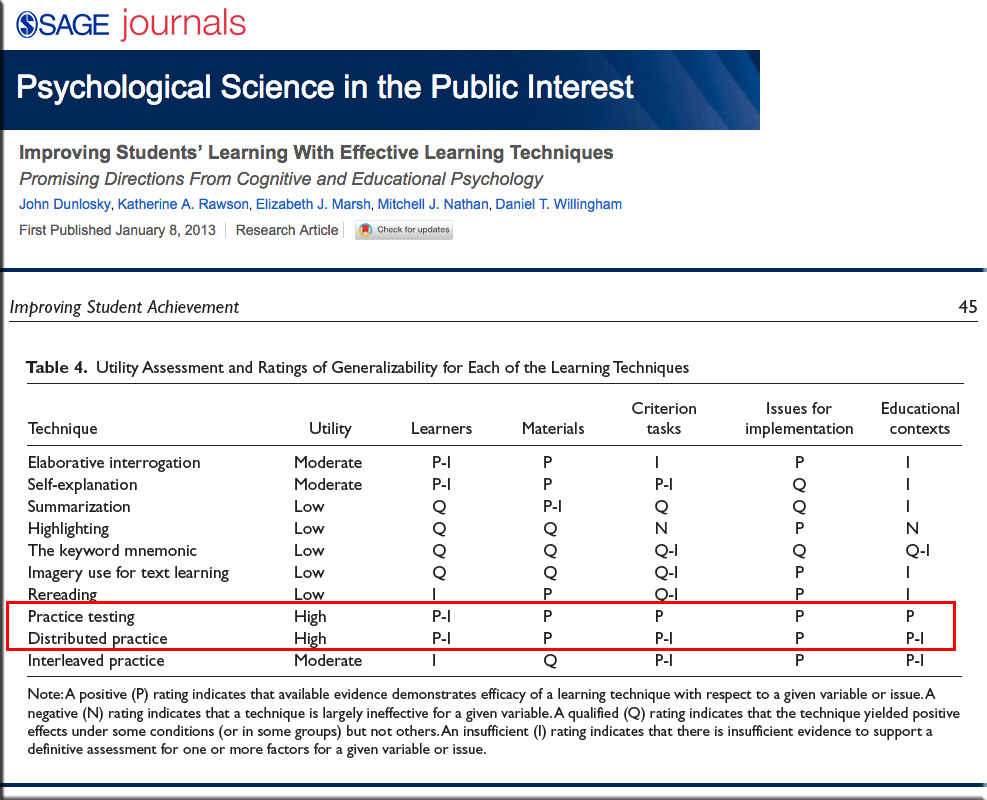
After seeing the article entitled, “Scientists Are Turning Alexa into an Automated Lab Helper,” I began to wonder…might Alexa be a tool to periodically schedule & provide practice tests & distributed practice on content? In the future, will there be “learning bots” that a learner can employ to do such self-testing and/or distributed practice?


From page 45 of the PDF available here:


Might Alexa be a tool to periodically schedule/provide practice tests & distributed practice on content?


Scientists Are Turning Alexa into an Automated Lab Helper — from technologyreview.com by Jamie Condliffe
Amazon’s voice-activated assistant follows a rich tradition of researchers using consumer tech in unintended ways to further their work.

Excerpt:

Alexa, what’s the next step in my titration?

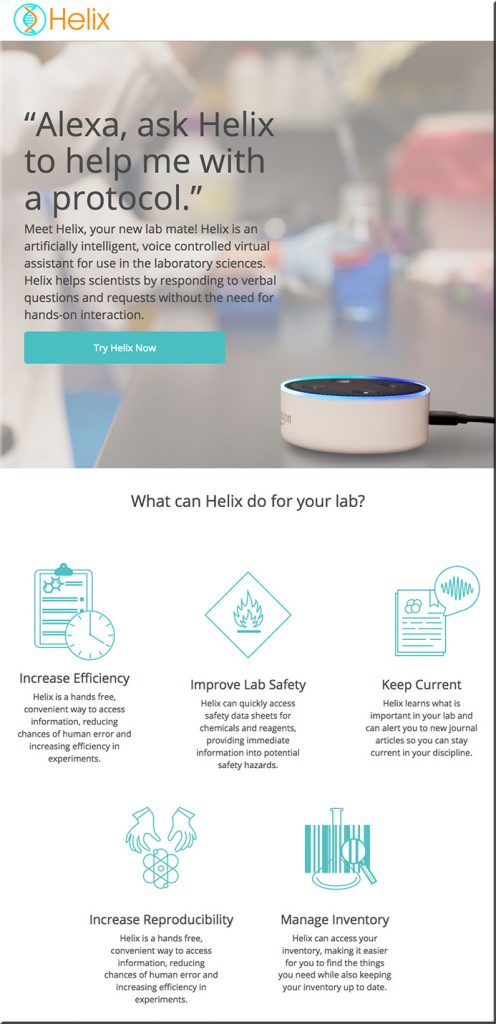
Probably not the first question you ask your smart assistant in the morning, but potentially the kind of query that scientists may soon be leveling at Amazon’s AI helper. Chemical & Engineering News reports that software developer James Rhodes—whose wife, DeLacy Rhodes, is a microbiologist—has created a skill for Alexa called Helix that lends a helping hand around the laboratory.

It makes sense. While most people might ask Alexa to check the news headlines, play music, or set a timer because our hands are a mess from cooking, scientists could look up melting points, pose simple calculations, or ask for an experimental procedure to be read aloud while their hands are gloved and in use.

…

For now, Helix is still a proof-of-concept. But you can sign up to try an early working version, and Rhodes has plans to extend its abilities…


Also see:

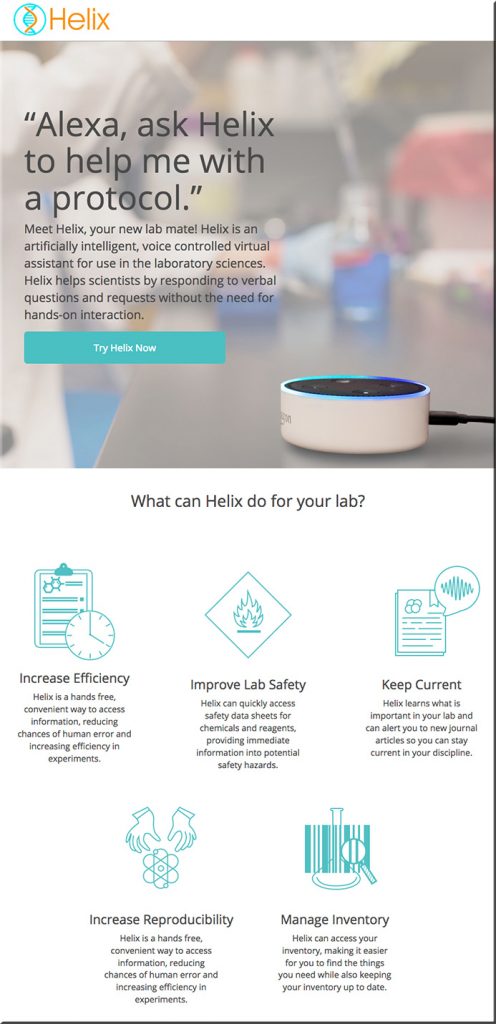
Helix


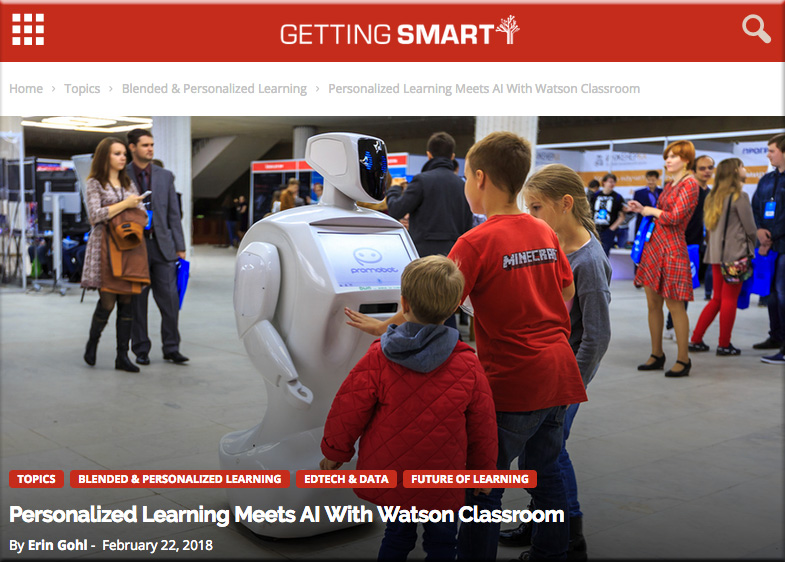
Personalized Learning Meets AI With Watson Classroom

Personalized Learning Meets AI With Watson Classroom — from gettingsmart.com by Erin Gohl

Excerpt (emphasis DSC):

Teaching is truly a Herculean challenge. Even the very best teachers can keep only so many of these insights in their heads and make only so many connections between expectations and circumstances. They can be aware of only a fraction of the research on best practices. They have only so much time to collaborate and communicate with the other adults in a particular student’s life to share information and insights. To be the best of themselves, teachers need to have access to a warehouse of information, a research assistant to mine best practices, note takers to gather and record information on each student, a statistician to gauge effective practices, and someone to collaborate with to distill the next best step with each student. In recent years, a plethora of vendors have developed software solutions that promise to simplify this process and give schools and teachers the answers to understand and address the individual needs of each student. One of the most promising, which I recently had a chance to learn about, is IBM’s Watson Classroom.

…

IBM is clear about what makes Watson different than existing solutions. First of all, it is a cognitive partner; not a solution. Secondly, it does not require proprietary or additional assessments, curriculum, or content. It uses whatever a district has in place. But it goes beyond the performance of tiering difficulty, pace, and reading level that is now standard fare for the solutions promising individualized, adaptive and personalized learning. Watson takes the stew of data from existing systems (including assessments, attendance records, available accommodations), adds the ability to infer meaning from written reports, and is able to connect the quality of the result to the approach that was taken. And then adjust the next recommendation based on what was learned. It is artificial intelligence (AI) brought to education that goes far beyond the adaptive learning technologies of today.

…

Watson Classroom is currently being piloted in 12 school districts across the country. In those classrooms, Watson Classroom is utilizing cutting-edge computing power to give teachers a full range of support to be the best versions of themselves. Watson is facilitating the kind of education the great teachers strive for every day–one where learning is truly personalized for each and every student. Bringing the power of big data to the interactions between students and teachers can help assure that every student reaches beyond our expectations to achieve their full potential.


Learn with Google AI: Making ML education available to everyone — from blog.google

Excerpt:

To help everyone understand how AI can solve challenging problems, we’ve created a resource called Learn with Google AI. This site provides ways to learn about core ML concepts, develop and hone your ML skills, and apply ML to real-world problems. From deep learning experts looking for advanced tutorials and materials on TensorFlow, to “curious cats” who want to take their first steps with AI, anyone looking for educational content from ML experts at Google can find it here.

Learn with Google AI also features a new, free course called Machine Learning Crash Course (MLCC). The course provides exercises, interactive visualizations, and instructional videos that anyone can use to learn and practice ML concepts.


7 Ways Chatbots and AI are Disrupting HR — from chatbotsmagazine.com
Enterprises are embracing AI for automating human resources

Excerpt:

Chatbots and AI have become household names and enterprises are taking notice. According to a recent Forrester survey, roughly “85% of customer interactions within an enterprise will be with software robots in five years’ time” and “87% of CEOs are looking to expand their AI workforce” using AI bots.

In an effort to drive increased labor efficiencies, reduce costs, and deliver better customer/employee experiences enterprises are quickly introducing AI, machine learning, and natural language understanding as core elements of their digital transformation strategy in 2018.

Human resources (HR) is one area ripe for intelligent automation within an enterprise. AI-powered bots for HR are able to streamline and personalize the HR process across seasonal, temporary, part-time, and full-time employees.

…
There are 7 ways in which enterprises can use HR bots to drive increased labors efficiencies, reduced costs, and better employee experiences:

  1. Recruitment
  2. Onboarding
  3. Company Policy FAQs
  4. Employee Training
  5. Common Questions
  6. Benefits Enrollment
  7. Annual Self-Assessment/Reviews


From DSC:
Again, this article paint a bit too rosy of a picture for me re: the use of AI and HR, especially in regards to recruiting employees.


Implementation of AI into eLearning. Interview with Christopher Pappas — from joomlalms.com by Darya Tarliuk
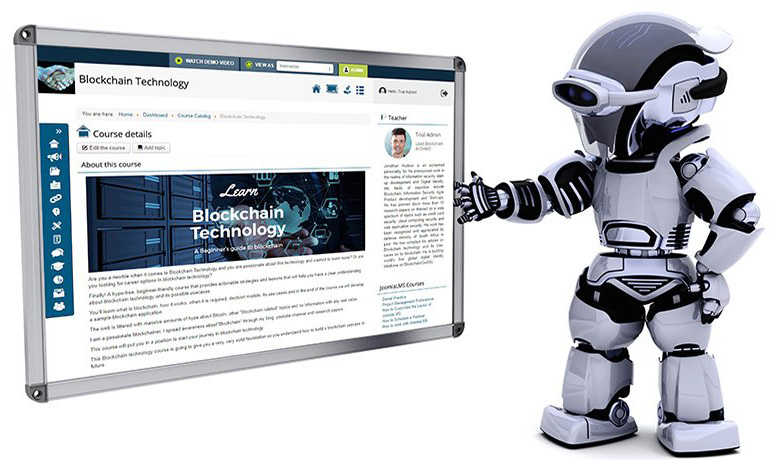
Excerpt:

Every day we hear more and more about the impact that Artificial Intelligence gains in every sphere of our life. In order to discover how AI implementation is going to change the eLearning we decided to ask Christopher Pappas to share his views and find out what he thinks about it. Christopher is an experienced eLearning specialist and the Founder of the eLearning Industry’s Network.

…
How to get ready preparing course materials now, while considering the future impact of AI?
Christopher: Regardless of whether you plan to adopt an AI system as soon as they’re available to the mass market or you opt to hold off (and let others work out the glitches), infrastructure is key. You can prepare your course materials now by developing course catalogs, microlearning online training repositories, and personalized online training paths that fall into the AI framework. For example, the AI system can easily recommend existing resources based on a learners’ assessment scores or job duties. All of the building blocks are in place, allowing the system to focus on content delivery and data analysis.


Can You Trust Intelligent Virtual Assistants? — from nojitter.com by Gary Audin
From malicious hackers to accidental voice recordings, data processed through virtual assistants may open you to security and privacy risks.

Excerpt:

Did you know that with such digital assistants your voice data is sent to the cloud or another remote location for processing? Is it safe to talk in front of your TV remote? Are you putting your business data at risk of being compromised by asking Alexa to start your meeting?


Thanks, Robots! Now These Four Non-Tech Job Skills Are In Demand — from fastcompany.com by Christian Madsbjerg
The more we rely on AI and machine learning, the more work we need social scientists and humanities experts to do.

Excerpt:

Automation isn’t a simple struggle between people and technology, with the two sides competing for jobs. The more we rely on robots, artificial intelligence (AI), and machine learning, the clearer it’s become just how much we need social scientists and humanities experts–not the reverse.

These four skills in particular are all unique to us humans, and will arguably rise in value in the coming years, as more and more companies realize they need the best of both worlds to unleash the potential from both humans and machines.


From DSC:
Here’s a quote that has been excerpted from the announcement below…and it’s the type of service that will be offered in our future learning ecosystems — our next generation learning platforms:


Career Insight™ enables prospective students to identify programs of study which can help them land the careers they want: Career Insight™ describes labor market opportunities associated with programs of study to prospective students. The recommendation engine also matches prospective students to programs based on specific career interests.


But in addition to our future learning platforms pointing new/prospective students to physical campuses, the recommendation engines will also provide immediate access to digital playlists for the prospective students/learners to pursue from their living rooms (or as they are out and about…i.e., mobile access).


The Living [Class] Room -- by Daniel Christian -- July 2012 -- a second device used in conjunction with a Smart/Connected TV


Artificial intelligence working with enormous databases to build/update recommendation engines…yup, I could see that. Lifelong learning. Helping people know what to reinvent themselves to.


Career Insight™ Lets Prospective Students Connect Academic Program Choices to Career Goals — from burning-glass.com; also from Hadley Dreibelbis from Finn Partners
New Burning Glass Technologies Product Brings Job Data into Enrollment Decisions

BOSTON—Burning Glass Technologies announces the launch of Career Insight™, the first tool to show prospective students exactly how course enrollment will advance their careers.

Embedded in institutional sites and powered by Burning Glass’ unparalleled job market data, Career Insight’s personalized recommendation engine matches prospective students with programs based on their interests and goals. Career Insight will enable students to make smarter decisions, as well as improve conversion and retention rates for postsecondary institutions.

“A recent Gallup survey found that 58% of students say career outcomes are the most important reason to continue their education,” Burning Glass CEO Matthew Sigelman said. “That’s particularly true for the working learners who are now the norm on college campuses. Career Insight™ is a major step in making sure that colleges and universities can speak their language from the very first.”

Beginning an educational program with a firm, realistic career goal can help students persist in their studies. Currently only 29% of students in two-year colleges and 59% of those in four-year institutions complete their degrees within six years.

Career Insight™ enables prospective students to identify programs of study which can help them land the careers they want:

  • Career Insight™ describes labor market opportunities associated with programs of study to prospective students. The recommendation engine also matches prospective students to programs based on specific career interests.
  • The application provides insights to enrollment, advising, and marketing teams into what motivates prospective students, analysis that will guide the institution in improving program offerings and boosting conversion.
  • Enrollment advisors can also walk students through different career and program scenarios in real time.

Career Insight™ is driven by the Burning Glass database of a billion job postings and career histories, collected from more than 40,000 online sources daily. The database, powered by a proprietary analytic taxonomy, provides insight into what employers need much faster and in more detail than any other sources.

Career Insight™ is powered by the same rich dataset Burning Glass delivers to hundreds of leading corporate and education customers – from Microsoft and Accenture to Harvard University and Coursera.

More information is available at http://burning-glass.com/career-insight.


You can now build Amazon Music playlists using voice commands on Alexa devices — from theverge.com by Natt Garun

Excerpt:

Amazon today announced that Amazon Music listeners can now build playlists using voice commands via Alexa. For example, if they’re streaming music from an app or listening to the radio on an Alexa-enabled device, they can use voice commands to add the current song to a playlist, or start a new playlist from scratch.


From DSC:
I wonder how long it will be before we will be able to create and share learning-based playlists for accessing digitally-based resources…? Perhaps AI will be used to offer a set of playlists on any given topic…?

With the exponential pace of change that we’re starting to experience — plus the 1/2 lives of information shrinking — such features could come in handy.


© 2025 | Daniel Christian