To higher ed: When the race track is going 180mph, you can’t walk or jog onto the track. [Christian]

From DSC:
When the race track is going 180mph, you can’t walk or jog onto the track.  What do I mean by that? 

Consider this quote from an article that Jeanne Meister wrote out at Forbes entitled, “The Future of Work: Three New HR Roles in the Age of Artificial Intelligence:”*

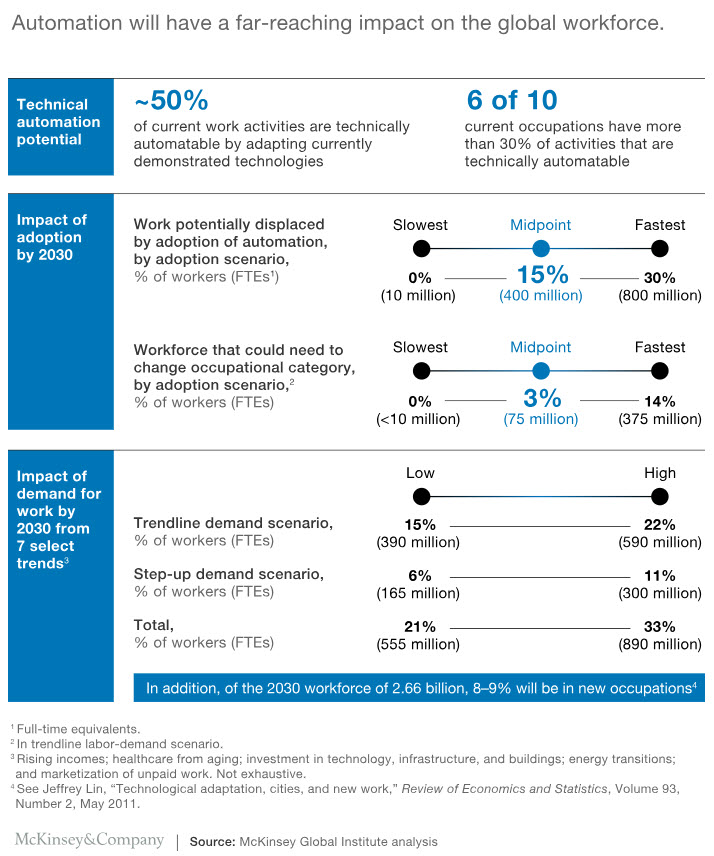
This emphasis on learning new skills in the age of AI is reinforced by the most recent report on the future of work from McKinsey which suggests that as many as 375 million workers around the world may need to switch occupational categories and learn new skills because approximately 60% of jobs will have least one-third of their work activities able to be automated.

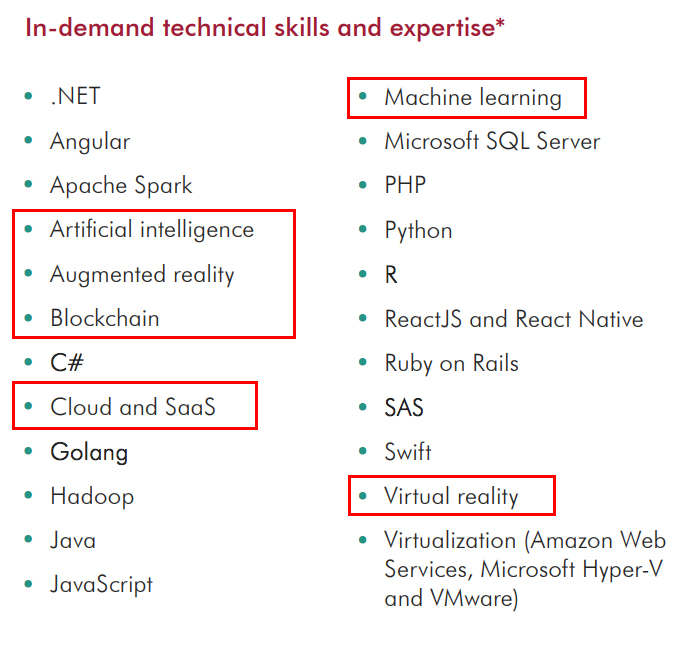
Go scan the job openings and you will likely see many that have to do with technology, and increasingly, with emerging technologies such as artificial intelligence, deep learning, machine learning, virtual reality, augmented reality, mixed reality, big data, cloud-based services, robotics, automation, bots, algorithm development, blockchain, and more. 


From Robert Half’s 2019 Technology Salary Guide 


How many of us have those kinds of skills? Did we get that training in the community colleges, colleges, and universities that we went to? Highly unlikely — even if you graduated from one of those institutions only 5-10 years ago. And many of those institutions are often moving at the pace of a nice leisurely walk, with some moving at a jog, even fewer are sprinting. But all of them are now being asked to enter a race track that’s moving at 180mph. Higher ed — and society at large — are not used to moving at this pace. 

This is why I think that higher education and its regional accrediting organizations are going to either need to up their game hugely — and go through a paradigm shift in the required thinking/programming/curricula/level of responsiveness — or watch while alternatives to institutions of traditional higher education increasingly attract their learners away from them.

This is also, why I think we’ll see an online-based, next generation learning platform take place. It will be much more nimble — able to offer up-to-the minute, in-demand skills and competencies. 


The below graphic is from:
Jobs lost, jobs gained: What the future of work will mean for jobs, skills, and wages


* Three New HR Roles To Create Compelling Employee Experiences
These new HR roles include:

  1. IBM: Vice President, Data, AI & Offering Strategy, HR
  2. Kraft Heinz Senior Vice President Global HR, Performance and IT
  3. SunTrust Senior Vice President Employee Wellbeing & Benefits

What do these three roles have in common? All have been created in the last three years and acknowledge the growing importance of a company’s commitment to create a compelling employee experience by using data, research, and predictive analytics to better serve the needs of employees. In each case, the employee assuming the new role also brought a new set of skills and capabilities into HR. And importantly, the new roles created in HR address a common vision: create a compelling employee experience that mirrors a company’s customer experience.


An excerpt from McKinsey Global Institute | Notes from the Frontier | Modeling the Impact of AI on the World Economy 

Workers.
A widening gap may also unfold at the level of individual workers. Demand for jobs could shift away from repetitive tasks toward those that are socially and cognitively driven and others that involve activities that are hard to automate and require more digital skills.12 Job profiles characterized by repetitive tasks and activities that require low digital skills may experience the largest decline as a share of total employment, from some 40 percent to near 30 percent by 2030. The largest gain in share may be in nonrepetitive activities and those that require high digital skills, rising from some 40 percent to more than 50 percent. These shifts in employment would have an impact on wages. We simulate that around 13 percent of the total wage bill could shift to categories requiring nonrepetitive and high digital skills, where incomes could rise, while workers in the repetitive and low digital skills categories may potentially experience stagnation or even a cut in their wages. The share of the total wage bill of the latter group could decline from 33 to 20 percent.13 Direct consequences of this widening gap in employment and wages would be an intensifying war for people, particularly those skilled in developing and utilizing AI tools, and structural excess supply for a still relatively high portion of people lacking the digital and cognitive skills necessary to work with machines.


Prudenti: Law schools facing new demands for innovative education — from libn.com by A. Gail Prudenti

Excerpt (emphasis DSC):

Law schools have always taught the law and the practice thereof, but in the 21st century that is not nearly enough to provide students with the tools to succeed.

Clients, particularly business clients, are not only looking for an “attorney” in the customary sense, but a strategic partner equipped to deal with everything from project management to metrics to process enhancement. Those demands present law schools with both an opportunity for and expectation of innovation in legal education.

At Hofstra Law, we are in the process of establishing a new Center for Applied Legal Technology and Innovation where law students will be taught to use current and emerging technology, and to apply those skills and expertise to provide cutting-edge legal services while taking advantage of interdisciplinary opportunities.

Our goal is to teach law students how to use technology to deliver legal services and to yield graduates who combine exceptional legal acumen with the skill and ability to travel comfortably among myriad disciplines. The lawyers of today—and tomorrow—must be more than just conversant with other professionals. Rather, they need to be able to collaborate with experts in other fields to serve the myriad and intertwined interests of the client.


Also see:

Workforce of the future: The competing forces shaping 2030 — from pwc.com

Excerpt (emphasis DSC):

We are living through a fundamental transformation in the way we work. Automation and ‘thinking machines’ are replacing human tasks and jobs, and changing the skills that organisations are looking for in their people. These momentous changes raise huge organisational, talent and HR challenges – at a time when business leaders are already wrestling with unprecedented risks, disruption and political and societal upheaval.

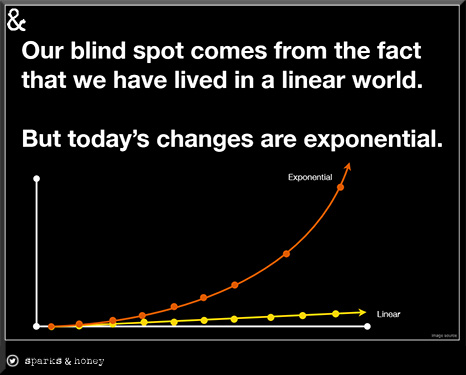
The pace of change is accelerating.


Graphic by DSC


Competition for the right talent is fierce. And ‘talent’ no longer means the same as ten years ago; many of the roles, skills and job titles of tomorrow are unknown to us today. How can organisations prepare for a future that few of us can define? How will your talent needs change? How can you attract, keep and motivate the people you need? And what does all this mean for HR?

This isn’t a time to sit back and wait for events to unfold. To be prepared for the future you have to understand it. In this report we look in detail at how the workplace might be shaped over the coming decade.


From DSC:

Peruse the titles of the articles in this document (that features articles from the last 1-2 years) with an eye on the topics and technologies addressed therein! 


Artificial Intelligence (AI), virtual reality, augmented reality, robotics, drones, automation, bots, machine learning, NLP/voice recognition and personal assistants, the Internet of Things, facial recognition, data mining, and more. How these technologies roll out — and if some of them should be rolling out at all — needs to be discussed and dealt with sooner. This is due to the fact that the pace of change has changed. If you can look at those articles  — with an eye on the last 500-1000 years or so to compare things to — and say that we aren’t living in times where the trajectory of technological change is exponential, then either you or I don’t know the meaning of that word.


The ABA and law schools need to be much more responsive and innovative — or society will end up suffering the consequences.

Daniel Christian


How AI could help solve some of society’s toughest problems — from MIT Tech Review by Charlotte Jee
Machine learning and game theory help Carnegie Mellon assistant professor Fei Fang predict attacks and protect people.

Excerpt:

At MIT Technology Review’s EmTech conference, Fang outlined recent work across academia that applies AI to protect critical national infrastructure, reduce homelessness, and even prevent suicides.


Google Cloud’s new AI chief is on a task force for AI military uses and believes we could monitor ‘pretty much the whole world’ with drones — from businessinsider.in by Greg Sandoval

  • Andrew Moore, the new chief of Google Cloud AI, co-chairs a task force on AI and national security with deep defense sector ties.
  • Moore leads the task force with Robert Work, the man who reportedly helped to create Project Maven.
  • Moore has given various talks about the role of AI and defense, once noting that it was now possible to deploy drones capable of surveilling “pretty much the whole world.”
  • One former Googler told Business Insider that the hiring of Moore is a “punch in the face” to those employees.


How AI can be a force for good — from science.sciencemag.org

Excerpt:

The AI revolution is equally significant, and humanity must not make the same mistake again. It is imperative to address new questions about the nature of post-AI societies and the values that should underpin the design, regulation, and use of AI in these societies. This is why initiatives like the abovementioned AI4People and IEEE projects, the European Union (EU) strategy for AI, the EU Declaration of Cooperation on Artificial Intelligence, and the Partnership on Artificial Intelligence to Benefit People and Society are so important (see the supplementary materials for suggested further reading). A coordinated effort by civil society, politics, business, and academia will help to identify and pursue the best strategies to make AI a force for good and unlock its potential to foster human flourishing while respecting human dignity.


Ethical regulation of the design and use of AI is a complex but necessary task. The alternative may lead to devaluation of individual rights and social values, rejection of AI-based innovation, and ultimately a missed opportunity to use AI to improve individual wellbeing and social welfare.


Robot wars — from ethicaljournalismnetwork.org by James Ball
How artificial intelligence will define the future of news

Excerpt:

There are two paths ahead in the future of journalism, and both of them are shaped by artificial intelligence.

The first is a future in which newsrooms and their reporters are robust: Thanks to the use of artificial intelligence, high-quality reporting has been enhanced. Not only do AI scripts manage the writing of simple day-to-day articles such as companies’ quarterly earnings updates, they also monitor and track masses of data for outliers, flagging these to human reporters to investigate.

Beyond business journalism, comprehensive sports stats AIs keep key figures in the hands of sports journalists, letting them focus on the games and the stories around them. The automated future has worked.

The alternative is very different. In this world, AI reporters have replaced their human counterparts and left accountability journalism hollowed out. Facing financial pressure, news organizations embraced AI to handle much of their day-to-day reporting, first for their financial and sports sections, then bringing in more advanced scripts capable of reshaping wire copy to suit their outlet’s political agenda. A few banner hires remain, but there is virtually no career path for those who would hope to replace them ? and stories that can’t be tackled by AI are generally missed.


Who’s to blame when a machine botches your surgery? — from qz.com by Robert Hart

Excerpt:

That’s all great, but even if an AI is amazing, it will still fail sometimes. When the mistake is caused by a machine or an algorithm instead of a human, who is to blame?

This is not an abstract discussion. Defining both ethical and legal responsibility in the world of medical care is vital for building patients’ trust in the profession and its standards. It’s also essential in determining how to compensate individuals who fall victim to medical errors, and ensuring high-quality care. “Liability is supposed to discourage people from doing things they shouldn’t do,” says Michael Froomkin, a law professor at the University of Miami.


Alibaba looks to arm hotels, cities with its AI technology — from zdnet.com by Eileen Yu
Chinese internet giant is touting the use of artificial intelligence technology to arm drivers with real-time data on road conditions as well as robots in the hospitality sector, where they can deliver meals and laundry to guests.

Excerpt:

Alibaba A.I. Labs’ general manager Chen Lijuan said the new robots aimed to “bridge the gap” between guest needs and their expected response time. Describing the robot as the next evolution towards smart hotels, Chen said it tapped AI technology to address painpoints in the hospitality sector, such as improving service efficiencies.

Alibaba is hoping the robot can ease hotels’ dependence on human labour by fulfilling a range of tasks, including delivering meals and taking the laundry to guests.


Accenture Introduces Ella and Ethan, AI Bots to Improve a Patient’s Health and Care Using the Accenture Intelligent Patient Platform — from marketwatch.com

Excerpt:

Accenture has enhanced the Accenture Intelligent Patient Platform with the addition of Ella and Ethan, two interactive virtual-assistant bots that use artificial intelligence (AI) to constantly learn and make intelligent recommendations for interactions between life sciences companies, patients, health care providers (HCPs) and caregivers. Designed to help improve a patient’s health and overall experience, the bots are part of Accenture’s Salesforce Fullforce Solutions powered by Salesforce Health Cloud and Einstein AI, as well as Amazon’s Alexa.


German firm’s 7 commandments for ethical AI — from france24.com

Excerpt:

FRANKFURT AM MAIN (AFP) –
German business software giant SAP published Tuesday an ethics code to govern its research into artificial intelligence (AI), aiming to prevent the technology infringing on people’s rights, displacing workers or inheriting biases from its human designers.


Skype chats are coming to Alexa devices — from engadget.com by Richard Lawlor
Voice controlled internet calls to or from any device with Amazon’s system in it.

Excerpt:

Aside from all of the Alexa-connected hardware, there’s one more big development coming for Amazon’s technology: integration with Skype. Microsoft and Amazon said that voice and video calls via the service will come to Alexa devices (including Microsoft’s Xbox One) with calls that you can start and control just by voice.


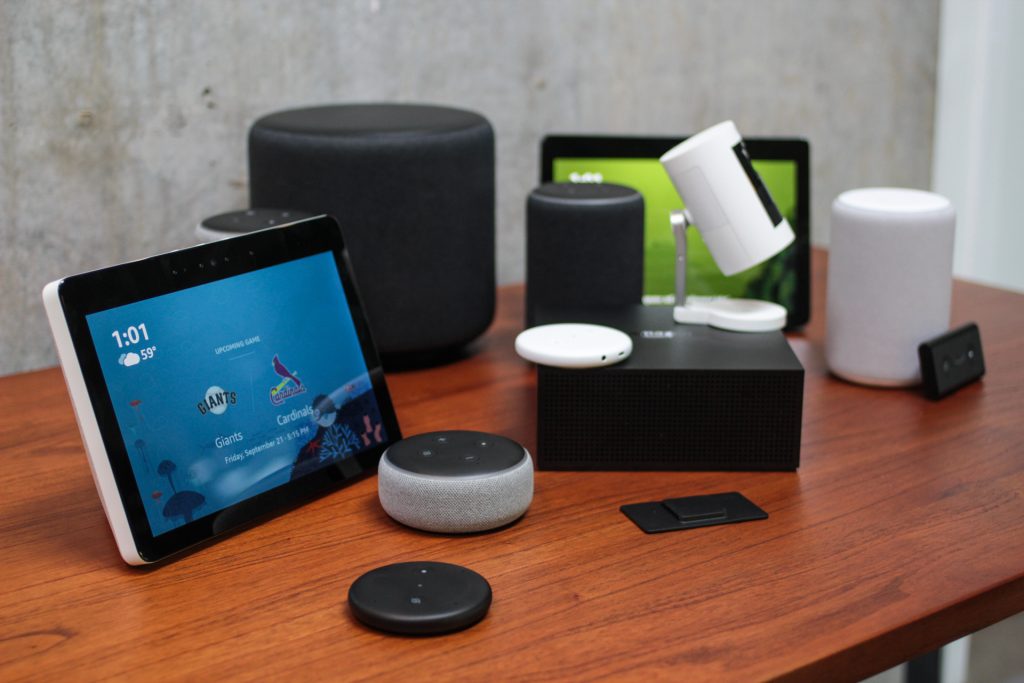
Amazon Hardware Event 2018
From techcrunch.com


Echo HomePod? Amazon wants you to build your own — by Brian Heater
One of the bigger surprises at today’s big Amazon event was something the company didn’t announce. After a couple of years of speculation that the company was working on its own version of the Home…


The long list of new Alexa devices Amazon announced at its hardware event — by Everyone’s favorite trillion-dollar retailer hosted a private event today where they continued to…


Amazon introduces APL, a new design language for building Alexa skills for devices with screensAlong with the launch of the all-new Echo Show, the Alexa-powered device with a screen, Amazon also introduced a new design language for developers who want to build voice skills that include multimedia…

Excerpt:

Called Alexa Presentation Language, or APL, developers will be able to build voice-based apps that also include things like images, graphics, slideshows and video, and easily customize them for different device types – including not only the Echo Show, but other Alexa-enabled devices like Fire TV, Fire Tablet, and the small screen of the Alexa alarm clock, the Echo Spot.


From DSC:
This is a great move by Amazon — as NLP and our voices become increasingly important in how we “drive” and utilize our computing devices.


Amazon launches an Echo Wall Clock, because Alexa is gonna be everywhere — by Sarah Perez


Amazon’s new Echo lineup targets Google, Apple and Sonos — from engadget.com by Nicole Lee
Alexa, dominate the industry.

The business plan from here is clear: Companies pay a premium to be activated when users pose questions related to their products and services. “How do you cook an egg?” could pull up a Food Network tutorial; “How far is Morocco?” could enable the Expedia app.
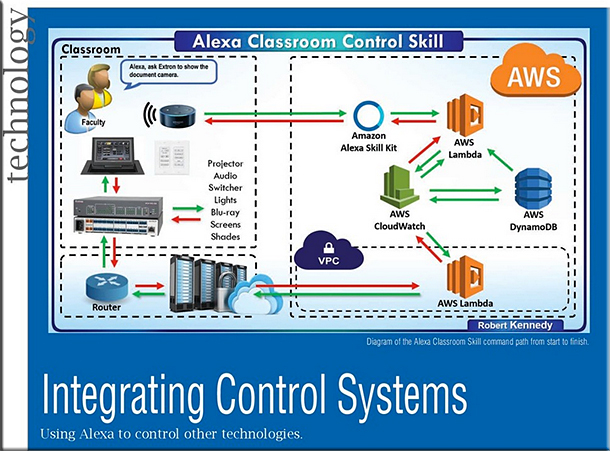
Also see how Alexa might be a key piece of smart classrooms in the future:
 

Smart Machines & Human Expertise: Challenges for Higher Education — from er.educause.edu by Diana Oblinger

Excerpts:

What does this mean for higher education? One answer is that AI, robotics, and analytics become disciplines in themselves. They are emerging as majors, minors, areas of emphasis, certificate programs, and courses in many colleges and universities. But smart machines will catalyze even bigger changes in higher education. Consider the implications in three areas: data; the new division of labor; and ethics.


Colleges and universities are challenged to move beyond the use of technology to deliver education. Higher education leaders must consider how AI, big data, analytics, robotics, and wide-scale collaboration might change the substance of education.


Higher education leaders should ask questions such as the following:

  • What place does data have in our courses?
  • Do students have the appropriate mix of mathematics, statistics, and coding to understand how data is manipulated and how algorithms work?
  • Should students be required to become “data literate” (i.e., able to effectively use and critically evaluate data and its sources)?

…

Higher education leaders should ask questions such as the following:

  • How might problem-solving and discovery change with AI?
  • How do we optimize the division of labor and best allocate tasks between humans and machines?
  • What role do collaborative platforms and collective intelligence have in how we develop and deploy expertise?

…
Higher education leaders should ask questions such as the following:

  • Even though something is possible, does that mean it is morally responsible?
  • How do we achieve a balance between technological possibilities and policies that enable—or stifle—their use?
  • An algorithm may represent a “trade secret,” but it might also reinforce dangerous assumptions or result in unconscious bias. What kind of transparency should we strive for in the use of algorithms?


Microsoft’s AI-powered Sketch2Code builds websites and apps from drawings — from alphr.com by Bobby Hellard
Microsoft Released on GitHub, Microsoft’s AI-powered developer tool can shave hours off web and app building

Excerpt:

Microsoft has developed an AI-powered web design tool capable of turning sketches of websites into functional HTML code.

Called Sketch2Code, Microsoft AI’s senior product manager Tara Shankar Jana explained that the tool aims to “empower every developer and every organisation to do more with AI”. It was born out of the “intrinsic” problem of sending a picture of a wireframe or app designs from whiteboard or paper to a designer to create HTML prototypes.


It’s time to address artificial intelligence’s ethical problems — from wired.co.uk by Abigail Beall
AI is already helping us diagnose cancer and understand climate change, but regulation and oversight are needed to stop the new technology being abused

Excerpt:

The potential for AI to do good is immense, says Taddeo. Technology using artificial intelligence will have the capability to tackle issues “from environmental disasters to financial crises, from crime, terrorism and war, to famine, poverty, ignorance, inequality, and appalling living standards,” she says.
…
Yet AI is not without its problems. In order to ensure it can do good, we first have to understand the risks.

The potential problems that come with artificial intelligence include a lack of transparency about what goes into the algorithms. For example, an autonomous vehicle developed by researchers at the chip maker Nvidia went on the roads in 2016, without anyone knowing how it made its driving decisions.


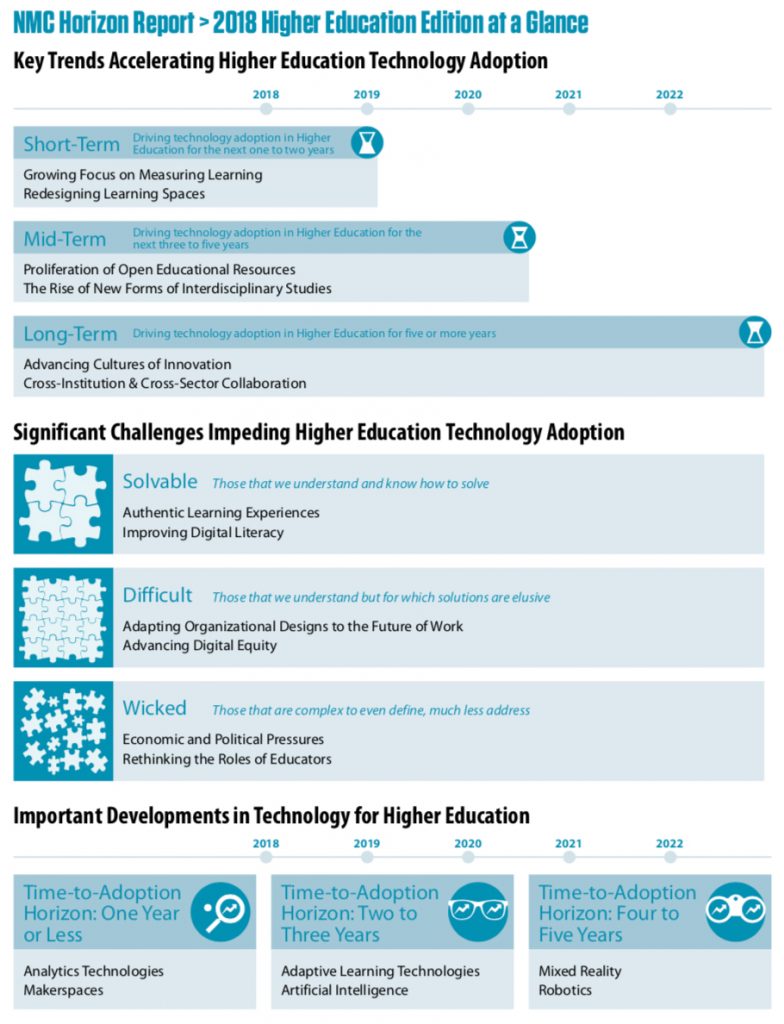
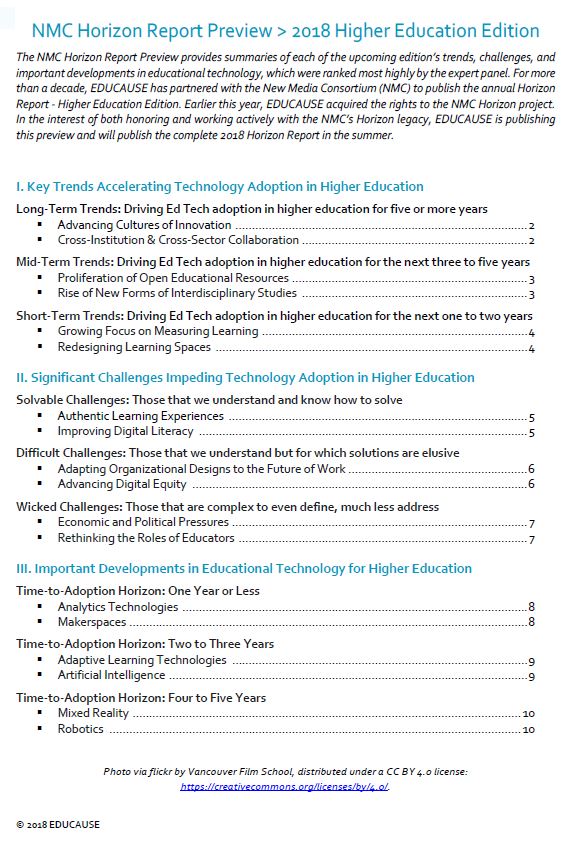
2018 NMC Horizon Report: The trends, challenges, and developments likely to influence ed tech

2018 NMC Horizon Report — from library.educause.edu

Excerpt:

What is on the five-year horizon for higher education institutions? Which trends and technology developments will drive educational change? What are the critical challenges and how can we strategize solutions? These questions regarding technology adoption and educational change steered the discussions of 71 experts to produce the NMC Horizon Report: 2018 Higher Education Edition brought to you by EDUCAUSE. This Horizon Report series charts the five-year impact of innovative practices and technologies for higher education across the globe. With more than 16 years of research and publications, the Horizon Project can be regarded as one of education’s longest-running explorations of emerging technology trends and uptake.

Six key trends, six significant challenges, and six developments in educational technology profiled in this higher education report are likely to impact teaching, learning, and creative inquiry in higher education. The three sections of this report constitute a reference and technology planning guide for educators, higher education leaders, administrators, policymakers, and technologists.


2018 NMC Horizon Report -- a glance at the trends, challenges, and developments likely to influence ed tech -- visual graphic


Also see:


Reimagining the Higher Education Ecosystem — from edu2030.agorize.com
How might we empower people to design their own learning journeys so they can lead purposeful and economically stable lives?

Excerpts:

The problem
Technology is rapidly transforming the way we live, learn, and work. Entirely new jobs are emerging as others are lost to automation. People are living longer, yet switching jobs more often. These dramatic shifts call for a reimagining of the way we prepare for work and life—specifically, how we learn new skills and adapt to a changing economic landscape.

The changes ahead are likely to hurt most those who can least afford to manage them: low-income and first generation learners already ill-served by our existing postsecondary education system. Our current system stifles economic mobility and widens income and achievement gaps; we must act now to ensure that we have an educational ecosystem flexible and fair enough to help all people live purposeful and economically stable lives. And if we are to design solutions proportionate to this problem, new technologies must be called on to scale approaches that reach the millions of vulnerable people across the country.


The challenge
How might we empower people to design their own learning journeys so they can lead purposeful and economically stable lives?

The Challenge—Reimagining the Higher Education Ecosystem—seeks bold ideas for how our postsecondary education system could be reimagined to foster equity and encourage learner agency and resilience. We seek specific pilots to move us toward a future in which all learners can achieve economic stability and lead purposeful lives. This Challenge invites participants to articulate a vision and then design pilot projects for a future ecosystem that has the following characteristics:

Expands access: The educational system must ensure that all people—including low-income learners who are disproportionately underserved by the current higher education system—can leverage education to live meaningful and economically stable lives.

Draws on a broad postsecondary ecosystem: While college and universities play a vital role in educating students, there is a much larger ecosystem in which students learn. This ecosystem includes non-traditional “classes” or alternative learning providers, such as MOOCs, bootcamps, and online courses as well as on-the-job training and informal learning. Our future learning system must value the learning that happens in many different environments and enable seamless transitions between learning, work, and life.


From DSC:
This is where I could see a vision similar to Learning from the Living [Class] Room come into play. It would provide a highly affordable, accessible platform, that would offer more choice, and more control to learners of all ages. It would be available 24×7 and would be a platform that supports lifelong learning. It would combine a variety of AI-enabled functionalities with human expertise, teaching, training, motivation, and creativity.

It could be that what comes out of this challenge will lay the groundwork for a future, massive new learning platform.


The Living [Class] Room -- by Daniel Christian -- July 2012 -- a second device used in conjunction with a Smart/Connected TV


Also see:


Computers that never forget a face — from Future Today Institute

Excerpts:

In August, the U.S. Customs and Border Protection will roll out new technology that will scan the faces of drivers as they enter and leave the United States. For years, accomplishing that kind of surveillance through a car windshield has been difficult. But technology is quickly advancing. This system, activated by ambient light sensors, range finders and remote speedometers, uses smart cameras and AI-powered facial recognition technology to compare images in government files with people behind the wheel.

Biometric borders are just the beginning. Faceprints are quickly becoming our new fingerprints, and this technology is marching forward with haste. Faceprints are now so advanced that machine learning algorithms can recognize your unique musculatures and bone structures, capillary systems, and expressions using thousands of data points. All the features that make up a unique face are being scanned, captured and analyzed to accurately verify identities. New hairstyle? Plastic surgery? They don’t interfere with the technology’s accuracy.

Why you should care. Faceprints are already being used across China for secure payments. Soon, they will be used to customize and personalize your digital experiences. Our Future Today Institute modeling shows myriad near-future applications, including the ability to unlock your smart TV with your face. Retailers will use your face to personalize your in-store shopping experience. Auto manufacturers will start using faceprints to detect if drivers are under the influence of drugs or alcohol and prevent them from driving. It’s plausible that cars will soon detect if a driver is distracted and take the wheel using an auto-pilot feature. On a diet but live with others? Stash junk food in a drawer and program the lock to restrict your access. Faceprints will soon create opportunities for a wide range of sectors, including military, law enforcement, retail, manufacturing and security. But as with all technology, faceprints could lead to the loss of privacy and widespread surveillance.

It’s possible for both risk and opportunity to coexist. The point here is not alarmist hand-wringing, or pointless calls for cease-and-desist demands on the development and use of faceprint technology. Instead, it’s to acknowledge an important emerging trend––faceprints––and to think about the associated risks and opportunities for you and your organization well in advance. Approach biometric borders and faceprints with your (biometrically unique) eyes wide open.

Near-Futures Scenarios (2018 – 2028):

Optimistic: Faceprints make us safer, and they bring us back to physical offices and stores.  

Pragmatic: As faceprint adoption grows, legal challenges mount. 
In April, a U.S. federal judge ruled that Facebook must confront a class-action lawsuit that alleges its faceprint technology violates Illinois state privacy laws. Last year, a U.S. federal judge allowed a class-action suit to go forth against Shutterfly, claiming the company violated the Illinois Biometric Information Privacy Act, which ensures companies receive written releases before collecting biometric data, including faces. Companies and device manufacturers, who are early developers but late to analyzing legal outcomes, are challenged to balance consumer privacy with new security benefits.

Catastrophic: Faceprints are used for widespread surveillance and authoritative control.


How AI is helping sports teams scout star play — from nbcnews.com by Edd Gent
Professional baseball, basketball and hockey are among the sports now using AI to supplement traditional coaching and scouting.



Preparing students for workplace of the future  — from educationdive.com by Shalina Chatlani

Excerpt:

The workplace of the future will be marked by unprecedentedly advanced technologies, as well as a focus on incorporating artificial intelligence to drive higher levels of production with fewer resources. Employers and education stakeholders, noting the reality of this trend, are turning a reflective eye toward current students and questioning whether they will be workforce ready in the years to come.

This has become a significant concern for higher education executives, who find their business models could be disrupted as they fail to meet workforce demands. A 2018 Gallup-Northeastern University survey shows that of 3,297 U.S. citizens interviewed, only 22% with a bachelor’s degree said their education left them “well” or “very well prepared” to use AI in their jobs.
…
In his book “Robot-Proof: Higher Education in the Age of Artificial Intelligence,” Northeastern University President Joseph Aoun argued that for higher education to adapt advanced technologies, it has to focus on life-long learning, which he said says prepares students for the future by fostering purposeful integration of technical literacies, such as coding and data literacy, with human literacies, such as creativity, ethics, cultural agility and entrepreneurship.

“When students combine these literacies with experiential components, they integrate their knowledge with real life settings, leading to deep learning,” Aoun told Forbes.


Amazon’s A.I. camera could help people with memory loss recognize old friends and family — from cnbc.com by Christina Farr

  • Amazon’s DeepLens is a smart camera that can recognize objects in front of it.
  • One software engineer, Sachin Solkhan, is trying to figure out how to use it to help people with memory loss.
  • Users would carry the camera to help them recognize people they know.


Microsoft acquired an AI startup that helps it take on Google Duplex — from qz.com by Dave Gershgorn

Excerpt:

We’re going to talk to our technology, and everyone else’s too. Google proved that earlier this month with a demonstration of artificial intelligence that can hop on the phone to book a restaurant reservation or appointment at the hair salon.

Now it’s just a matter of who can build that technology fastest. To reach that goal, Microsoft has acquired conversational AI startup Semantic Machines for an undisclosed amount. Founded in 2014, the startup’s goal was to build AI that can converse with humans through speech or text, with the ability to be trained to converse on any language or subject.


Researchers developed an AI to detect DeepFakes — from thenextweb.com by Tristan Greene

Excerpt:

A team of researchers from the State University of New York (SUNY) recently developed a method for detecting whether the people in a video are AI-generated. It looks like DeepFakes could meet its match.

What it means: Fear over whether computers will soon be able to generate videos that are indistinguishable from real footage may be much ado about nothing, at least with the currently available methods.

The SUNY team observed that the training method for creating AI that makes fake videos involves feeding it images – not video. This means that certain human physiological quirks – like breathing and blinking – don’t show up in computer-generated videos. So they decided to build an AI that uses computer vision to detect blinking in fake videos.


Bringing It Down To Earth: Four Ways Pragmatic AI Is Being Used Today — from forbes.com by Carlos Melendez

Excerpt:

Without even knowing it, we are interacting with pragmatic AI day in and day out. It is used in the automated chatbots that answer our calls and questions and the customer service rep that texts with us on a retail site, providing a better and faster customer experience.

Below are four key categories of pragmatic AI and ways they are being applied today.

1. Speech Recognition And Natural Language Processing (NLP)
2. Predictive Analytics
3. Image Recognition And Computer Vision
4. Self-Driving Cars And Robots


Billable Hour ‘Makes No Sense’ in an AI World — from biglawbusiness.com by Helen Gunnarsson

Excerpt:

Artificial intelligence (AI) is transforming the practice of law, and “data is the new oil” of the legal industry, panelist Dennis Garcia said at a recent American Bar Association conference.Garcia is an assistant general counsel for Microsoft in Chicago. Robert Ambrogi, a Massachusetts lawyer and blogger who focuses on media, technology, and employment law, moderated the program.“The next generation of lawyers is going to have to understand how AI works” as part of the duty of competence, panelist Anthony E. Davis told the audience. Davis is a partner with Hinshaw & Culbertson LLP in New York.
…
Davis said AI will result in dramatic changes in law firms’ hiring and billing, among other things. The hourly billing model, he said, “makes no sense in a universe where what clients want is judgment.” Law firms should begin to concern themselves not with the degrees or law schools attended by candidates for employment but with whether they are “capable of developing judgment, have good emotional intelligence, and have a technology background so they can be useful” for long enough to make hiring them worthwhile, he said.


Deep Learning Tool Tops Dermatologists in Melanoma Detection — from healthitanalytics.com
A deep learning tool achieved greater accuracy than dermatologists when detecting melanoma in dermoscopic images.


Apple’s plans to bring AI to your phone — from wired.com by Tom Simonite

Excerpt:

HomeCourt is built on tools announced by Federighi last summer, when he launched Apple’s bid to become a preferred playground for AI-curious developers. Known as Core ML, those tools help developers who’ve trained machine learning algorithms deploy them on Apple’s mobile devices and PCs.

At Apple’s Worldwide Developer Conference on Monday, Federighi revealed the next phase of his plan to enliven the app store with AI. It’s a tool called Create ML that’s something like a set of training wheels for building machine learning models in the first place. In a demo, training an image-recognition algorithm to distinguish different flavors of ice cream was as easy as dragging and dropping a folder containing a few dozen images and waiting a few seconds. In a session for developers, Apple engineers suggested Create ML could teach software to detect whether online comments are happy or angry, or predict the quality of wine from characteristics such as acidity and sugar content. Developers can use Create ML now but can’t ship apps using the technology until Apple’s latest operating systems arrive later this year.


Skill shift: Automation and the future of the workforce — from mckinsey.com by Jacques Bughin, Eric Hazan, Susan Lund, Peter Dahlström, Anna Wiesinger, and Amresh Subramaniam
Demand for technological, social and emotional, and higher cognitive skills will rise by 2030. How will workers and organizations adapt?

Excerpt:

Skill shifts have accompanied the introduction of new technologies in the workplace since at least the Industrial Revolution, but adoption of automation and artificial intelligence (AI) will mark an acceleration over the shifts of even the recent past. The need for some skills, such as technological as well as social and emotional skills, will rise, even as the demand for others, including physical and manual skills, will fall. These changes will require workers everywhere to deepen their existing skill sets or acquire new ones. Companies, too, will need to rethink how work is organized within their organizations.

This briefing, part of our ongoing research on the impact of technology on the economy, business, and society, quantifies time spent on 25 core workplace skills today and in the future for five European countries—France, Germany, Italy, Spain, and the United Kingdom—and the United States and examines the implications of those shifts.

Topics include:
How will demand for workforce skills change with automation?
Shifting skill requirements in five sectors
How will organizations adapt?
Building the workforce of the future


Google’s robot assistant now makes eerily lifelike phone calls for you — from theguardian.com by Olivia Solon
Google Duplex contacts hair salon and restaurant in demo, adding ‘er’ and ‘mmm-hmm’ so listeners think it’s human

Excerpt:

Google’s virtual assistant can now make phone calls on your behalf to schedule appointments, make reservations in restaurants and get holiday hours.

The robotic assistant uses a very natural speech pattern that includes hesitations and affirmations such as “er” and “mmm-hmm” so that it is extremely difficult to distinguish from an actual human phone call.

The unsettling feature, which will be available to the public later this year, is enabled by a technology called Google Duplex, which can carry out “real world” tasks on the phone, without the other person realising they are talking to a machine. The assistant refers to the person’s calendar to find a suitable time slot and then notifies the user when an appointment is scheduled.


Google employees quit over the company’s military AI project — from thenextweb.com by Tristan Greene

Excerpt:

About a dozen Google employees reportedly left the company over its insistence on developing AI for the US military through a program called Project Maven. Meanwhile 4,000 others signed a petition demanding the company stop.

It looks like there’s some internal confusion over whether the company’s “Don’t Be Evil” motto covers making machine learning systems to aid warfare.


The link between big tech and defense work — from wired.com by Nitasha Tiku

Except:

FOR MONTHS, A growing faction of Google employees has tried to force the company to drop out of a controversial military program called Project Maven. More than 4,000 employees, including dozens of senior engineers, have signed a petition asking Google to cancel the contract. Last week, Gizmodo reported that a dozen employees resigned over the project. “There are a bunch more waiting for job offers (like me) before we do so,” one engineer says. On Friday, employees communicating through an internal mailing list discussed refusing to interview job candidates in order to slow the project’s progress.

Other tech giants have recently secured high-profile contracts to build technology for defense, military, and intelligence agencies. In March, Amazon expanded its newly launched “Secret Region” cloud services supporting top-secret work for the Department of Defense. The same week that news broke of the Google resignations, Bloomberg reported that Microsoft locked down a deal with intelligence agencies. But there’s little sign of the same kind of rebellion among Amazon and Microsoft workers.


Amazon urged not to sell facial recognition tool to police — from wpxi.com by Gene Johnson

Excerpt:

Facebook SEATTLE (AP) – The American Civil Liberties Union and other privacy advocates are asking Amazon to stop marketing a powerful facial recognition tool to police, saying law enforcement agencies could use the technology to “easily build a system to automate the identification and tracking of anyone.”

The tool, called Rekognition, is already being used by at least one agency – the Washington County Sheriff’s Office in Oregon – to check photographs of unidentified suspects against a database of mug shots from the county jail, which is a common use of such technology around the country.


From DSC:
Google’s C-Suite — as well as the C-Suites at Microsoft, Amazon, and other companies — needs to be very careful these days, as they could end up losing the support/patronage of a lot of people — including more of their own employees. It’s not an easy task to know how best to build and use technologies in order to make the world a better place…to create a dream vs. a nightmare for our future. But just because we can build something, doesn’t mean we should.


The Complete Guide to Conversational Commerce | Everything you need to know. — from chatbotsmagazine.com by Matt Schlicht

Excerpt:

What is conversational commerce? Why is it such a big opportunity? How does it work? What does the future look like? How can I get started? These are the questions I’m going to answer for you right now.
…
The guide covers:

  • An introduction to conversational commerce.
  • Why conversational commerce is such a big opportunity.
  • Complete breakdown of how conversational commerce works.
  • Extensive examples of conversational commerce using chatbots and voicebots.
  • How artificial intelligence impacts conversational commerce.
  • What the future of conversational commerce will look like.


Definition: Conversational commerce is an automated technology, powered by rules and sometimes artificial intelligence, that enables online shoppers and brands to interact with one another via chat and voice interfaces.


Notes from the AI frontier: Applications and value of deep learning — from mckinsey.com by Michael Chui, James Manyika, Mehdi Miremadi, Nicolaus Henke, Rita Chung, Pieter Nel, and Sankalp Malhotra

Excerpt:

Artificial intelligence (AI) stands out as a transformational technology of our digital age—and its practical application throughout the economy is growing apace. For this briefing, Notes from the AI frontier: Insights from hundreds of use cases (PDF–446KB), we mapped both traditional analytics and newer “deep learning” techniques and the problems they can solve to more than 400 specific use cases in companies and organizations. Drawing on McKinsey Global Institute research and the applied experience with AI of McKinsey Analytics, we assess both the practical applications and the economic potential of advanced AI techniques across industries and business functions. Our findings highlight the substantial potential of applying deep learning techniques to use cases across the economy, but we also see some continuing limitations and obstacles—along with future opportunities as the technologies continue their advance. Ultimately, the value of AI is not to be found in the models themselves, but in companies’ abilities to harness them.

It is important to highlight that, even as we see economic potential in the use of AI techniques, the use of data must always take into account concerns including data security, privacy, and potential issues of bias.

  1. Mapping AI techniques to problem types
  2. Insights from use cases
  3. Sizing the potential value of AI
  4. The road to impact and value


AI for Good — from re-work.co by Ali Shah, Head of Emerging Technology and Strategic Direction – BBC


Algorithms are making the same mistakes assessing credit scores that humans did a century ago — from qz.com by Rachel O’Dwyer


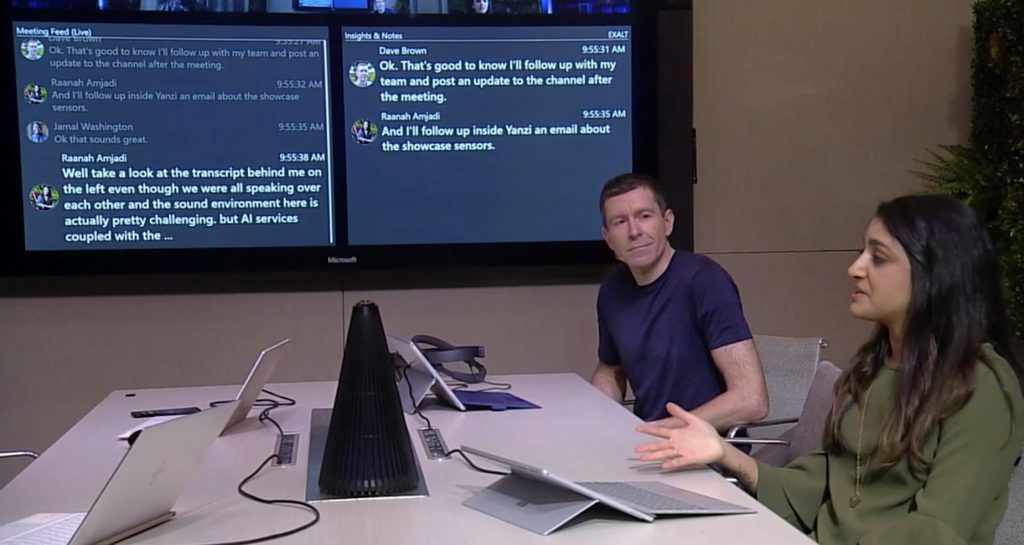
Microsoft’s meeting room of the future is wild — from theverge.com by Tom Warren
Transcription, translation, and identification

Excerpts:

Microsoft just demonstrated a meeting room of the future at the company’s Build developer conference.
…
It all starts with a 360-degree camera and microphone array that can detect anyone in a meeting room, greet them, and even transcribe exactly what they say in a meeting regardless of language.
…
Microsoft takes the meeting room scenario even further, though. The company is using its artificial intelligence tools to then act on what meeting participants say.


From DSC:
Whoa! Many things to think about here. Consider the possibilities for global/blended/online-based learning (including MOOCs) with technologies associated with translation, transcription, and identification.


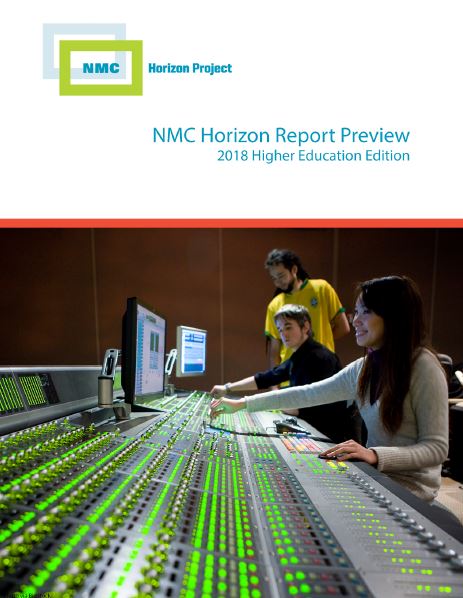
Educause Releases 2018 Horizon Report Preview — from campustechnology.com by Rhea Kelly

Excerpt:

After acquiring the rights to the New Media Consortium’s Horizon project earlier this year, Educause has now published a preview of the 2018 Higher Education Edition of the Horizon Report — research that was in progress at the time of NMC’s sudden dissolution. The report covers the key technology trends, challenges and developments expected to impact higher ed in the short-, mid- and long-term future.


Also see:


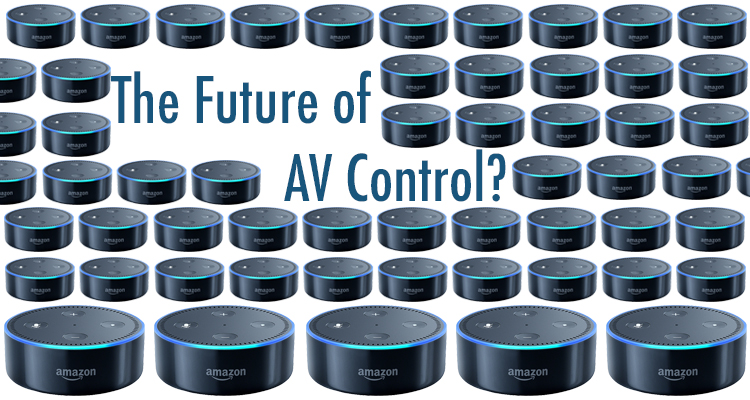
Amazon CEO Jeff Bezos’ personal AV tech controls the future of AV and doesn’t even realize it — from ravepubs.com by Gary Kayye

Excerpt:

But it dawned on me today that the future of our very own AV market may not be in the hands of any new product, new technology or even an AV company at all. In fact, there’s likely one AV guy (or girl) out there, today, that controls the future of AV for all of us, but doesn’t even know it, yet.

I’m talking about Jeff Bezos’ personal AV technician. Yes, that Jeff Bezos — the one who started Amazon.

Follow my logic.

The Amazon Alexa is AMAZING. Probably the most amazing thing since Apple’s iPhone. And, maybe even more so. The iPhone was revolutionary as it was a handheld phone, an email client, notes taker, voice recorder, calendar, to-do list, wrist watch and flashlight — all in one. It replaced like 10 things I was using every single day. And I didn’t even mention the camera!
…
Alexa seamlessly and simply connects to nearly everything you want to connect it to. And, it’s updated weekly — yes, weekly — with behind-the-scenes Friday-afternoon firmware and software upgrades. So, just when you think Alexa doesn’t do something you want it to do, she can — you just have to wait until an upcoming Friday — as someone will add that functionality. And, at any time, you can add Alexa SKILLS to yours and have third-party control of your Lutron lighting system, your shades and blinds, your HVAC, your TV, your DVR, your CableTV box, your SONOS, your home security system, your cameras and even your washer and dryer (yes, I have that functionality — even though I can’t find a use for it yet). It can even call people, play any radio station in the world, play movie previews, play Jeopardy!, play Sirius/XM radio — I mean, it can do nearly anything. It’s squarely aimed at the average consumer or home application — all to simplify your life.

But it could EASILY be upgraded to control everything. I mean everything. Projectors, digital signage networks, AV-over-IP systems, scalers, switchers, audio systems, commercial-grade lighting systems, rooms, buildings, etc. — you get the idea.


From DSC:
By the way, I wouldn’t be so sure that Bezos doesn’t realize this; there’s very little that gets by that guy.


Also see:

Crestron to Ship AirBoard Whiteboarding Solution — from ravepubs.com by Sara Abrons

Excerpt:

Crestron will soon be shipping the Crestron AirBoard PoE electronic whiteboard technology. Crestron AirBoard enables viewing of electronic whiteboard content on any display device, thereby solving the problem of meeting participants — remote participants, especially — not being able to see the whiteboard unless they’re seated with a direct line of sight.
…
With Crestron AirBoard, annotations can be saved and then posted, emailed, or texted to either a central web page (education applications) or to invited participants (corporate applications). Meeting participants simply choose “whiteboard” as a source on the in-room Crestron TSW or Crestron Mercury touch screen to start the session. When “end meeting” is selected, the user is prompted to save and send the file.


© 2025 | Daniel Christian