Now we just need a “Likewise TV” for learning-related resources! [Christian]

Likewise TV Brings Curation to Streaming — from lifewire.com by Cesar Aroldo-Cadenas
And it’s available on iOS, Android, and some smart TVs

All your streaming services in one place. One search. One watchlist. Socially powered recommendations.

Entertainment startup Likewise has launched a new recommendations hub that pulls from all the different streaming platforms to give you personalized picks.

Likewise TV is a streaming hub powered by machine learning, people from the Likewise community, and other streaming services. The service aims to do away with mindlessly scrolling through a menu, looking for something to watch, or jumping from one app to another by providing a single location for recommendations.

Note that Likewise TV is purely an aggregator.


Also see:
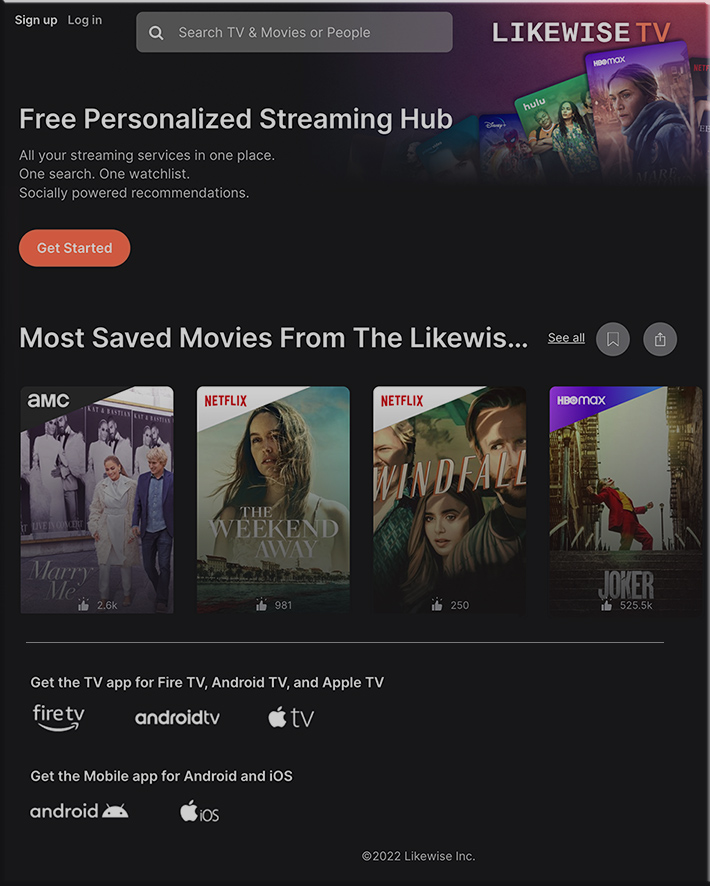
Likewise TV -- All your streaming services in one place. One search. One watchlist. Socially powered recommendations.


From DSC:
Now we need this type of AI-based recommendation engine, aggregator, and service for learning-related resources!

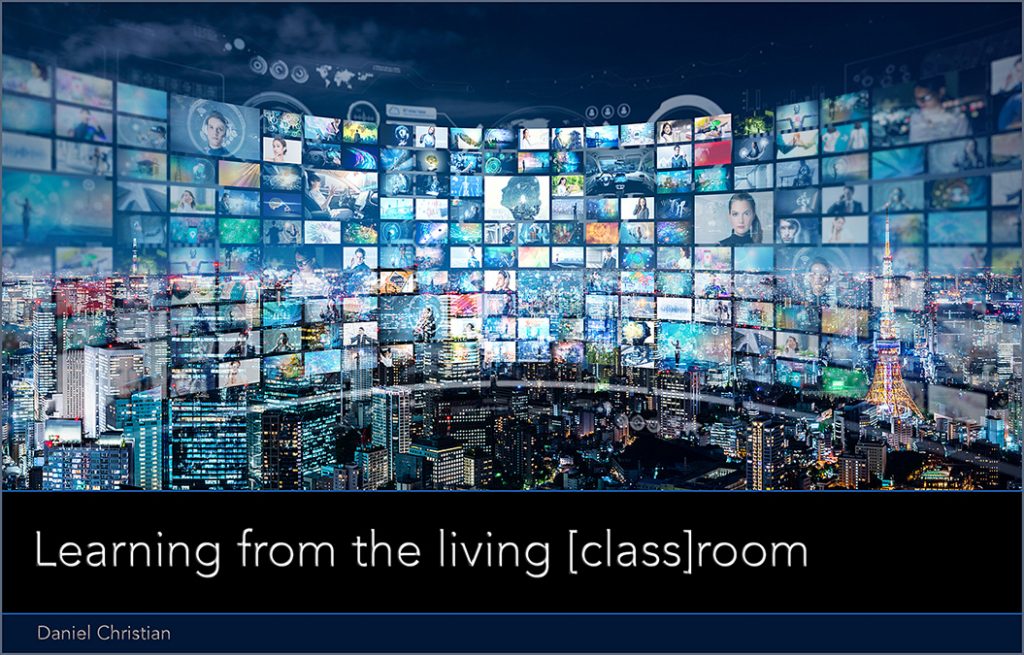
I realize that we have a long ways to go here — as a friend/former colleague of mine just reminded me that these recommendation engines often miss the mark. I’m just hoping that a recommendation engine like this could ingest our cloud-based learner profiles and our current goals and then present some promising learning-related possibilities for us. Especially if the following graphic is or will be the case in the future:


Learning from the living class room


Also relevant/see:

From DSC:
Some interesting/noteworthy features:

  • “The 32- inch display has Wi-Fi capabilities to supports multiple streaming services, can stream smartphone content, and comes with a removable SlimFit Cam.”
  • The M8 has Wi-Fi connectivity for its native streaming apps so you won’t have to connect to a computer to watch something on Netflix. And its Far Field Voice mic can be used w/ the Always On feature to control devices like Amazon Alexa with your voice, even if the monitor is off.
  • “You can also connect devices to the monitor via the SmartThings Hub, which can be tracked with the official SmartThings app.”

I wonder how what we call the TV (or television) will continue to morph in the future.


Addendum on 3/31/22 from DSC:
Perhaps people will co-create their learning playlists…as is now possible with Spotify’s “Blend” feature:

Today’s Blend update allows you to share your personal Spotify playlists with your entire group chat—up to 10 users. You can manually invite these friends and family members to join you from in the app, then Spotify will create a playlist for you all to listen to using a mixture of everyone’s music preferences. Spotify will also create a special share card that everyone in the group can use to save and share the created playlist in the future.

 

Announcing the 2022 AI Index Report — from hai.stanford.edu by Stanford University

Excerpt/description:

Welcome to the Fifth Edition of the AI Index

The AI Index is an independent initiative at the Stanford Institute for Human-Centered Artificial Intelligence (HAI), led by the AI Index Steering Committee, an interdisciplinary group of experts from across academia and industry. The annual report trackscollatesdistills, and visualizes data relating to artificial intelligence, enabling decision-makers to take meaningful action to advance AI responsibly and ethically with humans in mind.

The 2022 AI Index report measures and evaluates the rapid rate of AI advancement from research and development to technical performance and ethics, the economy and education, AI policy and governance, and more. The latest edition includes data from a broad set of academic, private, and non-profit organizations as well as more self-collected data and original analysis than any previous editions.

Also relevant/see:

  • Andrew Ng predicts the next 10 years in AI — from venturebeat.com by George Anadiotis
  • Nvidia’s latest AI wizardry turns 2D photos into 3D scenes in milliseconds — from thenextweb.com by Thomas Macaulay
    The Polaroid of the future?
    Nvidia events are renowned for mixing technical bravado with splashes of showmanship — and this year’s GTC conference was no exception. The company ended a week that introduced a new enterprise GPU and an Arm-based “superchip” with a trademark flashy demo. Some 75 years after the world’s first instant photo captured the 3D world in a 2D picture…

Nvidia believes Instant NeRF could generate virtual worlds, capture video conferences in 3D, and reconstruct scenes for 3D maps.


Reflections on “Do We Really Want Academic Permanent Records to Live Forever on Blockchain?” [Bohnke]

From DSC:
Christin Bohnke raises a great and timely question out at edsurge.com in her article entitled:
Do We Really Want Academic Permanent Records to Live Forever on Blockchain?

Christin does a wonderful job of addressing the possibilities — but also the challenges — of using blockchain for educational/learning-related applications. She makes a great point that the time to look at this carefully is now:

Yet as much as unchangeable education records offer new chances, they also create new challenges. Setting personal and academic information in stone may actually counter the mission of education to help people evolve over time. The time to assess the benefits and drawbacks of blockchain technology is right now, before adoption in schools and universities is widespread.

As Christin mentions, blockchain technology can be used to store more than formal certification data. It could also store such informal certification data such as “research experience, individual projects and skills, mentoring or online learning.”

The keeping of extensive records via blockchain certainly raises numerous questions. Below are a few that come to my mind:

  • Will this type of record-keeping help or hurt in terms of career development and moving to a different job?
  • Will — or should — CMS/LMS vendors enable this type of feature/service in their products?
  • Should credentials from the following sources be considered relevant?
    • Microlearning-based streams of content
    • Data from open courseware/courses
    • Learning that we do via our Personal Learning Networks (PLNs) and social networks
    • Learning that we get from alternatives such as bootcamps, coding schools, etc.
  • Will the keeping of records impact the enjoyment of learning — or vice versa? Or will it depend upon the person?
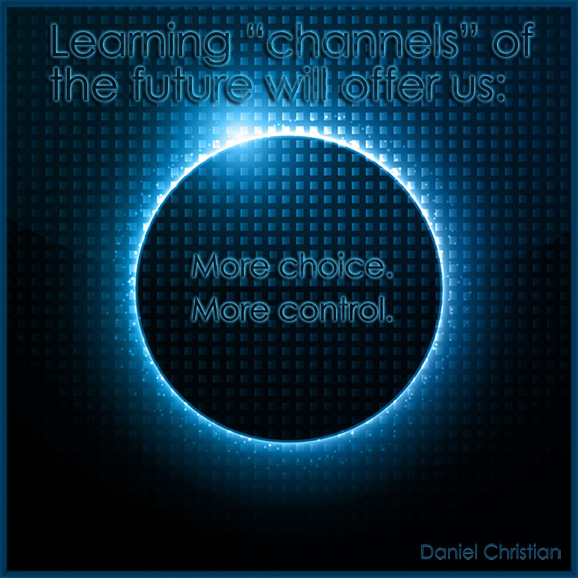
  • Will there be more choice, more control — or less so?
  • To what (granular) level of competency-based education should we go? Or from project-based learning?
  • Could instructional designers access learners’ profiles to provide more personalized learning experiences?
  • …and I’m certain there are more questions than these.

All that said…

To me, the answers to these questions — and likely other questions as well — lie in:

  1. Giving a person a chance to learn, practice, and then demonstrate the required skills (regardless of the data the potential employer has access to)
    .
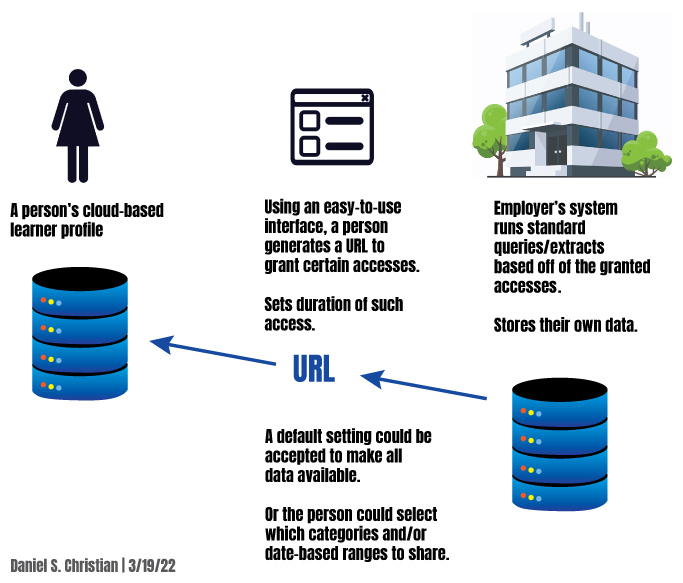
  2. Giving each user the right to own their own data — and to release it as they see fit. Each person should have the capability of managing their own information/data without having to have the skills of a software engineer or a database administrator. When something is written to a blockchain, there would be a field for who owns — and can administer — the data.

In the case of finding a good fit/job, a person could use a standardized interface to generate a URL that is sent out to a potential employer. That URL would be good for X days. The URL gives the potential employer the right to access whatever data has been made available to them. It could be full access, in which case the employer is able to run their own queries/searches on the data. Or the learner could restrict the potential employer’s reach to a more limited subset of data.

Visually, speaking:


Each learner can say who can access what data from their learner's profile


I still have a lot more thinking to do about this, but that’s where I’m at as of today. Have a good one all!


The Conversation: Twitter Trends 2022 -- from marketing.twitter.com

The Conversation: Twitter Trends 2022 — from marketing.twitter.com

Excerpt:

Billions of Tweets reveal tomorrow’s big movements. 

The biggest movements start quietly. An idea becomes conversation becomes a seismic cultural shift. And if you want in on what’s next, listen to what people on Twitter are saying right now. 

To help you out, we analyzed1 billions of Tweets over a two-year period to find three must-know trends about to go big. From The Great Restoration to Fan-Built Worlds to Finance Goes Social, the talk on Twitter reveals the underlying shifts in power shaping where the world is going. 


Penn Law -- Law 2030 graphic

The Moment to Lead is Now — from law.upenn.edu

Excerpts:

Why Now?
If lawyers are leading every day, why am I making a call to action that the time to lead is now? Because the demands of legal work have changed and the attitude towards the workplace have shifted.

  • The demands of the profession have changed and increased
  • The shift in attitudes towards work has opened an opportunity to upgrade how we lead in the law

From these conversations, I took away some fundamentals of how lawyers can step up and lead more effectively from wherever they are.

Mike Avery on the Power of Human-Centered Design

Excerpt:

On this episode, Mike explains the concept of human-centered design, compares healthcare redesign with legal services redesign, and shares why he’s optimistic about the future of higher education.


The Metaverse Will Radically Change Content Creation Forever — from forbes.com by Falon Fatemi

Excerpt:

Although the metaverse promises to touch nearly every person in our society, there’s one demographic that will almost certainly see disproportionately strong disruption: creators. The metaverse has the potential to fundamentally disrupt the content creation process.

The metaverse is slated to help creators make more interactive and immersive content, thanks in large part to advances in VR and AR. The stakes will be raised as creators will be expected to build more immersive and interactive content than ever before.

Also related/see:

The Amazing Possibilities Of Healthcare In The Metaverse — from forbes.com by Bernard Marr

Excerpts:

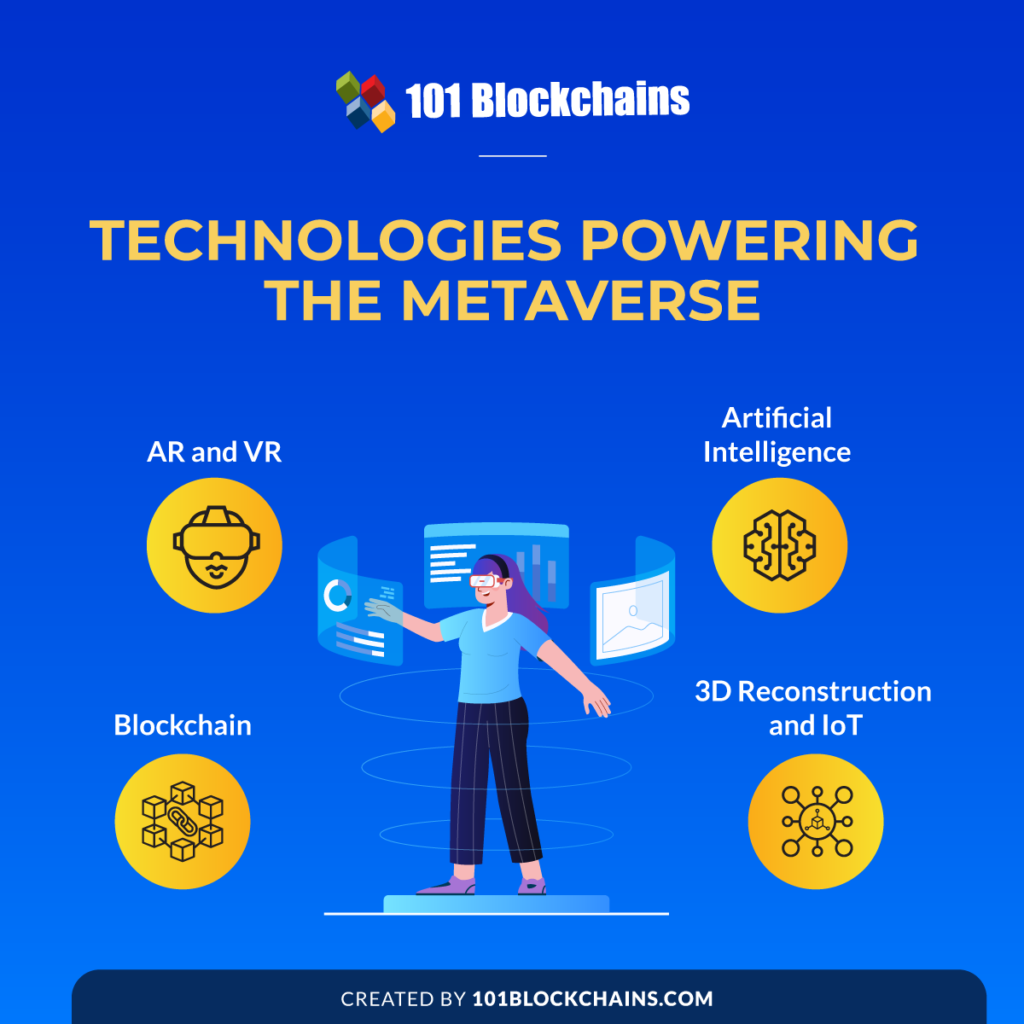
What’s generally agreed on, however, is that it’s effectively the next version of the internet – one that will take advantage of artificial intelligence (AI), augmented reality (AR), virtual reality (VR), and ever-increasing connectivity (for example, 5G networks) to create online environments that are more immersive, experiential and interactive than what we have today.

Metaverse involves the convergence of three major technological trends, which all have the potential to impact healthcare individually. Together, though, they could create entirely new channels for delivering care that have the potential to lower costs and vastly improve patient outcomes. These are telepresence (allowing people to be together virtually, even while we’re apart physically), digital twinning, and blockchain (and its ability to let us create a distributed internet).

From DSC:
That last paragraph could likely apply to our future learning ecosystems as well. Lower costs. A greater sense of presence. Getting paid for one’s teaching…then going to learn something new and paying someone else for that new training/education.


Excerpt:

The use of telehealth has soared during the pandemic, broadening access to care while also allowing providers, patients, and payers to consider possibilities, from expanding care at home to managing costs. But stakeholders have starkly different views on this next wave of healthcare: In a recent McKinsey survey, two-thirds of physicians and 60 percent of patients said they agreed that virtual health is more convenient than in-person care for patients, but only 36 percent of physicians find it more convenient for themselves. Explore these insights to understand the ongoing transition of IRL (in real life) to URL (virtual) medical care offerings…

Also from McKinsey, see:

What technology trends will—and should—lead business agendas in 2022?

Excerpt:

We asked leaders in industry, academia, and at McKinsey to share their perspectives on the technology trends likely to headline business agendas this year, the ones that could—but shouldn’t—slip through the cracks, and what executives should think about when considering new technologies. Here is what they told us.

Metaverse. Web3. Crypto. 5G.

These are just a few of the technologies grabbing headlines at the start of 2022. But what technology trends truly sit atop business agendas this year? Which might be under executives’ radars but should be surfaced? And what should business leaders keep in mind as they consider these trends?


From DSC:
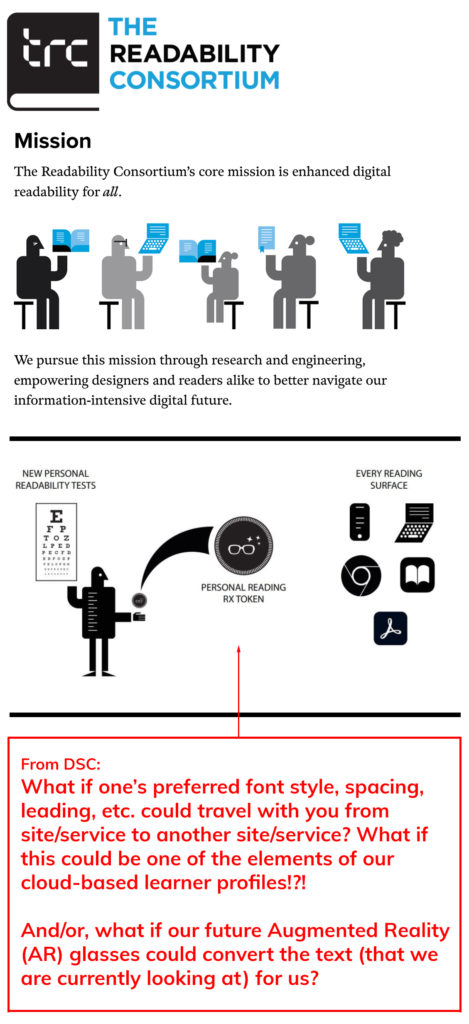
After checking out the following two links, I created the graphic below:

  1. Readability initiative > Better reading for all. — from Adobe.com
    We’re working with educators, nonprofits, and technologists to help people of all ages and abilities read better by personalizing the reading experience on digital devices.
  2. The Readability Consortium > About page


What if one's preferred font style, spacing, leading, etc. could travel with you from site to site? Or perhaps future AR glasses will be able to convert the text that we are looking at for us


Also related/see:


A couple from Barcelona built A.I. smart glasses to help their son see — from interestingengineering.com by Chris Young
Showing visually impaired people the way with their A.I. smart glasses.

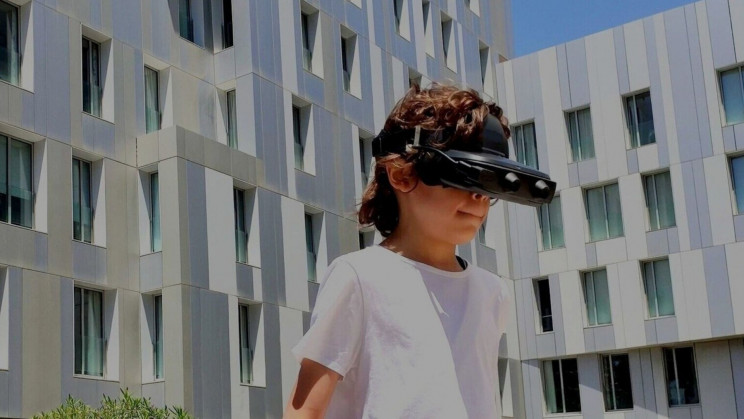
Biel wearing the Biel Glasses

Excerpt:

He and his wife, Constanza Lucero designed a pair of smart glasses that use artificial intelligence and augmented reality to indicate oncoming obstacles to wearers.

The couple drew from their respective fields — Puig is an electrical engineer and Lucero a doctor — to build smart glasses that overlay text and graphics over the real-time video feed of their users’ surroundings. They use A.I. algorithms that detect obstacles, signaling them to the wearer as they approach. Users gain added independence, and parents’ and loved ones’ peace of mind.


Accelerated Digital Skills and the ‘Bootcamp Boom’. — from holoniq.com
The market for accelerated digital skills is stepping up to a whole new level. Bootcamps, among others, are evolving rapidly to meet the opportunity.

Excerpt:

Tech Bootcamps re-skilled and up-skilled over 100,000 professionals globally in 2021, up from less than 20,000 in 2015. We expect this number to reach over 380,000 by 2025 representing over $3B of expenditure with significant upside as tech up-skilling models and modes overlap and converge. Governments, employers, universities and colleges everywhere are embracing rapid, high ROI training to build capacity in software, marketing, cyber and tech sales to drive their economies and growth.

Also from holoniq.com, see:

Also relevant/see:


Why the World’s First Virtual Reality High School Changes Everything — from steve-grubbs.medium.com by Steve Grubs

Excerpts:

The recipe required key ingredients to happen. In addition to an accredited school to manage students, admissions and the for-credit learning, it also needed a platform. That’s where EngageVR comes in. There are other platforms that will ultimately host schools, perhaps AltSpace, Horizon or others, but the first is on Engage.

The bottom line is this: creators, coders, educators, entrepreneurs, investors, corporations, parents and students all played a role in finally bringing the first global virtual reality high school to life. It won’t be the last school to open in the metaverse, but to all those involved in this inaugural launch — the Neil Armstrongs of your age — a special tip of the hat today for having the vision and the willingness to launch a better and more equitable era of education.

Also see:

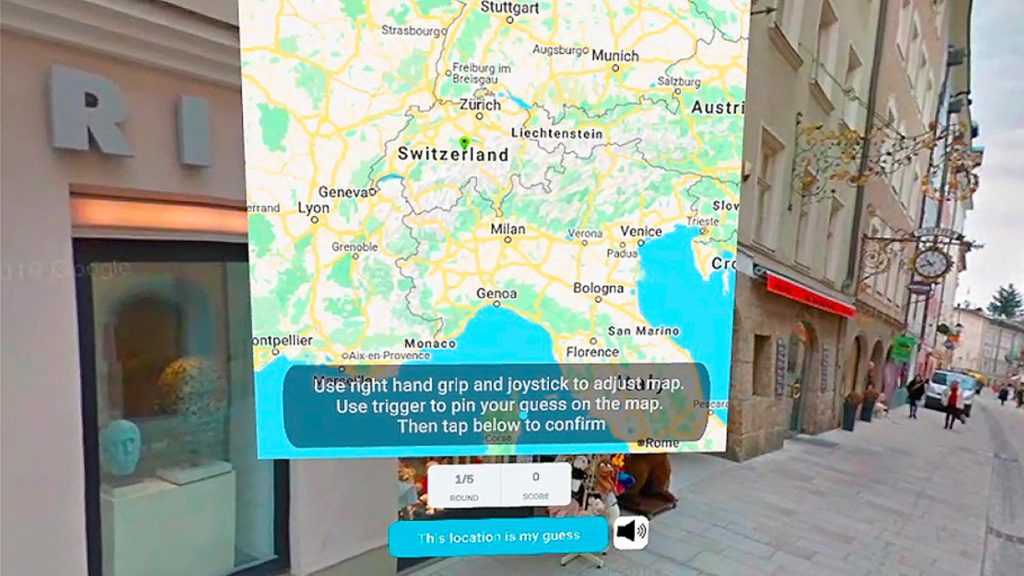
This is a snapshot from the Geo Guesser VR game


The doctor is in—the video call — from mckinsey.com

Excerpt:

More patients than ever were willing to try virtual health services after COVID-19 emerged. Last year, the use of telehealth care was 38 times higher than prepandemic levels, as appointments such as follow-ups could easily be delivered remotely. A recent McKinsey survey shows that up to $265 billion in Medicare spending could shift to patients’ homes by 2025, with greater physician participation in the transition from telehealth to at-home care.

From facility to home: How healthcare could shift by 2025 — from mckinsey.com by Oleg Bestsennyy, Michelle Chmielewski, Anne Koffel, and Amit Shah

Also see the other charts via their daily chart feature:

A daily chart from McKinsey Dot Com that helps explain a changing world—during the pandemic and beyond.


Using Telehealth to Expand Student Access to Care — from techlearning.com by Erik Ofgang
Renee Kotsopoulo, director of health services for the Garland ISD in Texas, helped bring telehealth to her students and believes technology can help keep kids healthy and in school.

Can Teletherapy Companies Ease the Campus Mental-Health Crisis? — from chronicle.com by Kate Hidalgo Bellows

From DSC:
Telehealth has been booming during the pandemic. I think telelegal will ride on the coattails of telehealth.

 
© 2025 | Daniel Christian