Holograms are coming to a high street near you — from telegraph.co.uk by Rebecca Burn-Callander
Can you tell what’s real and what’s not?

Excerpt:

Completely realistic holograms, that will be generated when you pass a sensor, are coming to the high street.

Some will be used to advertise, others will have the ability to interact with you, and show you information. In shops, when you find a shirt you like, the technology is now here to bring up a virtual clothes rail showing you that same shirt in a variety of colours, and even tell you which ones are in stock, all using the same jaw-dropping imaging we have previously only experienced wearing 3D glasses at the cinema.

Holograms, augmented reality – which superimposes technology over the real world – and virtual reality (VR), its totally immersive counterpart, are tipped to be the hot trends in retail next year. Pioneers of the technology are set to find increasingly entertaining, useful and commercially viable ways of using it to tempt people into bricks-and-mortar stores, and fight back against the rise of online shopping.


WaveOptics’ technology could bring physical objects, such as books, to life in new ways


Completely realistic holograms, that will be generated when you pass a sensor, are coming to the high street.


From DSC:
What might our learning spaces offer us in the not-too-distant future when:

  • Sensors are built into most of our wearable devices?
  • Our BYOD-based devices serve as beacons that use machine-to-machine communications?
  • When artificial intelligence (AI) gets integrated into our learning spaces?
  • When the Internet of Things (IoT) trend continues to pick up steam?

Below are a few thoughts/ideas on what might be possible.

A faculty member walks into a learning space, the sensors/beacons communicate with each other, and the sections of lights are turned down to certain levels while the main display is turned on and goes to a certain site (the latter part occurred because the beacons had already authenticated the professor and had logged him or her into the appropriate systems in the background). Personalized settings per faculty member.

A student walks over to Makerspace #1 and receives a hologram that relays some 30,000-foot level instructions on what the initial problem to be solved is about. This has been done using the student’s web-based learner profile — whereby the sensors/beacons communicate who the student is as well as some basic information about what that particular student is interested in. The problem presented takes these things into consideration. (Think IBM Watson, with the focus being able to be directed towards each student.) The student’s interest is piqued, the problem gets their attention, and the stage is set for longer lasting learning. Personalized experiences per student that tap into their passions and their curiosities.

The ramifications of the Internet of Things (IoT) will likely involve the classroom at some point.  At least I hope they do. Granted, the security concerns are there, but the IoT wave likely won’t be stopped by security-related concerns. Vendors will find ways to address them, hackers will counter-punch, and the security-related wars will simply move/expand to new ground. But the wave won’t be stopped.

So when we talk about “classrooms of the future,” let’s think bigger than we have been thinking.
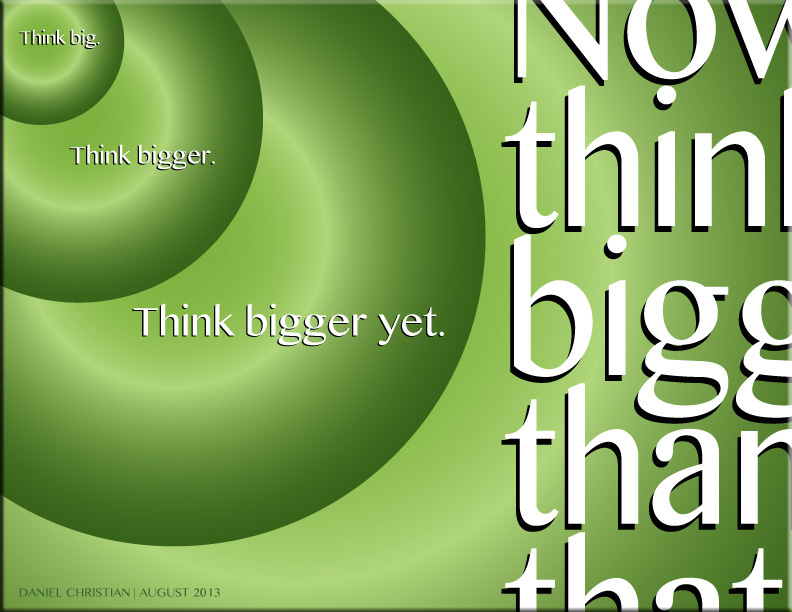
 

ThinkBiggerYet-DanielChristian-August282013


Also see:

What does the Internet of Things mean for meetings? — from meetingsnet.stfi.re by Betsy Bair

Excerpt:

The IoT has major implications for our everyday lives at home, as well as in medicine, retail, offices, factories, worksites, cities, or any structure or facility where people meet and interact.

The first application for meetings is the facility where you meet: doors, carpet, lighting, can all be connected to the Internet through sensors. You can begin to track where people are going, but it’s much more granular.

Potentially you can walk into a meeting space, it knows it’s you, it knows what you like, so your experience can be customized and personalized.

Right now beacons are fairly dumb, but Google and Apple are working on frameworks, building operating systems, that allow beacons to talk to each other.


Addendum on 1/14/16:

  • Huddle Space Products & Trends for 2016 — from avnetwork.com by Cindy Davis
    Excerpt:
    “The concept is that you should be able to walk into these rooms, and instead of being left with a black display, maybe a cable on the table, or maybe nothing, and not know what’s going on; what if when you walked into the room, the display was on, and it showed you what meeting room it was, who had the meeting room scheduled, and is it free, can just walk in and I use it, or maybe I am in the wrong room? Let’s put the relevant information up there, and let’s also put up the information on how to connect. Although there’s an HDMI cable at the table, here’s the wireless information to connect.
 

Predictions on the future of digital media — from techcrunch.com by Peter Csathy

Excerpt:

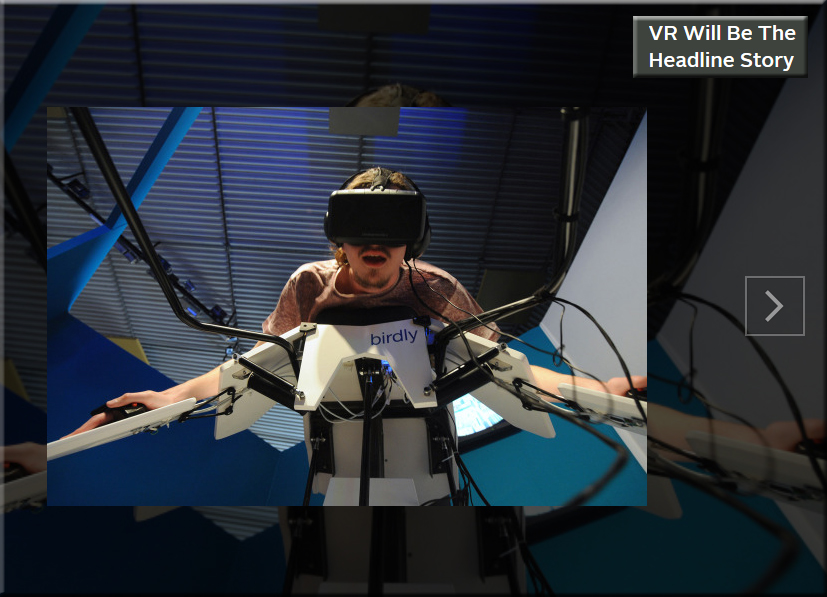
It’s pundit time — this time, digital media style.  Last year I predicted challenges to YouTube’s dominance in online video, a beginning of cord cutting and the unbundling of video services, and an explosion in short form video content. This year the media landscape will continue to shift as VR grows up and consolidation takes over.


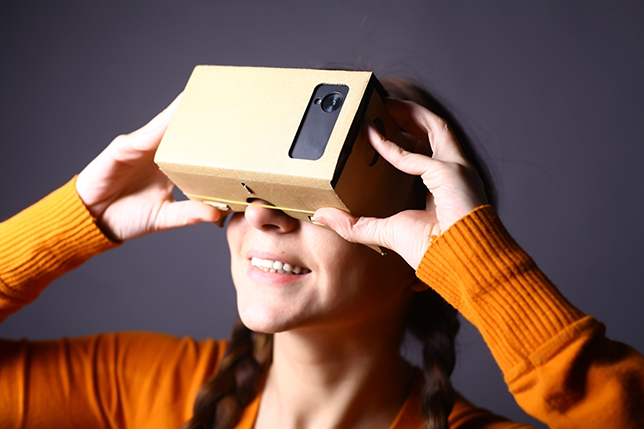
VR-HeadlineStory-Jan2016


The tech that will change your life in 2016 — from wsj.com by Geoffrey A. Fowler and Joanna Stern
Gadgets, breakthroughs and ideas we think will define the state of the art in the year ahead

Excerpts:

  • Virtual Reality Gets Real
  • Wiser Messaging Apps
  • Safer, Smarter Drones
  • Happy New USB Port! (USB Type-C port)
  • Voice-Operated Everything
  • Chinese Phones Hit the U.S.
  • Cameras That See More
  • Streaming Channels Galore
  • Wireless Charging Everywhere
  • Independent Wearables
  • Cutting the Headphone Cord
  • A Useful Internet of Things


Technology trends 2016 — from thefuturesagency.com by Rudy de Waele

Excerpt:

It’s this time of the year again for everyone in the business to release their yearly predictions. In order to save you some time, we collected all the most important and relevant trends – from the sources that matter, in one post.

The trends have been collected by The Futures Agency partner, speaker and content curator, Rudy de Waele, and were originally published on the shift 2020 Brain Food blog and newsletter.


CES 2016: Smart homes, smart cars, virtual reality — from cnbc.com by Harriet Taylor

Excerpt:

Nevertheless, there are still some distinct themes this year: Products that highlight the so-called Internet of Things (IoT), the connected home, autos and virtual reality will all have a big presence.


From smart to intelligent: 2016 AV trends — from avnetwork.com by Jonathan Owens

Excerpts:

  • Sensors
  • Bring Your Own Identity
  • UCC Bridging and True Collaboration


Cloud, virtual reality among top tech trends for 2016 — from news.investors.com by Patrick Seitz

Excerpts:

  • Cloud computing
  • Voice user interfaces
  • Virtual reality
  • Autonomous Vehicles
  • Over-The-Top TV


Virtual reality, robot companions and wraparound smartphones: Top 5 tech trends due in 2016 — from scmp.com by Jack Liu


The headset cometh: A virtual reality content primer — from gigaom.com by Megan Logan

Excerpt:

When we talk about VR, we tend to talk in broad strokes. “Experiences,” we call them, as if that term is somehow covers and conveys the depth and disparity that exists between gaming, watching, and interacting with VR content. The reality of virtual reality, however, is not so easily categorized or described.

VR content is the big blanket term that clumsily and imprecisely covers large and vastly divergent portions of the content market as it stands. VR games, immersive video, and virtual cinema all fall under “VR content”, but they’re fundamentally different experiences, possibly appealing to very different portions of a potential mainstream VR market.


6 ways work will change in 2016 — from fastcompany.com by Jared Lindzon
Workplace trends for 2016 will be set in large part by what’s happening in the freelance world right now.

Excerpt:

Most major workplace trends don’t evolve overnight, and if you know where to look, you can already witness their approach.

Many of the trends that will come into focus in 2016 already exist today, but their significance is expected to grow and become mainstream in the year to come.

While such trends used to be set by the world’s largest companies, today many are championed by the smallest. Freelancers and independent employees need to stay ahead of future needs to ensure they are up to date with the most in-demand skills. Therefore, activity in the freelance market often serves as an early indication of the growing needs of traditional businesses.

At the same time, large organizations today are under greater threat of disruption, requiring early adoption and a heightened awareness of the surrounding business environment.

Here are some of the workplace trends that are expected to have far-reaching effects in 2016, from the boardrooms of Fortune 500 companies to the home offices, cafes, and coworking spaces of the freelance economy.


7 top tech trends impacting innovators in 2016 — from innovationexcellence.com by Chuck Brooks

Excerpts:

  1. The Internet of Things
  2. Data Science & Digital Transformation
  3. Artificial Intelligence (AI) and Augmented Reality technologies
  4. Quantum and Super Computing
  5. Smart Cities
  6. 3-D Printing
  7. Cybersecurity


Related:


Addendum on 1/13/16:


Top app predictions of 2016: From tvOS and Google Now on Tap, apps are eating the web — from blog.appannie.com

Excerpt:

Every company that has an app is a publisher and apps are the new normal to deliver content, entertainment, utility, productivity, commerce, transportation, etc. 2016 promises to be another exciting year of developments and launches.  Our analysts predict the top 10 app trends to watch for in 2016:

  • Google Now on Tap: Deep linking and contextual discovery to ease app discovery
  • eSports: Set to become an emerging revenue stream for game publishers
  • Messaging: Cultural factors to maintain messaging divide between the East and the West
  • Online-to-Offline (O2O) Services: Asia primed for a wave of consolidation because of challenging unit economics
  • Productivity Apps: New input methods to spur app innovation
  • Financial Services: Retail banks face “death by a thousand cuts”
  • tvOS: Set to unlock the smartphone as a powerful second screen device
  • YouTube Red: Catalyst for indie long-form content
  • Wearables: Watch for vertical-specific and enterprise use cases
  • Augmented And Virtual Reality (AR/VR): Major content players to spur initial adoption, but still more hype in 2016


tvOS: Set to unlock the smartphone as a powerful second screen device


The Living [Class] Room -- by Daniel Christian -- July 2012 -- a second device used in conjunction with a Smart/Connected TV


Here’s another practical application of IBM Watson technology in healthcare: Boston Children’s Hospital is going to tap the supercomputing platform to improve diagnosis and treatment of rare diseases.

Researchers at the Harvard-affiliated hospital’s Manton Center for Orphan Disease Research will train Watson in nephrology by reading medical literature and scanning data on mutations for a kidney disease known as steroid-resistant nephrotic syndrome. They will then give Watson retrospective genomic data from patients in an effort to teach the computer to assist physicians in interpreting genome sequences as they look for abnormalities.


Wearables will see mass adoption via educated patients and digital health stores — from medcitynews.com by Shahid Shah

Excerpt:

In a fees-for-services (volume-driven) world, selling healthcare products and services to individual institutions is certainly time-consuming but reasonably straightforward. In an outcomes-driven (fees for value) world driven by shared risks and shared rewards, selling healthcare solutions across multiple disciplines, multiple stakeholders, and multiple institutions is much harder and even more time-consuming. That’s because there’s no easy buyer to identify. Population health is all the rage but our current $3 trillion + healthcare industry was never devised nor incentivized to work together as a team for long-term patient or population benefits (it’s reimbursed mainly for episodic care).

Our country’s healthcare industry is more about sick care and episodic transactions rather than longitudinal care. But, since we are moving to population and outcomes driven care where the patient is more responsible for their own care management and payment, it would seem patient education and digital health tools are more important than ever. So, perhaps we need to get together and innovate around how we’re going to present next-generation solutions from across multiple innovators and showcase them to patients and their caregivers.


Watch users claim Apple wearable improves health — from fiercemobilehealthcare.com by Judy Mottl

Excerpt:

Nearly two-thirds of Apple Watch users are exercising more often and for longer periods of time, and 72 percent claim the wearable is improving their health and fitness levels, according to a new report.


IBM forms new health data analytics unit, extends Apple partnership— from zdnet.com by Charlie Osborne
With the help of Apple, acquisitions and new partnerships, Big Blue plans to tap into the vast amount of data offered by health-tracking devices.


After medical school, IBM’s Watson gets ready for Apple health apps — from zdnet.com by David Shamah
The Watson Health Cloud – set to become an important component of Apple’s health platform – is targeting medical care, IBM says.

Excerpt:

“Watson went to medical school, and now it’s set to graduate,” said Dr Aya Soffer, director of big data and cognitive analytics at the Israel facility. “We’ve had it study the medical literature, and now it’s ready to apply its natural language processing skills to real-life applications.”

Just in time, too. Last week, IBM announced the launch of Watson Health Cloud to “provide a secure and open platform for physicians, researchers, insurers, and companies focused on health and wellness solutions”.

The platform will be used by health companies Johnson and Johnson and Medtronic, as well as by Apple. The Mac maker has its own platform and hopes to become a top health company itself. It has established a new business unit, called Watson Health Cloud, to administer the big data apps that will use Watson’s intelligent analysis and understanding of medical data.


Addendum on 11/13/15:

  • NYU Medical Students Learning How to Analyze Big Data — from imedicalapps.com by Brian Wu
    Excerpt:
    Big data is changing the way information is shared in the medical field. Current technologies such as IBM’s Watson are working to merge data from multiple sources to make it easier to access as well as share. Even ten years ago most doctors would not have known anything about big data, and it was definitely not taught in medical school. Today big data is becoming a crucial part of the healthcare field including the diagnosis and treatment of patients. It is important that doctors not only understand the importance of data but know how to properly access and interpret the data. The NYU School of Medicine requires that its first and second-year students complete a health care by the numbers project. Students are given access to a giant database with more than 5 million anonymous records, which includes information on every hospital patient in the state for the preceding two years.
 

Wearables & Virtual Reality: Where Higher Education is Headed — from higheredtechdecisions.com by Jessica Kennedy
EDUCAUSE seminar predicts wearables and virtual reality solutions will take higher education learning to a new level.


Excerpt:

Even though fitness trackers like FitBit are increasing in popularity among college students, Georgieva and Craig predict wearables and immersive and virtual reality spaces will become must-haves on college campuses.

“It’s a tremendous opportunity for teaching and learning,” Craig says. “[It provides] headgear for the eyes, virtual and augmented reality, and wearables for the brain.”

Georgieva says that as technologies like wearables evolve, students’ learning styles and visual literacy shift.

Students are more immersed in a visual culture and rely on pictures to communicate, analyze and learn.


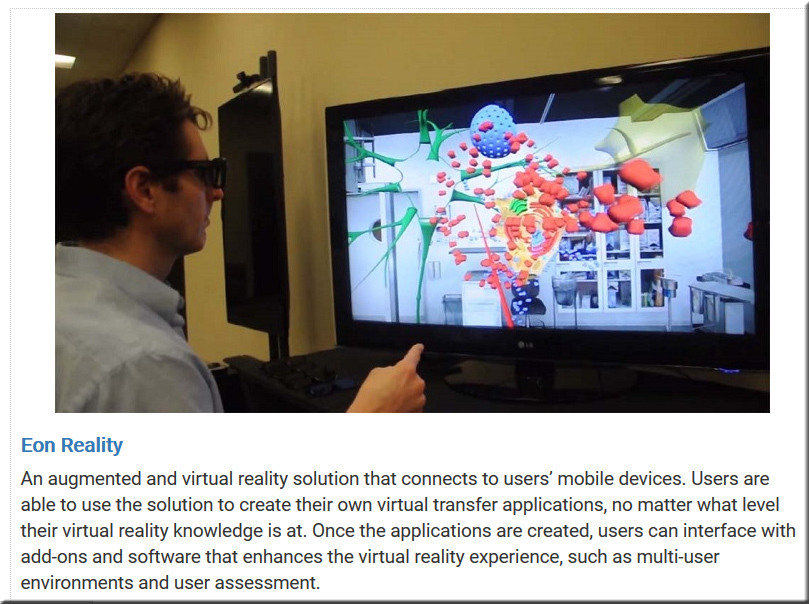
EonReality-Nov2015


7 up-and-coming wearable technologies — from campustechnology.com by Leila Meyer
Sensory messaging devices, stress-reducing headpieces, biometric authentication bands and more — these cutting-edge wearables could soon be coming to your campus.


How the Internet of Things will revolutionise medicine — from techradar.com by Jamie Carter

Excerpt:

Anyone who’s been in hospital will know how long nurses spend taking hourly measurements for blood pressure, and much more besides. If a hospital could put a wearable device on each patient to automate the process, the time saved would be enormous – and that’s just the beginning of how the Internet of Things (IoT) promises to change healthcare.

Over the next five years the traditional ‘doctor-patient’ model will completely open up as self-monitoring devices do away with the need for routine check-ups and appointments, and IoT sensors in our homes and on our bodies increasingly allow us to look after ourselves.


1 In 5 U.S. Adults On Board With Wearables Now — from readwrite.com by David Nield
And smartphones are driving the change.

Excerpt:

Forrester released its annual report on US consumer technology use on [9/28/15], and the findings make encouraging reading for wearable developers, manufacturers and enthusiasts.

Twenty-one percent of all “online” adults in the U.S. now own a wearable device of some kind, with the younger generation leading the way in adoption.


Future wearables could be sensors you ingest and implant, Jawbone CEO says — from cnet.com by Shara Tibken
Hosain Rahman also says sales of his company’s fitness wearables haven’t been hurt by the Apple Watch.

Excerpt:

He added that wearables will play a key role in the move to connect everything to the Internet, known as the Internet of Things.


Blocks modular smartwatch hits Kickstarter for $285 and ships in May 2016
What you need to know about specs, prices and modules before backing Blocks


Basis Peak Fitness and Sleep Tracker — from humanplus.design


Google Glass 2.0 – Specs, Price And Release Date — from wtvox.com

Excerpt:

Everybody is talking about Google Glass 2.0. To paraphrase from Lavoisier’s “Traité Élémentaire de Chimie”. “Rien ne se perd, rien ne se crée, tout se transforme.” (“Nothing is lost, nothing is created, everything is transformed.”)

I’m sure you’ve heard that Google Glass is dead. Believe it or not, it is still alive. Google Glass never died. Google Glass “reborn” into a second version. Like the phoenix bird.

There is much misinformation about Google Glass at the moment. Let’s get the facts straight. Here is everything you need to know about the new Google Glass 2.0.

Google Glass 2.0: Versions And Design
Google Glass 2.0 is in good hands. The old Glass team is now called Project Aura and behind the new team is Tony Fadell. You might now Mr. Fadel as the founder of NEST. But, few of you know that he designed the first iPod in 2001.


A Wearable Device with the Pitcher In Mind — from insightreplay.com by Graham Clark

Excerpt:

A wearable sensor that tracks strain on a pitcher’s elbow is making waves in major league baseball (MLB). The mThrow, by Motus Global, is a simple, lightweight sleeve, designed to be worn every time a pitcher throws. The smart throwing sleeve and companion iOS app collects and analyzes real-time biomechanical data from each game and practice, and uses that data to calculate workloads and recommend daily throw limits. This season, 27 MLB teams and their minor league affiliates are trying out the device, in the hope that it will help monitor pitchers’ workloads, improve pitching mechanics, and prevent injuries.


Wearables to U.S. adults: You’re putting me on — from news.investors.com


Back to the Future Day: A look at our technology in 2045 — from zdnet.com by David Gewirtz
The classic geek movie Back to the Future Part II sent Marty McFly 30 years forward to October 21, 2015. We asked top technology experts to check their digital crystal balls and describe what they see in store for us 30 years from now.

Excerpts/topics include:

  • Robots, for those who can afford them
  • The personal network and the future of the smartphone
  • Wearable biometric sensor networks
  • The future of the data center
  • The future of shipping
  • Our changing lifestyle
  • Microsoft and the future of the PC


Everything You Need To Know From Microsoft’s Massive Hardware Event — from techcrunch.com by Alex Wilhelm

Excerpt:

Microsoft [on 10/6/15] announced a grip of new hardware, including Surface products, high-end smartphones, a wearable, Windows 10 for the Xbox One and its first laptop.

The laptop, called the Surface Book, stunned in an event marked largely by products Microsoft watchers were expecting.


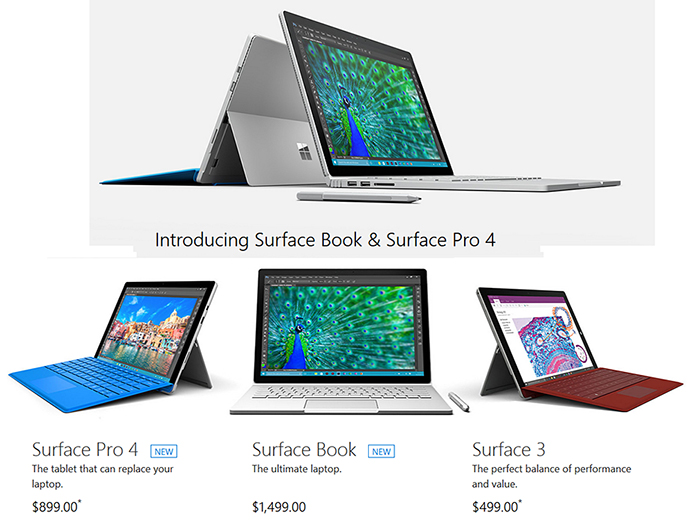
Introducing Surface Book & Surface Pro 4 — from microsoft.com


SurfacePro-MS-10-6-2015


Microsoft’s HoloLens Developer Edition Gets Date and Price — from vrfocus.com by Jamie Feltham

Excerpt:

Speaking at a Windows 10 briefing [on10/6/15] the company confirmed that applications for a HoloLens development kit are now open. Successful applicants will be able to pick up a kit for some $3,000 USD, and it will be arriving in the first quarter of 2016.

.


First HoloLens Prototypes Showcased — from vrfocus.com by Jamie Feltham

Excerpt:

Microsoft’s HoloLens mixed reality (MR) head-mounted display (HMD) is still a relatively new concept, having only been revealed to the public in January 2015. The device has remained shrouded in mystery since that time, making a handful of showings at events such as E3. The company has revealed a lot more about the kit [on 10/6/15], though, confirming that the anticipated Development Edition will be arriving in Q1 2016 for applicants in the USA and Canada at a price of $3,000 USD. Now a new video has been revealed giving a glimpse at the kit’s origins.


The new Microsoft Band offers Cortana integration, VO2 monitoring and Golf cards — from digitaltrends.com by David Curry

Excerpt:

Microsoft announced the second generation of the Microsoft Band at its event [on 10/6/15], a small update adding a new, more functional design and two sensors to track elevation and VO2 monitoring.


Addendum on 10/9/15:


Top wearables across 10 key sectors — from raconteur.net by
Useful applications of wearable technology are multiplying fast as innovators across numerous sectors find lucrative ways of putting the tech to work. Here are ten of the best…

Sectors covered include:

  1. Finance
  2. Retail
  3. Manufacturing
  4. Entertainment
  5. Insurance
  6. Field Service
  7. Transport
  8. Security
  9. Childcare
  10. Fashion


Addendum on 10/2/15:

  • This is the first cellular Android Wear smartwatch: LG Watch Urbane 2nd Edition — from techradar.com by Matt SwiderExcerpt:
    Strap on the LG G Watch Urbane 2nd Edition and feel free to walk away from your smartphone, because this is the first Android Wear smartwatch with untethered cellular connectivity. Compatible with both Android and iPhone, this revision of the first LG Watch Urbane makes and receives calls and data over 4G and 3G as well as the normal Wi-Fi and Bluetooth methods.
 

From DSC:
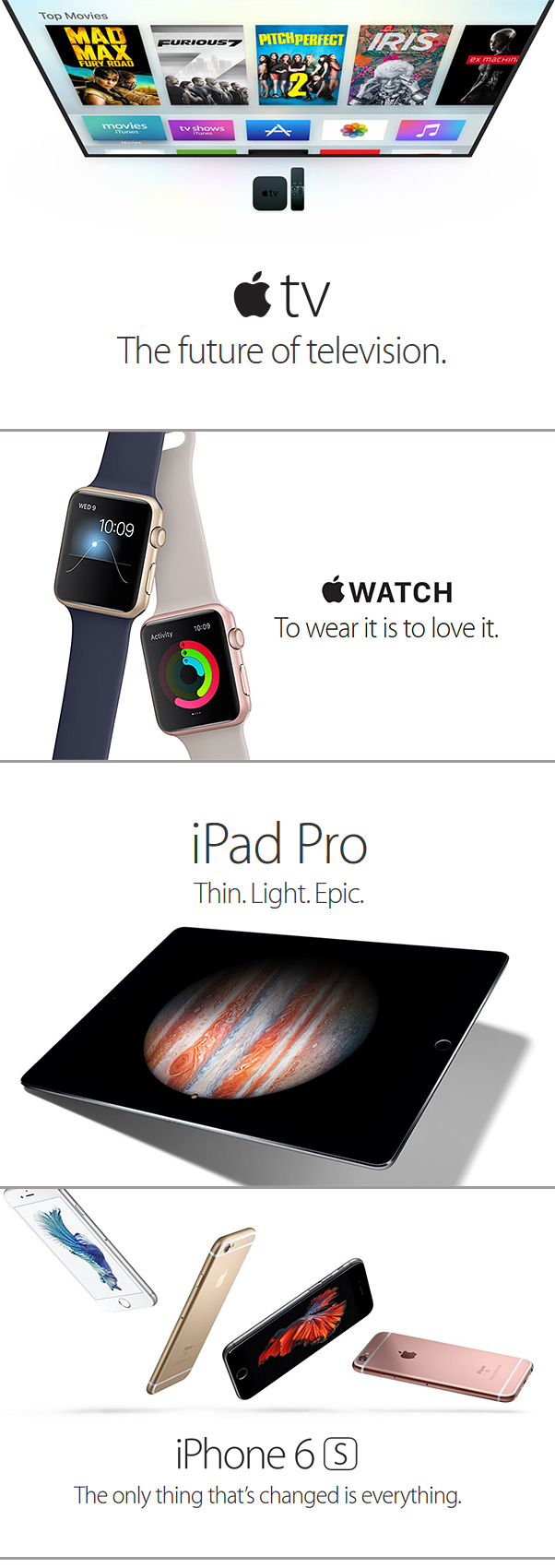
On 9/9/15, Apple held their September Event 2015. Below are some of the articles/items that capture some of the announcements from that event.


From Apple.com:


AppleAnnouncements-9-9-15


Apple Watch Finally Getting Native Apps, New Features Next Week — from wsj.com by Nathan Olivarez-Giles

Excerpt:

Native apps will arrive on the Apple Watch as a part of a major update known as WatchOS 2. The promise is that native apps will be able to run faster on the watch, though the watch isn’t free of the iPhone yet. The Apple Watch doesn’t have it’s own cellular connection, so any information an app wants to pull from the Internet (like live sports scores, transit times, or messages from friends) it’ll still rely on an iPhone to pull all that off.

Still, the promise of any added speed here is significant. Unlike smartphone apps which are built to consume your attention for minutes at a time, Apple Watch apps are built to get you in and out with the information you need in a matter of seconds.


Developers can register now to apply for a new Apple TV hardware ahead of general release, supplies limited — from 9to5mac.com


Apple unveils next generation iPhone 6s, 6s Plus — from by Jason Cipriani
The tech giant introduced a new touch-sensitive technology called 3D Touch to its next generation smartphones.

Excerpt:

Apple added pressure-sensitive technology to its new iPhones, which the company is calling 3D Touch. The technology can launch features and perform a variety of functions when varying levels of force are applied to the screen.


A side comment from DSC for those students involved with graphic design, digital media, and/or with communications:
Study the work that the folks did who were in charge of presenting the complex, technical information — but doing so in a way that was extremely polished, engaging, and professionally done. The videos, for example, were very well done. My hats off to these extremely creative folks — they are clearly at the top of their industry.


Addendum on 9/11/15:


Augmented reality is the future of design — from thenextweb.com by Jessica Lowry

Excerpt:

That’s why there’s more to AR than just wearable devices.

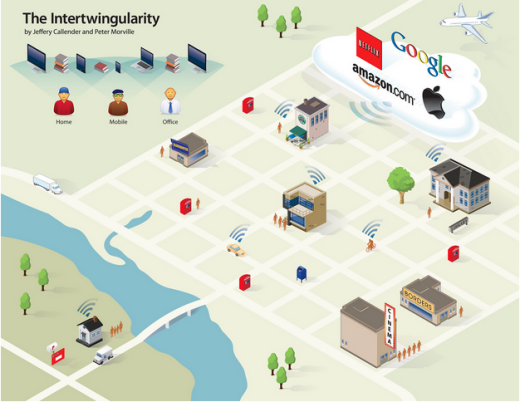
In this piece, I’ll explain the benefits and challenges of designing for augmented reality, then dive into why we must start thinking of products as connected services instead of standalone items.


Screen Shot 2015-08-31 at 14.55.23

Photo credit: Peter Morville. Creative Commons.


Augmented Reality Chemistry Experiments with Elements 4D — from whiteboardblog.co.uk

Excerpt:

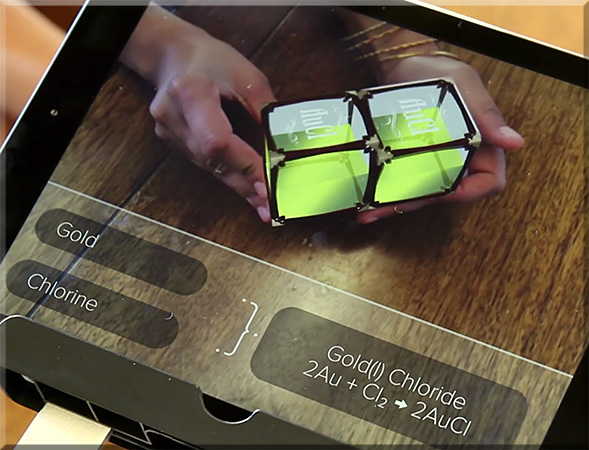
Elements 4D is a neat Augmented Reality chemistry app for iOS and Android devices which provides a fun way to look at various different chemical reactions.

The app uses blocks that are inscribed with the symbols of 36 elements from the periodic table. The site will eventually sell ready-made cubes, but you can download paper templates for free here.

When viewed through the app, these blocks instantly transform a simple, inanimate object into dynamic, dimensional, 4D representations of each element.

Also see:
Elements4D-July2015


Toss your manual overboard—augmented reality aims at big industry — from arstechnica.com by Lee Hutchinson
Papers, diagrams, and checklists would be replaced with intuitive visual tools.

Excerpt:

GE is focusing efforts on constructing an extensible “field maintenance manual” intended to be used for industrial equipment. The use case being tested in the labs is with oil and gas; researchers in GE’s Research Center in Brazil are building software that they hope will replace the need to deal with bulky printed maintenance manuals—manuals which have to be kept up to date and which lack any kind of interactivity.


New Microsoft Tool Takes the Pulse of Higher Education
Bing Pulse in the Classroom, a new student response system designed for higher education, launched this week.

Excerpt:

A new student response tool designed by a team at Microsoft will soon be giving teachers instant feedback on how their lessons are going.

Bing Pulse in the Classroom, a free online tool designed to make higher education lectures more dynamic, was released Thursday. The technology lets teachers ask students questions to get a real-time “pulse” of the lesson to ensure a teacher isn’t getting too far ahead of the class.

A feature not included in Pulse in the Classroom’s first iteration was live video streaming. Nesho says this capability will soon be added, and it could be a game changer for higher education classes that incorporate distance learning. Using a live video stream along with the Pulse feature set, the platform comes closer to an all-inclusive classroom experience.


Microsoft pioneers new ‘machine teaching’ technology to bring machine learning to the masses — from winbeta.org by Joseph Finney

Excerpt:

Tech companies are constantly building and testing technology which could cause the next paradigm shift in how the world communicates, creates, and consumes. Many big names including Google, IBM and Microsoft are investing in machine intelligence and machine learning. Now Microsoft believes they have created the next generation of machine learning which they call machine teaching. While the name ‘machine teaching’ does not instantly communicate the purpose or intent of the new tech the underlying concept is simple.

Essentially, like Henry Ford brought the automobile to the masses, Microsoft wants to bring machine learning to everyone. Many companies are focused on making their machine learning algorithms more accurate, but Patrice Simard believes more advances can be driven by bringing machine learning to the masses.


 Also relevant here/see:
What Every Manager Should Know About Machine Learning — from hbr.org by Mike Yeomans
A primer on machine learning — from loop.ai
A tour of Machine Learning Algorithms #BigData #MachineLearning — from mo-data.com
In this post we take a tour of the most popular machine learning algorithms.


Microsoft launches site for teachers taking Minecraft into the classroom — from theguardian.com
Minecraft in Education portal aims to get educators sharing tips on how Mojang’s popular game can be used to teach children


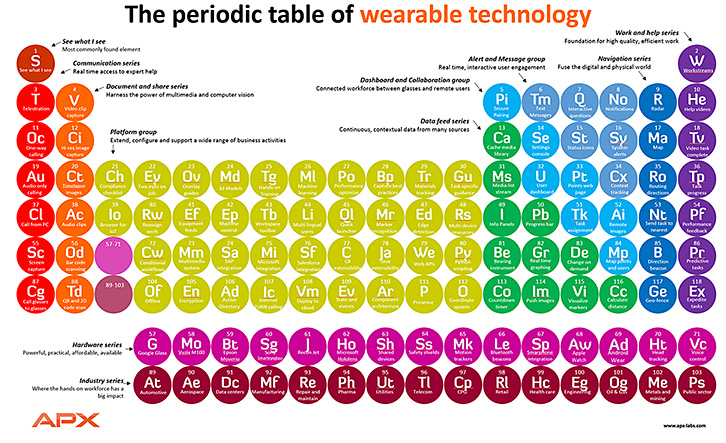
The Scoop on Periscope: Broadcast Live Video to the World — from learninginhand.com by Tony Vincent
[Tony includes a nice infographic in this posting.]


PeriodicTable-WearableTech-July2015


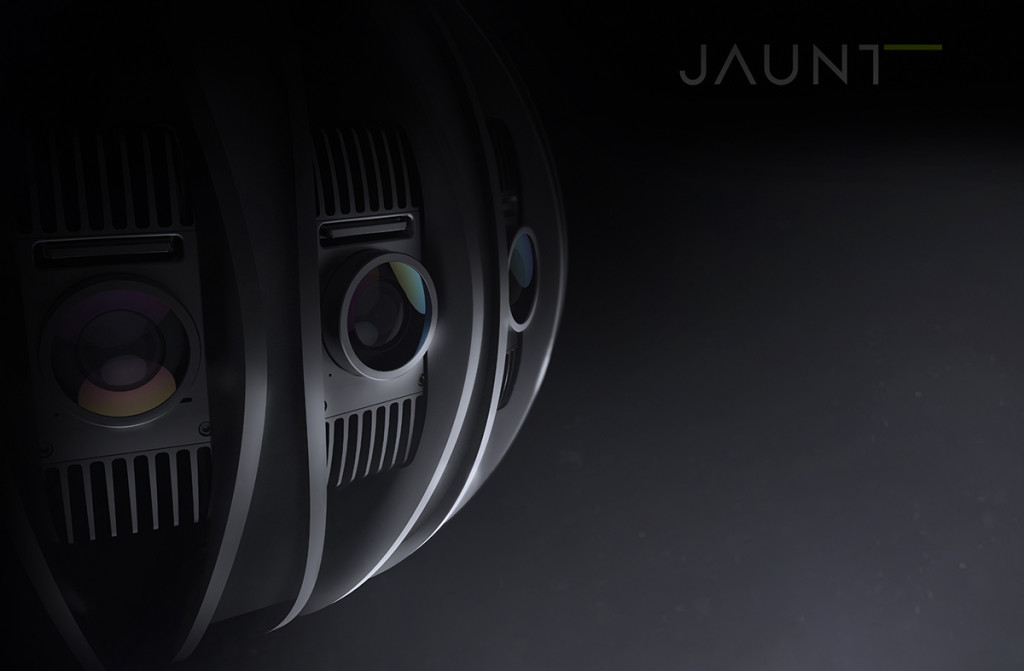
First Look: Jaunt’s VR Camera Codenamed NEO — from by Jonathan Nafarrete

Excerpt:

Jaunt has announced the launch of a new professional grade VR camera series codenamed “NEO” that will enable the next generation of filmmakers to produce the highest quality VR experiences.

Industrial Design by LUNAR.


Leap Motion’s Augmented-Reality Computing Looks Stupid Cool — from wired.com

Excerpt:

This demo, in which a standard desktop computer is reimagined as a three-dimensional workstation of the future, offers a glimpse of what that might look like.

The project came out of a hackathon at Leap Motion, whose nifty gesture-recognizing sensor acts as a sort of finger-scale Kinect for desktop software. Using a prototype Leap sensor, a developer-kit Oculus Rift, a team of engineers built an augmented-reality work environment in which regular desktop applications jump out of the computer and into 3-D space. It’s a new computing interface hovering in front of a traditional personal computer sitting on a wood table—three generations of the “desktop,” one on top of another.


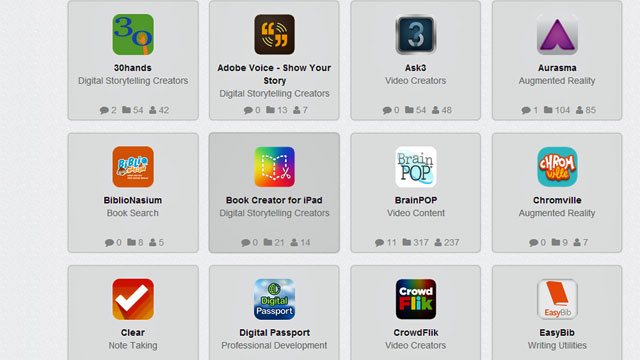
Apps That Rise to the Top: Tested and Approved By Teachers — from kqed.org b


Michelle Luhtala/Edshelf


EdTech 2015: What’s Coming Down the Innovation Pipeline — from medium.com by Daniel Rezac
Brace Yourselves for a New Wave of Classroom Integration


Office 365 Open Source plugins for Moodle: getting better all the time — from msopentech.com

Excerpt:

[On June 26th, 2015] we shared the news that the upcoming Cypress release of Open edX, the most popular open source MOOC (massive open online course), will include new features for tighter integration with Office 365. Those features are the result of our open source collaboration with members of the Open edX community.

In addition to the new work we’re doing with Open edX, we continue to work with Remote-Learner (a leading Moodle partner) to make improvements and additions to the open source Office 365 plugins for Moodle. Moodle is the most popular open source learning management system (LMS), and the Office 365 plugins were released in January of this year. In this post, we’d like to share a few details about the great work Remote-Learner is doing to evolve the plugins.


New math app turns 2-D problems into 3-D solutions for Nova Scotia students — from trurodaily.com by Zane Woodford, Metro Halifax

Excerpt:

HALIFAX – A new augmented reality application for iPhones, iPads and Android devices brings math problems off the page for Nova Scotia students – illustrating angles, curves and the dreaded Pythagorean theorem in three dimensions.


© Metro Halifax/Jeff Harper
Grade 9 student Nathaniel Jarmash uses an augmented reality app
to work on his math problems at Sir Robert Borden Junior High School.


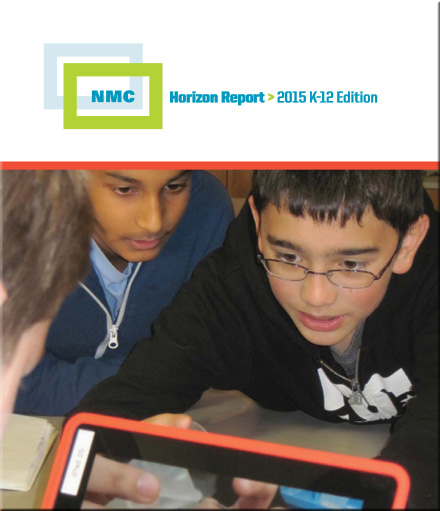
The NMC Horizon Report > 2015 K-12 Edition is now out.

 NMCReport-K12-2015


Description:

What is on the five-year horizon for K-12 schools worldwide? Which trends and technologies will drive educational change? What are the challenges that we consider as solvable or difficult to overcome, and how can we strategize effective solutions? These questions and similar inquiries regarding technology adoption and transforming teaching and learning steered the collaborative research and discussions of a body of 56 experts to produce the NMC Horizon Report > 2015 K-12 Edition, in partnership with the Consortium for School Networking (CoSN). The NMC also gratefully acknowledges ISTE as a dissemination partner. The three key sections of this report — key trends, significant challenges, and important developments in educational technology — constitute a reference and straightforward technology planning guide for educators, school leaders, administrators, policymakers, and technologists. It is our hope that this research will help to inform the choices that institutions are making about technology to improve, support, or extend teaching, learning, and creative inquiry in K-12 education across the globe. View the wiki where the work was produced.

> Download the NMC Horizon Report > 2015 K-12 Edition (PDF)
> Download the report preview (PDF)
> Download the interim results (PDF)


Augmented Reality – hype, or the future? — from mybroadband.co.za by EE Publishers
The concept of Augmented Reality has existed for many years now – and commentators have remained rigidly sceptical about whether it will truly materialise in our everyday lives.

Excerpts:

Essentially, AR describes the way in which a device (such as a smartphone camera, wearables like Google Glasses, or a videogame motion sensor) uses an application to “see” the real world around us, and overlay augmented features onto that view.

These augmented features are aimed at adding value to the user’s experience of their physical environment.

We predict there will be three primary areas in which we will initially engage with AR:

The way we consume information: Imagine going to a library or museum and being able to have a “conversation” with key people throughout history, or instantly transform the world around to you resemble a bygone era.

The fields of product development, marketing and customer engagement: Overlaying new digital services into retail environments opens up a host of new possibilities for organisations to tailor products to their consumers.

Back office/operational functions within the organisation: Companies are already finding ways to use AR in their supply chain, logistics and warehousing environments. Find out, for example, if a particular unit is missing from a shelf.


From DSC:
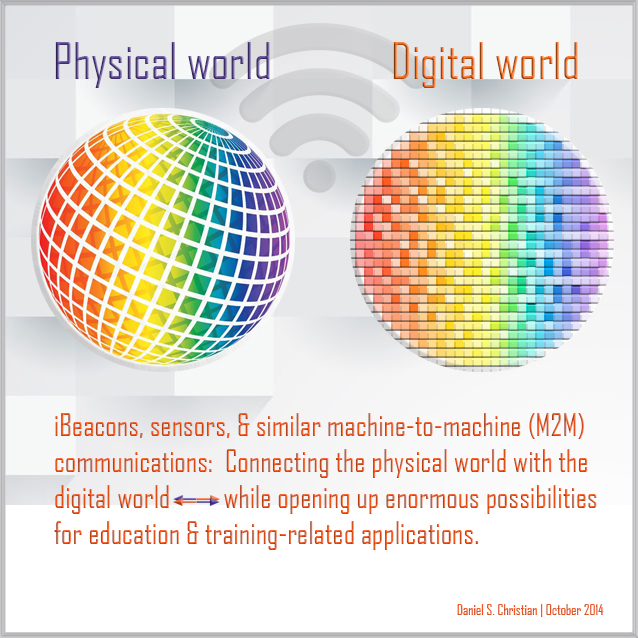
I wonder how Machine-to-Machine communications, beacons, GPS, and more will come into play here…? The end result, I think is a connection between the physical world and the digital world:


DanielChristian-Combining-Digital-Physical-Worlds-Oct2014


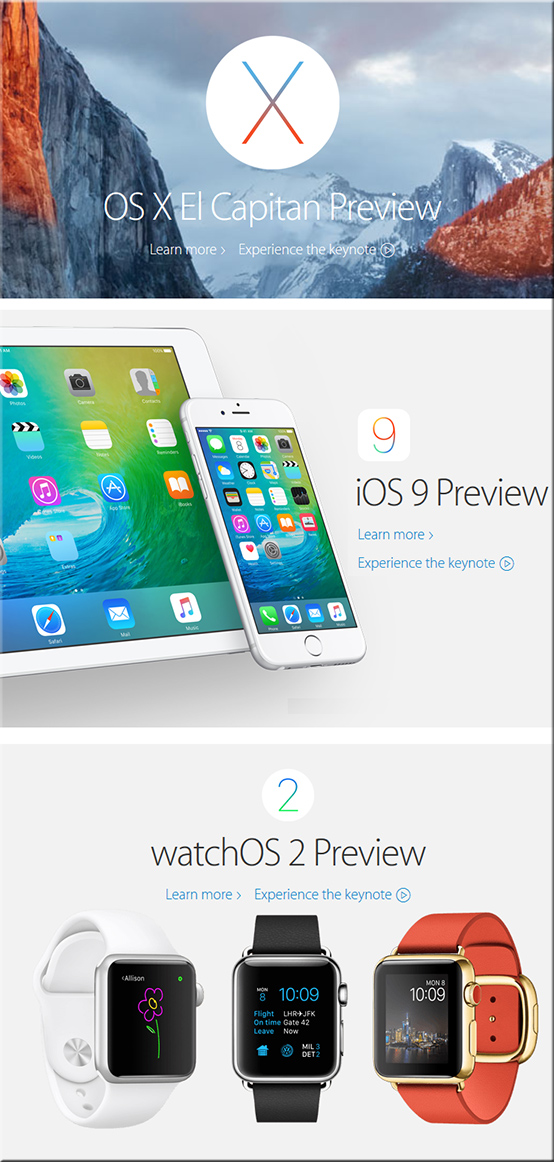
Everything you need to know from today’s Apple WWDC Keynote — from techcrunch.com by Greg Kumparak

Excerpts:

  • The Next Version Of OS X — Apple announced OS X 10.11, or “OS X El Capitan”.
  • iOS 9
  • Siri is getting smarter
  • Split Screen iPad Apps: Perhaps the biggest feature of all, and something that has been rumored for ages: the iPad is getting split screen apps. You’ll now be able to run two apps at once, side by side. (Split screen iPad apps are limited to the latest/most powerful iPad hardware: the iPad Air 2)
  • Picture in picture video
  • CarPlay goes wireless
  • Swift 2: Apple also announce Swift 2, the second iteration of their new programming language.
  • watchOS 2
  • Apple Music: As long rumored, Apple is launching a Spotify/Rdio competitor. It’s $9.99 per month, or $14.99 on a family plan (with support for up to 6 accounts)


The Apple Watch just got a lot more useful — from fastcompany.com by John Paul Titlow
Apple’s WatchOS 2 is here and it will let developers build native, much more capable apps.

If you had your doubts about the Apple Watch, Cupertino just made it much more interesting. At the Worldwide Developers Conference this morning, Apple announced WatchOS 2, a new version of the watch’s operating system that lets developers build native apps for the device.

Watch OS 2 will also ship with a number of new features, like the ability to set photo watch faces, reply to email, take FaceTime audio calls, use Apple Pay’s new virtual loyalty cards, and get mass transit directions.


Apple introduces “News”: An old idea with big potential — from fastcompany.com by John Paul Titlow
WWDC 2015 Update: Apple just unveiled News, a Flipboard-Style news aggregation app that will ship with iOS 9.

Excerpt:

Apple is now a Flipboard competitor. When iOS 9 ships in the fall, it will include a new app called News, a newspaper, magazine, and blog aggregator that will feel very familiar to anyone who’s ever used Flipboard, Pulse, or one of the many other apps of this nature. The new app was unveiled by Apple’s vice president of Product Marketing, Susan Prescott, this afternoon at the company’s Worldwide Developers Conference.


Apple Maps in iOS 9 adds public transit, local business search — from cio.com by Marco Tabini


Apple-6-8-15


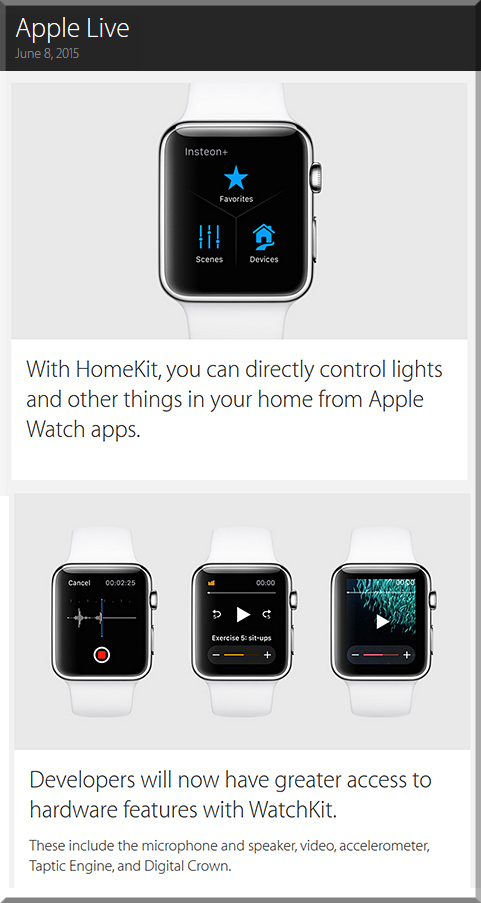
AppleHomekit-Watch-6-8-15


Kevin shows some of the great things developers can do with the new version of WatchKit.

 
© 2025 | Daniel Christian