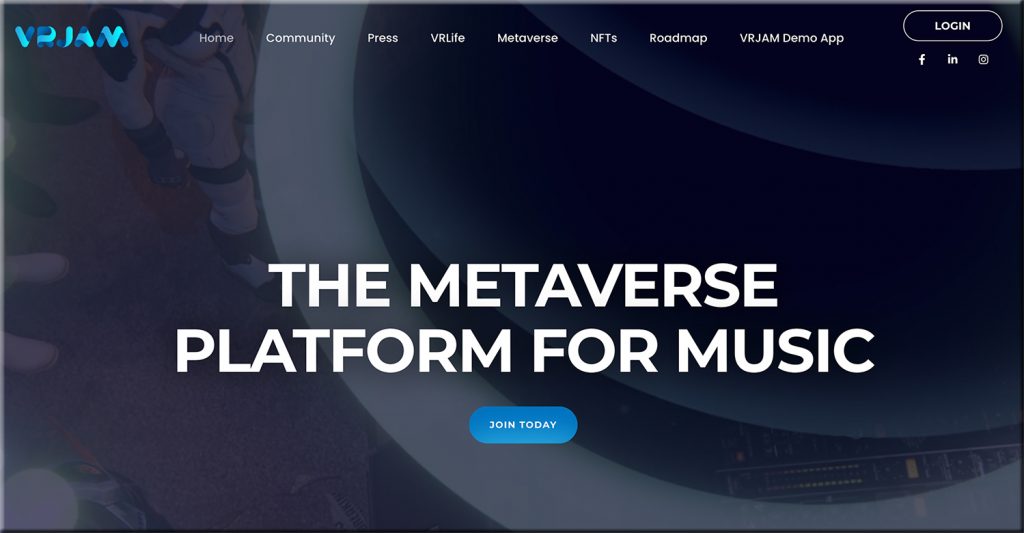
VRJAM -- the metaverse platform for music

The VRJAM metaverse platform is coming to transform the world of live entertainment 

VRJAM, the UK’s leading creator of live music experiences in virtual reality, today teased the launch of the VRJAM platform, a revolutionary new metaverse events platform and NFT creation solution. 

To bring the VRJAM metaverse platform to life, VRJAM has partnered with market leading NFT software developer Enjin.io to launch a rich virtual reality world that offers a host of new solutions for artists to render and monetize their music and live shows in amazing new ways using NFT’s, blockchain and immersive technology.  

The VRJAM platform promises to open up completely new ways for both fans and artist to experience live music events and represents the next step in the evolution of live music. 

Ownership of this virtual world will be shared by a guild of globally recognised artists and record labels who will cooperate to create value and define new possibilities for music inside the metaverse. 

VRJAM’s metaverse platform offers solutions for true live performance using technology that is years ahead of other similar platforms. It provides unsurpassed user experience and offers fans, artists and labels an array of unique features:

VRJAM's metaverse -- a vivid virtual world built for music

At the heart of the VRJAM metaverse platform is a blockchain based trading and finance system, VRJAM Coin. This revolutionary new cryptocurrency will create ways for both artists and fans to earn money inside the metaverse and promises to create entirely new business models for artists, venues and labels at a time when their traditional ways of making money have been turned upside down by the Covid 19 pandemic. 

The VRJAM cryptocurrency is backed by investment from 5 of the world’s leading blockchain specialist investment and venture capital firms, demonstrating the exciting potential of VRJAM’s tech.

The VRJAM platform is scheduled to go live in early 2022, follow on social media to stay up to date.


From DSC:
Hmmmmm….might this type of thing spill over into the worlds of teaching and learning? More direct-to-consumer (learner) types of offerings? Will this open up the doors for new methods of earning a living or for  those interested in building a teaching & learning-based brand?

Alternatively, will this impact what actors, actresses, and comedians will be able to do?


Addendum on 12/2/21:


The EdSurge Product Index

About:

Since 2012, the EdSurge Product Index has been the first stop for educators in search of learning technology solutions. The redesigned EdSurge Product Index(BETA) features enhanced product profiles and validations from trusted education and technology organizations. Now, educators will be able to find the most complete, reliable and up-to-date information available on learning technology products.

Also see:


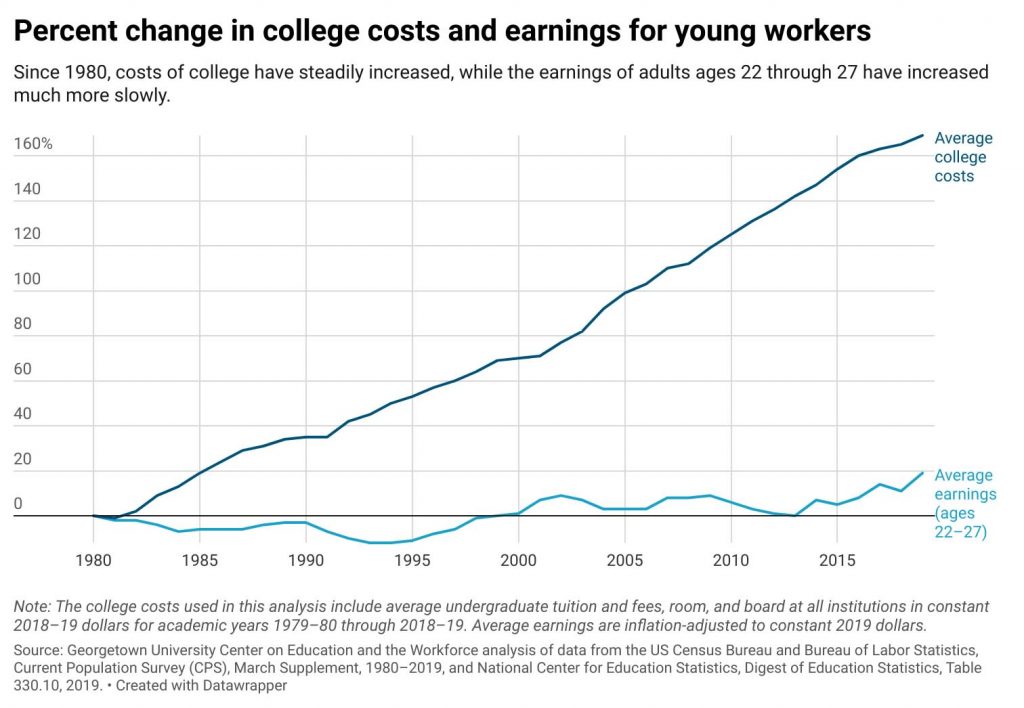
College costs have increased by 169% since 1980—but pay for young workers is up by just 19%: Georgetown report — from cnbc.com by Abigail Johnson Hess

Excerpt:

The report, titled “If Not Now, When? The Urgent Need for an All-One-System Approach to Youth Policy,” breaks down seven trends that have made it difficult for workers to transition from education to the workforce since 1980.

“Postsecondary education policy has failed to keep higher education affordable even as formal education beyond high school has become more essential,” reads the report. “Today, two out of three jobs require postsecondary education and training, while three out of four jobs in the 1970s required a high school diploma or less. Yet while young people today need more education than ever to compete in the labor market, a college education is more expensive than in the past.”


Also see:


Why everybody’s hiring but nobody’s getting hired — from vox.com by Rani Molla and Emily Stewart; with thanks to Ryan Craig for this resource
America’s broken hiring system, explained.

Tim Brackney, president and COO of management consulting firm RGP, refers to the current situation as the “great mismatch.” That mismatch refers to a number of things, including desires, experience, and skills. And part of the reason is that the skills necessary for a given job are changing faster than ever, as companies more frequently adopt new software.

“Twenty years ago, if I had 10 years experience as a warehouse manager, the likelihood that my skills would be pretty relevant and it wouldn’t take me that long to get up to speed was pretty good,” Joseph Fuller, a management professor at Harvard Business School and co-author of a recent paper on the disconnect between employers and employees, said. “The shelf life of people’s skills for a lot of decent-paying jobs has been shortening.”

From DSC:
I also think those hiring don’t think people can reinvent themselves. Folks who hire someone (and/or the applicant tracking systems as play) always seem to look for an exact match. There is little vision and/or belief that someone can grow into a position, or to lead differently, or to go in a different but better direction. They reach for their cookie cutters and shove their imaginations and ability to think bigger aside.

Employers could help people by investing in their employees’ growth and development — even if it means they actively help an employee take a right turn. Such an employee could hopefully find a new fit within that organization — if they do, they would likely turn out to be fiercely loyal.

Even if it means offering an employee 1-2 courses a year that they want to learn about — NO STRINGS ATTACHED — the learning culture would get a huge boost!!! Peoples’ love/enjoyment of learning would grow. Morale would improve. People would feel valued.

Let me offer a personal example:

  • My old boss, Mr. Irving Charles Coleman Jr, let me take a Photoshop class while I was working in the IT Department at Kraft Foods’ headquarters. Kraft paid for it, even though it wasn’t directly related to my position at the time. That course ended up changing my life and my future direction. No kidding. Thank you Irv! You’re the best!
 

BlueJeans Video Conferencing Giant to Launch Native Google Glass App for Remote Assistance — from next.reality.news by Adario Strange

Excerpt:

Starting in 2022, Glass Enterprise Edition 2 users will have the option of using a native version of the BlueJeans meeting software.

Like other enterprise AR wearables on the market, the primary use case for the dynamic will be in the realm of remote assistance, in which an expert in a faraway location can see what a Google Glass wearer sees and advise that team member accordingly.

From DSC:
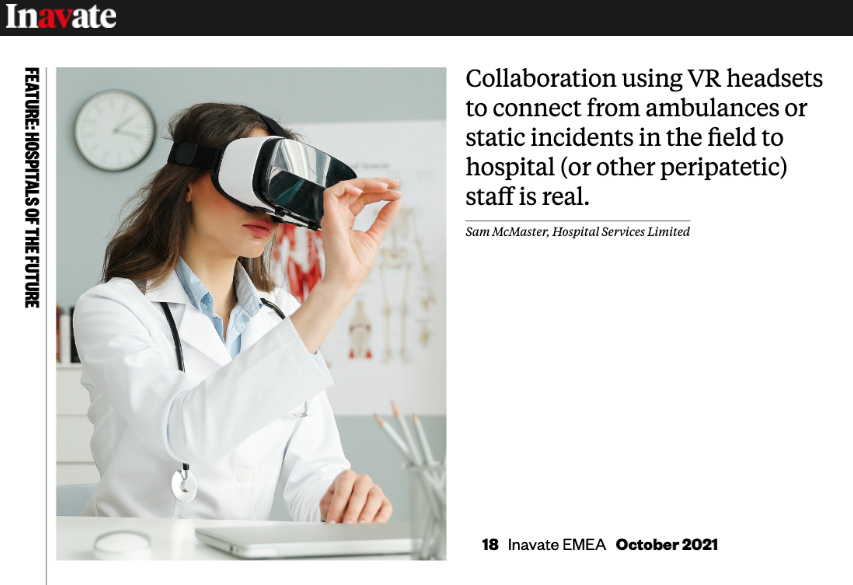
Remote support is also occurring in healthcare. What might “telehealth” morph into?

Remote support is also occurring in healthcare. What might telehealth morph into?


Report: Community Colleges Drive Workforce Education, Training — from insidehighered.com by Sara Weissman

Excerpt:

new survey found that community colleges, and especially their noncredit programs, play an outsize role in providing job-focused education.

Opportunity America, a Washington, D.C., think tank focused on economic mobility, explained the survey findings in an accompanying policy report released Tuesday.

The report says community colleges are “poised to come into their own as the nation’s premier provider of job-focused education and training.”


From DSC:
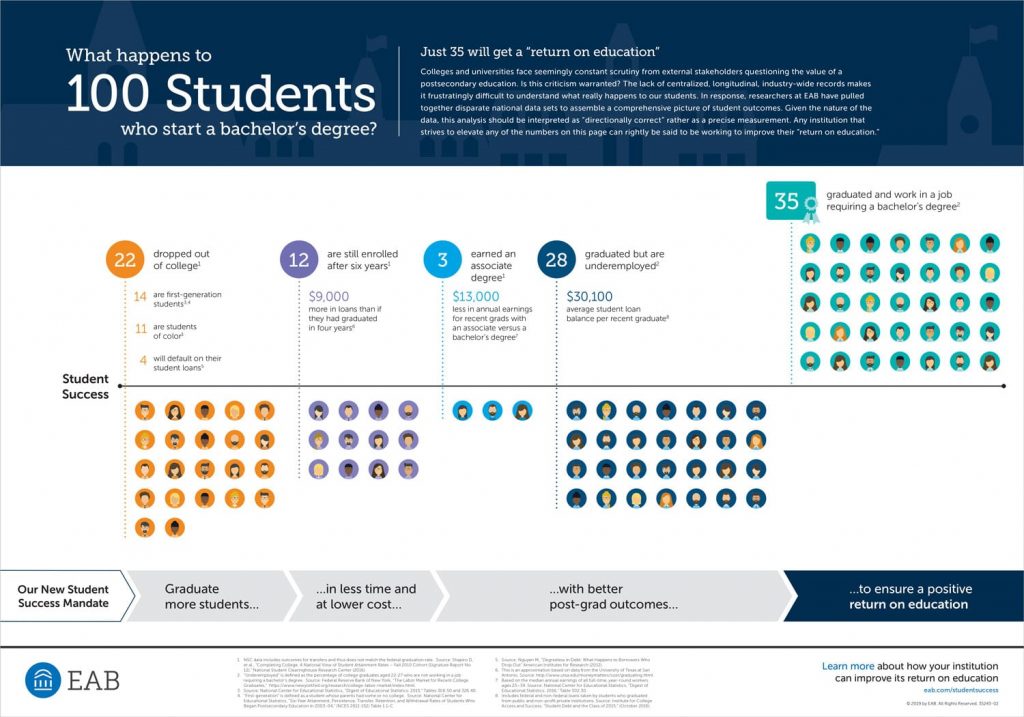
My answer to the question “Is Accreditation a Barrier to Innovation?” would be “Yes, it is.” But admittedly, maybe that’s because I work for a law school these days…and in the legal education realm (as controlled by the American Bar Association), there is YET to be a fully 100% online-based Juris Doctor (JD) degree that I’m aware of. There are some schools that have applied for “variances,” but we’re talking 20+ years after institutions of higher education introduced online-based learning! Those programs who have applied for variances are under an incredible amount of scrutiny by the American Bar Association, that’s for sure. So the legal realm is NOT doing well with innovation.

But in regards to other areas of higher ed and its accrediting bodies…I’m sorry, but you can’t tell me that the run-up in the price of higher education over the last several decades had nothing to do with HE’s accrediting bodies and either their support of — or their lack of support of — those organizations who were trying to introduce something new.

But along these lines, I’d like to hear from folks like:

  • Burck Smith from Straighterline on his perspectives and his company’s experiences with the various accrediting bodies that Straighterline has had to deal with. His insights here would carry a significant impact/weight for me.
  • Or perhaps someone like James DeVaney from University of Michingan’s Center for Academic Innovation or Joshua Kim who writes about higher education and edtech/online learning
  • Or folks like Mary Grush or Rhea Kelly at CampusTechnology.com
  • Surveying organizations who could speak for a massive group of students/learners/employees
  • …and/or other folks who are either trying to innovate within the existing systems, have heard from both sides of the table here, and/or have tried and failed to innovate within the existing structures

We’ll see if institutions of traditional higher education can reinvent themselves in order to stay relevant and survive (especially colleges and universities…not so much the community colleges). The accreditation bodies will have a large part in whether this happens…or not.

Along these lines…let’s see what happens to the growth of alternatives to those types of institutions as well.


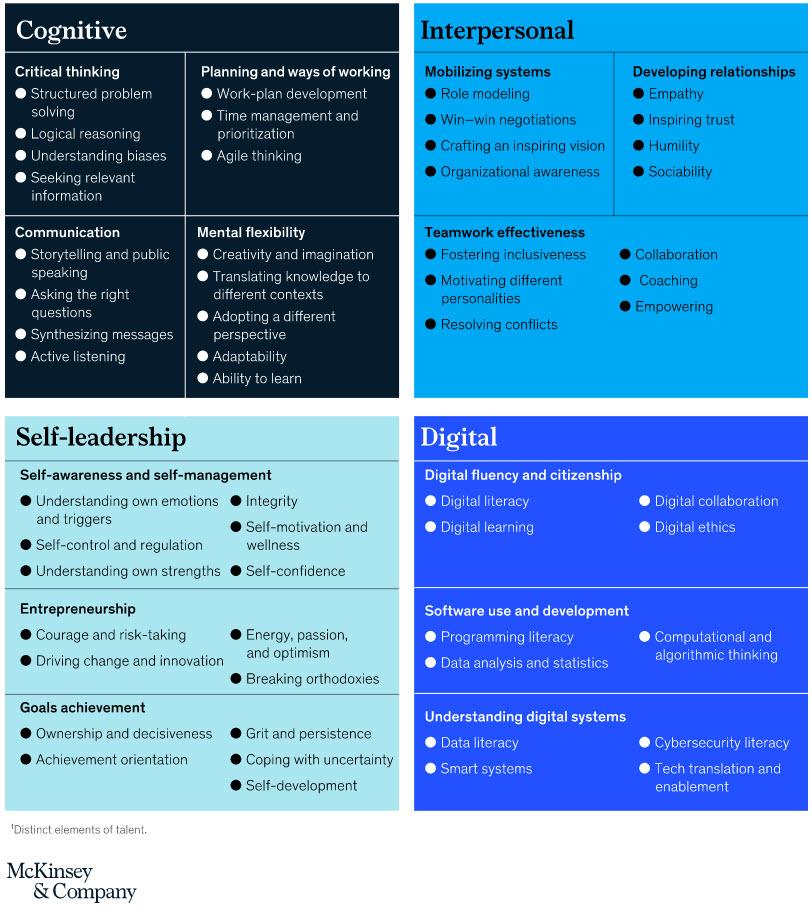
Defining the skills citizens will need in the future world of work — from McKinsey & Company; with thanks to Ryan Craig for this resource

Excerpts:

Our findings help define the particular skills citizens are likely to require in the future world of work and suggest how proficiency in them can influence work-related outcomes, namely employment, income, and job satisfaction. This, in turn, suggests three actions governments may wish to take.

  1. Reform education systems
  2. Reform adult-training systems
  3. Ensure affordability of lifelong education

Establish an AI aggregator of training programs to attract adult learners and encourage lifelong learning. AI algorithms could guide users on whether they need to upskill or reskill for a new profession and shortlist relevant training programs. 

Foundational skills that will help citizens thrive in the future of work


From DSC:
No one will have all 56 skills that McKinsey recommends here. So (HR) managers, please don’t load up your job postings with every single skill listed here. The search for purple unicorns can get tiring, old, and discouraging for those who are looking for work.

That said, much of what McKinsey’s research/data shows — and what their recommendations are — resonates with me. And that’s why I keep adding to the developments out at:

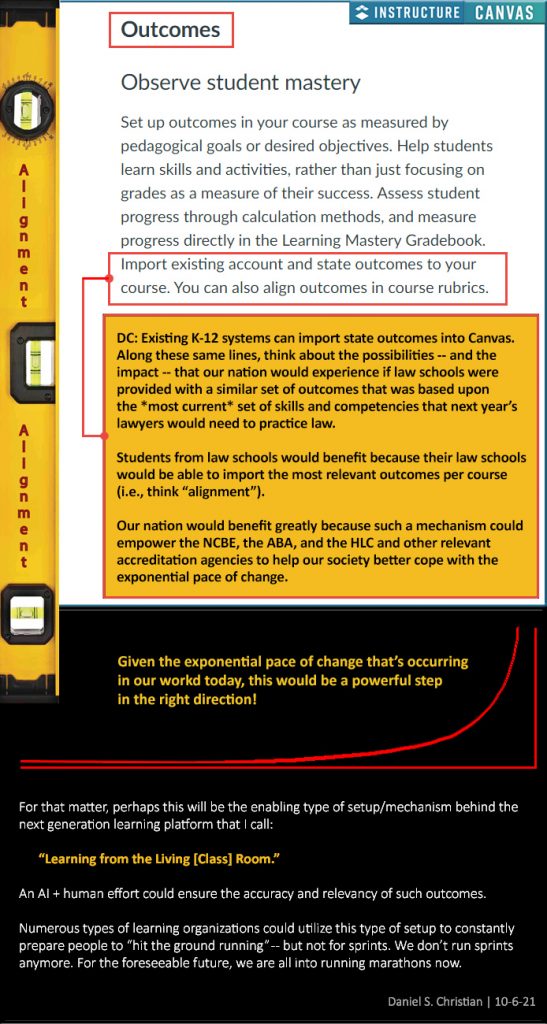
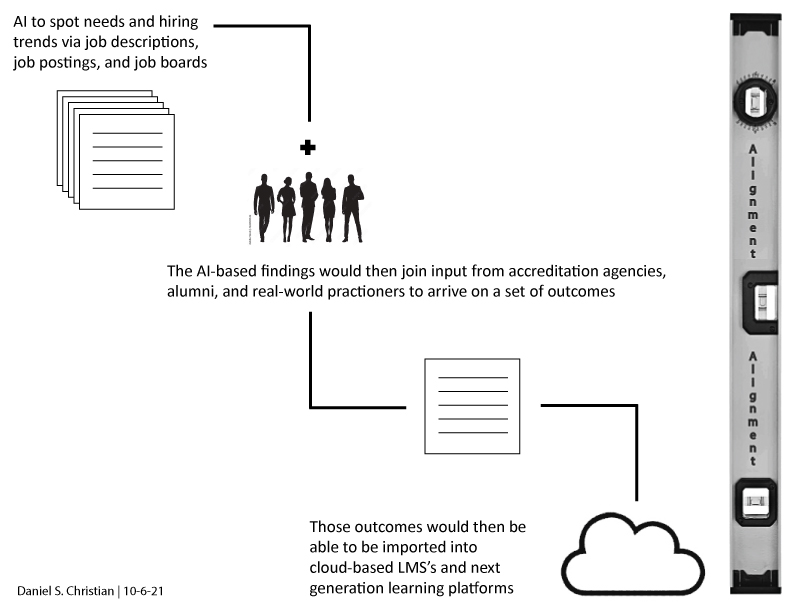
Learning from the living class room

A powerful, global, next-generation learning platform — meant to help people reinvent themselves quickly, safely, cost-effectively, conveniently, & consistently!!!


What doors does this type of real-time translation feature open up for learning? [Christian]

From DSC:
For that matter, what does it open up for #JusticeTech? #Legaltech? #A2J? #Telehealth?


Learning from the living class room


Better Questions in the Classroom Lead Students to Think Harder—and Learn Deeper — from edsurge.com by Staci Bradbury and Rebekah Berlin

Excerpt:

The takeaway here is that teachers should ask questions and design tasks that require students to engage in effortful thinking. This “teacher action,” as we like to call it, is one of the ways in which Deans for Impact has operationalized the vast body of research about how people learn in a way that teachers can use.

Also see:

Before providing evidence to support that claim, a quick recap of our organizational journey. Two years ago, we launched the Learning by Scientific Design (LbSD) Network to begin the vital—albeit challenging—work of redesigning how teachers are prepared. This effort is informed by principles of learning science and taking place in what is now a network of 10 educator-preparation programs across the country. More than 70 faculty are working with us to change the arc of experiences that teacher-candidates receive as they prepare to become teachers.


A LIFETIME OF LEARNING — from continuum.uw.edu

Excerpts:

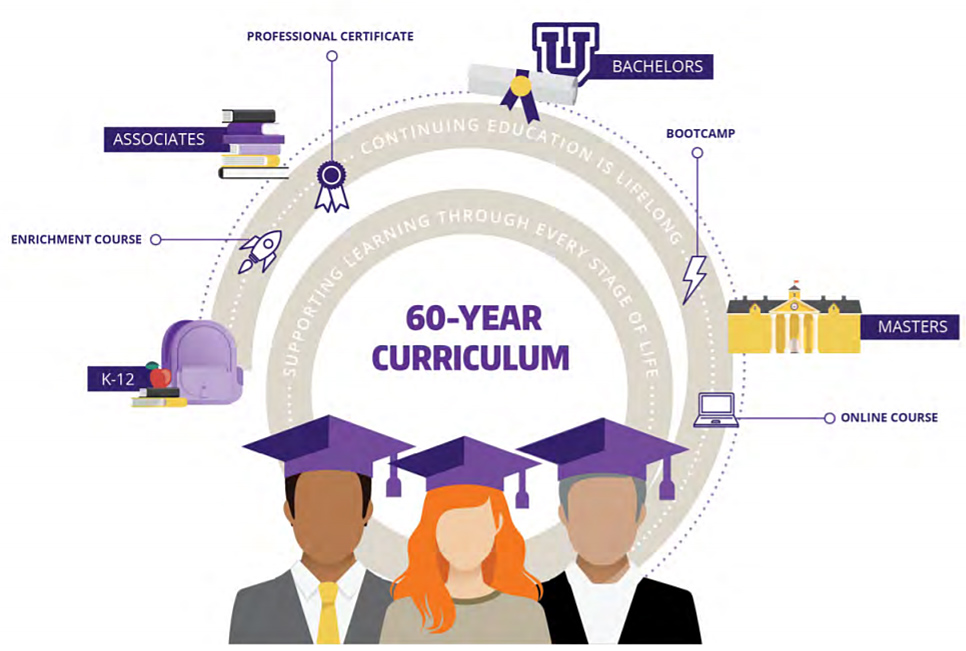
The 60-year curriculum is the modern approach to a lifetime of learning. Getting a degree, getting a job and never setting foot in a classroom again are not today’s reality.

A discussion paper from the McKinsey Global Institute predicts that in the next 10 to 15 years, the need for new tech skills will accelerate. We will also need people who will develop, innovate and adapt those technologies. The paper asserts that, right now, 80% of the workforce doesn’t have the skills for most of the jobs that will be available in the next five to 10 years.

The 60-year curriculum. Lifetime learning is now a requirement.

From DSC:
It would be good to integrate more vocational types of pathways/items in here as well.


Coursera: The ‘Amazon’ Of Online Education May Grow By Magnitudes — from seekingalpha.com

Summary

  • Increasing student dissatisfaction and declining enrollment suggest that many people are rethinking traditional methods of higher education.
  • The historical value of universities is becoming defunct as the internet allows a more efficient, less expensive, and more accessible vector of transmitting knowledge.
  • Innovative platforms like Coursera offer students a huge “marketplace” of high-quality courses far less expensive than those in traditional universities.
  • Given Coursera’s minimal barriers to growth and its massive total addressable market, I would not be surprised to see its annual revenue rise by 10X or more within years.
  • COUR may be one of the few recent IPOs which is actually trading below its fundamental fair value – subject to the assumption that online education will eventually supersede traditional models.
 

The Future of Career Technical Education (CTE): What Educators Need to Know — from techlearning.com by Ray Bendici
Career technical education is gaining expanded interest and funding support in the wake of the pandemic

Excerpt:

Career technical education (CTE) is currently receiving increased attention as it is expected to play a key role in the recovery from the pandemic. New skills, approaches, and funding introduced over the past year are helping to drive expansion of programs as many employers continue to struggle to find qualified workers.

Shortly after his confirmation, U.S. Secretary of Education Miguel Cardona posted an open letter to U.S. students and their families in regard to his plan for education. In it, he suggests that a heavy focus on CTE will be an essential part of what’s next in education.


The Short-term Credentials Landscape — from newamerica.org by Monique O. Ositelu, PhD, Clare McCann, and Amy Laitinen
What We See and What Remains Unseen

Abstract

Given the rapid growth in short-term programs, and policymakers’ fast-growing interest to invest federal higher education dollars into very-short-term credentials, we explore what the research does—and does not— show us about such credentials’ utility in the labor market. With concerns about equity, our review of the literature guides us towards caution, as a strong push for short-term certificates may run the risk of reifying socioeconomic stratification.

From DSC:
I wonder…will accreditation move towards the use of crowd-sourced methods? Similar to rating one’s driver or one’s experience with a product, will microcredentials get into more reviews and recommendations from the users of various learning/training-related sites and services?

Will users of a service comment on whether the credential helped them (with a salary increase, with practical knowledge, with an expanded scope of projects at work, etc.)?

 
© 2025 | Daniel Christian