What Colleges and Job-Training Programs Can Learn From Teenagers’ Hopes and Fears — from edsurge.com by Rebecca Koenig

Excerpts:

American teenagers don’t all have money, connections or other advantages. But they all have dreams.

Some adolescents are encouraged to follow their dreams. Others grow up hearing that their aspirations are a luxury—nice to have, but hard to afford.
..
The adolescent brain is wired for passion, purpose and experimentation. This drives young people to seek pathways to vocation, not shortcuts to work.

But young people want more than good livelihoods. They want good lives.


Trade Schools Vs. Traditional College: What You Should Know — from forbes.com by Robert Farrington

Excerpt:

We all know that a college education is usually worth the financial cost, but what about attending trade school instead? Unfortunately, many adults with influence over high schoolers never take the time to ask this important question.

I’m not only talking about school guidance counselors and other educators, but I’m also talking about parents themselves. For far too many parents with kids in their junior or senior years of school, the stigma surrounding having a child skip four-year college would just be too much to bear.

Have you tried to hire a contractor lately? How about an electrician? If you have, you probably already know these jobs are in high demand.

These are just some of the reasons to consider trade school, but there are others. And if you have your child’s best interest in mind, you will at least hear me out.


Holograms? Check! Now what? — from blog.webex.com by Elizabeth Bieniek

Excerpt (emphasis DSC):

Two years ago, I wrote about the Future of Meetings in 2030 and hinted at an effort my team was building to make this a reality. Now, we have publicly unveiled Webex Hologram and brought the reality of a real-time, end-to-end holographic meeting solution to life.

With Webex Hologram, you can feel co-located with a colleague who is thousands of miles away. You can share real objects in incredible multi-dimensional detail and collaborate on 3D content to show perspective, share, and approve design changes in real-time, all from the comfort of your home workspace.

As the hype dies down, the focus on entirely virtual experiences in fanciful environments will abate and a resurgence in focus on augmented experiences—interjecting virtual content into the physical world around you for an enhanced experience that blends the best of physical and virtual—will emerge.

The ability to have curated information at one’s fingertips, still holds an incredible value prop that has yet to be realized. Applying AI to predict, find, and present this type of augmented information in both 2D and 3D formats will become incredibly useful. 

From DSC:
As I think of some of the categories that this posting about establishing a new kind of co-presence relates to, there are many relevant ones:

  • 21st century
  • 24x7x365
  • 3D
  • Audio/Visual (A/V)
  • Artificial Intelligence (AI)
  • Cloud-based
  • Collaboration/web-based collaboration
  • Intelligent tutoring
  • Law schools, legal, government
  • Learning, learning agents, learning ecosystems, Learning from the Living [Class] Room, learning spaces/hubs/pods
  • Libraries/librarians
  • K-12, higher education, corporate training
  • Metaverse
  • Online learning
  • Telelegal, telemedicine
  • Videoconferencing
  • Virtual courts, virtual tutoring, virtual field trips
  • Web3
 

Exploring Virtual Reality [VR] learning experiences in the classroom — from blog.neolms.com by Rachelle Dene Poth

Excerpt:

With the start of a new year, it is always a great time to explore new ideas or try some new methods that may be a bit different from what we have traditionally done. I always think it is a great opportunity to stretch ourselves professionally, especially after a break or during the spring months.

Finding ways to boost student engagement is important, and what I have found is that by using tools like Augmented Reality (AR) and Virtual Reality (VR), we can immerse students in unique and personalized learning experiences. The use of augmented and virtual reality has increased in K-12 and Higher Ed, especially during the past two years, as educators have sought new ways to facilitate learning and give students the chance to connect more with the content. The use of these technologies is increasing in the workplace, as well.

With all of these technologies, we now have endless opportunities to take learning beyond what has been a confined classroom “space” and access the entire world with the right devices.


As seen/accessible from this page.

A brief insert from DSC:
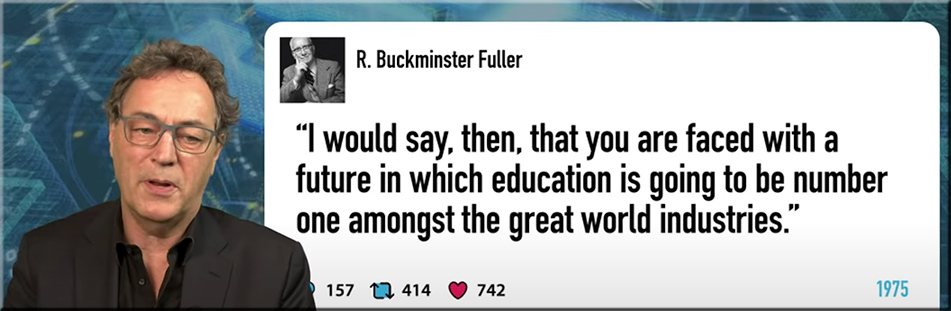
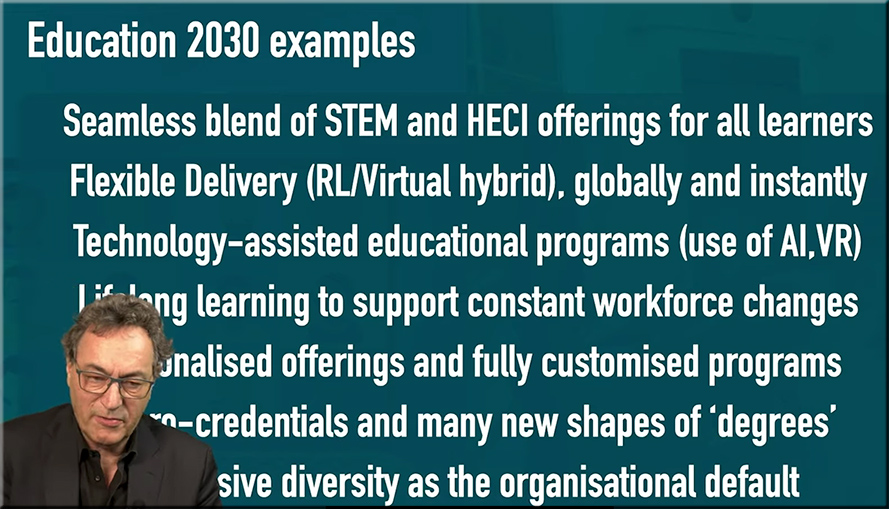
Another futurist Thomas Frey has some thoughts along this same line.

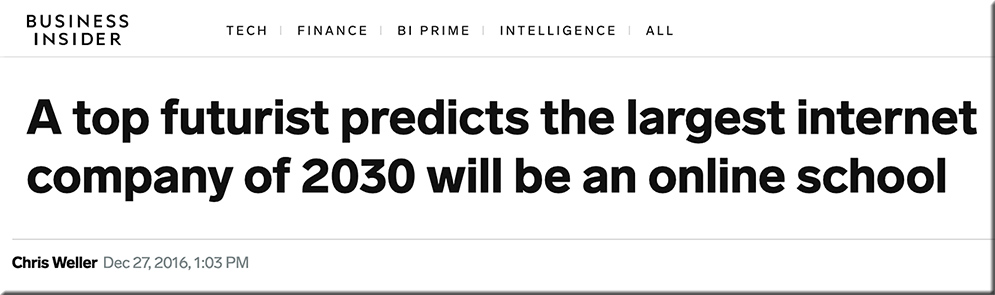
A top futurist predicts the largest internet company of 2030 will be an online school

#Canada #education #future #trends #careerdevelopment #change #paceofchange #automation #robotics #education #AI #learnhowtolearn #unlearn #learningecosystems #lifelonglearning #endofroutine #experientiallearning


Machines are for answers. Humans are for questions. 


Also relevant/see:


Shorter Training, Better Skills: Three Predictions For The Future Of Career And Technical Education — from forbes.com by Jeremy Wheaton; with thanks to Ryan Craig for this resource

But in the face of an entrenched and growing skills gap, young people are increasingly questioning the status quo and looking for shorter, less expensive, more direct-to-career options.

Excerpts:

Here [is the first of] three predictions for how the rest of the 2020s will continue to be defined by career education:

  1. The four-year degree will no longer be seen as the default postsecondary education option.


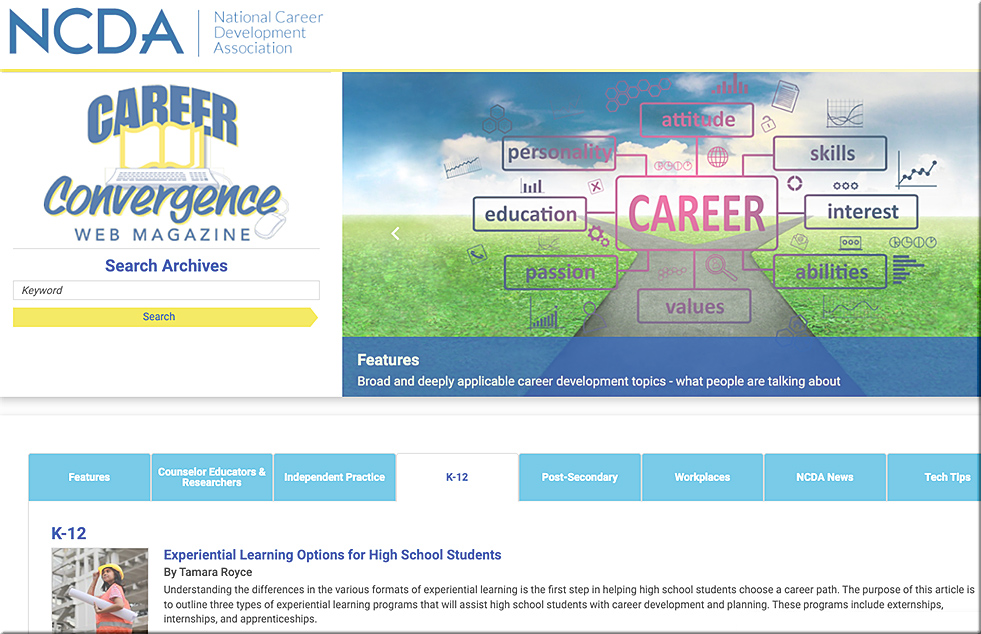
NCDA | Career Convergence - The NCDA's monthly web magazine for career practitioners

NCDA | Career Convergence – The NCDA’s monthly web magazine for career practitioners

From DSC:
I like the continuum that I see here:

  • K-12
  • Postsecondary
  • Workplaces
  • Counselors, Researchers, etc.

We ask students in college, for example, to pay an enormous amount of money at a time when they don’t know what’s all out there. Many don’t know themselves yet (I surely didn’t) and they also don’t know what discipline/area/jobs might be a good fit (again, I surely didn’t). We need more seamless transitions from one chapter/phase to another (and sometimes back again). We need more resources for students to find out what’s out there.

This is why I like services like LinkedIn Learning (which was Lynda.com), MasterClass, MOOCs and the like. A person can spend an hour or two (or even less) to see if that class, topic, etc. is of interest to them.


Resource via @ernperez
at this article/page.

From DSC:

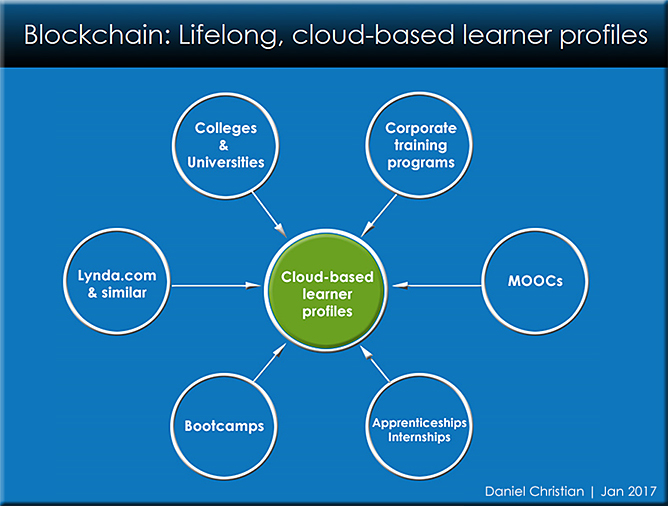
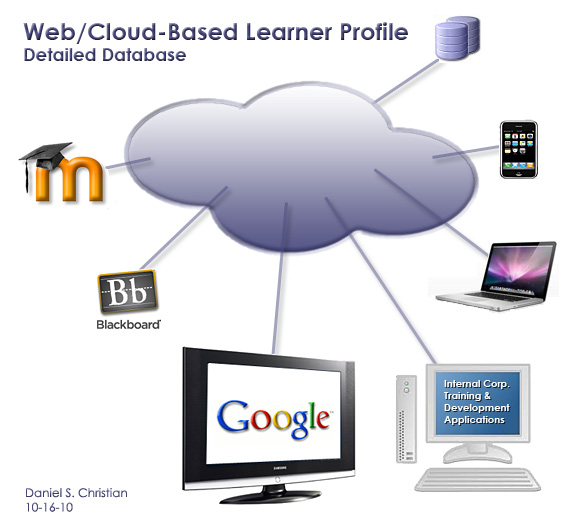
Cloud-based learner profiles are a likely element of our future learning ecosystems


2022: Year Of The Great Convergence — Volume IV, #1 by Ryan Craig

Excerpts:

Three sets of would-be pathway providers are converging on this massive opportunity. It’s going to get crowded very fast. Here’s the current landscape and prospects for each at the outset of the Great Convergence:

  1. Education-as-a-Benefit Providers
  2. Education Platform Companies
  3. Learning Experience Platforms

While one of these three sectors is likely to win the Great Convergence, there are two other possible outcomes.


Long disparaged, education for the skilled trades is slowly coming into fashion — from hechingerreport.org by Jon Marcus
Higher demand, better pay and new respect are drawing students to the trades

Excerpt:

Meanwhile, Americans can see firsthand the labor shortages in fields such as construction, transportation and logistics, along with rising pay for those kinds of jobs and the lower debt and the shorter timetables needed to train for them.

“Especially with the younger generation, time matters. Money matters, but time matters as well,” said Chad Wilson, superintendent at the East Valley Institute of Technology in Arizona, or EVIT.


From DSC:
As the article below clearly relays, MOOCs did NOT fail! In the last decade, they have reached 220 million learners worldwide!

I don’t know the total number of graduates from the Ivy League — throughout all of the relevant institutions’ histories — but I would bet you that MOOCs have reached far more learners. And MOOCs did so in less than a decade. 

And you’re going to tell me MOOCs have been a failure?!!!! Are you being serious!?!?!  You can talk about completion rates all that you want to (and that misses the point, as some people sign up for MOOCs without ever intending to finish the entire course). As with other things, people get out of something what they put into that thing.


A Decade of MOOCs: A Review of Stats and Trends for Large-Scale Online Courses in 2021 — from edsurge.com by Dhawal Shah

Excerpts:

Now, a decade later, MOOCs have reached 220 million learners, excluding China where we don’t have as reliable data, . In 2021, providers launched over 3,100 courses and 500 microcredentials.

Originally, MOOC providers relied on universities to create courses. But that dependence is declining as more and more of the courses are created by companies every year. These corporate partners in course creation include tech giants Google, Microsoft, Amazon and Facebook.

…the majority of the new courses launched on Coursera in 2021 are not from universities anymore.

These mass online courses were born without a business model. Yet within a decade, MOOCs went from no revenue to bringing in well over a half a billion dollars annually.


A handful of colleges are finally providing training in a way consumers want it: fast — from hechingerreport.org by Jon Marcus
‘Rapid reskilling’ seeks to speed up the frustratingly slow pace of switching careers

Excerpts:

Such so-called rapid reskilling remains surprisingly rare in public and nonprofit higher education, which generally has been slow to respond to the need for accelerated training among the nation’s many career-switchers.

While conventional education institutions have long offered what they call short-term training, what they often mean by that is “shorter than it takes to get a degree.” Such programs still typically follow academic semesters that start only in the fall or spring and meet for a few hours a week, stretching on for months or years.

“We have really picked up the pace,” said Urban. “That’s something that is very, very attractive to career-switchers. People want it faster and they want it cheaper and they want it more conveniently. And that’s not a mode of operation in which traditional colleges and universities have thrived.”


Cisco and Google join forces to transform the future of hybrid work — from blog.webex.com by Kedar Ganta

Cisco and Google join forces to transform the future of hybrid work

Excerpts:

Webex [on 12/7/21] announced the public preview of its native meeting experience for Glass Enterprise Edition 2 (Glass), a lightweight eye wearable device with a transparent display developed by Google. Webex Expert on Demand on Glass provides an immersive collaboration experience that supports natural voice commands, gestures on touchpad, and head movements to accomplish routine tasks.


Prisons are training inmates for the next generation of in-demand jobs — from hechingerreport.org by Danielle Dreilinger
Revamping career-tech education in prison with the goal of reducing recidivism

Excerpt:

And postsecondary education in prison, both vocational and more traditionally academic, will soon become more widespread: This perennially low-funded, essentially hidden part of the education world will be getting more money, thanks to three decisions in Washington: the First Step Act criminal justice reforms, the newest version of the federal Perkins Act for career and technical education and, most notably, the recent expansion of Second Chance Pell college grants for prisoners.

That’s good news, the evidence shows. Inmates who participate in correctional education — from GED certificates to college degrees and trade training and everything in between — are up to 43 percent less likely to return to prison, and such education provides a $5 return for every taxpayer dollar spent, according to the Rand Corp. And that’s just within three years of a prisoner’s release.

 
© 2025 | Daniel Christian