


Also relevant/see:
Also relevant/see:
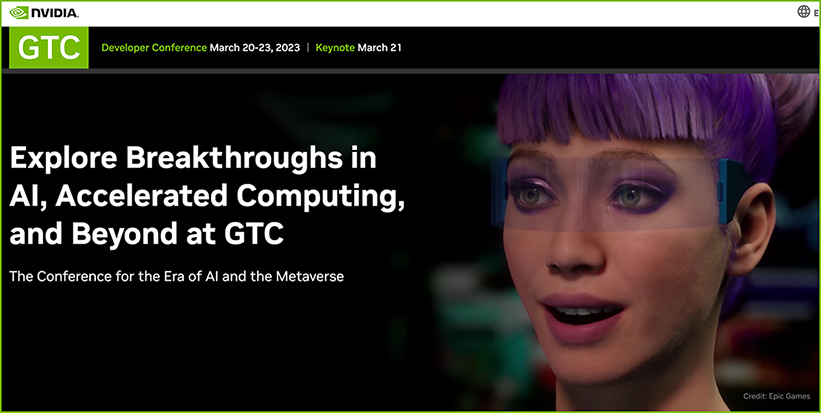
Explore Breakthroughs in AI, Accelerated Computing, and Beyond at GTC — from nvidia.com
The Conference for the Era of AI and the Metaverse
Addendums on 3/22/23:
Generative AI for Enterprises — from nvidia.com
Custom-built for a new era of innovation and automation.
Excerpt:
Impacting virtually every industry, generative AI unlocks a new frontier of opportunities—for knowledge and creative workers—to solve today’s most important challenges. NVIDIA is powering generative AI through an impressive suite of cloud services, pre-trained foundation models, as well as cutting-edge frameworks, optimized inference engines, and APIs to bring intelligence to your enterprise applications.
NVIDIA AI Foundations is a set of cloud services that advance enterprise-level generative AI and enable customization across use cases in areas such as text (NVIDIA NeMo™), visual content (NVIDIA Picasso), and biology (NVIDIA BioNeMo™). Unleash the full potential with NeMo, Picasso, and BioNeMo cloud services, powered by NVIDIA DGX™ Cloud—the AI supercomputer.
Introducing Q-Chat, the world’s first AI tutor built with OpenAI’s ChatGPT — from quizlet.com by Lex Bayer
Excerpt:
Modeled on research demonstrating that the most effective form of learning is one-on-one tutoring1, Q-Chat offers students the experience of interacting with a personal AI tutor in an effective and conversational way. Whether they’re learning French vocabulary or Roman History, Q-Chat engages students with adaptive questions based on relevant study materials delivered through a fun chat experience. Pulling from Quizlet’s massive educational content library and using the question-based Socratic method to promote active learning, Q-Chat has the ability to test a student’s knowledge of educational content, ask in-depth questions to get at underlying concepts, test reading comprehension, help students learn a language and encourage students on healthy learning habits.

94% of Consumers are Satisfied with Virtual Primary Care — from hitconsultant.net
Excerpt from What You Should Know (emphasis DSC):
From DSC:
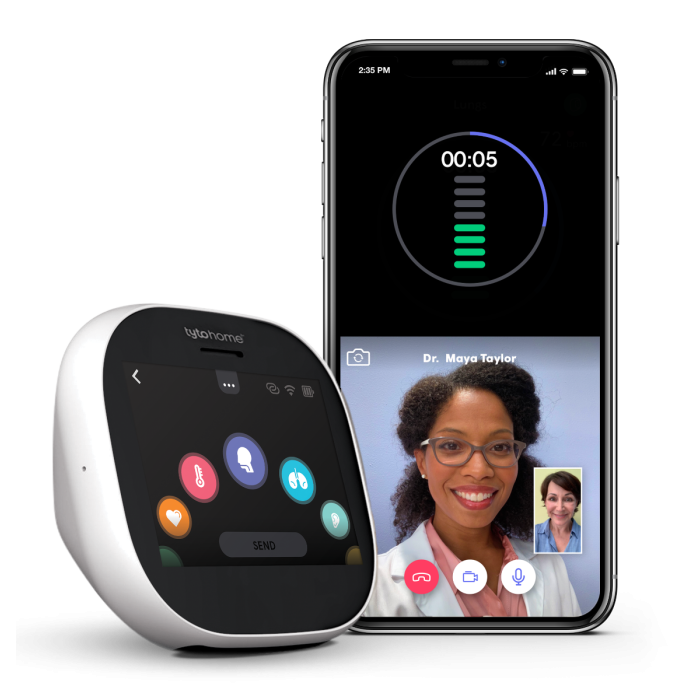
I received an email the other day re: a TytoCare Exam Kit. It said (with some emphasis added by me):
With a TytoCare Exam Kit connected to Spectrum Health’s 24/7 Virtual Urgent Care, you and your family can have peace of mind and a quick, accurate diagnosis and treatment plan whenever you need it without having to leave your home.
Your TytoCare Exam Kit will allow your provider to listen to your lungs, look inside your ears or throat, check your temperature, and more during a virtual visit.
Why TytoCare?
From DSC:
It made me reflect on what #telehealth has morphed into these days. Then it made me wonder (again), what #telelegal might become in the next few years…? Hmmm. I hope the legal field can learn from the healthcare industry. It could likely bring more access to justice (#A2J), increased productivity (for several of the parties involved), as well as convenience, peace of mind, and cost savings.


TV makers are looking beyond streaming to stay relevant — from protocol.com by Janko Roettgers and Nick Statt

Excerpts:
The search for TV’s next killer app
TV makers have some reason to celebrate these days: Streaming has officially surpassed cable and broadcast as the most popular form of TV consumption; smart TVs are increasingly replacing external streaming devices; and the makers of these TVs have largely figured out how to turn those one-time purchases into recurring revenue streams, thanks to ad-supported services.
…
What TV makers need is a new killer app. Consumer electronics companies have for some time toyed with the idea of using TV for all kinds of additional purposes, including gaming, smart home functionality and fitness. Ad-supported video took priority over those use cases over the past few years, but now, TV brands need new ways to differentiate their devices.
Turning the TV into the most useful screen in the house holds a lot of promise for the industry. To truly embrace this trend, TV makers might have to take some bold bets and be willing to push the envelope on what’s possible in the living room.
From DSC:
What if smart TVs’ new killer app was a next-generation learning-related platform? Could smart TVs deliver more blended/hybrid learning? Hyflex-based learning?
.
![The Living [Class] Room -- by Daniel Christian -- July 2012 -- a second device used in conjunction with a Smart/Connected TV](http://danielschristian.com/learning-ecosystems/wp-content/uploads/2012/07/The-Living-Class-Room-Daniel-S-Christian-July-2012.jpg)
.
Or what if smart TVs had to do with delivering telehealth-based apps? Or telelegal/virtual courts-based apps?
Online Learning, From the Margins to the Center — from insidehighered.com by Ray Schroeder
Online learning has evolved over the past 25 years from a niche position on the margins of higher ed to the leading driver of growth in enrollment and innovation.
Excerpt:
Online learning has grown from a marginal niche of higher ed to the largest provider of postsecondary learning in the world. We are now on the cusp of yet another technological evolution in the delivery of online learning. The advent of the metaverse in higher education is closer than many casual observers may think. By 2025, we will begin to see significant numbers of offerings using avatars and immersive technologies such as virtual reality, augmented reality and extended reality engaging learners at a distance.
Do you have developmental immersion laboratories for your faculty and staff to prepare for 2025? Who at your university is advocating for the integration of VR, AR and XR into online delivery? Are you already collaborating with industry and business in developing the most effective and relevant technology-enhanced online programs that will meet their needs? Those who lead in these ventures will set the standards and gain the recruiting advantage in higher education.
From DSC:
Is the use of virtual instructors going to be used more to fill vacancies within K12? Hmmm…time will tell.
By the way, I think online-based learning works for many people, but certainly it isn’t for everyone (even with the likely unfair assumption that everyone has Internet access and the equipment/setup that they need). From what I’ve observed, it works best for very disciplined, motivated students — they need to be a bit more independent in their learning. But school systems should have backup plans in place if the exodus continues.
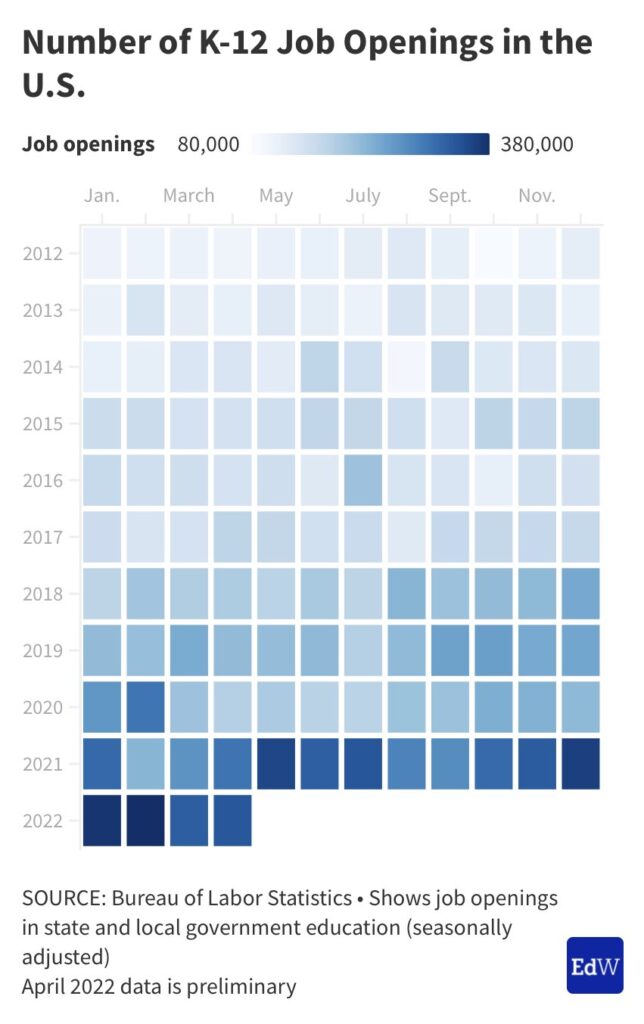
Education tech companies bring virtual teaching to the table as solution to teacher shortage — from thedenverchannel.com by Chloe Nordquist
Excerpts:
Education technology companies like Elevate K-12, which is a live streaming instruction platform, are growing. Especially in areas where hiring a teacher can be tough.
…
The company is seeing more interest from teachers in joining their platform. One is for schedule flexibility.
The Metaverse in 2040 — from pewresearch.org by Janna Anderson and Lee Rainie
Hype? Hope? Hell? Maybe all three. Experts are split about the likely evolution of a truly immersive ‘metaverse.’ They expect that augmented- and mixed-reality enhancements will become more useful in people’s daily lives. Many worry that current online problems may be magnified if Web3 development is led by those who built today’s dominant web platforms
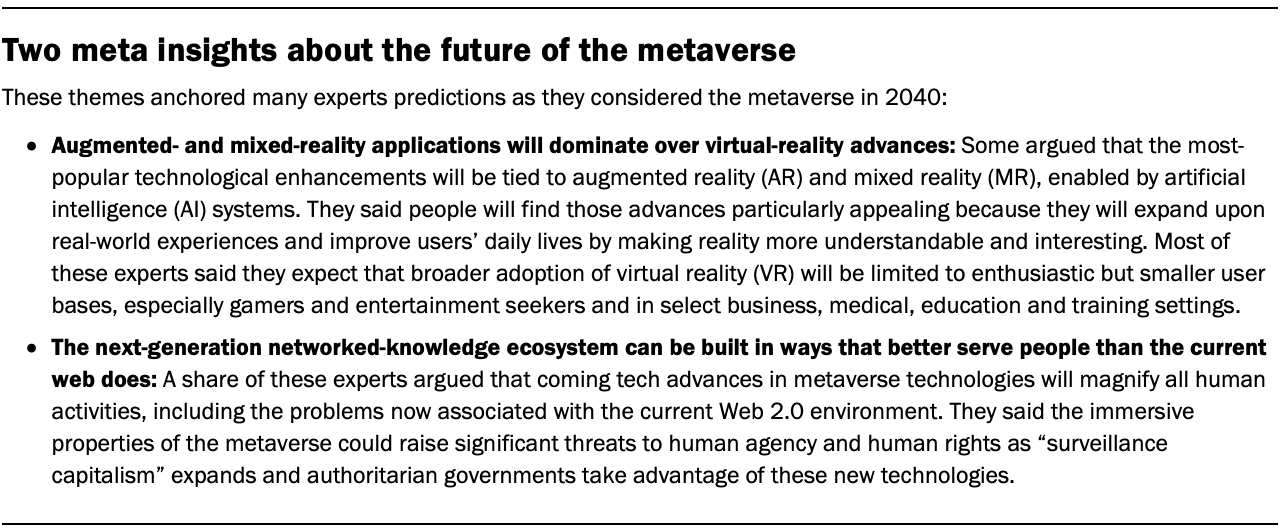
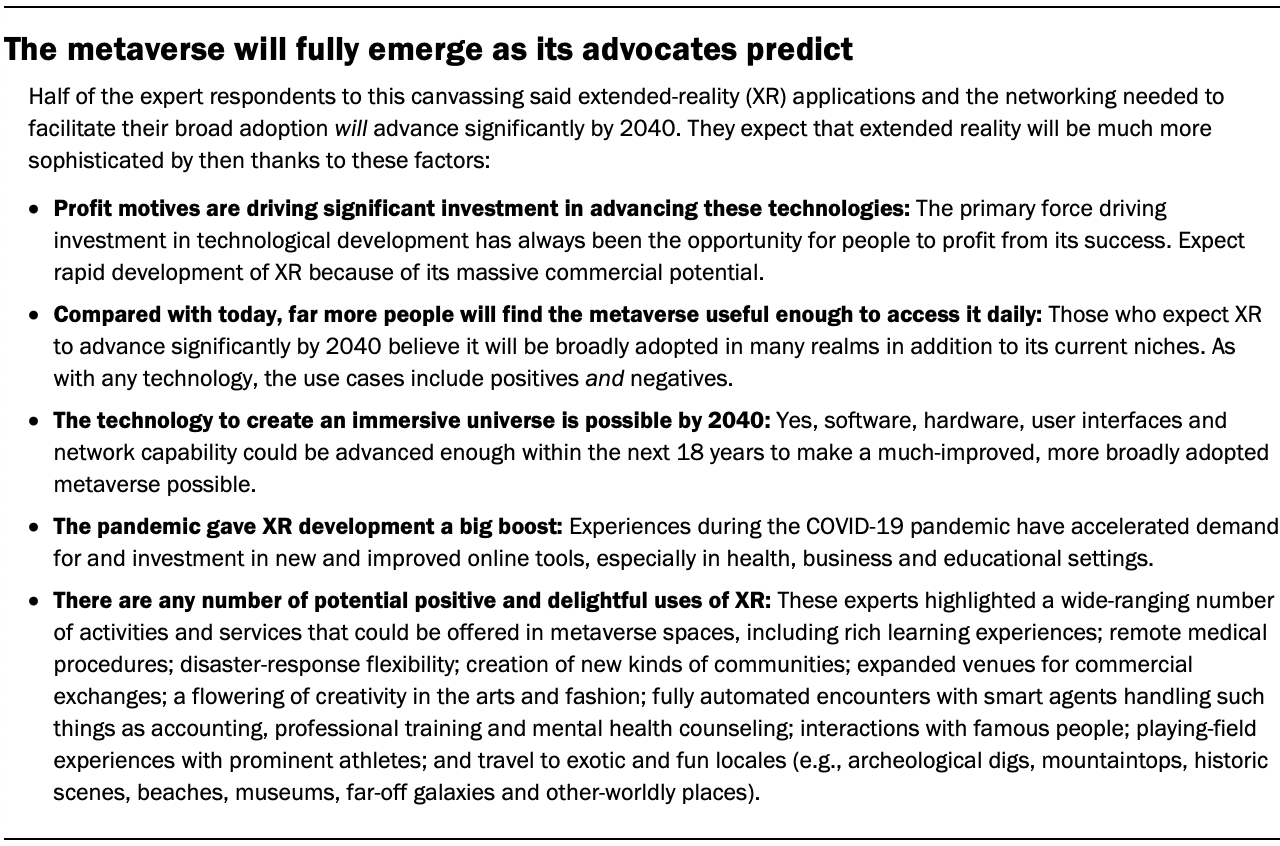
The metaverse will, at its core, be a collection of new and extended technologies. It is easy to imagine that both the best and the worst aspects of our online lives will be extended by being able to tap into a more-complete immersive experience, by being inside a digital space instead of looking at one from the outside.
Laurence Lannom, vice president at the Corporation for National Research Initiatives
“Virtual, augmented and mixed reality are the gateway to phenomenal applications in medicine, education, manufacturing, retail, workforce training and more, and it is the gateway to deeply social and immersive interactions – the metaverse.
Elizabeth Hyman, CEO for the XR Association
Meet the metaverse: Creating real value in a virtual world — from mckinsey.com with Eric Hazan and Lareina Yee
Excerpt (emphasis DSC):
Welcome to the metaverse. Now, where exactly are we? Imagine for a moment the next iteration of the internet, seamlessly combining our physical and digital lives. It’s many things: a gaming platform, a virtual retail spot, a training tool, an advertising channel, a digital classroom, a gateway to entirely new virtual experiences. While the metaverse continues to be defined, its potential to unleash the next wave of digital disruption is clear. In the first five months of 2022, more than $120 billion have been invested in building out metaverse technology and infrastructure. That’s more than double the $57 billion invested in all of 2021.
How would you define the metaverse?
Lareina: What’s exciting is that the metaverse, like the internet, is the next platform on which we can work, live, connect, and collaborate. It’s going to be an immersive virtual environment that connects different worlds and communities. There are going to be creators and alternative currencies that you can buy and sell things with. It will have a lot of the components of Web3 and gaming and AR, but it will be much larger.
Also relevant/see:
Also relevant/see:
Omar Wael built his first robot at the age of nine. ?
Now he's 13 and building a metaverse using his mother's old clothes. ?
See more ? pic.twitter.com/WxYMnaOQvt
— Euronews Next (@euronewsnext) June 28, 2022