Photo-realistic VR tour Oof the Palace Of Versailles now available free on SteamVR — from vrscout.com by Kyle Melnick
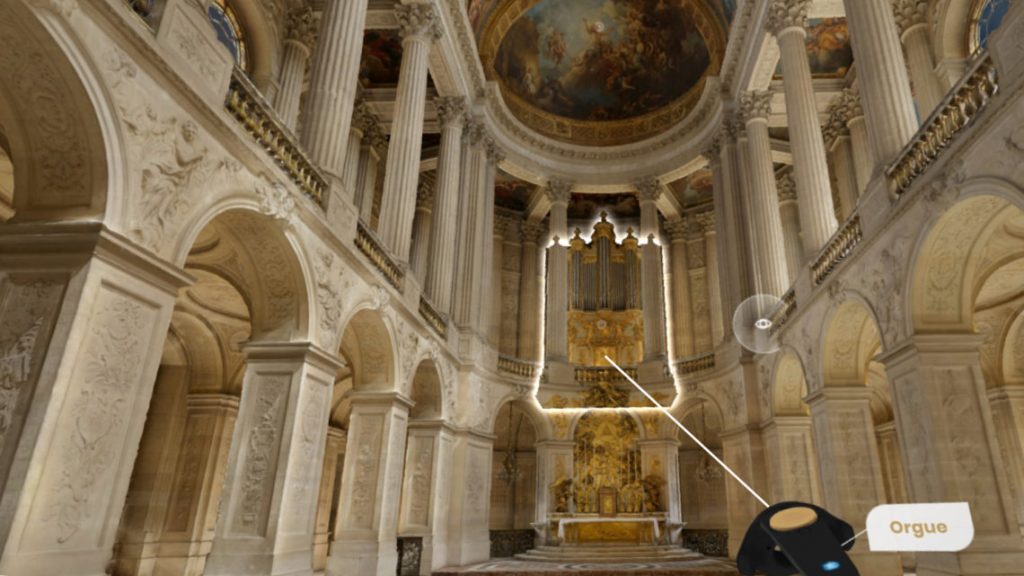
Photo-realistic VR tour Oof the Palace Of Versailles now available free on SteamVR — from vrscout.com by Kyle Melnick
Bigscreen TV launches with 50+ channels of video content — from vrscout.com by Allison Hollender
Excerpts:
Bigscreen, an immersive social platform that allows you to access your computer in VR, aims to continue revolutionizing the TV viewing experience with Bigscreen TV — a VR streaming experience that opens up access to over 50 major television providers.
…
“With Bigscreen, users can watch a Netflix show or a Twitch stream in an IMAX-like virtual movie theater,” Bigscreen reports. This means users from around the world can gather together to watch big championship games or their favorite shows with their friends as though they are together on the same couch.

From DSC:
Interesting…how might technologies and vendors like Bigscreen TV impact learning-related experiences? Hmmm….time will tell.
From DSC:
In a next generation learning system, it would be sharp/beneficial to have a Netflix-like interface to check out potential functionalities that you could turn on and off (at will) — as one component of your learning ecosystem that could feature a setup located in your living room or office.
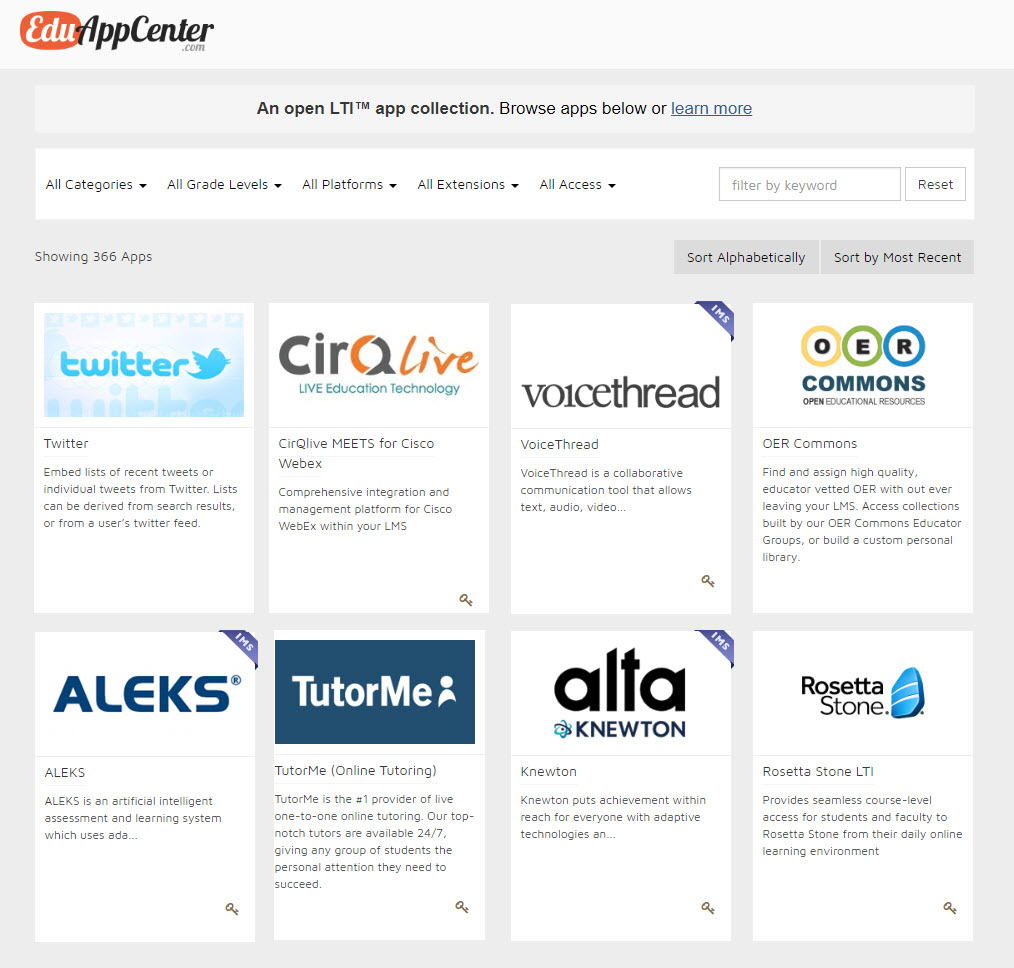
For example, put a Netflix-like interface to the apps out at eduappcenter.com (i.e., using a rolling interface at first, then going to a static page/listing of apps…again…similar to Netflix).
Augmented Reality In Healthcare Will Be Revolutionary — from medicalfuturist.com
Excerpts:
1) Augmented reality can save lives through showing defibrillators nearby
2) Google Glass might help new mothers struggling with breastfeeding
3) Patients can describe their symptoms better through augmented reality
4) Nurses can find veins easier with augmented reality
5) Motivating runners through zombies
6) Pharma companies can provide more innovative drug information
7) Augmented reality can assist surgeons in the OR
8) Google’s digital contact lens can transform how we look at the world
How is AI used in healthcare – 5 powerful real-world examples that show the latest advances — from forbes.com by Bernard Marr
Excerpts:
1) AI-assisted robotic surgery
2) Virtual nursing assistants
3) Aid clinical judgment or diagnosis
4) Workflow and administrative tasks
5) Image analysis
Summary: A Manager’s guide to Augmented Reality. — from twnkls.com by Prof. Michael Porter
Excerpt:
The full read can be found at the bottom of this page. But we summarized for you the 4 key take-aways:
What’s so great about VR? Virtually everything — from virtuallyinspired.org
Excerpt:
No doubt about it. Virtual reality isn’t just for gamers and gadget geeks anymore. In fact, as the technology gets better and cheaper, VR is the wave of the future when it comes to creating a truly memorable and effective learning experience – and for good reason.
Multiple Learning Attributes. To begin with, it empowers us to create any number of safely immersive virtual learning environments that feel and respond much as they would in real life, as students engage and explore, interact with and manipulate objects within these worlds. Imagine teleporting your students to re-enact historic battles; explore outer space; or travel the inner workings of the human body. What’s more, using sophisticated controls, they can actually “practice” complex procedures like cardiac surgery, or master difficult concepts, such as the molecular properties of brain cells.
Likewise, VR gives new meaning to the term “field trip,” by enabling students to virtually experience first-hand some of the world’s great museums, natural wonders and notable landmarks. You can also embed 360-degree objects within the virtual classroom to support course content, much as Drexel University Online is doing after assembling its one-of-a-kind VRtifacts+ repository. And you can use it to live-stream events, guest lectures and campus tours, in addition to hosting virtual community spaces where learners can meet and connect in a seemingly “real” environment.
The Modern Alternative Learning Resource: Time To Drop The Ban On Phones In Schools? — from vrfocus.com by Robert Currie
Robert Currie discusses the mobile phone’s role in education, and how thanks in part to AR and VR it should now be considered a top tool.
Benefits of Virtual Reality in Education — from invisible.toys
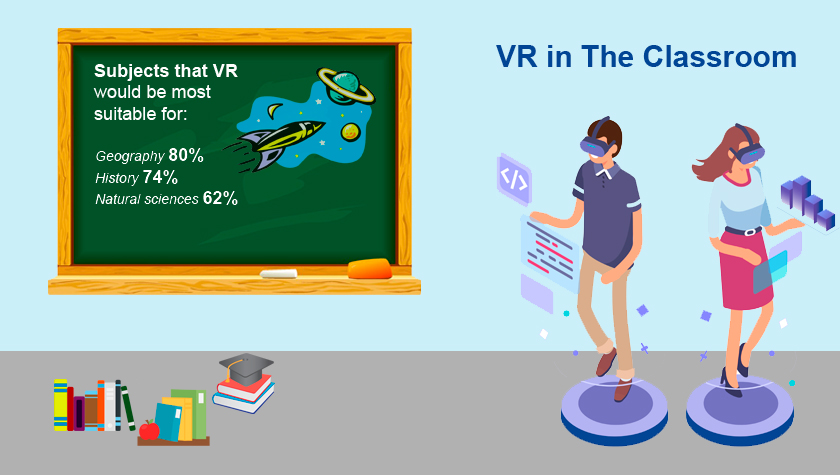
The AVR Platform and Classroom 3.0 Showcased at EduTECH Asia 2018 — from eonreality.com
Excerpt:
At EduTECH Asia 2018 this week in Singapore, EON Reality spent two full days speaking, promoting, and demonstrating the latest updates to the AVR Platform to the thousands of education and technology professionals in attendance.
With a focus on how the AVR Platform can best be used in the education world, EON Reality’s discussion, ‘Augmented and Virtual Reality in Education: The Shift to Classroom 3.0,’ highlighted Wednesday’s offerings with a full presentation and hands-on demos of the new tools in Creator AVR. Over the course of both days, visitors filled the EON Reality booth to get their own one-on-one experience of Creator AVR, Virtual Trainer, and the ways in which AR Assist can help out in the classroom.
The AVR Platform’s three products are the fundamental tools of EON Reality’s Classroom 3.0 vision for the Immersed Flipped Classrooms of the future. With Creator AVR — a SaaS-based learning and content creation solution — leading the way, the AVR Platform empowers Classroom 3.0 by providing teachers and educators of all types with the tools needed to create Augmented and Virtual Reality learning modules.
Bringing Asian educators from all over the continent together, EON Reality’s presence at EduTECH showed just how significantly Augmented Reality and Virtual Reality can elevate the overall educational experience going forward. After two full days of demonstrations, EON Reality introduced the AVR Platform to approximately 1500 teachers, school administration officials, and other decision-makers in Asia’s education industry.
As the AVR Platform expands to educational markets around the world, EON Reality’s revolutionary spin on traditional learning branches into new cultures and nations. With local Singaporean educational institutions like Temasek Polytechnic already onboard, the EduTECH Asia 2018 conference marked the continued spread of Classroom 3.0 and the AVR Platform on both a regional and global level.
Guiding faculty into immersive environments — from campustechnology.com by David Raths
What’s the best way to get faculty to engage with emerging technologies and incorporate new learning spaces into their teaching? Five institutions share their experiences.

Excerpt:
One of the biggest hurdles for universities has been the high cost of VR-enabled computers and headsets, and some executives say prices must continue to drop before we’ll see more widespread usage. But John Bowditch, director of the Game Research and Immersive Design Lab at Ohio University’s Scripps College of Communication, is already seeing promising developments on that front as he prepares to open a new 20-seat VR classroom. “Probably the best thing about VR in 2018 is that it is a lot more affordable now and that democratizes it,” he said. “We purchased a VR helmet 13 years ago, and it was $12,000 just for the headset. The machine that ran it cost about $20,000. That would be a nonstarter beyond purchasing just one or two. Today, you can get a VR-enabled laptop and headset for under $2,000. That makes it much easier to think about integrating it into classes.”
Colleges and universities face several hurdles in getting faculty to incorporate virtual reality or immersive experiences in their courses. For one, instructional designers, instructional technologists and directors of teaching and learning centers may not have access to these tools yet, and the budgets aren’t always there to get the labs off the ground, noted Daniel Christian, instructional services director at Western Michigan University‘s Cooley Law School. “Many faculty members’ job plates are already jam-packed — allowing little time to even look at emerging technologies,” he said. “Even if they wanted to experiment with such technologies and potential learning experiences, they don’t have the time to do so. Tight budgets are impacting this situation even further.”
From DSC regarding Virtual Reality-based apps:
If one can remotely select/change their seat at a game or change seats/views at a concert…how soon before we can do this with learning-related spaces/scenes/lectures/seminars/Active Learning Classrooms (ALCs)/stage productions (drama) and more?
Talk about getting someone’s attention and engaging them!
Excerpt:
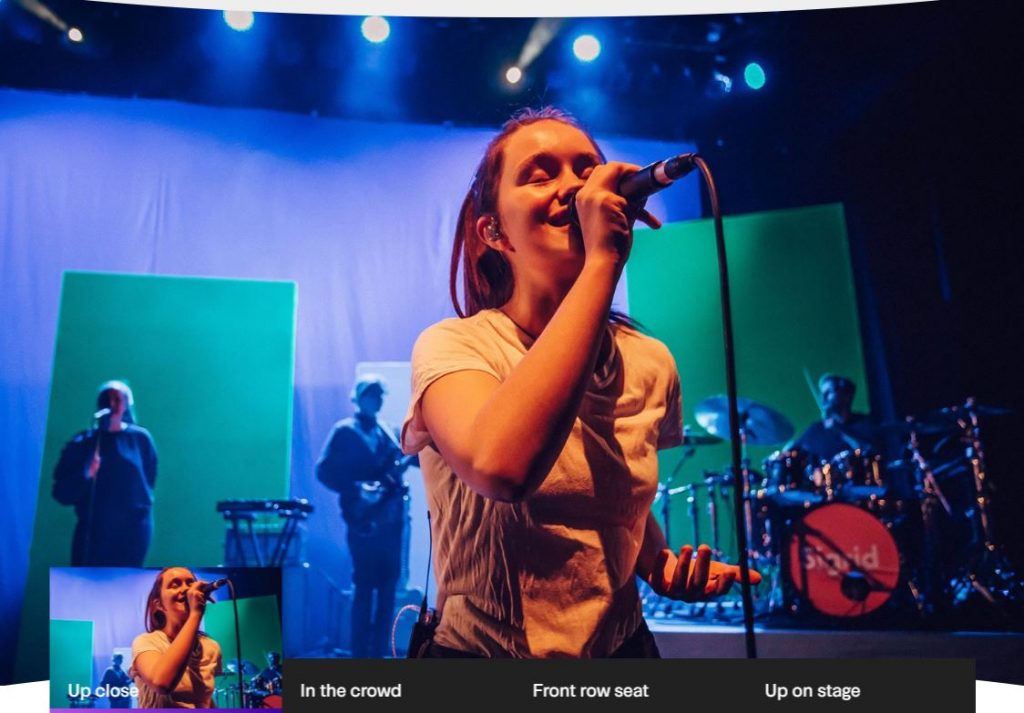
(MAY 2, 2018) MelodyVR, the world’s first dedicated virtual reality music platform that enables fans to experience music performances in a revolutionary new way, is now available.
The revolutionary MelodyVR app offers music fans an incredible selection of immersive performances from today’s biggest artists. Fans are transported all over the world to sold-out stadium shows, far-flung festivals and exclusive VIP sessions, and experience the music they love.
What MelodyVR delivers is a unique and world-class set of original experiences, created with multiple vantage points, to give fans complete control over what they see and where they stand at a performance. By selecting different Jump Spots, MelodyVR users can choose to be in the front row, deep in the crowd, or up-close-and-personal with the band on stage.
With standalone VR headsets like the Oculus Go now available at an extremely accessible price point ($199), the already vibrant VR market is set to grow exponentially over the coming years. Current market forecasts suggest over 350 million users by 2021 and last year saw $3 billion invested in virtual and alternative reality.
TV is (finally) an app: The goods, the bads and the uglies for learning — from thejournal.com by Cathie Norris, Elliot Soloway
Excerpts:
Television. TV. There’s an app for that. Finally! TV — that is, live shows such as the news, specials, documentaries (and reality shows, if you must) — is now just like Candy Crunch and Facebook. TV apps (e.g., DirecTV Now) are available on all devices — smartphones, tablets, laptops, Chromebooks. Accessing streams upon streams of videos is, literally, now just a tap away.
…
Plain and simple: readily accessible video can be a really valuable resource for learners and learning.
…
Not everything that needs to be learned is on video. Instruction will need to balance the use of video with the use of printed materials. That balance, of course, needs to take in cost and accessibility.
…
Now for the 800 pound gorilla in the room: Of course, that TV app could be a huge distraction in the classroom. The TV app has just piled yet another classroom management challenge onto a teacher’s back.
…
That said, it is early days for TV as an app. For example, HD (High Definition) TV demands high bandwidth — and we can experience stuttering/skipping at times. But, when 5G comes around in 2020, just two years from now, POOF, that stuttering/skipping will disappear. “5G will be as much as 1,000 times faster than 4G.” Yes, POOF!
From DSC:
Learning via apps is here to stay. “TV” as apps is here to stay. But what’s being described here is but one piece of the learning ecosystem that will be built over the next 5-15 years and will likely be revolutionary in its global impact on how people learn and grow. There will be opportunities for social-based learning, project-based learning, and more — with digital video being a component of the ecosystem, but is and will be insufficient to completely move someone through all of the levels of Bloom’s Taxonomy.
I will continue to track this developing learning ecosystem, but voice-driven personal assistants are already here. Algorithm-based recommendations are already here. Real-time language translation is already here. The convergence of the telephone/computer/television continues to move forward. AI-based bots will only get better in the future. Tapping into streams of up-to-date content will continue to move forward. Blockchain will likely bring us into the age of cloud-based learner profiles. And on and on it goes.
We’ll still need teachers, professors, and trainers. But this vision WILL occur. It IS where things are heading. It’s only a matter of time.
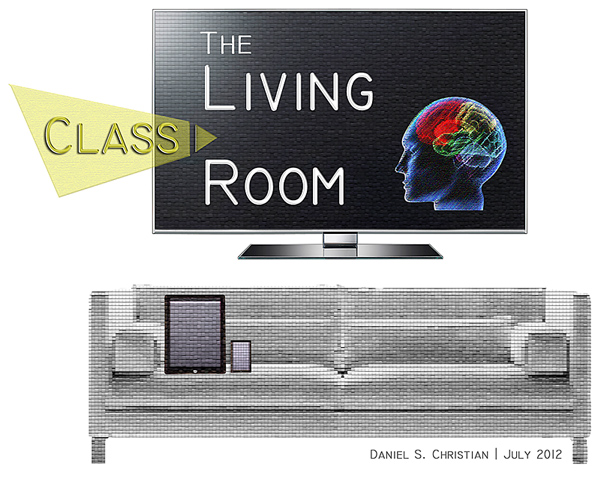
![The Living [Class] Room -- by Daniel Christian -- July 2012 -- a second device used in conjunction with a Smart/Connected TV](http://danielschristian.com/learning-ecosystems/wp-content/uploads/2012/07/The-Living-Class-Room-Daniel-S-Christian-July-2012.jpg)
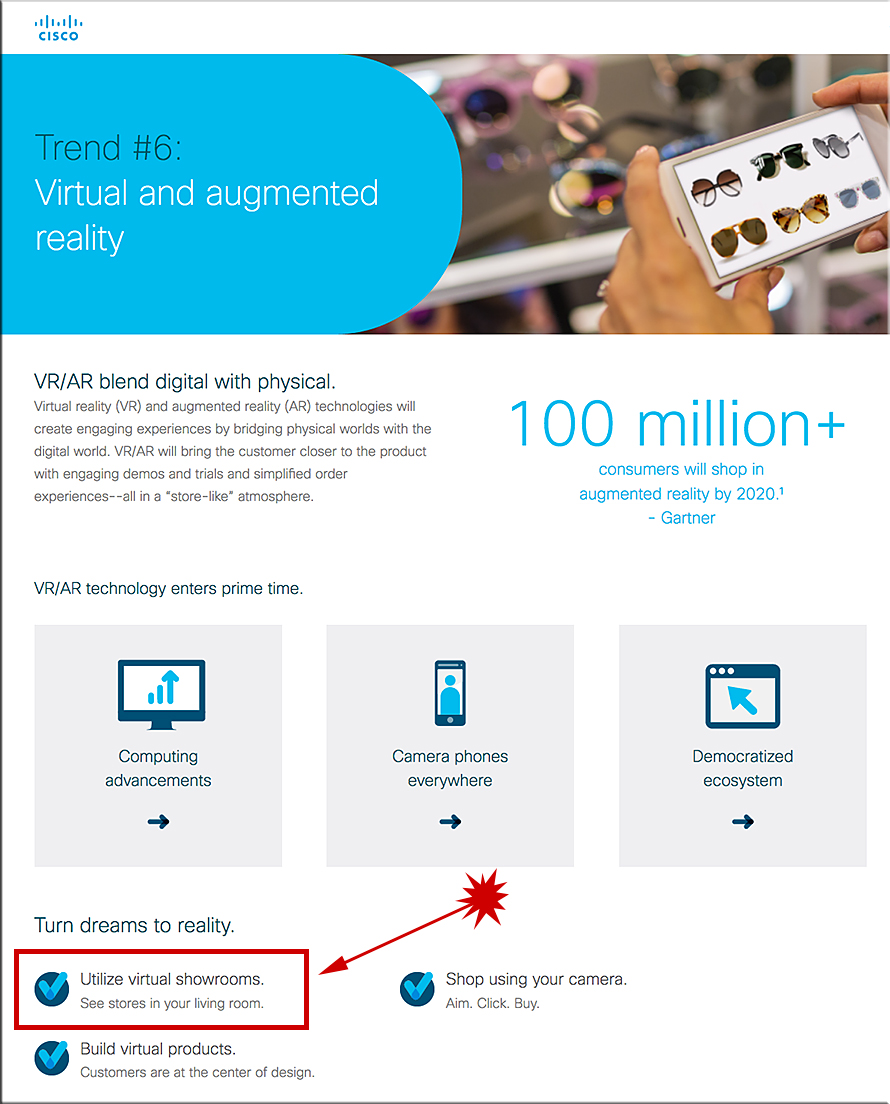
Cisco:
“Utilize virtual showrooms | See stores in your living room.”
DC:
If this is how retail could go, what might be the ramifications for learning-related environments & for learners’ expectations?
See Cisco’s whitepaper and the vision that I’m tracking along these lines.
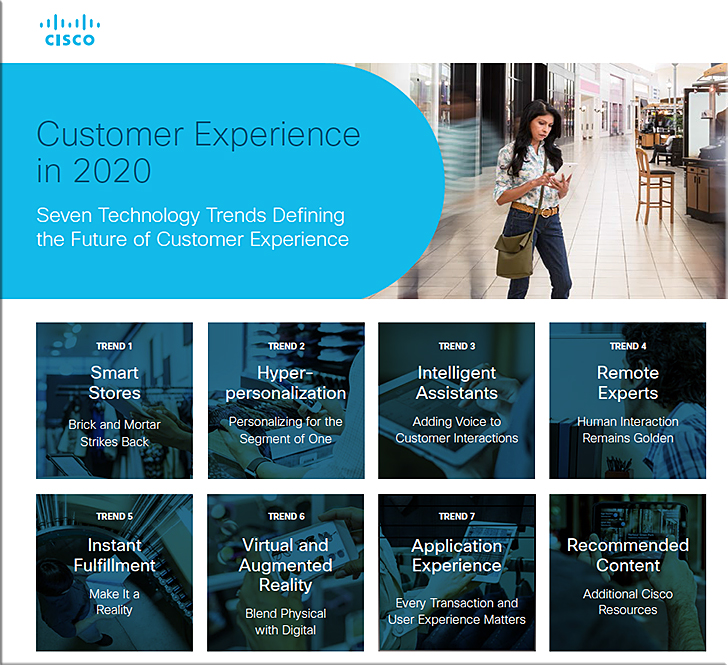
From DSC:
Looking at the trends below, again I wonder…how might learners’ expectations be impacted by these developments on the landscapes?
Also see:
From DSC:
Before we get to the announcements in more detail….
can you imagine being a teacher, a professor, or a trainer — with all of the required applications
launched — if you were the presenter in this video at say the 12:45 mark?
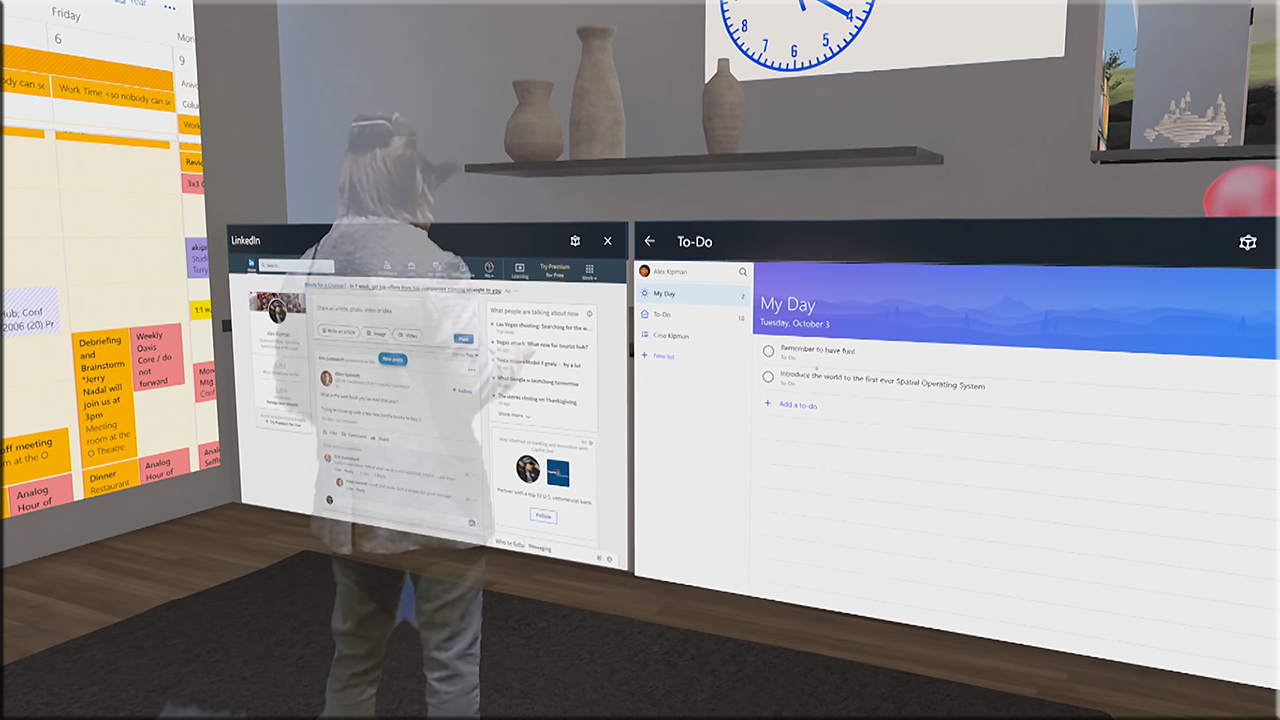
If you are at all interesting in emerging technologies and what several pieces
of our future learning ecosystems — and meeting spaces — could easily look like,
you NEED to watch the entire presentation.
Also, they announced
Microsoft’s purchase of AltspaceVR…in virtual reality!
This clip shows them meeting in a virtual space.
The era of Windows Mixed Reality begins October 17 — from blogs.windows.com by Alex Kipman
Samsung unveils Windows Mixed Reality headset, AltSpaceVR joins Microsoft, SteamVR catalog coming to Windows Mixed Reality this holiday.
At an event in San Francisco we unveiled our vision for Windows Mixed Reality, announced SteamVR and AltSpaceVR are coming to Windows Mixed Reality, introduced the new Samsung Odyssey HMD, and kicked off the holiday shopping season by announcing the availability of pre-orders for Windows Mixed Reality headsets at the Microsoft Store.
Also see:

Oct 4th, 2017
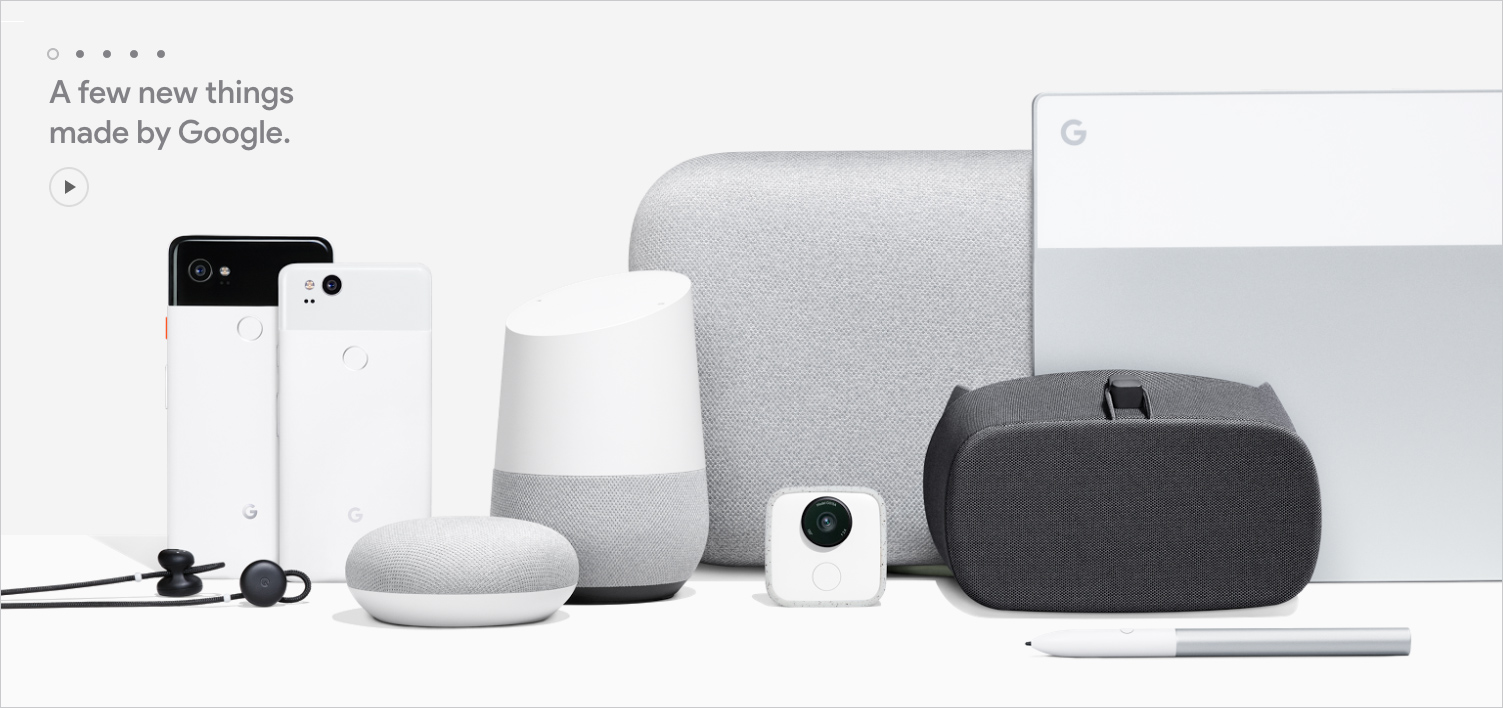
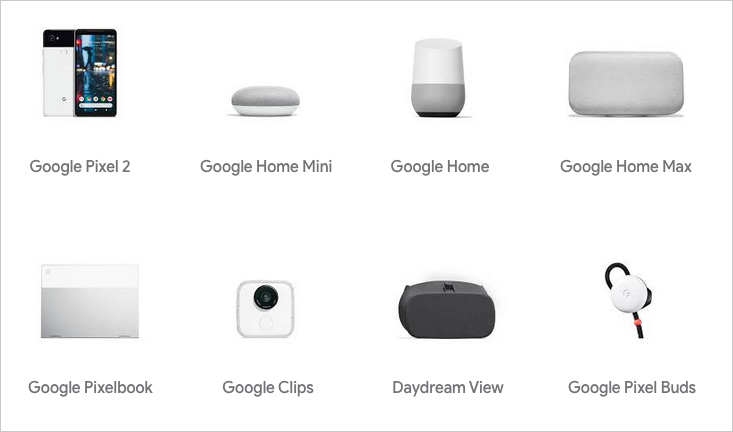
Microsoft held its long-awaited launch of Windows 10 Mixed Reality yesterday, and while most of the new devices and products had been leaked earlier, there were still some big takeaways. Here are some of them:
Google AR and VR: Get a closer look with Street View in Google Earth VR
Excerpt:
With Google Earth VR, you can go anywhere in virtual reality. Whether you want to stroll along the canals of Venice, stand at the summit of Mount Kilimanjaro or soar through the sky faster than a speeding bullet, there’s no shortage of things to do or ways to explore. We love this sense of possibility, so we’re bringing Street View to Earth VR to make it easier for you to see and experience the world.
This update lets you explore Street View imagery from 85 countries right within Earth VR. Just fly down closer to street level, check your controller to see if Street View is available and enter an immersive 360° photo. You’ll find photos from the Street View team and those shared by people all around the world.

Learning from the Living [Class] Room:
A vision for a global, powerful, next generation learning platform
By Daniel Christian
NOTE: Having recently lost my Senior Instructional Designer position due to a staff reduction program, I am looking to help build such a platform as this. So if you are working on such a platform or know of someone who is, please let me know: danielchristian55@gmail.com.
I want to help people reinvent themselves quickly, efficiently, and cost-effectively — while providing more choice, more control to lifelong learners. This will become critically important as artificial intelligence, robotics, algorithms, and automation continue to impact the workplace.
Learning from the Living [Class] Room:
A global, powerful, next generation learning platform
What does the vision entail?
“I’ve been predicting that by 2030 the largest company on the internet is going to be an education-based company that we haven’t heard of yet,” Frey, the senior futurist at the DaVinci Institute think tank, tells Business Insider.
Further details:
While basic courses will be accessible via mobile devices, the optimal learning experience will leverage two or more displays/devices. So while smaller smartphones, laptops, and/or desktop workstations will be used to communicate synchronously or asynchronously with other learners, the larger displays will deliver an excellent learning environment for times when there is:
This new learning platform will also feature:
In the future, new forms of Human Computer Interaction (HCI) such as Augmented Reality (AR), Virtual Reality (VR), and Mixed Reality (MR) will be integrated into this new learning environment – providing entirely new means of collaborating with one another.
Likely players:
From DSC:
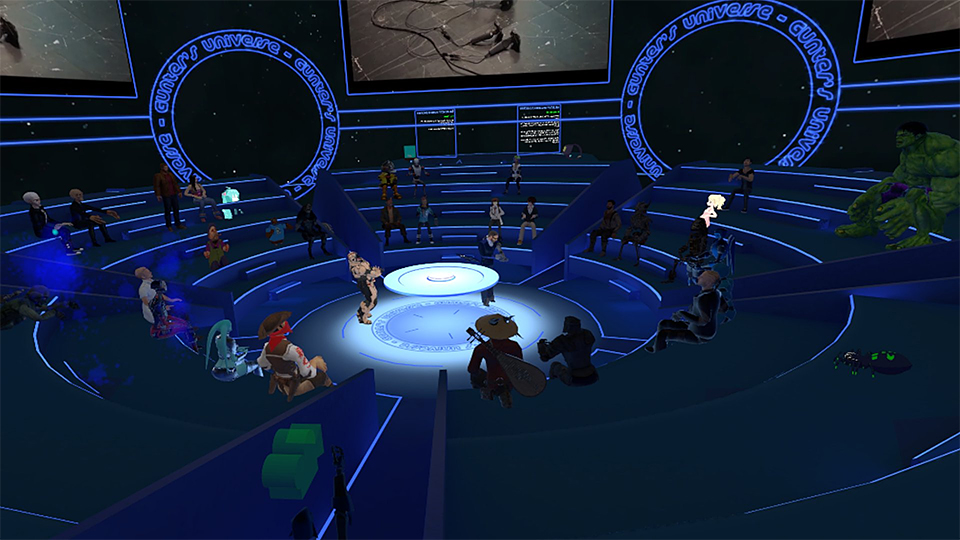
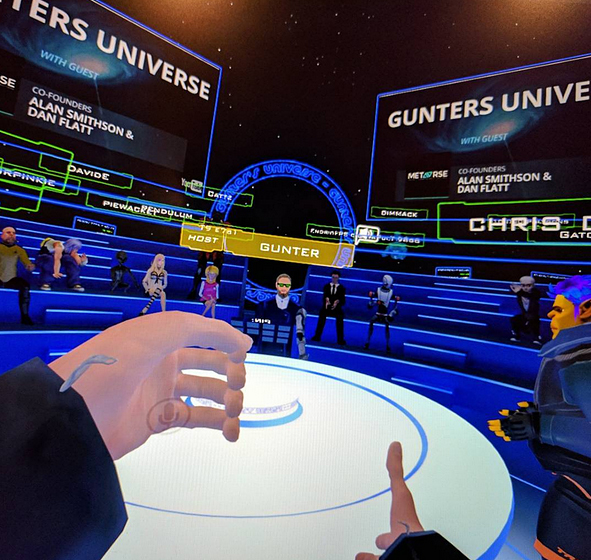
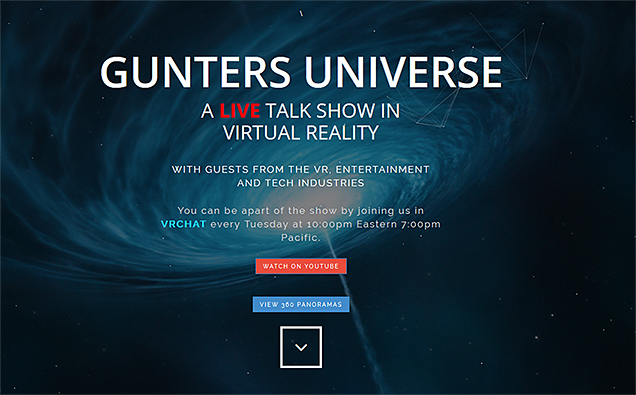
A classroom of the future perhaps? These graphics depict VR-based chats/talk shows from @guntersuniverse