Scientists Are Turning Alexa into an Automated Lab Helper— from technologyreview.com by Jamie Condliffe Amazon’s voice-activated assistant follows a rich tradition of researchers using consumer tech in unintended ways to further their work.
Excerpt:
Alexa, what’s the next step in my titration?
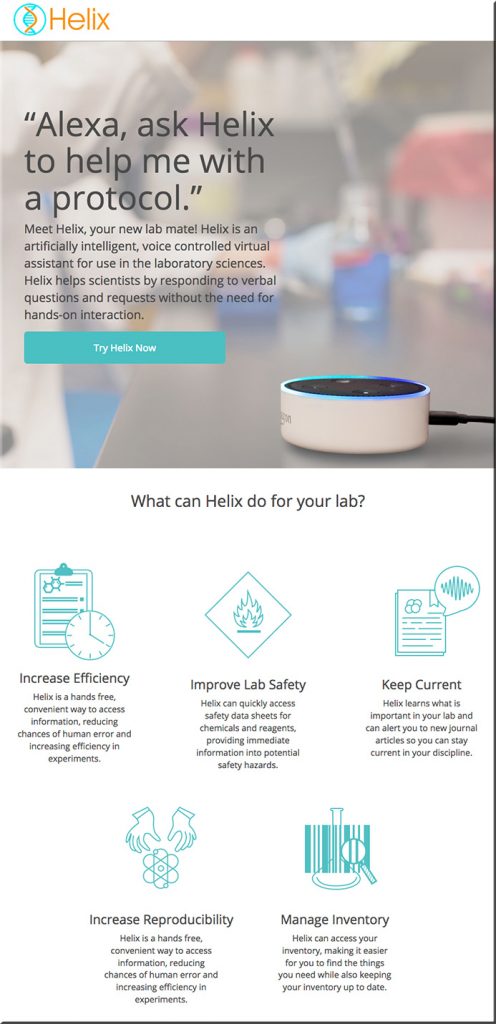
Probably not the first question you ask your smart assistant in the morning, but potentially the kind of query that scientists may soon be leveling at Amazon’s AI helper. Chemical & Engineering News reports that software developer James Rhodes—whose wife, DeLacy Rhodes, is a microbiologist—has created a skill for Alexa called Helix that lends a helping hand around the laboratory.
It makes sense. While most people might ask Alexa to check the news headlines, play music, or set a timer because our hands are a mess from cooking, scientists could look up melting points, pose simple calculations, or ask for an experimental procedure to be read aloud while their hands are gloved and in use.
…
For now, Helix is still a proof-of-concept. But you can sign up to try an early working version, and Rhodes has plans to extend its abilities…
The Future of Design, Part II— from 99u.adobe.com by Madeleine Morley; with thanks to Keesa V. Johnson for posting this on Twitter For the second straight year, we asked 10 creatives to predict what is coming up in the world of design and how they will prepare for it. This year’s installment includes designing for voice-controlled tech, holograms, and the rise of the hybrid designer.
Design is always changing, and wider changes are often spearheaded by design itself. Now with tech and the creative industry increasingly aligning, we’re on the precipice of a truly momentous period in the history of design, something unprecedented that is difficult to predict and prepare for.
Excerpts:
With quickly evolving tools, tumultuous shifts in the economy, the relentless growth of the gig and freelance lifestyle, and global networks, the working landscape for young designers is a tremendously uncertain one. There’s no model to follow: The known and well-trodden career path of previous generations is overgrown.
…
It’s an uncertain time for design, but in its difficulty and complexity, it is an inspiring and crucial one: Those with the skills will help decide the way that innovations in tech not only look but function, too, and influence our daily lives.
Although we can’t predict the future, we can speak to those with experience who think about what’s in store. We asked each participant to give us their advice: What does their future of design look like? What will it do to the very idea of design. And how can we prepare for it?
Design will be for ears and not eyes.
We’re always getting our heads around designing for the latest technology, methodology, application, media, or format. It’s a fascinating time to be a designer. There will always be space for experts, for those who specialize in the things they are really, really good at, but for others there is the need to diversify.
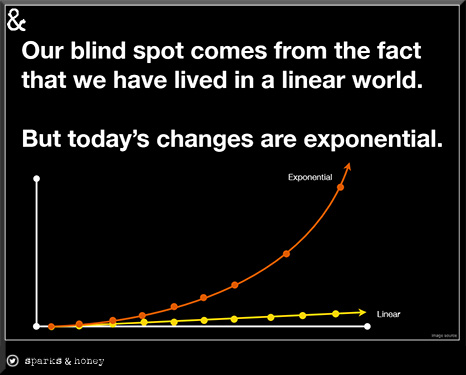
From DSC: In Part I, I looked at the new, exponential pace of change that colleges, community colleges and universities now need to deal with – observing the enormous changes that are starting to occur throughout numerous societies around the globe. If we were to plot out the rate of change, we would see that we are no longer on a slow, steady, incremental type of linear pathway; but, instead, we would observe that we are now on an exponential trajectory (as the below graphic from sparks & honey very nicely illustrates).
How should colleges and universities deal with this new, exponential pace of change?
1) I suggest that you ensure that someone in your institution is lifting their gaze and peering out into the horizons, to see what’s coming down the pike. That person – or more ideally, persons – should also be looking around them, noticing what’s going on within the current landscapes of higher education. Regardless of how your institution tackles this task, given that we are currently moving at an incredibly fast pace, this trend analysis is very important. The results from this analysis should immediately be integrated into your strategic plan. Don’t wait 3-5 years to integrate these new findings into your plan. The new, exponential pace of change is going to reward those organizations who are nimble and responsive.
2) I recommend that you look at what programs you are offering and consider if you should be developing additional programs such as those that deal with:
Artificial Intelligence (Natural Language Processing, deep learning, machine learning, bots)
New forms of Human Computer Interaction such as Augmented Reality, Virtual Reality, and Mixed Reality
User Experience Design, User Interface Design, and/or Interaction Design
Big data, data science, working with data
The Internet of Things, machine-to-machine communications, sensors, beacons, etc.
3) If you are not already doing so, I recommend that you immediately move to offer a robust lineup of online-based programs. Why do I say this? Because:
Without them, your institution may pay a heavy price due to its diminishing credibility.Your enrollments could decline if learners (and their families) don’t think they will get solid jobs coming out of your institution. If the public perceives you as a dinosaur/out of touch with what the workplace requires, your enrollment/admissions groups may find meeting their quotas will get a lot harder as the years go on. You need to be sending some cars down the online/digital/virtual learning tracks. (Don’t get me wrong. We still need the liberal arts. However, even those institutions who offer liberal arts lineups will still need to have a healthy offering of online-based programs.)
Online-based learning methods can expand the reach of your faculty members while offering chances for individuals throughout the globe to learn from you, and you from them
Online-based learning programs can increase your enrollments, create new revenue streams, and develop/reach new markets
Online-based learning programs have been proven to offer the same learning gains – and sometimes better learning results than – what’s being achieved in face-to-face based classrooms
The majority of pedagogically-related innovations are occurring within the online/digital/virtual realm, and you will want to have built the prior experience, expertise, and foundations in order to leverage and benefit from them
Faculty take their learning/experiences from offering online-based courses back into their face-to-face courses
Due to the increasing price of obtaining a degree, students often need to work to help get them (at least part of the way) through school; thus, flexibility is becoming increasingly important and necessary for students
An increasing number of individuals within the K-12 world as well as the corporate world are learning via online-based means. This is true within higher education as well, as, according to a recent report from Digital Learning Compass states that “the number of higher education students taking at least one distance education course in 2015 now tops six million, about 30% of all enrollments.”
Families are looking very closely at their return on investments being made within the world of higher education. They want to see that their learners are being prepared for the ever-changing future that they will encounter. If people in the workforce often learn online, then current students should be getting practice in that area of their learning ecosystems as well.
As the (mostly) online-based Amazon.com is thriving and retail institutions such as Sears continue to close, people are in the process of forming more generalized expectations that could easily cross over into the realm of higher education. By the way, here’s how our local Sears building is looking these days…or what’s left of it.
4) I recommend that you move towards offering more opportunities for lifelong learning, as learners need to constantly add to their skillsets and knowledge base in order to remain marketable in today’s workforce. This is where adults greatly appreciate – and need – the greater flexibility offered by online-based means of learning. I’m not just talking about graduate programs or continuing studies types of programs here. Rather, I’m hoping that we can move towards providing streams of up-to-date content that learners can subscribe to at any time (and can drop their subscription to at any time). As a relevant side note here, keep your eyes on blockchain-based technologies here.
5) Consider the role of consortia and pooling resources. How might that fit into your strategic plan?
6) Consider why bootcamps continue to come onto the landscape. What are traditional institutions of higher education missing here?
7) And lastly, if one doesn’t already exist, form a small, nimble, innovative group within your organization — what I call a TrimTab Group — to help identify what will and won’t work for your institution.
With ARKit already baked into the mobile operating system of “hundreds of millions of iPhones and iPads,” the massive potential install base means there’s plenty of reasons for developers to start making new augmented reality apps for Apple’s App Store. Now Udacity, the for-profit online education site that was spawned from free Stanford University computer science classes, has created a course that says will take you one month to complete so you can start making your own AR apps for iOS.
From DSC: Again, how many of these types of courses/programs are in the works right now throughout traditional institutions of higher education? My guess? Very few.
If you are at all interesting in emerging technologies and what several pieces
of our future learning ecosystems — and meeting spaces — could easily look like,
you NEED to watch the entire presentation.
The era of Windows Mixed Reality begins October 17— from blogs.windows.com by Alex Kipman Samsung unveils Windows Mixed Reality headset, AltSpaceVR joins Microsoft, SteamVR catalog coming to Windows Mixed Reality this holiday.
At an event in San Francisco we unveiled our vision for Windows Mixed Reality, announced SteamVR and AltSpaceVR are coming to Windows Mixed Reality, introduced the new Samsung Odyssey HMD, and kicked off the holiday shopping season by announcing the availability of pre-orders for Windows Mixed Reality headsets at the Microsoft Store.
Microsoft held its long-awaited launch of Windows 10 Mixed Reality yesterday, and while most of the new devices and products had been leaked earlier, there were still some big takeaways. Here are some of them:
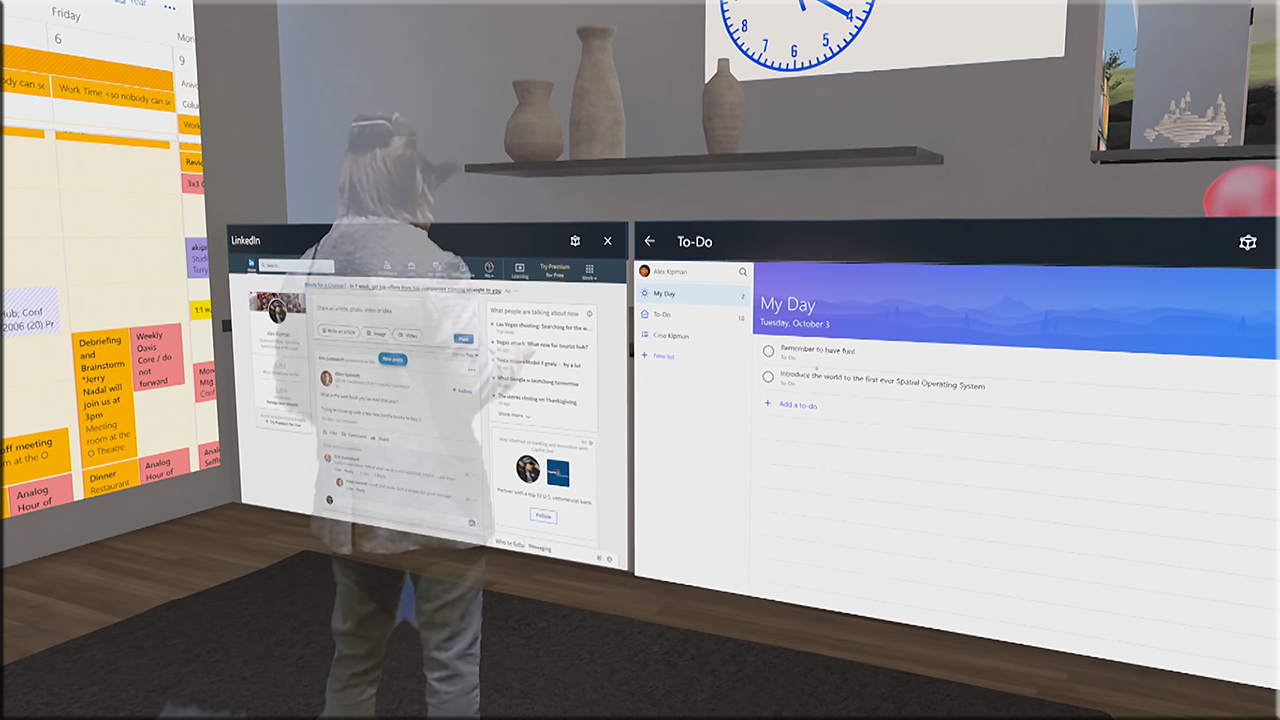
Mixed Reality: Microsoft gave a demo of what its new platform will do, covering the AR/VR spectrum with games, apps, and experiences. One such experience is Cliff House, a virtual work space and entertainment room.
Altspace VR: When the pioneering social VR app shut down this summer and was rescued by a “third party,” people wondered who that was. Turns out it was Microsoft, which acquired Altspace VR for an undisclosed amount. The acquisition was announced yesterday.
Steam VR and Halo: Microsoft had previously announced that its new Mixed Reality headsets would support Steam VR titles. Developers can now access that support, and consumers will be able to access it later this year. In addition to the hundreds of VR titles available on Steam, on Oct. 17, Microsoft will offer free downloads of Halo Recruit.
Odyssey and other headsets: The new Windows 10 platform is launching alongside a host of new headsets. In addition to the new Odyssey, which was made in partnership with Samsung, there are other headsets forthcoming from Acer, HP, Dell, Lenovo, and Asus.
2018 Olympics: This was announced previously in June, but yesterday Microsoft briefed the press that Intel is partnering with the International Olympic Committee to bring Windows Mixed Reality experiences to the 2018 games.
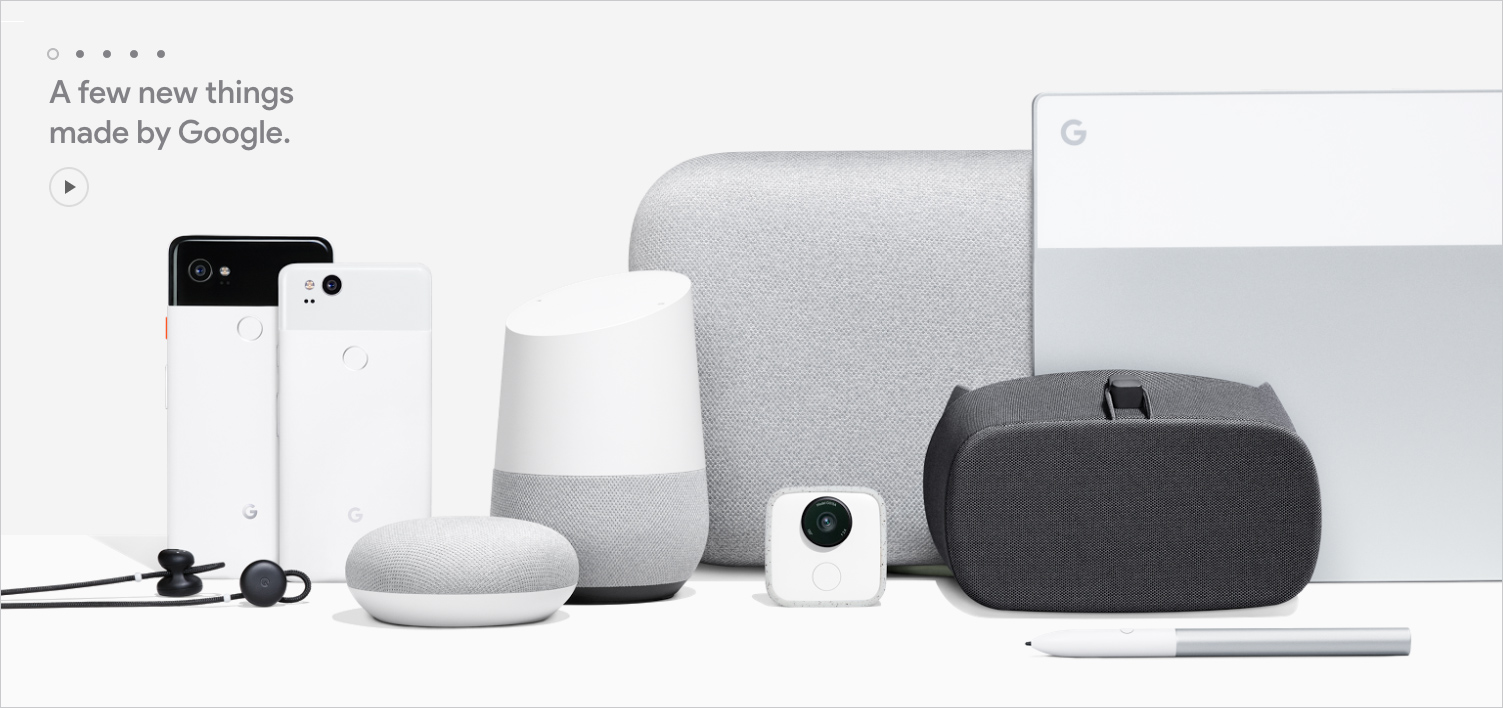
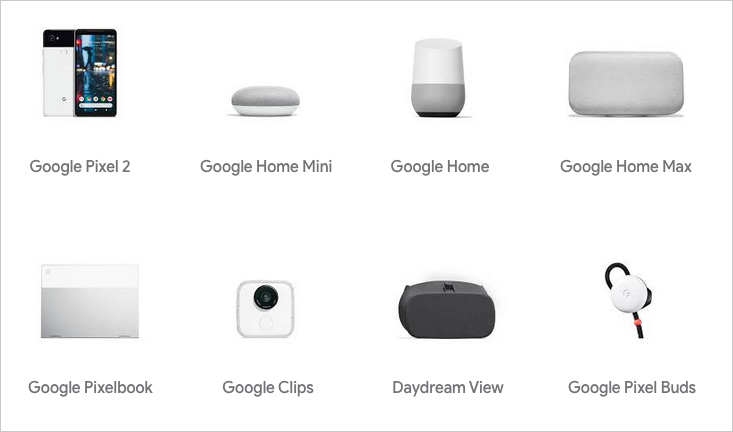
Watch the Google Pixel 2 event in 19 minutes — from the verge.com by Natt Garun The Google Pixel event has wrapped and we got a good look at a bunch of new hardware lineup this year: the second generation of Pixel smartphones, new Google Homes, a Pixelbook, and a surprise new Google camera that uses artificial intelligence to snap pictures and videos of your family. Is it as weird as it sounds? If you missed the keynote where Google presented everything, here’s a recap of everything Google announced in about two hours cut into a 19-minute video so you can see for yourself if these new products will make it to your shopping list this holiday season.
The internet’s global expansion is entering a new phase, and it looks decidedly unlike the last one.
Instead of typing searches and emails, a wave of newcomers—“the next billion,” the tech industry calls them—is avoiding text, using voice activation and communicating with images.
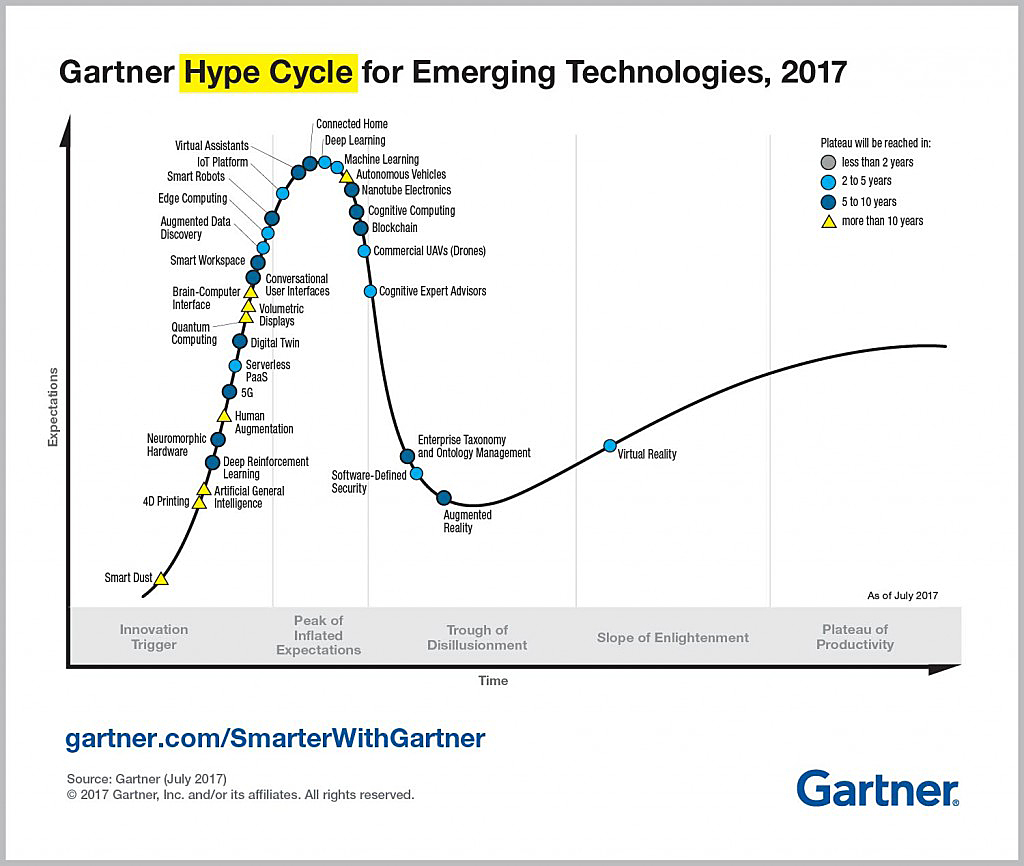
…emerging technologies such as machine learning, blockchain, drones (commercial UAVs), software-defined security and brain-computer interfaces have moved significantly along the Hype Cycle since 2016.
…
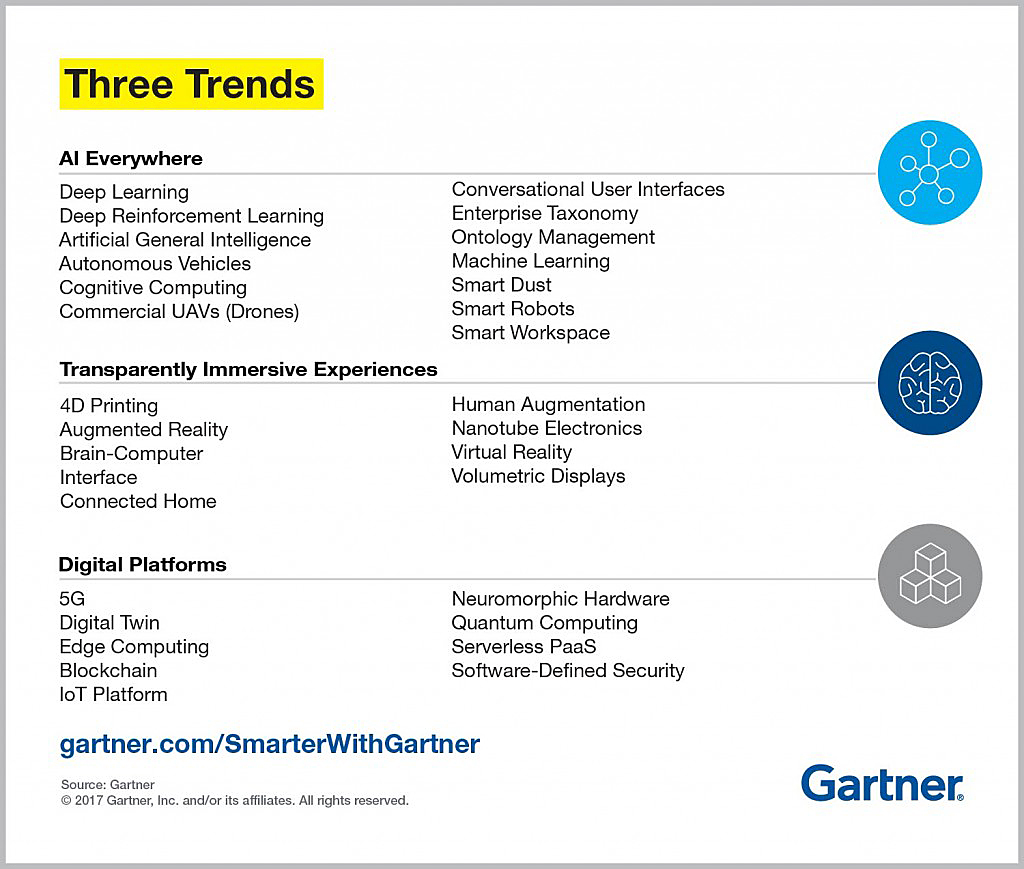
The Gartner Hype Cycle for Emerging Technologies, 2017 focuses on three emerging technology mega-trends: Artificial intelligence (AI) everywhere, transparently immersive experiences and digital platforms. Enterprise architects and technology innovation leaders should explore and ideate these three mega-trends to understand the future impacts to their business.
“Organizations will continue to be faced with rapidly accelerating technology innovation that will profoundly impact the way they deal with their workforces, customers and partners,” says Mike J. Walker, research director. “Our 2017 Hype Cycle reveals three distinct technology trends that profoundly create new experiences with unrivaled intelligence, and offer platforms that propel organizations to connect with new business ecosystems in order to become competitive over the next five to 10 years.”
Every time you ask Siri for directions, a complex chain of cutting-edge code is activated. It allows “her” to understand your question, find the information you’re looking for, and respond to you in a language that you understand. This has only become possible in the last few years. Until now, we have been interacting with computers in a way that they understand, rather than us. We have learned their language.
But now, they’re learning ours.
The technology underpinning this revolution in human-computer relations is Natural Language Processing (NLP). And it’s already transforming BI, in ways that go far beyond simply making the interface easier. Before long, business transforming, life changing information will be discovered merely by talking with a chatbot.
This future is not far away. In some ways, it’s already here.
What Is Natural Language Processing?
NLP, otherwise known as computational linguistics, is the combination of Machine Learning, AI, and linguistics that allows us to talk to machines as if they were human.
But NLP aims to eventually render GUIs — even UIs — obsolete, so that interacting with a machine is as easy as talking to a human.
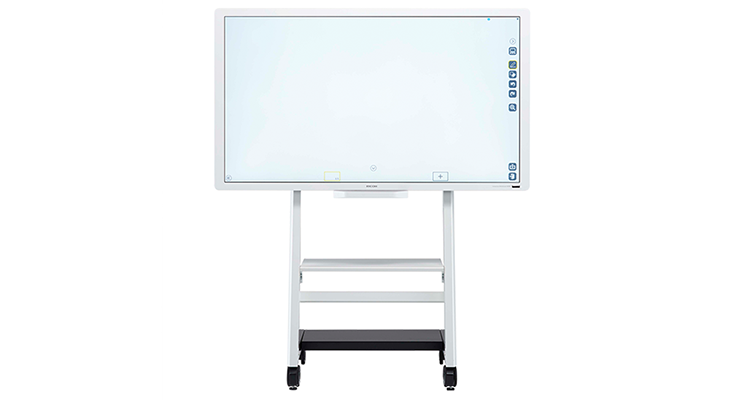
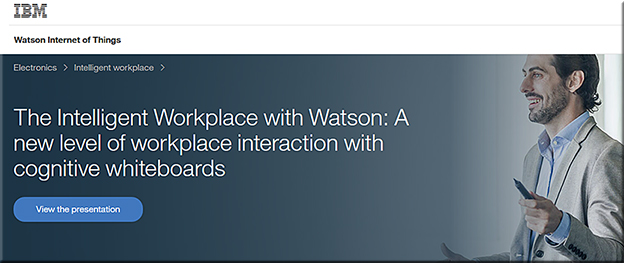
IBMandRicohhave partnered for a cognitive-enabled interactive whiteboard which uses IBM’s Watson intelligence and voice technologies to support voice commands, taking notes and actions and even translating into other languages.
The Intelligent Workplace Solution leverages IBM Watson and Ricoh’s interactive whiteboards to allow to access features via using voice. It makes sure that Watson doesn’t just listen, but is an active meeting participant, using real-time analytics to help guide discussions.
Features of the new cognitive-enabled whiteboard solution include:
Global voice control of meetings: Once a meeting begins, any employee, whether in-person or located remotely in another country, can easily control what’s on the screen, including advancing slides, all through simple voice commands using Watson’s Natural Language API.
Translation of the meeting into another language: The Intelligent Workplace Solution can translate speakers’ words into several other languages and display them on screen or in transcript.
Easy-to-join meetings:With the swipe of a badge the Intelligent Workplace Solution can log attendance and track key agenda items to ensure all key topics are discussed.
Ability to capture side discussions:During a meeting, team members can also hold side conversations that are displayed on the same whiteboard.
From DSC:
Holy smokes!
If you combine the technologies that Ricoh and IBM are using with their new cognitive-enabled interactive whiteboard with what Bluescape is doing — by providing 160 acres of digital workspace that’s used to foster collaboration (and to do so whether you are working remotely or working with others in the same physical space) — and you have one incredibly powerful platform!
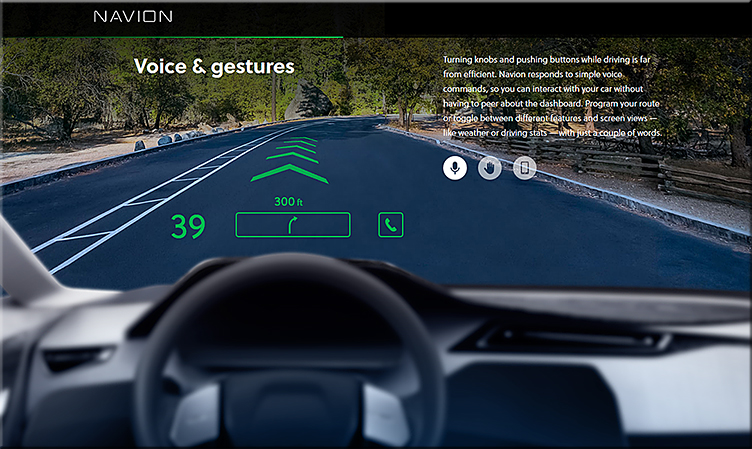
Just like a video game, users of the GPS need only follow green arrows projected as if onto the road in front of the car providing visual directions. More importantly, because the system displays on the windscreen, it does not require a cumbersome headset or eyewear worn by the driver. It integrates directly into the dashboard of the car.
The system also recognizes simple voice and gesture commands from the driver — eschewing turning of knobs or pressing buttons. The objective of the system is to allow the driver to spend more time paying attention to the road, with hands on the wheel. Many modern-day onboard GPS systems also recognize voice commands but require the driver to glance over at a screen.
Viro Media is supplying a platform of their own and their hope is to be the simplest experience where companies can code once and have their content available on multiple mobile platforms. We chatted with Viro Media CEO Danny Moon about the tool and what creators can expect to accomplish with it.
Virtual reality can transport us to new places, where we can experience new worlds and people, like no other. It is a whole new medium poised to change the future of gaming, education, health care and enterprise. Today we are starting a new series to help you discover what this new technology promises. With the help of our friends at RadioPublic, we are curating a quick library of podcasts related to virtual reality technology.
AUSTIN (KXAN) — Virtual reality is no longer reserved for entertainment and gamers, its helping solve real-world problems. Some of the latest advancements are being demonstrated at South by Southwest.
Dr. Skip Rizzo directs the Medical Virtual Reality Lab at the University of Southern California’s Institute for Creative Technologies. He’s helping veterans who suffer from post-traumatic stress disorder (PTSD). He’s up teamed with Dell to develop and spread the technology to more people.
At NVIDIA Jetson TX2 launch [on March 7, 2017], in San Francisco, [NVIDIA] showed how the platform not only accelerates AI computing, graphics and computer vision, but also powers the workflows used to create VR content. Artec 3D debuted at the event the first handheld scanner offering real-time 3D capture, fusion, modeling and visualization on its own display or streamed to phones and tablets.
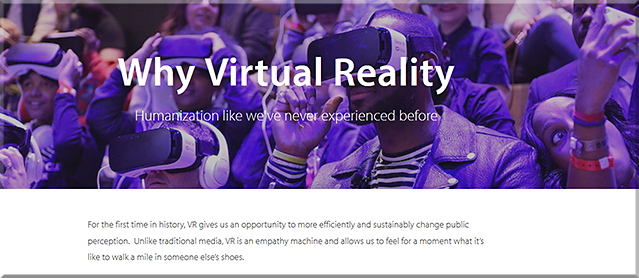
Project Empathy A collection of virtual reality experiences that help us see the world through the eyes of another
Excerpt:
Benefit Studio’s virtual reality series, Project Empathy is a collection of thoughtful, evocative and surprising experiences by some of the finest creators in entertainment, technology and journalism.
Each film is designed to create empathy through a first-person experience–from being a child inside the U.S. prison system to being a widow cast away from society in India. Individually, each of the films in this series presents its filmmaker’s unique vision, portraying an intimate experience through the eyes of someone whose story has been lost or overlooked and yet is integral to the larger story of our global society. Collectively, these creatively distinct films weave together a colorful tapestry of what it means to be human today.
Most introductory geology professors teach students about earthquakes by assigning readings and showing diagrams of tectonic plates and fault lines to the class. But Paul Low is not most instructors.
“You guys can go wherever you like,” he tells a group of learners. “I’m going to go over to the epicenter and fly through and just kind of get a feel.”
Low is leading a virtual tour of the Earth’s bowels, directly beneath New Zealand’s south island, where a 7.8 magnitude earthquake struck last November. Outfitted with headsets and hand controllers, the students are “flying” around the seismic hotbed and navigating through layers of the Earth’s surface.
Low, who taught undergraduate geology and environmental sciences and is now a research associate at Washington and Lee University, is among a small group of profs-turned-technologists who are experimenting with virtual reality’s applications in higher education.
“As virtual reality moves more towards the mainstream through the development of new, more affordable consumer technologies, a way needs to be found for students to translate what they learn in academic situations into careers within the industry,” says Frankie Cavanagh, a lecturer at Northumbria University. He founded a company called Somniator last year with the aim not only of developing VR games, but to provide a bridge between higher education and the technology sector. Over 70 students from Newcastle University, Northumbria University and Gateshead College in the UK have been placed so far through the program, working on real games as part of their degrees and getting paid for additional work commissioned.
Working with VR already translates into an extraordinarily diverse range of possible career paths, and those options are only going to become even broader as the industry matures in the next few years.
Customer service just got a lot more interesting. Construction equipment manufacturer Caterpillar just announced official availability of what they’re calling the CAT LIVESHARE solution to customer support, which builds augmented reality capabilities into the platform. They’ve partnered with Scope AR, a company who develops technical support and training documentation tools using augmented reality. The CAT LIVESHARE support system uses Scope AR’s Remote AR software as the backbone.
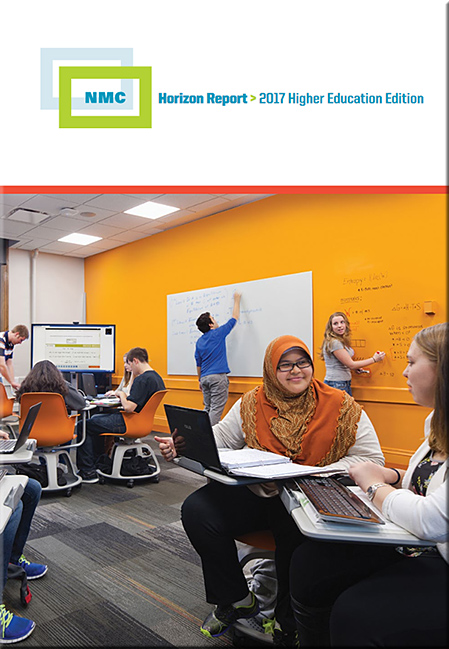
Earlier this week, the New Media Consortium (NMC) and the EDUCAUSE Learning Initiative (ELI) jointly released the NMC Horizon Report > 2017 Higher Education Edition at the 2017 ELI Annual Meeting. This 14th edition describes annual findings from the NMC Horizon Project, an ongoing research project designed to identify and describe emerging technologies likely to have an impact on learning, teaching, and creative inquiry in higher education. Six key trends, six significant challenges, and six important developments in educational technology are placed directly in the context of their likely impact on the core missions of universities and colleges.
The topics are summarized in the infographic below:
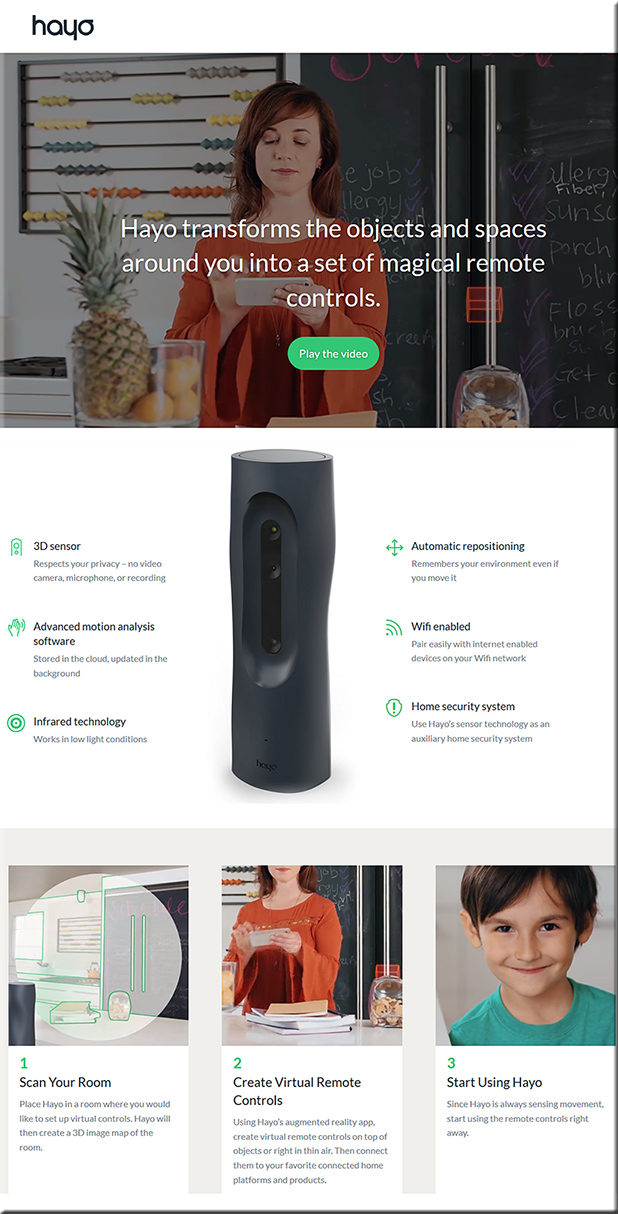
From DSC: Note this new type of Human Computer Interaction (HCI). I think that we’ll likely be seeing much more of this sort of thing.
Excerpt (emphasis DSC):
How is Hayo different?
AR that connects the magical and the functional:
Unlike most AR integrations, Hayo removes the screens from smarthome use and transforms the objects and spaces around you into a set of virtual remote controls.Hayo empowers you to create experiences that have previously been limited by the technology, but now are only limited by your imagination.
Screenless IoT:
The best interface is no interface at all. Aside from the one-time setup Hayo does not use any screens. Your real-life surfaces become the interface and you, the user, become the controls. Virtual remote controls can be placed wherever you want for whatever you need by simply using your Hayo device to take a 3D scan of your space.
Smarter AR experience:
Hayo anticipates your unique context, passive motion and gestures to create useful and more unique controls for the connected home. The Hayo system learns your behaviors and uses its AI to help meet your needs.
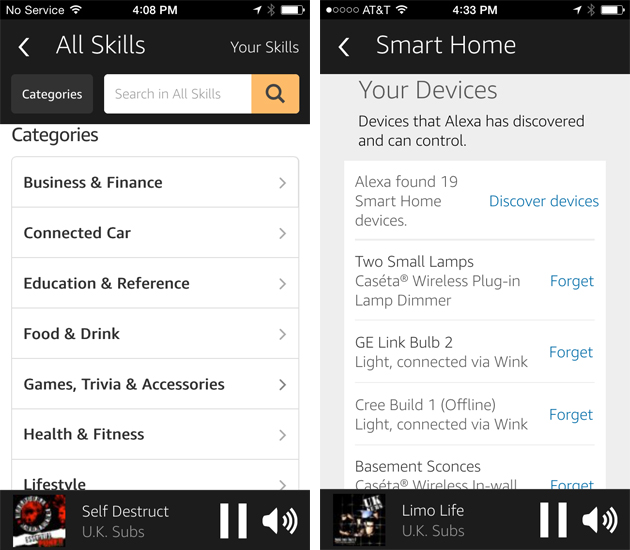
From DSC: When I saw the article below, I couldn’t help but wonder…what are the teaching & learning-related ramifications when new “skills” are constantly being added to devices like Amazon’s Alexa?
What does it mean for:
Students / learners
Faculty members
Teachers
Trainers
Instructional Designers
Interaction Designers
User Experience Designers
Curriculum Developers
…and others?
Will the capabilities found in Alexa simply come bundled as a part of the “connected/smart TV’s” of the future? Hmm….
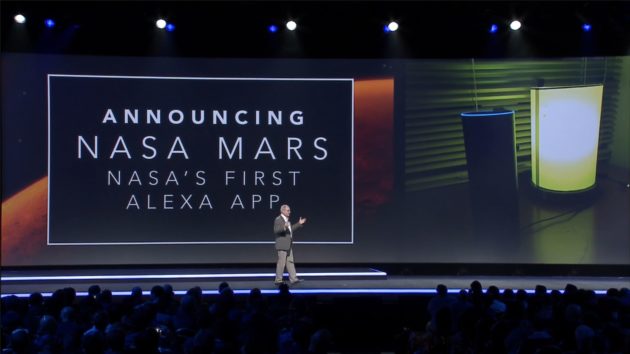
Amazon’s Alexa has gained many skills over the past year, such as being able to read tweets or deliver election results and fantasy football scores. Starting on Wednesday, you’ll be able to ask Alexa about Mars.
The new skill for the voice-controlled speaker comes courtesy of NASA’s Jet Propulsion Laboratory. It’s the first Alexa app from the space agency.
Tom Soderstrom, the chief technology officer at NASA’s Jet Propulsion Laboratory was on hand at the AWS re:invent conference in Las Vegas tonight to make the announcement.
Amazon today announced three new artificial intelligence-related toolkits for developers building apps on Amazon Web Services
At the company’s AWS re:invent conference in Las Vegas, Amazon showed how developers can use three new services — Amazon Lex, Amazon Polly, Amazon Rekognition — to build artificial intelligence features into apps for platforms like Slack, Facebook Messenger, ZenDesk, and others.
The idea is to let developers utilize the machine learning algorithms and technology that Amazon has already created for its own processes and services like Alexa.Instead of developing their own AI software, AWS customers can simply use an API call or the AWS Management Console to incorporate AI features into their own apps.
AWS Announces Three New Amazon AI Services Amazon Lex, the technology that powers Amazon Alexa, enables any developer to build rich, conversational user experiences for web, mobile, and connected device apps; preview starts today
Amazon Polly transforms text into lifelike speech, enabling apps to talk with 47 lifelike voices in 24 languages
Amazon Rekognition makes it easy to add image analysis to applications, using powerful deep learning-based image and face recognition
Capital One, Motorola Solutions, SmugMug, American Heart Association, NASA, HubSpot, Redfin, Ohio Health, DuoLingo, Royal National Institute of Blind People, LingApps, GoAnimate, and Coursera are among the many customers using these Amazon AI Services
Excerpt:
SEATTLE–(BUSINESS WIRE)–Nov. 30, 2016– Today at AWS re:Invent, Amazon Web Services, Inc. (AWS), an Amazon.com company (NASDAQ: AMZN), announced three Artificial Intelligence (AI) services that make it easy for any developer to build apps that can understand natural language, turn text into lifelike speech, have conversations using voice or text, analyze images, and recognize faces, objects, and scenes. Amazon Lex, Amazon Polly, and Amazon Rekognition are based on the same proven, highly scalable Amazon technology built by the thousands of deep learning and machine learning experts across the company. Amazon AI services all provide high-quality, high-accuracy AI capabilities that are scalable and cost-effective. Amazon AI services are fully managed services so there are no deep learning algorithms to build, no machine learning models to train, and no up-front commitments or infrastructure investments required. This frees developers to focus on defining and building an entirely new generation of apps that can see, hear, speak, understand, and interact with the world around them.
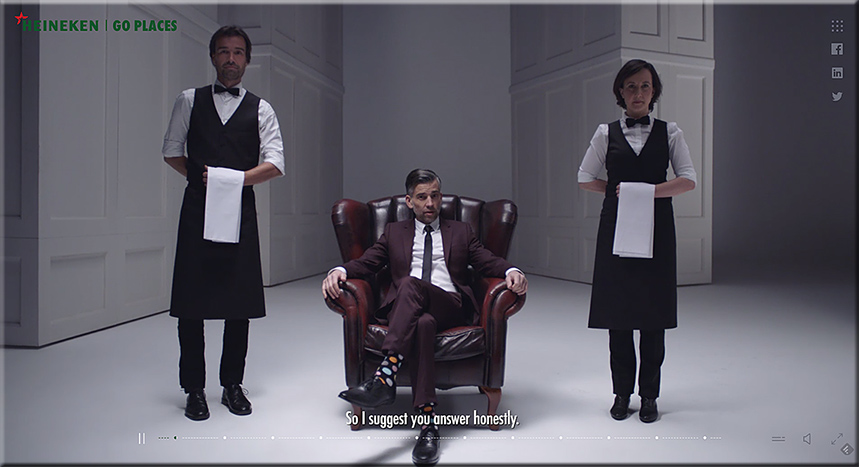
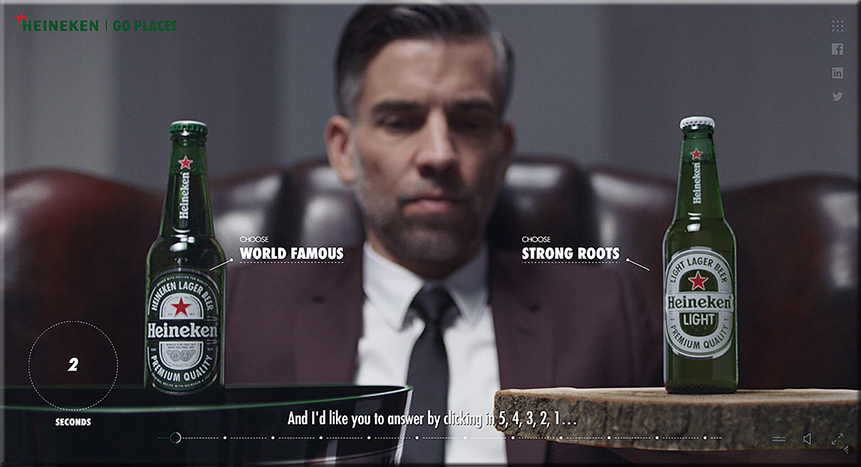
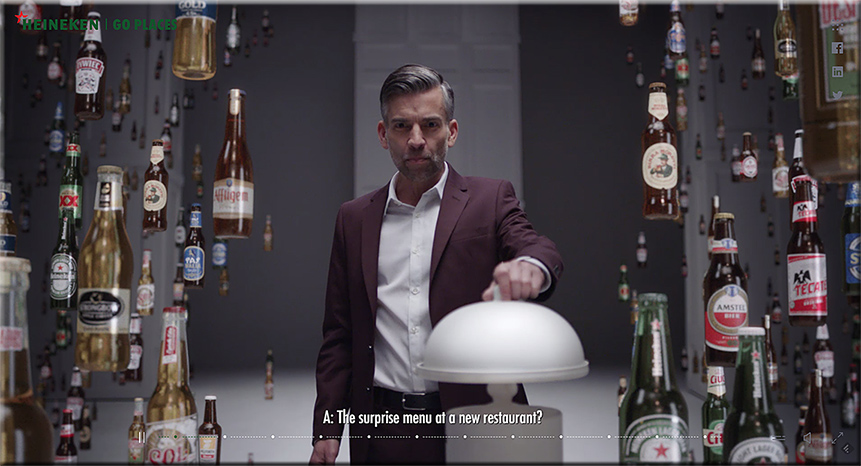
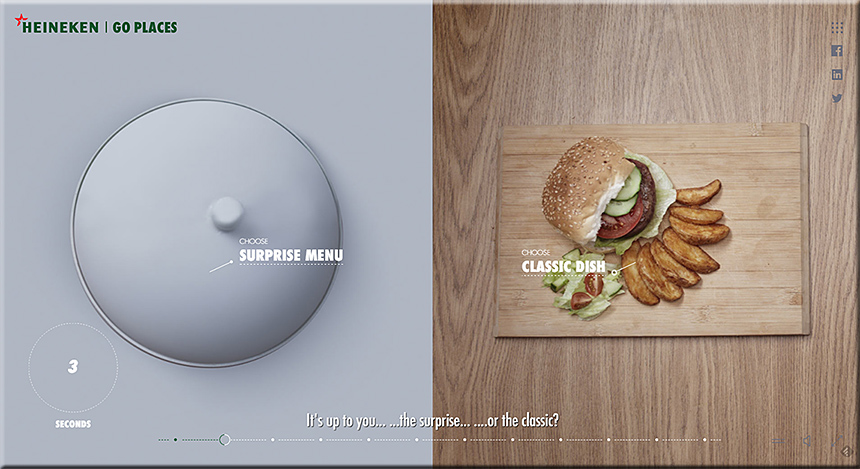
From DSC: Interactive video — a potentially very powerful medium to use, especially for blended and online-based courses or training-related materials! This interactive piece from Heineken is very well done, even remembering how you answered and coming up with their evaluation of you from their 12-question “interview.”
But notice again, a TEAM of specialists are needed to create such a piece. Neither a faculty member, a trainer, nor an instructional designer can do something like this all on their own. Some of the positions I could imagine here are:
Script writer(s)
Editor(s)
Actors and actresses
Those skilled in stage lighting and sound / audio recording
Digital video editors
Programmers
Graphic designers
Web designers
Producers
Product marketers
…and perhaps others
This is the kind of work that I wish we saw more of in the world of online and blended courses! Also, I appreciated their use of humor. Overall, a very engaging, fun, and informative piece!