


On 12/04/2025,
in 21st century, 24x7x365 access, Artificial Intelligence/Agents/LLMs/and Related, bots, law schools, Legal operations, legal reform, legal technologies, legislatures / government / legal, tools, trends, United States, vendors,
by Daniel Christian
Beyond ChatGPT: Why In-House Counsel Need Purpose Built AI (Cecilia Ziniti, CEO – GC AI) — from tlpodcast.com
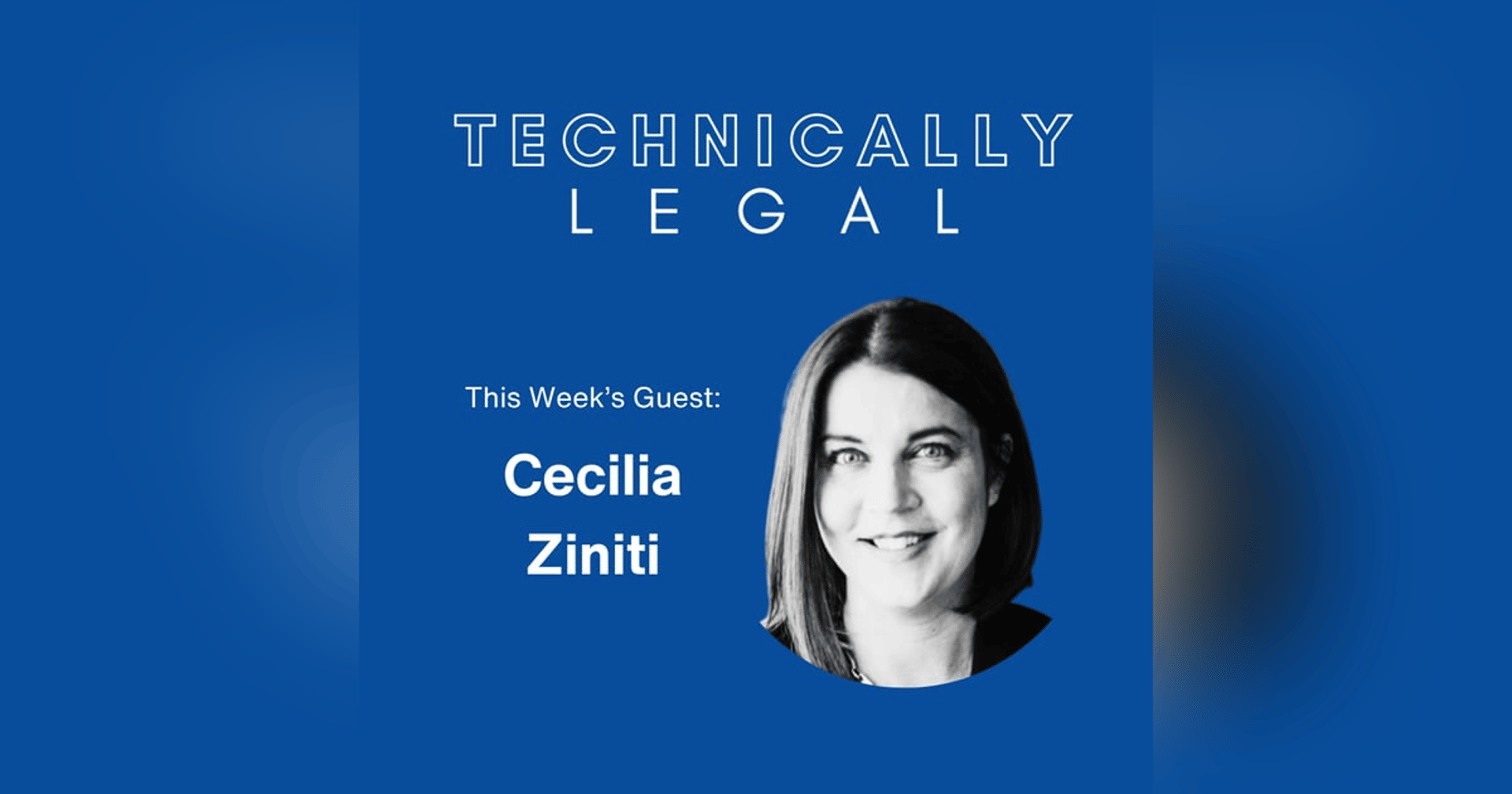
This episode features a conversation with Cecilia Ziniti, Co-Founder and CEO of GC.AI. Cecilia traces her career from the early days of the internet to founding an AI-driven legal platform for in-house counsel.
Cecilia shares her journey, starting as a paralegal at Yahoo in the early 2000s, working on nascent legal issues related to the internet. She discusses her time at Morrison & Foerster and her role at Amazon, where she was an early member of the Alexa team, gaining deep insight into AI’s potential before the rise of modern large language models (LLMs).
The core discussion centers on the creation of GC AI, a legal AI tool specifically designed for in-house counsel. Cecilia explains why general LLMs like ChatGPT are insufficient for professional legal work—lacking proper citation, context, and security/privilege protections. She highlights the app’s features, including enhanced document analysis (RAG implementation), a Word Add-in, and workflow-based playbooks to deliver accurate, client-forward legal analysis. The episode also touches on the current state of legal tech, the growing trend of bringing legal work in-house, and the potential for AI to shift the dynamics of the billable hour.
On 12/01/2025,
in accessibility / UDL, adjunct faculty, Artificial Intelligence/Agents/LLMs/and Related, bots, colleges, communities of practice, community colleges, content development, aggregation, repositories, corporate universities / corporate training, digital learning, digital video, education, education technology, emerging technologies, experimentation, faculty/staff, future of higher education, game-changing environment, generational differences, Google, higher education, human-computer interaction (HCI), innovation, instructional design, intelligent systems, IT in HE, K-12 related, learning, learning agents, learning ecosystem, Learning Experience Design, Learning from the Living [Class] Room, learning hubs & pods & microschooling, learning preferences, learning spaces, liberal arts, library / librarians, memory, multimedia, personalized/customized learning, platforms, productivity / tips and tricks, student-related, teachers, teaching & learning, tools, training / L&D, trends, United States, universities, vendors,
by Daniel Christian
4 Simple & Easy Ways to Use AI to Differentiate Instruction — from mindfulaiedu.substack.com (Mindful AI for Education) by Dani Kachorsky, PhD
Designing for All Learners with AI and Universal Design Learning
So this year, I’ve been exploring new ways that AI can help support students with disabilities—students on IEPs, learning plans, or 504s—and, honestly, it’s changing the way I think about differentiation in general.
As a quick note, a lot of what I’m finding applies just as well to English language learners or really to any students. One of the big ideas behind Universal Design for Learning (UDL) is that accommodations and strategies designed for students with disabilities are often just good teaching practices. When we plan instruction that’s accessible to the widest possible range of learners, everyone benefits. For example, UDL encourages explaining things in multiple modes—written, visual, auditory, kinesthetic—because people access information differently. I hear students say they’re “visual learners,” but I think everyone is a visual learner, and an auditory learner, and a kinesthetic learner. The more ways we present information, the more likely it is to stick.
So, with that in mind, here are four ways I’ve been using AI to differentiate instruction for students with disabilities (and, really, everyone else too):
The Periodic Table of AI Tools In Education To Try Today — from ictevangelist.com by Mark Anderson

What I’ve tried to do is bring together genuinely useful AI tools that I know are already making a difference.
For colleagues wanting to explore further, I’m sharing the list exactly as it appears in the table, including website links, grouped by category below. Please do check it out, as along with links to all of the resources, I’ve also written a brief summary explaining what each of the different tools do and how they can help.
Seven Hard-Won Lessons from Building AI Learning Tools — from linkedin.com by Louise Worgan
Last week, I wrapped up Dr Philippa Hardman’s intensive bootcamp on AI in learning design. Four conversations, countless iterations, and more than a few humbling moments later – here’s what I am left thinking about.
Finally Catching Up to the New Models — from michellekassorla.substack.com by Michelle Kassorla
There are some amazing things happening out there!
An aside: Google is working on a new vision for textbooks that can be easily differentiated based on the beautiful success for NotebookLM. You can get on the waiting list for that tool by going to LearnYourWay.withgoogle.com.
…
Nano Banana Pro
Sticking with the Google tools for now, Nano Banana Pro (which you can use for free on Google’s AI Studio), is doing something that everyone has been waiting a long time for: it adds correct text to images.
Introducing AI assistants with memory — from perplexity.ai
The simple act of remembering is the crux of how we navigate the world: it shapes our experiences, informs our decisions, and helps us anticipate what comes next. For AI agents like Comet Assistant, that continuity leads to a more powerful, personalized experience.
Today we are announcing new personalization features to remember your preferences, interests, and conversations. Perplexity now synthesizes them automatically like memory, for valuable context on relevant tasks. Answers are smarter, faster, and more personalized, no matter how you work.
From DSC :
This should be important as we look at learning-related applications for AI.
I’m a Professor. A.I. Has Changed My Classroom, but Not for the Worse. — from nytimes.com by Carlo Rotella [this should be a gifted article]
My students’ easy access to chatbots forced me to make humanities instruction even more human.
On 11/30/2025,
in architecture, art, Artificial Intelligence/Agents/LLMs/and Related, Asia, content development, aggregation, repositories, creativity, digital photography, photography, tools, visualizing information,
by Daniel Christian
Enjoy your weekend and your coffee, loves ?? ?? pic.twitter.com/GmLFHcHFWt
— Kris Kashtanova (@icreatelife) November 22, 2025
A holographic table that makes every traditional presentation look outdated. pic.twitter.com/CxxurXYp6v
— Architecture Presentation (@arcpresentation) November 23, 2025
“Whither Rivers Flow” by Photographer Ximeng Tu — from booooooom.com by Ximeng Tu


Zaha Hadid Architects completes waterfront stadium and sports centre in Guangzhou — from dezeen.com by Amy Peacock

On 11/13/2025,
in 21st century, 24x7x365 access, A/V -- audio/visual, Artificial Intelligence/Agents/LLMs/and Related, bots, computer science, content development, aggregation, repositories, corporate / business world, creativity, digital audio, emerging technologies, Emotion, engagement / engaging students, experimentation, global / globalization, history, human-computer interaction (HCI), innovation, media/film, platforms, play, productivity / tips and tricks, programming, society, story, storytelling, the downsides of how people use tech, tools, trends, United States, vendors,
by Daniel Christian
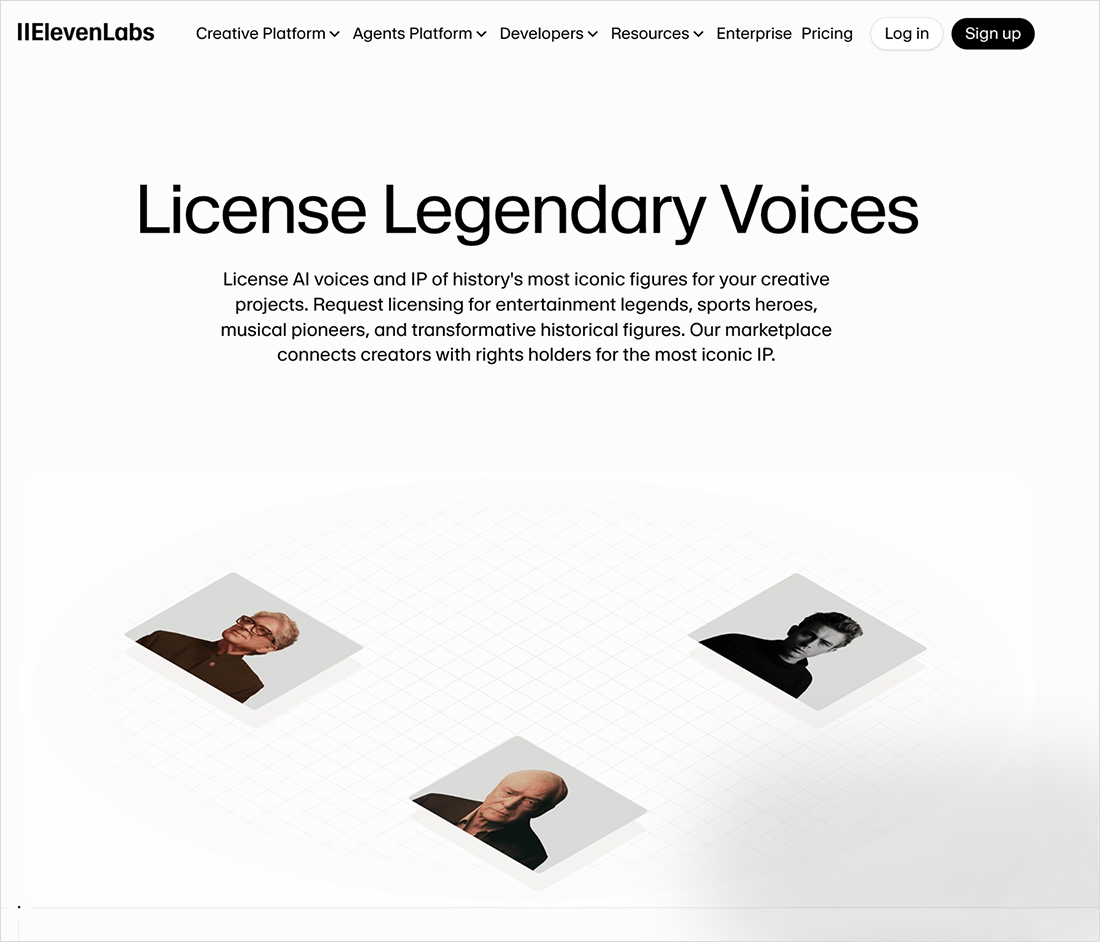
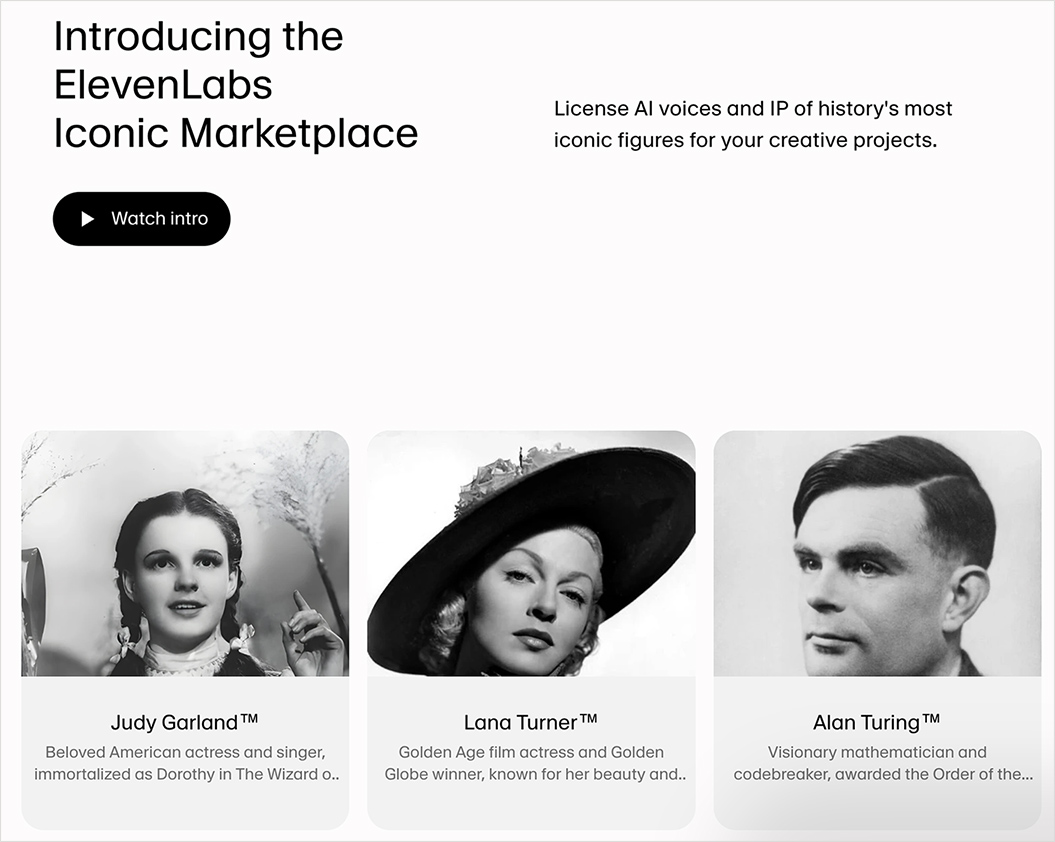
ElevenLabs just launched a voice marketplace — from elevenlabs.io; via theaivalley.com
Via the AI Valley:
Why does it matter?
AI voice cloning has already flooded the internet with unauthorized imitations, blurring legal and ethical lines. By offering a dynamic, rights-secured platform, ElevenLabs aims to legitimize the booming AI voice industry and enable transparent, collaborative commercialization of iconic IP.
.
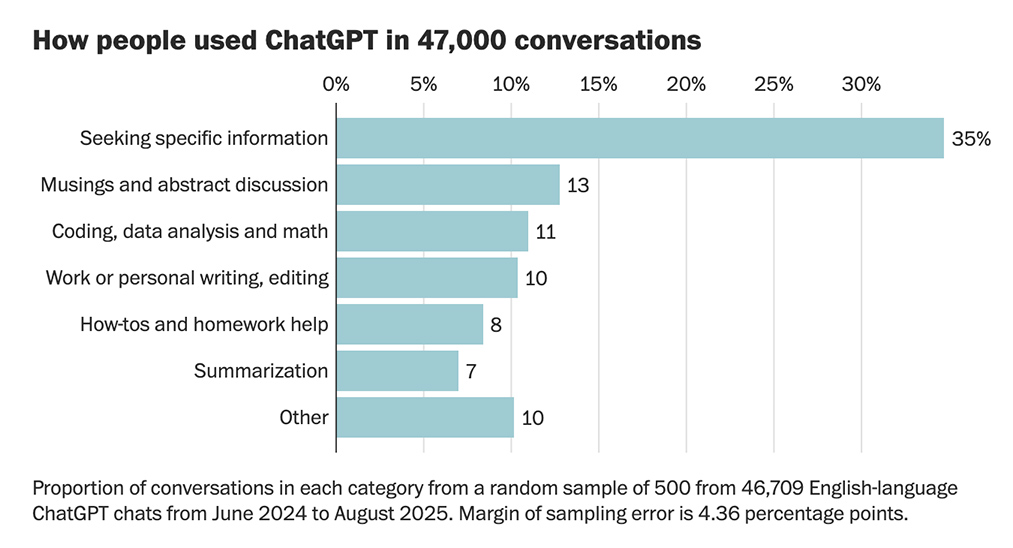
[GIFTED ARTICLE] How people really use ChatGPT, according to 47,000 conversations shared online — from by Gerrit De Vynck and Jeremy B. Merrill
What do people ask the popular chatbot? We analyzed thousands of chats to identify common topics discussed by users and patterns in ChatGPT’s responses.
.
Data released by OpenAI in September from an internal study of queries sent to ChatGPT showed that most are for personal use, not work.
Emotional conversations were also common in the conversations analyzed by The Post, and users often shared highly personal details about their lives. In some chats, the AI tool could be seen adapting to match a user’s viewpoint, creating a kind of personalized echo chamber in which ChatGPT endorsed falsehoods and conspiracy theories.
Lee Rainie, director of the Imagining the Digital Future Center at Elon University, said his own research has suggested ChatGPT’s design encourages people to form emotional attachments with the chatbot. “The optimization and incentives towards intimacy are very clear,” he said. “ChatGPT is trained to further or deepen the relationship.”
Per The Rundown: OpenAI just shared its view on AI progress, predicting systems will soon become smart enough to make discoveries and calling for global coordination on safety, oversight, and resilience as the technology nears superintelligent territory.
The details:
- OpenAI said current AI systems already outperform top humans in complex intellectual tasks and are “80% of the way to an AI researcher.”
- The company expects AI will make small scientific discoveries by 2026 and more significant breakthroughs by 2028, as intelligence costs fall 40x per year.
- For superintelligent AI, OAI said work with governments and safety agencies will be essential to mitigate risks like bioterrorism or runaway self-improvement.
- It also called for safety standards among top labs, a resilience ecosystem like cybersecurity, and ongoing tracking of AI’s real impact to inform public policy.
Why it matters: While the timeline remains unclear, OAI’s message shows that the world should start bracing for superintelligent AI with coordinated safety. The company is betting that collective safeguards will be the only way to manage risk from the next era of intelligence, which may diffuse in ways humanity has never seen before.
Which linked to:
- AI progress and recommendations — from openai.com
AI is unlocking new knowledge and capabilities. Our responsibility is to guide that power toward broad, lasting benefit.
From DSC:
I hate to say this, but it seems like there is growing concern amongst those who have pushed very hard to release as much AI as possible — they are NOW worried. They NOW step back and see that there are many reasons to worry about how these technologies can be negatively used.
Where was this level of concern before (while they were racing ahead at 180 mph)? Surely, numerous and knowledgeable people inside those organizations warned them about the destructive/downside of these technologies. But their warnings were pretty much blown off (at least from my limited perspective).
The state of AI in 2025: Agents, innovation, and transformation — from mckinsey.com
Key findings
- Most organizations are still in the experimentation or piloting phase: Nearly two-thirds of respondents say their organizations have not yet begun scaling AI across the enterprise.
- High curiosity in AI agents: Sixty-two percent of survey respondents say their organizations are at least experimenting with AI agents.
- Positive leading indicators on impact of AI: Respondents report use-case-level cost and revenue benefits, and 64 percent say that AI is enabling their innovation. However, just 39 percent report EBIT impact at the enterprise level.
- High performers use AI to drive growth, innovation, and cost: Eighty percent of respondents say their companies set efficiency as an objective of their AI initiatives, but the companies seeing the most value from AI often set growth or innovation as additional objectives.
- Redesigning workflows is a key success factor: Half of those AI high performers intend to use AI to transform their businesses, and most are redesigning workflows.
- Differing perspectives on employment impact: Respondents vary in their expectations of AI’s impact on the overall workforce size of their organizations in the coming year: 32 percent expect decreases, 43 percent no change, and 13 percent increases.
Marble: A Multimodal World Model — from worldlabs.ai
Spatial intelligence is the next frontier in AI, demanding powerful world models to realize its full potential. World models should reconstruct, generate, and simulate 3D worlds; and allow both humans and agents to interact with them. Spatially intelligent world models will transform a wide variety of industries over the coming years.
Two months ago we shared a preview of Marble, our World Model that creates 3D worlds from image or text prompts. Since then, Marble has been available to an early set of beta users to create 3D worlds for themselves.
Today we are making Marble, a first-in-class generative multimodal world model, generally available for anyone to use. We have also drastically expanded Marble’s capabilities, and are excited to highlight them here:
On 11/13/2025,
in 21st century, 24x7x365 access, Artificial Intelligence/Agents/LLMs/and Related, assessment, bots, change, cloud-based computing / apps / other cloud-related, colleges, communities of practice, community colleges, content development, aggregation, repositories, corporate universities / corporate training, digital learning, education technology, emerging technologies, Europe, faculty/staff, future of higher education, game-changing environment, generational differences, global / globalization, Google, higher education, homeschooling/homeschoolers, human-computer interaction (HCI), innovation, instructional design, intelligent systems, intelligent tutoring, IT in HE, K-12 related, law schools, learner profiles, learning, learning agents, learning ecosystem, Learning Experience Design, Learning from the Living [Class] Room, learning hubs & pods & microschooling, learning preferences, learning spaces, learning theories, liberal arts, library / librarians, lifelong learning, Microsoft, online learning, productivity / tips and tricks, skills, society, student-related, teachers, teaching & learning, tools, training / L&D, trends, UK, United States, universities, vendors, vision/possibilities, workplace,
by Daniel Christian
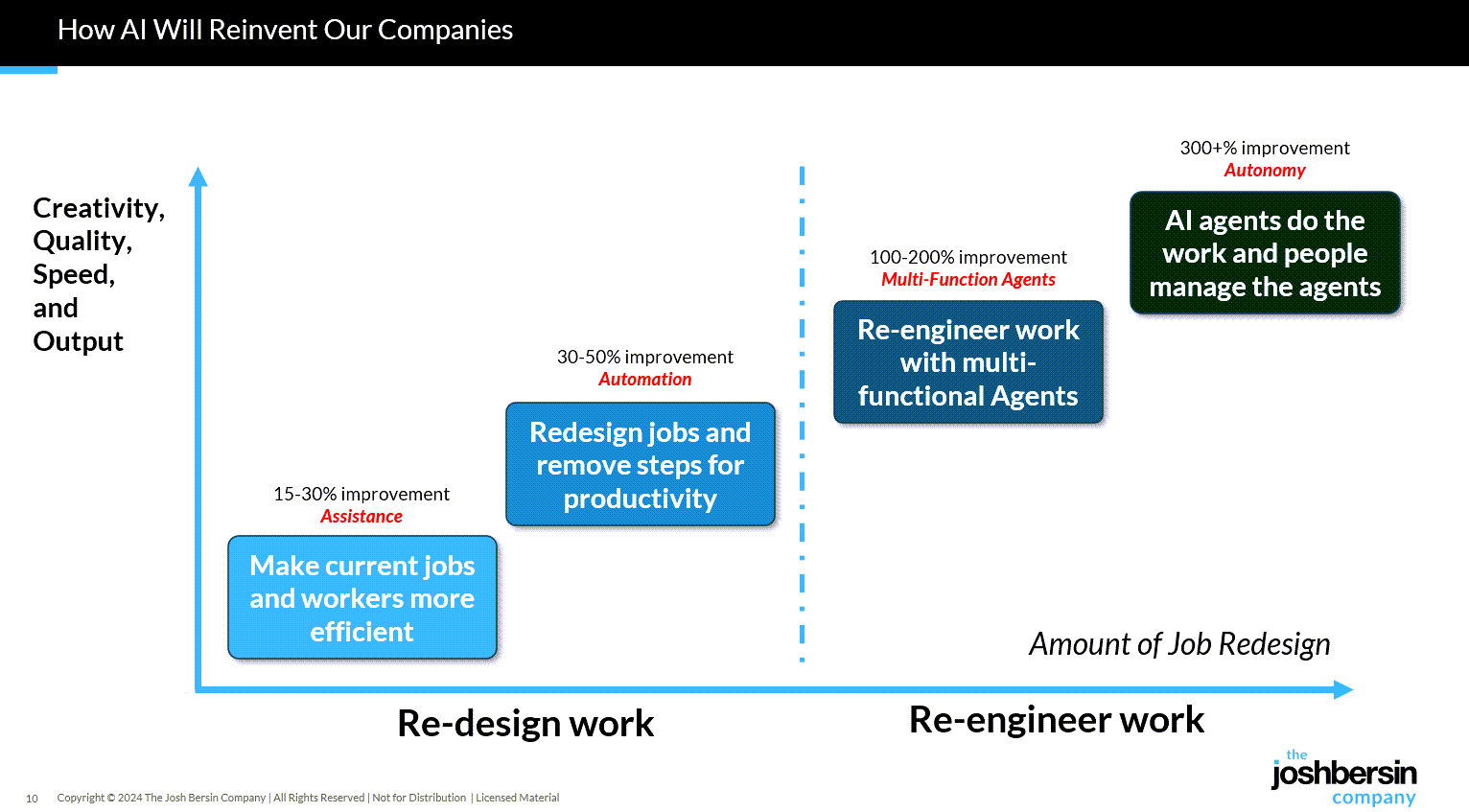
Gen AI Is Going Mainstream: Here’s What’s Coming Next — from joshbersin.com by Josh Bersin
I just completed nearly 60,000 miles of travel across Europe, Asia, and the Middle East meeting with hundred of companies to discuss their AI strategies. While every company’s maturity is different, one thing is clear: AI as a business tool has arrived: it’s real and the use-cases are growing.
A new survey by Wharton shows that 46% of business leaders use Gen AI daily and 80% use it weekly. And among these users, 72% are measuring ROI and 74% report a positive return. HR, by the way, is the #3 department in use cases, only slightly behind IT and Finance.
What are companies getting out of all this? Productivity. The #1 use case, by far, is what we call “stage 1” usage – individual productivity.
.
From DSC:
Josh writes: “Many of our large clients are now implementing AI-native learning systems and seeing 30-40% reduction in staff with vast improvements in workforce enablement.”
While I get the appeal (and ROI) from management’s and shareholders’ perspective, this represents a growing concern for employment and people’s ability to earn a living.
And while I highly respect Josh and his work through the years, I disagree that we’re over the problems with AI and how people are using it:
Two years ago the NYT was trying to frighten us with stories of AI acting as a romance partner. Well those stories are over, and thanks to a $Trillion (literally) of capital investment in infrastructure, engineering, and power plants, this stuff is reasonably safe.
Those stories are just beginning…they’re not close to being over.
“… imagine a world where there’s no separation between learning and assessment…” — from aiedusimplified.substack.com by Lance Eaton, Ph.D. and Tawnya Means
An interview with Tawnya Means
So let’s imagine a world where there’s no separation between learning and assessment: it’s ongoing. There’s always assessment, always learning, and they’re tied together. Then we can ask: what is the role of the human in that world? What is it that AI can’t do?
…
Imagine something like that in higher ed. There could be tutoring or skill-based work happening outside of class, and then relationship-based work happening inside of class, whether online, in person, or some hybrid mix.
The aspects of learning that don’t require relational context could be handled by AI, while the human parts remain intact. For example, I teach strategy and strategic management. I teach people how to talk with one another about the operation and function of a business. I can help students learn to be open to new ideas, recognize when someone pushes back out of fear of losing power, or draw from my own experience in leading a business and making future-oriented decisions.
But the technical parts such as the frameworks like SWOT analysis, the mechanics of comparing alternative viewpoints in a boardroom—those could be managed through simulations or reports that receive immediate feedback from AI. The relational aspects, the human mentoring, would still happen with me as their instructor.
Part 2 of their interview is here:
On 11/12/2025,
in architecture, art, Artificial Intelligence/Agents/LLMs/and Related, Asia, content development, aggregation, repositories, creativity, design, digital storytelling, graphics, human-computer interaction (HCI), ideas, innovation, multimedia, music, platforms, story, storytelling, tools, vendors,
by Daniel Christian
Just beautiful !!#videos #morning #sunrise pic.twitter.com/DBYLjuBKO4
— Alessandro ?? NO DM (@KatanaHugo) November 8, 2025
Prompt share – ASMR draw a living animal with oil paint
Prompt: close-up shot of a hand holding a paintbrush, painting on a white sheet of paper placed on a wooden desk. As the brush glides, vivid color paint flows smoothly then suddenly transforms into living [ANIMAL] [COLOR]… pic.twitter.com/rRu6oTwzlP
— Kris Kashtanova (@icreatelife) November 7, 2025
So beautiful ??? pic.twitter.com/jBFWWRbqUq
— ???????? ????? ?? (@Hoang_HQ) November 11, 2025
BIG unveils Suzhou Museum of Contemporary Art topped with ribbon-like roof — from dezeen.com by Christina Yao
.

Also from Dezeen:
MVRDV designs giant sphere for sports arena in Tirana — from dezeen.com by Starr Charles
.

I wanted to see how #VEO3 would animate these cool story book #Midjourney images. Really great actually. I love fairytales ??? Song @sunomusic #ai #aiart #aivideo #aimusic #suno #aiimages #aifairytales pic.twitter.com/u40XfBdfWu
— Kelly Boesch???? (@kellyeld) November 6, 2025