Agents, robots, and us: Skill partnerships in the age of AI — from mckinsey.com by Lareina Yee, Anu Madgavkar, Sven Smit, Alexis Krivkovich, Michael Chui, María Jesús Ramírez, and Diego Castresana
AI is expanding the productivity frontier. Realizing its benefits requires new skills and rethinking how people work together with intelligent machines.

At a glance

  • Work in the future will be a partnership between people, agents, and robots—all powered by AI. …
  • Most human skills will endure, though they will be applied differently. …
  • Our new Skill Change Index shows which skills will be most and least exposed to automation in the next five years….
  • Demand for AI fluency—the ability to use and manage AI tools—has grown sevenfold in two years…
  • By 2030, about $2.9 trillion of economic value could be unlocked in the United States…

Also related/see:


State of AI: December 2025 newsletter — from nathanbenaich.substack.com by Nathan Benaich
What you’ve got to know in AI from the last 4 weeks.

Welcome to the latest issue of the State of AI, an editorialized newsletter that covers the key developments in AI policy, research, industry, and start-ups over the last month.


From DSC:
One of my sisters shared this piece with me. She is very concerned about our society’s use of technology — whether it relates to our youth’s use of social media or the relentless pressure to be first in all things AI. As she was a teacher (at the middle school level) for 37 years, I greatly appreciate her viewpoints. She keeps me grounded in some of the negatives of technology. It’s important for us to listen to each other.


How HR is adapting as AI agents join the workforce — from hrexecutive.com by Jill Barth

Business leaders across the world are grappling with a reality that would have seemed like science fiction just a few decades ago: Artificial intelligence systems dubbed AI agents are becoming colleagues, not just tools. At many organizations, HR pros are already developing balanced and thoughtful machine-people workforces that meet business goals.

At Skillsoft, a global corporate learning company, Chief People Officer Ciara Harrington has spent the better part of three years leading digital transformation in real time. Through her front-row seat to CEO transitions, strategic pivots and the rapid acceleration of AI adoption, she’s developed a strong belief that organizations must be agile with people operations.

‘No role that’s not a tech role’
Under these modern conditions, she says, technology is becoming a common language in the workplace. “There is no role that’s not a tech role,” Harrington said during a recent discussion about the future of work. It’s a statement that gets at the heart of a shift many HR leaders are still coming to terms with.

But a key question remains: Who will manage the AI agents, specifically, HR leaders or someone else?


Recurring Themes In Bob Ambrogi’s 30 Years of Legal Tech Reporting (A Guest Post By ChatGPT) — from lawnext.com by ChatGPT
#legaltech #innovation #law #legal #innovation #vendors #lawyers #lawfirms #legaloperations

  • Evolution of Legal Technology: From Early Web to AI Revolution
  • Challenges in Legal Innovation and Adoption
  • Law Firm Innovation vs. Corporate Legal Demand: Shifting Dynamics
  • Tracking Key Technologies and Players in Legal Tech
  • Access to Justice, Ethics, and Regulatory Reform

Also re: legaltech, see:

How LegalTech is Changing the Client Experience in 2025 — from techbullion.com by Uzair Hasan

A Digital Shift in Law
In 2025, LegalTech isn’t a trend—it’s a standard. Tools like client dashboards, e-signatures, AI legal assistants, and automated case tracking are making law firms more efficient and more transparent. These systems also help reduce errors and save time. For clients, it means less confusion and more control.

For example, immigration law—a field known for paperwork and long processing times—is being transformed through tech. Clients now track their case status online, receive instant updates, and even upload key documents from their phones. Lawyers, meanwhile, use AI tools to spot issues faster, prepare filings quicker, and manage growing caseloads without dropping the ball.

Loren Locke, Founder of Locke Immigration Law, explains how tech helps simplify high-stress cases:
“As a former consular officer, I know how overwhelming the visa process can feel. Now, we use digital tools to break down each step for our clients—timelines, checklists, updates—all in one place. One client recently told me it was the first time they didn’t feel lost during their visa process. That’s why I built my firm this way: to give people clarity when they need it most.”


While not so much legaltech this time, Jordan’s article below is an excellent, highly relevant posting for what we are going through — at least in the United States:

What are lawyers for? — from jordanfurlong.substack.com by Jordan Furlong
We all know lawyers’ commercial role, to be professional guides for human affairs. But we also need lawyers to bring the law’s guarantees to life for people and in society. And we need it right now.

The question “What are lawyers for?” raises another, prior and more foundational question: “What is the law for?”

But there’s more. The law also exists to regulate power in a society: to structure its distribution, create processes for its implementation, and place limits on its application. In a healthy society, power flows through the law, not around it. Certainly, we need to closely examine and evaluate those laws — the exercise of power through a biased or corrupted system will be illegitimate even if it’s “lawful.” But as a general rule, the law is available as a check on the arbitrary exercise of power, whether by a state authority or a private entity.

And above these two aspects of law’s societal role, I believe there’s also a third: to serve as a kind of “moral architecture” of society.


Scientific breakthrough: artificial blood for all blood groups — from getsuperintel.com by Kim “Chubby” Isenberg
Japan’s universal artificial blood could revolutionize emergency medicine and global healthcare resilience.

They all show that we are on the threshold of a new era – one in which technological systems are no longer just tools, but independent players in medical, cognitive and infrastructural change.

This paradigm shift means that AI will no longer be limited to static training data, but will learn through open exploration, similar to biological organisms. This is nothing less than the beginning of an era of autonomous cognition.


From DSC:
While there are some promising developments involving AI these days, we need to look at what the potential downsides might be of AI becoming independent players, don’t you think? Otherwise, what could possibly go wrong?


Cultivating a responsible innovation mindset among future tech leaders — from timeshighereducation.com by Andreas Alexiou
The classroom is a perfect place to discuss the messy, real-world consequences of technological discoveries, writes Andreas Alexiou. Beyond ‘How?’, students should be asking ‘Should we…?’ and ‘What if…?’ questions around ethics and responsibility

University educators play a crucial role in guiding students to think about the next big invention and its implications for privacy, the environment and social equity. To truly make a difference, we need to bring ethics and responsibility into the classroom in a way that resonates with students. Here’s how.

Debating with industry pioneers on incorporating ethical frameworks in innovation, product development or technology adoption is eye-opening because it can lead to students confronting assumptions they hadn’t questioned before. For example, students could discuss the roll-out of emotion-recognition software. Many assume it’s neutral, but guest speakers from industry can highlight how cultural and racial biases are baked into design decisions.

Leveraging alumni networks and starting with short virtual Q&A sessions instead of full lectures can work well.


Are we overlooking the power of autonomy when it comes to motivating students? — from timeshighereducation.com by Danny Oppenheimer
Educators fear giving students too much choice in their learning will see them making the wrong decisions. But structuring choice without dictating the answers could be the way forward

So, how can we get students to make good decisions while still allowing them agency to make their own choices, maintaining the associated motivational advantages that agency provides? One possibility is to use choice architecture, more commonly called “nudges”: structuring choices in ways that scaffold better decisions without dictating them.

Higher education rightly emphasises the importance of belonging and mastery, but when it ignores autonomy – the third leg of the motivational tripod – the system wobbles. When we allow students to decide for themselves how they’ll engage with their coursework, they consistently rise to the occasion. They choose to challenge themselves, perform better academically and enjoy their education more.


I’m a LinkedIn Executive. I See the Bottom Rung of the Career Ladder Breaking. — from nytimes.com by Aneesh Raman; this is a gifted article

There are growing signs that artificial intelligence poses a real threat to a substantial number of the jobs that normally serve as the first step for each new generation of young workers. Uncertainty around tariffs and global trade is likely to only accelerate that pressure, just as millions of 2025 graduates enter the work force.

Breaking first is the bottom rung of the career ladder. In tech, advanced coding tools are creeping into the tasks of writing simple code and debugging — the ways junior developers gain experience. In law firms, junior paralegals and first-year associates who once cut their teeth on document review are handing weeks of work over to A.I. tools to complete in a matter of hours. And across retailers, A.I. chatbots and automated customer service tools are taking on duties once assigned to young associates.


Talk to Me: NVIDIA and Partners Boost People Skills and Business Smarts for AI Agents  — from blogs.nvidia.com by Adel El Hallak
NVIDIA Enterprise AI Factory validated design and latest NVIDIA AI Blueprints help businesses add intelligent AI teammates that can speak, research and learn to their daily operations.

Call it the ultimate proving ground. Collaborating with teammates in the modern workplace requires fast, fluid thinking. Providing insights quickly, while juggling webcams and office messaging channels, is a startlingly good test, and enterprise AI is about to pass it — just in time to provide assistance to busy knowledge workers.

To support enterprises in boosting productivity with AI teammates, NVIDIA today introduced a new NVIDIA Enterprise AI Factory validated design at COMPUTEX. IT teams deploying and scaling AI agents can use the design to build accelerated infrastructure and easily integrate with platforms and tools from NVIDIA software partners.

NVIDIA also unveiled new NVIDIA AI Blueprints to aid developers building smart AI teammates. Using the new blueprints, developers can enhance employee productivity through adaptive avatars that understand natural communication and have direct access to enterprise data.


NVIDIA CEO Envisions AI Infrastructure Industry Worth ‘Trillions of Dollars’ — from blogs.nvidia.com by Brian Caulfield
In his COMPUTEX keynote, Huang unveiled a sweeping vision for an AI-powered future, showcasing new platforms and partnerships.

“AI is now infrastructure, and this infrastructure, just like the internet, just like electricity, needs factories,” Huang said. “These factories are essentially what we build today.”

“They’re not data centers of the past,” Huang added. “These AI data centers, if you will, are improperly described. They are, in fact, AI factories. You apply energy to it, and it produces something incredibly valuable, and these things are called tokens.”

More’s coming, Huang said, describing the growing power of AI to reason and perceive. That leads us to agentic AI — AI able to understand, think and act. Beyond that is physical AI — AI that understands the world. The phase after that, he said, is general robotics.


Everything Revealed at Nvidia’s 2025 Computex Press Conference in 19 Minutes — from mashable.com
Nvidia is creating Omniverse Digital Twins of factories including humanoid robots

Watch all the biggest announcements from Nvidia’s keynote address at Computex 2025 in Taipei, Taiwan.


Dell unveils new AI servers powered by Nvidia chips to boost enterprise adoption — from reuters.com

May 19 (Reuters) – Dell Technologies (DELL.N), opens new tab on Monday unveiled new servers powered by Nvidia’s (NVDA.O), opens new tab Blackwell Ultra chips, aiming to capitalize on the booming demand for artificial intelligence systems.

The servers, available in both air-cooled and liquid-cooled variations, support up to 192 Nvidia Blackwell Ultra chips but can be customized to include as many as 256 chips.


Nvidia announces humanoid robotics, custom AI infrastructure tech at Computex 2025 — from finance.yahoo.com by Daniel Howley

Nvidia (NVDA) rolled into this year’s Computex Taipei tech expo on Monday with several announcements, ranging from the development of humanoid robots to the opening up of its high-powered NVLink technology, which allows companies to build semi-custom AI servers with Nvidia’s infrastructure.

During the event on Monday, Nvidia revealed its Nvidia Isaac GR00T-Dreams, which the company says helps developers create enormous amounts of training data they can use to teach robots how to perform different behaviors and adapt to new environments.


Addendums on 5/22/25:


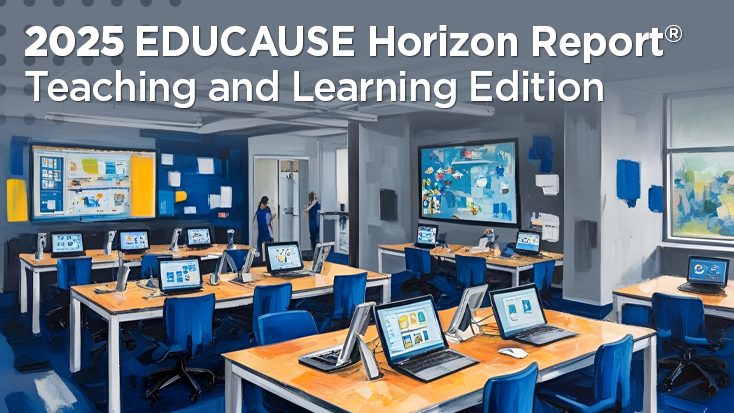
2025 EDUCAUSE Horizon Report | Teaching and Learning Edition — from library.educause.edu

Higher education is in a period of massive transformation and uncertainty. Not only are current events impacting how institutions operate, but technological advancement—particularly in AI and virtual reality—are reshaping how students engage with content, how cognition is understood, and how learning itself is documented and valued.

Our newly released 2025 EDUCAUSE Horizon Report | Teaching and Learning Edition captures the spirit of this transformation and how you can respond with confidence through the lens of emerging trends, key technologies and practices, and scenario-based foresight.

#teachingandlearning #highereducation #learningecosystems #learning #futurism #foresight #trends #emergingtechnologies #AI #VR #gamechangingenvironment #colleges #universities #communitycolleges #faculty #staff #IT


.

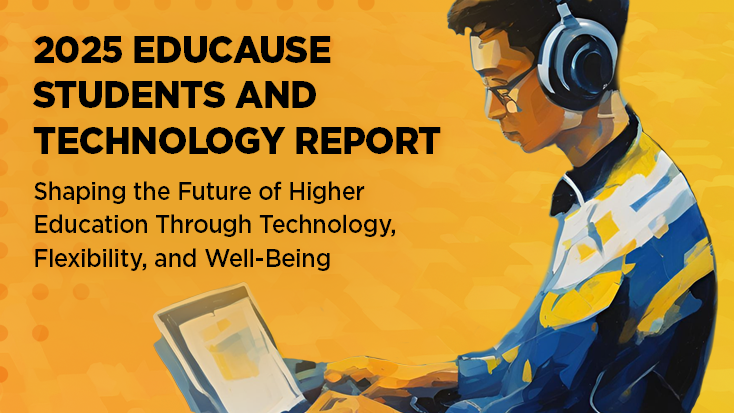
2025 EDUCAUSE Students and Technology Report: Shaping the Future of Higher Education Through Technology, Flexibility, and Well-Being — from library.educause.edu

The student experience in higher education is continually evolving, influenced by technological advancements, shifting student needs and expectations, evolving workforce demands, and broadening sociocultural forces. In this year’s report, we examine six critical aspects of student experiences in higher education, providing insights into how institutions can adapt to meet student needs and enhance their learning experience and preparation for the workforce:

  • Satisfaction with Technology-Related Services and Supports
  • Modality Preferences
  • Hybrid Learning Experiences
  • Generative AI in the Classroom
  • Workforce Preparation
  • Accessibility and Mental Health

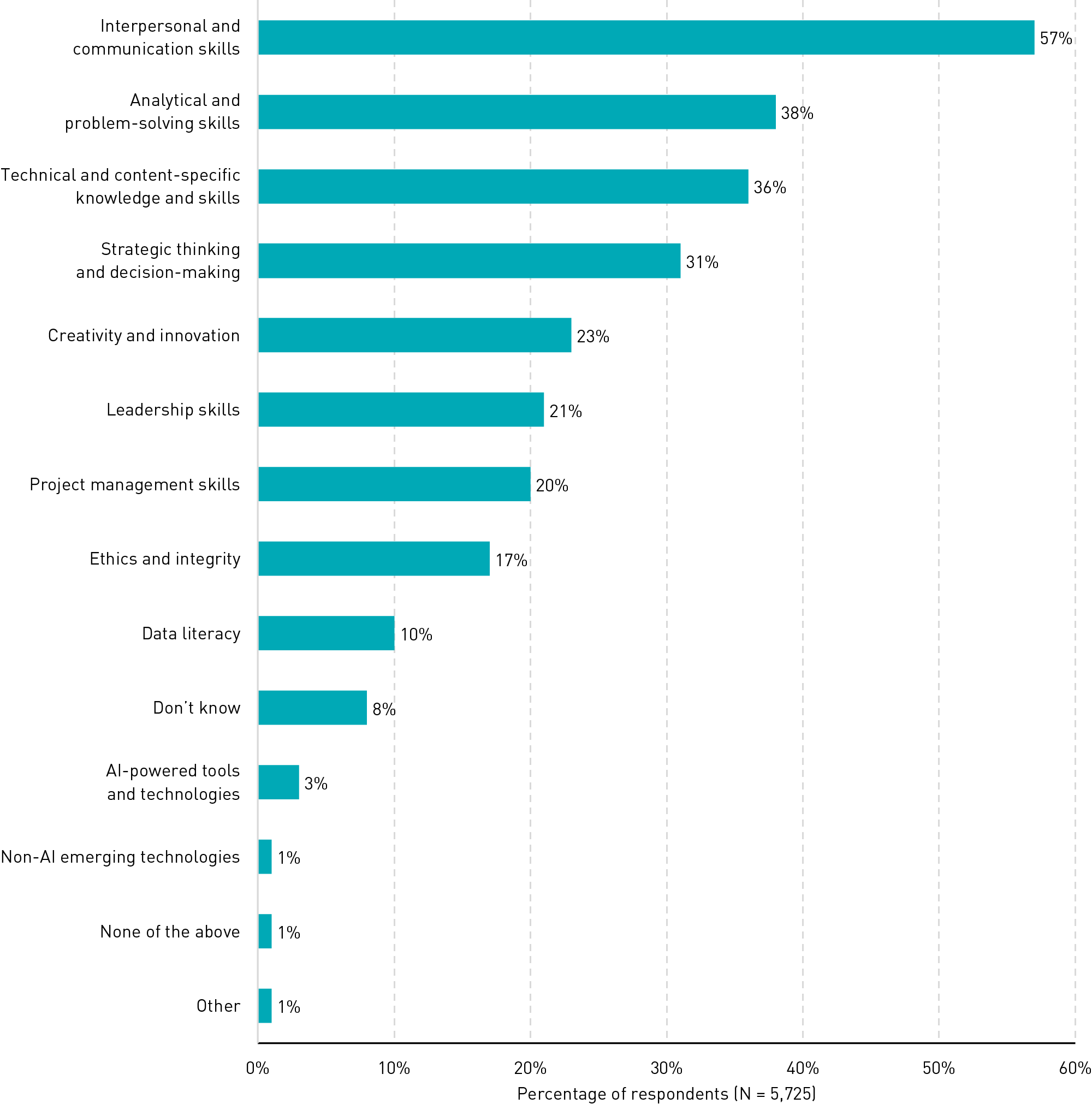
DSC: Shame on higher ed for not preparing students for the workplace (see below). You’re doing your students wrong…again. Not only do you continue to heap a load of debt on their backs, but you’re also continuing to not get them ready for the workplace. So don’t be surprised if eventually you’re replaced by a variety of alternatives that students will flock towards.
.


DSC: And students don’t have a clue as to what awaits them in the workplace — they see AI-powered tools and technologies at an incredibly low score of only 3%. Yeh, right. You’ll find out. Here’s but one example from one discipline/field of work –> Thomson Reuters Survey: Over 95% of Legal Professionals Expect Gen AI to Become Central to Workflow Within Five Years

.

Figure 15. Competency Areas Expected to Be Important for Career


It’s the end of work as we knew it
and I feel…

powerless to fight the technology that we pioneered
nostalgic for a world that moved on without us
after decades of paying our dues
for a payday that never came
…so yeah
not exactly fine.


The Gen X Career Meltdown — from nytimes.com by Steeven Kurutz (DSC: This is a gifted article for you)
Just when they should be at their peak, experienced workers in creative fields find that their skills are all but obsolete.

If you entered media or image-making in the ’90s — magazine publishing, newspaper journalism, photography, graphic design, advertising, music, film, TV — there’s a good chance that you are now doing something else for work. That’s because those industries have shrunk or transformed themselves radically, shutting out those whose skills were once in high demand.

“I am having conversations every day with people whose careers are sort of over,” said Chris Wilcha, a 53-year-old film and TV director in Los Angeles.

Talk with people in their late 40s and 50s who once imagined they would be able to achieve great heights — or at least a solid career while flexing their creative muscles — and you are likely to hear about the photographer whose work dried up, the designer who can’t get hired or the magazine journalist who isn’t doing much of anything.

In the wake of the influencers comes another threat, artificial intelligence, which seems likely to replace many of the remaining Gen X copywriters, photographers and designers. By 2030, ad agencies in the United States will lose 32,000 jobs, or 7.5 percent of the industry’s work force, to the technology, according to the research firm Forrester.


From DSC:
This article reminds me of how tough it is to navigate change in our lives. For me, it was often due to the fact that I was working with technologies. Being a technologist can be difficult, especially as one gets older and faces age discrimination in a variety of industries. You need to pick the right technologies and the directions that will last (for me it was email, videoconferencing, the Internet, online-based education/training, discovering/implementing instructional technologies, and becoming a futurist).

For you younger folks out there — especially students within K-16 — aim to develop a perspective and a skillset that is all about adapting to change. You will likely need to reinvent yourself and/or pick up new skills over your working years. You are most assuredly required to be a lifelong learner now. That’s why I have been pushing for school systems to be more concerned with providing more choice and control to students — so that students actually like school and enjoy learning about new things.


How can businesses stay ahead of trends and technologies that are rapidly changing their industries? — from linkedin.com by Tanja Schindler; via her Dancing with Uncertainty newsletter

Companies need to develop a sense of curiosity about both the observable trends in the present and the unobserved factors that could significantly influence their futures. While current trends can drive us in certain directions, we also need to imagine possible futures that could either disrupt our industry or offer tremendous opportunities for growth.

To stay ahead of the game, companies should focus on recognising weak signals in the present – subtle hints of emerging trends – and deciding whether to encourage or discourage these signals to avoid undesirable futures and encourage desirable ones. This process is a constant dance between the push of the present (existing trends) and the pull of the future (visions of the future we want to create).


From DSC:
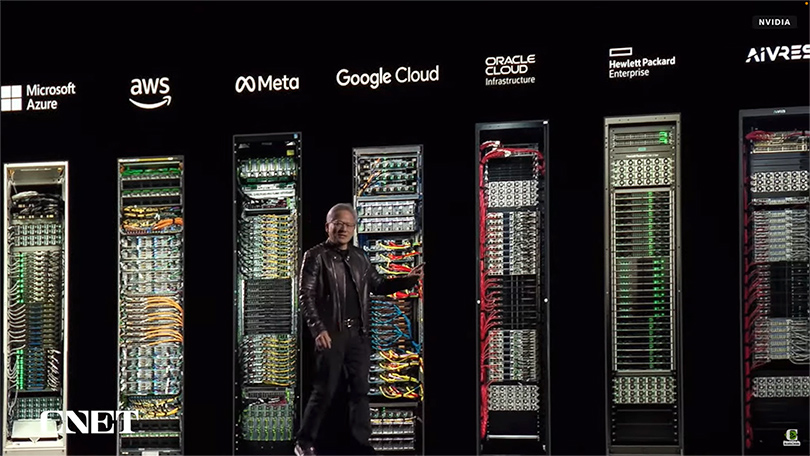
Look out Google, Amazon, and others! Nvidia is putting the pedal to the metal in terms of being innovative and visionary! They are leaving the likes of Apple in the dust.

The top talent out there is likely to go to Nvidia for a while. Engineers, programmers/software architects, network architects, product designers, data specialists, AI researchers, developers of robotics and autonomous vehicles, R&D specialists, computer vision specialists, natural language processing experts, and many more types of positions will be flocking to Nvidia to work for a company that has already changed the world and will likely continue to do so for years to come. 


NVIDIA’s AI Superbowl — from theneurondaily.com by Noah and Grant
PLUS: Prompt tips to make AI writing more natural

That’s despite a flood of new announcements (here’s a 16 min video recap), which included:

  1. A new architecture for massive AI data centers (now called “AI factories”).
  2. A physics engine for robot training built with Disney and DeepMind.
  3. partnership with GM to develop next-gen vehicles, factories and robots.
  4. A new Blackwell chip with “Dynamo” software that makes AI reasoning 40x faster than previous generations.
  5. A new “Rubin” chip slated for 2026 and a “Feynman” chip set for 2028.

For enterprises, NVIDIA unveiled DGX Spark and DGX Station—Jensen’s vision of AI-era computing, bringing NVIDIA’s powerful Blackwell chip directly to your desk.


Nvidia Bets Big on Synthetic Data — from wired.com by Lauren Goode
Nvidia has acquired synthetic data startup Gretel to bolster the AI training data used by the chip maker’s customers and developers.


Nvidia, xAI to Join BlackRock and Microsoft’s $30 Billion AI Infrastructure Fund — from investopedia.com by Aaron McDade
Nvidia and xAI are joining BlackRock and Microsoft in an AI infrastructure group seeking $30 billion in funding. The group was first announced in September as BlackRock and Microsoft sought to fund new data centers to power AI products.


Nvidia CEO Jensen Huang says we’ll soon see 1 million GPU data centers visible from space — from finance.yahoo.com by Daniel Howley
Nvidia CEO Jensen Huang says the company is preparing for 1 million GPU data centers.


Nvidia stock stems losses as GTC leaves Wall Street analysts ‘comfortable with long term AI demand’ — from finance.yahoo.com by Laura Bratton
Nvidia stock reversed direction after a two-day slide that saw shares lose 5% as the AI chipmaker’s annual GTC event failed to excite investors amid a broader market downturn.


Microsoft, Google, and Oracle Deepen Nvidia Partnerships. This Stock Got the Biggest GTC Boost. — from barrons.com by Adam Clark and Elsa Ohlen


The 4 Big Surprises from Nvidia’s ‘Super Bowl of AI’ GTC Keynote — from barrons.com by Tae Kim; behind a paywall

AI Super Bowl. Hi everyone. This week, 20,000 engineers, scientists, industry executives, and yours truly descended upon San Jose, Calif. for Nvidia’s annual GTC developers’ conference, which has been dubbed the “Super Bowl of AI.”


The Learning & Development Global Sentiment Survey 2025 — from donaldhtaylor.co.uk by Don Taylor

The L&D Global Sentiment Survey, now in its 12th year, once again asked two key questions of L&D professionals worldwide:

  • What will be hot in workplace learning in 2025?
  • What are your L&D challenges in 2025?

For the obligatory question on what they considered ‘hot’ topics, respondents voted for one to three of 15 suggested options, plus a free text ‘Other’ option. Over 3,000 voters participated from nearly 100 countries. 85% shared their challenges for 2025.

The results show more interest in AI, a renewed focus on showing the value of L&D, and some signs of greater maturity around our understanding of AI in L&D.


Four objectives to guide artificial intelligence’s impact on higher education — from timeshighereducation.com by Susan C. Aldridge
How can higher education leaders manage both the challenge and the opportunity artificial intelligence presents? Here are four objectives to guide the way

That’s why, today, the question I’m asking is: How best can we proactively guide AI’s use in higher education and shape its impact on our students, faculty and institution? The answer to that broad, strategic question lies in pursuing four objectives that, I believe, are relevant for many colleges and universities.


In This Week’s Gap Letter — by Ryan Craig

Learning to use business software is different from learning to think. But if the software is sufficiently complex, how different is it really? What if AI’s primary impact on education isn’t in the classroom, but rather shifting the locus of learning to outside the classroom?

Instead of sitting in a classroom listening to a teacher, high school and college students could be assigned real work and learn from that work. Students could be matched with employers or specific projects provided by or derived from employers, then do the work on the same software used in the enterprise. As AI-powered digital adoption platforms (DAPs) become increasingly powerful, they have the potential to transform real or simulated work into educational best practice for students only a few years away from seeking full-time employment.

If DAPs take us in this direction, four implications come to mind….


The Impact of Gen AI on Human Learning: a research summary — from drphilippahardman.substack.com by  Dr. Philippa Hardman
A literature review of the most recent & important peer-reviewed studies

In this week’s blog post, I share a summary of five recent studies on the impact of Gen AI on learning to bring you right up to date.

Implications for Educators and Developers

For Educators:

  • Combine ChatGPT with Structured Activities: …
  • Use ChatGPT as a Supplement, Not a Replacement:…
  • Promote Self-Reflection and Evaluation:

For Developers:

  • Reimagine AI for Reflection-First Design: …
  • Develop Tools that Foster Critical Thinking: …
  • Integrate Adaptive Support: …

Assessing the GenAI process, not the output — from timeshighereducation.com by Paul McDermott, Leoni Palmer, and Rosemary Norton
A framework for building AI literacy in a literature-review-type assessment

In this resource, we outline our advice for implementing an approach that opens AI use up to our students through a strategy of assessing the process rather than outputs.

To start with, we recommend identifying learning outcomes for your students that can be achieved in collaboration with AI.


What’s New: The Updated Edtech Insiders Generative AI Map — from edtechinsiders.substack.com by Sarah Morin, Alex Sarlin, and Ben Kornell
A major expansion on our previously released market map, use case database, and AI tool company directory.

.


Tutorial: 4 Ways to Use LearnLM as a Professor — from automatedteach.com by Graham Clay
Create better assessments, improve instructions and feedback, and tutor your students with this fine-tuned version of Gemini.

I cover how to use LearnLM

  • to create sophisticated assessments that promote learning
  • to develop clearer and more effective assignment instructions
  • to provide more constructive feedback on student work, and
  • to support student learning through guided tutoring
 
© 2025 | Daniel Christian