7 things you should know about podcasting — from library.educause.edu

Excerpt:

What is it?
In its most basic sense, a podcast is an audio file. When the term was introduced in 2004—derived from the Apple iPod, at the time still a novel portable music player—podcast referred to audio content that employed RSS technology to allow users to subscribe to serialized content that is automatically downloaded and synchronized whenever it is updated. Purists would insist that those requirements still apply—that a podcast must be serialized content available through an RSS feed. In common usage, however, the term has become much looser and is now often used to describe essentially any audio file, whether it is part of a program or a one-off, and even audio content available on a website but not syndicated. It can replace or augment written material, such as textbooks or similar resources. Other podcasts consist of poetry or fiction or are venues for entertainment. Podcasting is enjoying a resurgence, in part because of the penetration of smartphones. People can listen to podcasts during their commutes, while exercising or washing the dishes, or in countless other times and places.
 

Watch out for these 3 mistakes you’re making during distance teaching — from edsurge.com by Paul Emerich France

Excerpt:

Distance teaching also shone a light on problematic practices that were never effective in person, either. And trying to re-create them in a virtual environment didn’t make them any better. As many schools resume remote instruction this fall, watch out for these three mistakes you may be making. More importantly, give yourself the liberty to try out some of the alternative approaches that can help make distance teaching more sustainable and effective.


Moody’s: Coronavirus is accelerating shift to online education — from educationdive.com by Natalie Schwartz

Dive Brief:

  • The pandemic will hasten a transformation of higher education business models, according to a new Moody’s Investors Service report.
  • The crisis will accelerate many colleges’ plans to grow their online footprints, though not all schools have the resources to invest in digital infrastructure, the report notes. They will also likely expand non-degree and certificate programs.
  • Analysts predict that once the pandemic subsides, some colleges will struggle if they haven’t established a strong online presence.

“Some universities previously resistant to change will have to take more expansive steps to adapt to this transformation,” Pranav Sharma, assistant vice president at Moody’s, said in a statement. “Not all universities, however, have the resources or culture to move quickly and the coronavirus will expedite existential threats for some.”

Also see:

Active Learning while Physically Distant — from blogs.acu.edu

Excerpt:

  • Use a Google Form as an entrance or exit ticket. Upon entering class, a quick google form can engage students with a couple of quick questions. A google form as an exit ticket can provide good insight into student learning that day.
 

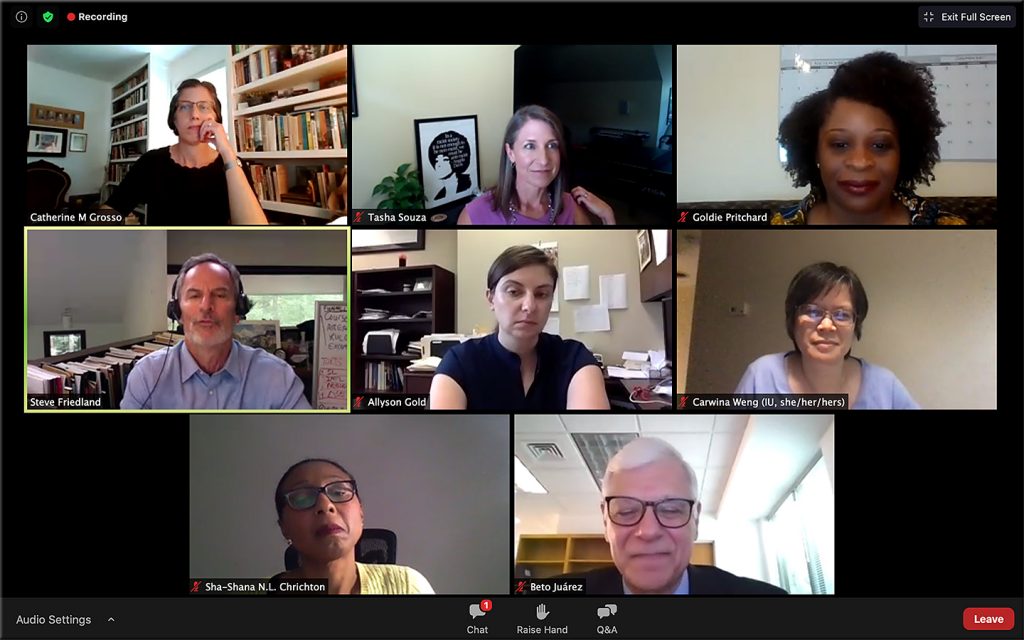
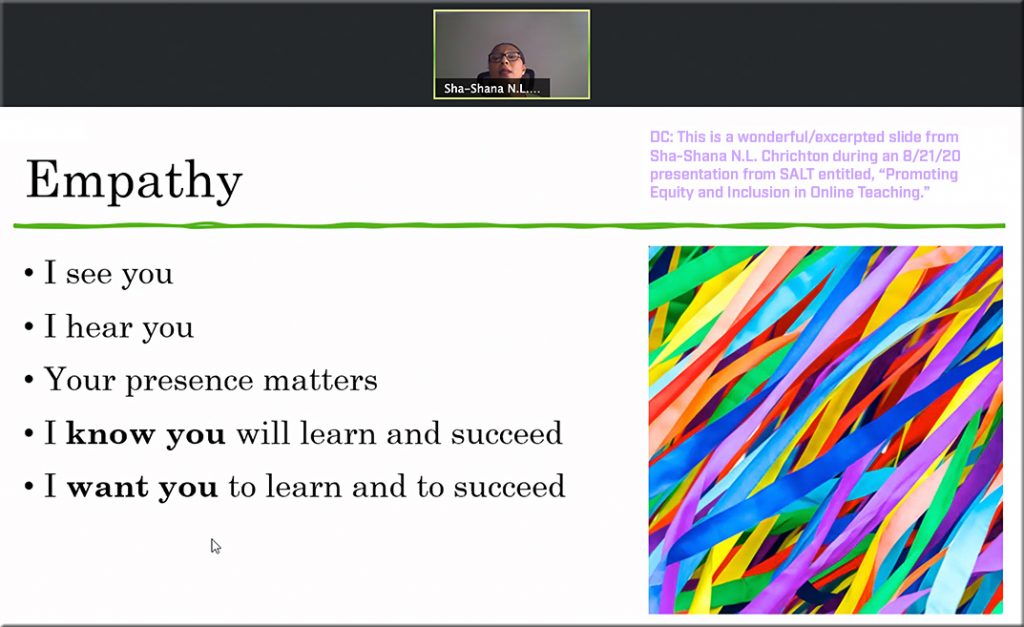
SALT Social Justice Series Promoting Equity Online (21 Aug 2020) — from saltlaw.org with a special thanks to Catherine M. Grosso for these resources (Catherine is a Professor of Law at Michigan State University, Co-President, Society of American Law Teachers, and an Associate Editor for the National Registry of Exonerations.)

From DSC:
To me, that last bullet point says:

“I’m on your team and I’m here to help you become the best lawyer, litigator, judge, legislator, etc. that you can be.”

Other resources Catherine and Dr. Tasha Souza mentioned:


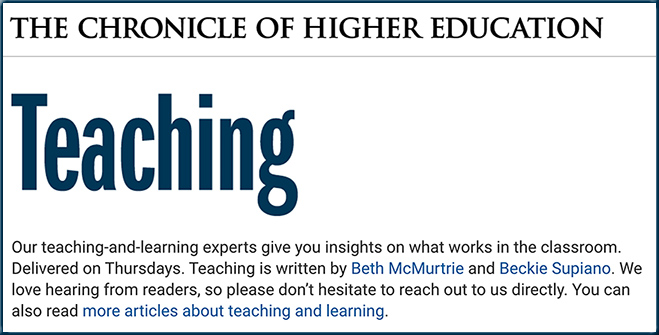
From Beth McMurtrie in this week’s “Teaching” over at The Chronicle:

  • Examples of innovative assessment strategies
  • An instructor’s request to help students engage with digital textbooks
  • Some resources for effective online, equitable, & antiracist teaching

Teaching -- over at The Chronicle

From DSC:
I especially appreciated the item re: the creation/use of multimedia-based content in place of a more traditional assessment. This type of assignment/assessment allows more choice and it opens up opportunities for more creativity and expression.


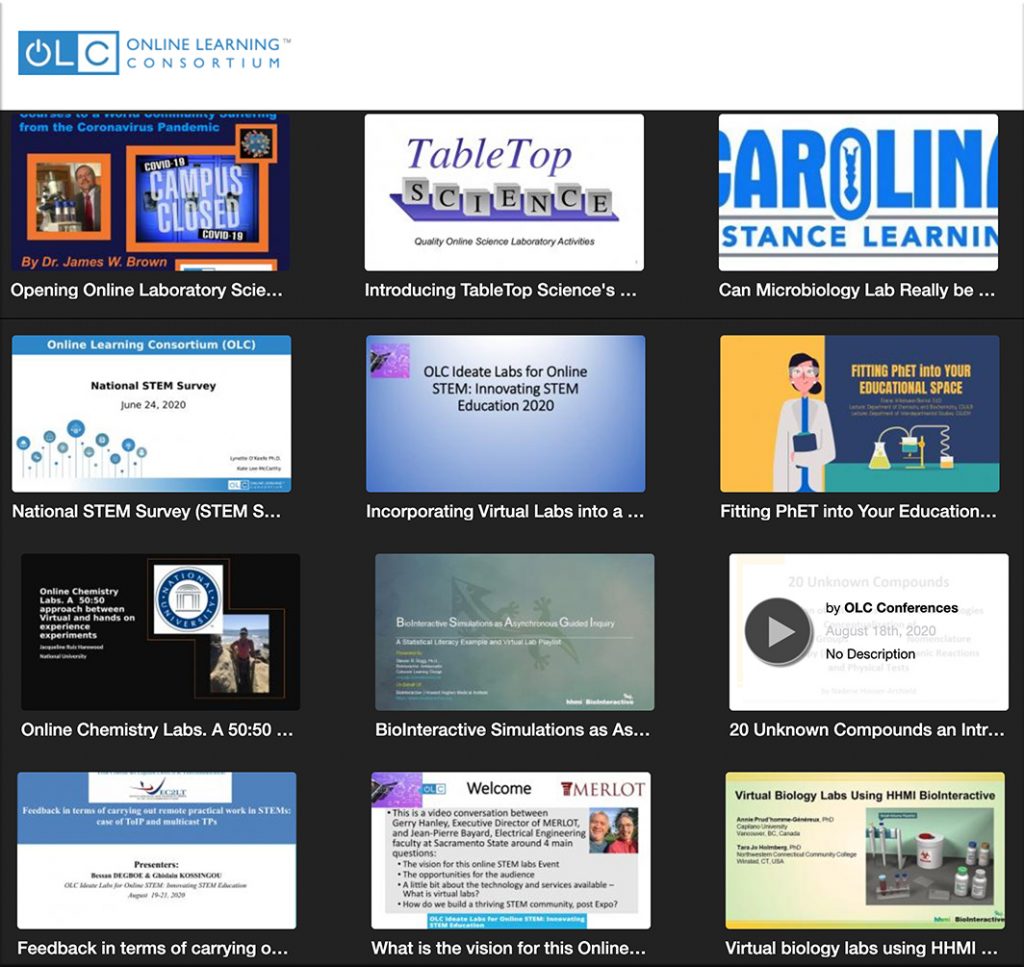
Information re: virtual labs from the Online Learning Consortium


 7 Things You Should Know About Virtual Labs — from library.educause.edu

Excerpt:

Virtual labs are interactive, digital simulations of activities that typically take place in physical laboratory settings. Virtual labs simulate the tools, equipment, tests, and procedures used in chemistry, biochemistry, physics, biology, and other disciplines. Virtual labs allow students to participate in lab-based learning exercises without the costs and limitations of a physical lab. Virtual labs can be an important element in institutional efforts to expand access to lab-based courses to more and different groups of students, as well as efforts to establish contingency plans for natural disasters or other interruptions of campus activities.


Addendum on 8/27/20:


Back-to-School Help for Students Without Internet — from by James K. Willcox
For millions of families, broadband access is a challenge. These resources can help bridge that digital divide.

Excerpt:

“If it wasn’t glaringly clear before, the pandemic has confirmed the vital importance of a broadband internet connection—one that is reliable, affordable, and in some cases, simply available,” says Jonathan Schwantes, senior policy counsel in Consumers Reports’ Washington, D.C., office. “Unfortunately, far too many Americans lack access or are unable to afford broadband.”

A new state-by-state report on America’s K-12 students by Common Sense and Boston Consulting finds that almost 16 million students and 10 percent of teachers lack adequate internet or computing devices at home. Minority households are among the most affected. Though 18 percent of white homes lack broadband, the figure rises to 26 percent for Latinx homes and 30 percent for Black homes. The percentage is even higher among Native American households.

From DSC:
Though this solid article lists some very helpful resources, we have to do much better than this as a nation! It’s not right. 

My thanks to James McQueen for this resource.


With an eye towards the future…what questions should we be asking about learning experience design (#LXD)? [Christian]

From DSC:
Some of the following questions came to my mind recently:

  • In this age of the Coronavirus, how can we think differently about learning experience design (#LXD)?
  • How can *teams* of people come together to reimagine what learning could look like in the future? Who might be some new players at the table? More students? Artists? Actors? More animators? More technicians and people from A/V? Specialists in XR? Corporate trainers coming together with Instructional Designers from higher ed and from K-12? #learningecosystems #future
  • How can we better tighten up the alignment between K-12, higher ed / vocational programs, and the corporate world?
  • How can we make self-directed learning more prevalent (which would release an enormous amount of energy & creativity)? #heutagogy

Maybe those aren’t even the right questions…

If not, what do you think? What questions should we be asking about learning these days?

#LXD #learningecosystems #future #lifelonglearning #onlinelearning #highereducation #K12 #corporatelearning #heutagogy


The main thing we need to remember is that this space no longer serves as an accessory to face-to-face teaching. It is now our main contact point with learners, so it needs to play different roles: communication channel, learning path, interaction platform and community space. Teachers therefore need a certain degree of freedom to design this space in the best way that suits their teaching style and philosophy as well as their course content and learning objectives.
…
What became obvious in the past months is that when it comes to teaching and learning
 fully online, the learning experience design aspect, including look, feel and logic of the platform from the users’ perspective- be it teachers or students-, are at least as important as the content.

(source)


James Lang’s Distracted: Why Students Can’t Focus and What You Can Do About It — from tophat.com by Harleen Dhami
Navigating distraction in the virtual classroom starts with curating novel, community-oriented learning activities

Excerpt:

You suggest that how instructors teach is often at odds with how students learn. What’s the disconnect here?
The disconnect is taking for granted that students should pay attention. What we need to think about is how we structure the class in a way that sustains someone’s attention through an extended period of time. We need to think like playwrights. What do they do to maintain attention? They have acts and scenes, there’s an intermission, the action rises and falls. At the beginning of a play, something happens that is designed to intrigue you and get you engaged in the story. I argue in the book that we have to think both like a playwright and like a poet. You have to think like a playwright in terms of the structure. You have to think like a poet in terms of “what’s going to reawaken the attention of my students,” or awaken the attention of my students to this particular content for the day.


Metacognition and Learning How to Learn Online – Preparing for Fall Teaching in Physically Distanced, Hybrid, or Remote Courses — from prawfsblawg.blogs.com

Excerpt:

Here are some specific metacognition prompts that you can also use, either through polling software or reflection that students do on their own:

  • What helped you learn in the spring when classes went online? What practices or strategies do wish you had adopted?
  • If you were to do [name specific assignment] again, what would you do differently? What would you do in the same way?
  • Think about today’s class. What strategies did you use to prepare? How do you think they worked? What other strategies would you like to try?
  • What does fully preparing for class include for you? Create a list of the things you want to do on your own to understand the material before coming to class.
  • If you were to spend 30 minutes after class reflecting on what we learned today, what specific things would you do during this time?
  • What are your goals for this course in light of your larger motivation in coming to law school?
  • What have you done so far this semester that has helped you to achieve these goals? What specific strategies could you try to help you achieve these goals?

For the full series on preparing to teach this fall, see:


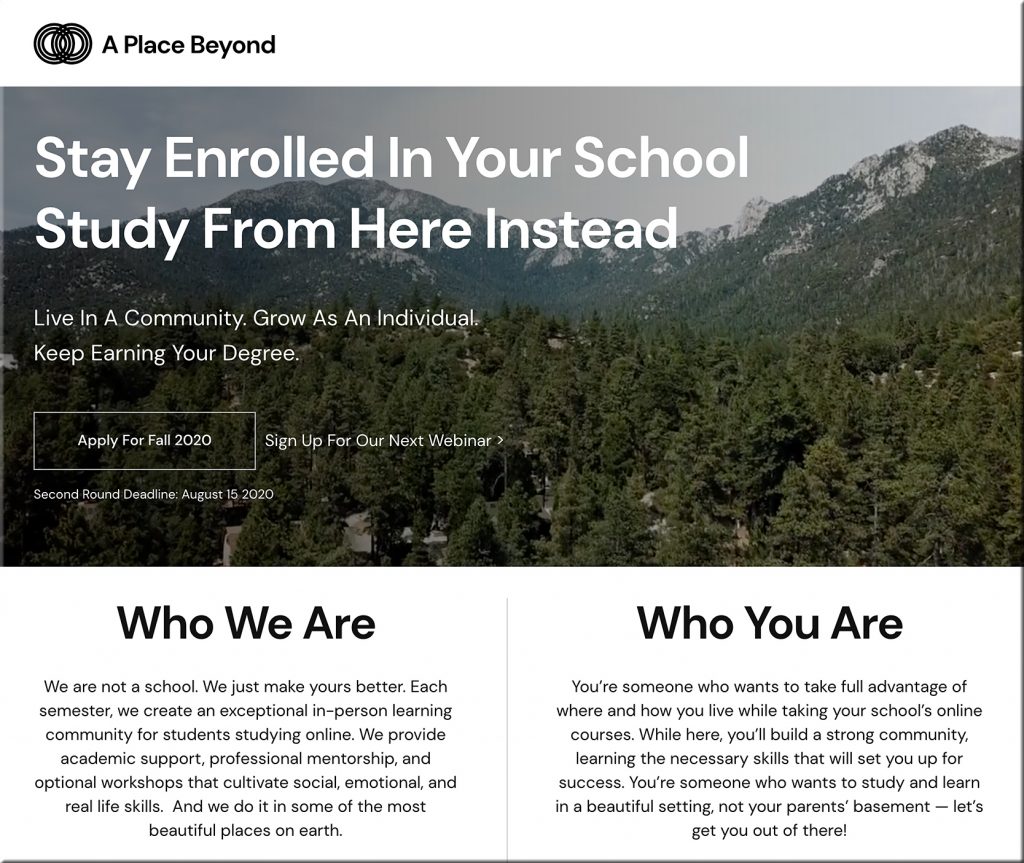
Another type of learning ecosystem (online, but from beautiful places!)

From DSC:
I instantly see the inequities involved here — as only those with the resources can choose this route. Also, one would have to be careful about how many others are around you choosing to do the same thing. (Otherwise, it defeats the purpose of social distancing, and one might as well be back in a physical classroom.)

All that said, I post this because I’m intrigued by the different ways people are enhancing their learning ecosystems. The creativity out there is wonderful to see. Learning should be fun.

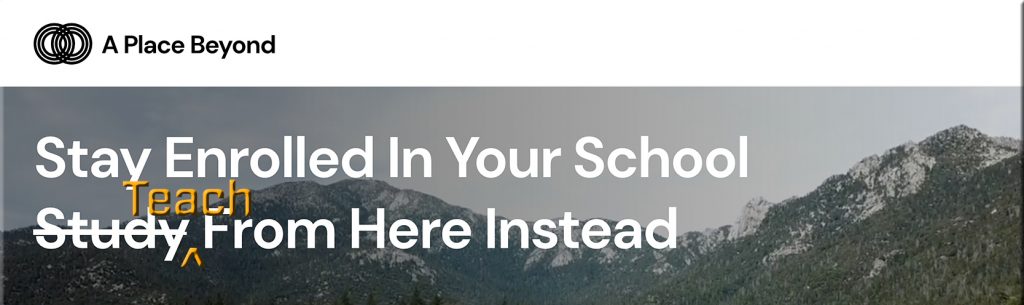
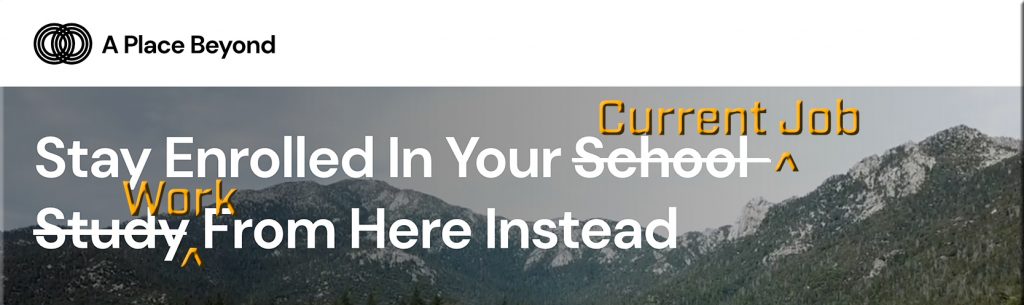
For that matter, a few words could be interchanged to create a slightly different perspective here…

Teach from here instead

Work from here instead


I’m a teacher headed back to school next month. It’s going to be traumatic. — from co.chalkbeat.org by Autumn Jones
A teacher mental health crisis is coming. Schools should prepare themselves now. 

Excerpts:

Last week, the Colorado district where I teach announced schools would return August 18 for a hybrid of in-person and remote learning. That means that teachers must face the reality of walking into a school building where little of what we were taught about being a teacher will apply. We will be expected at school five days a week, teaching alternating groups of students while also providing remote instruction for those learning from home.

What happens when, instead of getting the virus, we see educators experience anxiety, panic attacks, or stress-induced ailments? Do schools have the necessary supports in place to care for the mental health of its educators?

From DSC:
Which brings up some important questions re: teacher education / student teaching:

  • How are schools of education dealing with the Coronavirus? For example, can a student-teacher get the appropriate credits if they teach a learning pod?
  • How are schools of education modifying how they prepare the teachers of tomorrow? Are they (hopefully) introducing more training in how to teach online? 
  • What curriculum changes are in the works (hopefully) as I write this? 
  • Will many teachers leave this area of work and pursue other pathways/opportunities?
  • And numerous other questions I’m sure.


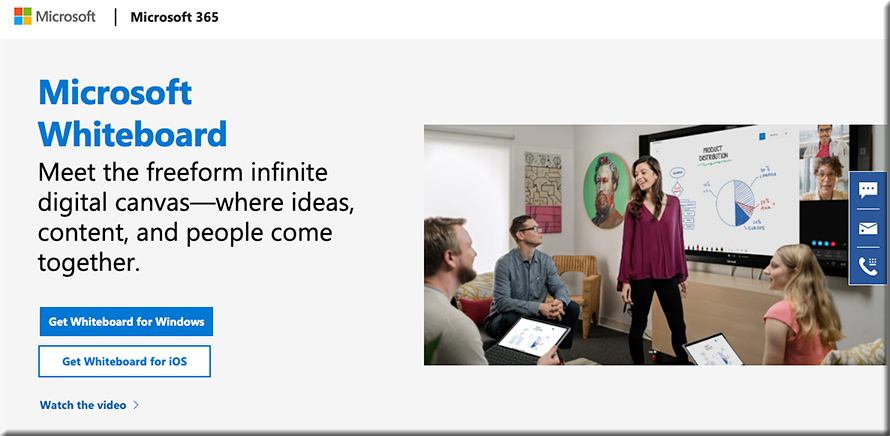
How might tools like Microsoft’s new Whiteboard be used in online-based learning? In “learning pods?” [Christian]

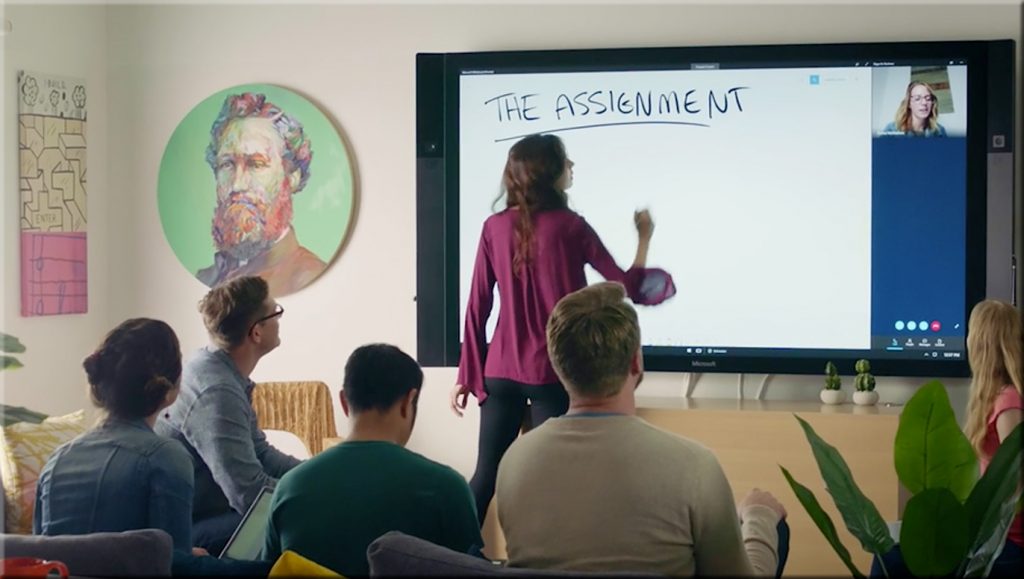
The new Microsoft Whiteboard -- how might this be used for online-based learning? Learning pods?

The new Microsoft Whiteboard -- how might this be used for online-based learning? Learning pods?

Questions/reflections from DSC:

  • How might this be used for online-based learning?
  • For “learning pods” and homeschoolers out there? 
  • Will assistants such as the Webex Assistant for Meetings (WAM) be integrated into such tools (i.e., would such tools provide translation, transcripts, closed captioning, and more)?
  • How might this type of tool be used in telehealth? Telelegal? In online-based courtrooms? In presentations?

#onlinelearning #collaboration #education #secondscreen #edtedh #presentations #AI #telehealth #telelegal #emergingtechnologies

 
© 2025 | Daniel Christian