Canvas Certified Educator program for higher education

Per “Instructure Launches Canvas Certified Educator Program” out at The Journal by Dian Schaffhauser:

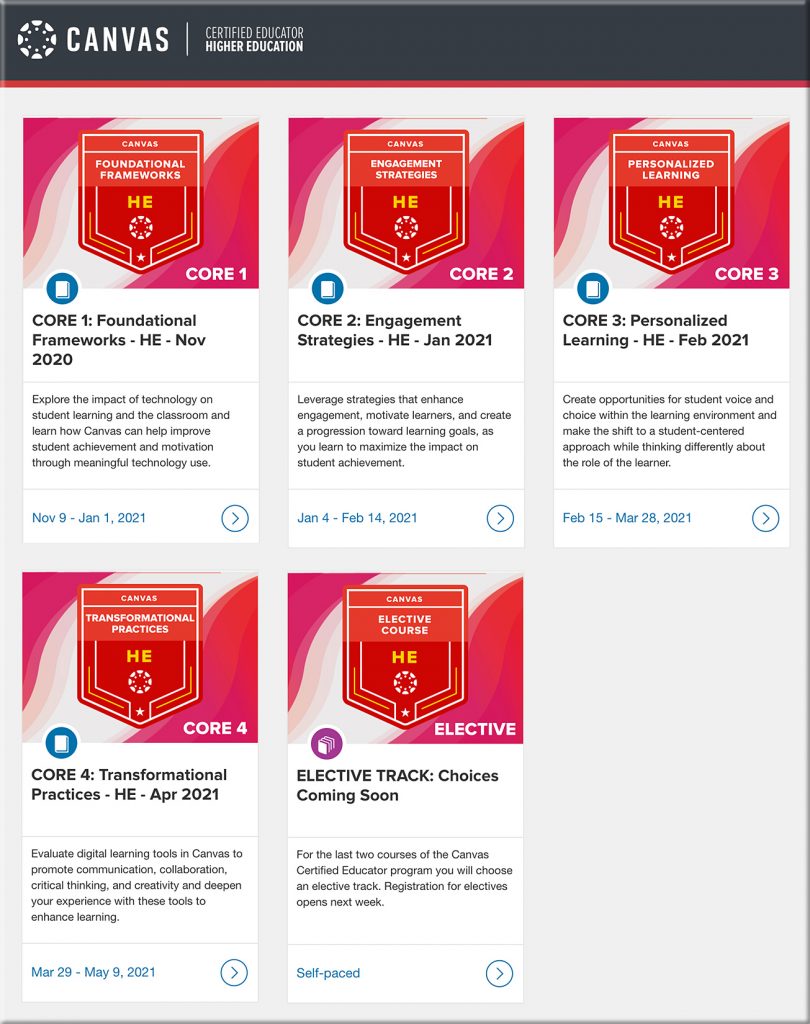
Each course is expected to take about four weeks to finish. They include:

  • Core 1: Foundational frameworks, which explores the impact of technology on student learning and the classroom and how Canvas can be used to help educators boost student achievement, motivation and engagement;
  • Core 2: Engagement strategies, to examine how Canvas can help enrich teaching practices and maximize student achievement;
  • Core 3: Personalized learning, to dive into personalized learning and learn how to create opportunities for student voice and choice within the learning environment;
  • Core 4: Transformational practices, to help participants learn how to evaluate open standard digital learning tools that can enhance learning through Canvas; and
  • Electives, described as a series of optional courses that can be selected by educators based on interests and needs.



Richard Mayer Has Spent Decades On Educational Research. Here are His Pandemic Teaching Tips. — from edsurge.com by Jeff Young

Excerpt:

EdSurge recently reached out to Mayer, who is a professor of psychology at the University of California at Santa Barbara, to get his thoughts on the lessons his research reveals that can guide teachers and professors.
…
One finding is that students learn better if they see a video of the professor actually working out a math problem or concept on a whiteboard, than if they see a video of the same professor standing next to a whiteboard where the problem has already been worked out.


5 things that show students aren’t the only ones learning during the pandemic — from mlive.com by Melissa Frick

Excerpts:

“Never in my 33 years of teaching did I ever think it would be like this,” the Muskegon High School teacher said of virtual learning, which the district is using this semester to mitigate the spread of the coronavirus.

“It’s a huge learning curve.”

With Michigan K-12 schools back in session for the fall – some virtually, some in-person, and some a mix of both – students aren’t the only ones doing the learning this year. Amid this unprecedented school year, teachers are learning some new things along the way, too.

…
3. Virtual learning has exposed the depth of Michigan’s digital divide
Systemic gaps in technology access among school districts around the state left thousands of students at a disadvantage this year, despite efforts by educators to fulfill short-term connectivity needs during virtual learning.

From DSC:
These are just a couple of reasons that I say that Rome wasn’t built overnight. But it’s great to see that tools are being added to teaching toolboxes and learners’ toolboxes as well:

“It’s easy for them to get onto Zoom now, they can go onto Google Classroom and go into the lesson right along with us,” she said. “I’m surprised at how smooth it’s running now.”


10 Ways You Can Use Podcasts in Your Course to Engage Students — from barbihoneycutt.com by Barbi Honeycutt, Ph.D.

Excerpts:

Have you used podcasts in your courses yet? If not, you might want to consider it! Podcasts can be an excellent tool to add to your lesson to enhance a message, present more in-depth perspectives, and offer a different medium for students to engage with the course content.
…
10 Ways You Can Use Podcasts in a Course or Lesson:

1) Compare and contrast two podcast episodes where the same topic is discussed by different guests.
2) Use an episode as a supplement or additional resource for a reading assignment.


Fostering Student Creativity with Green-Screen Videos — from teachingprofessor.com by Jason Webb and Jeff Mangram

Excerpt:

Educators have come to realize that videos are highly effective and engaging ways to create online course content. One of the most engaging forms uses a green-screen backdrop to project images or videos behind or next to the speaker. Barbara Oakley used this technique in her famous course Learning How to Learn, where she brought in images to illustrate and amplify her message during course videos. Take a look at this example and consider the fact that Oakley shot the videos in her basement using only a couple hundred dollars’ worth of supplies. Today most colleges already have green-screen studios set up for marketing or other uses.


From DSC:
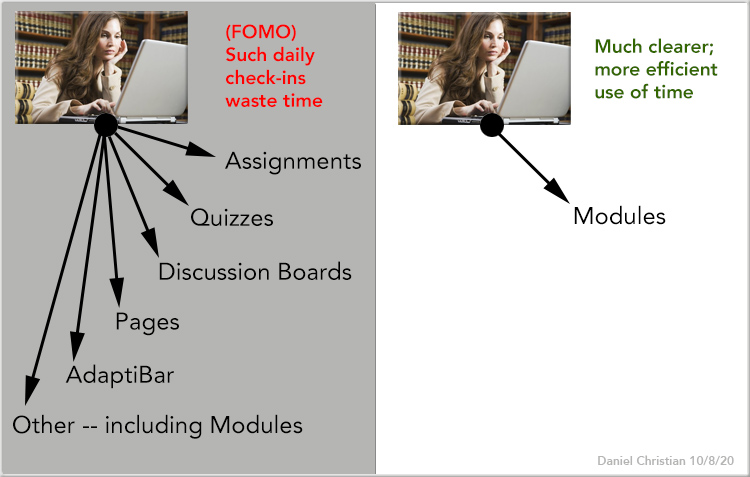
Put yourself in the place of the conscientious/thorough learner. If you come into a course on Canvas & see Quizzes, Assignments, Discussion Boards, as well as other items listed on the Course Navigation Bar — in addition to the Modules selection — you might find yourself going to check many of those selections Every. Single. Day.

Graphically speaking:

Let's stop the FOMO and make it easy to find the content and the to-do's

(DSC purchased this image from Getty Images)

From DSC:
By the way, this is why RSS feeds and feed aggregators were implemented. Have updates/content flow to the person, instead of the person wasting time trying to find what’s been updated on 100+ websites.


Per Dr. Honeycutt, also see:


The shift online has colleges looking to share courses — from educationdive.com by Alia Wong
Dozens of institutions have joined consortia for exchanging online classes since the pandemic began, and new options have sprung up.

Excerpts:

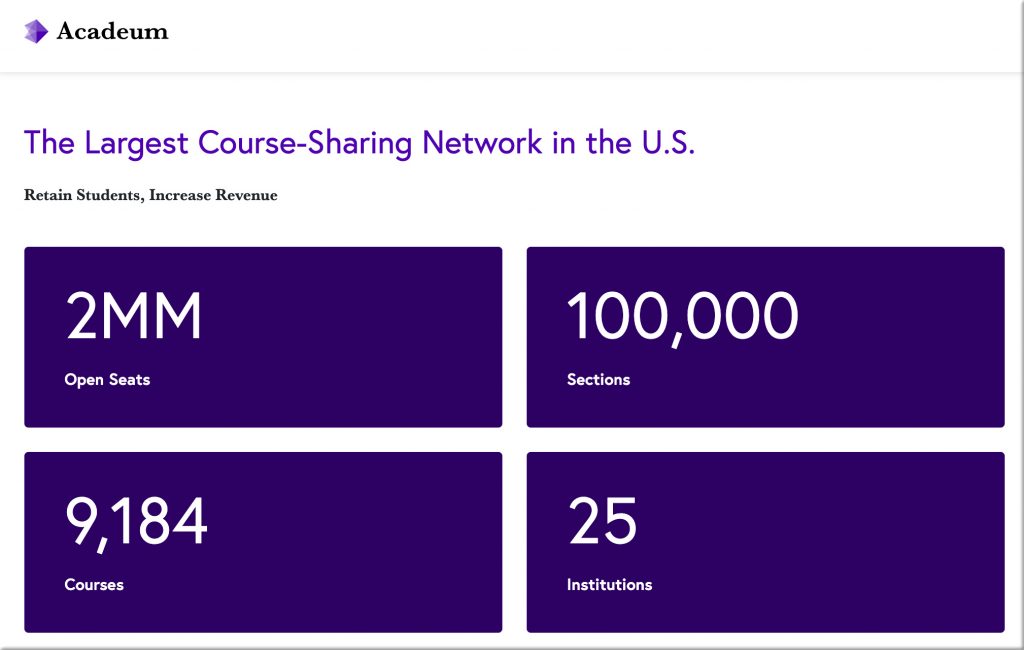
Dozens of other small, private institutions followed thanks to the Council of Independent Colleges’ (CIC’s) Online Course Sharing Consortium, which was formed in late 2018 and today is the largest of the dozen or so networks on Acadeum.

CIC Online Course Sharing Consortium


Course recovery consortium


3 winners for the GSV Cup: Abwaab, Prepmedians, and Ringbeller! Congratulations!! These three exceptional companies won out of over 550 applications.

First Place Winner – Watch the pitch below from Abwaab

Second Place Winner – Watch the pitch below from Prepmedians

Third Place Winner – Watch the pitch below from Ringbeller


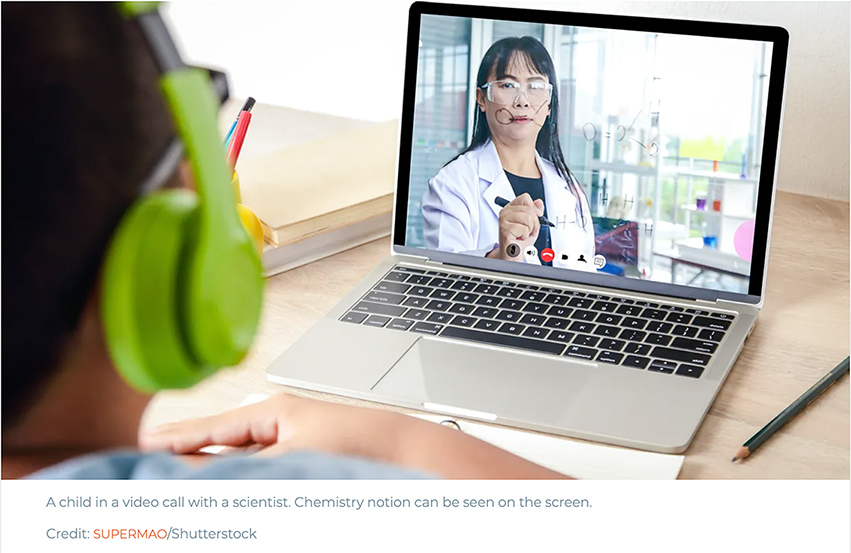
Livestreamed Chemistry Labs Keep Learning Real — Mistakes, Spills and All — from campustechnology.com by Dian Schaffhauser

Excerpt:

To keep students engaged, the synchronous sessions include small-group breakout sessions and on-the-spot activities like having students name compounds; balance chemical equations; predict the outcomes of experiments; and calculate masses, amounts and concentrations for the chemicals used.

 
© 2025 | Daniel Christian