Earning a degree behind bars is difficult. Finding housing after release can be harder. — from college-inside.beehiiv.com by Charlotte West
Some prison education programs are expanding their services to provide their alumni with a place to live alongside job assistance and other support.

Short on time? Here’s what you need to know:

  • The number of people coming home from prison with college degrees is expected to increase with the return of Pell Grants. Recognizing that housing underpins successful reentry, some prison education programs are expanding their services. College Inside visited Hudson Link in New York State. 
  • In a first-person essay we published last year, incarcerated writer Kwaneta Harris asks: how can prisons celebrate Black History Month while banning the very books that tell Black history?
 

Something Big Is Happening — from shumer.dev by Matt Shumer; see below from the BIG Questions Institute, where I got this article from

I’ve spent six years building an AI startup and investing in the space. I live in this world. And I’m writing this for the people in my life who don’t… my family, my friends, the people I care about who keep asking me “so what’s the deal with AI?” and getting an answer that doesn’t do justice to what’s actually happening. I keep giving them the polite version. The cocktail-party version. Because the honest version sounds like I’ve lost my mind. And for a while, I told myself that was a good enough reason to keep what’s truly happening to myself. But the gap between what I’ve been saying and what is actually happening has gotten far too big. The people I care about deserve to hear what is coming, even if it sounds crazy.


They’ve now done it. And they’re moving on to everything else.

The experience that tech workers have had over the past year, of watching AI go from “helpful tool” to “does my job better than I do”, is the experience everyone else is about to have. Law, finance, medicine, accounting, consulting, writing, design, analysis, customer service. Not in ten years. The people building these systems say one to five years. Some say less. And given what I’ve seen in just the last couple of months, I think “less” is more likely.

The models available today are unrecognizable from what existed even six months ago. The debate about whether AI is “really getting better” or “hitting a wall” — which has been going on for over a year — is over. It’s done. Anyone still making that argument either hasn’t used the current models, has an incentive to downplay what’s happening, or is evaluating based on an experience from 2024 that is no longer relevant. I don’t say that to be dismissive. I say it because the gap between public perception and current reality is now enormous, and that gap is dangerous… because it’s preventing people from preparing.


What “Something Big Is Happening” Means for Schools — from/by the BIG Questions Institute
Matt Shumer’s newsletter post Something Big is Happening has been read over 80 million times within the week when it was published, on February 9.

Still, it’s worth reading Shumer’s post. Given the claims and warnings in Something Big Is Happening (and countless other articles), how would you truly, honestly respond to these questions:

  • What will the purpose of school be in 5 years?
  • What are we doing now that we must leave behind right away?
  • What can we leave behind gradually?
  • What does rigor look like in this AI-powered world?
  • Does our strategy look like making adjustments at the margins or are we preparing our students for a fundamental shift?
  • What is our definition of success? How do the the implications of AI and jobs (and other important forces, from geopolitical shifts and climate change, to mental health needs and shifting generational values) impact the outcomes we prioritize? What is the story of success we want to pass on to our students and wider community?
 

Funding cuts, shifts in aid could make college harder to afford for low-income families — from hechingerreport.org by Jon Marcus
Advocates worry that the promise of a higher education will soon drift further out of reach

Now TRIO has come under the scrutiny of the Trump administration, which has already moved to cancel TRIO funding for some participating colleges (though this was paused in January by a federal court and remains in litigation) and proposes to eliminate it altogether; letters from the Department of Education to those colleges show the money was cut off because the programs were considered part of diversity, equity and inclusion, or DEI, efforts.

At a time of rising income inequality, it’s one of several developments advocates worry are converging to make things even harder for lower-income Americans who want to go to and get through college — a group that already faces considerable challenges, and whose proportion of enrollment has been falling for a decade and a half.


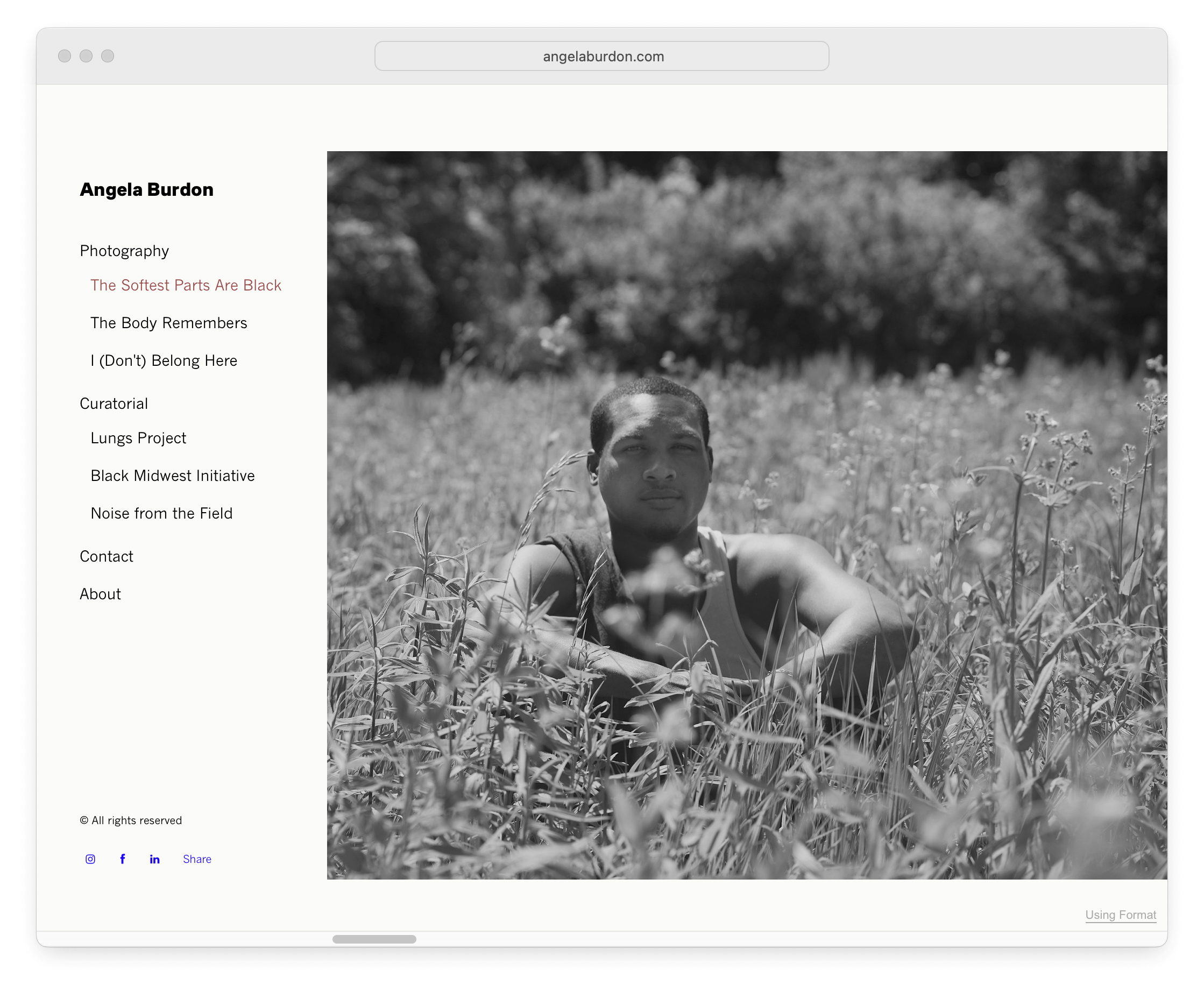
12 Photographer Portfolios Packed With Ideas and Inspiration — from booooooom.com


Speaking of photography, also see:

Photographer Spotlight: Pelle Cass — from booooooom.com


Caring for Patients for 26 Years—and Still Not a Nurse — from workshift.org/ by Colleen Connolly

Arnett’s experience spending decades in a job she intended as a first step is common among CNAs, medical assistants, and other entry-level healthcare workers, many of them women of color from low-income backgrounds. Amid a nationwide nursing shortage, elevating those workers seems like an obvious solution, but the path from CNA to nurse isn’t so much a ladder as it is a huge leap.

And obstacle after obstacle is strewn in the way. The high cost of nursing school, lengthy prerequisite requirements, rigid schedules, and unpaid clinical hours make it difficult for many CNAs to advance in their careers, despite their willingness and ability and the dire need of healthcare facilities.

While there are no national statistics about the number of entry-level healthcare workers who move on to higher-paid positions, a study of federal grants for CNA training showed that only 3% of those who completed the training went on to pursue further education to become an LPN or RN. Only 1% obtained an associate degree or above. A similar study in California showed that 22% of people who completed CNA certificate programs at community colleges went on to get a higher-level educational credential in health, but only 13% became registered nurses within six years.

That reality perpetuates chronic shortages in nursing, and it also keeps hundreds of thousands of healthcare workers locked below a living wage, often for decades.


Celebrating International Day of Persons with Disabilities — from joshbersin.com by Josh Bersin

Today I want to celebrate the International Day of Persons with Disabilities, an important day that recognizes the needs of millions of people. My perspective, as a professional entering my later years, is that many of us are likely to have disabilities over time, so the more we understand the diversity of disabilities the better for everyone.

First, let me point out that this is a massive population. The US Department of Labor and Census estimates that 11-13% of the working age population has some form of disability (more on what that means below), yet only 5-6% of workers. This points out that the employment ratio (percent of people with jobs) is far lower. People with disabilities are one-third as likely to have a job, which is quite a disparity and loss of economic potential.

Second, people with disabilities suffer a 15% lower average wage.


Josh linked to the item below:


Celebrating International Day of persons with disabilities
International Day of Persons with Disabilities (IDPD) is a UN day that is celebrated every year on 3 December.

The day is about promoting the rights and well-being of persons with disabilities at every level of society and development, and to raise awareness of the situation of persons with disabilities in all aspects of political, social, economic, and cultural life. WHO joins the UN in observing this day each year, reinforcing the importance of securing the rights of people with disabilities, so they can participate fully, equally and effectively in society with others, and face no barriers in all aspects of their lives.

At its headquarters in Geneva, WHO organizes an annual IDPD event to educate the public, raise awareness, advocate for political will and resources, and celebrate WHO’s achievements. In 2022, the WHO launched the Global Report on health equity for persons with disabilities. This report sets forth the approaches and actions that countries can take to address the health inequities that persons with disabilities experience.


From DSC:
I just want to add that one of our daughters has some special needs. So Josh’s posting caught my eye. He’s right to point out these things. You and I will likely have a period of disability in our lives. It’s not just relevant for “other people.” (And by the way…in the learning world, practicing Universal Design for Learning (UDL) is good for everyone!)

People with disabilities face enormous challenges that neurotypical people never have to deal with. They face unfair wage situations and a lack of opportunities. Our family has experienced — and continues to experience — this firsthand.

So thanks Josh for your posting here.


From DSC:
I posted an excerpt of this in another posting, but I wanted to highlight these two powerful, extremely well-done video series for those who might be interested in them.


The House of David is very well done! I enjoyed watching Season 1. Like The Chosen, it brings the Bible to life in excellent, impactful ways! Both series convey the context and cultural tensions at the time. Both series are an answer to prayer for me and many others — as they are professionally-done. Both series match anything that comes out of Hollywood in terms of the acting, script writing, music, the sets, etc.  Again, both of these series are very well done.
.

The House of David

.

The Chosen


A sampling of others who cover The Chosen includes:


Nutrition education programs shutter amid funding cuts — from open-campus-dispatch.beehiiv.com by Colleen Murphy
SNAP-Ed programs teach low-income families about healthy eating habits and food preparation.

University-run nutrition education programs are closing around the country following Trump administration funding cuts. That means low-income families are losing access to information about healthy eating and cooking.

“When you teach people how to eat healthier, the students do better in school, the parents do better at work, that feeds the economy,” Mark Lynch, director of advocacy, told the TV station. “Everybody lives longer and stays out of the doctor’s offices or the ERs.”

From DSC:
“Everybody lives longer and stays out of the doctor’s offices or the ERs.” DC: Yup. We can pay up front and be healthier as a society, or we can try to get people their necessary healthcare later on (probably costing us much more on the aggregate).

Making America Great Again…NOT!


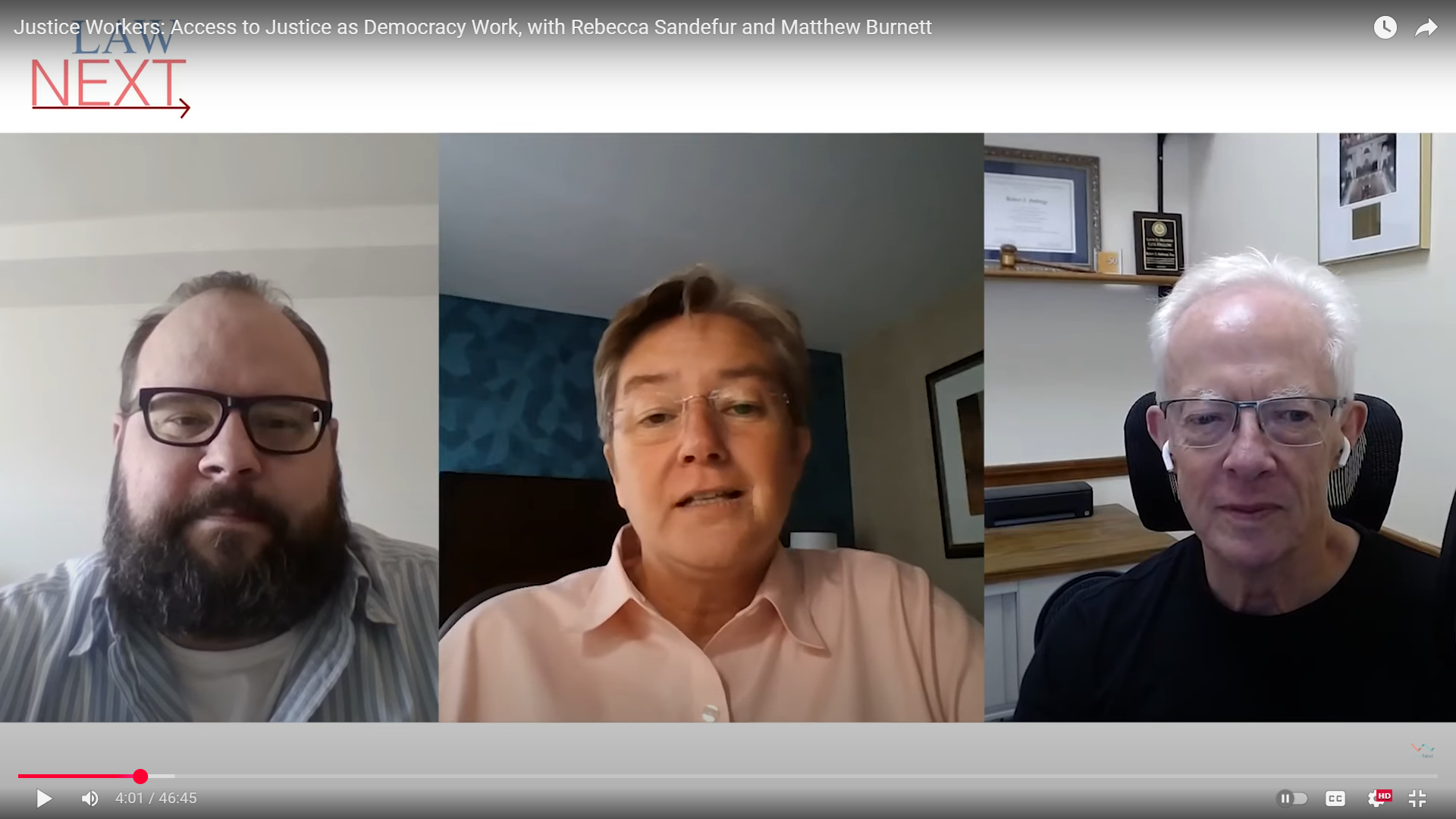
On LawNext: Justice Workers — Reimagining Access to Justice as Democracy Work, with Rebecca Sandefur and Matthew Burnett — from lawnext.com by Bob Ambrogi

With as many as 120 million legal problems going unresolved in America each year, traditional lawyer-centered approaches to access to justice have consistently failed to meet the scale of need. But what if the solution is not just about providing more legal services — what if it lies in fundamentally rethinking who can provide legal help?

In today’s episode, host Bob Ambrogi is joined by two of the nation’s leading researchers on access to justice: Rebecca Sandefur, professor and director of the Sanford School of Social and Family Dynamics at Arizona State University and a faculty fellow at the American Bar Foundation, and Matthew Burnett, director of research and programs for the Access to Justice Research Initiative at the American Bar Foundation and an adjunct professor of law at Georgetown University Law Center.


The waiting game — from college-inside.beehiiv.com by Charlotte West
College Inside breaks down the numbers from a first-of-its kind report on higher education in Illinois prisons.

For every person enrolled in higher education at Illinois prisons, someone else is waiting for their turn, according to new state data that reveals a system where access to college depends largely on where someone is incarcerated.

Right now, roughly 2,000 people in Illinois prisons are participating in higher education programs, according to a report released at the beginning of September. That’s about 1 out of every 15 people incarcerated in the state. At the same time, though, another 2,000 are stuck on waiting lists to get into classes because there’s not enough programming available.

Another 700 people on supervised release — Illinois’ version of parole — are also enrolled in higher education, per the report. Those numbers include enrollment in both college classes, and career and technical education.


Diamonds in the Rough — from the-job.beehiiv.com by Paul Fain
One of the country’s largest community college districts expands support for students with criminal records—and the employers who hire them.

Clearing Records, Building Careers

The Big Idea: Toyotetsu is now one of several employers in talks with Alamo Colleges as they expand their support for students with criminal backgrounds. The effort is part of a larger push to broaden the colleges’ role in lifting up their cities and regions. Alamo Colleges is one of 15 institutions participating in Achieving the Dream’s Community Vibrancy Cohort, which encourages community colleges to reimagine their role in the health and economic success of their communities.

Before joining the Achieving the Dream cohort, San Antonio College was already establishing an associate degree program at Dominguez State Jail. Julia Stotts, director of strategic planning and partnerships for the Alamo Colleges Foundation, says the initiative spurred leaders to think about how to also help those kinds of students after release.

“The earlier we can catch these students who are having these challenges, the better off they’re going to be,” Stotts says.


What next for EDI? Protecting equality of opportunity in HE — from timeshighereducation.com by Laura Duckett
As equity, diversity and inclusion practices face mounting political and cultural challenges, this guide includes strategies from academics around the world on preserving fair access and opportunity for all

As many in this guide explain, hostility to efforts to create fairer, inclusive and diverse institutions of higher education runs a lot deeper than the latest US presidential agenda and it cannot be ignored and rejected as a momentary political spike. Yet the continued need for EDI (or DEI as it is called in America) work to address historic and systemic injustice is clear from the data. In the US, Black, Hispanic, Latino, Native American and Pacific Islander people are under-represented in university student and staff populations. Students from these groups also have worse academic outcomes.

In the UK, only 1 per cent of professors are Black, women remain under-represented on the higher rungs of the academic ladder and the attainment gap between students from minoritised backgrounds and their white counterparts remains stubbornly evident across the higher education sector.

While not all EDI work has proved successful, significant progress has been made on widening participation in higher education and building more inclusive universities in which students and academics can thrive.

This guide shares lessons from academics on navigating increasingly choppy waters relating to EDI, addressing misconceptions about the work and its core ambitions, strategies for allyship, anti-racism and inclusion and how to champion EDI through your teaching and institutional culture.

 
© 2025 | Daniel Christian