From DSC:
I posted an excerpt of this in another posting, but I wanted to highlight these two powerful, extremely well-done video series for those who might be interested in them.


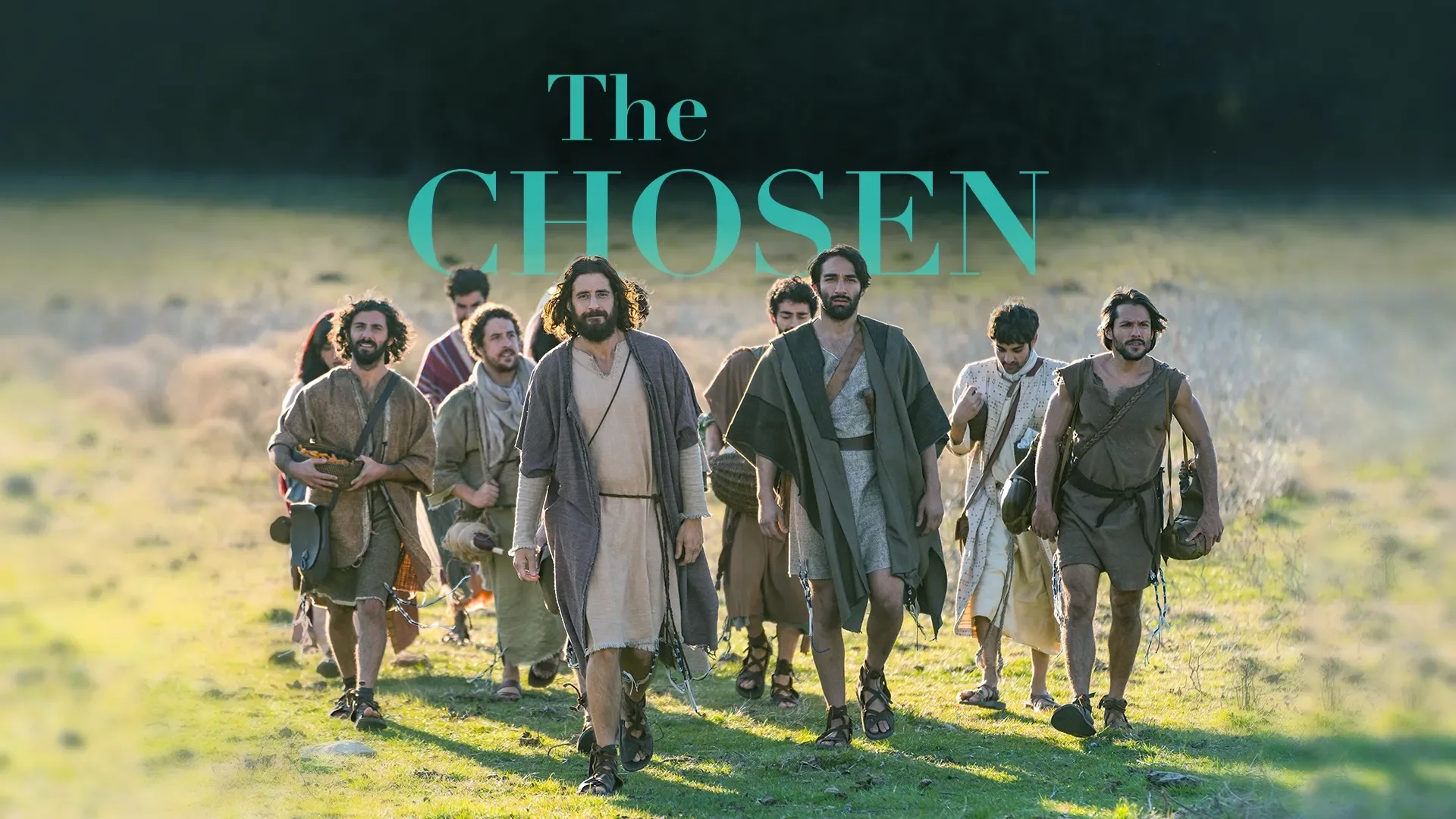
The House of David is very well done! I enjoyed watching Season 1. Like The Chosen, it brings the Bible to life in excellent, impactful ways! Both series convey the context and cultural tensions at the time. Both series are an answer to prayer for me and many others — as they are professionally-done. Both series match anything that comes out of Hollywood in terms of the acting, script writing, music, the sets, etc.  Again, both of these series are very well done.
.

The House of David

.

The Chosen


A sampling of others who cover The Chosen includes:


2. Concern and excitement about AI — from pewresearch.org by Jacob Poushter,Moira Faganand Manolo Corichi

Key findings

  • A median of 34% of adults across 25 countries are more concerned than excited about the increased use of artificial intelligence in daily life. A median of 42% are equally concerned and excited, and 16% are more excited than concerned.
  • Older adults, women, people with less education and those who use the internet less often are particularly likely to be more concerned than excited.

Also relevant here:


AI Video Wars include Veo 3.1, Sora 2, Ray3, Kling 2.5 + Wan 2.5 — from heatherbcooper.substack.com by Heather Cooper
House of David Season 2 is here!

In today’s edition:

  • Veo 3.1 brings richer audio and object-level editing to Google Flow
  • Sora 2 is here with Cameo self-insertion and collaborative Remix features
  • Ray3 brings world-first reasoning and HDR to video generation
  • Kling 2.5 Turbo delivers faster, cheaper, more consistent results
  • WAN 2.5 revolutionizes talking head creation with perfect audio sync
  • House of David Season 2 Trailer
  • HeyGen Agent, Hailuo Agent, Topaz Astra, and Lovable Cloud updates
  • Image & Video Prompts

From DSC:
By the way, the House of David (which Heather referred to) is very well done! I enjoyed watching Season 1. Like The Chosen, it brings the Bible to life in excellent, impactful ways! Both series convey the context and cultural tensions at the time. Both series are an answer to prayer for me and many others — as they are professionally-done. Both series match anything that comes out of Hollywood in terms of the acting, script writing, music, the sets, etc.  Both are very well done.
.


An item re: Sora:


Other items re: Open AI’s new Atlas browser:

Introducing ChatGPT Atlas — from openai.com
The browser with ChatGPT built in.

[On 10/21/25] we’re introducing ChatGPT Atlas, a new web browser built with ChatGPT at its core.

AI gives us a rare moment to rethink what it means to use the web. Last year, we added search in ChatGPT so you could instantly find timely information from across the internet—and it quickly became one of our most-used features. But your browser is where all of your work, tools, and context come together. A browser built with ChatGPT takes us closer to a true super-assistant that understands your world and helps you achieve your goals.

With Atlas, ChatGPT can come with you anywhere across the web—helping you in the window right where you are, understanding what you’re trying to do, and completing tasks for you, all without copying and pasting or leaving the page. Your ChatGPT memory is built in, so conversations can draw on past chats and details to help you get new things done.

ChatGPT Atlas: the AI browser test — from getsuperintel.com by Kim “Chubby” Isenberg
Chat GPT Atlas aims to transform web browsing into a conversational, AI-native experience, but early reviews are mixed

OpenAI’s new ChatGPT Atlas promises to merge web browsing, search, and automation into a single interface — an “AI-native browser” meant to make the web conversational. After testing it myself, though, I’m still trying to see the real breakthrough. It feels familiar: summaries, follow-ups, and even the Agent’s task handling all mirror what I already do inside ChatGPT.

OpenAI’s new Atlas browser remembers everything — from theneurondaily.com by Grant Harvey
PLUS: Our AIs are getting brain rot?!

Here’s how it works: Atlas can see what you’re looking at on any webpage and instantly help without you needing to copy/paste or switch tabs. Researching hotels? Ask ChatGPT to compare prices right there. Reading a dense article? Get a summary on the spot. The AI lives in the browser itself.

OpenAI’s new product — from bensbites.com

The latest entry in AI browsers is Atlas – A new browser from OpenAI. Atlas would feel similar to Dia or Comet if you’ve used them. It has an “Ask ChatGPT” sidebar that has the context of your page, and choose “Agent” to work on that tab. Right now, Agent is limited to a single tab, and it is way too slow to delegate anything for real to it. Click accuracy for Agent is alright on normal web pages, but it will definitely trip up if you ask it to use something like Google Sheets.

One ambient feature that I think many people will like is “select to rewrite” – You can select any text in Atlas, hover/click on the blue dot in the top right corner to rewrite it using AI.


Your AI Resume Hacks Probably Won’t Fool Hiring Algorithms — from builtin.com by Jeff Rumage
Recruiters say those viral hidden prompt for resumes don’t work — and might cost you interviews.

Summary: Job seekers are using “prompt hacking” — embedding hidden AI commands in white font on resumes — to try to trick applicant tracking systems. While some report success, recruiters warn the tactic could backfire and eliminate the candidate from consideration.


The Job Market Might Be a Mess, But Don’t Blame AI Just Yet — from builtin.com by Matthew Urwin
A new study by Yale University and the Brookings Institution says the panic around artificial intelligence stealing jobs is overblown. But that might not be the case for long.

Summary: A Yale and Brookings study finds generative AI has had little impact on U.S. jobs so far, with tariffs, immigration policies and the number of college grads potentially playing a larger role. Still, AI could disrupt the workforce in the not-so-distant future.


From DSC:
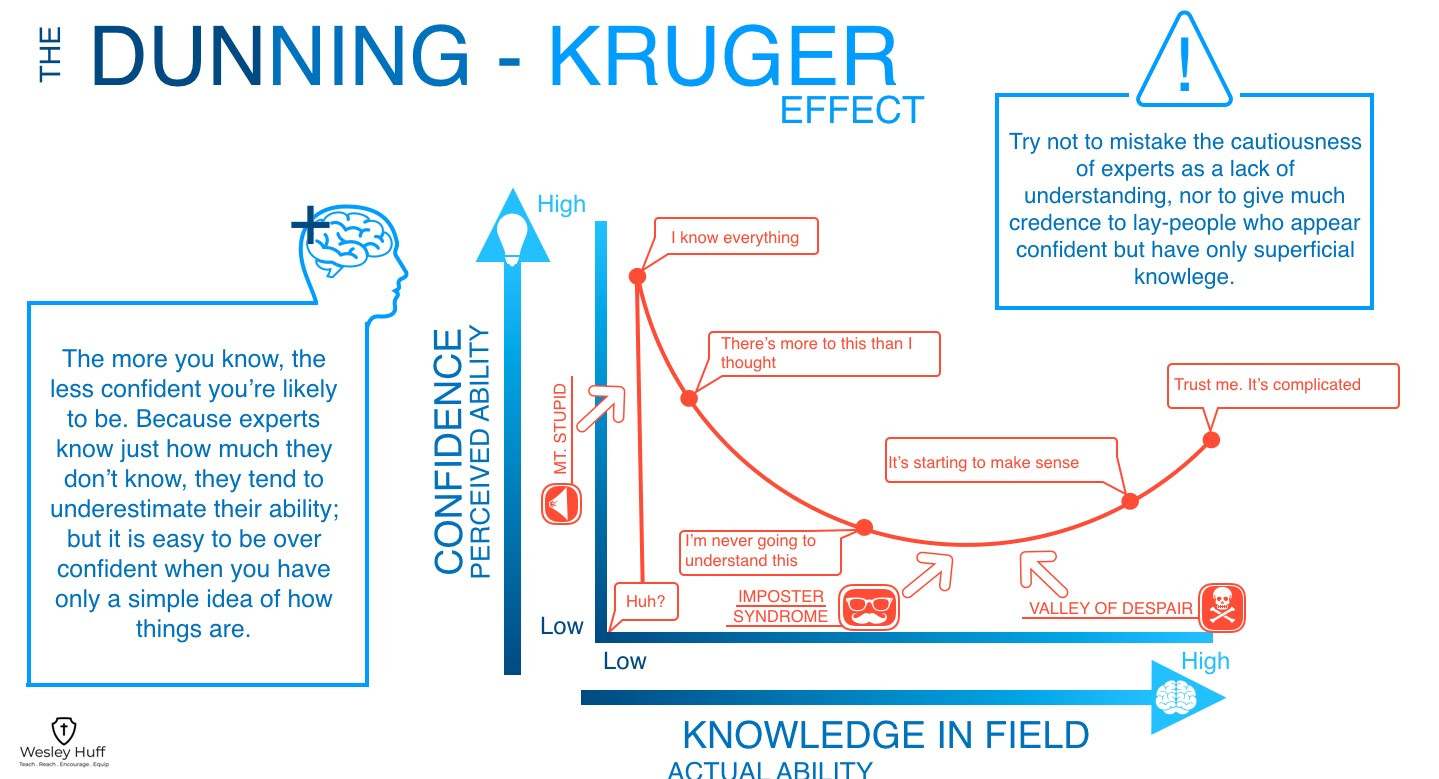
I love the graphic below of the Dunning-Kruger Effect:


— graphic via a teacher at one of our daughters’ schools
.


The Dunning-Kruger effect is a cognitive bias where people with low ability in a task tend to overestimate their own competence, while high-ability individuals often underestimate theirs. This happens because those with low competence lack the metacognitive skills to recognize their own shortcomings, leading them to believe they are performing better than they are. Examples include a new driver who thinks they are better than average, or a novice who is confident in their ability to diagnose a medical issue based on a quick online search.

Examples in different fields

  • Driving: Many drivers believe they are above average, a statistical impossibility.
  • Healthcare: Patients may overestimate their ability to self-diagnose serious conditions after a quick search and disregard expert medical advice.
  • Workplace: Employees may overestimate their performance compared to their colleagues.
  • Social Media: The Dunning-Kruger effect can be seen online, where individuals with a superficial understanding of a topic may argue confidently with experts.
 

International AI Safety Report — from internationalaisafetyreport.org

About the International AI Safety Report
The International AI Safety Report is the world’s first comprehensive review of the latest science on the capabilities and risks of general-purpose AI systems. Written by over 100 independent experts and led by Turing Award winner Yoshua Bengio, it represents the largest international collaboration on AI safety research to date. The Report gives decision-makers a shared global picture of AI’s risks and impacts, serving as the authoritative reference for governments and organisations developing AI policies worldwide. It is already shaping debates and informing evidence-based decisions across research and policy communities.


From DSC:
One of my sisters is a Professor of Communication at a major university and she recently sent me the following article. I thought I’d pass it along to those of you who are also interested in this topic. My sister has written several books on media literacy and has created museum-based exhibits to address this topic.


How to find trustworthy news reporting in these times? — from ericdeggans.substack.com by Switching Codes w/Eric Deggans
I don’t have the perfect answer. But here’s a few ideas.

Here’s a few suggestions for how to navigate our new, challenging news media reality.

  • Find individual journalists to trust…
  • Don’t let the perfect be the enemy of the good…
  • Be skeptical of those telling you what you want to hear…
  • Learn what outlets are good at covering…
  • …and more

The above article links to:

My take on why Americans don’t trust journalists anymore — from ericdeggans.substack.com by Switching Codes w/Eric Deggans
It’s more complicated than journalists failing in their mission. And reversing the numbers are key to preserving democracy.
.


On a somewhat-related note, see:

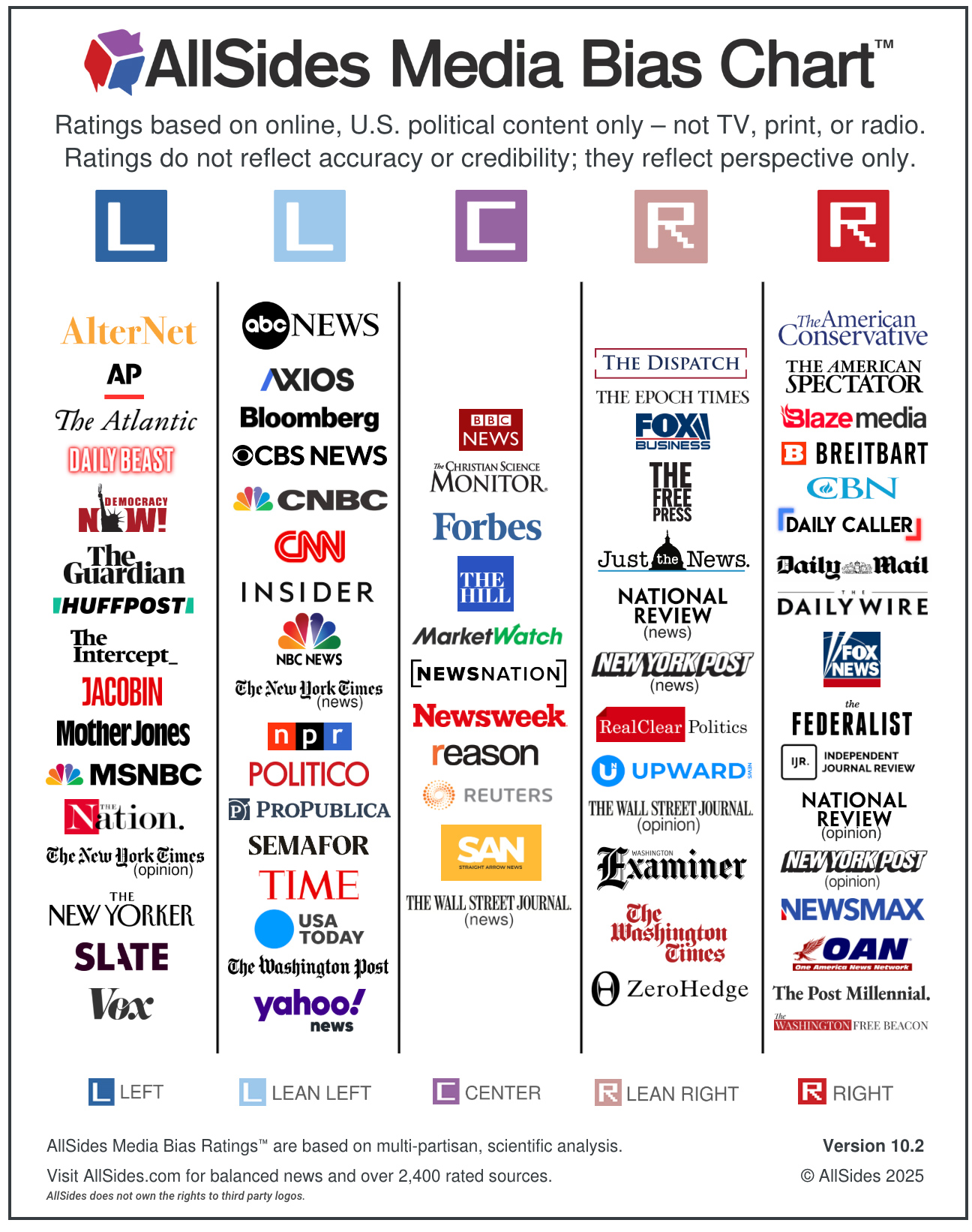
AllSides Media Bias Chart


Eye implant and high-tech glasses restore vision lost to age — from newscientist.com by Chris Simms
Age-related macular degeneration is a common cause of vision loss, with existing treatments only able to slow its progression. But now an implant in the back of the eye and a pair of high-tech glasses have enabled people with the condition to read again

People with severe vision loss have been able to read again, thanks to a tiny wireless chip implanted in one of their eyes and a pair of high-tech glasses.

“This is an exciting and significant study,” says Francesca Cordeiro at Imperial College London. “It gives hope for providing vision in patients for whom this was more science fiction than reality.”


The above posting on LinkedIn then links to this document


Designing Microsoft 365 Copilot to empower educators, students, and staff — from microsoft.com by Deirdre Quarnstrom

While over 80% of respondents in the 2025 AI in Education Report have already used AI for school, we believe there are significant opportunities to design AI that can better serve each of their needs and broaden access to the latest innovation.1

That’s why today [10/15/25], we’re announcing AI-powered experiences built for teaching and learning at no additional cost, new integrations in Microsoft 365 apps and Learning Management Systems, and an academic offering for Microsoft 365 Copilot.

Introducing AI-powered teaching and learning
Empowering educators with Teach

We’re introducing Teach to help streamline class prep and adapt AI to support educators’ teaching expertise with intuitive and customizable features. In one place, educators can easily access AI-powered teaching tools to create lesson plans, draft materials like quizzes and rubrics, and quickly make modifications to language, reading level, length, difficulty, alignment to relevant standards, and more.


When Heads Butt — from kathleendelaski.substack.com by Kathlee deLaski
An actual debate at LinkedIn Headquarters on the value of the college degree

Coincidentally published the same day, our books do take opposing views in parts. Scott is very strong on the value of the traditional degree, but wants to help students see beyond “the major,” telling them not to rely on what essentially amounts to a minority of the courses you’ll take in college to find your path to passion and employment. He urges them to find a “field of study,” to build in a broader range of self-directed experiences and classes to find your purpose and profession. (I love this and recommend his book.)

WhiIe I don’t recommend against college, “Who Needs College Anymore?” points to the growing number of employers and colleges that are offering skills-based career paths, that can be achieved with shorter term programs…that can be a stepladder to a degree, but don’t leave you credential-less if life gets in the way. I call on colleges to embrace all the market share they are leaving on the table, the 60% plus of Americans who are not getting a four-year degree, and to consider providing more modular professional pathway opportunities in addition to degrees.


Also re: higher education, see:

After years of quietly falling, college tuition is on the rise again — from hechingerreport.org
As colleges also pare back services, many students are paying more and getting less

Students nationwide are facing increases in tuition this fall of as high as 10 percent, along with new fees and rising costs for dorms and dining. And as in Pennsylvania, it’s an abrupt change from a period during which something happened that most Americans probably didn’t notice: Tuition had actually been falling, when adjusted for inflation, after decades of outpacing the cost of almost everything else.

That’s among the conclusions of The Hechinger Report’s update of its Tuition Tracker tool, which shows what students pay to go to individual colleges and universities based on their families’ incomes.

Considering the growing skepticism that college is “the magic ticket to the American dream,” said Gillen, raising tuition, for many higher education institutions, “definitely has the potential to be penny-wise and pound-foolish.” 

But universities and colleges are confronting unprecedented problems on the funding side. 


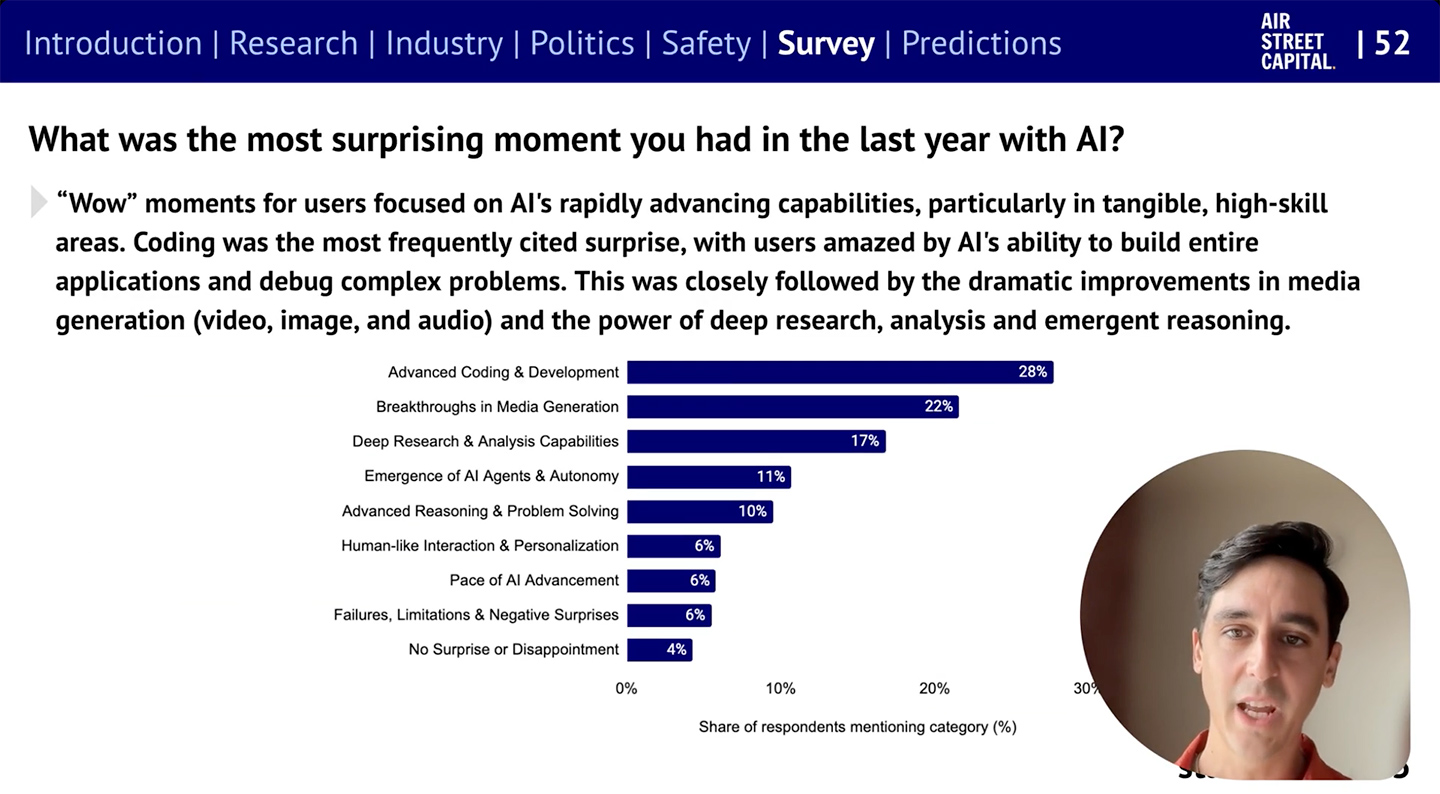
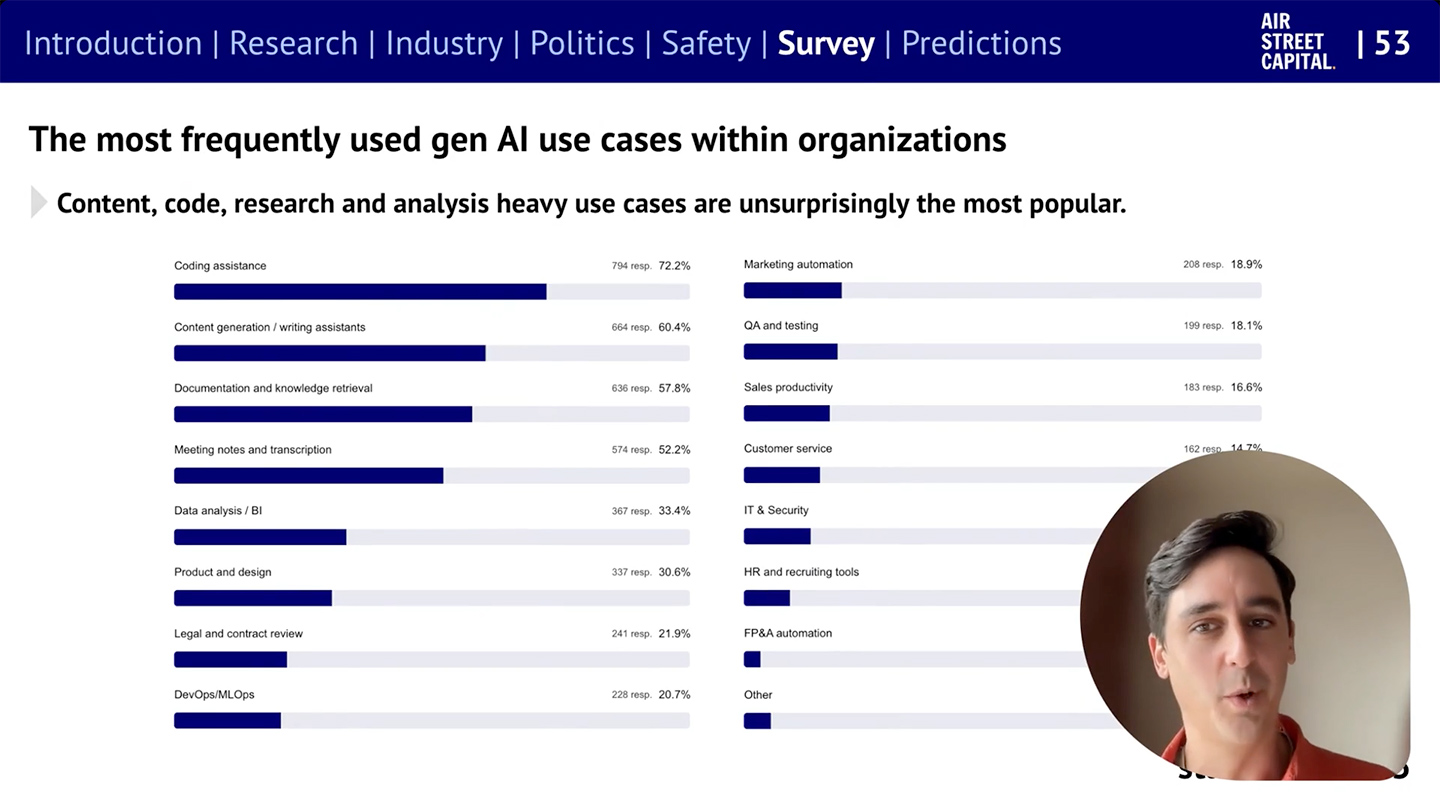
The State of AI Report 2025 — from nathanbenaich.substack.com by Nathan Benaich

In short, it’s been a monumental 12 months for AI. Our eighth annual report is the most comprehensive it’s ever been, covering what you need to know about research, industry, politics, and safety – along with our first State of AI Usage Survey of 1,200 practitioners.

stateof.ai
.


Nutrition education programs shutter amid funding cuts — from open-campus-dispatch.beehiiv.com by Colleen Murphy
SNAP-Ed programs teach low-income families about healthy eating habits and food preparation.

University-run nutrition education programs are closing around the country following Trump administration funding cuts. That means low-income families are losing access to information about healthy eating and cooking.

“When you teach people how to eat healthier, the students do better in school, the parents do better at work, that feeds the economy,” Mark Lynch, director of advocacy, told the TV station. “Everybody lives longer and stays out of the doctor’s offices or the ERs.”

From DSC:
“Everybody lives longer and stays out of the doctor’s offices or the ERs.” DC: Yup. We can pay up front and be healthier as a society, or we can try to get people their necessary healthcare later on (probably costing us much more on the aggregate).

Making America Great Again…NOT!


The World’s Classrooms Are Short 44 Million Teachers — from edsurge.com by Nadia Tamez-Robledo
It’s not just pay that’s a problem in retaining and recruiting educators, experts say.

K-12 education worldwide is facing a two-pronged dilemma: A global shortage of 44 million teachers by 2030 and not enough funding to train or retain them, according to a report released by UNESCO and the International Taskforce on Teachers for Education 2030 following the summit. Countries around the world risk not having enough teachers — or not enough high-caliber teachers — for the rising number of students expected to enter primary and secondary school within the next five years.

The report’s findings reflect what some school districts and states have been grappling with in the United States, where research has consistently shown that teachers face lower rates of well-being and satisfaction with pay than similarly employed workers in other fields.


From DSC:
As usual, here are some solid items and reflections from Stephen Downes:

The AI Tsunami Is Here: Reinventing Education for the Age of AI — from downes.ca by Stephen Downes

The framework seems reasonable, overall, but I would have to ask why the model, which includes things like “dynamic, adaptive content” and “multiple perspectives and sources” and “cultivation of self-directed learning” needs to happen in a university as such. Why not develop something like this as a society-wide initiative, removing the barriers for entry, and making it an ongoing part of people’s lives?

From DSC:
Why not develop something like this as a society-wide initiative, removing the barriers for entry, and making it an ongoing part of people’s lives?

Exactly.


Artificial Intelligence in Educational Research and Scholarship: Seven Framings — from downes.ca by Stephen Downes

There are those who draw a sharp distinction between formal academic papers and blog posts, and then there’s me, who reads something like this (16-page PDF), and sees nothing more than a set of short blog posts, where “writing was conducted in a sprint over the summer of 2025 using a shared Google doc.” I’m not saying this is bad (though the resulting article is a bit loose and unfocused) but I remind readers that academic research in this domain should properly consider, and credit, not only formal journal articles, but also the original blogs where so many of the ideas are originally posted.

From DSC:
Preach it Stephen! Blogging counts — big time! In fact, I wish that many more faculty members, staff, provosts, and presidents would blog to publically share their thinking, knowledge, and reflections.


Supreme Court Allows Trump to Slash Foreign Aid — from nytimes.com by Ann E. Marimow
The court’s conservative majority allowed the president to cut the funding in part because it said his flexibility to engage in foreign affairs outweighed “the potential harm” faced by aid recipients.

The Supreme Court on Friday allowed the Trump administration to withhold $4 billion in foreign aid that had been appropriated by Congress, in a preliminary test of President Trump’s efforts to wrest the power of the purse from lawmakers.

“The stakes are high: At issue is the allocation of power between the executive and Congress” over how government funds are spent, wrote Justice Elena Kagan, who was joined by Justices Sonia Sotomayor and Ketanji Brown Jackson.

“This result further erodes separation of powers principles that are fundamental to our constitutional order,” Nicolas Sansone, a lawyer with the Public Citizen Litigation Group who represents the coalition, said in a statement. “It will also have a grave humanitarian impact on vulnerable communities throughout the world.”


From DSC:
Do your friggin’ job Supreme Court justices! Your job is to uphold the Constitution and the laws of the United States of America! As you fully well know, it is the Legislative Branch (Congress) that allocates funding — not the Executive Branch.

And there will be horrible humanitarian impacts that are going to be felt in many places because this funding is being withheld.

Making America Great Again…NOT!!!


What today’s students really want — and what that means for higher ed — from highereddive.com by Ellucian

Cost is too high. Pathways are unclear. Options feel limited. For many prospective, current, or former students, these barriers define their relationship with higher education. As colleges and universities face the long-anticipated enrollment cliff, the question isn’t just how to recruit—it’s how to reimagine value, access, and engagement across the entire student journey.

Ellucian’s 2025 Student Voice Report offers one of the most comprehensive views into that journey to date. With responses from over 1,500 learners across the U.S.—including high school students, current undergrads, college grads, stop-outs, and opt-outs—the findings surface one clear mandate for institutions: meet students where they are, or risk losing them entirely.

What Are Learners Asking For?
Across demographics, four priorities rose to the top:
Affordability. Flexibility. Relevance. Clarity.

Students aren’t rejecting education—they’re rejecting systems that don’t clearly show how their investment leads to real outcomes. 


© 2025 | Daniel Christian