Hacking the classroom: Purdue U’s approach to augmented learning — from campustechnology.com by Mary Grush
A Q&A with Kyle Bowen

Excerpt:

A term more familiar in the competitive world of the television industry, “second screen” offers a simple way for viewers to access additional information relevant to a TV program. At Purdue University, researchers aim to put the concept to work in the classroom — making an enriched and interactive learning experience with classroom apps easier. Here, Kyle Bowen, Purdue’s director of informatics explores his latest research on “hacking the classroom”: how to leverage the second screen concept to help instructors and students negotiate the realm of multiple and varied classroom apps.


From DSC:
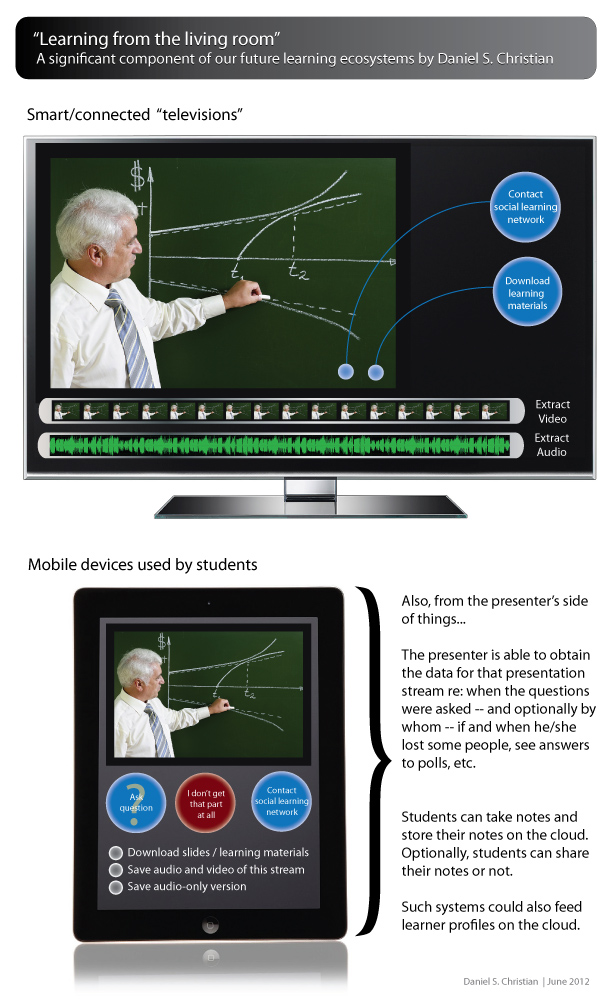
Reminds me of the underlying vision that I was trying to get at here:


Learning from the living room -- a component of our future learning ecosystems -- by Daniel S. Christian, June 2012


Students seeing need for social media classes — from usatoday.com by Lexy Gross
At least two colleges have launched M.B.A.s in social media, and students across the country are discovering its utility.

Also related/see:


FacultyRow-NYTEvent-9-17-13


Check out the agenda:


7:00 a.m.

REGISTRATION


7:45 – 8:45 a.m. The Hall

BREAKFAST PANEL: BRIDGING THE KNOWLEDGE GAP
Technology is giving educators and students more tools to promote the exchange of ideas and expertise.  That exchange is key to improved knowledge and empowerment, but without a level playing field, equal access and the right tools, we will never take full advantage of the opportunity to connect.  Panelists will discuss the knowledge gap and how new technologies and motivated citizens are bridging that gap to support formal education as well as lifelong learning.
Sponsored by Bank of America

Aditya Bhasin, consumer marketing, analytics and digital banking executive, Bank of America
Gov. Jack Markell, Governor of Delaware
Ted Mitchell, President and C.E.O., NewSchools Venture Fund
Jennifer Tescher, President and C.E.O., The Center for Financial Services Innovation
Joanne Weiss, Former Chief of Staff to the Secretary, U.S. Department of Education

Moderated by John Merrow, Education Correspondent, PBS NewsHour


9 – 9:10 a.m.

WELCOME
Arthur Sulzberger Jr., publisher, The New York Times


9:10 – 9:45 a.m.

KEYNOTE ADDRESS
Sal Khan, founder of the Khan Academy

including 9:30-9:45 audience questions


9:45 – 10:30 a.m.

DEBATE: HAS THE UNIVERSITY AS AN INSTITUTION HAD ITS DAY?
Higher education has always been an array of autonomous institutions, each with their own courses, their own faculty, and their own requirements for their own degrees. But online education is starting to break down those lines in ways that are likely to lead to a lot more shared courses, consortia and credit transfers. In addition, there are a growing number of companies (not schools) providing higher education courses outside of the traditional higher education institutions. As we move towards the possibility of a multi-institution, multicredit qualification, is the traditional higher education institution in danger of losing applicants, income and identity?

Anant Agarwal, president, edX
Sal Khan, founder, The Khan Academy
Biddy Martin, president, Amherst College
Nancy Zimpher, Chancellor, SUNY

Moderated by David Leonhardt, Washington bureau chief, The New York Times

including 10:15 – 10:30 audience questions


10:30 – 11 a.m.

COFFEE BREAK


11 – 11:45 a.m.

THE DEALBOOK PANEL: WHAT’S THE NEW ERA BUSINESS MODEL FOR HIGHER EDUCATION?
The traditional idea that education is something the government provides, free, for the public good, is coming under assault from an increasing assortment of new ventures offering for-profit schools, for-profit online courses, tests, curricula, interactive whiteboard, learning management systems, paid-for verified certificates of achievement, e-books, e-tutoring, e-study groups and more. Which areas have the most potential growth — and where is the smart investment going?

Donn Davis, co-founder, Revolution
Tony Florence, general partner, NEA
Deborah Quazzo, founder and managing partner, GSV Advisors

Moderated by Andrew Ross Sorkin, columnist/editor DealBook, The New York Times

Including 11:30 – 11:45 audience questions


11:45 a.m. – 12:10 p.m.

CONVERSATION: THE DISRUPTION OF HIGHER EDUCATION

Michael Horn, co-founder, The Clayton Christenen Institute for Disruptive Innovation
In conversation with David Leonhardt, Washington bureau chief, The New York Times


12:10 – 12:45 p.m.

AUDIENCE DISCUSSION: INCREASING STUDENT ENGAGEMENT
Student attrition is as high as 90 percent for some of the biggest online courses, and remains a problem even
in smaller-scale courses when compared with traditional face-to-face classes. The problem is exacerbated for
community college students who enroll in online courses, or for low-performing students. How can we increase student engagement in online classes, particularly among students who lack competence or confidence?

Yvonne Chan, principal, Vaughn Next Century Learning Center
John Palfrey Jr, head of school, Phillips Academy, Andover
Diane Tavenner, founder and C.E.O., Summit Public Schools

Moderated by Bill Keller, Op-Ed columnist, The New York Times


12:45 – 1:15 p.m.

COLUMNIST CONVERSATION

Senator Bob Kerrey, executive chairman, Minerva Institute

in conversation with Bill Keller, Op-Ed columnist, The New York Times


1:15 – 3:00 p.m.

LUNCH PANEL A: INCREASING HIGHER EDUCATION AFFORDABILTY AND COMPLETION THROUGH ONLINE INNOVATIONS
A thoughtful conversation about innovative online models that are lowering the cost of degrees and increasing degree completion. How do these models work – and where are they going?
Sponsored by Capella

(Held in The Hall)

Mark Becker, President, Georgia State University
Scott Kinney, President, Capella University
Jamie Merisotis, President and C.E.O., Lumina Foundation
Burck Smith, Founder and C.E.O., StraighterLine

Moderated by Melody Barnes, C.E.O., Melody Barnes Solutions (former Director of the White House Domestic Policy Council)


1:15 – 3:00 p.m.

LUNCH PANEL B: A MATHEMATICIAN, SCIENTIST, DOCTOR, AND SOCIOLOGIST WALK INTO A ZOMBIE APOCALYPSE…WHO SURVIVES?
What skills give you the best shot at surviving a zombie apocalypse? Can you do anything to increase your odds of survival? Get an extended preview of UC Irvine’s MOOC “Society, Science, Survival: Lessons from AMC’s The Walking Dead” as we explore what math, science, public health, and sociology have to do with a zombie apocalypse and, in particular, survival. At the end of the panel, the audience will vote on who stands the best chance of survival: mathematician, scientist, doctor, or sociologist.
Sponsored by Instructure

(Held on 15th Floor)

Joanne Christopherson, Associate Director of the Demographic and Social Analysis M.A. Program, University of California, Irvine
Michael Dennin, Professor of physics and astronomy, University of California, Irvine
Sarah Eichhorn, Assistant Vice Chair for undergraduate studies in the mathematics department, University of California, Irvine
Melissa Loble, Associate Dean of distance learning, University of California, Irvine

Moderated by Josh Coates, CEO, Instructure


3 – 3:30 p.m.

COLUMNIST CONVERSATION
In an increasingly connected world, how do we ensure our students are being prepared to compete in a knowledge-based, global economy? What role does technology play in education, and what does the future of learning look like?

Arne Duncan, US Secretary of Education

interviewed by David Leonhardt, Washington bureau chief, The New York Times


3:30 – 4:15 p.m.

IS ONLINE THE GREAT EQUALIZER?
There is no doubt that we are in the middle of an online education revolution, which offers huge potential to broaden access to education and therefore, in theory, level the playing field for students from lower-income, lower-privileged backgrounds. But evidence to date shows that the increasing number of poorly designed courses could actually have the reverse effect and put vulnerable students at an even bigger disadvantage.

Karen Cator, C.E.O., Digital Promise
Dean Florez, president, 20 Million Minds Foundation
Candace Thille, director of the Open Learning Initiative (OLI) and assistant professor of education, Stanford University
David Wiley, founder, Lumen Learning

Moderated by Tina Rosenberg, Op-Ed Columnist, The New York Times

Including 4:00 – 4:15 p.m. audience questions


4:15 – 4:45 p.m.

COFFEE BREAK  


4:45 – 5 p.m.

COLUMNIST CONVERSATION

Daphne Koller, co-founder, Coursera

in conversation with Ethan Bronner, Deputy National Editor, The New York Times


5 – 5:45 p.m

GAMECHANGERS: HOW WILL ONLINE EDUCATION REVOLUTIONIZE WHAT WE KNOW AND UNDERSTAND ABOUT LEARNING?
Traditionally, pedagogical research has been done in tiny groups; but new-generation classes of 60,000 students make it possible to do large scale testing and provide potentially game-changing research on how students learn best. Using the Big Data from online courses, we have access to new information about what pedagogical approaches work best. MOOCs, and many more traditional online classes, can track every keystroke, every homework assignment and every test answer a student provides. This can produce a huge amount of data on how long students pay attention to a lecture, where they get stuck in a problem set, what they do to get unstuck, what format and pacing of lectures, demonstrations, labs and quizzes lead to the best outcomes, and so on. How can we use Big Data for the good of the education profession, and not for “Big Brother”?

Daphne Koller, co-founder, Coursera
Alec Ross, senior advisor on innovation and former senior advisor to Secretary Hillary Clinton at the U.S. State Department
Paula Singer, C.E.O. Global Products and Services, Laureate Education

Moderated by Ethan Bronner, Deputy National Editor, The New York Times

including 5:30 – 5:45 p.m. audience questions


5:45 – 6 p.m.

COLUMNIST CONVERSATION

Amol Bhave, student, MIT

in conversation with Tina Rosenberg, Op-Ed Columnist, The New York Times


6 p.m.

CLOSING REMARKS

Gerald Marzorati, editorial director and general manager, conferences, The New York Times


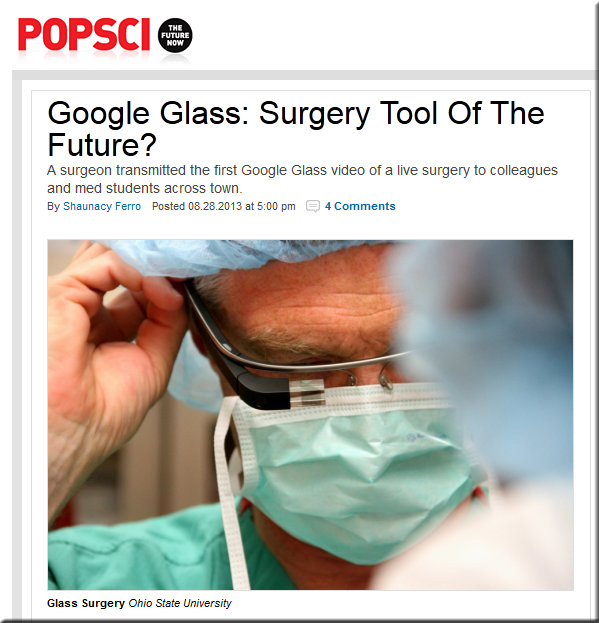
GoogleGlass-SurgeryToolOfFuture-9-2013

.

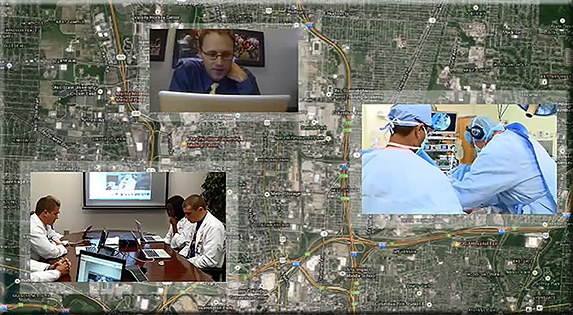
GoogleGlass-SurgeryToolOfFuture2-9-2013


Also see:

Wearable tech at the workplace — from connectedworldmag.com

Excerpt:

Wearable sensors are the latest tech-related fashion craze, but not just for consumers. Businesses could soon make use of sensors affixed to hats, watches, glasses, and more. Equipped to provide workers with much-need data about the surrounding environment, these devices may soon invade the job and redefine the workplace—much like tablets and smartphones did just a few years back.

Naturally, businesses have been discussing how something like Google Glass could be used at work. Even the BYOD (bring your own device) phenomenon has the potential to extend to wearable technology, with workers bringing their personal smart watches and glasses for use at work. However, the potential for wearable sensors could be much greater, with specific applications created for targeted industries.

From DSC:
Some serious potential for mobile/distance learning here.  What if, instead of a surgeon, that person was an archaeologist on a dig speaking to students in their living rooms, on mobile devices, and/or in classrooms somewhere else…? An electrician fixing a broken transformer on the electrical grid and talking through what she is fixing…? The possibilities are numerous.

See Andrew Vanden Heuvel’s work on this as well:


Moving back to the surgery…one last thought/idea here:

  • What if there were several people wearing Google Glasses and the learners/students could pick the camera angle that they wanted to see?


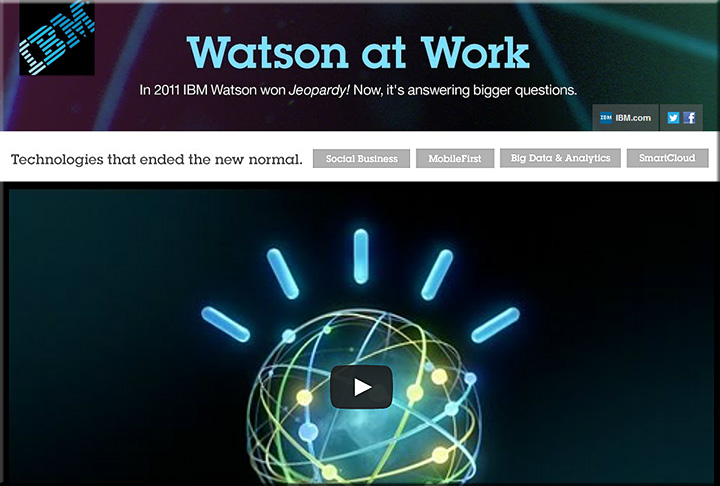
IBM-WatsonAtWork-Sept2013


From DSC:
IBM Watson continues to expand into different disciplines/areas, which currently include:

  • Healthcare
  • Finance
  • Customer Service

But Watson is also entering the marketing and education/research realms.

I see a Watson-type-of-tool as being a key ingredient for future MOOCs and the best chance for MOOCs to morph into something very powerful indeed — offloading the majority of the workload to computers/software/intelligent tutoring/learning agents, while at the same time allowing students to connect with each other and/or to Subject Matter Experts (SME’s) as appropriate.

The price of education could hopefully come way down — depending upon the costs involved with licensing Watson or a similar set of technologies — as IBM could spread out their costs to multiple institutions/organizations.  This vision represents another important step towards the “Walmart of Education” that continues to develop before our eyes.

Taking this even one step further, I see this system being available to us on our mobile devices as well as in our living rooms — as the telephone, the television, and the computer continue to converge.  Blended learning on steroids.

What would make this really powerful would be to provide:

  • The ability to create narratives/stories around content
  • To feed streams of content into Watson for students to tap into
  • Methods of mining data and using that to tweak algorithms, etc. to improve the tools/learning opportunities

Such an architecture could be applied towards lifelong learning opportunities — addressing what we now know as K-12, higher education, and corporate training/development.

.


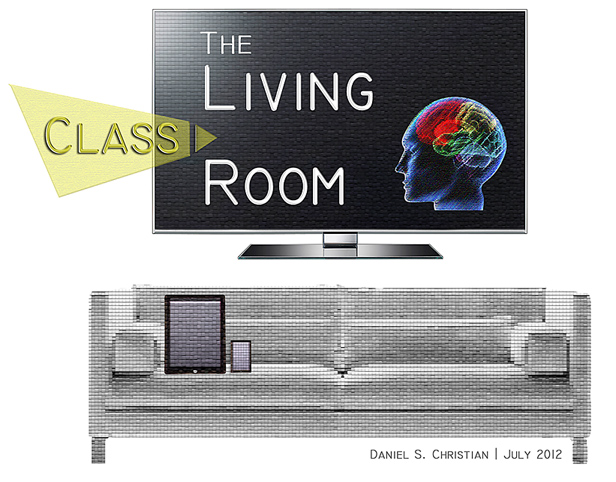
The Living [Class] Room -- by Daniel Christian -- July 2012 -- a second device used in conjunction with a Smart/Connected TV


IsSchoolEnoughPBSDotOrg-Sep32013


.

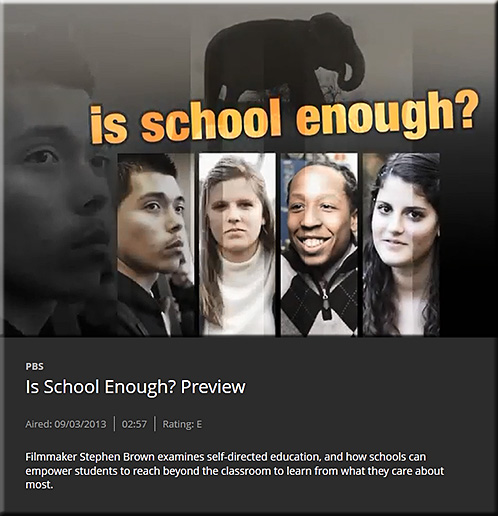
About the program (emphasis DSC):

Thanks to digital media, the Internet and new advances in understanding how students learn, educators are beginning to appreciate the importance of breaking out of the classroom and into the wider world. There’s a growing understanding that learning should not just be preparation for life, but is actually “life itself.”

Is School Enough? documents vivid examples of where new modes of learning and engagement are taking hold and flourishing. Featuring nationally recognized educators and researchers, Stephen Brown’s powerful stories show that when students have the opportunity to explore real interests and problems, they step up and perform at the highest level. This new approach reaches motivated students as well as kids that educators call “the bright and bored,” helping these learners tune in rather than drop out.

Is School Enough? introduces parents, educators, and everyone passionate about learning to:

• Students in Maine who work with veterinary experts and digital apps to prepare a new home for a retired circus elephant.
• Young people worldwide who use the online Harry Potter Alliance to launch meaningful social justice initiatives.
• A curious and creative teen who crafts her own educational experience based on her passion for natural healing and yoga.
• A young man in Oakland who produces state-of-the-art music videos to engage his community—and himself.

Through the voices of these inspired students and America’s foremost education thought leaders, Is School Enough? provides insight into an essential new understanding of what education can be in the 21st century. Is School Enough? is the second in a series of programs about kids, digital media and education. The first program, Digital Media: New Learners of the 21st Century explores students claiming digital media as a means of connecting, communicating, creating, and learning, while interpreting its importance and providing a window into 21st-century education.


E-books could be the future of social media — from fastcolabs.com by Michael Grothaus

Excerpt (emphasis DSC):

Both Apple and Amazon were designing e-book readers by copying the 2,500-year-old idea of books as self-contained collections of words, completely missing how readers share and discuss content online today. While most e-readers allow you to share passages or links to the book you are reading, and sites like Goodreads let you share what you’ve read, their implementations treat the book and the discussions around them as separate collections. Worse, these apps force users to venture into the distracting world of the open Internet when they want to share, making it hard to stay focused on reading.

This didn’t sit well with Berggren, so he came up with an ingenious solution: Make each and every book its own self-contained social network.


From DSC:
When people urge us to do things differently due to the technologies at our disposal, this is a great example of that.  It rethinks what can be done now vs. how it has been done in the past.  I like the increased opportunities this type of big-thinking, innovative solution offers for increased participation, collaboration, and discussion.

Questions that come to my mind:

  • How might this affect what’s possible with digital storytelling? With transmedia?
  • Could each MOOC/course/stream of content be its own social network?
  • “The app itself is free, so the company makes money by selling anonymized data it collects about its users’ consumption habits to publishers.”  Will we see more of this type of business model?


Also see:

.

readmill-Sept2013


Also see:


Addendum on 9/10/13:

Content as a Service (CaaS) — from knowledgestarblog.wordpress.com by David Grebow

Excerpt:

The etextbook in 2018 will be dramatically different than the etextbook of today. It will be coupled to an app that will provide you with Content as a Service (CaaS). CaaS will include many of the following features (and more that have yet to be imagined):

Multimedia
Simulations
Educational Games
Animations
Pre- and post-tests
Formative and Summative Quizzes
Adaptive testing
Networked Social Learning
Study groups
Analytic Datasets
Virtual and Flipped classes
Communities of Learning and Practice
Virtual classes.


IBM and USTA captivate tennis fans with immersive second screen experience — from MarketWatch.com
Analytics, cloud, mobile and social computing technologies deliver US Open to fans’ fingertips


Excerpt:

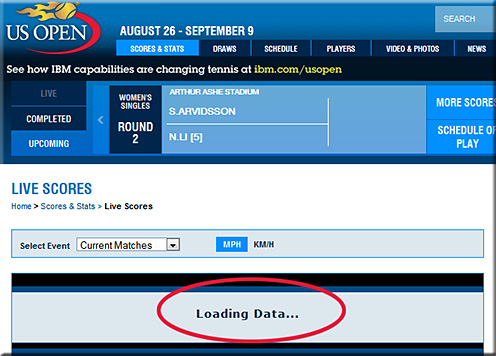
The innovative digital US Open environment provides fans, players, broadcasters and media with access to a range of Big Data insights streaming from the courts, including stats, facts, videos, live scoring, and historical and real-time analysis of tennis data served to tablets, smartphones, PCs and other devices.


Also see:

USOpen-USTA-IBM-Aug2013


.

USOpen2-USTA-IBM-Aug2013


From DSC:
Questions I wonder about:

  • How might this sort of thing help us in education? What if, instead of a tennis match, it was a debate on X vs. Y…?
    .
  • Could we use it in educational gaming apps?
    .
  • If so, what sorts of apps that lean on social learning could we create?
    .
  • How could professional development/conferences use this type of immersive second screen experience? What sorts of opportunities for participation would open up?
    .
  • Could we develop things like this that help us learn things IN REAL TIME from the streams of content flowing by? (Do learning agents employ this sort of thing?)


Somewhat-related items:

College students bring targeted media to doctors’ waiting rooms — from entrepreneur.com by Michelle Goodman

Excerpt:

Their idea was to sell doctors’ offices prepackaged video segments containing tips on diet, exercise and other lifestyle tweaks patients could make to improve their health. A TV screen in the reception area would broadcast this programming, modeled after segments on shows such as Today, while patients waited for appointments.

To test the idea, Agarwal, Shah and classmate Derek Moeller bought TVs and DVD players, culled content from the internet and distributed the equipment and “shows” to 50 doctors in five states.

MOOCing the Liberal Arts? Technology and Relationship in Liberal Arts Education
The Thirteenth Annual Conversation on the Liberal Arts
February 13 – 15, 2014
 

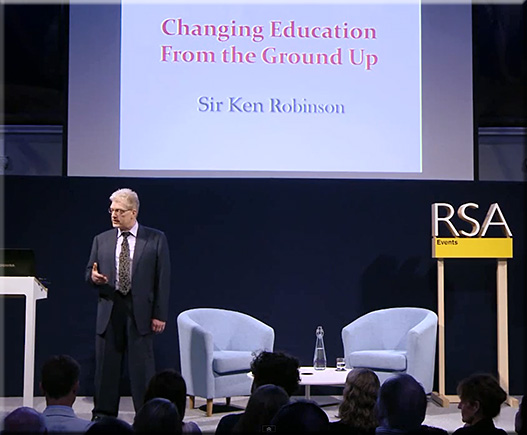
Changing education from the ground up — published on Jul 18, 2013; with thanks to Mr. Michael Haan, from Calvin College’s IT Department, for the resource
Sir Ken Robinson addresses the fundamental economic, cultural, social and personal purposes of education. He argues that education should be personalised to every student’s talent, passion, and learning styles, and that creativity should be embedded in the culture of every single school.


ChangingEdFromGroundUpSirKenRobinson-July2013


From DSC:
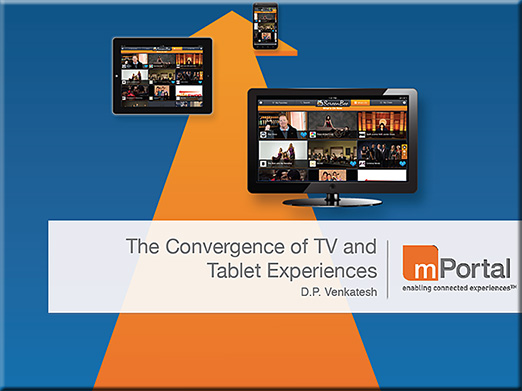
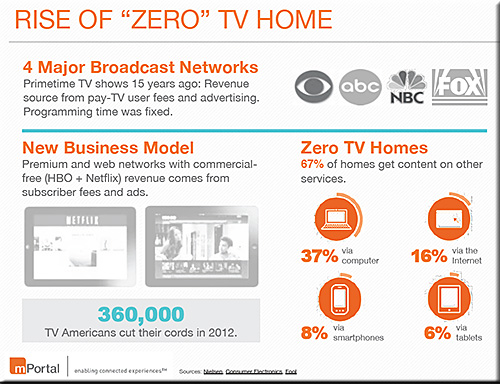
The massive convergence of the telephone, the television, and the computer continues.  How that media gets to us is also changing (i.e. the cord cutting continues). 

What types of innovative learning experiences can be crafted as “TV” becomes more interactive, participatory, and engaging? What happens if technologies like WebRTC make their way into our browsers and we can videoconference with each other without having to download anything?

What doors open for for us when Google, Apple, or an Amazon.com delivers your “shows” vs. NBC/ABC/CBS/etc.?

 The items below cause me to reflect on those questions…


.

Streaming devices lead the way to Smart TV — from nytimes.com by Brian Stelter

Julia Yellow


ConvergenceTVTablet-DPVenkatesh-Aug2013


ConvergenceTVTablet2-DPVenkatesh-Aug2013


.

Is Google ready to buy its way into TV with an NFL deal? — from allthingsd.com by Peter Kafka

Excerpt:

Here’s a fun combination to ponder: The world’s most powerful media company and America’s most popular sport.

That could happen if Google buys the rights to the NFL’s Sunday Ticket package, the all-you-can-eat subscription-TV service currently owned by DirecTV.


Cord Cliff Coming: What happens to TV when Netflix streams live events? — from allthingsd.com by Ben Elowitz, CEO, Wetpaint


 Addendums on 8/22/13:


The tv of tomorrow and the living room of the future

by beutlerink.
Explore more infographics like this one on the web’s largest information design community – Visually.


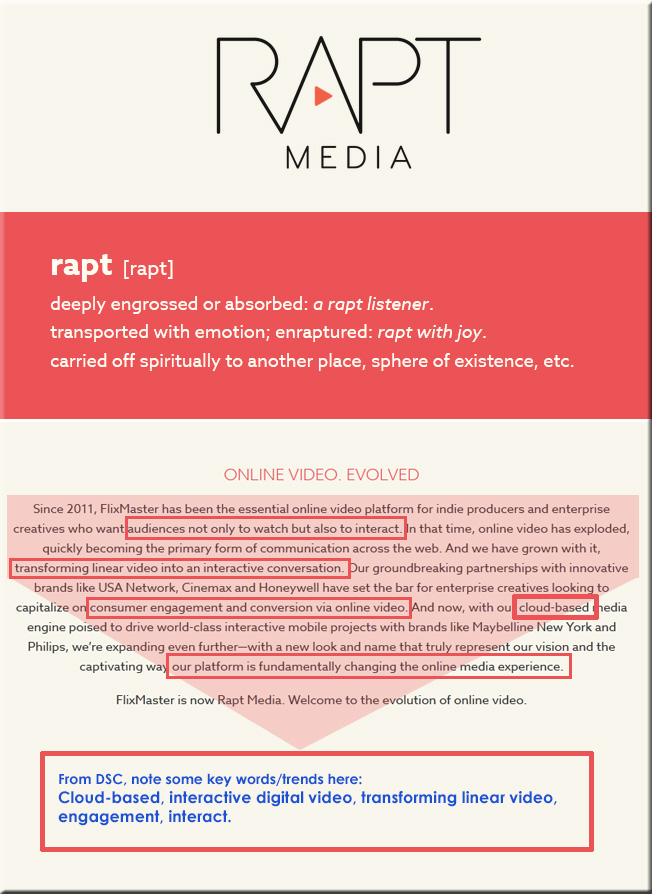
FlixMaster changes model; becomes Rapt — from bcbr.com by Joshua Lindenstein

Excerpts:

BOULDER – Highlighting a shift toward a new model for its interactive online video platform, Boulder-based FlixMaster Inc. this week announced that it is changing its name to Rapt Media Inc.

…

“When we founded FlixMaster, we set out to create the best toolset for video creators wanting to build interactive videos, and we succeeded in doing that that,” Rapt co-founder and chief executive Erika Trautman said in an email.  “But as we partnered with really sophisticated companies (like HBO and Maybelline), we realized that our platform and the opportunity it posed was bigger than just interactive video. It was about improving online communication and storytelling through interactivity of all kinds, with video as the central component. Our company had already transitioned to this bigger vision, and we wanted a name that could reflect that vision.


FlixMasterBecomingRapt-August2013


Additional thought from DSC:
This item relates to the convergence of the television, the computer, and the telephone that I’m pulse-checking. I’m hopeful that such a convergence will provide students in the future with 24×7, highly-engaging, interactive, customized/personalized content:

.

More choice. More control.


How to make online courses massively personal — from scientificamerican.com by Peter Norvig
How thousands of online students can get the effect of one-on-one tutoring

Excerpt (emphasis DSC):

Educators have known for 30 years that students perform better when given one-on-one tutoring and mastery learning—working on a subject until it is mastered, not just until a test is scheduled. Success also requires motivation, whether from an inner drive or from parents, mentors or peers.

Will the rise of massive open online courses (MOOCs) quash these success factors? Not at all. In fact, digital tools offer our best path to cost-effective, personalized learning.

I know because I have taught both ways.

…

Inspired by Nobel laureate Herbert Simon’s comment that “learning results from what the student does and thinks and only from what the student does and thinks,” we created a course centered on the students doing things and getting frequent feedback. Our “lectures” were short (two- to six-minute) videos designed to prime the attendees for doing the next exercise. Some problems required the application of mathematical techniques described in the videos. Others were open-ended questions that gave students a chance to think on their own and then to hash out ideas in online discussion forums.

…

That is why a properly designed automated intelligent tutoring system can foster learning outcomes as well as human instructors can, as Kurt van Lehn found in a 2011 meta-analysis in Educational Psychologist.


From DSC:
A potential learning scenario in the future:

  1. “Learning Agent, go find me a MOOC (or what the MOOC will morph into) about ________.”
    Similar to a Google Alert, the Learning Agent returns some potential choices.  I select one.
    .
  2. Once there… “System,  let’s begin.”  I begin taking the online-based course — which is stocked full of a variety of media, some interactive, that I get to choose from for each module/item based upon my personal preferences — and the intelligent tutoring system kicks in and responses at relevant points based upon my questions, answers, responses. The system uses AI, data mining, learning analytics, to see how I’m doing. It tracks this for each student.  Humans regularly review the data to begin noticing patterns and to tweak the algorithms based upon these patterns.
    .
  3. If at any time I find the responses from the automated intelligent tutoring system confusing or weak, I will:
    • Make note of why I’m confused or disagree with the response (via an online-based form entry on the page; this feedback gets instantly sent to the Team of Specialists in charge of the “course.” They will use it to tweak the course/algorithms.)
    • Ask to speak with a person, at which point I am asked to choose whether my inquiry would best be handled by a Subject Matter Expert (SME) at $___/hour/request (more expensive price) or by an entry-level tutor (at a lower $___/hour/request).  I then enter into a videoconference-based tutoring session with them, and they can access my records and even take over my screen (if I let them).  Once I get my questions answered, I return to the course and continue.


From DSC:
A twist on the above scenario would be if a cohorted group of people — not age-based — met in a physical place/room and were able to bounce ideas off of each other before anyone ante’d up for additional expenses by contacting a tutor and/or an SME. They could even share the expenses of the “call” (so-to-speak).


From DSC:
I love multimedia because it enables me to craft a message using audio, video, text, graphics, and even animations.  The Internet extends the power of this communication by allowing that message to go forth 24 x 7 x 365 in multi-directional ways — even allowing others to join in the conversations and participate.

The following item made me reflect upon on how important this is becoming to business:

Excerpt:

How (and why) is Marketing Changing?
The first thing to understand about marketing today is that it’s all about shared experience. Consumer behavior is radically changing with respect to content consumption. No longer are people consuming most of their content on the TV, a newspaper, or even their computer. Rather, they are using a combination of channels:


From DSC:

  • Won’t this trend also impact students’ expectations/hopes/engagement?
  • What do we need to do to help youth build these skillsets?


Also related/see:

  • The rise, implications & benefits of the second screen — from newsworks.org.uk by Mark Challinor
    Telegraph Media Group’s director of mobile Mark Challinor says in this new era of second screens, news companies must create content that helps consumers to multi-task on multiple platforms with multiple devices.

Excerpt:
Watching television – or even reading a newspaper – with a smartphone and/or tablet device is becoming one of the most popular leisure activities of this “mobile age”. In turn, publishers such as ourselves are trying to find ways to capitalise on this somewhat new consumer behaviour of real-time interaction, which, more often than not, includes social media. This type of interaction, referred to as “the second screen” or “the companion device”, has become not just a latest hot topic of discussion all over social media blogs; it is a huge development for the mobile app industry and a target-rich environment for our advertisers.

  • Emerging markets’ second-screen boost with 1BN smart devices by 2014 — from rapidtvnews.com by Joseph O’Halloran
    Excerpt:
    New research by IDC has revealed that it won’t just be Western Europe and North America forming happy hunting grounds for second-screen services and applications. The analyst says it is clear that demand for smart connected devices is quickly shifting from developed to emerging markets and that by the end of 2014, global shipments of smart connected devices such as PCs, tablets, and smartphones will exceed surpass 1.7 billion units, with roughly one billion units delivered to emerging markets. The emerging markets are expected to grow at a compound annual growth rate (CAGR) of 17% over the 2012-2017 forecast period, compared to the 7% CAGR expected in developed markets.
 

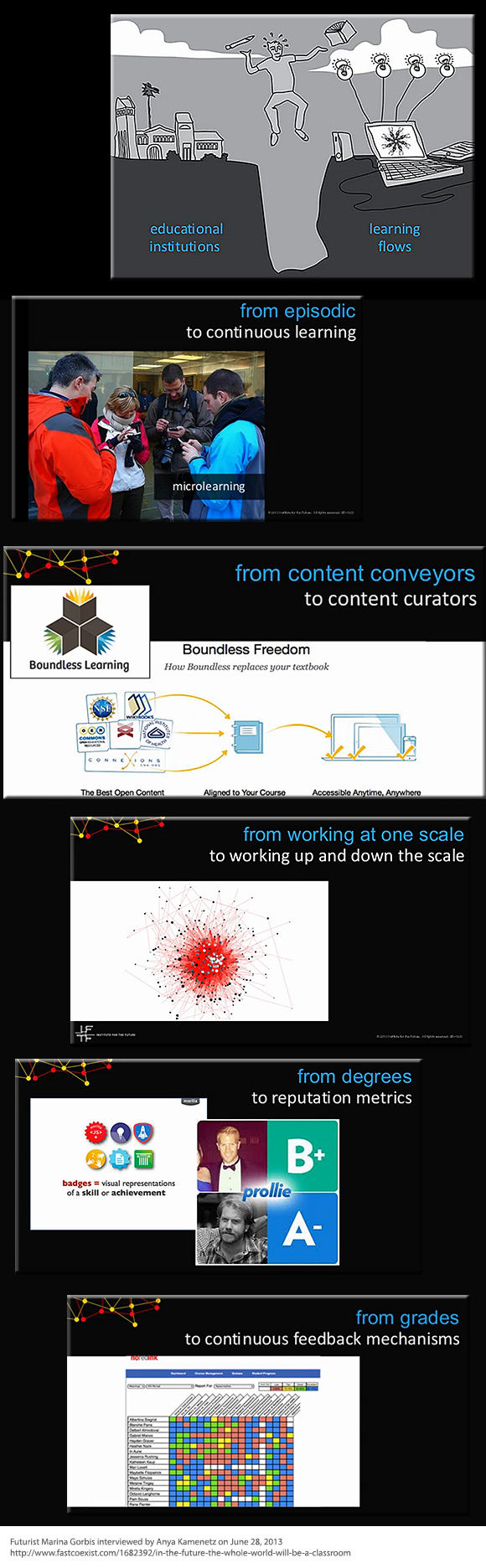
In the future, the whole world will be a classroom — from fastcoexist.com by Marina Gorbis


TheFutureOfEducation-Gorbis-6-28-13

. TheFutureOfEducation3-Gorbis-6-28-13.

From DSC:
What Marina is asserting is what I’m seeing as well. That is, we are between two massive but different means of obtaining an education/learning (throughout our lifetimes I might add).  What she’s saying is also captured in the following graphic:

.

streams-of-content-blue-overlay


Also see:


© 2025 | Daniel Christian