Why Parents Aren’t Reading to Kids, and What It Means for Young Students — from the74million.org by Jessika Harkay
A recent study found less than half of children are read to daily. The consequences are serious for early learners who enter school unprepared.

For children not getting the benefits of being read to at home, the opportunity gap has widened, with those young students entering school unprepared compared to those who have been read to.

“The gap really begins very, very early on. I think we underestimate how large a gap we’re already seeing in kindergarten,” said Susan Neuman, professor of childhood and literacy education at New York University, adding she recently visited a New York City kindergarten classroom and saw some children who only knew two letters compared to others who were prepared to read phrases.

A 2019 Ohio State University study found a 5-year-old child who is read to daily would be exposed to nearly 300,000 more words than one who isn’t read to regularly.


“OpenAI’s Atlas: the End of Online Learning—or Just the Beginning?” [Hardman] + other items re: AI in our LE’s

OpenAI’s Atlas: the End of Online Learning—or Just the Beginning? — from drphilippahardman.substack.com by Dr. Philippa Hardman

My take is this: in all of the anxiety lies a crucial and long-overdue opportunity to deliver better learning experiences. Precisely because Atlas perceives the same context in the same moment as you, it can transform learning into a process aligned with core neuro-scientific principles—including active retrieval, guided attention, adaptive feedback and context-dependent memory formation.

Perhaps in Atlas we have a browser that for the first time isn’t just a portal to information, but one which can become a co-participant in active cognitive engagement—enabling iterative practice, reflective thinking, and real-time scaffolding as you move through challenges and ideas online.

With this in mind, I put together 10 use cases for Atlas for you to try for yourself.

6. Retrieval Practice
What:
Pulling information from memory drives retention better than re-reading.
Why: Practice testing delivers medium-to-large effects (Adesope et al., 2017).
Try: Open a document with your previous notes. Ask Atlas for a mixed activity set: “Quiz me on the Krebs cycle—give me a near-miss, high-stretch MCQ, then a fill-in-the-blank, then ask me to explain it to a teen.”
Atlas uses its browser memory to generate targeted questions from your actual study materials, supporting spaced, varied retrieval.


From DSC:
A quick comment. I appreciate these ideas and approaches from Katarzyna and Rita. I do think that someone is going to want to be sure that the AI models/platforms/tools are given up-to-date information and updated instructions — i.e., any new procedures, steps to take, etc. Perhaps I’m missing the boat here, but an internal AI platform is going to need to have access to up-to-date information and instructions.


Here are my favorite back-to-school activities to strengthen learning — from retrievalpractice.org by Pooja K. Agarwal, Ph.D.

Welcome back to school! For most of us (myself included), the whirlwind of lesson prep, meetings, professional development—and of course, teaching—is here. Keep reading for my favorite back-to-school activities to engage students with retrieval practice during the first week of class.

It may (or may not) surprise you to know that my first day of class is full of retrieval practice. Even if you haven’t introduced content yet, use retrieval practice the first day or week of class. Here’s how, with quick activities you can adapt for K–12 students, higher ed courses, and all content areas:


How to Teach a Good First Day of Class — by James Lang; via Dr. Pooja Agarwal’s posting above

What you can expect to find here:

  • I’ll start, as we academics so love to do, with a little bit of theory — specifically, four core principles that can help shape your planning for the first day of your course.
  • Next, I’ll cover the logistics of a successful first day, including managing the space and technology as well as getting to know your students.
  • To show you how to put the principles and the logistics into practice, I will provide examples of what a good set of first-day activities might look like in four disciplines.
  • I’ll finish with some suggestions for how to support the good work you have done on the first day with some follow-up activities.

7 Pieces of Advice for New Teachers — from edutopia.org by Brienne May
Focus on relationships with students and colleagues to make a good start to the year—and remember to ask for what you need.

Too often, teacher preparation programs are rich in theory but light on practical guidance. After working hard through my undergraduate classes, completing student teaching, and spending countless hours laminating and cutting, I still found myself on the first day of school, standing in front of a room full of expectant faces with eager eyes, and realized I had no idea what to do next. I didn’t know what to say to students in that moment, let alone how to survive the following 180 days. Twelve years later, I have collected a trove of advice I wish I could have shared with that fresh-faced teacher.


The Transient Information Effect: Why Great Explanations Don’t Always Stick — from scienceoflearning.substack.com by Nidhi Sachdeva and Jim Hewitt
In this post, Dr. John Sweller describes how the Transient Information Effect can overload student working memory and what teachers can do about it.

Highlights:

  • The Transient Information Effect happens when important information disappears before learners can process and remember it.
  • Dr. John Sweller, who first studied the Transient Information Effect, answers our questions about this overlooked learning challenge.
  • Turning transient information into something students can revisit (like writing key steps on the board) can help explanations stick.

41 Elementary Classroom Jobs to Build Shared Responsibility and Community — from edutopia.org by Donna Paul
Classroom jobs help students feel seen, trusted, and excited to contribute to their classroom community.

Each fall, one of the first routines I introduce is our classroom job board. It’s more than a list of tasks—it helps students feel that they belong and have real roles in our shared space. Over the years, I’ve expanded beyond classic jobs like Line Leader and Pencil Sharpener to include creative roles with quirky titles that engage and resonate with students.

Here are the jobs that have helped my students feel seen, trusted, and excited to contribute.


Guiding Students to Overcome Learned Helplessness — from edutopia.org by Michelle Singh
New teachers can create an environment where students feel supported and understand that mistakes are part of the learning process.


Creating a Kid-Led Hall of Fame for Books — from edutopia.org by Eric Hall
Allowing elementary students to nominate and vote for their favorite books of the year can create a culture of celebration in the classroom.

When I started teaching, I remembered that conversation with my elementary school librarian. I thought, “Why should adults have all the fun?” I wanted my students to experience the excitement of recognizing books they thought were the best. And just like that, the Hallbery Awards were born and continued twice a year for over 15 years. (Why Hallbery? Because my last name is Hall.)


Understanding Diagnostic, Formative, and Summative Assessments — from edmentum.com

Today, we’re taking a look at the three primary forms of assessments—diagnostic, formative, and summative—with the goal of not only differentiating between them but also better understanding the purpose and potential power of each.

At their core, each of the three primary assessment types serves a distinct purpose. Diagnostic assessments are used before instruction to help identify where students are in their comprehension of academic content. Formative assessments are used while content is being taught to understand what students are picking up, to guide their learning, and to help teachers determine what to focus on moving forward. Summative assessments are used after instruction to evaluate the outcomes of student learning: what, or how much, they ultimately learned.


How one state revamped high school to reflect reality: Not everyone goes to college — from hechingerreport.org by Kavitha Cardoza
Indiana’s initial plan for revised graduation requirements was criticized for prioritizing workforce skills over academic preparedness. The state has tried to find a balance between the two

This story is part of Hechinger’s ongoing coverage about rethinking high school. Read about high school apprenticeships in Indiana, a new diploma in Alabama that trades chemistry for carpentry, and “career education for all” in Kentucky.

The “New Indiana Diploma” — which was signed into law in April and goes into effect for all incoming first-year students this academic year — gives students the option to earn different “seals” in addition to a basic diploma, depending on whether they plan to attend college, go straight to work or serve in the military. Jenner describes it as an effort to tailor the diploma to students’ interests, expose students to careers and recognize different forms of student achievement.


How Teachers in This District Pushed to Have Students Spend Less Time Testing — from edweek.org by Elizabeth Heubeck

Students in one Arizona district will take fewer standardized tests this school year, the result of an educator-led push to devote less time to testing.

The Tucson Education Association, backed by the school board and several parents, reached an agreement with the Tucson Unified school system in May to reduce the number of district-mandated standardized assessments students take annually starting in the 2025-26 academic year.

Just 25 percent of educators agreed that state-mandated tests provide useful information for the teachers in their school, according to a 2023 EdWeek Research Center survey of teachers, principals, and district leaders. 


30 Ways to Bring Calm to a Noisy High School Classroom — from edutopia.org by Anne Noyes Saini
From ‘finding the lull’ to the magic of a dramatic whisper, these teacher-tested strategies quickly get high school students focused and back on track.


Approaching Experiential Learning as a Continuum — from edutopia.org by Bill Manchester
Teachers can consider 12 characteristics of experiential learning to make lessons more or less active for students.


15 Quick (and Mighty) Retrieval Practices — from edutopia.org by Daniel Leonard
From concept maps to flash cards to Pictionary, these activities help students reflect on—and remember—what they’ve learned.

But to genuinely commit information to long-term memory, there’s no replacement for active retrieval—the effortful practice of recalling information from memory, unaided by external sources like notes or the textbook. “Studying this way is mentally difficult,” Willingham acknowledged, “but it’s really, really good for memory.”

From low-stakes quizzes to review games to flash cards, there are a variety of effective retrieval practices that teachers can implement in class or recommend that students try at home. Drawing from a wide range of research, we compiled this list of 15 actionable retrieval practices.


And speaking of cognitive science, also see:

‘Cognitive Science,’ All the Rage in British Schools, Fails to Register in U.S. — from the74million.org by Greg Toppo
Educators blame this ‘reverse Beatles effect’ on America’s decentralized system and grad schools that are often hostile to research.

When Zach Groshell zoomed in as a guest on a longstanding British education podcast last March, a co-host began the interview by telling listeners he was “very well-known over in the U.S.”

Groshell, a former Seattle-area fourth-grade teacher, had to laugh: “Nobody knows me here in the U.S.,” he said in an interview.

But in Britain, lots of teachers know his name. An in-demand speaker at education conferences, he flies to London “as frequently as I can” to discuss Just Tell Them, his 2024 book on explicit instruction. Over the past year, Groshell has appeared virtually about once a month and has made two personal appearances at events across England.

The reason? A discipline known as cognitive science. Born in the U.S., it relies on decades of research on how kids learn to guide teachers in the classroom, and is at the root of several effective reforms, including the Science of Reading.


Assistive tech in your classroom: A practical guide — from understood.org by Andrew M.I. Lee, JD
Assistive technology (AT) are tools that let people with differences work around challenges. They make tasks and activities accessible at school, work, and home. Learn how AT apps and software can help with reading, writing, math, and more.

People who learn and think differently can use technology to help work around their challenges. This is called assistive technology (AT). AT helps people with disabilities learn, communicate, or function better. It can be as high-tech as a computer, or as low-tech as a pencil grip. It’s a type of accommodation that involves tools.

Assistive technology has two parts: devices (the actual tools people use) and services (the support to choose and use the tools).

Students who struggle with learning can use AT to help with subjects like reading, writing, and math. AT can also help kids and adults with the tasks of daily life. And many adults use these tools on the job, too.
.


What Educators Need to Know About Dyslexia—and Why It’s Not Something to ‘Fix’ — from edweek.org by Elizabeth Heubeck

“The good news is, though, with early intervention and with the appropriate types of modifications and intervention, people with dyslexia thrive in today’s world.”

From DSC:
I have a retired friend who is dyslexic and, to this very day, feels the pain of being told — and treated like — he was stupid in the majority of his K-12 years. He later went on to get trained on how to operate missiles, solve a variety of highly technical IT-related problems, set up networks, run security departments, and more. He is a highly intelligent individual. But he is dsylexic. And he recalls the pain of those early education days.

I’m glad that we’ve made some significant progress in understanding dsylexia. And I hope that today’s dyslexic students don’t have experiences like his.


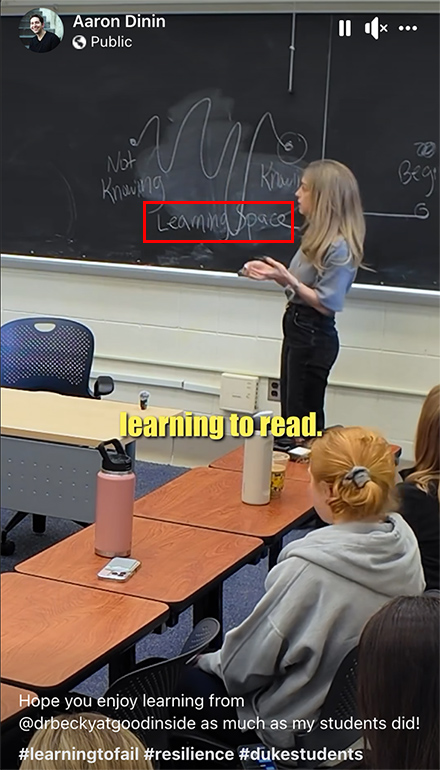
“Learning is frustration.”

The learning space is that space between “not knowing” and “knowing.” It can be very frustrating. But don’t be discouraged when you are frustrated. It means that you are learning. Eventually, you’ll get to “knowing.”
.


Department of Education Helps Students With Disabilities. Don’t Let It Disappear | Opinion — from newsweek.com by Katy NeasCEO, The Arc of the United States

When education is limited, so is opportunity. Without education, students with disabilities face higher rates of poverty, unemployment, poor health, and social isolation. Education is the foundation for independence, inclusion, and a future with choices. Strip it away, and we are not just limiting potential—we are forcing millions of people into a lifetime of barriers and hardship.

This issue is personal for me. As a former deputy assistant secretary in the Department of Education’s Office of Special Education and a lifelong advocate for disability rights, I have seen firsthand what happens when children with disabilities face barriers—and how the Department of Education steps in to make things right.


An excerpt from Derek Bruff’s newsletter entitled, “Digital reading, belonging stories, escape rooms, and more

Course Contributors
At the Top Hat Engage conference last week, I met Whitney Silvis-Sawyer, who teaches education courses at Louisiana Tech University. She regularly invites her students to provide feedback on her courses, and when she makes a change to a course in response to student feedback, she acknowledges that student by name (and with permission) in a “course contributors” section of her syllabus. Some of her course syllabi now have dozens of students listed who have helped shape her courses. I love this as a way to help students see that you take their feedback seriously and as a way to acknowledge sources of inspiration for one’s teaching.

In-Class Escape Rooms
Over on Bluesky, I was delighted to see that Lisa Fazio, who teaches psychology at Vanderbilt University, shared images of the escape room activity she designed as a review for her social cognition course. Her students worked in teams of four to complete a series of puzzles and open a number of combination locks, all of which required them to apply social cognition concepts they had been studying. Lisa writes, “Watching them race through the puzzles today brought me joy!” See Lisa’s thread for all the details.


Designing the Classroom of the Future: 5 Easy Pieces — from ed-spaces.com by Leslie Stebbins
When designing new classrooms the most important factors to consider are designs that encourage movement, provide space for collaborative and independent work, seamlessly embed technology, promote creativity, and provide flexibility.

  1. Design for Movement: Sitting is the new smoking!
  2. Build for Collaboration and Independent Work
  3. Embed Technology Seamlessly: Clean up your Cables!
  4. Promote Creativity: Mix it Up!
  5. Flexibility with Limits

Addendums:


Your AI Writing Partner: The 30-Day Book Framework — from aidisruptor.ai by Alex McFarland and Kamil Banc
How to Turn Your “Someday” Manuscript into a “Shipped” Project Using AI-Powered Prompts

With that out of the way, I prefer Claude.ai for writing. For larger projects like a book, create a Claude Project to keep all context in one place.

  • Copy [the following] prompts into a document
  • Use them in sequence as you write
  • Adjust the word counts and specifics as needed
  • Keep your responses for reference
  • Use the same prompt template for similar sections to maintain consistency

Each prompt builds on the previous one, creating a systematic approach to helping you write your book.


Using NotebookLM to Boost College Reading Comprehension — from michellekassorla.substack.com by Michelle Kassorla and Eugenia Novokshanova
This semester, we are using NotebookLM to help our students comprehend and engage with scholarly texts

We were looking hard for a new tool when Google released NotebookLM. Not only does Google allow unfettered use of this amazing tool, it is also a much better tool for the work we require in our courses. So, this semester, we have scrapped our “old” tools and added NotebookLM as the primary tool for our English Composition II courses (and we hope, fervently, that Google won’t decide to severely limit its free tier before this semester ends!)

If you know next-to-nothing about NotebookLM, that’s OK. What follows is the specific lesson we present to our students. We hope this will help you understand all you need to know about NotebookLM, and how to successfully integrate the tool into your own teaching this semester.


Leadership & Generative AI: Hard-Earned Lessons That Matter — from jeppestricker.substack.com by Jeppe Klitgaard Stricker
Actionable Advice for Higher Education Leaders in 2025

AFTER two years of working closely with leadership in multiple institutions, and delivering countless workshops, I’ve seen one thing repeatedly: the biggest challenge isn’t the technology itself, but how we lead through it. Here is some of my best advice to help you navigate generative AI with clarity and confidence:

  1. Break your own AI policies before you implement them.
  2. Fund your failures.
  3. Resist the pilot program. …
  4. Host Anti-Tech Tech Talks
  5. …+ several more tips

While generative AI in higher education obviously involves new technology, it’s much more about adopting a curious and human-centric approach in your institution and communities. It’s about empowering learners in new, human-oriented and innovative ways. It is, in a nutshell, about people adapting to new ways of doing things.


Maria Anderson responded to Clay’s posting with this idea:

Here’s an idea: […] the teacher can use the [most advanced] AI tool to generate a complete solution to “the problem” — whatever that is — and demonstrate how to do that in class. Give all the students access to the document with the results.

And then grade the students on a comprehensive followup activity / presentation of executing that solution (no notes, no more than 10 words on a slide). So the students all have access to the same deep AI result, but have to show they comprehend and can iterate on that result.


Grammarly just made it easier to prove the sources of your text in Google Docs — from zdnet.com by Jack Wallen
If you want to be diligent about proving your sources within Google Documents, Grammarly has a new feature you’ll want to use.

In this age of distrust, misinformation, and skepticism, you may wonder how to demonstrate your sources within a Google Document. Did you type it yourself, copy and paste it from a browser-based source, copy and paste it from an unknown source, or did it come from generative AI?

You may not think this is an important clarification, but if writing is a critical part of your livelihood or life, you will definitely want to demonstrate your sources.

That’s where the new Grammarly feature comes in.

The new feature is called Authorship, and according to Grammarly, “Grammarly Authorship is a set of features that helps users demonstrate their sources of text in a Google doc. When you activate Authorship within Google Docs, it proactively tracks the writing process as you write.”


AI Agents Are Coming to Higher Education — from govtech.com
AI agents are customizable tools with more decision-making power than chatbots. They have the potential to automate more tasks, and some schools have implemented them for administrative and educational purposes.

Custom GPTs are on the rise in education. Google’s version, Gemini Gems, includes a premade version called Learning Coach, and Microsoft announced last week a new agent addition to Copilot featuring use cases at educational institutions.


Generative Artificial Intelligence and Education: A Brief Ethical Reflection on Autonomy — from er.educause.edu by Vicki Strunk and James Willis
Given the widespread impacts of generative AI, looking at this technology through the lens of autonomy can help equip students for the workplaces of the present and of the future, while ensuring academic integrity for both students and instructors.

The principle of autonomy stresses that we should be free agents who can govern ourselves and who are able to make our own choices. This principle applies to AI in higher education because it raises serious questions about how, when, and whether AI should be used in varying contexts. Although we have only begun asking questions related to autonomy and many more remain to be asked, we hope that this serves as a starting place to consider the uses of AI in higher education.


A Teacher-to-Teacher Approach to Professional Development — from nataliewexler.substack.com by Natalie Wexler
An innovative fellowship program spotlights the practices of effective literacy teachers

When seeking guidance on classroom practice, teachers—understandably—tend to trust other teachers the most. An innovative fellowship program connects teachers with one another to provide concrete examples of what effective literacy instruction looks like.

A small philanthropy called the Goyen Foundation sponsors the program, now in its third year. For each cohort, the foundation selects 12 to 14 educators who are skilled in systematically teaching foundational reading skills while simultaneously building the knowledge that enables reading comprehension.

The Goyen Literacy Fellows document their own classroom practice, mostly through videos that are posted on social media platforms like X/Twitter and Facebook. They also interact with other educators who may have heard about “structured literacy” but aren’t sure what it means or how it’s done.


Giving Kids Some Autonomy Has Surprising Results — from nytimes.com by Jenny Anderson and Rebecca Winthrop
Jenny Anderson and Rebecca Winthrop are the authors of “The Disengaged Teen: Helping Kids Learn Better, Feel Better, and Live Better.”

In a polarized nation, one point of agreement deserves more attention: Young adults say they feel woefully unprepared for life in the work force, and employers say they’re right.

In a survey by Gallup and the Walton Family Foundation of more than 4,000 members of Gen Z, 49 percent of respondents said they did not feel prepared for the future. Employers complain that young hires lack initiative, communication skills, problem-solving abilities and resilience.

There’s a reason the system isn’t serving people well, and it goes beyond the usual culprits of social media and Covid. Many recent graduates aren’t able to set targets, take initiative, figure things out and deal with setbacks — because in school and at home they were too rarely afforded any agency.

Maybe it’s time to define a higher ideal for education, less about ranking and sorting students on narrow measures of achievement and more about helping young people figure out how to unlock their potential and how to operate in the world. Amid the drumbeat of evolving artificial intelligence, wars, rising authoritarianism, political polarization and digital disconnection, they need to learn a lot more than how to follow instructions.


The Disengagement Crisis — from xqinstitute.org by Edward Montalvo – Director, Educator Network

Youth Voice & Choice
At XQ, we don’t see high schools as the tail end of K-12 education. Instead, we believe they are pivotal spaces for unleashing a young person’s sense of possibility and agency—so much so that it’s one of our Design Principles for school-wide success: Youth Voice and Choice.

Anderson and Winthrop, too, emphasize that when students feel they can shape the direction of their learning, they gain essential life skills: setting targets, identifying strategies, monitoring progress, and course-correcting when inevitable challenges arise. These aptitudes translate directly to college readiness, workforce performance, and a strong sense of agency in adulthood. As the authors note, even small doses of agency—like letting students choose which angle of a topic to explore—can radically transform how teens engage with the material and each other.

We’ve long championed youth voice and choice as a key element for transforming the traditional high school experience. By adopting this design principle, educators and school leaders empower students to be agents of their own learning journeys. They celebrate students’ personal growth and consistently provide opportunities for them to set goals and reflect on how they learn best.

By shifting away from checklists and mindless compliance, we can transform high schools into spaces of curiosity, discovery, and lasting engagement—where a spark lit in 9th grade can guide and energize students for a lifetime.

.


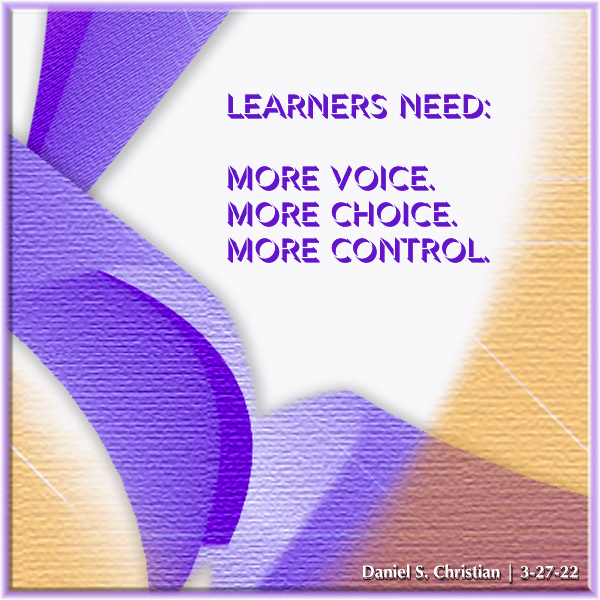
Learners need: More voice. More choice. More control. -- this image was created by Daniel Christian


Addendum on 1/17/25:

376. Students as Partners — from teaforteaching.com

Faculty members often design and revise courses with limited direct feedback from students. In this episode, Laurel Willingham-McLain and Jacques Safari Mwayaona join us to discuss a program in which faculty work with trained student consultants to improve the student learning experience.  Laurel is a consulting faculty developer at the Center for Teaching and Learning Excellence at Syracuse University. Jacques is a Faculty Development Fellow, also at Syracuse University. Laurel and Jacques both work with the Students Consulting on Teaching program at Syracuse University.


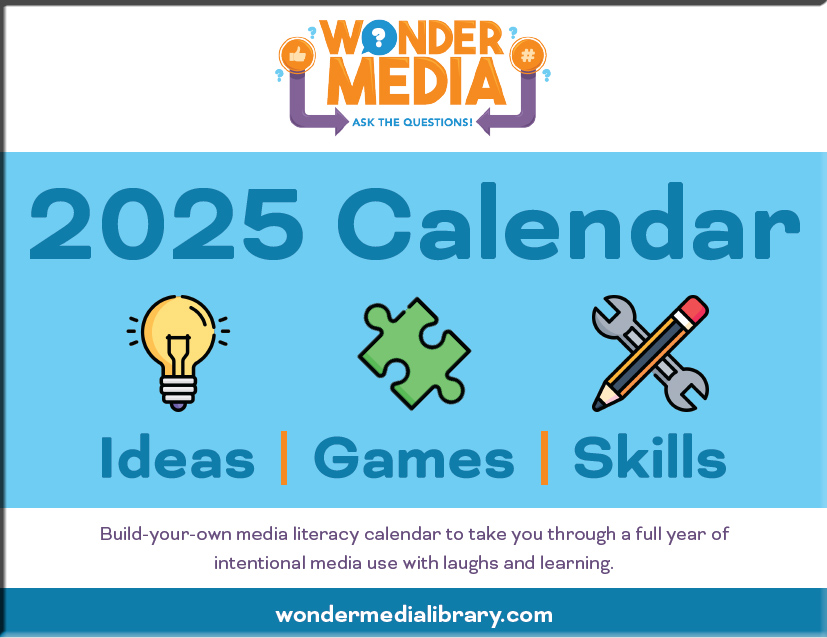
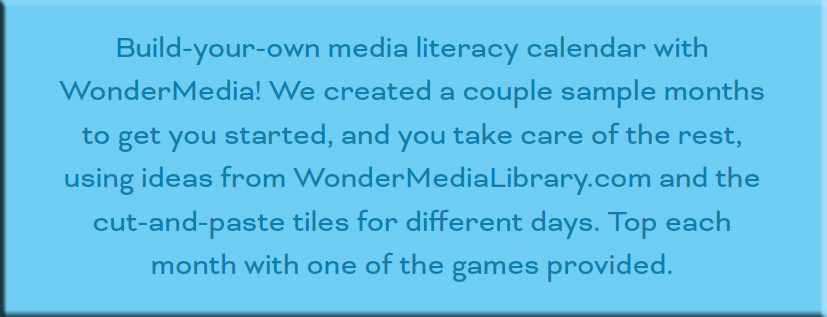
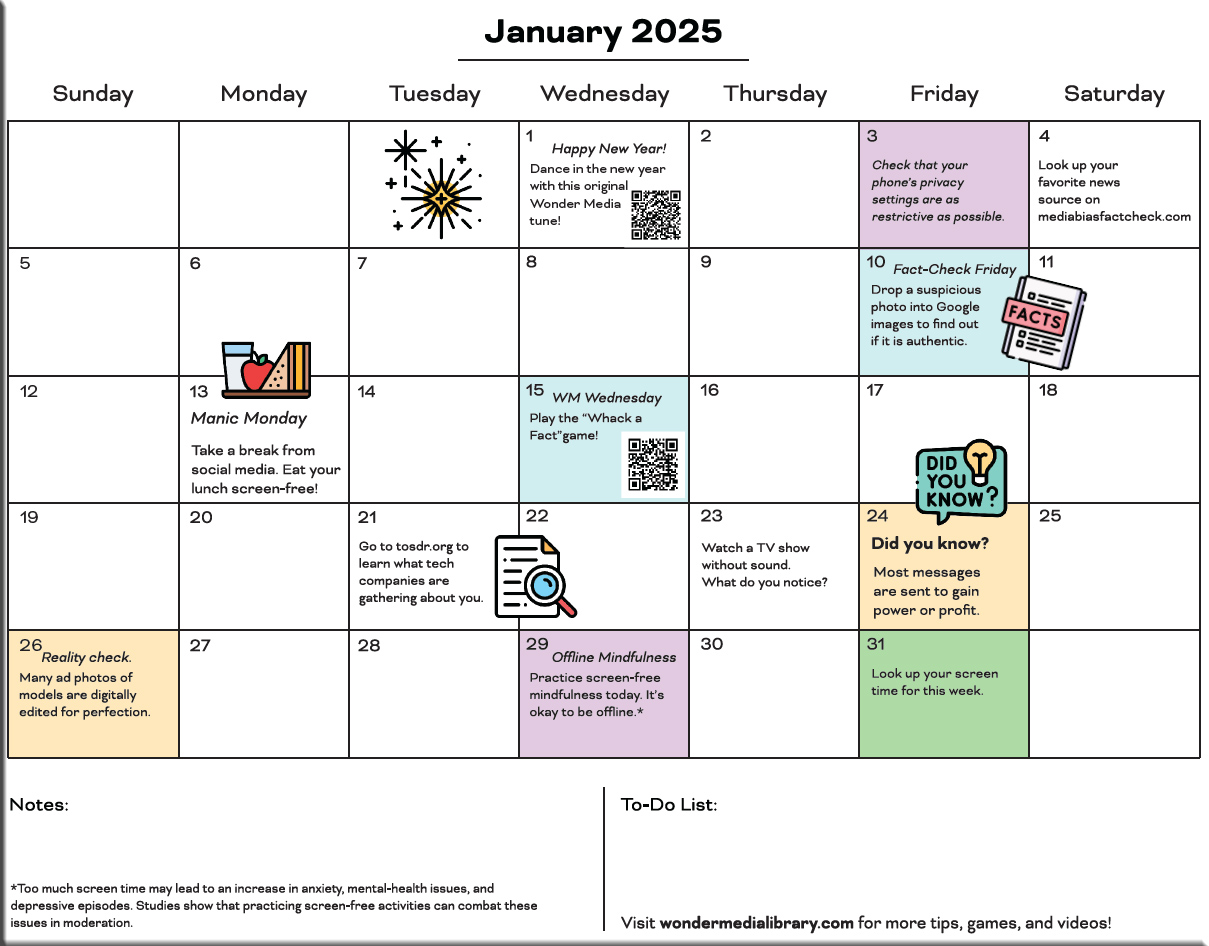
Introducing the 2025 Wonder Media Calendar for tweens, teens, and their families/households. Designed by Sue Ellen Christian and her students in her Global Media Literacy class (in the fall 2024 semester at Western Michigan University), the calendar’s purpose is to help people create a new year filled with skills and smart decisions about their media use. This calendar is part of the ongoing Wonder Media Library.com project that includes videos, lesson plans, games, songs and more. The website is funded by a generous grant from the Institute of Museum and Library Services, in partnership with Western Michigan University and the Library of Michigan.


Duolingo Introduces AI-Powered Innovations at Duocon 2024 — from investors.duolingo.com; via Claire Zau

Duolingo’s new Video Call feature represents a leap forward in language practice for learners. This AI-powered tool allows Duolingo Max subscribers to engage in spontaneous, realistic conversations with Lily, one of Duolingo’s most popular characters. The technology behind Video Call is designed to simulate natural dialogue and provides a personalized, interactive practice environment. Even beginner learners can converse in a low-pressure environment because Video Call is designed to adapt to their skill level. By offering learners the opportunity to converse in real-time, Video Call builds the confidence needed to communicate effectively in real-world situations. Video Call is available for Duolingo Max subscribers learning English, Spanish, and French.


And here’s another AI-based learning item:

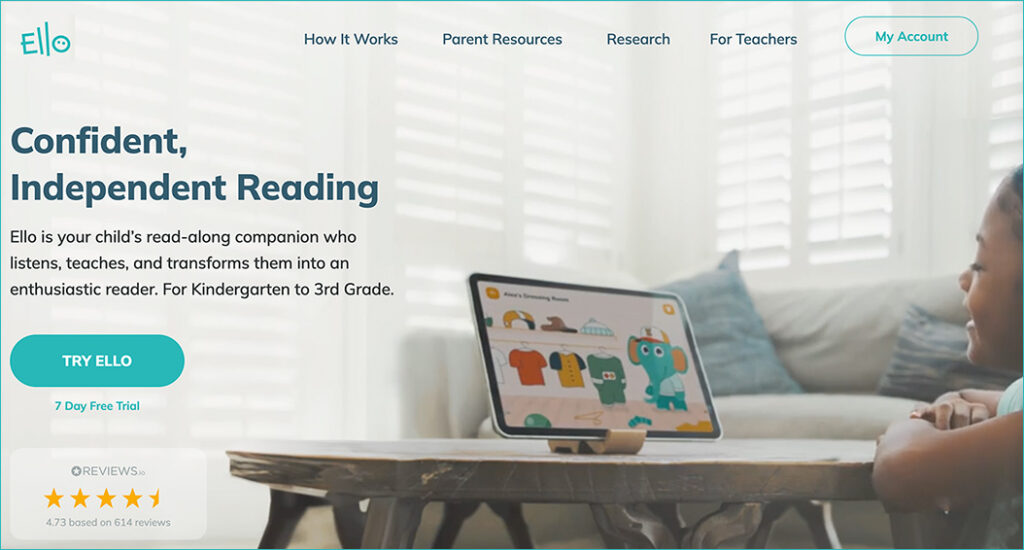
AI reading coach startup Ello now lets kids create their own stories — from techcrunch.com by Lauren Forristal; via Claire Zau

Ello, the AI reading companion that aims to support kids struggling to read, launched a new product on Monday that allows kids to participate in the story-creation process.

Called “Storytime,” the new AI-powered feature helps kids generate personalized stories by picking from a selection of settings, characters, and plots. For instance, a story about a hamster named Greg who performed in a talent show in outer space.


Giving ELA Lessons a Little Edtech Boost — from edutopia.org by Julia Torres
Common activities in English language arts classes such as annotation and note-taking can be improved through technology.

6 ELA Practices That Can Be Enhanced by EdTech

  1. Book clubs.
  2. Collective note-taking.
  3. Comprehension checks.
  4. Video lessons.
  5. ..and more

Using Edtech Tools to Differentiate Learning— from edutopia.org by Katie Novak and Mary E. Pettit
Teachers can use tech tools to make it easier to give students choice about their learning, increasing engagement.

3 UDL-Aligned EdTech Tools

  1. Digital audiobook platforms.
  2. Multimedia presentation tools.
  3. Digital annotation tools.
 

Some of the Best Online Learning Games for Kids — from nytimes.com by Courtney Schley

If you’re looking for apps and games that not only keep young kids occupied but also encourage them to explore, learn, and express themselves, we have some great suggestions.

The apps we cover in this guide are good learning apps not because they’re designed to make kids smarter, to drill facts, or to replace in-school learning, but because they each offer something fun, unique, and interesting for kids and adults.

As with our guides to STEM and learning toys, we didn’t test scores of apps to try to find the “best” ones. Rather, most of our favorite apps have been chosen by teachers for their students in classrooms, used by Wirecutter parents and their kids, or recommended by the experts and educators we spoke with.


SATs Have Never Been About Equity — from insidehighered.com by Pepper Stetler
The history of the SAT raises questions about how we value and measure intelligence, Pepper Stetler writes.

Excerpts (emphasis DSC):

Even though the overwhelming majority (about 80 percent) of the country’s colleges and universities will remain test optional for the Class of 2029, our national conversation about the role of standardized admissions tests in higher education focuses almost exclusively on elite colleges, whose enrollments represent only 1 percent of students. Such a myopic perspective will do little to increase access to higher education. Real change would require us to reckon with the history of standardized tests and how they have persistently disadvantaged large numbers of students, particularly students of color and students with disabilities.

One hundred years later, academic success is defined as the capacity to do well on a standardized test. It does not just predict a person’s academic ability. It defines academic ability. And those who have the most time and resources to devote to the test are the ones who will succeed.


Top EdTech Trends Shaping Education in 2024-2025 — from edmentum.com

  • Trend #1: Schools Are Using Career Technical Education to Increase Student Engagement
  • Trend #2: Districts Are Looking to Scale Up Tutoring
  • Trend #3: Virtual Learning Solutions Can Help Address Teacher Shortages

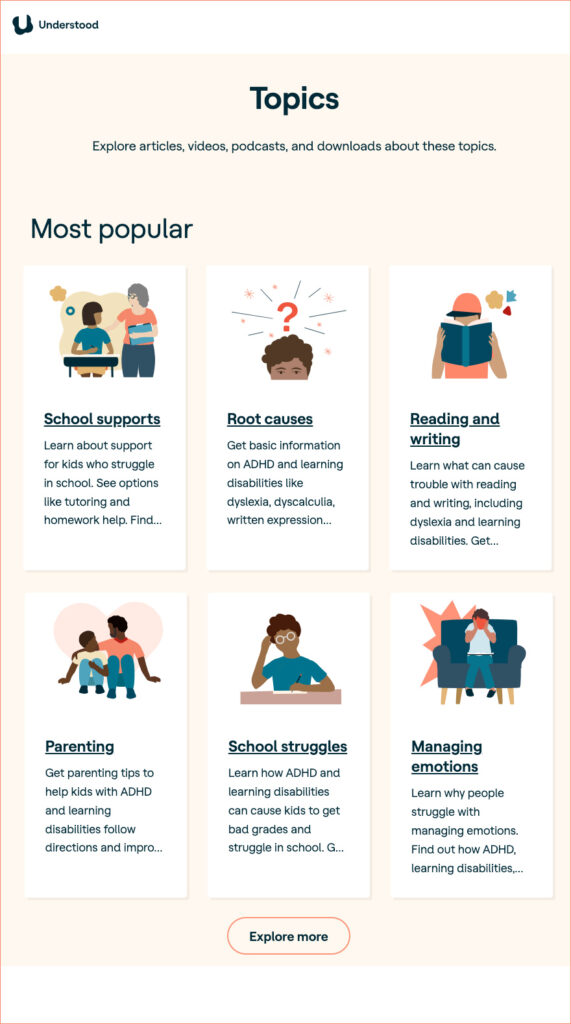
Understood.com | Everyone deserves to be understood
Understood is the leading nonprofit empowering the 70 million people with learning and thinking differences in the United States.


How to use accommodations and modifications in the classroom — from understood.org by Amanda Morin

In a busy classroom, it can be daunting to meet the varied learning needs of all your students. Knowing you’re also responsible for implementing instructional accommodations and modifications in students’ IEPs and 504 plans can make it feel even more challenging. But with the right information, you can provide these important supports to help all students thrive.

Here are key concepts to keep in mind and steps you can take to implement accommodations and modifications for your students.


Unschooling: A way of learning outside of school and it requires no lessons, tests or grades — from cbsnews.com by  Janay Reece

BALTIMORE — What if your child didn’t go to school?

Believe it or not, some parents don’t send their children to school five days a week, and it’s called unschooling.

It is a growing and sometimes controversial approach to homeschooling.

Rather than using a defined curriculum, unschooling parents trust their kids to learn organically. Unschoolers are focused more on the experimental process of learning and becoming educated, rather than with “doing or going to school.”


People Are Hunting for Education ‘Fads.’ What Does That Say About Schools? — from edsurge.com by Daniel Mollenkamp

Public schools are particularly vulnerable to pressure, Cuban said on a call with EdSurge. That’s because national problems tend to become school ones, Cuban says. Schools have to walk a “tightrope,” striking a balance that is both stable for students and able to adapt to changes in the broader society, he says.

Pressure on schools to respond to new issues often ends up altering curricula or introducing new courses, because that’s the easiest part of the public education system to change, Cuban argues. But classrooms are isolated from the superintendent’s office, the school board and other “policy elites” who push change, he says.


Many kids can’t read, even in high school. Is the solution teaching reading in every class? — from hechingerreport.org by Julian Roberts-Grmela
Some high schools and states are experimenting with ways to integrate literacy instruction across all classes

Every teacher at her school, the Health Sciences High and Middle College, in San Diego, shares in the responsibility of teaching students literacy skills, regardless of the subject they teach. That’s because so many students, even incoming ninth graders, arrive at the school without basic reading skills, according to Douglas Fisher, an administrator at the school. While some students also receive one-on-one remediation, Fisher said that research shows those interventions aren’t enough to close the gap.

“We have kids that on our benchmark knowledge assessments are scoring what is the equivalent of second grade, first grade, fourth grade,” said Fisher, who is also a professor and chair of educational leadership at San Diego State University. Yet, by the time students graduate, he said, the goal at the secondary school is that they have “reading levels ready for college.”


From DSC:
[For those folks who use Google Chrome]

When you keep getting distracted from all of the extraneous items — such as those annoying videos and advertisements — that appear when you launch a web page, there is a solution to quickly hiding all of those items. It’s called Postlight Reader. I’ve been using it for years and wanted to put this information out there for folks who might not have heard about it.


I highly recommend it if you are having trouble reading an article and processing the information that it contains. Instructional Designers will know all about Extraneous Load (one of the types of Cognitive Load) and how it negatively impacts one’s learning and processing of the information that really counts (i.e., the Germane Cognitive Load).

Note the differences when I used Postlight Reader on an article out at cbsnews.com:


The page appears with all kinds of ads and videos going on…I can hardly
process the information on the article due to these items:


Then, after I enabled this extension in Chrome and click on
the icon for Postlight Reader, it strips away all of those items
and leaves me with the article that I wanted to read:


If you aren’t using it, I highly recommend that you give it a try.


Postlight Reader – Clear away the clutter from all of your articles. Instantly.

The Postlight Reader extension for Chrome removes ads and distractions, leaving only text and images for a clean and consistent reading view on every site. Features:

  • Disable surrounding webpage noise and clutter with one click
  • Send To Kindle functionality
  • Adjust typeface and text size, and toggle between light or dark themes
  • Quick keyboard shortcut (Cmd + Esc for Mac users, Alt + ` for Windows users) to switch to Reader on any article page
  • Printing optimization
  • Sharing through Facebook, Twitter and Email
 
© 2025 | Daniel Christian