


eLearning Trends of 2018 (Top picks from 57 experts)
Summary of 11 top trends in 5 minutes, 21 seconds.
Includes predictions from 57 industry experts.
Note from DSC:
Audio is a music track only.
There is no narration or
speaking from the experts.
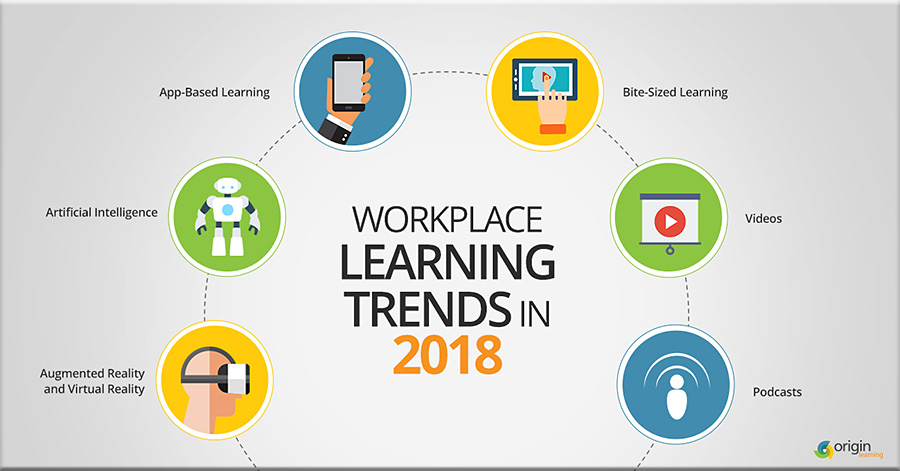
Workplace learning trends 2018 — from elearninglearning.com
Excerpt:
The beginning of a year is a great time to take stock of the year gone by and plan for the year ahead. In this blog post, we will have a quick glimpse of what we believe would be some of the key trends in workplace learning this year.
Also see:
Learning Experience Design Trends For 2018 — from elearninglearning.com. & theelearningcoach.com by
8 Ways Things are Changing for Practitioners
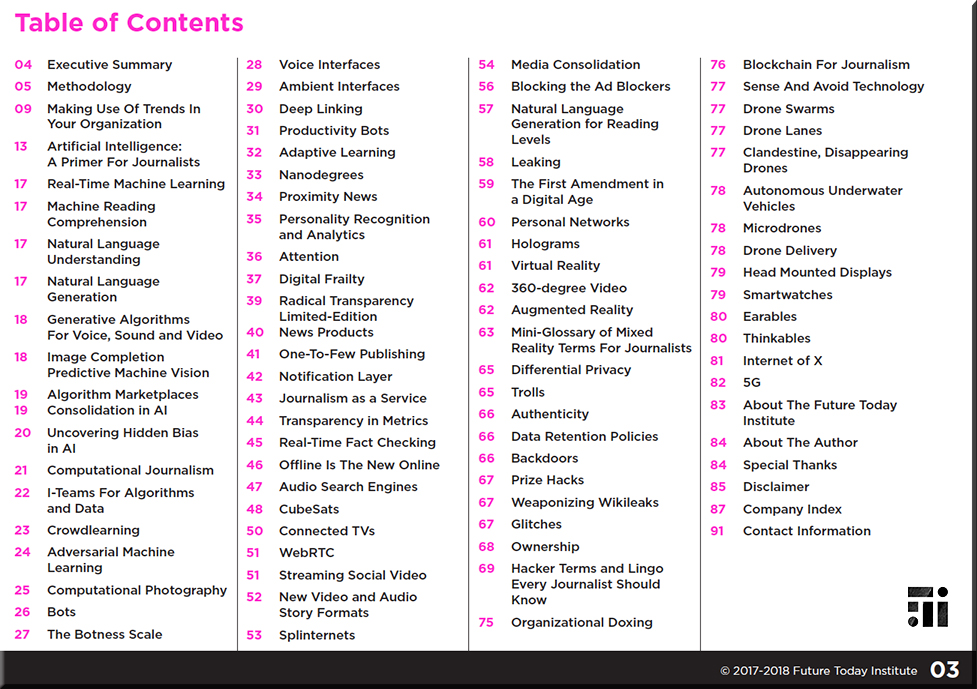
2018 Tech Trends For Journalism Report — from the Future Today Institute
Key Takeaways
Those in the news ecosystem should factor the trends in this report into their strategic thinking for the coming year, and adjust their planning, operations and business models accordingly.
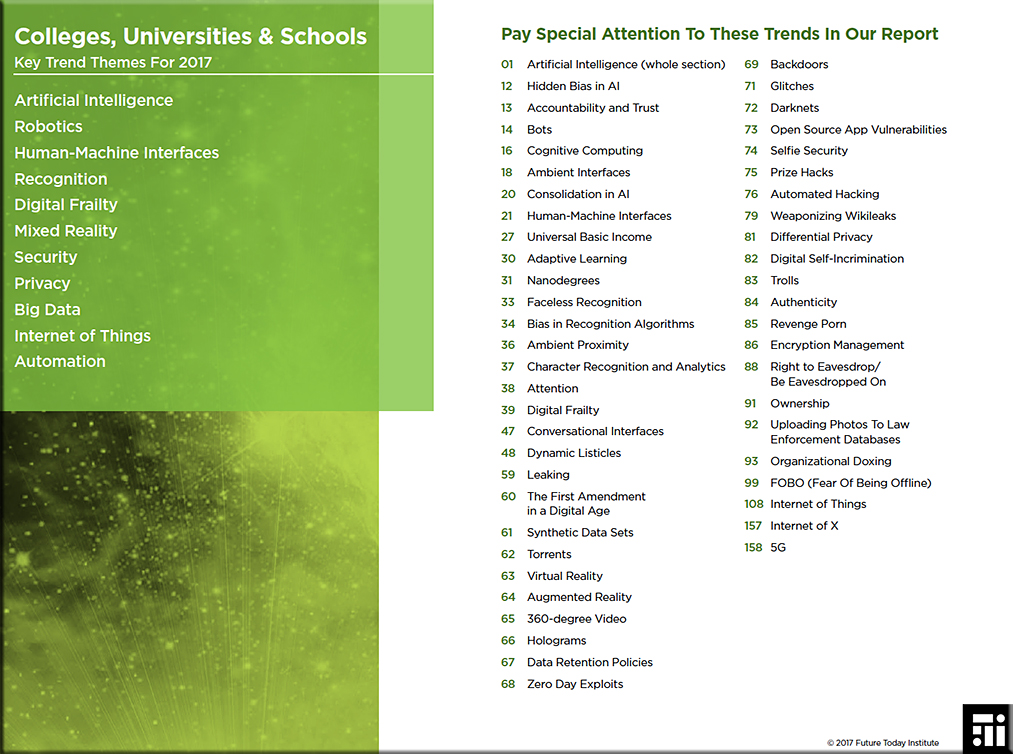
2017 Tech Trends Annual Report — from the Future Today Institute; this is the first I’ve seen this solid report
Excerpts:
This year’s report has 159 trends.
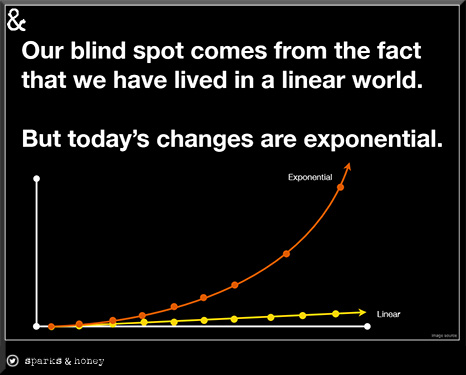
This is mostly due to the fact that 2016 was the year that many areas of science and technology finally started to converge. As a result we’re seeing a sort of slow-motion explosion––we will undoubtedly look back on the last part of this decade as a pivotal moment in our history on this planet.
…
Our 2017 Trend Report reveals strategic opportunities and challenges for your organization in the coming year. The Future Today Institute’s annual Trend Report prepares leaders and organizations for the year ahead, so that you are better positioned to see emerging technology and adjust your strategy accordingly. Use our report to identify near-future business disruption and competitive threats while simultaneously finding new collaborators and partners. Most importantly, use our report as a jumping off point for deeper strategic planning.
Also see:
Emerging eLearning Tools and Platforms Improve Results — from learningsolutionsmag.com
DevLearn Attendees Learn How to ‘Think Like a Futurist’ — from learningsolutionsmag.com
Excerpt:
How does all of this relate to eLearning? Again, Webb anticipated the question. Her response gave hope to some—and terrified others. She presented three possible future scenarios:
In an attempt to end on a strong positive note, Webb said that “the future hasn’t happened yet—we think” and encouraged attendees to take action. “To build the future of learning that you want, listen to weak signals now.”

From DSC and Adobe — for faculty members and teachers out there:
Do your students an enormous favor by assigning them a digital communications project. Such a project could include images, infographics, illustrations, animations, videos, websites, blogs (with RSS feeds), podcasts, videocasts, mobile apps and more. Such outlets offer powerful means of communicating and demonstrating knowledge of a particular topic.
As Adobe mentions, when you teach your students how to create these types of media projects, you prepare them to be flexible and effective digital communicators. I would also add that these new forms and tools can be highly engaging, while at the same time, they can foster students’ creativity. Building new media literacy skills will pay off big time for your students. It will land them jobs. It will help them communicate to a global audience. Students can build upon these skills to powerfully communicate numerous kinds of messages in the future. They can be their own radio station. They can be their own TV station.
For more information, see this page out at Adobe.com.
From DSC:
This is where we may need more team-based approaches…because one person may not be able to create and grade/assess such assignments.
From DSC:
The following graphic from “The Future of Work and Learning 1: The Professional Ecosystem” by Jane Hart is a wonderful picture of a learning ecosystem:
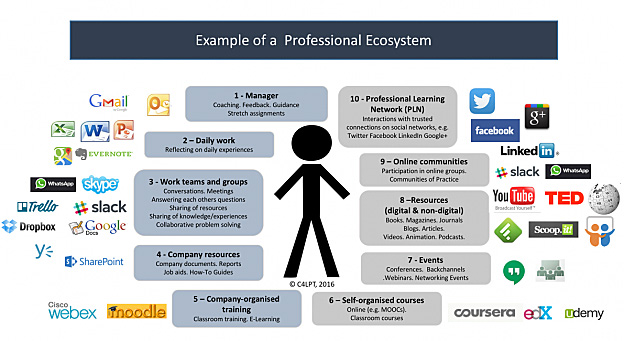
Note that such an ecosystem involves people, tools, processes and more — and is constantly changing. As Jane comments:
But the point to make very clear is that a PES is not a prescribed entity – so everyone’s PES will be different. It is also not a fixed entity – organisational elements will change as the individual changes jobs, and personal elements will change as the individual adds (or removes) external people, content and tools in order to maintain an ecosystem that best fits their needs.
Jane also mentions the concept of flows of new ideas and resources. I call these streams of content, and we need to both contribute items to these streams as well as take things from them.

So while Jane and I are on the same page on the vast majority of these concepts (and I would add Harold Jarche to this picture as well, whom Jane mentions with his Personal Knowledge Mastery (PKM) process), Jane broadens the scope of what I normally refer to as a learning ecosystem when she mentions, “it isn’t just about learning, but just as much about doing a job.”
Anyway, thanks Jane for your posting here.
Where are all the Kidcasts? — from theatlantic.com by Stephanie Hayes
Kids learn from podcasts, so why aren’t adults making more for them?
Excerpt:
The obvious follow-up question is why? Podcasts for kids seem like such a no-brainer. Podcasts could offer a solution to kids overdosing on dreaded “screentime,” a way to entertain and educate kids without fear of burning their retinas or letting their imaginations go to ruin. Plus, they could fit seamlessly into existing routines, filling long car trips or down-time before bed.
“One argument we’ve heard is that kids won’t sit through podcasts if they’re not being engaged visually,” said Molly Bloom, one of the producers of the children’s podcast Brains On!, echoing a sentiment I heard many times while researching this article. “But kids are used to hearing stories all the time.”
Microlearning: The e-Learning method taking off around the world — from educators.co.nz by Catherine Knowles
Excerpt:
Technology is disrupting traditional learning bringing new methods and tools into educational institutions and businesses.
Microlearning, for instance, has displayed great potential for growth, according to Association Learning + Technology 2016 – a report published by Tagoras and sponsored by YM Learning.
The report looks at the use of technology to enable and enhance learning in the continuing education and professional development market and provides insight into how the role technology plays in learning has and will evolve.
In fact, among five emerging types of learning (microlearning, massive open online courses (MOOCs), flipped classes, gamified learning, and microcredentials), microlearning shows the highest rate of adoption – and arguably the greatest potential for growth.
Podcasting is perfect for people with big ideas. Here’s how to do it — from by Todd Landman
Surprisingly few academics have learned how to podcast – but it’s a great way to reach a wider audience
Excerpt:
In the face of conflict in the Middle East, the flow of refugees to Europe and the violence associated with Islamic State and other militants, there has never been a more important time to talk about human rights. And talk about them is what I do – not in a lecture hall or at conferences with academics, but in a podcast series. Let me explain why.
I have worked as a political scientist for 25 years, focusing on human rights problems such as the struggle for citizenship rights in Latin America and the relationship between inequality and human rights violations.
I am part of a wide network of people dedicated to producing sound evidence on human rights, and my work has been communicated through articles, books and reports. But I am limited in my ability to reach the people I would most like to engage and influence – those who do not have an academic understanding of human rights but might benefit from finding out about it.
There is a new breed of academic who understands this and is committed to bridging the gap between academia and the real world. Many blog, actively seek media coverage of their research and appear on radio and television to shed light on the issues of the day.
From DSC:
Some of the tools that Landman mentioned were:
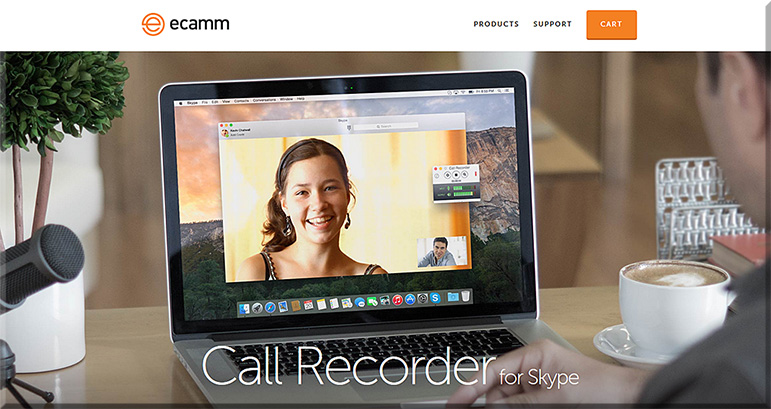
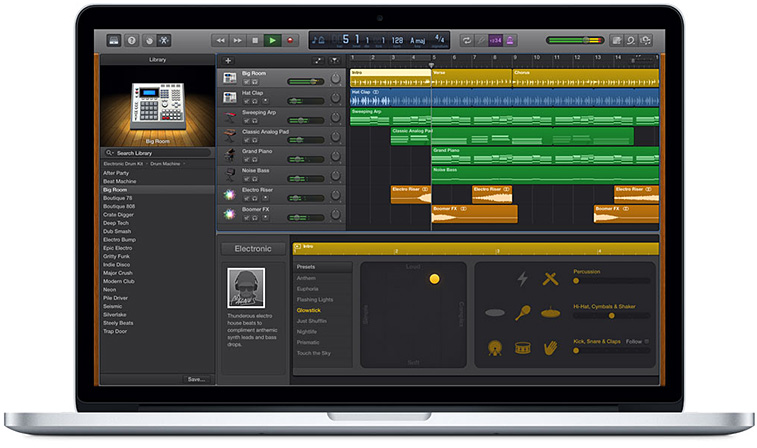
Some other tools to consider:
From DSC:
The above articles point to the idea — and the need — of creating “streams of content” — something that I wish more professors, teachers, staff, administrators, trainers, and instructional designers would create. Blogs, podcasts, and the use of Twitter come to my mind. Such channels could really help build others’ learning ecosystems.
Many professors and academics — folks who have so much information to share with the world — often produce works just for other academics in their discipline to review/check out. Such bubbles don’t have the impact that would occur if professors created streams of content for members of society to check out and learn from. Such mechanisms would also hopefully strip away some of the more academic sounding language and would get to the point.

Also see:
From DSC:
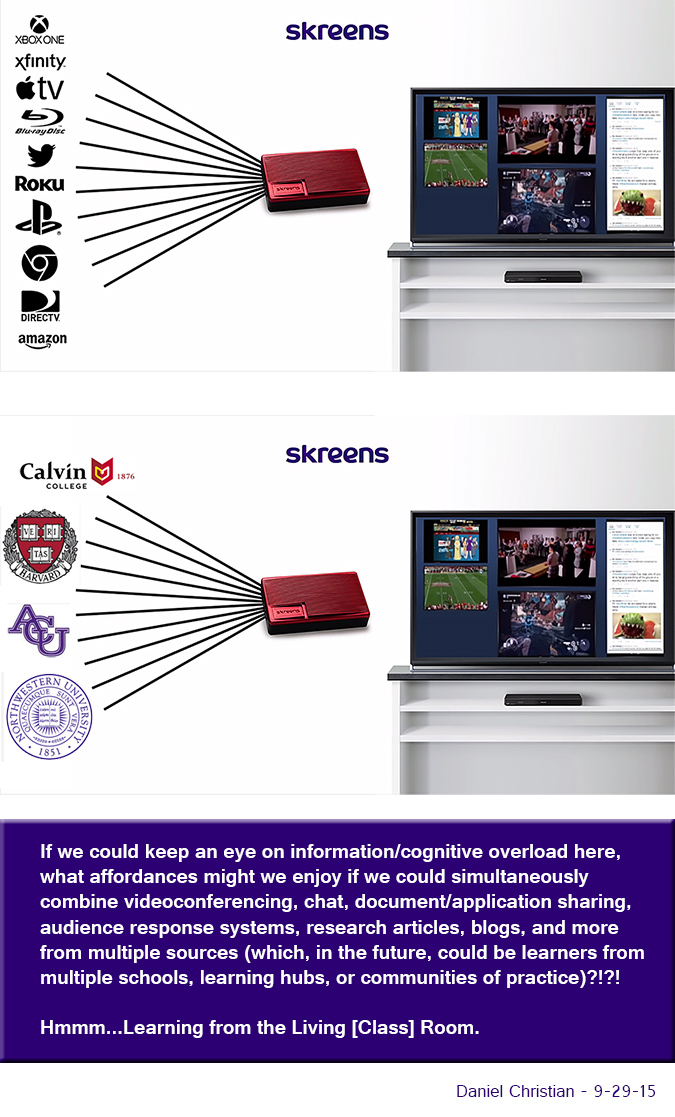
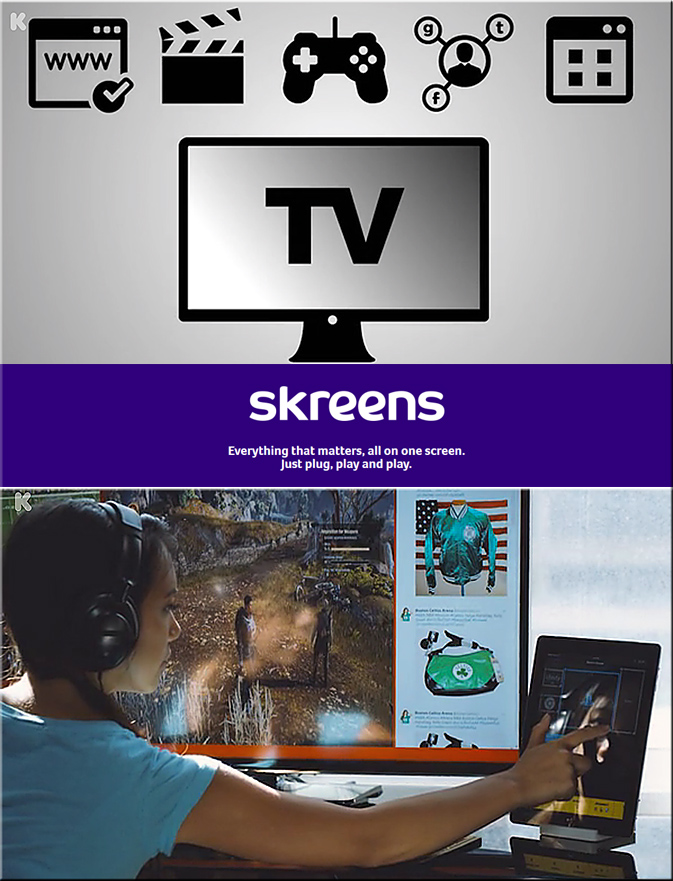
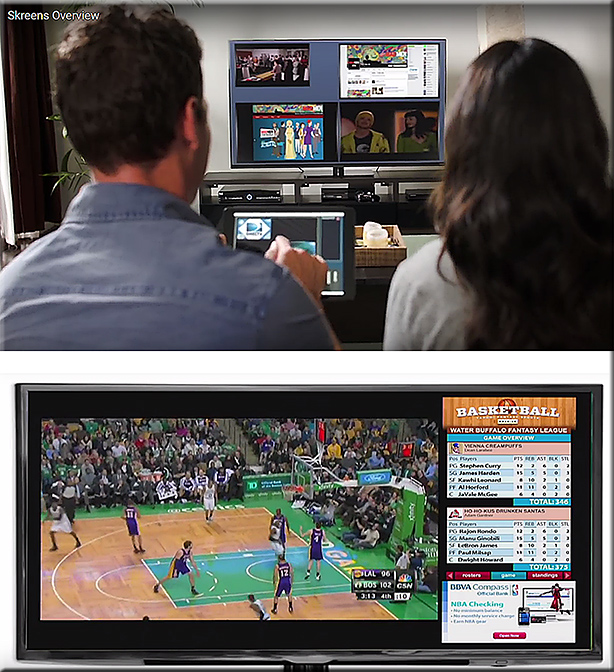
Imagine what learning could look like w/ the same concepts found in the Skreens kickstarter campaign? Where you can use your mobile device to direct what you are seeing and interacting with on the larger screen? Hmmm… very interesting indeed! With applications not only in the home (and on the road), but also in the active classroom, the boardroom, and the training room.
See
Skreens.com
&
Learning from the Living [Class] Room
![The Living [Class] Room -- by Daniel Christian -- July 2012 -- a second device used in conjunction with a Smart/Connected TV](http://danielschristian.com/learning-ecosystems/wp-content/uploads/2012/07/The-Living-Class-Room-Daniel-S-Christian-July-2012.jpg)
From DSC:
Some of the phrases and concepts that come to my mind:
Addendum:
Check out this picture from Meet the winners of #RobotLaunch2015
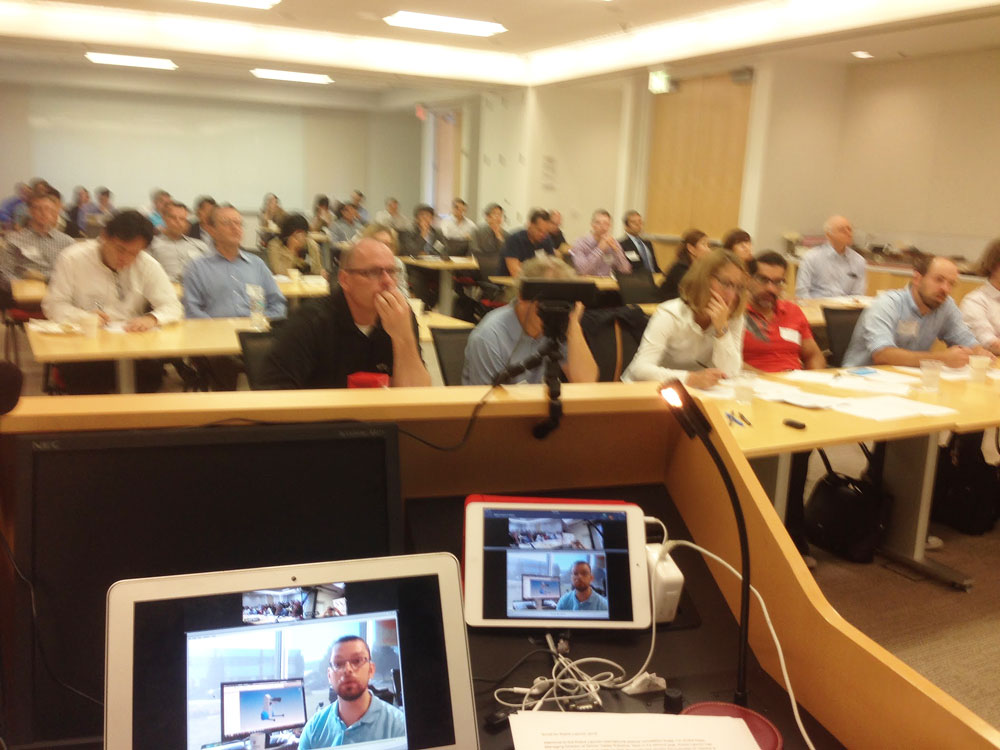
Packed house at WilmerHale for the Robot Launch 2015 judging – although 2/3rds of the participants were attending and pitching remotely via video and web conferencing.
From DSC:
Right upfront, I want you to know that I am not being paid for this posting. Rather I want to pass along some valuable information for those folks out there who want a powerful screencasting and video editing tool for the Mac. You should check out ScreenFlow from Telestream.net. The tool can record your desktop, your iPhone, and/or your iPad as well as can record audio from multiple sources.
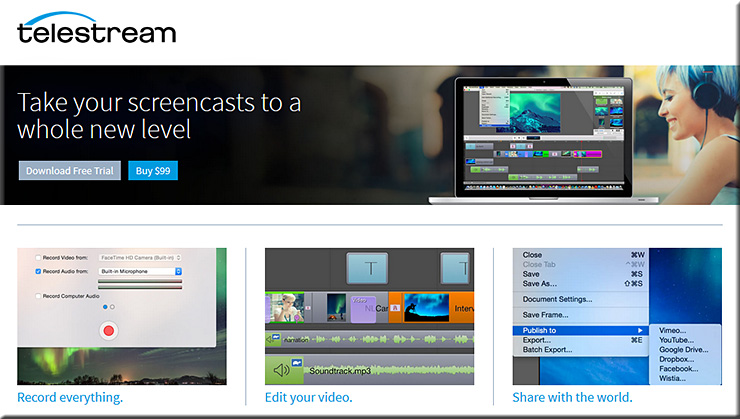
From their website:
Screenflow is award-winning, powerful screencasting & video editing software for Mac that lets you create high-quality software or iPhone demos, professional video tutorials, in-depth video training, and dynamic presentations.
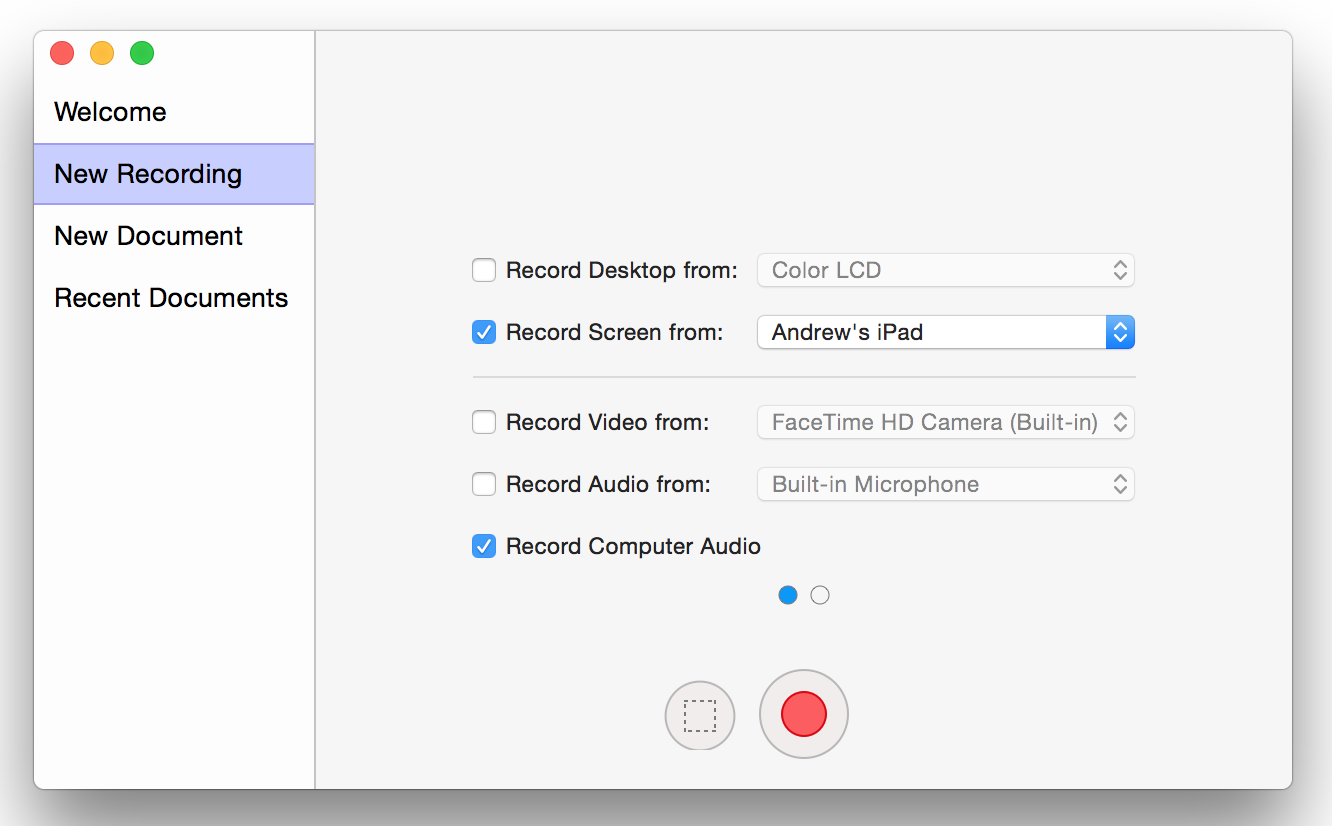
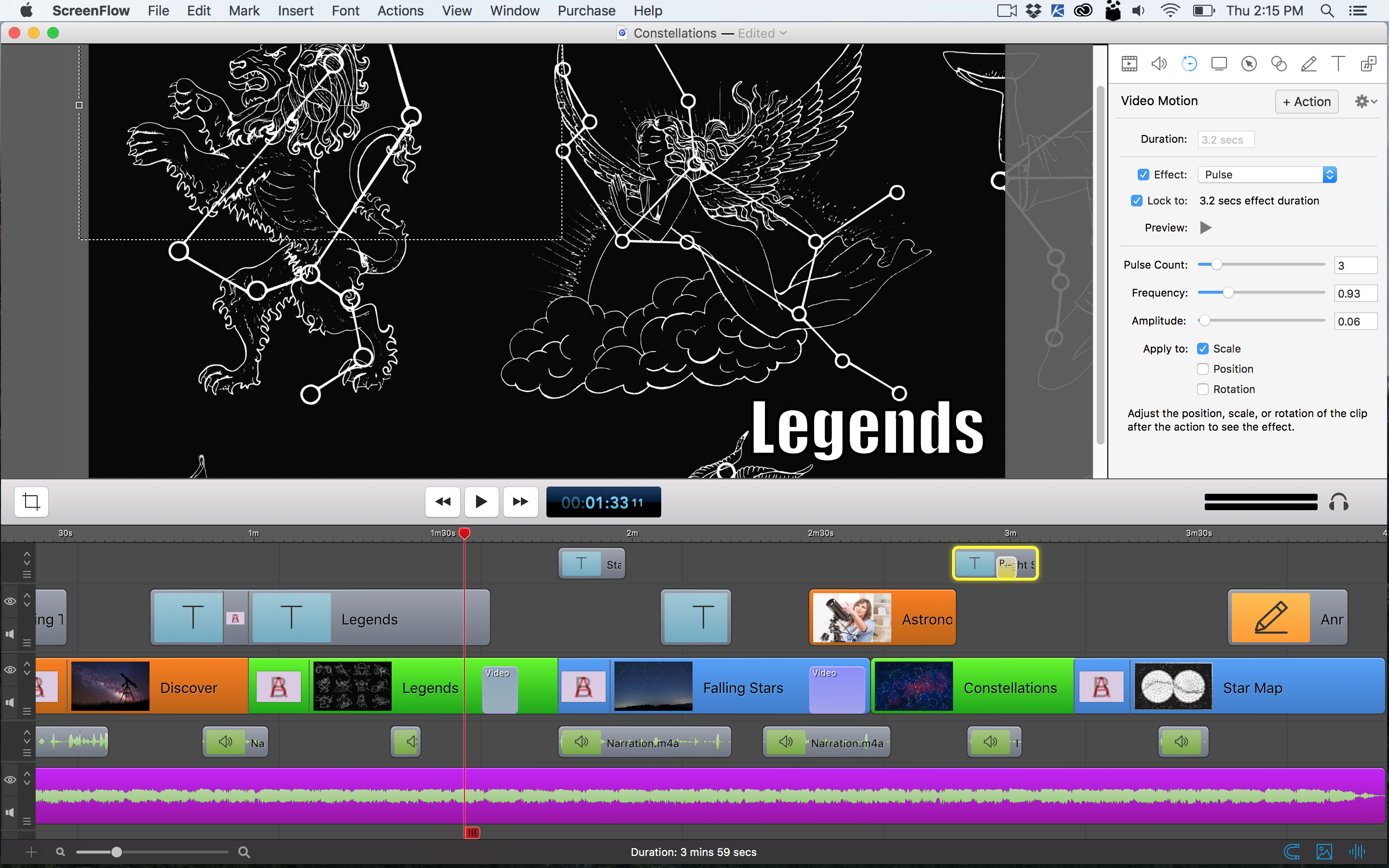
The timeline-based editor reminds me of the editing interface within iMovie 6 (one of the most intuitive interfaces I’ve seen in iMovie throughout the years). In our Teaching & Learning Digital Studio at Calvin College, the feedback from clients has been very positive.
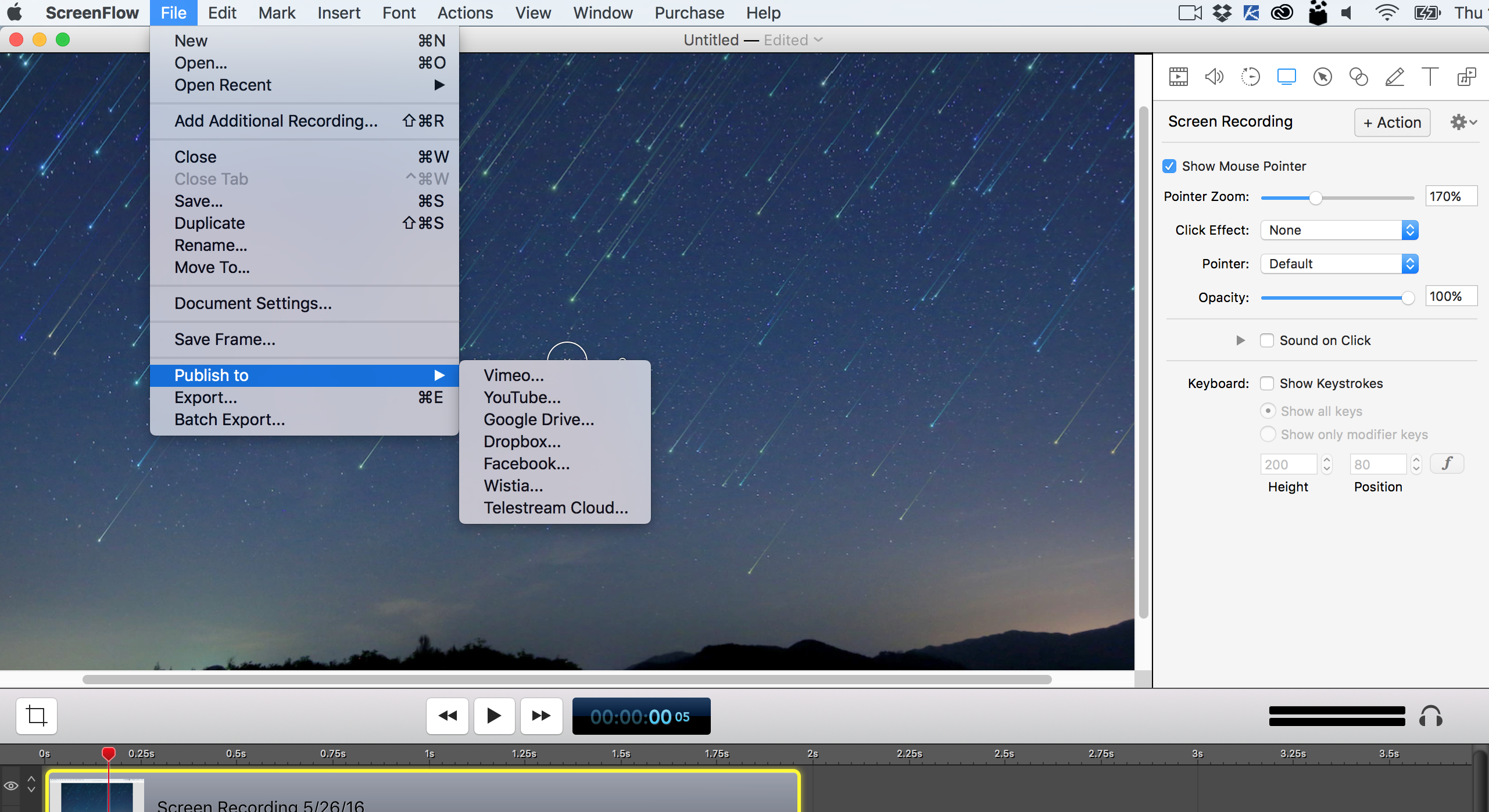
And you can export your creation to multiple outlets:
It’s a solid tool; check it out.
Graduate School 2.0: Three ways to put technology to work for graduate student success — from evolllution.com by Susan Aldridge | President of Drexel University Online, Drexel University
Excerpt (emphasis DSC):
Podcasting and Vodcasting
Although these digital techniques are becoming a popular enhancement for “flipping” classrooms and furnishing supplemental course materials, they’re also a great way to teach professional skills. For example, Karl Okomoto created LawMeets, an online moot court experience for budding transactional attorneys who, up until now, have been expected to learn the art of negotiation by reading textbooks and listening to lectures.
As a result, law students across the country can now use this unique virtual platform to practice and perfect their deal-making skills, by posting videos of themselves counseling their moot clients, which are peer-reviewed through a digital voting device. Top-rated performances are then critiqued by seasoned attorneys, who furnish a demonstration video of their own. Equally important, professors in other law schools are incorporating these online exercises into their own classroom activities, with excellent results, while Okomoto is making plans to deploy his platform for role-playing job interviews and salary negotiations.
By the same token, an inventive cardiologist and professor at the Temple University School of Medicine employed podcast technology to help students learn how to listen for heart murmurs. Appropriately called Heartsongs, this MP3 teaching tool provides audio recordings of common murmurs, complete with running commentary — and, so far, its track record is nothing short of amazing. Among the medical students and residents using it, diagnostic accuracy rates have skyrocketed to 90 percent compared to the average of 20 to 30 percent.
Here’s why the TV apps economy will be a $14 billion business — from forbes.com by Michael Wolf

.
Excerpt:
According to new research published this week, the TV apps economy is forecasted to reach $14 billion by 2017.
…
Take for example today’s news that Apple will begin selling video advertisements served by iAd through iTunes Radio loaded on Apple TVs. This is only the first move for Apple in this space, and others like Samsung and Google are already investing heavily in connected TV app advertising.
From DSC:
Why post this? Because:
.
From DSC:
And if this does take off,
$14 billion won’t begin to capture the profits from this new industry.
It will be far larger than that.
Relevant addendum on 6/27/13:

Via: [The Verge] Image Credits: [Venture Beat] [Home Theater]
The simple guide to academic podcasting: Post-production and audio platforms — from blogs.lse.ac.uk by Cheryl Brumley
Also see:
From DSC:
I would also add Garageband (on the Mac) as a nice entry-level tool.
Your future TV is not about Tele-Vision — from FastCompany.com by Kit Eaton
Excerpt (emphasis below from DSC; also see the above categories to see how I see this as a highly-relevant component to our future learning ecosystems):
Then imagine what a hybrid of Apple’s tech and efforts like GetGlue, Shazam, and other interactive systems will be like when they’re more integrated into your 2017 smart TV. The big screen in your living room won’t be a one-way window into another world you can’t touch anymore. It’ll be a discovery engine, a way to learn facts, interact with the world, talk to people, find new and surprising content to absorb. Advertisers will love it, and companies like Nielsen–which largely has to guess all those stats about who watches which show at primetime nowadays–will be able to get accurate data…which may mean more appealing shows.
Also see: