FutureOfTV-Apple-Oct2015


The New Apple TV Invigorates the Set-Top Box — from nytimes.com by Brian Chen

Excerpt:

I NEVER imagined I would get hooked on reading comic books on a TV screen. That changed last week after I picked up a new Apple TV.

The new device, which is similar to a set-top box and brings video and music from the Internet to a television, now has an app store. So I downloaded Madefire, one of the first apps available for the new device. Madefire adds a twist to digital comics with sound effects, music and motion, bringing the panels to life on the big screen. Within minutes, I was bingeing on a series about Superman turning into a corrupt dictator.

Playing with apps is just one new feature of the revamped Apple TV, which will ship this week. It’s that plethora of innovations and apps that leads me to conclude that the upgraded $149 box is now the best TV streaming device you can get for your money.


Apple TV challenges developers to take apps to the big screen — from http://finance.yahoo.com by Julia Love

Excerpt:

(Reuters) – Apple’s loyal army of software developers is joining the tech giant in its bid to conquer the living room with a new version of Apple TV, creating apps for the big screen that they hope will attract users and unlock a rich source of revenue.

A long-awaited update to Apple TV, which launched in 2007, will start shipping in 80 countries on Friday.

Apple views apps as the future of television. An App Store is the centerpiece of the new device, and hundreds of apps will be ready at launch, including gaming, shopping and photography.

Although developers have already been able to make apps for smart TV rivals, Apple’s vast base of developers will set the device apart, analysts say. And developers say they relish the opportunity to reach users in a more intimate setting.


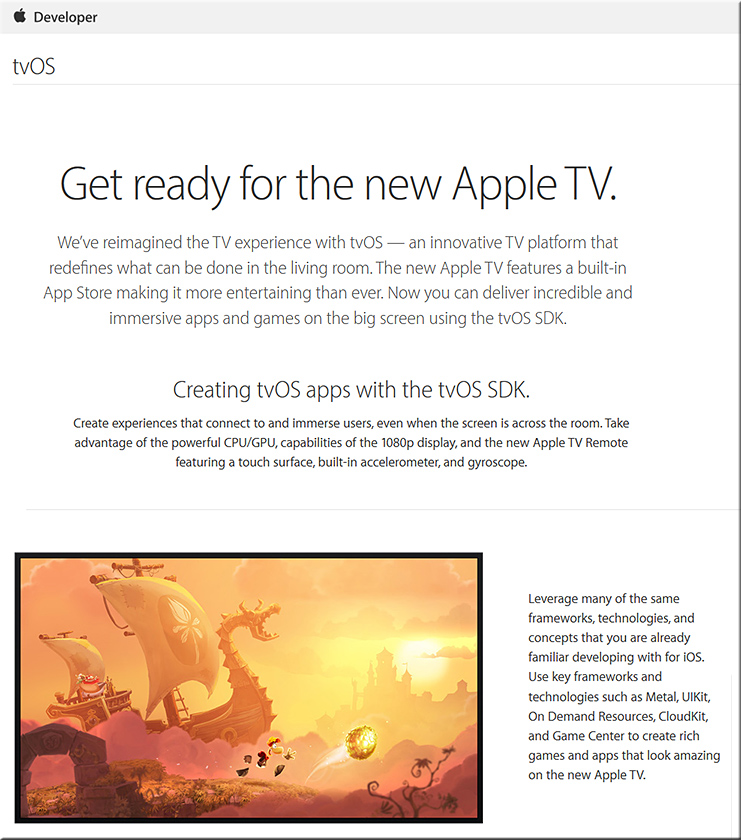
tvOS > Developer information


AppleTV-tvOS-Oct2015


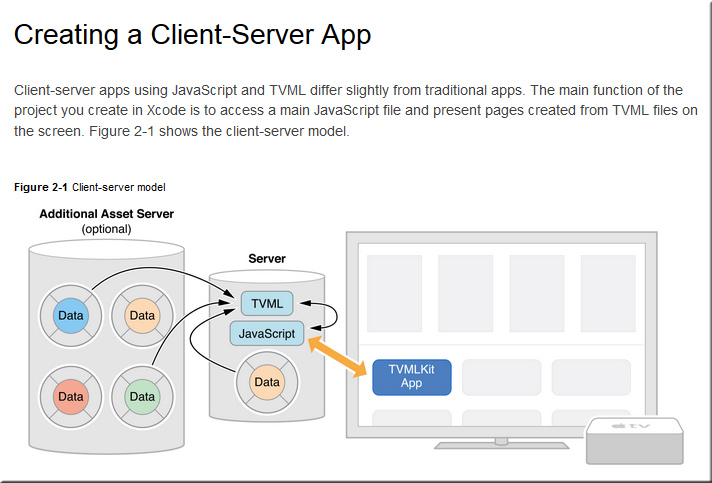
Building Apple TV Apps > Creating a Client-Server App


ClientServerApp-tvOS-Oct2015


Which Apple TV Should You Buy? — from wired.com

Excerpt:

Pre-orders for the new Apple TV have begun. Well, technically, the new Apple TVs; the latest model comes in two sizes. Oh, and the previous version remains available too. For the first time in Apple TV history, you’ve got options. Now it’s time to figure out which one’s right for you.


‘Aerial’ brings beautiful Apple TV video screensavers to your Mac — from 9to5mac.com


screensavers-oct2015


Addendum:


Florida Universities take system approach in addressing growth of online — from campustechnology.com by Dian Schaffhauser

Excerpt:

The Board of Governors for the State University System of Florida is putting final touches on a strategic plan for online education. The idea is to create a framework around which all 10 institutions in the system with online programs can pool their “collective talents and resources toward a common purpose” — helping Florida citizens earn credentials that will “improve their lives, lead to new discoveries and advanced Florida’s economy.” The plan was first begun a year ago when the board created a task force to examine how the state could better meet workforce needs through online education and increase effectiveness while reducing costs.

The goal of the “2025 Strategic Plan for Online Education” is intended to guide development and implementation of system policies and legislative budget requests related to online education with a focus on three primary elements: quality, access and affordability.


Also see:

  • U Florida turns distance learning into searchable video on demand — from campustechnology.com by Rhea Kelly
    Excerpt:
    The University of Florida is rolling out technology from Sonic Foundry to record, store and manage distance learning courses, collaborative meetings and special events that occur via videoconference. The cloud-based Mediasite Join product can record any videoconference and make the content searchable, with no additional appliances or equipment required. Users invite Mediasite Join as a participant to a videoconference, and the technology then transcodes, indexes and publishes recorded calls to Mediasite alongside the institution’s other video assets.
 

Google teams up with Udacity to introduce a new tech entrepreneurship nanodegree — from thetechportal.in by Mir Juned Hussain

Excerpt (emphasis DSC):

Google, during its I/O 2015 developer conference in May had announced a partnership with Udacity to launch a six-course Android Development Nanodegree. The company wanted to allow developers to learn how to write apps for Google’s mobile operating system. 

Surprisingly, these new Nanodegrees turned out to the most popular ones by Udacity, attracting more than 300,000 people to enrol in the courses. The web giant wanted anyone, technical or not, to learn not just the basics of how to build Android, iOS, and web apps, but also to explain what it takes to design, validate, prototype, monetize, and market app ideas.

As a part of that initiative, Google has now introduced a new Nanodegree, which will consist of a Tech Entrepreneurship certificate, access to coaches, guidance on your project, help staying on track and career counseling. If all you want is the content, quizzes, and projects, all of that is available online for free at udacity.com/google.


From DSC:
This item made me wonder:

Will setting up nanodegrees become a trend for OS providers?  That is, will Google be more successful in the marketplace than either Apple or Microsoft if they develop a series of nanodegrees?  In fact, taking that one step further…will doing so become a competitive necessity for OS providers?  For other software-related vendors?

Hmmm….


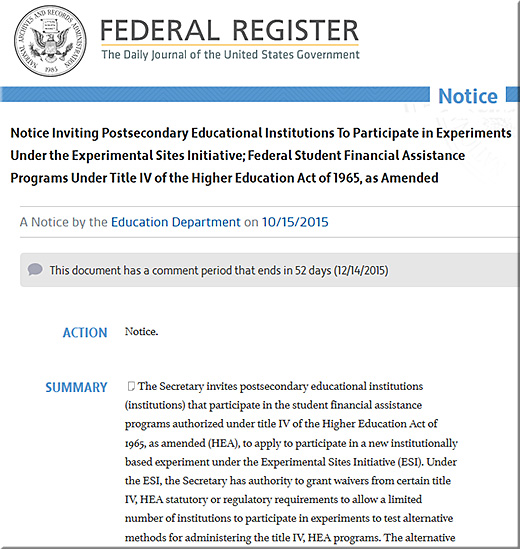
Ed Dept pilot opens aid to alternative credentialing — from educationdive.com

Excerpt:

  • The U.S. Department of Education on Wednesday [10/14/15] unveiled the Educational Quality Through Innovation Partnerships (EQUIP) program, an experimental pathway to Title IV funding for partnerships between higher ed institutions and nontraditional programs.
  • The program has been brewing for some time under the experimental sites initiative, though it will remain limited to about 10 applications from applicable partnerships.
  • Likely candidates for participation in the pilot include coding bootcamps, MOOC providers, and various short-term certificate and corporate training programs, and according to Inside Higher Ed, inclusion will also give institutions freedom from a federal aid ban on colleges that outsource over half of their content or instruction to an unaccredited third party.


Also see:

Alternatives-Funding-Gov-10-14-15

Excerpt:

Background: The landscape for learning in postsecondary education is undergoing tremendous development. Innovations in technology, pedagogy, and business models are driving rapid change. While much of this development has been led by traditional postsecondary institutions, there are also significant educational changes occurring outside of the traditional educational sector. Non-traditional providers have begun to offer educational opportunities to students in new ways, such as through intensive short-term programs, online or blended approaches, or personalized/adaptive learning. These opportunities have the potential to advance goals such as increased equity and access, more flexible and personalized learning, high-quality student outcomes, and reduced costs.

Although some of these educational opportunities show promise in advancing these priorities, they remain out of reach for many students, particularly those from low-income backgrounds, in part because they generally do not provide students with access to title IV aid. The unavailability of title IV aid could increase the potential for educational inequity, because only those students with significant financial resources are able to enroll in these innovative programs, and it may constrain the growth of promising new approaches to learning.


University-Run Boot Camps Offer Students Marketable Skills — but Not Course Credit — from chronicle.com by Ellen Wexler

Excerpt (emphasis DSC):

Level, a venture that offers students courses in data analytics, has a motto of sorts. It’s written in large letters across the program’s website: “Real skills. Real experience. Two months.”

The motto sounds a lot like the boot-camp style of education offered by companies like General Assembly. But Level, a product of Northeastern University, is neither a private company nor a Silicon Valley startup. It is one of the first boot-camp programs created by a traditional university, and it exists alongside Northeastern’s master’s programs in subjects such as urban informatics and information design and visualization.


Also see:

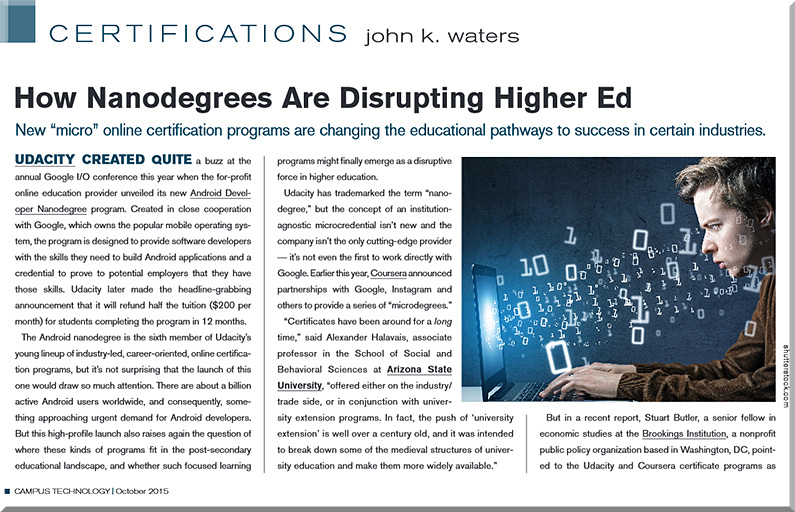
How Nanodegrees Are Disrupting Higher Ed — from Campus Technology’s October 2015 edition
New “micro” online certification programs are changing the educational pathways to success in certain industries.


nanodegrees-disrupting-HE-oct2015


Addendum on 10/15/15:

  • For 1st time, MIT’s free online classes can lead to degree — from monroenews.com
    Excerpt:
    CAMBRIDGE, Mass. (AP) – The Massachusetts Institute of Technology has offered free online courses for the last four years with one major downside: They didn’t count toward a degree. That’s about to change. In a pilot project announced Wednesday, students will be able to take a semester of free online courses in one of MIT’s graduate programs and then, if they pay a “modest fee” of about $1,500 and pass an exam, they will earn a MicroMaster’s credential, the school said. The new credential represents half of the university’s one-year master’s degree program in supply chain management. As part of the pilot project, students who perform well in the online half can take an exam to apply for the second semester on campus. Those who get in would pay $33,000, about half the cost of the yearlong program.
 

Networks and the Nature of the Firm — from medium.com by Tim O’Reilly
The discussion around companies like Uber and Airbnb is too narrow. The issue isn’t just employment, but a huge economic shift led by software and connectedness.

Excerpt:

One of the themes we’re exploring at the Next:Economy summit is the way that networks trump traditional forms of corporate organization, and how they are changing traditional ways of managing that organization. Uber and Airbnb are textbook examples of this trend. Uber has ambitious plans to manage hundreds of thousands?—?eventually even millions?—?of independent drivers with a small core of employees building a technology platform that manages those workers. Airbnb is on track to have more rooms on offer than large hotel chains, with under a thousand employees.

But the Internet takes the networked firm to a new level. Google, the company that ended up as the prime gateway to the World Wide Web, provides access to a universe of content that it doesn’t own yet has become the largest media company in the world. 13–24 years olds already watch more video on YouTube, much of it user-contributed, than they watch on television. And Amazon just surpassed WalMart as the world’s most valuable retailer by offering virtually unlimited selection, including marketplace items from ordinary individuals and small businesses


HBX Intros HBX Live Virtual Classroom — from campustechnology.com by Rhea Kelly

Excerpt:

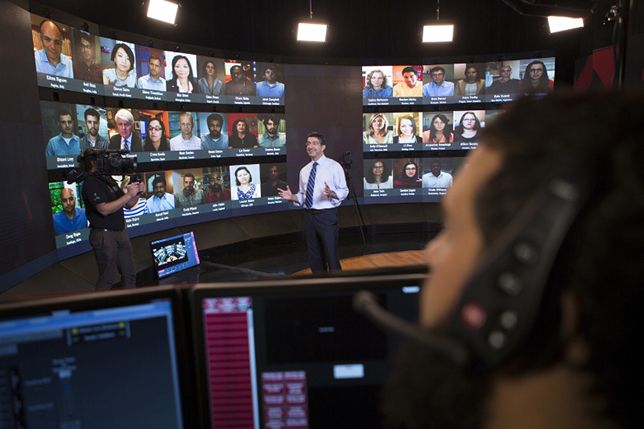
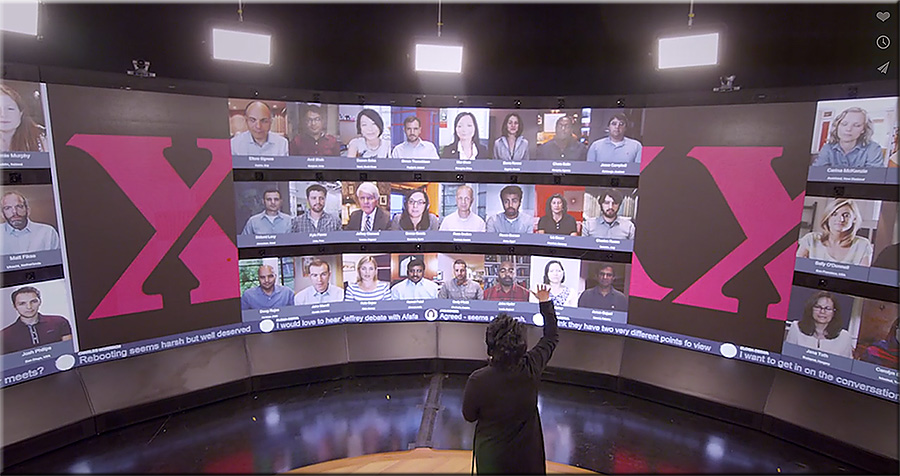
Harvard Business School‘s HBX digital learning initiative today launched a virtual classroom designed to reproduce the intimacy and synchronous interaction of the case method in a digital environment. With HBX Live, students from around the world can log in concurrently to participate in an interactive discussion in real time, guided by an HBS professor.

Built to mimic the amphitheater-style seating of an HBS classroom, the HBX Live Studio features a high-resolution video wall that can display up to 60 participants. Additional students can audit sessions via an observer model. An array of stationary and roaming cameras capture the action, allowing viewers to see both the professor and fellow students.


HBX Live

HBX Live’s virtual amphitheater
(PRNewsFoto/Harvard Business School)


Also see HBX Live in Action

I think that this type of setup could also be integrated with a face-to-face classroom as well (given the right facilities). The HBX Live concept fits right into a piece of my vision entitled, “Learning from the Living [Class] Room.”

Several words/phrases comes to mind:

  • Convenience. I don’t have to travel to another city, state, country. That type of convenience and flexibility is the basis of why many learners take online-based courses in the first place.
  • Global — learning from people of different cultures, races, backgrounds, life experiences.
  • The opportunities are there to increase one‘s cultural awareness.
  • HBX Live is innovative; in fact, Harvard is upping it’s innovation game yet again — showing a firm grasp/display of understanding that they realize that the landscape of higher education is changing and that institutions of traditional higher education need to adapt.
  • Harvard is willing to experiment and to identify new ways to leverage technologies — taking advantage of the affordances that various technologies offer.

BTW, note how the use of teams is a requirement here.


HBXLive-8-26-2015


Also see:

Harvard Business School really has created the classroom of the future — from fortune.com by  John A. Byrne

Excerpt:

Anand, meantime, faces the images of 60 students portrayed on a curved screen in front of him, a high-resolution video wall composed of more than 6.2 million pixels that mimics the amphitheater-style seating of a class HBS tiered classroom


Establishment goes alternative — from insidehighered.com by Paul Fain

Excerpt:

Traditional colleges have been mostly on the sidelines for the early development of online microcredentials or badges — the kind that aren’t linked to conventional courses and the credit hour. Educational technology companies and other alternative providers have taken the lead in working with employers on these skills-based credentials.

A new prototype from a group of seven brand-name universities could change that.

Tentatively dubbed the University Learning Store, the project is a joint effort involving the Georgia Institute of Technology, Northwestern University, the University of Washington, the University of California’s Davis, Irvine and Los Angeles campuses, and the University of Wisconsin Extension.


White House: Innovation in Higher Education — from elearnspace.org by George Siemens

Excerpt from George’s posting (emphasis DSC):

A few weeks ago, I received an invitation to the White House. The invitation was somewhat cryptic, but basically stated that the focus on the meeting was on quality and innovation.

2. Higher education generally has no clue about what’s brewing in the marketplace as a whole. The change pressures that exist now are not ones that the existing higher education model can ignore. The trends – competency-based learning, unbundling, startups & capital inflow, new pedagogical models, technology, etc – will change higher education dramatically.

3. No one knows what HE is becoming. Forget the think tanks and the consultants and the keynote speakers. No one knows how these trends will track or what the university will look like in the future. This unknowability stems from HE being a complex systems with many interacting elements. We can’t yet see how these will connect and inter-relate going forward. The best strategy in a time of uncertainty is not to seek or force the way forward, but to enter a cycle of experimentation. The Cynefin Framework provides the best guidance that I’ve seen on how to function in our current context.

7. Expect a future of far greater corporate involvement in HE. VC funds are flowing aggressively and these funders are also targeting policy change at local, state, and national levels. We aren’t used to this level of lobbying and faculty is unprepared to respond to this. Expect it. Your next faculty meeting will involve a new student success system, a personalized learning system, an analytics system, a new integrated bootcamp model, new competency software, new cloud-based computing systems, and so on. Expect it. It’s coming.

8. Expect M & A activities in higher education. I fully anticipate some combination of partnering with companies like General Assembly, creation of in-house bootcamps, or outright acquisitions by innovative universities.


Higher Education is moving from a 4 year relationship to students to a 40 year relationship.


From DSC:

[First of all, if you read this George, thanks for sharing your experiences, reflections, and recommendations from your recent trip to the White House. I/we appreciate it.]

I can’t agree with — and emphasize — George’s second point (above) strongly enough. Too often, I think we have our heads and eyes pointed downward, busy in our work; we fail to look up and see what’s happening all around us. We neglect to see the trends that are occurring and that will likely have an impact on us. If we were doing this, as we should be doing, several of our priorities would instantly change and there would be a much stronger sense of urgency in identifying some new directions/strategic initiatives/experiments within institutions of traditional higher education.

I don’t see our institutions competing with our typical/normal peer groups of the past. More and more, I think that we are competing with the new models, startups, and alternatives to traditional higher education. Yes, traditional institutions of higher education can respond and change — some have been doing so already. But how many of our institutions within the overall learning ecosystems are not experimenting? How many of our institutions have their heads buried in the sand, waiting for the good old days to return? Those days are not going to return. They’re gone. That ride is over. We need to wake up and adapt before the alternatives gain momentum (perhaps even borrowing some strategies from the alternatives, hmm?).

This is why I’m big on experimentation and the implementation of TrimTab Groups within higher education.

Finally, you may not like the word “disruption” and you may think it’s overused. But I don’t think we’ve seen anything yet.

As George warns in his posting, there are dramatic changes to higher education coming down the pike. George is not one to hype things up — he is a level-headed deep thinker. I’d suggest that we listen to what he’s saying to us via his experiences and reflections from participating in his recent meetings/conversations held at the White House.


RealEstate-HigherEd-DanielSChristian11-1-13


TheTrimtabInHigherEducation-DanielChristian


The 3 instructional shifts that will redefine the college professor — from edsurge.com by Ryan Craig

Excerpts:

As faculty at colleges and universities are all too aware, it’s hard to do two jobs at the same time. Since the advent of the modern research university over a century ago, faculty have effectively held down two jobs: conducting (and publishing) research and teaching students.

Arguments for the dual-role professor seem logical. Knowledge production should make one a better instructor. Students should benefit from teachers producing the latest knowledge. But there’s precious little data to support that adding the research job to the instruction job improves student outcomes.

The downside is that both jobs require significant expertise and commitment to do well.

There is an emerging consensus as to what works best for onground instruction. It’s called the Dynamic Classroom, and it looks like this:

  • Flip classroom so “transfer of information” occurs ahead of class
  • Incorporate technology in the classroom (handheld clickers or smartphone apps) to quickly ascertain whether students have understood key concepts
  • Integrate active learning techniques to improve understanding of key concepts, including peer learning, group problem solving, project-based learning and experiential learning via studios and workshops
  • Include “perspective transformation” exercises wherein students change their frames of reference by critically reflecting on their assumptions


From DSC:
First of all, I second the idea of splitting up the responsibilities of researching and teaching. Both roles are full-time jobs and require different skillsets. With students paying ever higher tuition bills, students deserve to take their courses from professors who know how to teach (not an easy job by the way!). 

But the unbundling doesn’t — and shouldn’t — stop with the splitting up of the teaching and research roles.

Let’s look at another of the instructional shifts that Ryan considers — and that is the move towards the use of smartphones and apps:

In this environment, we can imagine one app for Economics 101 and another for Psychology 110. They are also the ideal platform for simulations and gamified learning and can tailor the user experience further by incorporating real-world inputs (e.g., location of the student) into the material. But, like the dynamic classroom, apps require an unparalleled level of development and instructional expertise—a full-time job for faculty who will be teaching online.

I think there’s some serious potential with this approach, especially given the trend towards more mobile computing and the affordances that come with using mobile technologies.

However, when we start delivering teaching and learning experiences that involve the digital/virtual realm like this, we’re instantly catapulted into a world that requires additional skills. As such, I highly doubt that the majority of faculty members have the time, interests, passions, or the abilities/gifts to code such apps.  They would have to simultaneously be (or become) a programmer/developer, an instructional designer, a graphic designer, a copyright expert, an expert in accessibility, instantly knowledgeable in user interface and user experience design, as well as continue to serve as the Subject Matter Expert (SME) — and I could list other roles as well. That is why we need TEAMS of specialists. If the trends towards moving more of our teaching and learning experiences online and/or into such digital realms continue, then our current models simply won’t cut it anymore, at least in the majority of cases.

I appreciate Ryan’s article and second the main idea of splitting up the teaching and researching responsibilities. But again, when we’re talking developing apps, we had better be talking employing the use of teams — or the students will likely not be better off.

—–

A related quote from “In Sign of the Times for Teaching, More Colleges Set Up Video-Recording Studios” — from The Chronicle

At some colleges, media teams sit down with professors ahead of time and lay out long-term strategies to determine how video may enhance the learning experience of students in their courses.

The media team offers instructors a number of planning worksheets to encourage them to think more about the purpose of videos in their courses.


 —–


Beyond Automation — from hbr.org by Thomas Davenport & Julia Kirby

Excerpt (emphasis DSC):

After hearing of a recent Oxford University study on advancing automation and its potential to displace workers, Yuh-Mei Hutt, of Tallahassee, Florida, wrote, “The idea that half of today’s jobs may vanish has changed my view of my children’s future.” Hutt was reacting not only as a mother; she heads a business and occasionally blogs about emerging technologies. Familiar as she is with the upside of computerization, the downside looms large. “How will they compete against AI?” she asked. “How will they compete against a much older and experienced workforce vying for even fewer positions?”

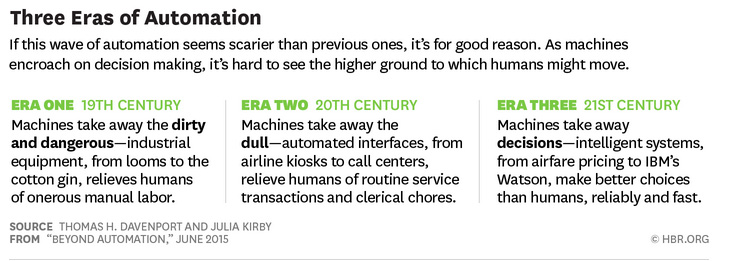
Suddenly, it seems, people in all walks of life are becoming very concerned about advancing automation. And they should be: Unless we find as many tasks to give humans as we find to take away from them, all the social and psychological ills of joblessness will grow, from economic recession to youth unemployment to individual crises of identity (*DC insert: See my footnote below). That’s especially true now that automation is coming to knowledge work, in the form of artificial intelligence. Knowledge work—which we’ll define loosely as work that is more mental than manual, involves consequential decision making, and has traditionally required a college education—accounts for a large proportion of jobs in today’s mature economies. It is the high ground to which humanity has retreated as machines have taken over less cognitively challenging work. But in the very foreseeable future, as the Gartner analyst Nigel Rayner says, “many of the things executives do today will be automated.”


3-eras-automation-davenport-kirby-jun2015


From DSC:
* These are the types of concerns I was trying to get at when I asked the question:  Which street do we care more about, Wall Street or Main Street?

If the we make decisions solely on the basis of the bottom lines and with an eye solely on shareholders, we could have some major issues to deal with. We must consider the effects of automation on Main Street, not just on Wall Street.


From DSC:
The phenomenon I’m thinking about are:

  1. We in higher education are so peer-oriented that we don’t lead.  That is, if our peers would do X, then we could do X.  But if they aren’t doing it, we can’t or shouldn’t do it either.  As Barnds says in his article below, “We continue to play a game of chicken as we wait for a so-called peer to do what we need to do.”

  2. We are so peer-oriented that we don’t see that if we don’t lead and care far less about what our peers are doing, we risk being in a situation where we’re simply shifting chairs around, and doing so aboard the Titanic.

  3. Why do I say Titanic? Because if we don’t address the growing chasm between what the corporate world wants/expects and what learners/families expect, we risk creating a void that WILL BE filled by another completely new system or systems. There WILL BE disruption if we don’t address the gaps. People will find other routes.

  4. Folks in leadership positions within higher education have no choice but to deal with risk.  If you don’t do anything, you are courting an enormous amount of risk. You are running a very dangerous experiment and your institution will likely be a shadow of what it once was (if it’s even able to remain open at all in the future). But if you change something — such as lowering the price of obtaining a degree — you also face risk. So risk comes with the job; there’s no escaping it.  But just don’t make the mistake of thinking there’s no risk in pursuing the status quo.


The Best Pricing Model: Transparency — from insidehighered.com by W. Kent Barnds

Excerpts:

The current funding model for higher education is broken and we can only blame ourselves for creating a norm of bargain basement pricing for those families in the know, opaque business models and unexplained annual increases based more on competitors’ current price tag rather than our actual campus needs. We continue to play a game of chicken as we wait for a so-called peer to do what we need to do.

There are significant risks involved in changing how we discuss pricing, cost and value. Private colleges, as tuition-dependent institutions, are hesitant to try something new, especially if all of our peers stick with the currently murky language and approaches to cost and price.

As an industry, we need to work at getting it right for our students, which includes lowering actual costs for students and maintaining sufficient revenue to deliver on our mission.

Further, colleges need to clearly describe their business model to their campus constituents, students and parents of current students and delineate how the annual operation is funded. Finally, leaders need to acknowledge that percentage increases in tuition costs cannot continue in perpetuity. At some point we will price ourselves out of the market and into bankruptcy.

Seldom is there a clear statement that all students will pay at least $XXXX less to attend the next year. I realize this is pretty tricky — saying that the education offered is less expensive than the previous year — but this is exactly what’s missing and why many of the efforts so far seem to miss the mark.


Institutions say this is the new priority in higher education — from ecampusnews.com by Ron Bethke; with a shout out to eduwire.com for their comments/posting on this
Survey reveals institutions, like UC Irvine, are putting greater effort into tracking graduates’ success and helping them continue learning through short-term programs.

Excerpt:

The days of warmly wishing graduates farewell and good luck after four years is not a sustaining strategy for colleges and universities, says a new report. Instead, offering online programs to keep graduates coming back to the institution for continuing career education is quickly becoming higher-ed’s newest must-offer.

Simply better understanding how graduates are doing isn’t the only way institutions are showing their commitment to lifelong career success. Though only 4 percent of respondents currently offer short-term alternative credentials such as digital badges and short-term certificates for graduates changing careers or looking to learn new skills, 50 percent of responding senior executives plan to add these customizable certificates to their portfolio in the next five years, with another 30 percent planning to offer digital badges in the same time frame.

“Universities and colleges want better ways to connect with alumni for years to come,” said EAB Practice Manager Carla Hickman. “This means offering not just surveys, but also new, intensive learning opportunities that support lifelong achievement and success of students.”

UC Irvine, for example, is currently working on setting up special communities for alumni taking various MOOCs on Coursera, in order to bring more graduates back to learn in more meaningful ways.

“[Millennials] are seeking short-format courses and credentials for ‘just-in-time’ and ‘just enough’ education.


From DSC:
Given the pace and far-reaching impact of today’s changes, lifelong learning is now a requirement. Learning new things, staying on top of trends, peering out into the future to see what’s coming down the pike — these are important actions that we all need to take to remain marketable.  If we see robots, algorithms, and automation coming into the neighborhood of our particular jobs, then we had better be looking and preparing for something else.  At that point, we’ll need to pivot…to adapt…to change.

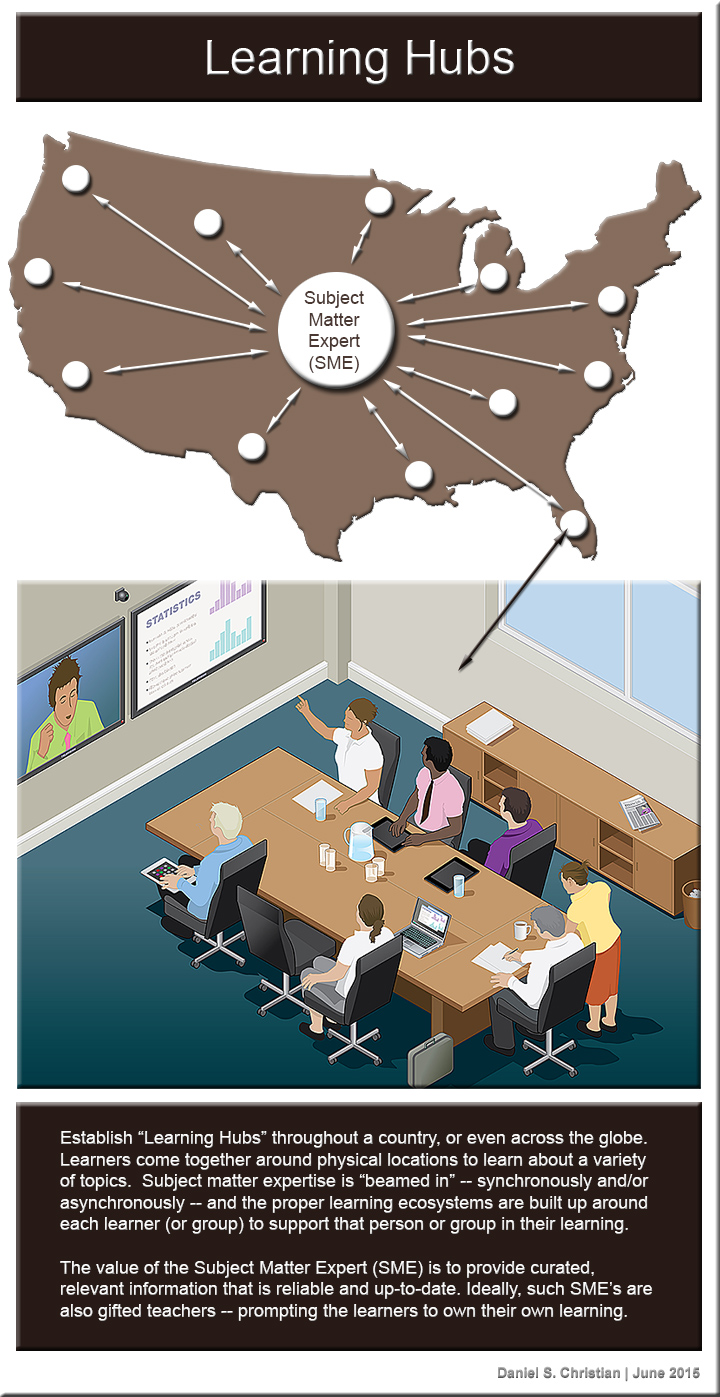
Speaking of change, the article above reminds me of a potentially more utilized “distribution channel” — or model, if you will — that universities, colleges, and businesses could be moving towards in the future.  And that is, that organizations could be moving towards providing streams of relevant, curated, dependable content to learning hubs around the globe. Hubs that feature blended learning where some of the content is beamed in from Subject Matter Experts (such as professors, teachers, trainers, and others) and some of the content is dealt with in a face-to-face manner.  The beamed in content could be done synchronously and/or asynchronously. And as people often like to learn with others around a physical location, I could see this type of model taking off. 

It would feature smaller, bite-sized chunks of content and investigations into a topic. But the model would have to allow for such a learning provider to be nimble and responsive — always up-to-date. That way they could provide such “just-in-time” and “just enough” learning.

Other words that come to my mind here — both as individuals and as institutions — are the following:

  • Reinvent
  • Staying relevant
  • Surviving
  • Being responsive


StreamsOfContent-DSC


DanielSChristian-Learning-hubs-June2015


An increasingly popular job perk: Online education — from chronicle.com by Mary Ellen McIntire

Excerpt:

Southern New Hampshire University has become the latest institution to team up with a major employer to make online courses a benefit of employment.

A partnership between Southern New Hampshire and Anthem Inc., a health-insurance company, will allow some 55,000 Anthem employees to earn associate or bachelor’s degrees through the university’s College for America, a competency-based assessment program.

The announcement is one of several recent deals between a college and a corporation that will expand higher-education opportunities for employees at no or reduced cost, following a high-profile deal, announced last year, between Starbucks and Arizona State University. On Monday, Fiat Chrysler Automobiles announced a similar arrangement with Strayer University.


Alternatives to traditional higher education continue to develop:


Google partners with Udacity to launch Android development nanodegree — from techcrunch.com by Frederic Lardinois

Excerpt:

At its I/O developer conference in San Francisco, Google announced [on 5/28/15] that it has partnered with Udacity to launch a six-course Android development nanodegree.

The idea here is to help developers learn how to write apps for Google’s mobile operating system “the right way” up to the point where they could potentially be hired by Google itself.


Udemy alternatives for selling video courses online — from robcubbon.com

Excerpt:

Udemy is currently the leading online learning platform. Their top 10 instructors all made over $500,000 last year and the top earner makes over $8 million. I make $4000+ each month by selling courses on Udemy.


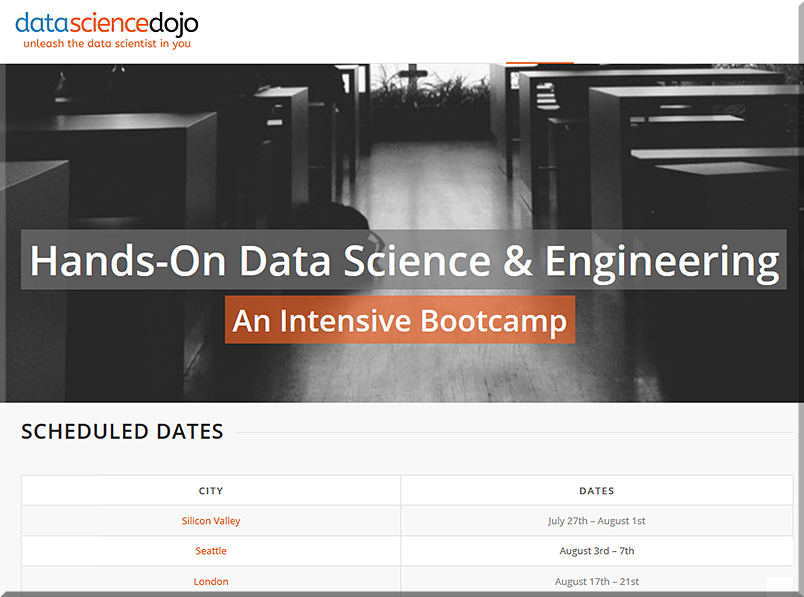
16 startups poised to disrupt the education market — from inc.com by Ilan Mochari
Colleges and universities are facing new competition for customers–students and their parents–from startups delivering similar goods (knowledge, credentials, prestige) more affordably and efficiently. Here’s a rundown of some of those startups.


bootcamp-datascience-NY-june2015


datasciencedojo-summer2015


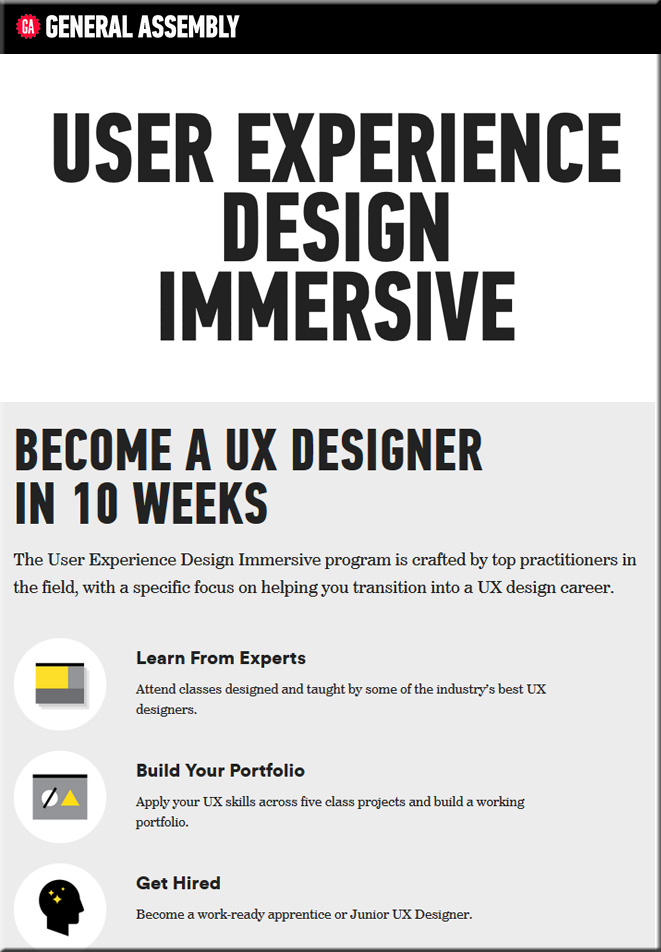
UX-10-WeekImmersiveTraining-OCt2014


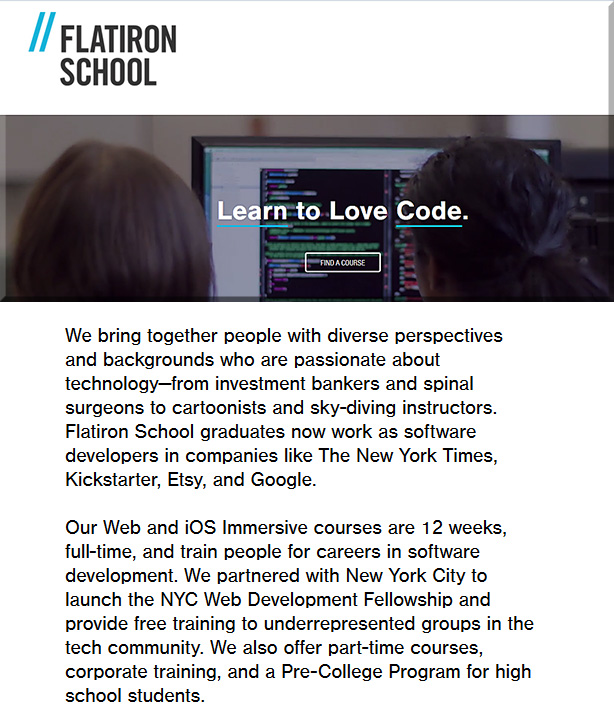
FlatironSchool


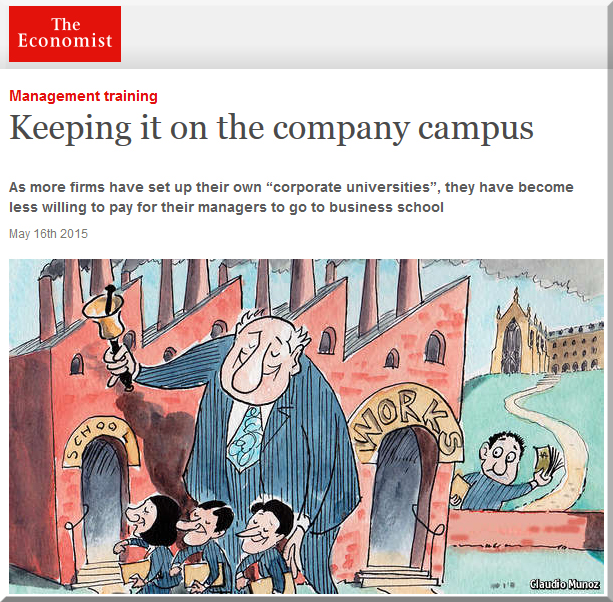
CorpUnivs-May2015


.

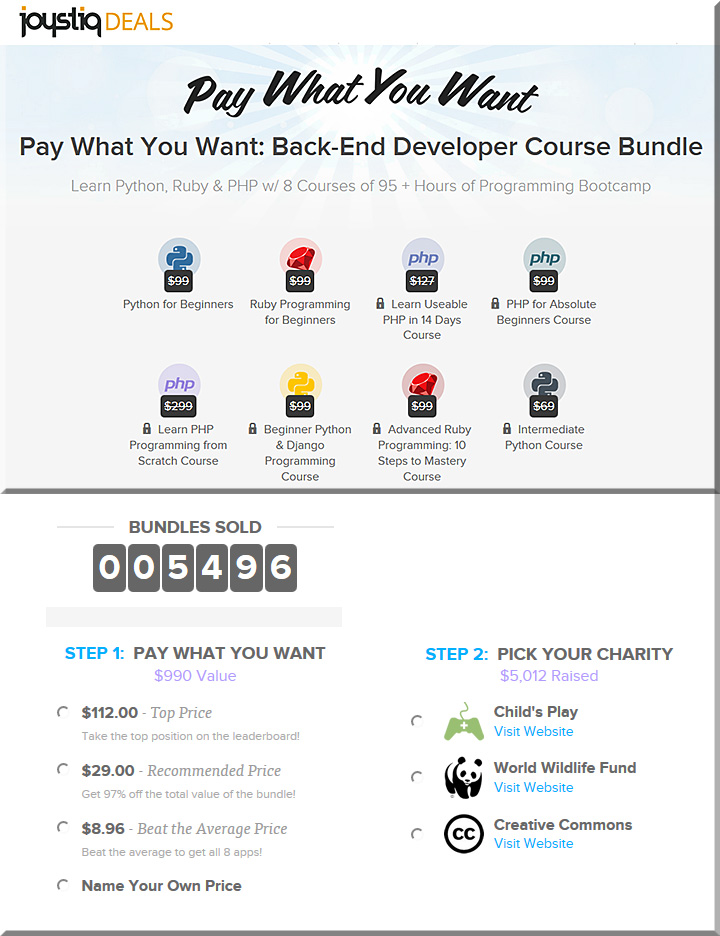
PayWhatYouWantBootcamp-Jan2015


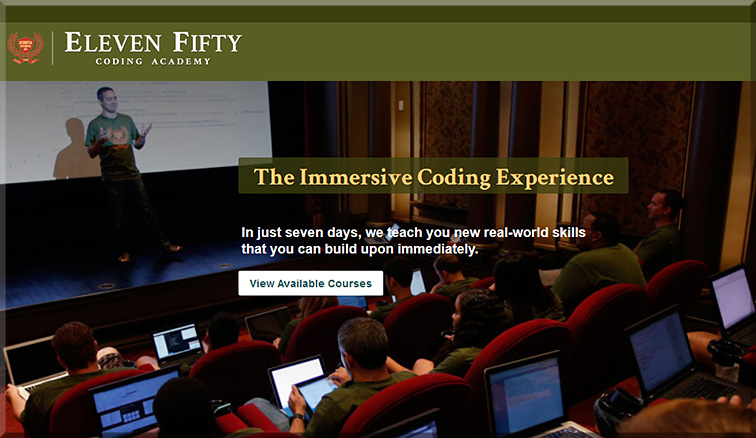
ElevenFifty-CodingAcademy-Jan2015


New MOOC Platform Provides Free IT Certification Courses — from campustechnology.com by Rhea Kelly


Cybrary-IT-Jan2015


Ideo U

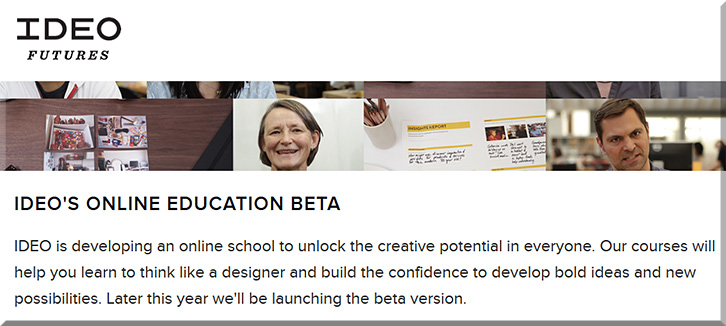
IDEO-Online-EducationBeta-Oct2014


Yieldr Academy

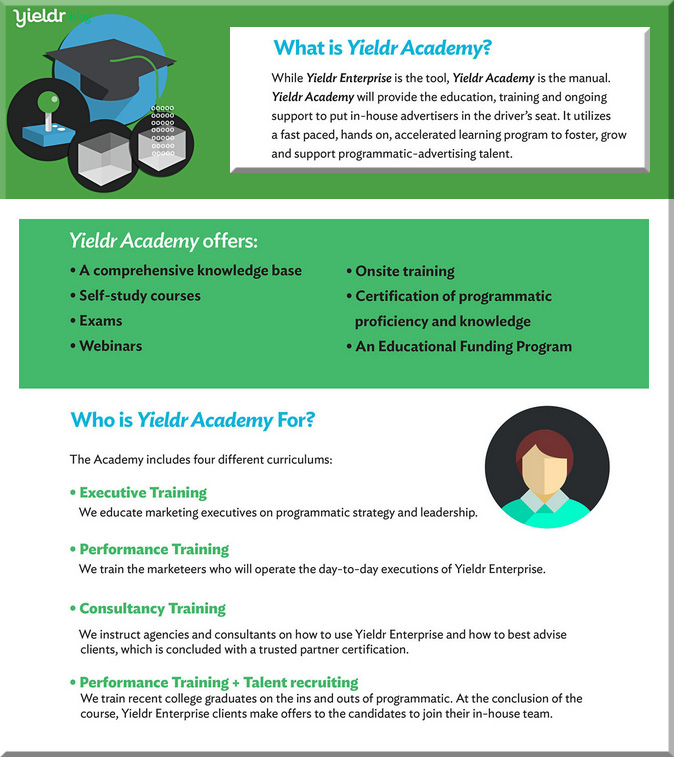
YieldrAcademy-Sept2014


Lessons Go Where

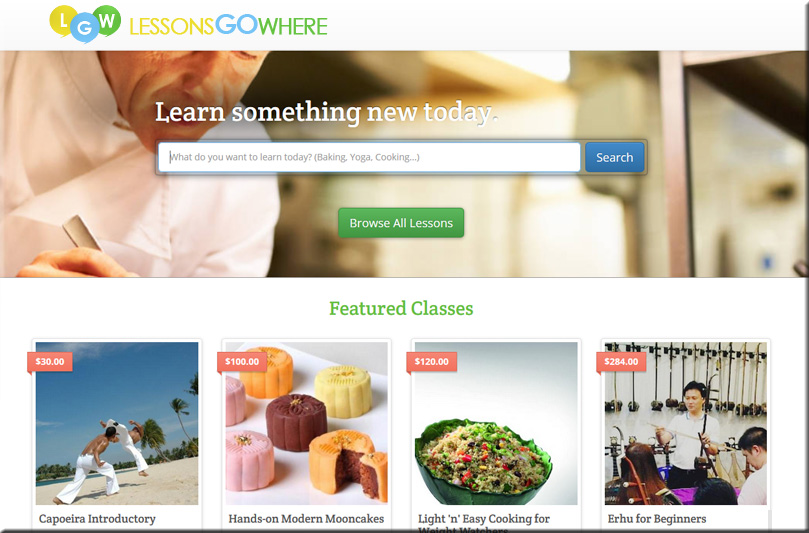
LessonsGoWhere


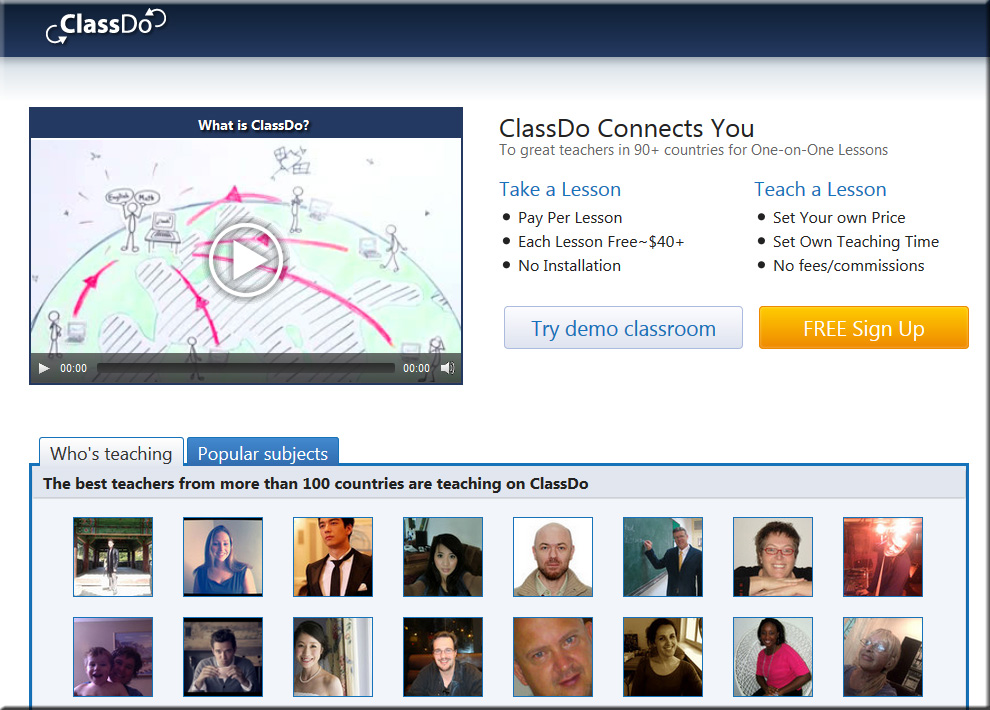
ClassDo

ClassDo


Udemy

udemy


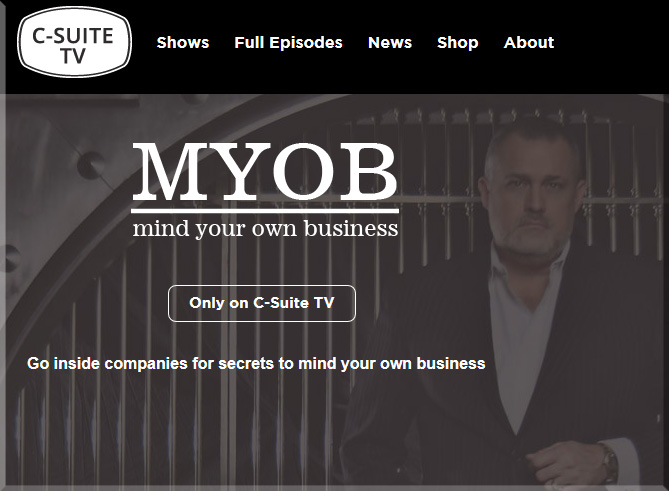
C-Suite TV.com

MYOB-July2014


Simon & Schuster to sell online courses taught by popular authors — from nytimes.com by Alexandra Alter; with thanks to Sidneyeve Matrix for her Tweet on this

Excerpt:

Simon & Schuster is making a push into paid online video, with a new website offering online courses from popular health, finance and self-help authors.

The cost of the first batch of online courses ranges from $25 to $85, and includes workbooks and access to live question-and-answer sessions with three authors: Dr. David B. Agus, the best-selling author of “The End of Illness”; Zhena Muzyka, who wrote the self-help book “Life by the Cup”; and Tosha Silver, the author of the spiritual advice book “Outrageous Openness.” The courses will be available on the authors’ individual websites and on the company’s new site, SimonSays.

.

 

Simon-Schuster-OnlineCourses-Jan2015

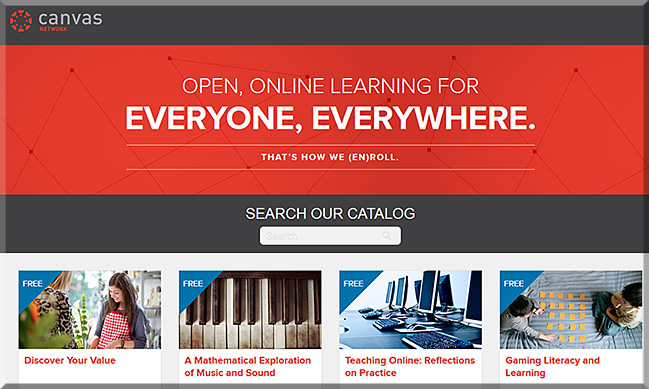
But there is a new wave of online competency-based learning providers that has absolutely nothing to do with offering free, massive, or open courses. In fact, they’re not even building courses per se, but creating a whole new architecture of learning that has serious implications for businesses and organizations around the world.

It’s called online competency-based education, and it’s going to revolutionize the workforce.

The key distinction is the modularization of learning.

Here’s why business leaders should care: the resulting stackable credential reveals identifiable skillsets and dispositions that mean something to an employer. As opposed to the black box of the diploma, competencies lead to a more transparent system that highlights student-learning outcomes.


CanvasDotNet-April2015


worldacademy.tv

WorldAcademyDotTV-May2015


Addendum on 6/3/15:

Disrupting Higher Education — from Campus Technology
Can colleges and universities break out of traditional models and compete with the disruptive forces changing the nature of higher ed?

Excerpts:

Also, traditional colleges and universities have turned away from the growing population of “nonconsumers” who need workforce skills. Only one in five freshmen actually have that residential college experience that we tend to glorify, she said. Close to 71 percent of students are what we now call non-traditional students, but which are fast becoming the norm.

These kinds of students are “overserved” by those bundled services of traditional brick-and-mortar institutions, she said. Many feel underprepared for the workforce, and they’re looking for something different.

“Higher education institutions are now competing with organizations they have never even heard of,” Weise said. “These are organizations that are really getting at the inadequacies of the system…. things like coding boot camps, where you can pay $10,000 to $20,000, spend six to 12 weeks learning to code, and get recruited by places like Google or Facebook and start earning about six figures…. Your shot at getting a job is better than if you went to law school.

“This is just to emphasize that it’s not who you think you’re competing with,” she said.

Per Michelle Weise  p. 8 pf 45

IBM-Affiliated Brooklyn School Graduates Its First Students Ahead of Schedule With Both High School & College STEM Degrees — from finance.yahoo.com and the PR Newswire
Young trailblazers pave way for national education model for tens of thousands of students

Excerpt:

BROOKLYN, N.Y., June 2, 2015 /PRNewswire/ — Six students from Brooklyn are graduating from P-TECH (Pathways in Technology Early College High School) two years early with both their high school diplomas and college degrees in computer systems technology, fast tracking through the nation’s first school that blends public high school, community college, and work experience into one.

Addendums on 7/1/15:

  • Boot camp classes may offer a peek at the future of higher ed — from cnbc.com by Bob Sullivan
    Excerpt (emphasis DSC): 
    Udacity has abandoned the idea of giving classes away to huge numbers of people in favor of “nanodegrees”—boot-camp style, short-term programs with a laser-like focus on preparing students for a career. Nanodegree subjects include Web developer, Android developer, iOS developer … you get the picture.

What you don’t get is a huge student loan debt. Udacity classes start at $1,200 for a six-month program. The fees have actually helped with online classes’ biggest problem: High dropout rates. Turns out, more people stick with classes if they have to pay for them.


  • Are small, private online courses the future of higher education in America? — from theweek.com by James Poulos
    Excerpt:
    Rather than trying to get universities to shape up, we should recognize that the SPOC (Small and Private Online Courses) model will flourish best outside the confines of today’s campus environment. In small, private forums, pioneers who want to pursue wisdom can find a radically alternate education — strikingly contemporary, yet deeply rooted in the ancient practice of conversational exegesis.


Addendum on 7/24/15:

HowZone Collaborative Learning Communities
Connecting you with people from around the world who are passionate about the same topics as you.

What We Do:
HowZone connects people around topics of shared interest and gives them tools to help each other learn. Beginners get the foundational knowledge they need and experts get special ways to take their expertise as far as they want to go.

Addendums on 7/24/15 — with thanks to Thomas Frey for his posting mentioning these resources

.
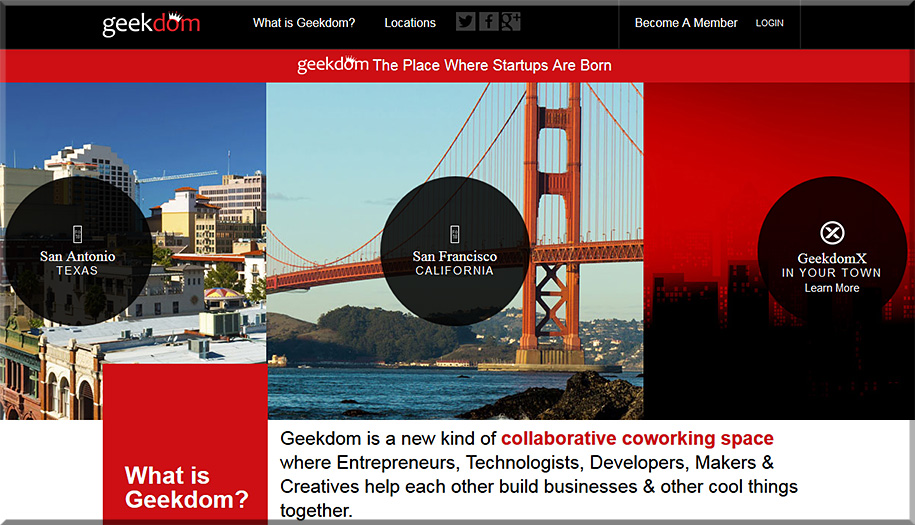
 

geekdom-july2015


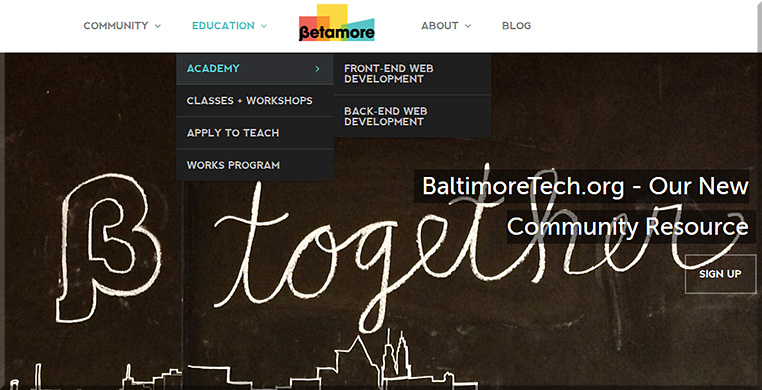
betamore-july2015


Addendum 8/7/15:


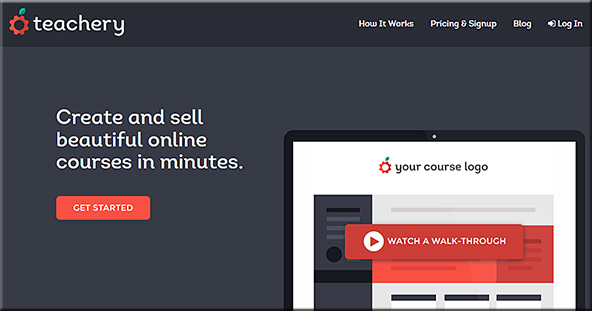
teachery-2015


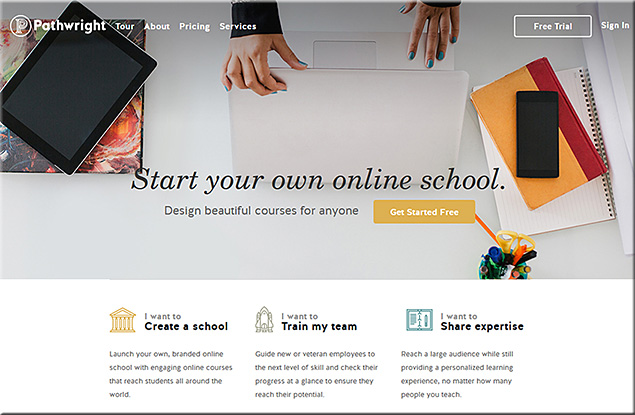
Pathwright-2015


Addendums on 8/26/15:


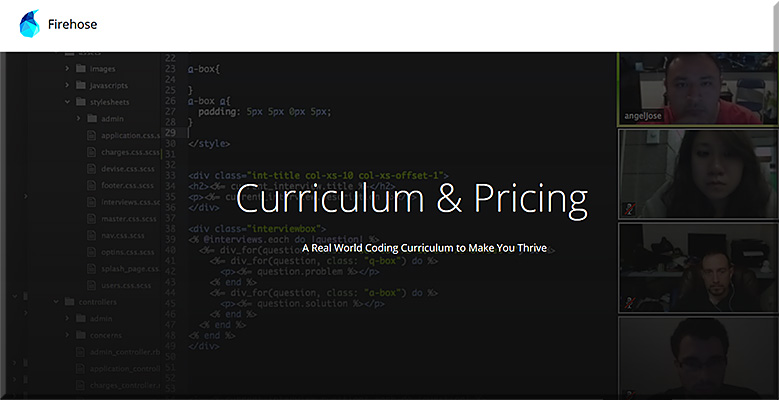
TheFireHoseProject-bootcamp-2015


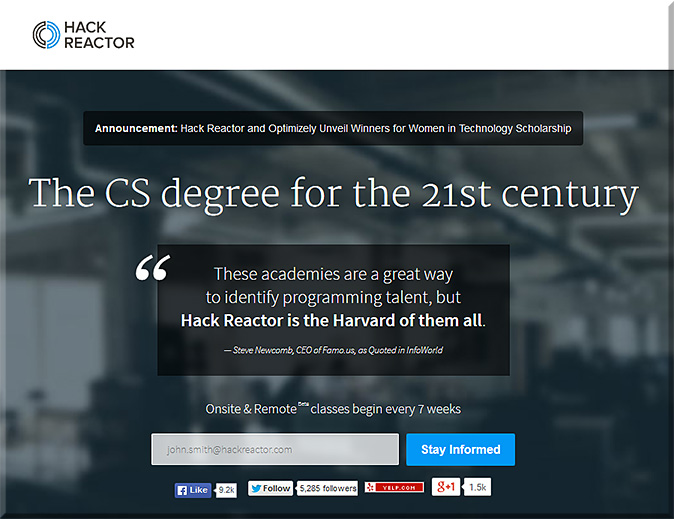
HackReactor-2015


galvanize-2015


Addendum on 10/15/15:


© 2025 | Daniel Christian