What are micro-credentials? — from onlineschoolscenter.com; with thanks to Arabella Bronson for the resource


What Are Micro-credentials?
Source:
OnlineSchoolsCenter.com

Also see:


From DSC:
It wasn’t too long ago that the price of gasoline in our area was hovering around $4.00 per gallon.  As gas prices kept increasing through the years, people began to cut back on the amount that they traveled — this included our own family as well, as we started seriously questioning whether we needed to make trip A, B, or C.

I remember questioning why the prices kept going up.  I began to be suspicious of the large, international oil and gas companies — sensing some opportunistic greed originating from them…and wondering if this greed wasn’t being shared by many firms/traders on Wall Street.  I remember thinking to myself, “Enjoy the profits now folks…because you are likely shooting yourselves in the foot.”

Now, fast forward a bit and I began to see more hybrid cars — cars that “have a traditional internal-combustion engine and a fuel tank, as well as one or more electric motors and a battery pack.”

This observation seems to be backed up by data:


Then I saw more purely electric cars. Again, this seems to be backed up by data:

Demand for their products decreased.  This was likely due to their high prices and due to people seeking other alternatives (perhaps there were other reasons as well).  The revenues and profits did go down for some of the large, international oil and gas companies, such as ExxonMobil. The graphic below illustrates a major drop in both revenues and in net profits for ExxonMobil (i.e., showing an amount of net profit in 2015 that was less than 1/2 the net profit back in 2011):


So, as I work within the higher education industry, I can’t help but ask:

Are we within the higher education industry making the same mistake?  Are we not fighting hard enough to bring the prices down? Are we still ok with yearly tuition increases? 

When the cost per credit hour continually goes up — like the price of a gallon of gasoline did there for a while — aren’t there going to be ramifications to that trend as well?  Put another way, do we really think prices can increase indefinitely without serious ramifications?

I realize that most institutions of traditional higher education are different from large, international corporations — having different stakeholders, sources of funding, and dynamics/forces impacting us. I realize that most people within higher education are here to help students, and likely the word greed is too strong of a word for many working within higher education.

But the question won’t leave my mind…

Are institutions of higher education shooting ourselves in the foot — just like the oil and gas companies did?


In terms of obtaining credentials and applicable knowledge…people will find the equivalents of electric cars and hybrid cars — in fact, we’re seeing such alternatives crop up all the time these days.   People holding the steering wheels within higher education better start taking this much more seriously and had better start making some serious adjustments to the routes being taken — the current trajectory doesn’t look promising.

No more can there be increases in tuition.  Prices had better start coming down, or we truly will be shooting ourselves in the foot. Institutions of higher education likely won’t be able to escape the laws of supply and demand — at some point, when prices have increased too much, demand will decrease.

People will find a way.


EffectOfPriceIncrease-SupplyDemand


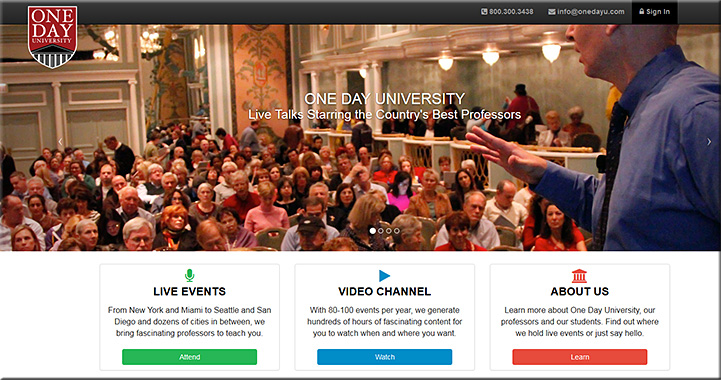
Why can’t the “One Day University” come directly into your living room — 24×7? [Christian]

  • An idea/question from DSC:
    Looking at the article below, I wonder…“Why can’t the ‘One Day University‘ come directly into your living room — 24×7?”


The Living [Class] Room -- by Daniel Christian -- July 2012 -- a second device used in conjunction with a Smart/Connected TV


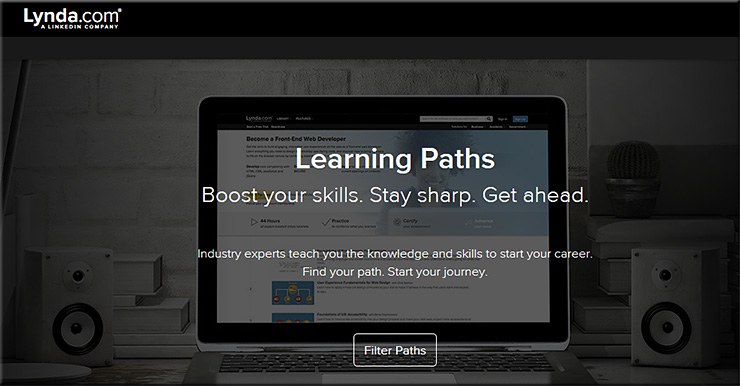
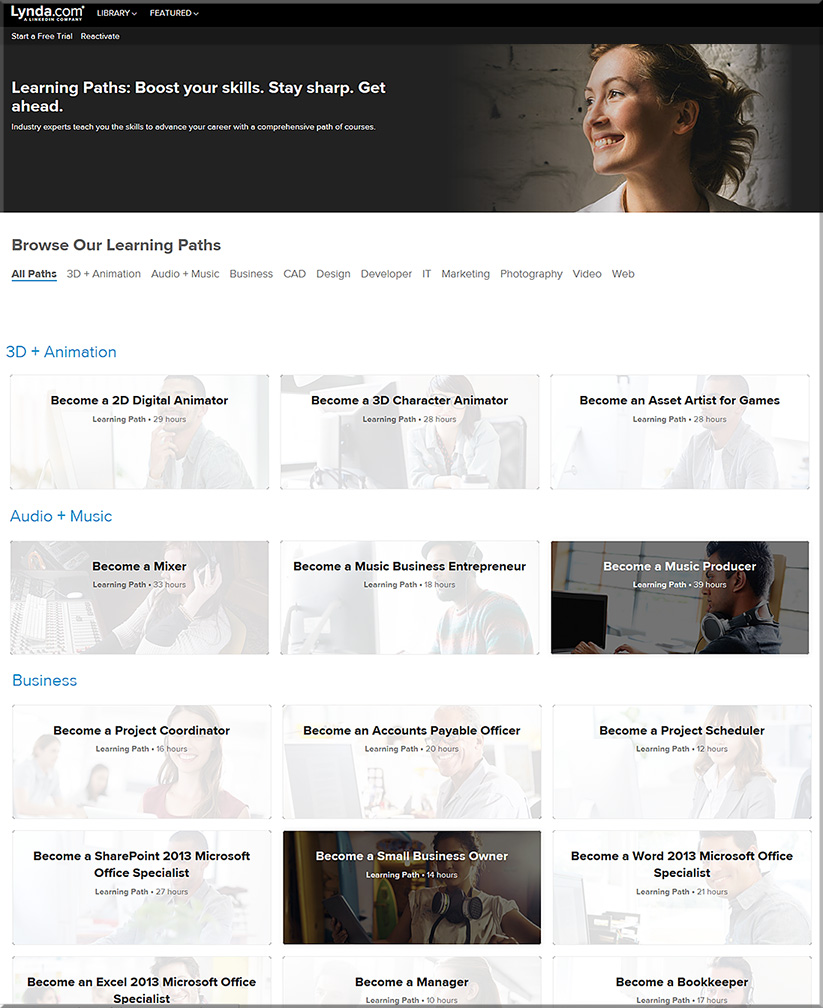
This is why I’m so excited about the “The Living [Class] Room” vision. Because it is through that vision that people of all ages — and from all over the world — will be able to constantly learn, grow, and reinvent themselves (if need be) throughout their lifetimes. They’ll be able to access and share content, communicate and discuss/debate with one another, form communities of practice, go through digital learning playlists (like Lynda.com’s Learning Paths) and more.  All from devices that represent the convergence of the television, the telephone, and the computer (and likely converging with the types of devices that are only now coming into view, such as Microsoft’s Hololens).


LearningPaths-LyndaDotCom-April2016


You won’t just be limited to going back to college for a day — you’ll be able to do that 24×7 for as many days of the year as you want to.

Then when some sophisticated technologies are integrated into this type of platform — such as artificial intelligence, cloud-based learner profiles, algorithms, and the ability to setup exchanges for learning materials — we’ll get some things that will blow our minds in the not too distant future! Heutagogy on steroids!


Want to go back to college? You can, for a day. — from washingtonpost.com by Valerie Strauss

Excerpt:

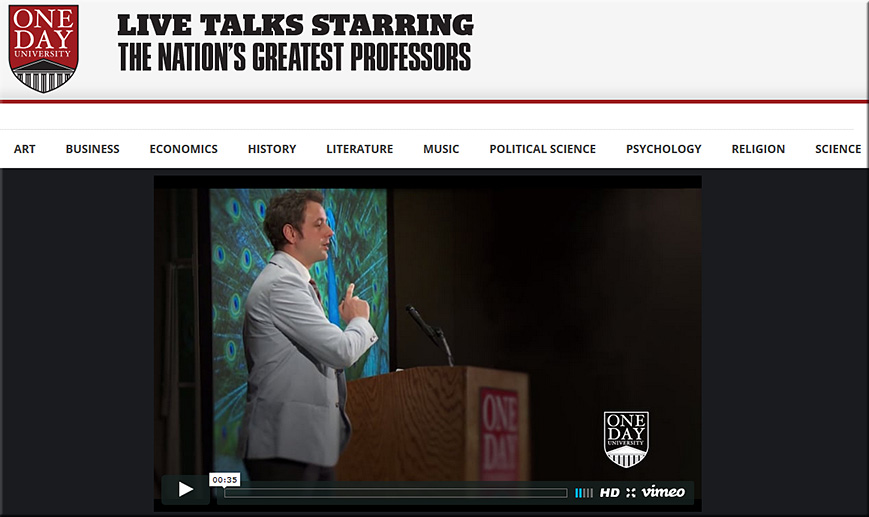
Have you ever thought about how nice it would be if you could go back to college, just for the sake of learning something new, in a field you don’t know much about, with no tests, homework or studying to worry about? And you won’t need to take the SAT or the ACT to be accepted? You can, at least for a day, with something called One Day University, the brainchild of a man named Steve Schragis, who about a decade ago brought his daughter to Bard College as a freshman and thought that he wanted to stay.

One Day University now financially partners with dozens of newspapers — including The Washington Post — and a few other organizations to bring lectures to people around the country. The vast majority of the attendees are over the age 50 and interested in continuing education, and One Day University offers them only those professors identified by college students as fascinating. As Schragis says, it doesn’t matter if you are famous; you have to be a great teacher. For example, Schragis says that since Bill Gates has never shown to be one, he can’t teach at One Day University.

We bring together these professors, usually four at at a time, to cities across the country to create “The Perfect Day of College.” Of course we leave out the homework, exams, and studying! Best if there’s real variety, both male and female profs, four different schools, four different subjects, four different styles, etc. There’s no one single way to be a great professor. We like to show multiple ways to our students.

Most popular classes are history, psychology, music, politics, and film. Least favorite are math and science.


See also:


OneDayUniversity-1-April2016


OneDayUniversity-2-April2016


Addendum:


lyndaDotcom-onAppleTV-April2016


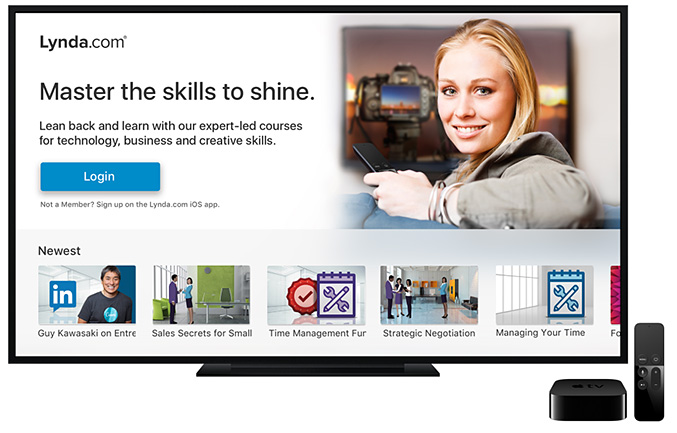
We know the shelf-life of skills are getting shorter and shorter. So whether it’s to brush up on new skills or it’s to stay on top of evolving ones, Lynda.com can help you stay ahead of the latest technologies.


From DSC:
Let’s take some of the same powerful concepts (as mentioned below) into the living room; then let’s talk about learning-related applications.


Google alum launches MightyTV for cable cord-cutters — from bizjournals.com by Anthony Noto

Excerpts (emphasis DSC):

MightyTV, which has raised more than $2 million in venture funding to date, launched today with a former Google exec at the helm. The startup’s technology incorporates machine learning with computer-generated recommendations in what is being touted as a “major step up” from other static list-making apps.

In this age of Roku and Apple TV, viewers can choose what to watch via the apps they’ve downloaded. MightyTV curates those programs — shows, movies and YouTube videos — into one app without constantly switching between Amazon, HBO, Netflix or Hulu.

Among the features included on MightyTV are:

*  A Tinder-like interface that allows users to swipe through content, allowing the service to learn what you’d like to watch
*  An organizer tool that lists content via price range
A discovery tool to see what friends are watching
*  Allows for group viewings and binge watching


From DSC:
What if your Apple TV could provide these sorts of functionalities for services and applications that are meant for K-12 education, higher education, and/or corporate training and development?

Instead of Amazon, HBO, Netflix or Hulu — what if the interface would present you with a series of learning modules, MOOCs, and/or courses from colleges and universities that had strong programs in the area(s) that you wanted to learn about?

That is, what if a tvOS-based system could learn more about you and what you are trying to learn about? It could draw upon IBM Watson-like functionality to provide you with a constantly morphing, up-to-date recommendation list of modules that you should look at.  Think microlearning. Reinventing oneself. Responding to the exponential pace of change. Pursuing one’s passions. More choice/more control. Lifelong learning. Staying relevant. Surviving.

…all from a convenient, accessible room in your home…your living room.

A cloud-based marketplace…matching learners with providers.

Now tie those concepts in with where LinkedIn.com and Lynda.com are going and how people will get jobs in the future.


The Living [Class] Room -- by Daniel Christian -- July 2012 -- a second device used in conjunction with a Smart/Connected TV


BlueJeans Unveils Enterprise Video Cloud as Businesses Hang Up on Audio-Only Communications
Global Enterprises Adopt Video as a First-Line Communications Strategy

Excerpt (emphasis DSC):

April 12, 2016 — Mountain View, CA—BlueJeans Network, the global leader in cloud-based video communication services, today unveiled the Enterprise Video Cloud, a comprehensive platform built for today’s globally distributed, modern workforce with video communications at the core. New global research shows that 85% of employees are already using video in the workplace and 72% believe that video will transform the way they communicate at work.

“There is a transformation happening among business today – face-to-face video is quickly rising as the preferred communications medium, offering new opportunities for deeper personal relations and outreach, as well as for improved internal and external collaboration,” said Krish Ramakrishnan, CEO of BlueJeans. “Once people experience the power of video, they ‘hang-up’ on traditional conference calling. We are seeing this happen with the emergence of video cultures that power the most innovative cultures—from Facebook and Netflix to Viacom and Del Monte.”


From DSC:
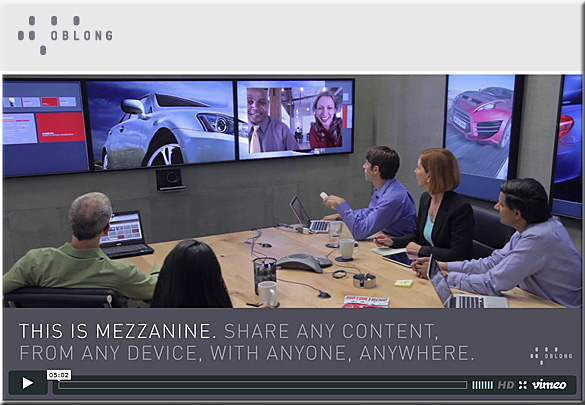
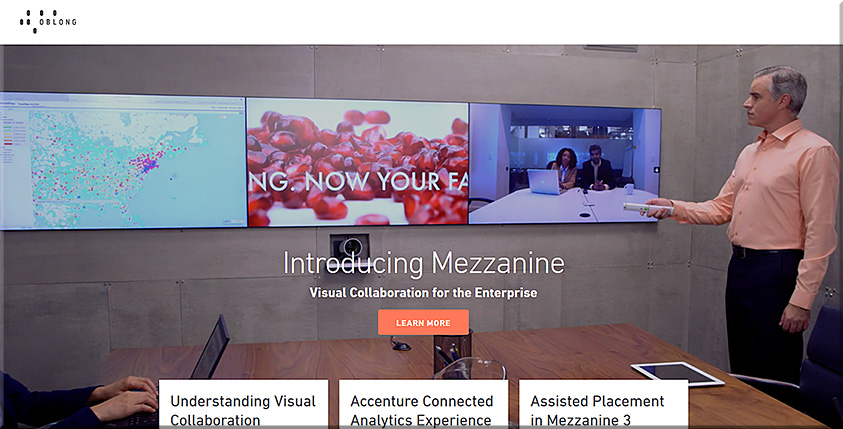
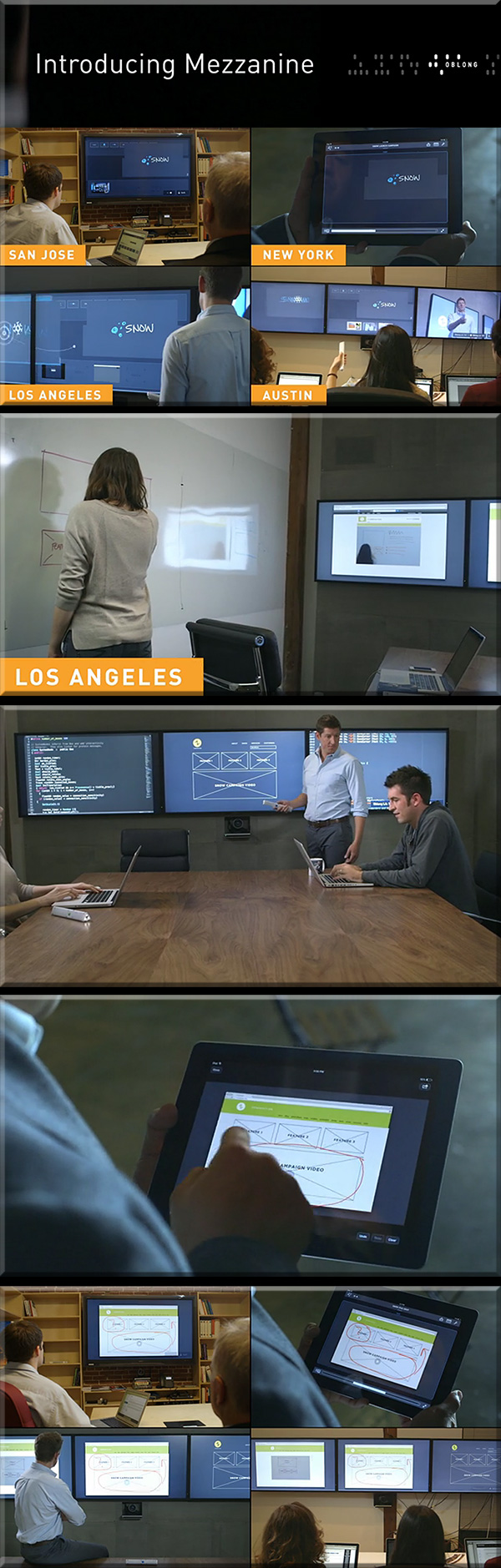
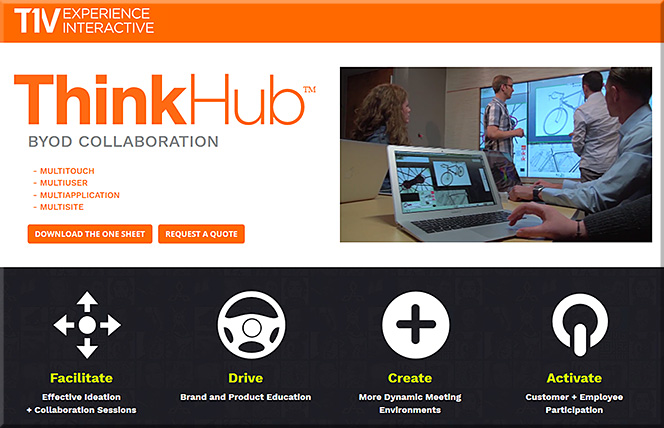
I wonder if we’ll see video communication vendors such as BlueJeans or The Video Call Center merge with vendors like Bluescape, Mezzanine, or T1V with their collaboration tools. If so, some serious collaboration could all happen…again, right from within your living room!


UniversityLearningStore-April2016

From DSC:

  • Will more institutions of higher education be joining/contributing courses to this type of University Learning Store? I’ve often wondered about the place of consortia in higher ed…perhaps this will be one of the ways that institutions pool their resources.  (i.e., creating and contributing content, tapping into content that’s been aggregated)
    .
  • How will corporate training / L&D groups view his sort of development? Will it be helpful to them?
    .
  • Will the University Learning Store, like Lynda.com, continually expand the list of topics that they are offering/addressing?
    .
  • Will these types of efforts morph into what I’ve been calling Learning from the Living [Class] Room? (i.e., learning on demand across a lifetime; employing web-based learner profiles, cognitive computing, social networking/learning while offering the ability to instantly form or join communities of practice) Another way of asking this question is this: “As technology-enabled collaborations increase what’s possible, what’s to keep courses from being ported to tvOS-based apps for on demand learning?”

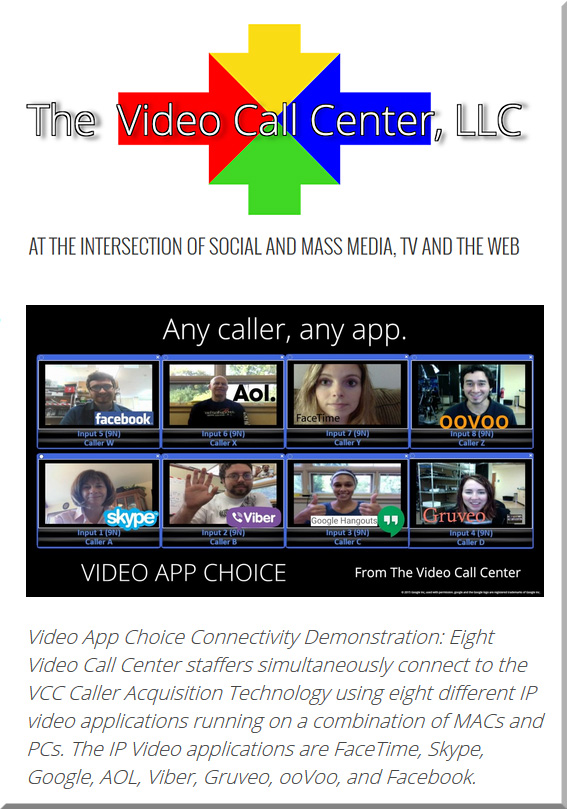
For example, fast forward a few years from the technologies found in “The Video Call Center” and one could imagine some powerful means of collaborating from one’s living room:

VideoCallCenter-April2016


The Living [Class] Room -- by Daniel Christian -- July 2012 -- a second device used in conjunction with a Smart/Connected TV


Also see:

Micro-credentials offer universities an opportunity to bridge skill gaps — from centerdigitaled.com by Tanya Roscorla
By working with employers, universities can help students of all ages learn skills that industry leaders need.

Excerpt:

Higher education leaders are pondering how to make bite-sized, low-cost learning opportunities available to students in different ways.

Working adults who change jobs and careers frequently often don’t need to go through an entire degree program to learn different skills. However, they do need a flexible way to earn credentials that are recognized by employers and that demonstrate their ability to apply the skills they learn, said David Schejbal, dean of continuing education, outreach and e-learning at University of Wisconsin-Extension. University micro-credentials can help fill that role.

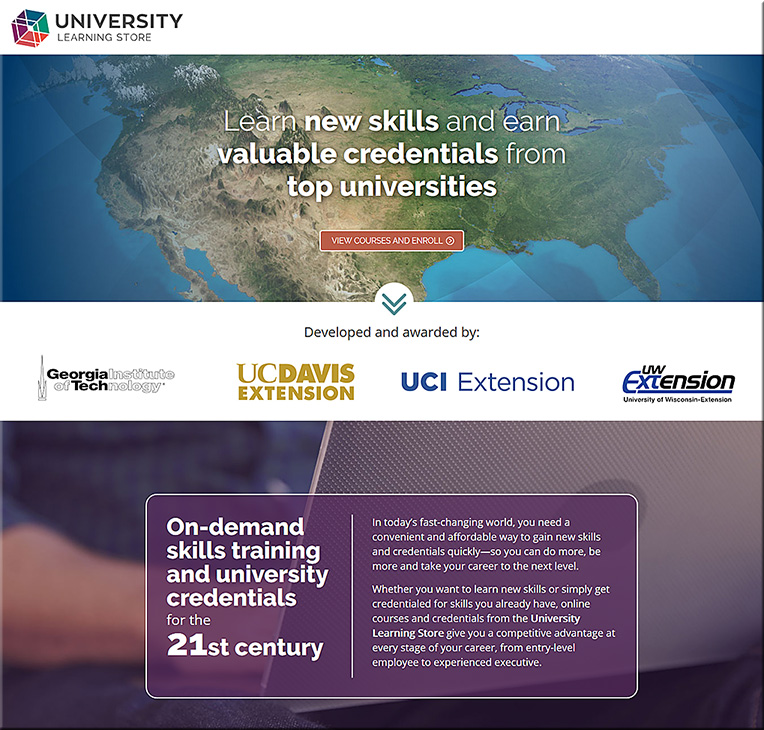
Six universities have been working with employers to find out what skills they need their employees to have, including the Georgia Institute of Technology, University of California Davis Extension, University of California Irvine Extension, University of Wisconsin-Extension, University of Washington and University of California, Los Angeles.

As a result of collaborating with industry, these universities created short courses and certification programs for the University Learning Store that launched last week. These courses fall into three categories: power skills, technical skills and career advancement skills. Power skills used to be called “soft skills” and include communication, collaboration and critical thinking.


Start your journey: Lynda.com introduces Learning Paths to help you stay ahead — from linkedin.com

Excerpt:

We all know that the knowledge and skills required to be successful in our jobs today is accelerating. This rate of change challenges all of us to stay ahead in our roles and sets a high bar for those looking to start or change their careers. Today we are introducing more than 50 new learning paths to help you stay ahead in your current job or if you’re looking to make a career pivot.


LearningPathsLyndaDotCom-April2016


Learning paths are step-by-step structured courses, supported with quizzes, practice, and learning reminders to encourage you and support you as you make progress towards your goal. These new learning paths include how to become a Web Developer, a Manager, a Bookkeeper, a Project Manager, a Small Business Owner, a Digital Marketer, a Digital Illustrator. Check out the full list here.

Learning paths are also a great way to continue expanding on your existing skill set. If you’re embarking on a new career, you can take advantage of these learning paths to become more knowledgeable about the skills and experience needed to secure your dream job. If  you’re a marketing manager who needs to quickly get up to speed on how to leverage social media for your job, you could take the digital marketing learning path to continue grooming and adding new skills.

We know that making the commitment to learn is incredibly tough; sticking with it can be even harder. To ensure your hard work gets noticed,  you’ll receive a certification of completion at the end of a learning path that you can share with your professional network on LinkedIn. Whether you’re looking to transform your current career path, jump into a new career, or sharpen your skills in your current job, Lynda.com can be your guide.

These new learning paths will be available starting today in English around the world and we are working towards adding new paths for you to take. We look forward to hearing about your learning path stories.


Also see:

LinkedIn launches Lynda.com ‘Learning Paths’ in push to grow education business — from forbes.com by Kathleen Chaykowski

Excerpt:

On Thursday, the Mountain View, Calif.-based company launched more than 50 Lynda.com “Learning Paths,” a package of ordered courses intended to prepare users for a specific role or to update users’ skills for their current job. Some of the new “Learning Paths” include how to become a digital marketer, photographer, digital illustrator, small business owner, project manager, bookkeeper or web developer.

“Whether you’re looking to transform your current career path, jump into a new career, or sharpen your skills in your current job, Lynda.com can be your guide,” Arthur Nicholls, a senior product manager at LinkedIn said. ”We all know that the knowledge and skills required to be successful in our jobs today is accelerating. This rate of change challenges all of us to stay ahead in our roles and sets a high bar for those looking to start or change their careers.”


Fuller profiles on candidates’ skills and qualifications will also advance LinkedIn’s efforts in building an economic graph, a digital map of the skills, economic needs, jobs, companies and people around the world.


Cisco’s John Chambers on the digital era — from mckinsey.com
How significant is the digital era? It’s the biggest technology transition in history, according to Cisco’s executive chairman—and requires a proportional response from companies.

Excerpts:

If you’re a leader in today’s world, whether you’re a government leader or a business leader, you have to focus on the fact that this is the biggest technology transition ever. This digital era will dwarf what’s occurred in the information era and the value of the Internet today. As leaders, if you don’t transform and use this technology differently—if you don’t reinvent yourself, change your organization structure; if you don’t talk about speed of innovation—you’re going to get disrupted. And it’ll be a brutal disruption, where the majority of companies will not exist in a meaningful way 10 to 15 years from now.

This digital age is the connectivity of going from a thousand devices  connected to the Internet to 500 billion. It will transform business.

Business models will rise and fall at a tremendous speed. It will create huge opportunities—probably $19 trillion in economic value over the next decade, incremental above what we’re seeing today. That’s the size of the US economy, plus some.

But it will also result in tremendous disruption. And this is where it’s  so important…that you either disrupt or you get disrupted.

It’s simple to describe, but it really means you’re dealing with intelligent networks—a next generation of the Internet, if you will. But connecting 500 billion devices doesn’t get the job done. It’s the process change behind it. So you’ve got technologies like cloud or mobility and cybersecurity and the Internet of Things that are very important. That’s actually the easy part. The hard part is how do you change your organization structure? How do you change your culture to be able to think in terms of outcomes for your customers? It’s all about speed of innovation and changing the way you do business. The majority of companies will be digital within five years, yet the majority of their digital efforts will fail, which speaks to what a CEO has to do differently.

They have to reinvent themselves. They have to reinvent their company. Not stay doing the right thing too long, if you will.

Not enabled by technology—technology will become the company.

The first step is merely making it an independent group, because if you do it inside your organization, your existing culture will kill it.

Companies fail to understand the implications of how quickly this technology will transform their business. And they underestimate what it really means to their economic growth or that of their competitors.


From DSC:
Some graphics come to my mind:


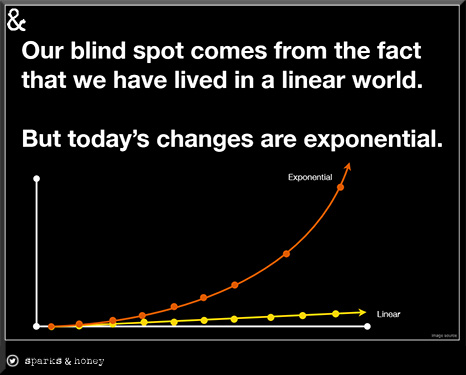
The pace has changed significantly and quickly


ExponentialNotLinearSparksNHoney-Spring2013


From DSC:
This is the world that our students are and will be graduating into.  Are they ready to handle this kind of pace?  Of exponential — not linear — change? How can we better prepare them to be successful in the future that they will inherit?


Key point from DSC:
Digitally-based means of learning are going to skyrocket!!! Far more than what we’ve seen so far!  There are several trends that are occurring to make this so.


As background here, some of the keywords and phrases that are relevant to this posting include:

  • Wireless content sharing
  • Wireless collaboration solutions
  • Active learning based classrooms
  • Conference rooms
  • Bring Your Own Device (BYOD)
  • Enterprise wireless display solutions
  • Enterprise collaboration solutions
  • Cross platform support: iOS, Android, Windows
  • Personalized learning
  • Learning analytics

Some of the relevant products in this area include:

  • Bluescape
  • Mezzanine from Oblong Industries
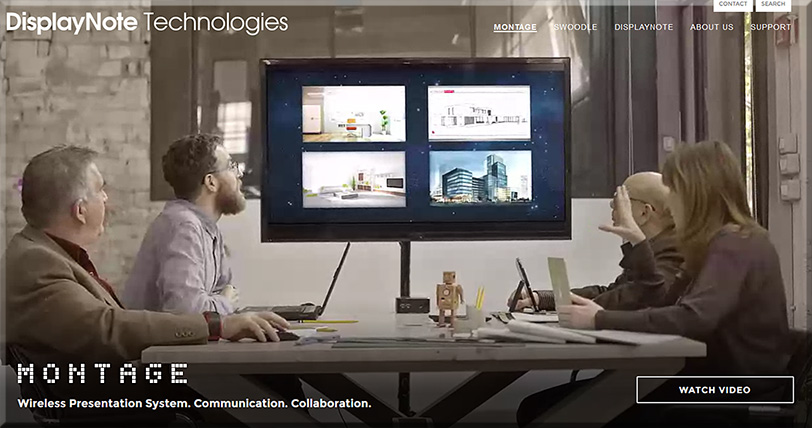
  • Montage from DisplayNote Technologies
  • ThinkHub and ViewHub from T1V
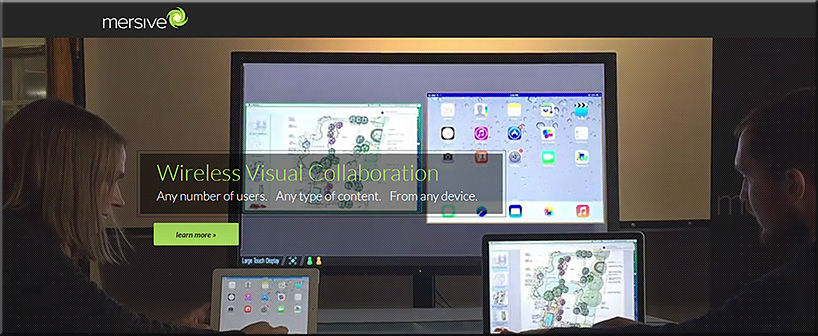
  • Mersive Solstice
  • Crestron AirMedia
  • Barco Clickshare
  • Haworth Workware Wireless
  • Christi Brio
  • AMX enzo
  • NovoConnect from Vivitek
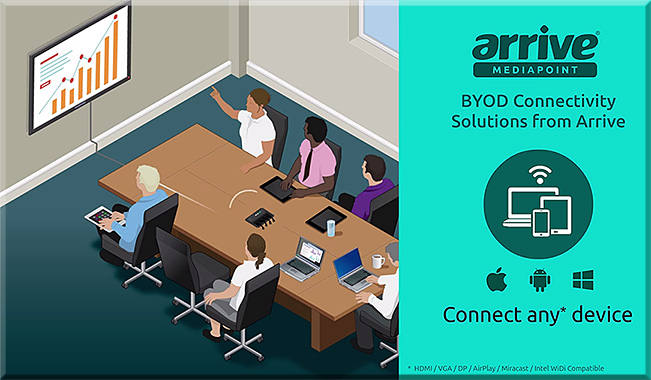
  • Arrive MediaPoint
  • Apple TV
  • Chromecast

From DSC:

First of all, consider the following products and the functionalities they offer.

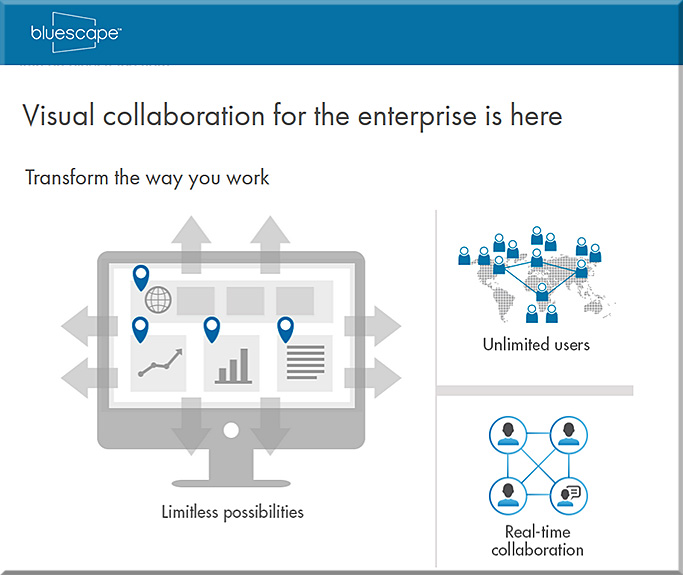
People who are in the same physical space can collaborate with people from all over the world — no matter if they are at home, in another office, on the road, etc.

For several of these products, remote employees/consultants/trainers/learners can contribute content to the discussions, just like someone in the same physical location can.

 

Bluescape-March2016


BlueScape-2015


Mezzanine-from-Oblong-May2013

Mezzanine-By-Oblong-Jan2016


mezzanine-feb-2015


ThinkHub-March2016


mersive-March2016

Montage-March2016

ArriveMediaPoint-March2016


From DSC:

Many of these sorts of systems & software are aimed at helping people collaborate — again, regardless of where they are located. Remote learners/content contributors are working in tandem with a group of people in the same physical location. If this is true in business, why can’t it be true in the world of education?

So keep that in mind, as I’m now going to add on a few other thoughts and trends that build upon these sorts of digitally-based means of collaborating.

Q: Towards that end…ask yourself, what do the following trends and items have in common?

  • The desire to capture and analyze learner data to maximize learning
  • Colleges’ and universities’ need to increase productivity (which is also true in the corporate & K-12 worlds)
  • The trend towards implementing more active learning-based environments
  • The increasing use of leveraging students’ devices for their learning (i.e., the BYOD phenomenon)
  • The continued growth and increasing sophistication of algorithms

A: All of these things may cause digitally-based means of learning to skyrocket!!!

To wrap up this line of thought, below are some excerpts from recent articles that illustrate what I’m trying to get at here.


Embrace the Power of Data
A continuous improvement mindset is important. Back-end learning analytics, for example, can reveal where large numbers of students are struggling, and may provide insights into questions that require new feedback or content areas that need more development. Data can also highlight how students are interacting with the content and illuminate things that are working well—students’ lightbulb moments.

Five Principles for Your Learning Design Toolkit
from edsurge.com by Amanda Newlin


Mitchell gave the example of flight simulators, which not only provide students with a way to engage in the activity that they want to learn, but also have data systems that monitor students’ learning over time, providing them with structured feedback at just the right moment. This sort of data-centric assessment of learning is happening in more and more disciplines — and that opens the door to more innovation, he argued.

A promising example, said Thille, is the use of educational technology to create personalized and adaptive instruction. As students interact with adaptive technology, the system collects large amounts of data, models those data, and then makes predictions about each student based on their interactions, she explained. Those predictions are then used for pedagogical decision-making — either feeding information back into the system to give the student a personalized learning path, or providing insights to faculty to help them give students individualized support.

“We need the models and the data to be open, transparent, peer-reviewable and subject to academic scrutiny.”

“We began to actually examine what we could do differently — based not upon hunches and traditions, but upon what the data told us the problems were for the students we enroll,” said Renick. “We made a commitment not to raise our graduation rate through getting better students, but through getting better — and that gain meant looking in the mirror and making some significant changes.”

A 21st-century learning culture starts with digital content. In 2010, Jackson State University was looking for ways that technology could better address the needs of today’s learner. “We put together what we call our cyberlearning ecosystem,” said Robert Blaine, dean of undergraduate studies and cyberlearning. “What that means is that we’re building a 21st-century learning culture for all of our students, writ large across campus.” At the core of that ecosystem is digital content, delivered via university-supplied iPads.

7 Things Higher Education Innovators Want You to Know
from campustechnology.com by Rhea Kelly


On Bennett’s wish list right now is an application that allows students to give feedback at specific points of the videos that they’re watching at home. This would help him pinpoint and fix any “problem” areas (e.g. insufficient instructions for difficult topics/tasks) and easily see where students are experiencing the most difficulties.

TechSmith’s now-retired “Ask3” video platform, for example, would have done the trick. It allowed users to watch a video and ask text-based questions at the point where playback was stopped. “I’d like to be able to look at my content and say, ‘Here’s a spot where there are a lot of questions and confusion,'” said Bennett, who also sees potential in an “I get it” button that would allow students to hit the button when everything clicks. “That would indicate the minimum viable video that I’d need to produce.” Learning Catalytics offers a similar product at a fee, Bennett said, “but I can’t charge my students $20 a year to use it.”

6 Flipped Learning Technologies To Watch in 2016
from thejournal.com by Bridget McCrea


All of these trends lend themselves to causing a major increase in the amount of learning that occurs via digitally-based means and methods.


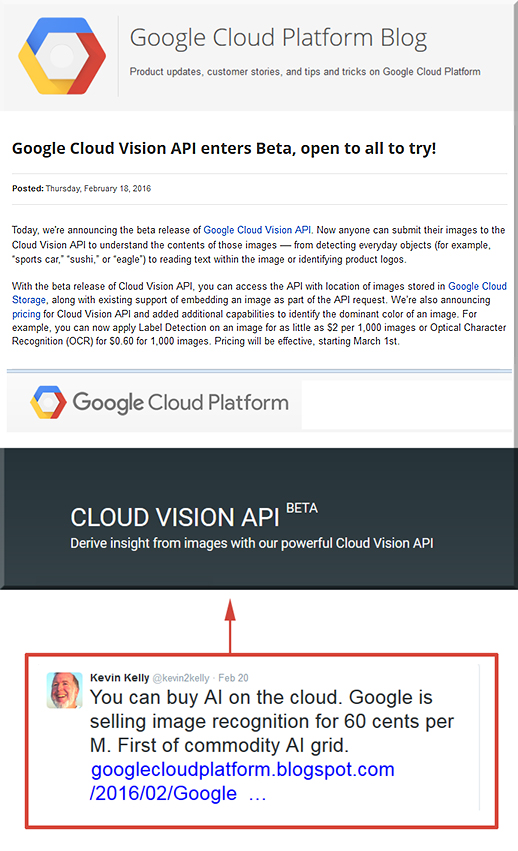
Google Cloud Vision API enters Beta, open to all to try!

Excerpt:

[On Thursday, February 18, 2016, we announced] the beta release of Google Cloud Vision API. Now anyone can submit their images to the Cloud Vision API to understand the contents of those images — from detecting everyday objects (for example, “sports car,” “sushi,” or “eagle”) to reading text within the image or identifying product logos.

With the beta release of Cloud Vision API, you can access the API with location of images stored in Google Cloud Storage, along with existing support of embedding an image as part of the API request. We’re also announcing pricing for Cloud Vision API and added additional capabilities to identify the dominant color of an image. For example, you can now apply Label Detection on an image for as little as $2 per 1,000 images or Optical Character Recognition (OCR) for $0.60 for 1,000 images. Pricing will be effective, starting March 1st.


GoogleCloudVisionAPI-Feb2016


From DSC:
Talk about a potential money maker with significant profit margins! Geez.  A serious, new business model.


Also see:


Some items from Bryan Alexander:


Excerpt:

Today’s students expect their entire experience with an institution to mirror what they see from major online retailers and service providers; personalized, supportive and flexible. However, institutions are having to deliver on these heightened expectations with smaller budgets and less capacity to increase prices than ever before.

Scaling is absolutely critical for higher education institutions in today’s marketplace. Through scaling, institutions can “do more with less”—they can meet the sky-high expectations of today’s discerning students while keeping their costs and prices low.

This Feature highlights some of the approaches today’s institutions are taking to achieving scale.


A new vision for paying for higher education — from usnews.com by Lauren Camera
How do you build the federal student loan system from the ground up?

Excerpt:

As it stands now, the current system for financing higher education is particularly unfair for poor students, many of whom are forced to borrow more money than their wealthier peers, graduate at a much lower rate and go into default at a much higher rate.

To be sure, the average six-year graduation rate for students seeking a bachelor’s degree is 59.4 percent, but a recent survey of more than 1,000 public and private four-year colleges found that only 51 percent of Pell recipients graduate. And at community colleges, only 23 percent of first-time, full-time students ever receive a degree.


Is it time for colleges to withdraw from their outdated schedules? — from pri.org by Caroline Lester

Excerpt:

We asked a few college grads what they’d like to change about the current system. Their answers spanned from increasing accessibility, to eliminating lectures, to creating greater support services for students at risk of dropping out.

That last point is key: the vast majority of students who start college don’t graduate.

Community college, state schools, and private universities — six-year completion rates are falling. To Michael Crow, president of Arizona State University, this means something is wrong.

Crow believes that the best way to address America’s higher education woes is to lower the cost of a college education while personalizing teaching. He proposes three big changes…


Credentialing, free tuition top this week’s news — from ecampusnews.com by Laura Devaney


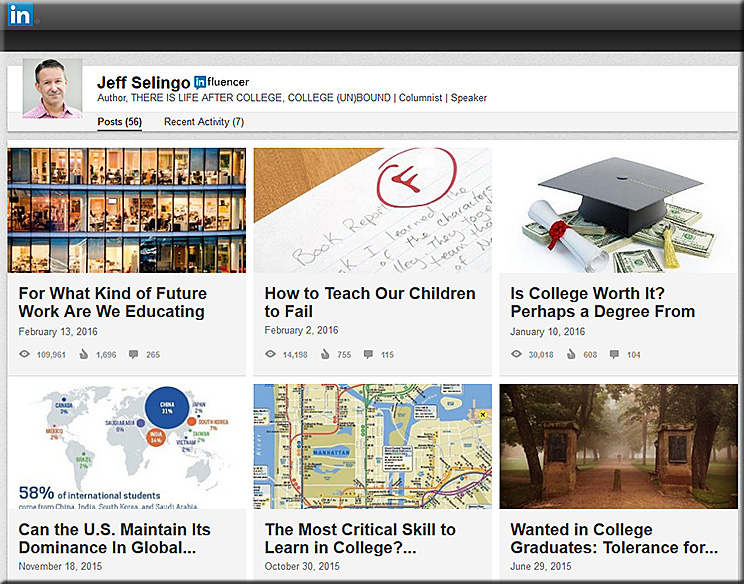
Some items from Jeff Selingo:

JeffSelingo-Feb2016


A brief excerpt from newsletter from one of Michigan’s Senators, Debbie Stabenow:

62 percent of students in Michigan graduate #InTheRed with student loan debt. A student who graduated from a 4-year Michigan college or university in 2014 owes on average almost $30,000 in loans, making Michigan 9th in the country on average student loan debt.  Student loan debt in the United States is over $1.3 trillion and is the 2nd highest form of consumer debt.


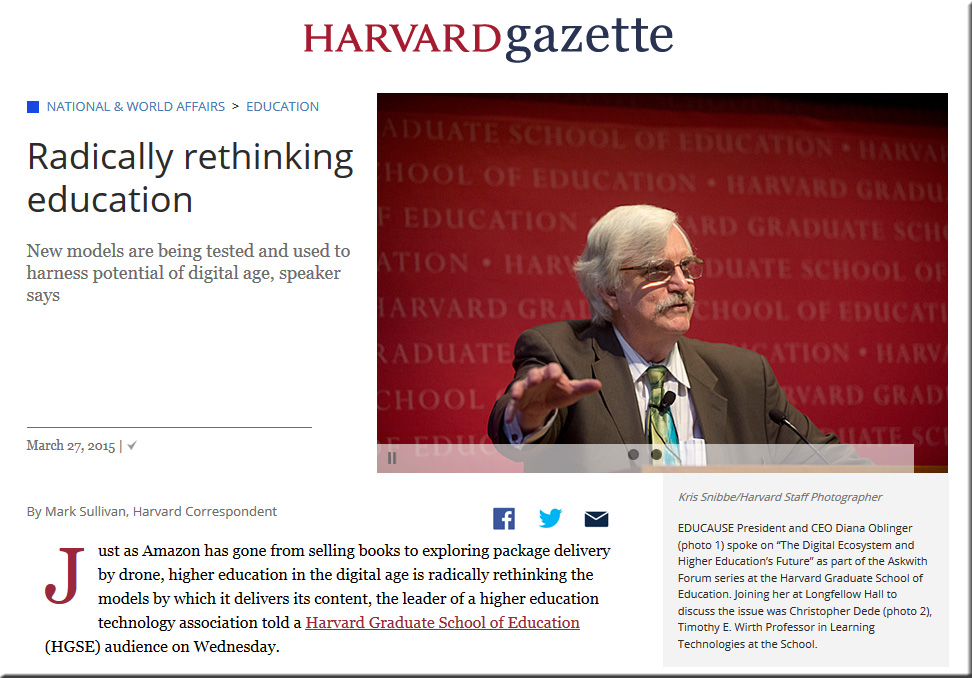
…and back from March 2015:


RethinkingHE-March2015


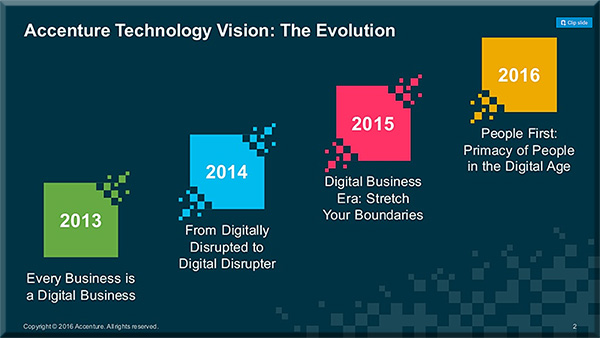
Accenture-TechVision2016


Example slides from their
SlideShare presentation:


Accenture-TechVision2016-2

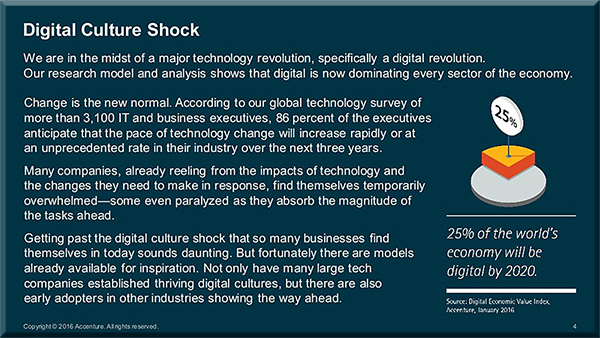
Accenture-TechVision2016-3

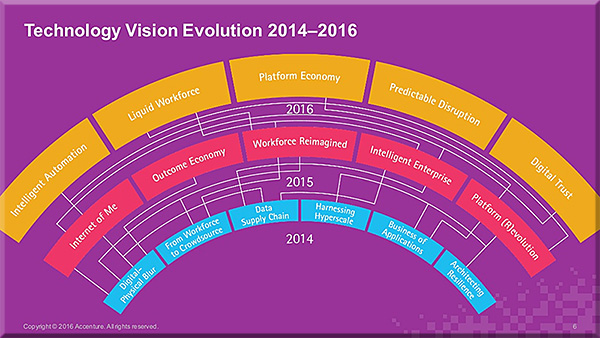
Accenture-TechVision2016-4

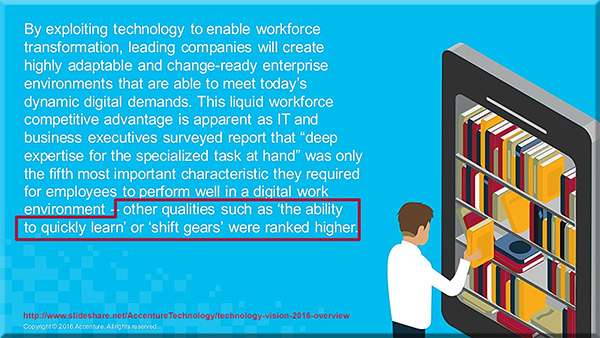
Accenture-TechVision2016-5-Abilityto-learn

and from the PDF:

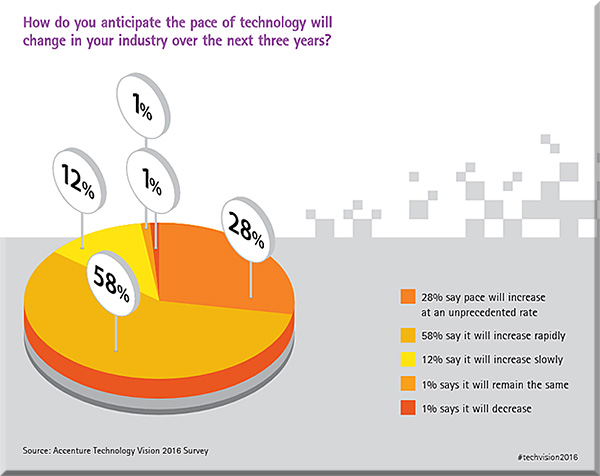
Accenture-TechVision2016-6-PaceOfChange


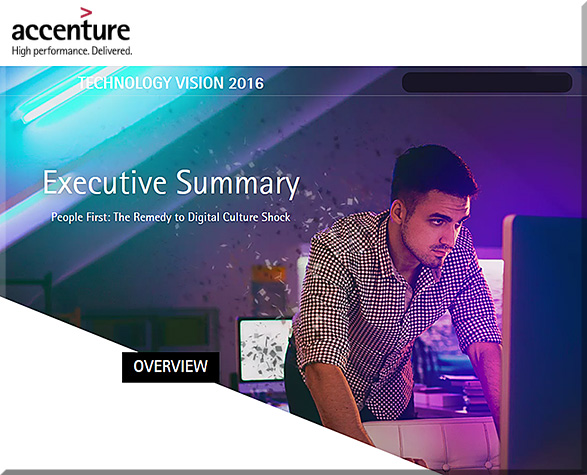
accenture: Technology Vision 2016 | People First: The Remedy to Digital Culture Shock — from accenture.com

Excerpt:

Winners in the digital age do much more than complete a technology checklist. They know their success hinges on people. Understanding changing customer needs and behaviors is, of course, hugely important. But the real deciding factor in the digital era will be the ability to evolve corporate culture. That means not simply taking advantage of emerging technologies but, critically, embracing the new business strategies that those technologies drive.

You can’t solve this challenge just by consuming more and more technology. Nor, as some fear, by replacing humans with machines. Instead, enterprises must focus on enabling people – consumers, employees and ecosystem partners – to do more with technology. That demands a digital corporate culture enabling people to continuously adapt, learn, create new solutions, drive relentless change, and disrupt the status quo. In an age where tech is grabbing the limelight, true leaders will, in fact, put people first.


But the real deciding factor in the era of intelligence will be a company’s ability to evolve its corporate culture to not only take advantage of emerging technologies, but also, critically, embrace the new business strategies that those technologies drive.


From DSC:
Are we preparing our students to be ready for — and successful in — this changing workplace?  Are adults ready for this changing workplace? It appears that some are, and some are left reeling by the pace of change.

What is our role as educators in K-12? In higher ed?

What are the roles of trainers and/or mentors in the marketplace?

How does one help another person to learn quickly?


——–

Addendum:


Equipped for EQUIP? Here’s a primer — from edsurge.com by Bart Epstein and Ben Wallerstein (on 11/9/15)

Excerpt:

On October 15th, the Department of Education launched a new Experimental Site called Educational Quality through Innovative Partnerships (EQUIP), which creates a pathway to federal aid for unaccredited education providers–including the fast-growing bootcamp sector. Here’s what you need to know.

The US Department of Education’s Experimental Sites Initiative (ESI) is a policymaker’s dream. The authority granted though the ESI allows the Secretary of Education to waive certain rules governing federal financial aid to experiment with new models and test their impact. The goal: improve access for low-income students, and increase the return on our $130 billion annual investment in student aid.

As a policy “lab,” Experimental Sites have allowed the Department of Education to provide Title IV access for self-paced and competency-based programs, decouple aid from the credit hour, and fund students who demonstrate prior learning through assessments.


From DSC:
As higher ed (as an industry) doesn’t seem to be able to decrease the costs of obtaining a degree, alternatives continue to crop up.

If…

  • The prices don’t start coming down from institutions of traditional higher education
  • Alternatives continue to crop up and gather steam
  • The U.S. Federal Government gets behind such alternatives

…then higher ed (again, as an industry) can only blame itself for not responding more significantly than we did.

We need to respond. We need to address this growing wave of unrest regarding higher ed. We need more innovation. We need lower prices. Towards that end, that’s why I’ve been saying that we need more TrimTab Groups to find ways to maintain quality, but reduce the price.


TheTrimtabInHigherEducation-DanielChristian


A New Job Guarantee — from udacity.com by Sebastian Thrun

Excerpt:

In 2010, we started Google x to pursue moon shots, moving impossible ideas into reality to change people’s lives forever. In education, the biggest moon shot is connecting learning to jobs. Get an education to get a job to change your life.

[On 1/13/16], we launch[ed] a new program at Udacity, called Nanodegree Plus. Earn a Nanodegree credential and we will guarantee you a job within six months of graduation, or give you 100% of your tuition back.

Over the last 18 months, our Nanodegree programs have begun to emerge as the place to go to learn technical skills to get a new job or advance a career. They are backed by companies like Google, Facebook, Amazon, GitHub and AT&T among others—teaching students the latest technical skills for today’s workforce. Already, Udacity graduates are working at companies like Google, Nest, Accenture, AT&T, Amazon, Salesforce, Rakuten, Verizon, Goldman Sachs, Intuit and many others in Silicon Valley and beyond.


Is the next Uber coming your way? — from ibm.com IBM’s Global C-suite Study

Excerpt:

This report is IBM’s second study of the entire C-suite and the eighteenth in the ongoing series of CxO studies developed by the IBM Institute for Business Value. We now have data from more than 28,000 interviews stretching back to 2003. Our latest study draws on input from:

Chief Executive Officers (CEOs): 818
Chief Finance Officers (CFOs): 643
Chief Human Resources Officers (CHROs): 601
Chief Information Officers (CIOs): 1,805
Chief Marketing Officers (CMOs): 723
Chief Operating Officers (COOs): 657

Innovations that harness new technologies or business models, or exploit old technologies in new ways, are emerging on an almost daily basis. And the most disruptive enterprises don’t gradually displace the incumbents; they reshape entire industries, swiftly obliterating whatever stands in their way. So how are C-suite executives (CxOs) tackling the threat of competition from companies in other sectors or with very different business models? Our latest study explores what they think the future holds, how they’re identifying new trends and how they’re positioning their organizations to prosper in the “age of disruption.”


NextUberComingYourWay-IBM-2015


From DSC:
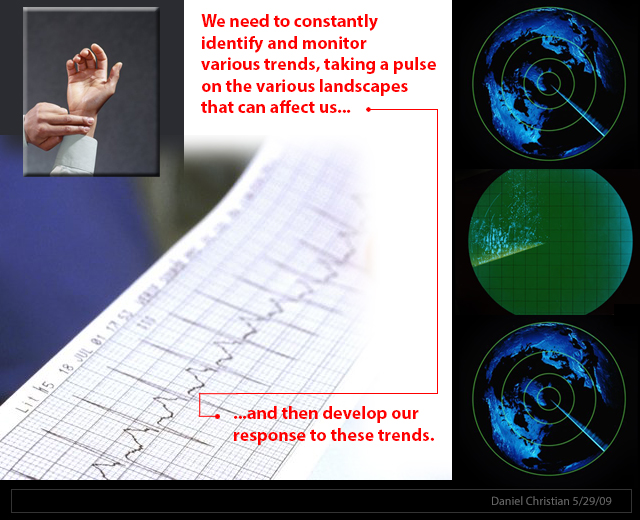
Is looking out for the next Uber just something that corporations/businesses should be doing? Isn’t this true for us as individuals as well? That is, aren’t our jobs/positions vulnerable to disruption as well? As our organizations go, so we often go.  As such, should we leave the pulse checking to others or should we be developing these types of skills ourselves? That is, shouldn’t our own gazes be set on the horizons so that we aren’t broadsided as individuals? 

Given the pace of change and given that more of us are freelancing, this is why I think that we need more such training within K-12 and higher education — programs that focus on pulse checking a variety of landscapes. Futurism is not gazing into some magic ball; such skills can be useful today.


DanielChristian-MonitoringTrends


© 2025 | Daniel Christian