10 takeaways from Big Tech’s big earnings — from protocol.com by David Pierce
What Apple, Facebook, Alphabet, Microsoft and Amazon earnings say about the state of tech.
7 Things You Didn’t Know PowerPoint Could Do That Will Make Your Next Presentation POP! — from Dr. Echo Rivera; posted 4/20/21
Excerpt:
I’m going to show you more than 7 Powerpoint features, but I’ve broken them down into 7 categories.
Here are those seven categories:
14th Annual Edition | 2021 Tech Trends Report — from the Future Today Institute
Our 2021 Tech Trends Report is designed to help you confront deep uncertainty, adapt and thrive. For this year’s edition, the magnitude of new signals required us to create 12 separate volumes, and each report focuses on a cluster of related trends. In total, we’ve analyzed nearly 500 technology and science trends across multiple industry sectors. In each volume, we discuss the disruptive forces, opportunities and strategies that will drive your organization in the near future.
Now, more than ever, your organization should examine the potential near and long-term impact of tech trends. You must factor the trends in this report into your strategic thinking for the coming year, and adjust your planning, operations and business models accordingly. But we hope you will make time for creative exploration. From chaos, a new world will come.
Some example items noted in this report:
The excerpt below is from The 7 best online whiteboards in 2021 — from zapier.com by Maria Myre
From DSC:
Other potentially-relevant tools/vendors here include:


Look at the choice and control possibilities mentioned in the following except from Immersive Reader in Canvas: Improve Reading Comprehension for All Students
When building courses and creating course content in Canvas, Immersive Reader lets users:
Also see:
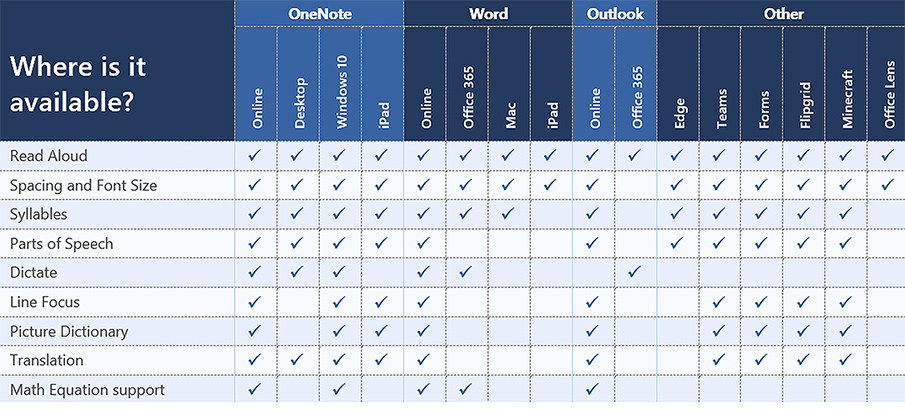
All about the Immersive Reader — from education.microsoft.com
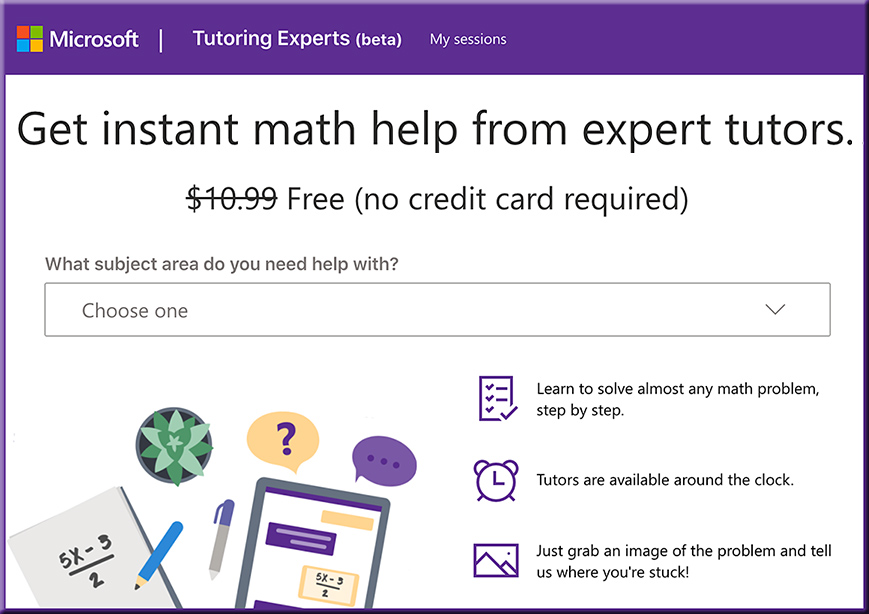
Microsoft Education offers a free tutoring service to help students with their math problems — from educatorstechnology.com
Excerpt:
In today’s post I want to bring to your attention this interesting math resource from Microsoft Education called Tutoring Experts. As its name indicates, Tutoring Experts allows students to seek help with their math problems from tutors that are available 24/7.
Also see:
From DSC:
One wonders if there aren’t some opportunities here for more online-based tutoring services. Perhaps graduates from schools of education will move more towards this type of thing…
Perhaps the online-based materials in the future will have a question mark “?” icon that instantly connects to that service’s teachers, professors, trainers, pastors, and/or other SMEs. Or perhaps this type of thing is already there…I’m not sure.
The Digital Divide for Tribal College Students — COVID, CARES Act, and Critical Next Steps — from diverseeducation.com
Excerpt:
In this episode staff writer Sara Weissman shares a story that focuses on the digital divide for Native Americans by bringing in voices of tribal college leaders and their students during the COVID 19 pandemic.
Many don’t know but Native American colleges and universities have long struggled with the worst internet connectivity in the nation while ironically paying the highest rates for service. Hear first-hand how students from Diné College and other institutions are currently affected. Carrie Billie (Big Water Clan), President & CEO of the American Indian Higher Education Consortium (AIHEC) and Dr. Cynthia Lindquist (Star Horse Woman), President of Cankdeska Cikana Community College in North Dakota, break down the data and lay out critical next steps necessary to address the digital divide.
Many don’t know but Native American colleges and universities have long struggled with the worst internet connectivity in the nation while ironically paying the highest rates for service.
From DSC:
When will there be justice!? Let’s join in and make amends and provide the funding, concrete assistance, products, and services to Native American colleges, universities, and communities. Some potential ideas:
We need to do the right thing here. This is another area* where our nation can do much better.
* Here’s another example/area where we can do much better and make amends/changes.
Addendum on 12/7/20:
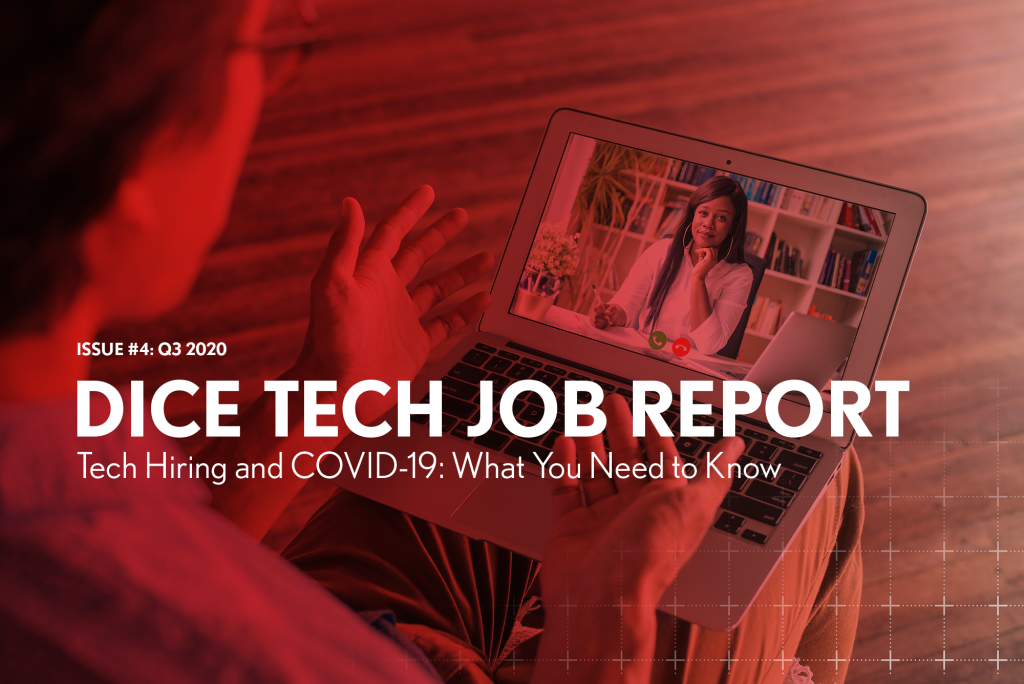
The Dice Q3 Tech Job Report: Tech Hiring and COVID-19: What You Need to Know — from techhub.dice.com
The report, issued quarterly by Dice, provides
From DSC:
One can quickly see how valuable this information would be as a data feed into an AI-based, next-generation learning platform.
The platform would connect the marketable skills with the courses, websites, blogs, RSS feeds/streams of content, etc. that would help a learner quickly and affordably build such in-demand skills. Given the shortening half-lives of many kinds of information, such a service is needed desperately…especially now with the impact of the Coronavirus.


Also relevant: See how ISTE built its upcoming virtual event!
Expert Tips for Using PowerPoint Presenter View (2 screens, Windows) in Zoom or Teams — from thinkoutsidetheslide.com; with thanks to Tamara Kravits for this resource
Except:
In this article I want to share some of the expert tips for using the features of Presenter View. I will use the common scenario of Presenter View showing on one screen while the slides show on a second screen which is shared in the meeting platform. This allows easy access to all the Presenter View features.
If you need to add a second screen, check out the options in this article and if you want to learn more about using Presenter View in different setups, I have complete guides to using Presenter View in Zoom and in Teams.
From DSC:
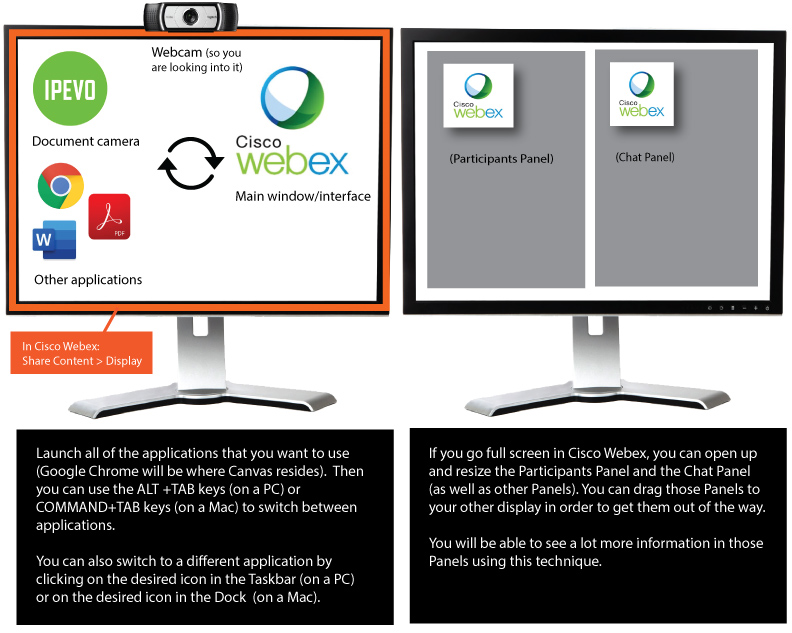
Along the lines of using two monitors with a videoconferencing application, below is a graphic I created for our faculty members at the WMU-Cooley Law School.
Also relevant/see:
From DSC:
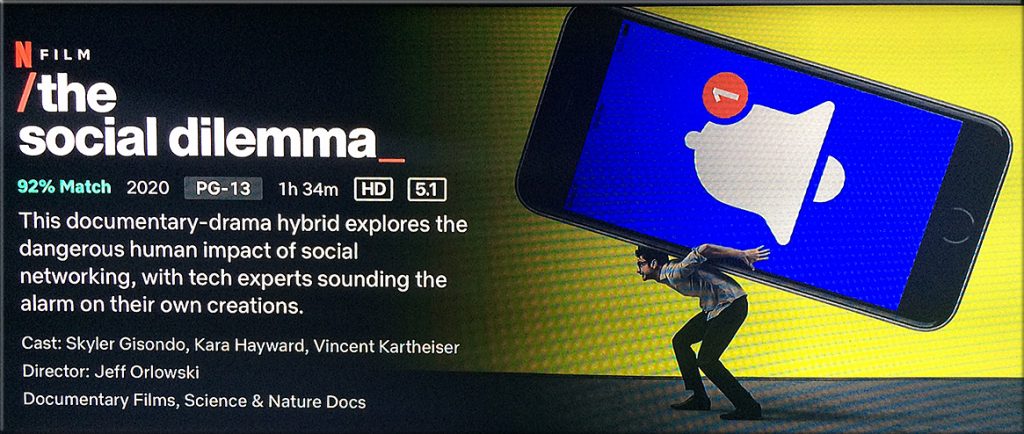
Who needs to be discussing/debating “The Social Dilemma” movie? Whether one agrees with the perspectives put forth therein or not, the discussion boards out there should be lighting up in the undergraduate areas of Computer Science (especially Programming), Engineering, Business, Economics, Mathematics, Statistics, Philosophy, Religion, Political Science, Sociology, and perhaps other disciplines as well.
To those starting out the relevant careers here…just because we can, doesn’t mean we should. Ask yourself not whether something CAN be developed, but *whether it SHOULD be developed* and what the potential implications of a technology/invention/etc. might be. I’m not aiming to take a position here. Rather, I’m trying to promote some serious reflection for those developing our new, emerging technologies and our new products/services out there.
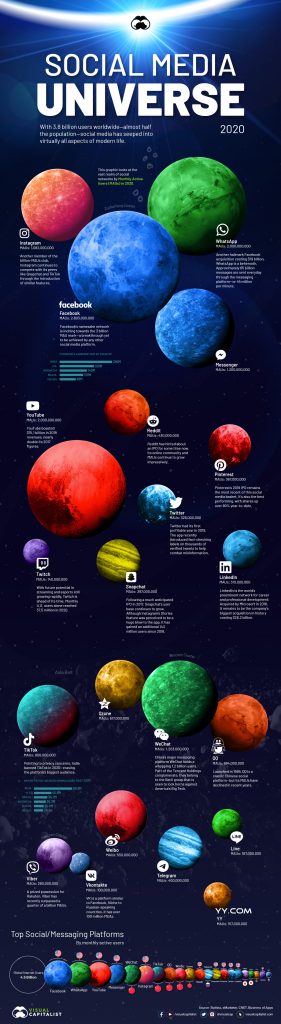
Visualizing the Social Media Universe in 2020 — from visualcapitalist.com Aran Ali
Per this week’s Lecture Breakers Weekly! from Dr. Barbi Honeycutt:
Break up your online lectures with the Watch Party! Here’s how you can do it:
Instead of presenting during the synchronous class time, you can now focus completely on managing the chat, prompting discussion, and responding to students’ questions and ideas in real-time. And be sure to record and save the chat for students who couldn’t attend the live session or want to review it later.
From DSC:
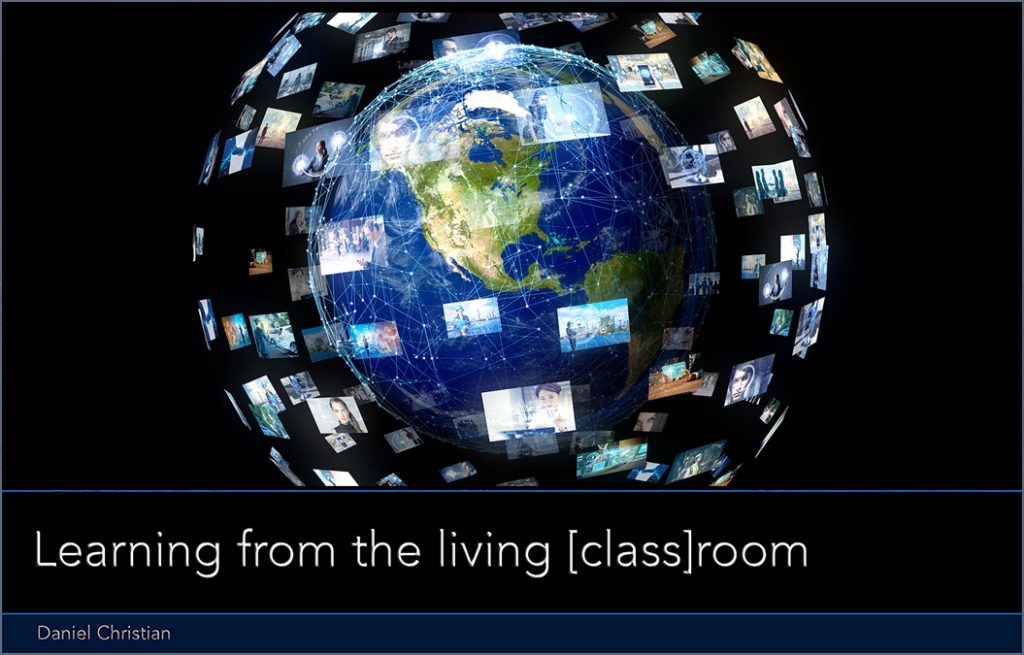
This is one of the kind of things that I envisioned with Learning from the living class[room] — a next-generation, global learning platform.
Learners could be watching a presentation/presenter, but communicating in real-time with other learners. Perhaps it will be a tvOS-based app or something similar. But TV as we know it is changing, right? It continues to become more interactive and on-demand all the time. Add videoconferencing apps like Zoom, Cisco Webex Meetings, Blackboard Collaborate, Microsoft Teams, Adobe Connect and others, and you have real-time, continuous, lifelong, relevant/timely, affordable, accessible, up-to-date learning.
Also, you have TEAM-BASED learning.