Enrollment Planning in the Specter of Closure — from insidehighered.com by Mark Campbell and Rachel Schreiber; via GSV
Misunderstandings about enrollment management and changing student needs can make a bad situation worse, Mark Campbell and Rachel Schreiber write. 

Excerpts (emphasis DSC):

However, we find that many institutions provide little to no information to prospective students about actual outcomes for graduates. Examples include: What does applying to graduate school look like for graduates? Employment and earning potential? Average student loan debt? What do alumni say about their experience? What data do you have that is compelling to answer these and related questions? Families increasingly ask, “What is the ROI on this investment?”
…
Another important issue relates to the unwillingness of leaders to evolve the institution to meet market demands. We have too often seen that storied, historic institutions have cultures that are change averse, and this seems to be particularly true in the liberal arts. This statement might appear to be controversial—but only if misunderstood.

To be clear, the humanities and the arts are vital, critical aspects of our institutions. But today’s prospective students are highly focused on career outcomes, given the financial investment they and their families are being asked to make. We believe that curricular offerings can place a high value on the core principles of the humanities and liberal arts while also preparing students for careers.

By contrast, curricular innovation, alterations to long-held marketing practices, openness to self-reflection regarding out-of-date programs, practices and policies—in short, a willingness to change and adapt—are all key. Finally, vital and successful institutions develop long-term strategic enrollment plans that are tactical, realistic and assessable and for which there is clarity about accountability. Putting these practices in place now can avert catastrophe down the road.


From DSC:
As I can’t embed his posting, I’m copying/pasting Jeff’s posting on LinkedIn:


According to Flighty, I logged more than 2,220 flight miles in the last 5 days traveling to three conferences to give keynotes and spend time with housing officers in Milwaukee, college presidents in Mackinac Island, MI, and enrollment and marketing leaders in Raleigh.

Before I rest, I wanted to post some quick thoughts about what I learned. Thank you to everyone who shared their wisdom these past few days:

  • We need to think about the “why” and “how” of AI in higher ed. The “why” shouldn’t be just because everyone else is doing it. Rather, the “why” is to reposition higher ed for a different future of competitors. The “how” shouldn’t be to just seek efficiency and cut jobs. Rather we should use AI to learn from its users to create a better experience going forward.
  • Residence halls are not just infrastructure. They are part and parcel of the student experience and critical to student success. Almost half of students living on campus say it increases their sense of belonging, according to research by the Association of College & University Housing Officers.
  • How do we extend the “residential experience”? More than half of traditional undergraduates who live on campus now take at least once course online. As students increasingly spend time off campus – or move off campus as early as their second year in college – we need to help continue to make the connections for them that they would in a dorm. Why? 47% of college students believe living in a college residence hall enhanced their ability to resolve conflicts.
  • Career must be at the core of the student experience for colleges to thrive in the future, says Andy Chan. Yes, some people might see that as too narrow of a view of higher ed or might not want to provide cogs for the wheel of the workforce, but without the job, none of the other benefits of college follow–citizenship, health, engagement.
  • A “triple threat grad”–someone who has an internship, a semester-long project, and an industry credential (think Salesforce or Adobe in addition to their degree–matters more in the job market than major or institution, says Brandon Busteed.
  • Every faculty member should think of themselves as an ambassador for the institution. Yes, care about their discipline/department, but that doesn’t survive if the rest of the institution falls down around them.
  • Presidents need to place bigger bets rather than spend pennies and dimes on a bunch of new strategies. That means to free up resources they need to stop doing things.
  • Higher ed needs a new business model. Institutions can’t make money just from tuition, and new products like certificates, are pennies on the dollars of degrees.
  • Boards aren’t ready for the future. They are over-indexed on philanthropy and alumni and not enough on the expertise needed for leading higher ed.

From DSC:
As I can’t embed his posting, I’m copying/pasting Jeff’s posting on LinkedIn:


It’s the stat that still gnaws at me: 62%.

That’s the percentage of high school graduates going right on to college. A decade ago it was around 70%. So for all the bellyaching about the demographic cliff in higher ed, just imagine if today we were close to that 70% number? We’d be talking a few hundred thousand more students in the system.

As I told a gathering of presidents of small colleges and universities last night on Mackinac Island — the first time I had to take [numerous modes of transportation] to get to a conference — being small isn’t distinctive anymore.

There are many reasons undergrad enrollment is down, but they all come down to two interrelated trends: jobs and affordability.

The job has become so central to what students want out of the experience. It’s almost as if colleges now need to guarantee a job.

These institutions will need to rethink the learner relationship with work. Instead of college with work on the side, we might need to move to more of a mindset of work with college on the side by:

  • Making campus jobs more meaningful. Why can’t we have accounting and finance majors work in the CFO office, liberal arts majors work in IT on platforms such as Salesforce and Workday, which are skills needed in the workplace, etc.?
  • Apprenticeships are not just for the trades anymore. Integrate work-based learning into the undergrad experience in a much bigger way than internships and even co-ops.
  • Credentials within the degree. Every graduate should leave college with more than just a BA but also a certified credential in things like data viz, project management, the Adobe suite, Alteryx, etc.
  • The curriculum needs to be more flexible for students to combine work and learning — not only for the experience but also money for college — so more availability of online courses, hybrid courses, and flexible semesters.

How else can we think about learning and earning?


The Musician’s Rule and GenAI in Education — from opencontent.org by David Wiley

We have to provide instructors the support they need to leverage educational technologies like generative AI effectively in the service of learning. Given the amount of benefit that could accrue to students if powerful tools like generative AI were used effectively by instructors, it seems unethical not to provide instructors with professional development that helps them better understand how learning occurs and what effective teaching looks like. Without more training and support for instructors, the amount of student learning higher education will collectively “leave on the table” will only increase as generative AI gets more and more capable. And that’s a problem.

From DSC:
As is often the case, David put together a solid posting here. A few comments/reflections on it:

  • I agree that more training/professional development is needed, especially regarding generative AI. This would help achieve a far greater ROI and impact.
  • The pace of change makes it difficult to see where the sand is settling…and thus what to focus on
  • The Teaching & Learning Groups out there are also trying to learn and grow in their knowledge (so that they can train others)
  • The administrators out there are also trying to figure out what all of this generative AI stuff is all about; and so are the faculty members. It takes time for educational technologies’ impact to roll out and be integrated into how people teach.
  • As we’re talking about multiple disciplines here, I think we need more team-based content creation and delivery.
  • There needs to be more research on how best to use AI — again, it would be helpful if the sand settled a bit first, so as not to waste time and $$. But then that research needs to be piped into the classrooms far better.
    .

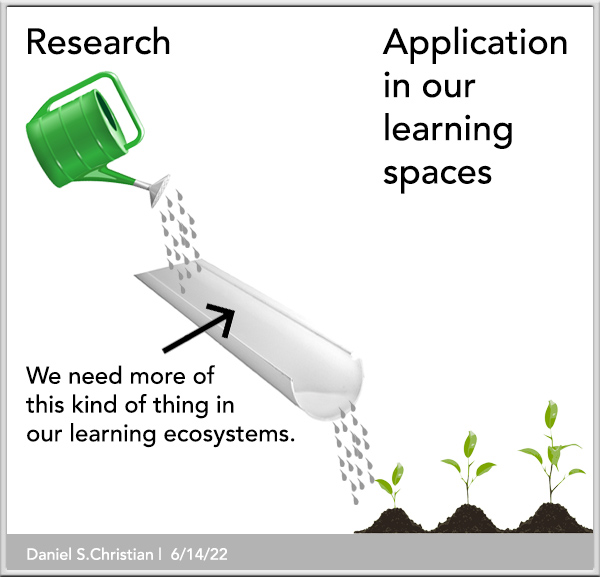
We need to take more of the research from learning science and apply it in our learning spaces.


Daniel Christian: My slides for the Educational Technology Organization of Michigan’s Spring 2024 Retreat

From DSC:
Last Thursday, I presented at the Educational Technology Organization of Michigan’s Spring 2024 Retreat. I wanted to pass along my slides to you all, in case they are helpful to you.

Topics/agenda:

  • Topics & resources re: Artificial Intelligence (AI)
    • Top multimodal players
    • Resources for learning about AI
    • Applications of AI
    • My predictions re: AI
  • The powerful impact of pursuing a vision
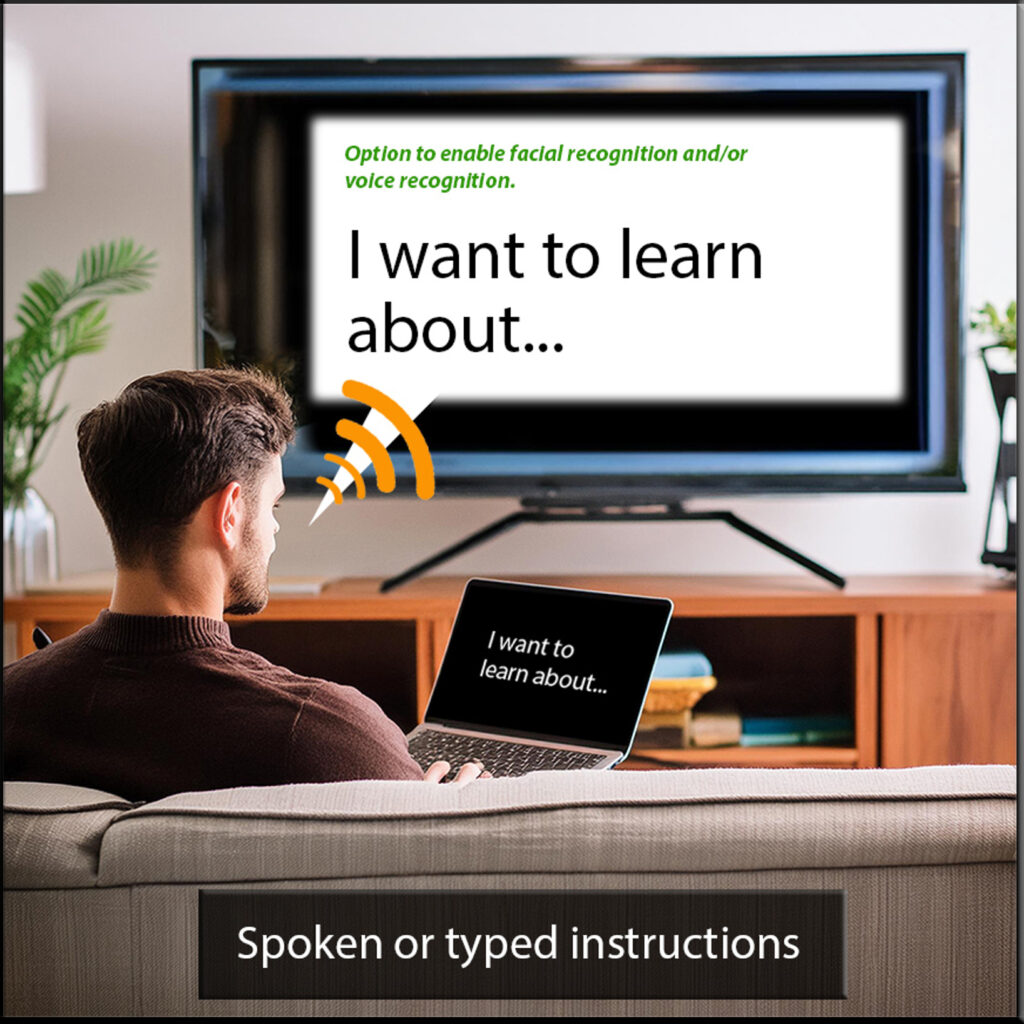
  • A potential, future next-gen learning platform
  • Share some lessons from my past with pertinent questions for you all now
  • The significant impact of an organization’s culture
  • Bonus material: Some people to follow re: learning science and edtech


Education Technology Organization of Michigan -- ETOM -- Spring 2024 Retreat on June 6-7

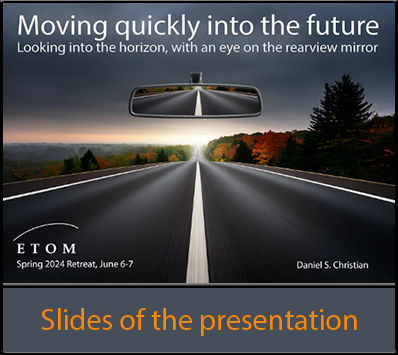
PowerPoint slides of Daniel Christian's presentation at ETOM

Slides of the presentation (.PPTX)
Slides of the presentation (.PDF)


Plus several more slides re: this vision.


Hello GPT-4o — from openai.com
We’re announcing GPT-4o, our new flagship model that can reason across audio, vision, and text in real time.

GPT-4o (“o” for “omni”) is a step towards much more natural human-computer interaction—it accepts as input any combination of text, audio, image, and video and generates any combination of text, audio, and image outputs. It can respond to audio inputs in as little as 232 milliseconds, with an average of 320 milliseconds, which is similar to human response time in a conversation. It matches GPT-4 Turbo performance on text in English and code, with significant improvement on text in non-English languages, while also being much faster and 50% cheaper in the API. GPT-4o is especially better at vision and audio understanding compared to existing models.

Example topics covered here:

  • Two GPT-4os interacting and singing
  • Languages/translation
  • Personalized math tutor
  • Meeting AI
  • Harmonizing and creating music
  • Providing inflection, emotions, and a human-like voice
  • Understanding what the camera is looking at and integrating it into the AI’s responses
  • Providing customer service

With GPT-4o, we trained a single new model end-to-end across text, vision, and audio, meaning that all inputs and outputs are processed by the same neural network. Because GPT-4o is our first model combining all of these modalities, we are still just scratching the surface of exploring what the model can do and its limitations.


From DSC:
I like the assistive tech angle here:


.

2024 EDUCAUSE Horizon Report® Teaching and Learning Edition

Trends
As a first activity, we asked the Horizon panelists to provide input on the macro trends they believe are going to shape the future of postsecondary teaching and learning and to provide observable evidence for those trends. To ensure an expansive view of the larger trends serving as context for institutions of higher education, panelists provided input across five trend categories: social, technological, economic, environmental, and political. Given the widespread impacts of emerging AI technologies on higher education, we are also including in this year’s report a list of “honorary trends” focused on AI. After several rounds of voting, the panelists selected the following trends as the most important:


ChatGPT remembers who you are — from thebrainyacts.beehiiv.com |Brainyacts #191

OpenAI rolls out Memory feature for ChatGPT
OpenAI has introduced a cool update for ChatGPT (rolling out to paid and free users – but not in the EU or Korea), enabling the AI to remember user-specific details across sessions. This memory feature enhances personalization and efficiency, making your interactions with ChatGPT more relevant and engaging.

.

Key Features

  1. Automatic Memory Tracking
    • ChatGPT now automatically records information from your interactions such as preferences, interests, and plans. This allows the AI to refine its responses over time, making each conversation increasingly tailored to you.
  2. Enhanced Personalization
    • The more you interact with ChatGPT, the better it understands your needs and adapts its responses accordingly. This personalization improves the relevance and efficiency of your interactions, whether you’re asking for daily tasks or discussing complex topics.
  3. Memory Management Options
    • You have full control over this feature. You can view what information is stored, toggle the memory on or off, and delete specific data or all memory entries, ensuring your privacy and preferences are respected.


From DSC:
The ability of AI-based applications to remember things about us will have major and positive ramifications for us when we think about learning-related applications of AI.


Description:

I recently created an AI version of myself—REID AI—and recorded a Q&A to see how this digital twin might challenge me in new ways. The video avatar is generated by Hour One, its voice was created by Eleven Labs, and its persona—the way that REID AI formulates responses—is generated from a custom chatbot built on GPT-4 that was trained on my books, speeches, podcasts and other content that I’ve produced over the last few decades. I decided to interview it to test its capability and how closely its responses match—and test—my thinking. Then, REID AI asked me some questions on AI and technology. I thought I would hate this, but I’ve actually ended up finding the whole experience interesting and thought-provoking.


From DSC:
This ability to ask questions of a digital twin is very interesting when you think about it in terms of “interviewing” a historical figure. I believe character.ai provides this kind of thing, but I haven’t used it much.


Colleges are now closing at a pace of one a week. What happens to the students? — from hechingerreport.org by Jon Marcus
Most never finish their degrees, and alumni wonder about the value of degrees they’ve earned

About one university or college per week so far this year, on average, has announced that it will close or merge. That’s up from a little more than two a month last year, according to the State Higher Education Executive Officers Association, or SHEEO.
…
Most students at colleges that close give up on their educations altogether. Fewer than half transfer to other institutions, a SHEEO study found. Of those, fewer than half stay long enough to get degrees. Many lose credits when they move from one school to another and have to spend longer in college, often taking out more loans to pay for it.
…
Colleges are almost certain to keep closing. As many as one in 10 four-year colleges and universities are in financial peril, the consulting firm EY Parthenon estimates.

Students who transferlose an average of 43 percentof the credits they’ve already earned and paid for, the Government Accountability Office found in the most recent comprehensive study of this problem.

Also relevant:


AI RESOURCES AND TEACHING (Kent State University) — from aiadvisoryboards.wordpress.com

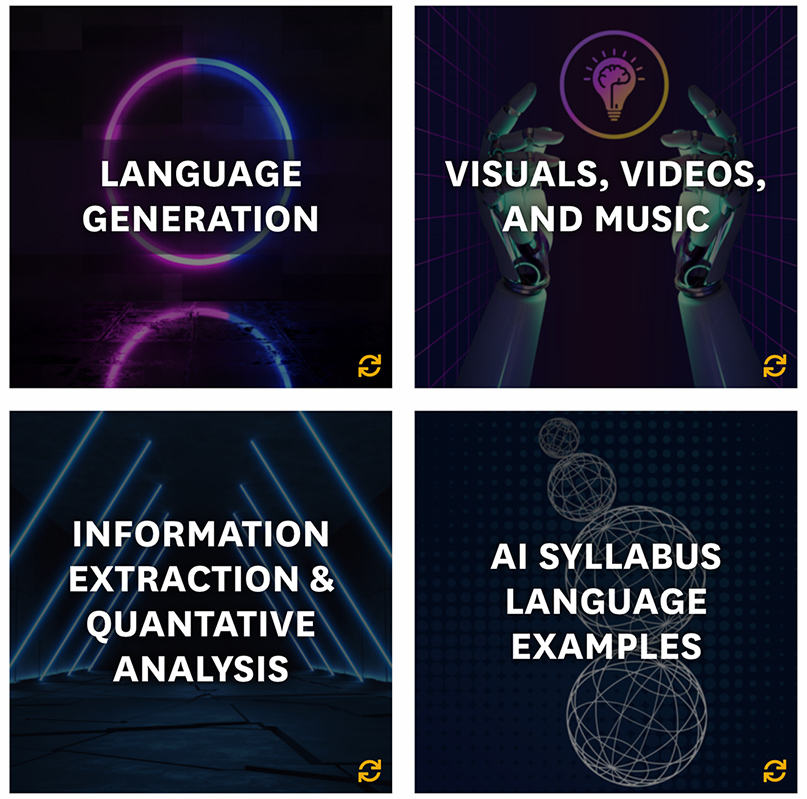
AI Resources and Teaching | Kent State University offers valuable resources for educators interested in incorporating artificial intelligence (AI) into their teaching practices. The university recognizes that the rapid emergence of AI tools presents both challenges and opportunities in higher education.

The AI Resources and Teaching page provides educators with information and guidance on various AI tools and their responsible use within and beyond the classroom. The page covers different areas of AI application, including language generation, visuals, videos, music, information extraction, quantitative analysis, and AI syllabus language examples.


A Cautionary AI Tale: Why IBM’s Dazzling Watson Supercomputer Made a Lousy Tutor — from the74million.org by Greg Toppo
With a new race underway to create the next teaching chatbot, IBM’s abandoned 5-year, $100M ed push offers lessons about AI’s promise and its limits.

For all its jaw-dropping power, Watson the computer overlord was a weak teacher. It couldn’t engage or motivate kids, inspire them to reach new heights or even keep them focused on the material — all qualities of the best mentors.

It’s a finding with some resonance to our current moment of AI-inspired doomscrolling about the future of humanity in a world of ascendant machines. “There are some things AI is actually very good for,” Nitta said, “but it’s not great as a replacement for humans.”

His five-year journey to essentially a dead-end could also prove instructive as ChatGPT and other programs like it fuel a renewed, multimillion-dollar experiment to, in essence, prove him wrong.
…

To be sure, AI can do sophisticated things such as generating quizzes from a class reading and editing student writing. But the idea that a machine or a chatbot can actually teach as a human can, he said, represents “a profound misunderstanding of what AI is actually capable of.” 

Nitta, who still holds deep respect for the Watson lab, admits, “We missed something important. At the heart of education, at the heart of any learning, is engagement. And that’s kind of the Holy Grail.”

From DSC:
This is why the vision that I’ve been tracking and working on has always said that HUMAN BEINGS will be necessary — they are key to realizing this vision. Along these lines, here’s a relevant quote:

Another crucial component of a new learning theory for the age of AI would be the cultivation of “blended intelligence.” This concept recognizes that the future of learning and work will involve the seamless integration of human and machine capabilities, and that learners must develop the skills and strategies needed to effectively collaborate with AI systems. Rather than viewing AI as a threat to human intelligence, a blended intelligence approach seeks to harness the complementary strengths of humans and machines, creating a symbiotic relationship that enhances the potential of both.

Per Alexander “Sasha” Sidorkin, Head of the National Institute on AI in Society at California State University Sacramento.


The University Student’s Guide To Ethical AI Use  — from studocu.com; with thanks to Jervise Penton at 6XD Media Group for this resource

This comprehensive guide offers:

  • Up-to-date statistics on the current state of AI in universities, how institutions and students are currently using artificial intelligence
  • An overview of popular AI tools used in universities and its limitations as a study tool
  • Tips on how to ethically use AI and how to maximize its capabilities for students
  • Current existing punishment and penalties for cheating using AI
  • A checklist of questions to ask yourself, before, during, and after an assignment to ensure ethical use

Some of the key facts you might find interesting are:

  • The total value of AI being used in education was estimated to reach $53.68 billion by the end of 2032.
  • 68% of students say using AI has impacted their academic performance positively.
  • Educators using AI tools say the technology helps speed up their grading process by as much as 75%.
 

Student perceptions of American higher education — from usprogram.gatesfoundation.org by Edge Research & HCM Strategists
Continued research exploring college enrollment declines

Overview of 2023 Findings
Despite our understanding of the value of higher education, perceptions among these audiences make it clear that institutions need to prove their value to them. In particular, why does the value of a 2-year or 4-year degree outweigh the value of credentials and job training programs? Both High Schoolers and Non-Enrollees see and select other paths that are shorter, cheaper, and/or more directly linked to specific job opportunities.

As part of that effort, these audiences want and need supports throughout their college journeys to reach the destination of acquiring a degree. These audiences feel anxious about making the wrong choices when it comes to college, and that those choices will impact the rest of their lives. Finally, it is also important to understand that the information received by these audiences differs by cohort. High Schoolers are at the epicenter of the college information network. Non-Enrollees, on the other hand, are forced to seek information about colleges, and the information they find tends to be less positive compared to what High Schoolers receive and consume about higher education.

Higher Education Must Prove Value to Potential Students, Who are Currently More Attracted to Immediate, Lower-Cost Options


Many Students Don’t Inform Their Colleges About Their Disability. That Needs to Change. — from edsurge.com by Stephanie A.N. Levin

After engaging in a policy review and coding a set of policy documents from disability service offices at colleges and universities across the U.S., it became clear to me that I wasn’t alone in my reluctance to seek accommodations at my college. It turns out that many higher education students with disabilities are hesitant to self-identify and pursue accommodations that could support them in their studies.

According to the most recent data published by the National Center for Education Statistics, about 20 percent of undergraduate students and nearly 11 percent of graduate students have a disability. There’s a discrepancy though, between the rate of students reporting having a disability, and those who are actually registering with their campus disability center. It turns out many students don’t inform their colleges of their disability and that has led to a support gap.The truth is, too many college and university students with disabilities decide to forgo a request for the accommodations that they may need to be successful.


5 ways to support today’s online learner — from insidetrack.org

  1. Make online learning learner-centered, demand-driven and career-advancing
  2. Help cultivate a sense of belonging
  3. Reduce barriers to online learning
  4. Encourage investment in planning and support structures
  5. Build up online learner confidence


The New Academic Arms Race | Competition over amenities is over. The next battleground is technology. — from chronicle.com by Jeffrey J. Selingo
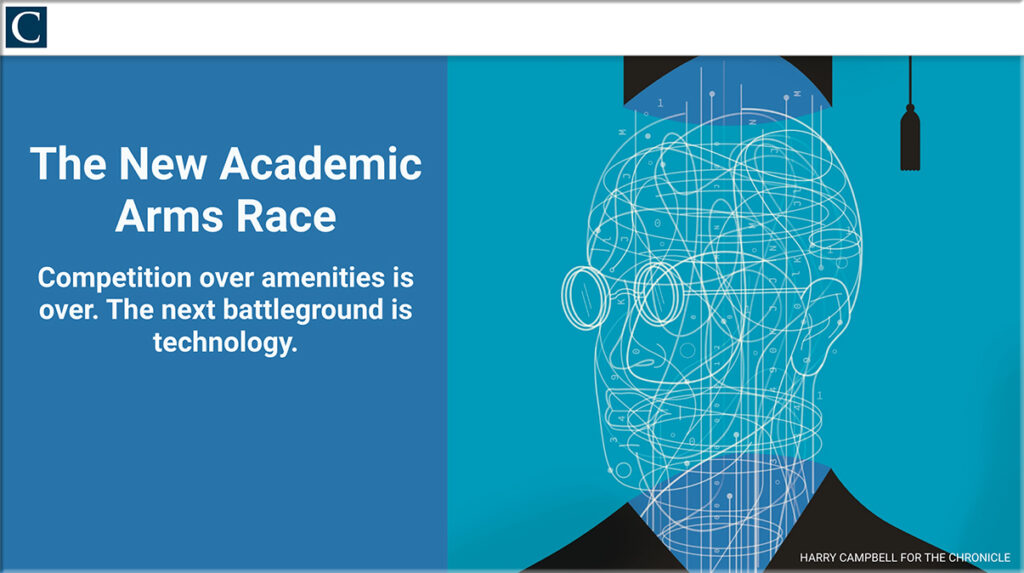
Now, after the pandemic, with the value of the bachelor’s degree foremost in the minds of students and families, a new academic arms race is emerging. This one is centered around academic innovation. The winners will be those institutions that in the decade ahead better apply technology in teaching and learning and develop different approaches to credentialing.

Sure, technology is often seen as plumbing on campuses — as long as it works, we don’t worry about it. And rarely do prospective students on a tour ever ask about academic innovations like extended reality or microcredentials. Campus tours prefer to show off the bells and whistles of residential life within dorms and dining halls.

That’s too bad.

The problem is not a lack of learners, but rather a lack of alignment in what colleges offer to a generation of learners surrounded by Amazon, Netflix, and Instagram, where they can stream entertainment and music anytime, anywhere.

From DSC:
When I worked for Calvin (then College, now University) from 2007-2017, that’s exactly how technologies and the entire IT Department were viewed — as infrastructure providers. We were not viewed as being able to enhance the core business/offerings of the institution. We weren’t relevant in that area. In fact, the IT Department was shoved down in the basement of the library. Our Teaching & Learning Digital Studio was sidelined in a part of the library where few students went to. The Digitial Studio’s marketing efforts didn’t help much, as faculty members didn’t offer assignments that called for multimedia-based deliverables. It was a very tough and steep hill to climb.

Also the Presidents and Provosts over the last couple of decades (not currently though) didn’t think much of online-based learning, and the top administrators dissed the Internet’s ability to provide 24/7 worldwide conversations and learning. They missed the biggest thing to come along in education in 500 years (since the invention of the printing press). Our Teaching & Learning Group provided leadership by starting a Calvin Online pilot. We had 13-14 courses built and inquiries from Christian-based high schools were coming in for dual enrollment scenarios, but when it came time for the College to make a decision, it never happened. The topic/vote never made it to the floor of the Faculty Senate. The faculty and administration missed an enormous opportunity.

When Calvin College became Calvin University in 2019, they were forced to offer online-based classes. Had they supported our T&L Group’s efforts back in the early to mid-2010’s, they would have dove-tailed very nicely into offering more courses to working adults. They would have built up the internal expertise to offer these courses/programs. But the culture of the college put a stop to online-based learning at that time. They now regret that decision I’m sure (as they’ve had to outsource many things and they now offer numerous online-based courses and even entire programs — at a high cost most likely).

My how times have changed.


For another item re: higher education at the 30,000-foot level, see:


Lifelong Learning Models for a Changing Higher Ed Marketplace — from changinghighered.com by Dr. Drumm McNaughton and Amrit Ahluwalia
Exploring the transformation of higher education into lifelong learning hubs for workforce development, with innovative models and continuing education’s role.

Higher education is undergoing transformational change to redefine its role as a facilitator of lifelong learning and workforce development. In this 200th episode of Changing Higher Ed, host Dr. Drumm McNaughton and guest Amrit Ahluwalia, incoming Executive Director for Continuing Studies at Western University, explore innovative models positioning universities as sustainable hubs for socioeconomic mobility.

The Consumer-Driven Educational Landscape
Over 60% of today’s jobs will be redefined by 2025, driving demand for continuous upskilling and reskilling to meet evolving workforce needs. However, higher education’s traditional model of imparting specific knowledge through multi-year degrees is hugely misaligned with this reality.

Soaring education costs have fueled a consumer mindset shift, with learners demanding a clear return on investment directly aligned with their career goals. The expectation is to see immediate skills application and professional impact from their educational investments, not just long-term outcomes years after completion.


Doubts About Value Are Deterring College Enrollment — from insidehighered.com by Jessica Blake
Survey data suggests that prospective learners are being dissuaded from college by skepticism about whether degrees are worth the time and money.

Enrollment has been declining in higher education for more than a decade, and the most common explanations in recent years have been lingering effects of the pandemic and a looming demographic cliff expected to shrink the number of traditional-age college students. But new research suggests that public doubts about the value of a college degree are a key contributor.

The study—conducted by Edge Research, a marketing research firm, and HCM Strategists, a public policy and advocacy consulting firm with funding from the Bill & Melinda Gates Foundation—uses focus groups and parallel national surveys of current high school students and of adults who decided to leave college or who didn’t go at all to link the value proposition of a college degree and Americans’ behaviors after high school.

“At the end of the day, higher education has a lot of work to do to convince these audiences of its value,” said Terrell Dunn, an HCM consultant.


‘A Condemnation’: Under Mental Health Strains, Students Weigh Quitting College — from edsurge.com by Daniel Mollenkamp

When college students think about quitting, it’s most likely because of mental health strain or stress.

That’s according to the recent data from the “State of Higher Education Study,” conducted by the analytics company Gallup and the private foundation Lumina.


Top 6 Use Cases of Generative AI in Education in 2024 — from research.aimultiple.com by Cem Dilmegani

Use cases included:

  1. Personalized Lessons
  2. Course Design
  3. Content Creation for Courses
  4. Data Privacy Protection for Analytical Models
  5. Restoring Old Learning Materials
  6. Tutoring

The Next Phase of AI in Education at the U.S. Department of Education — from medium.com by Office of Ed Tech

Why are we doing this work?
Over the past two years, the U.S. Department of Education has been committed to maintaining an ongoing conversation with educators, students, researchers, developers — and the educational community at large — related to the continuous progress of Artificial Intelligence (AI) development and its implications for teaching and learning.

Many educators are seeking resources clarifying what AI is and how it will impact their work and their students. Similarly, developers of educational technology (“edtech”) products seek guidance on what guardrails exist that can support their efforts. After the release of our May 2023 report Artificial Intelligence and the Future of Teaching and Learning, we heard the desire for more.


2024 EDUCAUSE AI Landscape Study — from library.educause.edu by Jenay Robert

Moving from reaction to action, higher education stakeholders are currently exploring the opportunities afforded by AI for teaching, learning, and work while maintaining a sense of caution for the vast array of risks AI-powered technologies pose. To aid in these efforts, we present this inaugural EDUCAUSE AI Landscape Study, in which we summarize the higher education community’s current sentiments and experiences related to strategic planning and readiness, policies and procedures, workforce, and the future of AI in higher education.


AI Update for K-16 Administrators: More People Need to Step-Up and Take the AI Bull By the Horns — from stefanbauschard.substack.com by Stefan Bauschard
AI capabilities are way beyond what most schools are aware of, and they will transform education and society over the next few years.

Educational administrators should not worry about every AI development, but should, instead focus on the big picture, as those big picture changes will change the entire world and the educational system.

AI and related technologies (robotics, synthetic biology, and brain-computer interfaces) will continue to impact society and the entire educational system over the next 10 years. This impact on the system will be greater than anything that has happened over the last 100 years, including COVID-19, as COVID-19 eventually ended and the disruptive force of these technologies will only continue to develop.

AI is the bull in the China Shop, redefining the world and the educational system. Students writing a paper with AI is barely a poke in the educational world relative to what is starting to happen (active AI teachers and tutors; AI assessment; AI glasses; immersive learning environments; young students able to start their own business with AI tools; AIs replacing and changing jobs; deep voice and video fakes; intelligence leveling; individualized instruction; interactive and highly intelligent computers; computers that can act autonomously; and more).


© 2025 | Daniel Christian