Short and Sweet: The Educational Benefits of Microlectures and Active Learning — from er.educause.edu by Hua Zheng; with thanks to the Learning Now TV Newsletter – April 2022
The combination of short videos and the techniques of active learning can create rich, engaging educational experiences to maximize learning.

Excerpt:

The goal of interspersing a microlecture with active learning approaches is to improve student engagement and learning performance when participating in online, hybrid, or face-to-face instruction. Empirical studies have shown that active learning approaches, such as combining pause points with interactive quizzes, tasks requiring written responses, or note taking, can improve student performance.


Innovative and practical applications of the metaverse — from mckinsey.com

In this episode of the At the Edge podcast, McKinsey expert Richard Ward speaks with McKinsey’s Mina Alaghband.

Excerpts:

One of the things that we’ve learned during the pandemic is that if you put these metaverse design rooms up on the internet, your clients and other expert engineers can log in remotely, and the experience takes on the quality of Zoom in 3-D, which allows a new level of engineering to happen. The beauty of it is that people are able to do highly productive engineering design work without getting on an airplane. And that has a lot of rollover value for what we’re doing long term.

One of the great lessons we’ve had from the pandemic, as horrible as it’s been, is that things that people had said were impossible for decades are now possible. Like the idea that you can’t possibly have everybody not be in the office—it’s been proven wrong.

Also relevant/see:


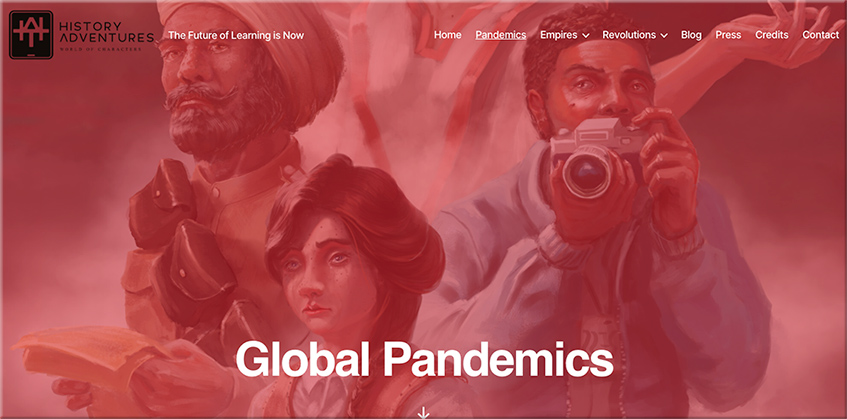
Global Pandemics is a cutting-edge, browser-based, digital learning experience—designed to enhance student understanding of the role of pandemics in world history.

Global Pandemics — from historyadventures.co with thanks to Andrea Boros for the resource

Excerpts:

Global Pandemics is “a cutting-edge, browser-based, digital learning experience—designed to enhance student understanding of the role of pandemics in world history. One year in the making, and involving a talented, interdisciplinary team from around the world—the new product features cutting-edge digital learning design, web animation, interaction design, and digital storytelling.”

This browser-based digital learning experience introduces multiple novel technologies, including:

  • 3D Motion Design to Recreate History
  • Advanced Web Animation to Simulate Pathogens
  • Immersive 360 Panoramas of Historical Locations
  • Animated Historical Timeline & Maps
  • Choice-based Narrative Design
  • Interactive Original Historical Documents
  • Media-Rich Adaptive Assessments

Also see:


The Metaverse Will Radically Change Content Creation Forever — from forbes.com by Falon Fatemi

Excerpt:

Although the metaverse promises to touch nearly every person in our society, there’s one demographic that will almost certainly see disproportionately strong disruption: creators. The metaverse has the potential to fundamentally disrupt the content creation process.

The metaverse is slated to help creators make more interactive and immersive content, thanks in large part to advances in VR and AR. The stakes will be raised as creators will be expected to build more immersive and interactive content than ever before.

Also related/see:

The Amazing Possibilities Of Healthcare In The Metaverse — from forbes.com by Bernard Marr

Excerpts:

What’s generally agreed on, however, is that it’s effectively the next version of the internet – one that will take advantage of artificial intelligence (AI), augmented reality (AR), virtual reality (VR), and ever-increasing connectivity (for example, 5G networks) to create online environments that are more immersive, experiential and interactive than what we have today.

Metaverse involves the convergence of three major technological trends, which all have the potential to impact healthcare individually. Together, though, they could create entirely new channels for delivering care that have the potential to lower costs and vastly improve patient outcomes. These are telepresence (allowing people to be together virtually, even while we’re apart physically), digital twinning, and blockchain (and its ability to let us create a distributed internet).

From DSC:
That last paragraph could likely apply to our future learning ecosystems as well. Lower costs. A greater sense of presence. Getting paid for one’s teaching…then going to learn something new and paying someone else for that new training/education.


MUHC uses artificial intelligence to train neurosurgery students — from montreal.ctvnews.ca by Rob Lurie

Excerpt:

“I think above all it just provides an opportunity for junior learners to get some hands-on exposure,” said medical student Ali Fazlollahi.

“Basically, it was inspired by the idea of how do we prevent error in the operating room,” said Neurosurgeon Dr. Rolando De Maestro. Maestro says virtual reality has been a game-changer when it comes to teaching.


Why the World’s First Virtual Reality High School Changes Everything — from steve-grubbs.medium.com by Steve Grubs

Excerpts:

The recipe required key ingredients to happen. In addition to an accredited school to manage students, admissions and the for-credit learning, it also needed a platform. That’s where EngageVR comes in. There are other platforms that will ultimately host schools, perhaps AltSpace, Horizon or others, but the first is on Engage.

The bottom line is this: creators, coders, educators, entrepreneurs, investors, corporations, parents and students all played a role in finally bringing the first global virtual reality high school to life. It won’t be the last school to open in the metaverse, but to all those involved in this inaugural launch — the Neil Armstrongs of your age — a special tip of the hat today for having the vision and the willingness to launch a better and more equitable era of education.

Also see:

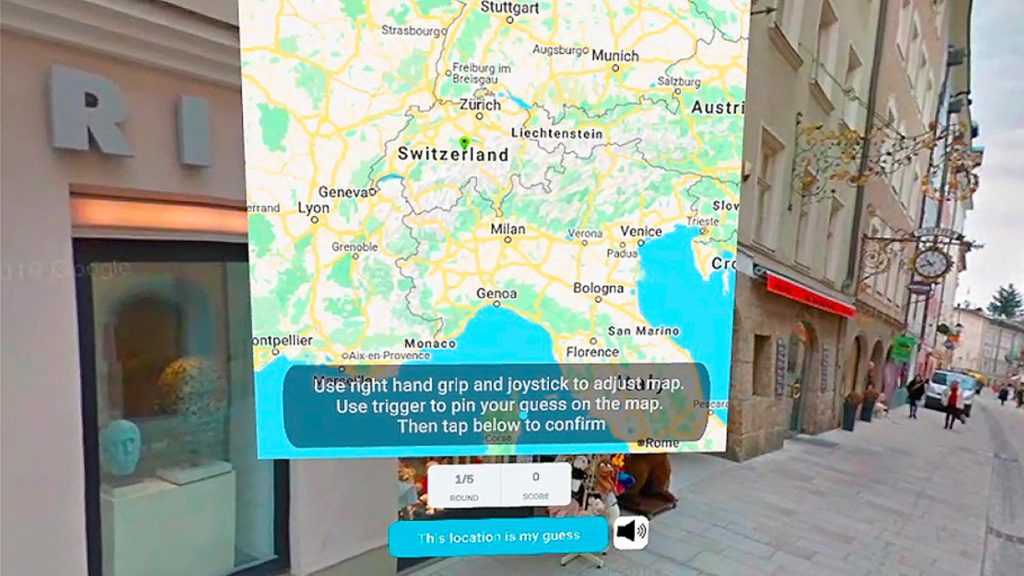
This is a snapshot from the Geo Guesser VR game


Exploring Virtual Reality [VR] learning experiences in the classroom — from blog.neolms.com by Rachelle Dene Poth

Excerpt:

With the start of a new year, it is always a great time to explore new ideas or try some new methods that may be a bit different from what we have traditionally done. I always think it is a great opportunity to stretch ourselves professionally, especially after a break or during the spring months.

Finding ways to boost student engagement is important, and what I have found is that by using tools like Augmented Reality (AR) and Virtual Reality (VR), we can immerse students in unique and personalized learning experiences. The use of augmented and virtual reality has increased in K-12 and Higher Ed, especially during the past two years, as educators have sought new ways to facilitate learning and give students the chance to connect more with the content. The use of these technologies is increasing in the workplace, as well.

With all of these technologies, we now have endless opportunities to take learning beyond what has been a confined classroom “space” and access the entire world with the right devices.


22 Augmented Reality Trends to Keep an Eye on for 2022 — from linkedin.com by Tom Emrich

Excerpts:

#1 Metaverse remains at peak hype as the next iteration of the Internet feels so close but is actually much further away

#2 The smartphone continues to become an even more powerful augmented reality machine with advancements in chips, displays and connectivity

#3 Early consumer smartglasses reinforce the need for smartphones rather than attempt to replace them

The metaverse is defined differently by different people but for me, the metaverse is an aha moment. It is a realization by industry that the next wave of computing is comprised of a stack of emerging technologies (including blockchain, AI, IoT, AR and VR) that will all work together to create a fundamental shift in our relationship with technology. 


Also see:


Theater companies in the U.K., home to one of the world’s oldest and grandest performing traditions, are increasingly integrating digital technology into interactive theater performances. They’re even getting help from the government to do it, The New York Times reported.

Along these lines, also see:


Tech & Learning Magazine Names the Winners of the Best of 2021 — from techlearning.com
Tech & Learning’s judges deemed these products as standouts for supporting teaching and learning in 2021

Excerpt:

Tech & Learning magazine has named the winners of the Awards of Excellence: Best of 2021 contest, which recognizes educational technology that exceptionally supported teachers and students last year.

 The contest focused on outstanding products that supported education this past year no matter the learning environment, whether face-to-face, remote, or anything in between. Eligible products included hardware, software, curriculum, and more, all divided by grade levels to make it easier to find the solutions you need.

 Each nominee answered the following questions: What specific problem does this product solve? How did your product exceptionally support teaching and learning in 2021? How does your product address the challenges facing education today?


Inside Melbourne’s Major New Interactive Gallery, Where Art and Science Collide

Inside Melbourne’s Major New Interactive Gallery, Where Art and Science Collide — from broadsheet.com.au by Liv Downing
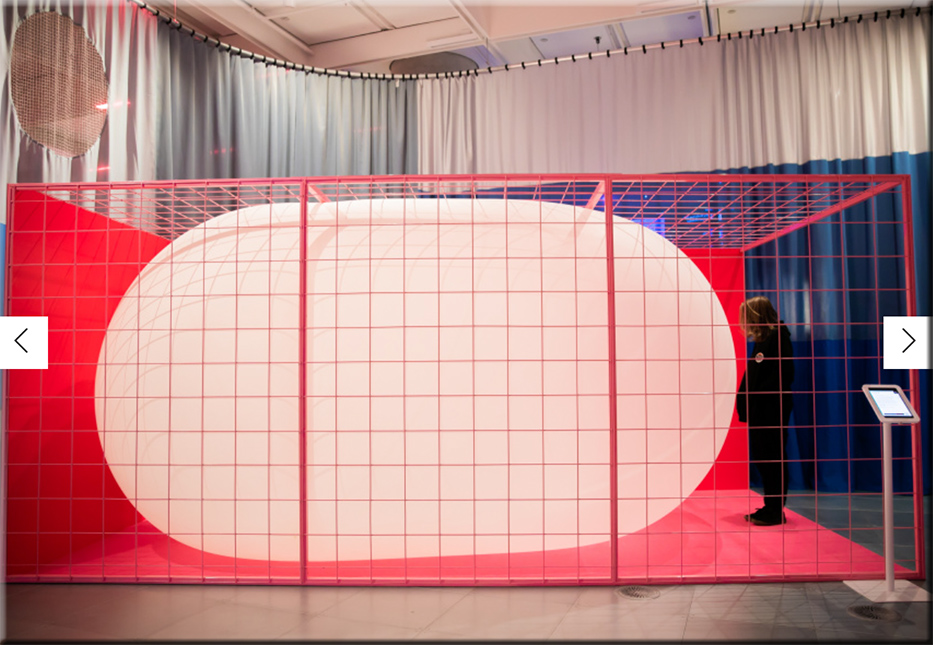
The inaugural Science Gallery exhibition tackles mental health head-on, but with an out-of-the-box approach. Across 3500 square metres, there’s a kaleidoscopic human-sized hamster wheel you can step inside, a gigantic white balloon trapped in a pink cage, and a fake bedroom where two performance artists will live for a week.


From DSC:
These ideas are specially meant for you entrepreneurs and vendors out there! Including such vendors and products such as Zoom, Cisco Webex, Microsoft Teams, Adobe Connect, and others!

This idea could also be profitable and fun for CMS/LMS vendors and products such as Instructure/Canvas, Blackboard Learn, D2L, Google Classroom and others!


How might we take engagement within an online-based learning environment to an entirely different level? Well, check out these ideas!

What if learning could feature more personality? Be more fun? Have shades of game shows even!? Yet at the same time, if you are a learner who ventures into the ideas that I’m about to suggest, you had better be ready to back up and explain your perspective/position!

Here’s what I’m getting at. You know when you are messaging you can insert some fun motion graphics into your message?


Well, what about if we could select from a bank of very short video clips during a live/synchronous discussion — or during an asynchronous-based discussion board posting — that contained a famous movie clip/message? Then, if you choose to do that, you are then required to explain your perspective/position.  


Video What the video could mean
“Beam me up Scotty! There’s no intelligent life down here.” This is ridiculous. No one’s making any sense here. 
“You meddling kids.”
 From various bad guys on Scooby-Doo.
 You’re messing with me. I don’t agree with your perspective, and here’s why.
“That does not compute.”
Spock from Star Trek. 
I don’t agree with your answer. That doesn’t make any sense and here’s why.
“You can’t handle the truth.”
Jack Nicholson in “A Few Good Men.”
Are you sure you want to know the truth about this topic? Can you handle such a truth? This is about to get real in here.
“Do. Or do not. There is no try.”
Yoda. Star Wars
 Take action on something; do something.
“I’ll be back.”
Arnold Schwarzenegger in various films.
I’m stepping away from my desk…but I’ll be back soon.
or
You may have one this round, but I’ll be back for another round.

Learners within a learning community could use entertainment and have some fun while also having to backup their position/perspective! Talk about engagement! Shooooot.

And/or…learners could be like DJ’s at radio stations — and, on the fly, select from a bank of songs, audio-based noises and sounds!

The danger here is that humor can sometimes backfire and/or offend someone. So we would need to watch the content that’s available to choose from within the repositories of media. We would want to do some serious beta testing here to make sure things stay on the fun, entertaining, and educational sides of things.

Such an approach could introduce opportunities for creativity and for honing one’s ability to think on one’s feet. Also, learners could work on their communication skills as well as their ability to debate or persuade, or to practice some critical thinking.

While more gameshow-like on the surface, if you use such media, you have to explain why you used that media.


Methods and tools to develop future-ready skills — from blog.neolms.com by Rachelle Dene Poth

Excerpt:

Because of the changes that we experienced in the past year, I believe that it is important to have various options, whether teaching in-person, hybrid, or virtually. Choosing methods like Genius hour or project-based learning, activities such as scavenger hunts or learning stations, or selecting digital tools that promote more interaction with and between students will help foster the development of essential future-ready and SEL skills.

There are many methods and tools to explore, but it’s important to focus on the why behind the choices we make for our students. The use of digital tools promotes collaboration, communication, creativity and many more essential skills while also promoting the power of choice for students to share what they have learned.

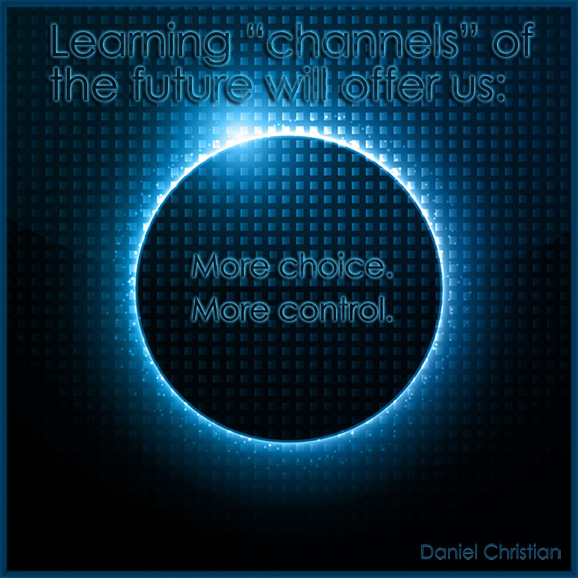
More choice. More control.

Also see:

Escape rooms have become very popular as a place teams can go to work out how to get free from the room in which they are “trapped.” It’s like a real-world version of a computer game that makes you work together to solve puzzles to escape from somewhere.

Breakout EDU helps to bring that experience to educators so as to better engage students and help them learn while having fun.


Also see:


© 2025 | Daniel Christian