What a future, powerful, global learning platform will look & act like [Christian]


Learning from the Living [Class] Room:
A vision for a global, powerful, next generation learning platform

By Daniel Christian

NOTE: Having recently lost my Senior Instructional Designer position due to a staff reduction program, I am looking to help build such a platform as this. So if you are working on such a platform or know of someone who is, please let me know: danielchristian55@gmail.com.

I want to help people reinvent themselves quickly, efficiently, and cost-effectively — while providing more choice, more control to lifelong learners. This will become critically important as artificial intelligence, robotics, algorithms, and automation continue to impact the workplace.


The Living [Class] Room -- by Daniel Christian -- July 2012 -- a second device used in conjunction with a Smart/Connected TV


Learning from the Living [Class] Room:
A global, powerful, next generation learning platform


What does the vision entail?

  • A new, global, collaborative learning platform that offers more choice, more control to learners of all ages – 24×7 – and could become the organization that futurist Thomas Frey discusses here with Business Insider:

“I’ve been predicting that by 2030 the largest company on the internet is going to be an education-based company that we haven’t heard of yet,” Frey, the senior futurist at the DaVinci Institute think tank, tells Business Insider.

  • A learner-centered platform that is enabled by – and reliant upon – human beings but is backed up by a powerful suite of technologies that work together in order to help people reinvent themselves quickly, conveniently, and extremely cost-effectively
  • An AI-backed system of analyzing employment trends and opportunities will highlight those courses and “streams of content” that will help someone obtain the most in-demand skills
  • A system that tracks learning and, via Blockchain-based technologies, feeds all completed learning modules/courses into learners’ web-based learner profiles
  • A learning platform that provides customized, personalized recommendation lists – based upon the learner’s goals
  • A platform that delivers customized, personalized learning within a self-directed course (meant for those content creators who want to deliver more sophisticated courses/modules while moving people through the relevant Zones of Proximal Development)
  • Notifications and/or inspirational quotes will be available upon request to help provide motivation, encouragement, and accountability – helping learners establish habits of continual, lifelong-based learning
  • (Potentially) An online-based marketplace, matching learners with teachers, professors, and other such Subject Matter Experts (SMEs)
  • (Potentially) Direct access to popular job search sites
  • (Potentially) Direct access to resources that describe what other companies do/provide and descriptions of any particular company’s culture (as described by current and former employees and freelancers)

Further details:
While basic courses will be accessible via mobile devices, the optimal learning experience will leverage two or more displays/devices. So while smaller smartphones, laptops, and/or desktop workstations will be used to communicate synchronously or asynchronously with other learners, the larger displays will deliver an excellent learning environment for times when there is:

  • A Subject Matter Expert (SME) giving a talk or making a presentation on any given topic
  • A need to display multiple things going on at once, such as:
  • The SME(s)
  • An application or multiple applications that the SME(s) are using
  • Content/resources that learners are submitting in real-time (think Bluescape, T1V, Prysm, other)
  • The ability to annotate on top of the application(s) and point to things w/in the app(s)
  • Media being used to support the presentation such as pictures, graphics, graphs, videos, simulations, animations, audio, links to other resources, GPS coordinates for an app such as Google Earth, other
  • Other attendees (think Google Hangouts, Skype, Polycom, or other videoconferencing tools)
  • An (optional) representation of the Personal Assistant (such as today’s Alexa, Siri, M, Google Assistant, etc.) that’s being employed via the use of Artificial Intelligence (AI)

This new learning platform will also feature:

  • Voice-based commands to drive the system (via Natural Language Processing (NLP))
  • Language translation (using techs similar to what’s being used in Translate One2One, an earpiece powered by IBM Watson)
  • Speech-to-text capabilities for use w/ chatbots, messaging, inserting discussion board postings
  • Text-to-speech capabilities as an assistive technology and also for everyone to be able to be mobile while listening to what’s been typed
  • Chatbots
    • For learning how to use the system
    • For asking questions of – and addressing any issues with – the organization owning the system (credentials, payments, obtaining technical support, etc.)
    • For asking questions within a course
  • As many profiles as needed per household
  • (Optional) Machine-to-machine-based communications to automatically launch the correct profile when the system is initiated (from one’s smartphone, laptop, workstation, and/or tablet to a receiver for the system)
  • (Optional) Voice recognition to efficiently launch the desired profile
  • (Optional) Facial recognition to efficiently launch the desired profile
  • (Optional) Upon system launch, to immediately return to where the learner previously left off
  • The capability of the webcam to recognize objects and bring up relevant resources for that object
  • A built in RSS feed aggregator – or a similar technology – to enable learners to tap into the relevant “streams of content” that are constantly flowing by them
  • Social media dashboards/portals – providing quick access to multiple sources of content and whereby learners can contribute their own “streams of content”

In the future, new forms of Human Computer Interaction (HCI) such as Augmented Reality (AR), Virtual Reality (VR), and Mixed Reality (MR) will be integrated into this new learning environment – providing entirely new means of collaborating with one another.

Likely players:

  • Amazon – personal assistance via Alexa
  • Apple – personal assistance via Siri
  • Google – personal assistance via Google Assistant; language translation
  • Facebook — personal assistance via M
  • Microsoft – personal assistance via Cortana; language translation
  • IBM Watson – cognitive computing; language translation
  • Polycom – videoconferencing
  • Blackboard – videoconferencing, application sharing, chat, interactive whiteboard
  • T1V, Prsym, and/or Bluescape – submitting content to a digital canvas/workspace
  • Samsung, Sharp, LCD, and others – for large displays with integrated microphones, speakers, webcams, etc.
  • Feedly – RSS aggregator
  • _________ – for providing backchannels
  • _________ – for tools to create videocasts and interactive videos
  • _________ – for blogs, wikis, podcasts, journals
  • _________ – for quizzes/assessments
  • _________ – for discussion boards/forums
  • _________ – for creating AR, MR, and/or VR-based content


Australian start-up taps IBM Watson to launch language translation earpiece — from prnewswire.com
World’s first available independent translation earpiece, powered by AI to be in the hands of consumers by July

Excerpts:

SYDNEY, June 12, 2017 /PRNewswire/ — Lingmo International, an Australian technology start-up, has today launched Translate One2One, an earpiece powered by IBM Watson that can efficiently translate spoken conversations within seconds, being the first of its kind to hit global markets next month.
…
Unveiled at last week’s United Nations Artificial Intelligence (AI) for Good Summit in Geneva, Switzerland, the Translate One2One earpiece supports translations across English, Japanese, French, Italian, Spanish, Brazilian Portuguese, German and Chinese. Available to purchase today for delivery in July, the earpiece carries a price tag of $179 USD, and is the first independent translation device that doesn’t rely on Bluetooth or Wi-Fi connectivity.


Lingmo International, an Australian technology start-up, has today launched Translate One2One, an earpiece powered by IBM Watson that can efficiently translate spoken conversations within seconds.


From DSC:
How much longer before this sort of technology gets integrated into videoconferencing and transcription tools that are used in online-based courses — enabling global learning at a scale never seen before? (Or perhaps NLP-based tools are already being integrated into global MOOCs and the like…not sure.) It would surely allow for us to learn from each other in a variety of societies throughout the globe.


The Classroom of Tomorrow: A Panel Discussion — sponsored by Kaltura

Description:
Technology is changing the way we approach education, rapidly. But what will tomorrow’s classroom actually look like? We’ve invited some leading experts for a spirited debate about what the future holds for educational institutions. From personalization to predictive analytics to portable digital identities, we’ll explore the biggest changes coming. We’ll see how new technologies might interact with changing demographics, business models, drop out rates, and more.

Panelists:

  • David Nirenberg – Dean of the Division of the Social Sciences, University of Chicago
  • Rick Kamal – Chief Technology Officer, Harvard Business School, HBX
  • Gordon Freedman – President, National Laboratory for Education Transformation
  • Michael Markowitz – Entrepreneur and Investor, Education
  • Dr Michal Tsur – Co-founder and President, Kaltura


Also see:

  • Roadmap to the Future — by Dr Michal Tsur – Co-founder and President, Kaltura
    What are some of the leading trends emerging from the educational technology space? Michal Tsur takes you on a quick tour of big trends you should be aware of. Then, get a glimpse of Kaltura’s own roadmap for lecture capture and more.


Regarding the above items, some thoughts from DSC:
Kaltura did a nice job of placing the focus on a discussion about the future of the classroom as well as on some trends to be aware of, and not necessarily on their own company (this was especially the case in regards to the panel discussion). They did mention some things about their newest effort, Kaltura Lecture Capture, but this was kept to a very reasonable amount.


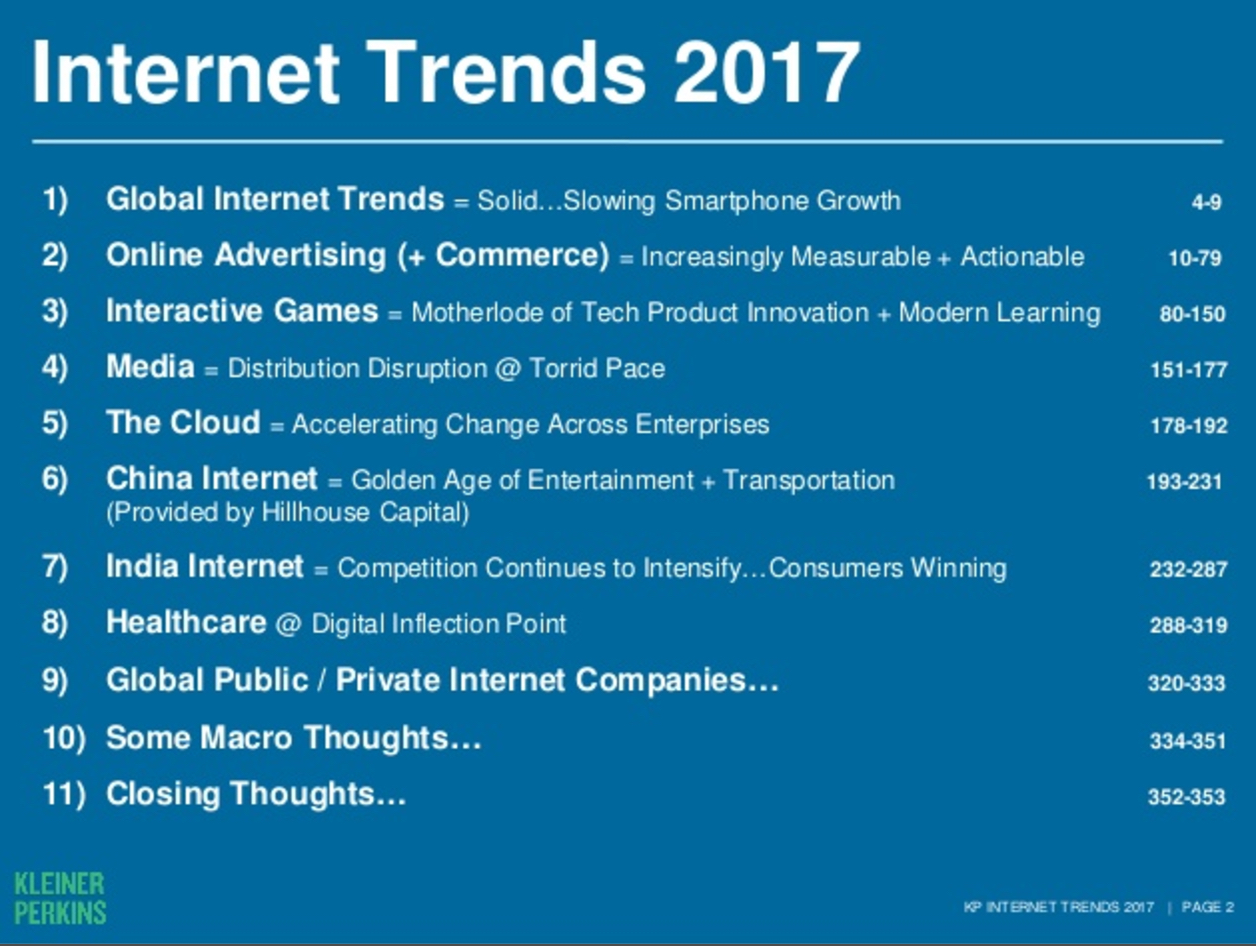
2017 Internet Trends Report — from kpcb.com by Mary Meeker


Mary Meeker’s 2017 internet trends report: All the slides, plus analysis — from recode.net by Rani Molla
The most anticipated slide deck of the year is here.

Excerpt:

Here are some of our takeaways:

  • Global smartphone growth is slowing: Smartphone shipments grew 3 percent year over year last year, versus 10 percent the year before. This is in addition to continued slowing internet growth, which Meeker discussed last year.
  • Voice is beginning to replace typing in online queries. Twenty percent of mobile queries were made via voice in 2016, while accuracy is now about 95 percent.
  • In 10 years, Netflix went from 0 to more than 30 percent of home entertainment revenue in the U.S. This is happening while TV viewership continues to decline.
  • China remains a fascinating market, with huge growth in mobile services and payments and services like on-demand bike sharing. (More here: The highlights of Meeker’s China slides.)


Read Mary Meeker’s essential 2017 Internet Trends report — from techcrunch.com by Josh Constine

Excerpt:

This is the best way to get up to speed on everything going on in tech. Kleiner Perkins venture partner Mary Meeker’s annual Internet Trends report is essentially the state of the union for the technology industry. The widely anticipated slide deck compiles the most informative research on what’s getting funded, how Internet adoption is progressing, which interfaces are resonating, and what will be big next.

You can check out the 2017 report embedded below, and here’s last year’s report for reference.


A question/reflection from DSC:


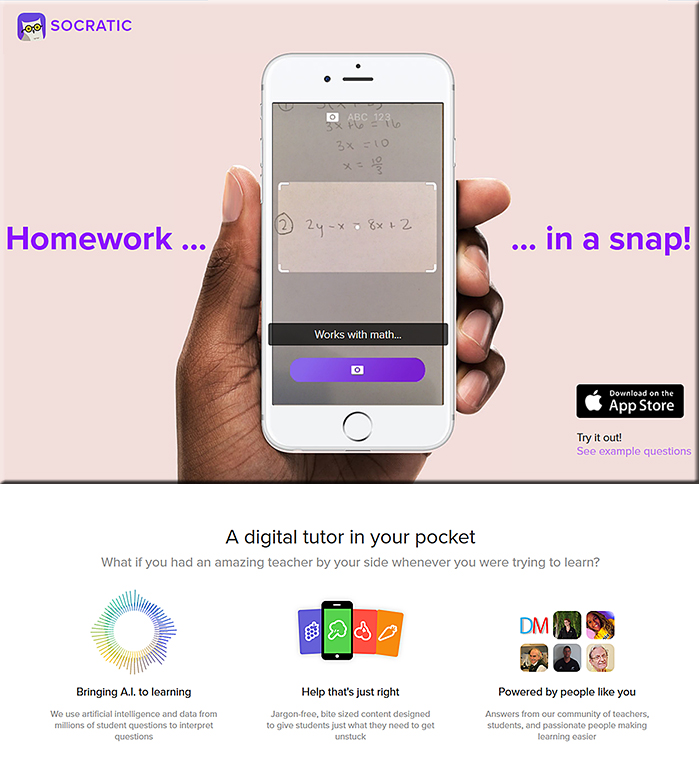
Will #MOOCs provide the necessary data for #AI-based intelligent agents/algorithms? Reminds me of Socratic.org:


Somewhat related:


2017 is the year of artificial intelligence. Here’s why. — from weforum.org

Excerpt (emphasis DSC):

A recent acceleration of innovation in Artificial Intelligence (AI) has made it a hot topic in boardrooms, government, and the media. But it is still early, and everyone seems to have a different view of what AI is.

I have investigated the space over the last few years as a technologist and active investor. What is remarkable now is that things that haven’t worked for decades in the space are starting to work; and we are going beyond just tools and embedded functions.

We are starting to redefine how software and systems are built, what can be programmed, and how users interact. We are creating a world where machines are starting to understand and anticipate what we want to do – and, in the future, will do it for us. In short, we are on the cusp of a completely new computing paradigm. But how did we get here and why now?


From DSC:
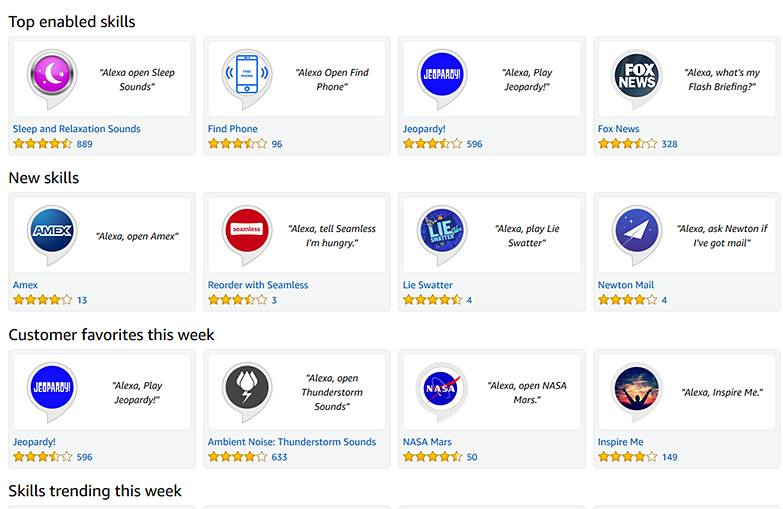
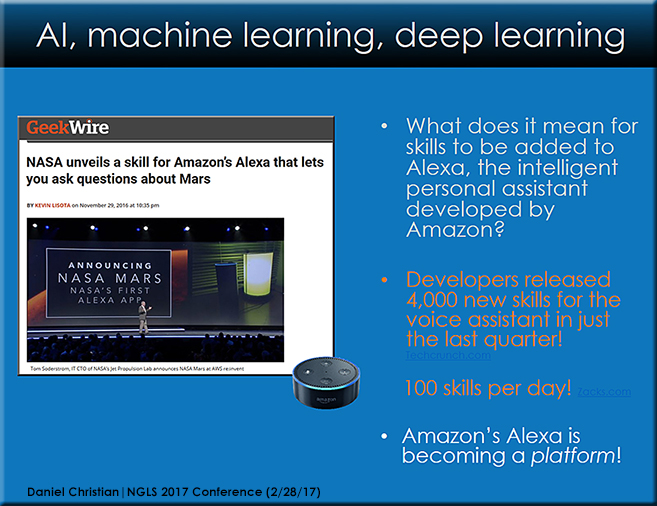
There are now more than 12,000+ skills on Amazon’s new platform — Alexa.  I continue to wonder…what will this new platform mean/deliver to societies throughout the globe?


From this Alexa Skills Kit page:

What Is an Alexa Skill?
Alexa is Amazon’s voice service and the brain behind millions of devices including Amazon Echo. Alexa provides capabilities, or skills, that enable customers to create a more personalized experience. There are now more than 12,000 skills from companies like Starbucks, Uber, and Capital One as well as innovative designers and developers.

What Is the Alexa Skills Kit?
With the Alexa Skills Kit (ASK), designers, developers, and brands can build engaging skills and reach millions of customers. ASK is a collection of self-service APIs, tools, documentation, and code samples that makes it fast and easy for you to add skills to Alexa. With ASK, you can leverage Amazon’s knowledge and pioneering work in the field of voice design.

You can build and host most skills for free using Amazon Web Services (AWS).


7 things you should know about artificial intelligence in teaching and learning — from Educause Learning Initiative (ELI)

Abstract:

The term artificial intelligence (AI) refers to computer systems that undertake tasks usually thought to require human cognitive processes and decision-making capabilities. To exhibit intelligence, computers apply algorithms to find patterns in large amounts of data—a process called machine learning, which plays a key role in a number of AI applications. AI learning agents have the potential to function like adaptive learning but at a much more sophisticated and nuanced level, potentially giving every student a computer-simulated personal mentor. Many colleges and universities are developing AI projects that aid teaching and learning.


7 things you should know about the evolution of teaching and learning professions — from Educause Learning Initiative (ELI)

Abstract

For this issue of the 7 Things, we asked a set of seven community leaders—who come from different walks of life in the community—to offer a short meditation on the evolution of the profession. In this issue you will find comments from professionals such as an instructional designer, a CIO, an accessibility expert, and a librarian. We hope that this issue and the spotlight it casts on the evolution of our profession will encourage us to begin further conversations about where we are headed and how we can help one another to achieve our professional goals.


Chief information officers are fast becoming chief innovation officers. It is increasingly critical for the CIO to be an advocate and leader of transformational change on campus rather than a director and manager of IT operations.

A key “big picture” area is the mission of teaching and learning. How do the systems we select today enable improved learning opportunities over the next three years? Will this solution empower students and faculty for years to come or merely meet a tactical need today?
There are increasing opportunities for librarians to work as partners with faculty to develop challenging assignments that encourage students to create a project with an output of a video, podcast, website, data visualization, blog, or other format.
“Support” connotes a hierarchy that doesn’t recognize that staff are valuable assets who play an important role in postsecondary education. We need to find a new language that promotes the ethos of service and servant leadership, within the context of describing ourselves as non-faculty educators and alternative academics.
Once, we thought the faculty role was expanding such that instructors would become learning designers and proto-technologists. Instead, an increasingly competitive and austere landscape is putting competing pressures on faculty, either around research expectations or expanded teaching responsibilities, preventing most from expanding their roles. 
 

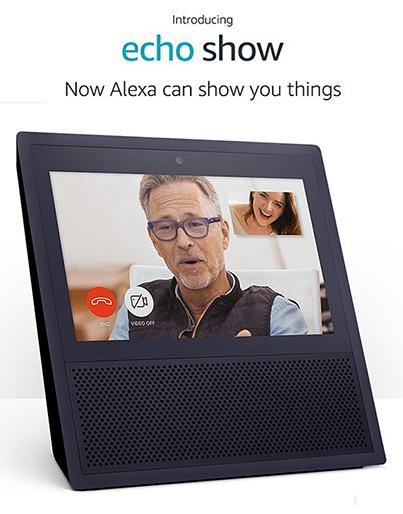
Amazon introduces Echo Show

The description reads:

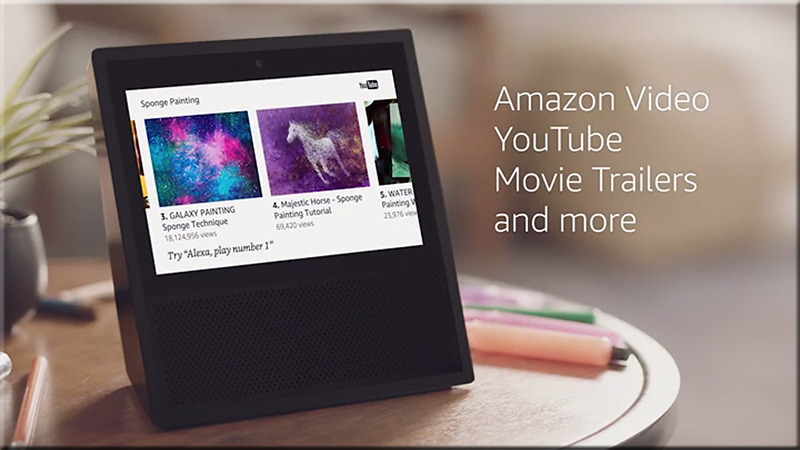
  • Echo Show brings you everything you love about Alexa, and now she can show you things. Watch video flash briefings and YouTube, see music lyrics, security cameras, photos, weather forecasts, to-do and shopping lists, and more. All hands-free—just ask.
  • Introducing a new way to be together. Make hands-free video calls to friends and family who have an Echo Show or the Alexa App, and make voice calls to anyone who has an Echo or Echo Dot.
  • See lyrics on-screen with Amazon Music. Just ask to play a song, artist or genre, and stream over Wi-Fi. Also, stream music on Pandora, Spotify, TuneIn, iHeartRadio, and more.
  • Powerful, room-filling speakers with Dolby processing for crisp vocals and extended bass response
  • Ask Alexa to show you the front door or monitor the baby’s room with compatible cameras from Ring and Arlo. Turn on lights, control thermostats and more with WeMo, Philips Hue, ecobee, and other compatible smart home devices.
  • With eight microphones, beam-forming technology, and noise cancellation, Echo Show hears you from any direction—even while music is playing
  • Always getting smarter and adding new features, plus thousands of skills like Uber, Jeopardy!, Allrecipes, CNN, and more


From DSC:

Now we’re seeing a major competition between the heavy-hitters to own one’s living room, kitchen, and more. Voice controlled artificial intelligence. But now, add the ability to show videos, text, graphics, and more. Play music. Control the lights and the thermostat. Communicate with others via hands-free video calls.

Hmmm….very interesting times indeed.


Developers and corporates released 4,000 new skills for the voice assistant in just the last quarter. (source)


…with the company adding about 100 skills per day. (source)


The Living [Class] Room -- by Daniel Christian -- July 2012 -- a second device used in conjunction with a Smart/Connected TV


Addendum on 5/10/17:


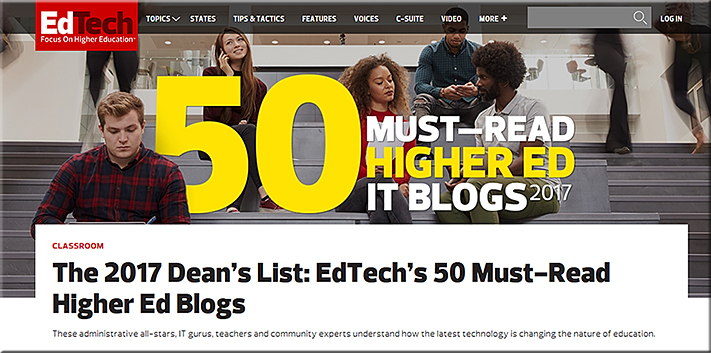
The 2017 Dean’s List: EdTech’s 50 Must-Read Higher Ed Blogs [Meghan Bogardus Cortez at edtechmagazine.com]


The 2017 Dean’s List: EdTech’s 50 Must-Read Higher Ed Blogs — from edtechmagazine.com by Meghan Bogardus Cortez
These administrative all-stars, IT gurus, teachers and community experts understand how the latest technology is changing the nature of education.

Excerpt:

With summer break almost here, we’ve got an idea for how you can use some of your spare time. Take a look at the Dean’s List, our compilation of the must-read blogs that seek to make sense of higher education in today’s digital world.

Follow these education trailblazers for not-to-be-missed analyses of the trends, challenges and opportunities that technology can provide.

If you’d like to check out the Must-Read IT blogs from previous years, view our lists from 2016, 2015, 2014 and 2013.


From DSC:
I would like to thank Tara Buck, Meghan Bogardus Cortez, D. Frank Smith, Meg Conlan, and Jimmy Daly and the rest of the staff at EdTech Magazine for their support of this Learning Ecosystems blog through the years — I really appreciate it. 

Thanks all for your encouragement through the years!


Brace yourselves: AI is set to explode in higher ed in the next 4 years –from ecampusnews.com by Laura Ascione
As AI grows in the education sector, its impact could be felt in student learning programs, websites and admissions programs

Excerpt:

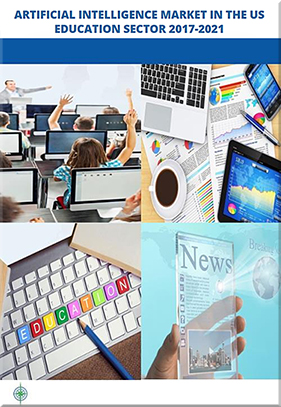
A new report predicts that artificial intelligence (AI) in the U.S. education sector will grow 47.5 percent through 2021.

The report, Artificial Intelligence Market in the U.S. Education Sector 2017-2021, is based on in-depth market analysis with inputs from industry experts.

One of the major trends surrounding AI and education is AI-powered educational games. Because games have the potential to engage students while teaching them challenging education concepts in an engaging manner, vendors are incorporating AI features into games to enhance their interactivity.

Educational games that include adaptive learning features give students frequent and timely suggestions for a guided learning experience.


From DSC:
I can’t say how many AI-based solutions we’ll see within higher education in the next 4 years…it could be a lot…it could be a little. But it will happen. At some point, it will happen.

The use of AI will likely play a key role in a future organization that I’m calling the Next Amazon.com of Higher Education.  AI will likely serve as a foundational piece of what futurist Thomas Frey claims will be the largest company on the internet: “an education-based company that we haven’t heard of yet.” (source)

Web-based learner profiles and blockchain-based technologies should also be on our radars, and are relevant in this discussion.


Also see:

Key questions answered in this report

  • What will the market size be in 2021 and what will the growth rate be?
  • What are the key market trends?
  • What is driving this market?
  • What are the challenges to market growth?
  • Who are the key vendors in this market space?
  • What are the market opportunities and threats faced by the key vendors?
  • What are the strengths and weaknesses of the key vendors?


Q&A: Artificial Intelligence Expert Shares His Vision of the Future of Education — from edtechmagazine.com by Amy Burroughs
Artificial intelligence expert Joseph Qualls believes AI can solve some of the biggest challenges facing higher education — and the change is already underway.

Excerpts:

EDTECH: What AI applications might we see in higher education?

QUALLS: You are going to see a massive change in education from K–12 to the university. The thought of having large universities and large faculties teaching students is probably going to go away — not in the short-term, but in the long-term. You will have a student interact with an AI system that will understand him or her and provide an educational path for that particular student. Once you have a personalized education system, education will become much faster and more enriching. You may have a student who can do calculus in the sixth grade because AI realized he had a mathematical sense. That personalized education is going to change everything.


Retailers cut tens of thousands of jobs. Again. — from money.cnn.com by Paul R. La Monica
The dramatic reshaping of the American retail industry has, unfortunately, led to massive job losses in the sector.

Excerpt (emphasis DSC):

The federal government said Friday that retailers shed nearly 30,000 jobs in March. That follows a more than 30,000 decline in the number of retail jobs in the previous month.

So-called general merchandise stores are hurting the most.

That part of the sector, which includes struggling companies like Macy’s, Sears, and J.C. Penney, lost 35,000 jobs last month. Nearly 90,000 jobs have been eliminated since last October.
…
“There is no question that the Amazon effect is overwhelming,” said Scott Clemons, chief investment strategist of private banking for BBH. “There has been a shift in the way we buy things as opposed to a shift in the amount of money spent.”

To that end, Amazon just announced plans to hire 30,000 part-time workers.


From DSC:
One of the reasons that I’m posting this item is for those who say disruption isn’t real…it’s only a buzz word…

A second reason that I’m posting this item is because those of us working within higher education should take note of the changes in the world of retail and learn the lesson now before the “Next Amazon.com of Higher Education*” comes on the scene. Though this organization has yet to materialize, the pieces of its foundation are beginning to come together — such as the ingredients, trends, and developments that I’ve been tracking in my “Learning from the Living [Class] Room” vision.

This new organization will be highly disruptive to institutions of traditional higher education.

If you were in an influential position at Macy’s, Sears, and/or at J.C. Penney today, and you could travel back in time…what would you do?

We in higher education have the luxury of learning from what’s been happening in the retail business. Let’s be sure to learn our lesson.


* Effective today, what I used to call the “Forthcoming Walmart of Education“ — which has already been occurring to some degree with things such as MOOCs and collaborations/partnerships such as Georgia Institute of Technology, Udacity, and AT&T — I now call the “Next Amazon.com of Higher Education.”

Cost. Convenience. Selection. Offering a service on-demand (i.e., being quick, responsive, and available 24×7). <– These all are powerful forces.


P.S. Some will say you can’t possibly compare the worlds of retail and higher education — and that may be true as of 2017. However, if:

  • the costs of higher education keep going up and we continue to turn a deaf ear to the struggling families/students/adult learners/etc. out there
  • alternatives to traditional higher education continue to come on the landscape
  • the Federal Government continues to be more open to financially supporting such alternatives
  • technologies such as artificial intelligence, machine learning, deep learning continue to get better and more powerful — to the point that they can effectively deliver a personalized education (one that is likely to be fully online and that utilizes a team of specialists to create and deliver the learning experiences)
  • people lose their jobs to artificial intelligence, robotics, and automation and need to quickly reinvent themselves

…I can assure you that people will find other ways to make ends meet. The Next Amazon.com of Education will be just what they are looking for.


21 bot experts make their predictions for 2017 — from venturebeat.com by Adelyn Zhou

Excerpt:

2016 was a huge year for bots, with major platforms like Facebook launching bots for Messenger, and Amazon and Google heavily pushing their digital assistants. Looking forward to 2017, we asked 21 bot experts, entrepreneurs, and executives to share their predictions for how bots will continue to evolve in the coming year.
…
From Jordi Torras, founder and CEO, Inbenta:
“Chatbots will get increasingly smarter, thanks to the adoption of sophisticated AI algorithms and machine learning. But also they will specialize more in specific tasks, like online purchases, customer support, or online advice. First attempts of chatbot interoperability will start to appear, with generalist chatbots, like Siri or Alexa, connecting to specialized enterprise chatbots to accomplish specific tasks. Functions traditionally performed by search engines will be increasingly performed by chatbots.”


From DSC:
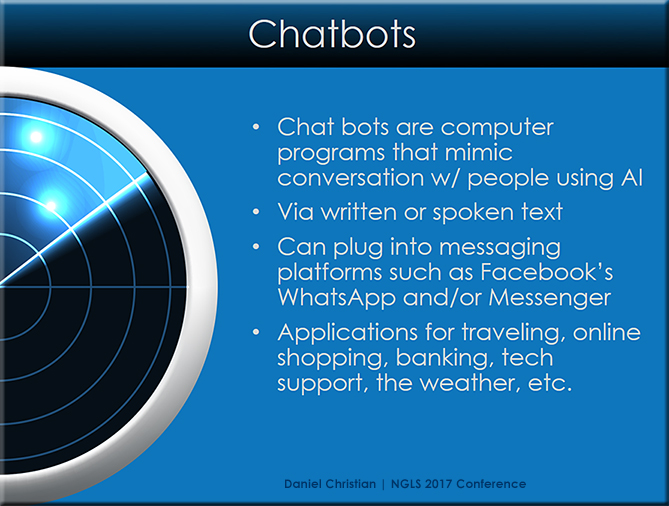
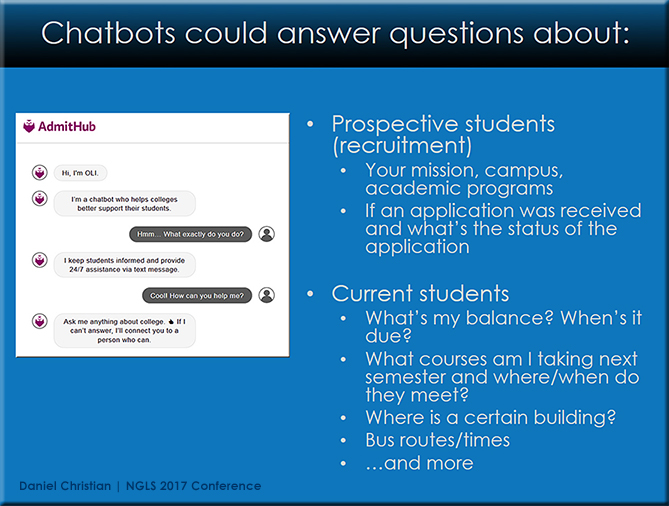
For those of us working within higher education, chatbots need to be on our radars. Here are 2 slides from my NGLS 2017 presentation.


59 impressive things artificial intelligence can do today — from businessinsider.com by Ed Newton-Rex

Excerpt:

But what can AI do today? How close are we to that all-powerful machine intelligence? I wanted to know, but couldn’t find a list of AI’s achievements to date. So I decided to write one. What follows is an attempt at that list. It’s not comprehensive, but it contains links to some of the most impressive feats of machine intelligence around. Here’s what AI can do…


Recorded Saturday, February 25th, 2017 and published on Mar 16, 2017


Description:

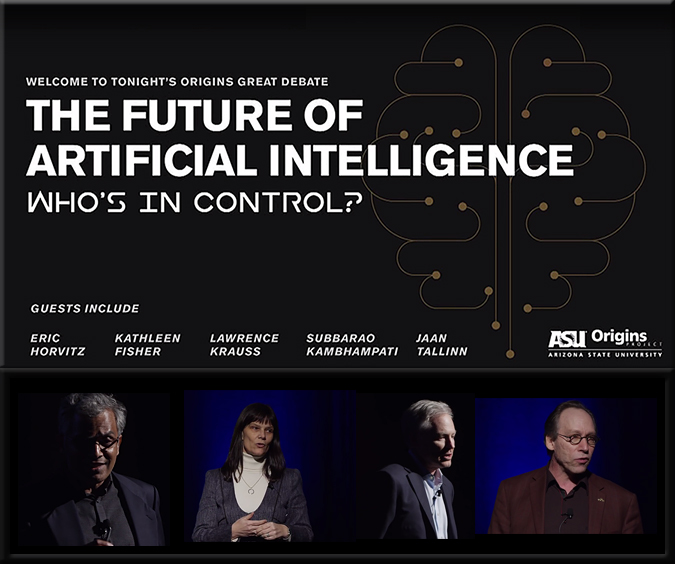
Will progress in Artificial Intelligence provide humanity with a boost of unprecedented strength to realize a better future, or could it present a threat to the very basis of human civilization? The future of artificial intelligence is up for debate, and the Origins Project is bringing together a distinguished panel of experts, intellectuals and public figures to discuss who’s in control. Eric Horvitz, Jaan Tallinn, Kathleen Fisher and Subbarao Kambhampati join Origins Project director Lawrence Krauss.


Description:
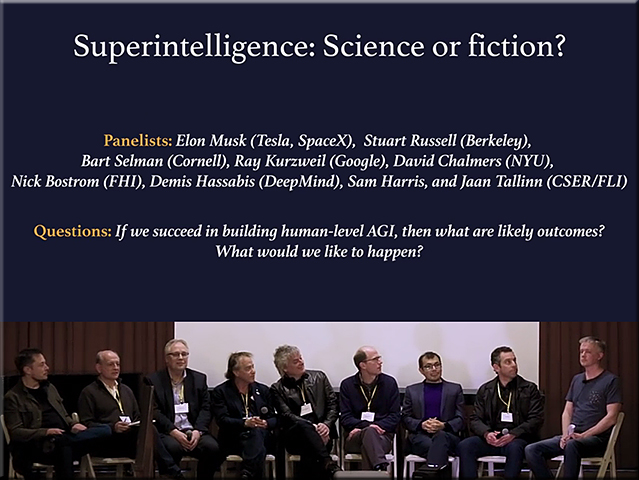
Elon Musk, Stuart Russell, Ray Kurzweil, Demis Hassabis, Sam Harris, Nick Bostrom, David Chalmers, Bart Selman, and Jaan Tallinn discuss with Max Tegmark (moderator) what likely outcomes might be if we succeed in building human-level AGI, and also what we would like to happen. The Beneficial AI 2017 Conference: In our sequel to the 2015 Puerto Rico AI conference, we brought together an amazing group of AI researchers from academia and industry, and thought leaders in economics, law, ethics, and philosophy for five days dedicated to beneficial AI. We hosted a two-day workshop for our grant recipients and followed that with a 2.5-day conference, in which people from various AI-related fields hashed out opportunities and challenges related to the future of AI and steps we can take to ensure that the technology is beneficial.


(Below emphasis via DSC)

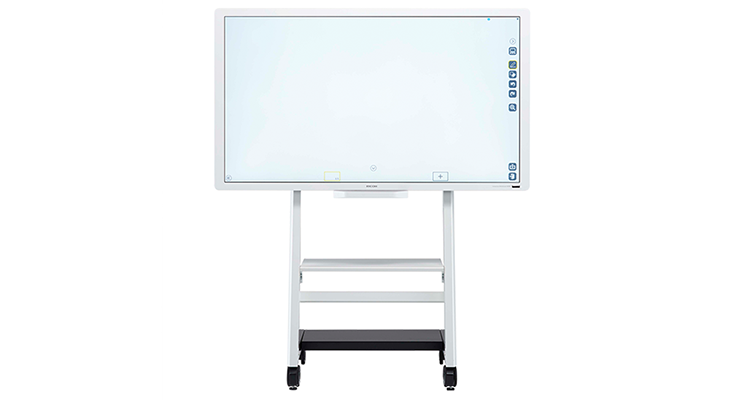
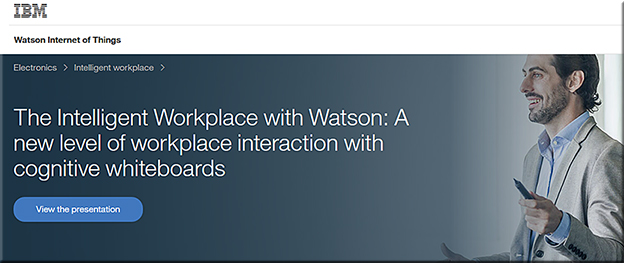
IBM and Ricoh have partnered for a cognitive-enabled interactive whiteboard which uses IBM’s Watson intelligence and voice technologies to support voice commands, taking notes and actions and even translating into other languages.


The Intelligent Workplace Solution leverages IBM Watson and Ricoh’s interactive whiteboards to allow to access features via using voice. It makes sure that Watson doesn’t just listen, but is an active meeting participant, using real-time analytics to help guide discussions.

Features of the new cognitive-enabled whiteboard solution include:

  • Global voice control of meetings: Once a meeting begins, any employee, whether in-person or located remotely in another country, can easily control what’s on the screen, including advancing slides, all through simple voice commands using Watson’s Natural Language API.
  • Translation of the meeting into another language: The Intelligent Workplace Solution can translate speakers’ words into several other languages and display them on screen or in transcript.
  • Easy-to-join meetings: With the swipe of a badge the Intelligent Workplace Solution can log attendance and track key agenda items to ensure all key topics are discussed.
  • Ability to capture side discussions: During a meeting, team members can also hold side conversations that are displayed on the same whiteboard.


From DSC:

Holy smokes!

If you combine the technologies that Ricoh and IBM are using with their new cognitive-enabled interactive whiteboard with what Bluescape is doing — by providing 160 acres of digital workspace that’s used to foster collaboration (and to do so whether you are working remoting or working with others in the same physical space) — and you have one incredibly powerful platform! 

#NLP  |  #AI  |  #CognitiveComputing  | #SmartClassrooms
#LearningSpaces  |#Collaboration |  #Meetings 


AI Market to Grow 47.5% Over Next Four Years — from campustechnology.com by Richard Chang

Excerpt:

The artificial intelligence (AI) market in the United States education sector is expected to grow at a compound annual growth rate of 47.5 percent during the period 2017-2021, according to a new report by market research firm Research and Markets.


Amazon deepens university ties in artificial intelligence race — from by Jeffrey Dastin

Excerpt:

Amazon.com Inc has launched a new program to help students build capabilities into its voice-controlled assistant Alexa, the company told Reuters, the latest move by a technology firm to nurture ideas and talent in artificial intelligence research.
…
Amazon, Alphabet Inc’s Google and others are locked in a race to develop and monetize artificial intelligence. Unlike some rivals, Amazon has made it easy for third-party developers to create skills for Alexa so it can get better faster – a tactic it now is extending to the classroom.


The WebMD skill for Amazon’s Alexa can answer all your medical questions — from digitaltrends.com by Kyle Wiggers
WebMD is bringing its wealth of medical knowledge to a new form factor: Amazon’s Alexa voice assistant.

Excerpt:

Alexa, Amazon’s brilliant voice-activated smart assistant, is a capable little companion. It can order a pizza, summon a car, dictate a text message, and flick on your downstairs living room’s smart bulb. But what it couldn’t do until today was tell you whether that throbbing lump on your forearm was something that required medical attention. Fortunately, that changed on Tuesday with the introduction of a WebMD skill that puts the service’s medical knowledge at your fingertips.


Addendum:

  • How artificial intelligence is taking Asia by storm — from techwireasia.com by Samantha Cheh
    Excerpt:
    Lately it seems as if everyone is jumping onto the artificial intelligence bandwagon. Everyone, from ride-sharing service Uber to Amazon’s logistics branch, is banking on AI being the next frontier in technological innovation, and are investing heavily in the industry.

    That’s likely truest in Asia, where the manufacturing engine which drove China’s growth is now turning its focus to plumbing the AI mine for gold.

    Despite Asia’s relatively low overall investment in AI, the industry is set to grow. Fifty percent of respondents in KPMG’s AI report said their companies had plans to invest in AI or robotic technology.

    Investment in AI is set to drive venture capital investment in China in 2017. Tak Lo, of Hong Kong’s Zeroth, notes there are more mentions of AI in Chinese research papers than there are in the US.

    China, Korea and Japan collectively account for nearly half the planet’s shipments of articulated robots in the world.


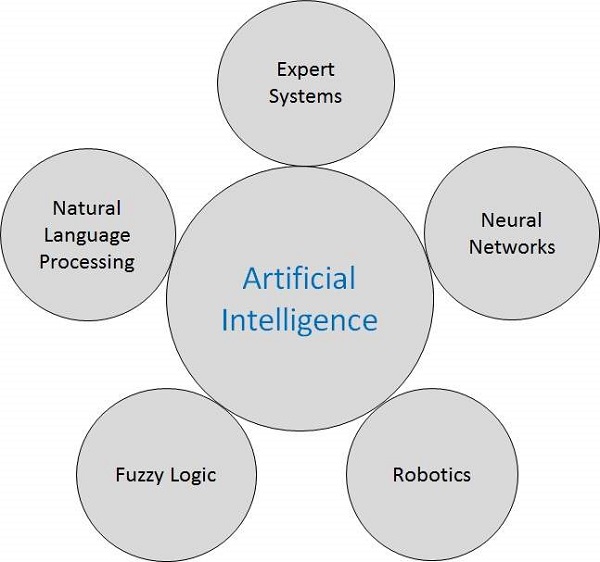
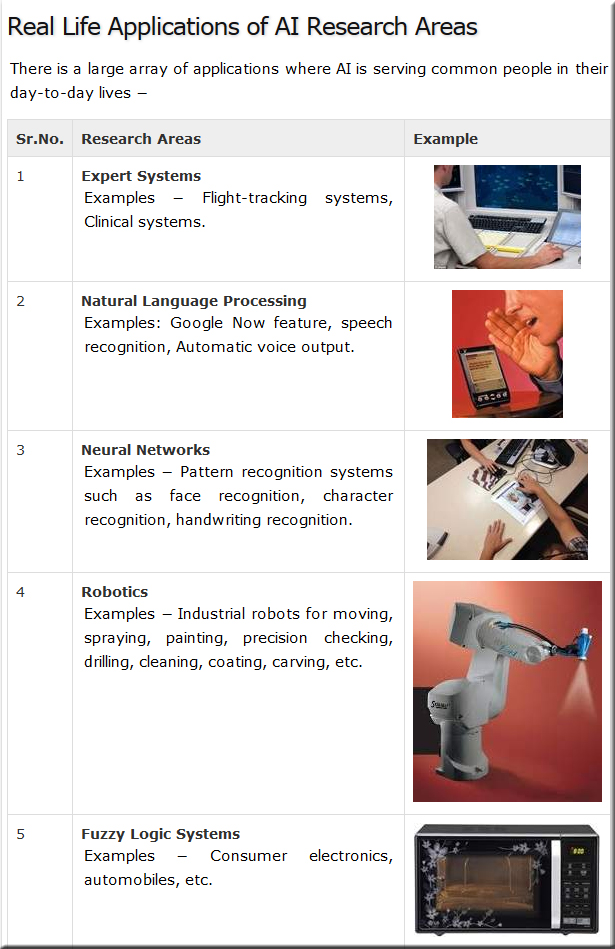
Artificial Intelligence – Research Areas


(Below emphasis via DSC)

IBM and Ricoh have partnered for a cognitive-enabled interactive whiteboard which uses IBM’s Watson intelligence and voice technologies to support voice commands, taking notes and actions and even translating into other languages.


The Intelligent Workplace Solution leverages IBM Watson and Ricoh’s interactive whiteboards to allow to access features via using voice. It makes sure that Watson doesn’t just listen, but is an active meeting participant, using real-time analytics to help guide discussions.

Features of the new cognitive-enabled whiteboard solution include:

  • Global voice control of meetings: Once a meeting begins, any employee, whether in-person or located remotely in another country, can easily control what’s on the screen, including advancing slides, all through simple voice commands using Watson’s Natural Language API.
  • Translation of the meeting into another language: The Intelligent Workplace Solution can translate speakers’ words into several other languages and display them on screen or in transcript.
  • Easy-to-join meetings: With the swipe of a badge the Intelligent Workplace Solution can log attendance and track key agenda items to ensure all key topics are discussed.
  • Ability to capture side discussions: During a meeting, team members can also hold side conversations that are displayed on the same whiteboard.

From DSC:

Holy smokes!

If you combine the technologies that Ricoh and IBM are using with their new cognitive-enabled interactive whiteboard with what Bluescape is doing — by providing 160 acres of digital workspace that’s used to foster collaboration (and to do so whether you are working remotely or working with others in the same physical space) — and you have one incredibly powerful platform! 

#NLP  |  #AI  |  #VoiceRecognition |  #CognitiveComputing
#SmartClassrooms  |  #LearningSpaces  |#Collaboration |  #Meetings 


© 2025 | Daniel Christian