


DC: Is the future of one of our powerful learning ecosystems more like adding your own desired groups/cohorts, topics, items, etc. to your server? Like a learning-focused type of Discord service? (https://t.co/Vq4dZamBf2)#future #learningecosystems #personalizedlearning pic.twitter.com/wVMWYBN3R1
— Daniel Christian (he/him/his) (@dchristian5) August 17, 2023
On 08/15/2023,
in 21st century, 24x7x365 access, adjunct faculty, Asia, assessment, colleges, community colleges, content development, aggregation, repositories, corporate universities / corporate training, digital learning, disruption, education, education technology, emerging technologies, experimentation, faculty/staff, future, future of higher education, game-changing environment, generational differences, global, higher education, human-computer interaction (HCI), ideas, India, innovation, instructional design, intelligent systems, intelligent tutoring, IT in HE, K-12 related, law schools, learning, learning agents, learning ecosystem, Learning Experience Design, Learning from the Living [Class] Room, learning hubs & pods & microschooling, learning preferences, learning spaces, legislatures / government / legal, lifelong learning, mathematics, personalized/customized learning, platforms, policy, productivity / tips and tricks, professional development, science, teachers, teaching & learning, UK, United States,
by Daniel Christian
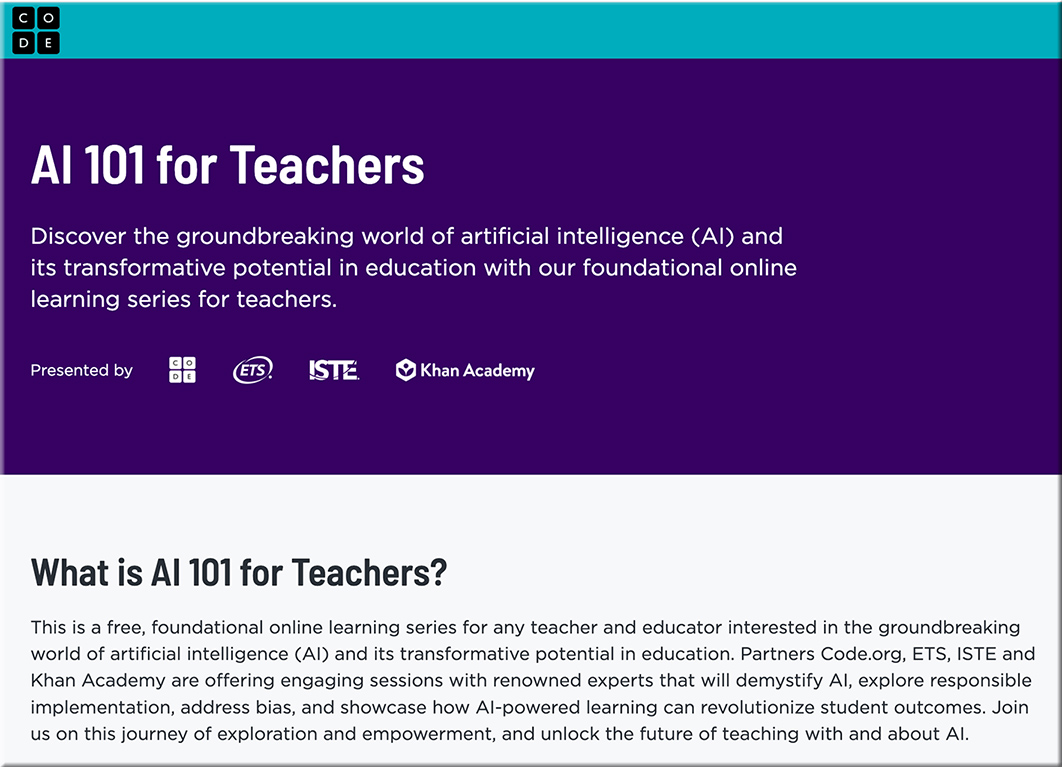
What value do you offer? — from linkedin.com by Dan Fitzpatrick — The AI Educator
Excerpt (emphasis DSC):
So, as educators, mentors, and guides to our future generations, we must ask ourselves three pivotal questions:
- What value do we offer to our students?
- What value will they need to offer to the world?
- How are we preparing them to offer that value?
The answers to these questions are crucial, and they will redefine the trajectory of our education system.
We need to create an environment that encourages curiosity, embraces failure as a learning opportunity, and celebrates diversity. We need to teach our students how to learn, how to ask the right questions, and how to think for themselves.
5 Little-Known ChatGPT Prompts to Learn Anything Faster — from medium.com by Eva Keiffenheim
Including templates, you can copy.
Leveraging ChatGPT for learning is the most meaningful skill this year for lifelong learners. But it’s too hard to find resources to master it.
As a learning science nerd, I’ve explored hundreds of prompts over the past months. Most of the advice doesn’t go beyond text summaries and multiple-choice testing.
That’s why I’ve created this article — it merges learning science with prompt writing to help you learn anything faster.
From DSC:
This is a very nice, clearly illustrated, free video to get started with the Midjourney (text-to-image) app. Nice work Dan!
Also see Dan’s
AI Generated Immersive Learning Series
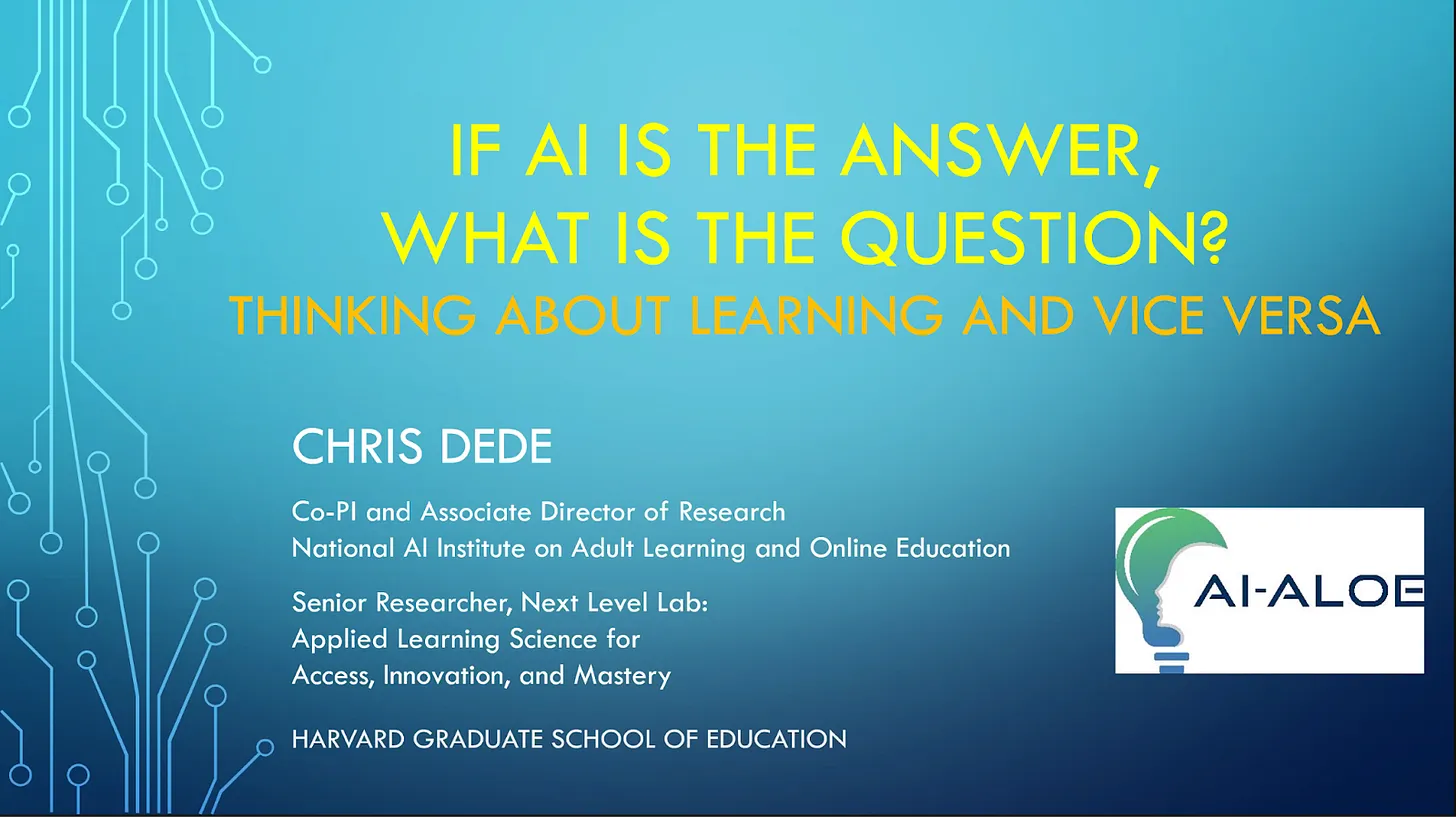
What is Academic Integrity in the Era of Generative Artificial intelligence? — from silverliningforlearning.org by Chris Dede
In the new-normal of generative AI, how does one articulate the value of academic integrity? This blog presents my current response in about 2,500 words; a complete answer could fill a sizable book.
Massive amounts of misinformation are disseminated about generative AI, so the first part of my discussion clarifies what large language models (Chat-GPT and its counterparts) can currently do and what they cannot accomplish at this point in time. The second part describes ways in which generative AI can be misused as a means of learning; unfortunately, many people are now advocating for these mistaken applications to education. The third part describes ways in which large language models (LLM), used well, may substantially improve learning and education. I close with a plea for a robust, informed public discussion about these topics and issues.
Dr. Chris Dede and the Necessity of Training Students and Faculty to Improve Their Human Judgment and Work Properly with AIs — from stefanbauschard.substack.com by Stefan Bauschard
We need to stop using test-driven curriculums that train students to listen and to compete against machines, a competition they cannot win. Instead, we need to help them augment their Judgment.
The Creative Ways Teachers Are Using ChatGPT in the Classroom — from time.com by Olivia B. Waxman
Many of the more than a dozen teachers TIME interviewed for this story argue that the way to get kids to care is to proactively use ChatGPT in the classroom.
…
Some of those creative ideas are already in effect at Peninsula High School in Gig Harbor, about an hour from Seattle. In Erin Rossing’s precalculus class, a student got ChatGPT to generate a rap about vectors and trigonometry in the style of Kanye West, while geometry students used the program to write mathematical proofs in the style of raps, which they performed in a classroom competition. In Kara Beloate’s English-Language Arts class, she allowed students reading Shakespeare’s Othello to use ChatGPT to translate lines into modern English to help them understand the text, so that they could spend class time discussing the plot and themes.
AI in Higher Education: Aiding Students’ Academic Journey — from td.org by J. Chris Brown
Topics/sections include:
Automatic Grading and Assessment
AI-Assisted Student Support Services
Intelligent Tutoring Systems
AI Can Help Both Students and Teachers
Shockwaves & Innovations: How Nations Worldwide Are Dealing with AI in Education — from the74million.org by Robin Lake
Lake: Other countries are quickly adopting artificial intelligence in schools. Lessons from Singapore, South Korea, India, China, Finland and Japan.

I found that other developed countries share concerns about students cheating but are moving quickly to use AI to personalize education, enhance language lessons and help teachers with mundane tasks, such as grading. Some of these countries are in the early stages of training teachers to use AI and developing curriculum standards for what students should know and be able to do with the technology.
Several countries began positioning themselves several years ago to invest in AI in education in order to compete in the fourth industrial revolution.
AI in Education — from educationnext.org by John Bailey
The leap into a new era of machine intelligence carries risks and challenges, but also plenty of promise
In the realm of education, this technology will influence how students learn, how teachers work, and ultimately how we structure our education system. Some educators and leaders look forward to these changes with great enthusiasm. Sal Kahn, founder of Khan Academy, went so far as to say in a TED talk that AI has the potential to effect “probably the biggest positive transformation that education has ever seen.” But others warn that AI will enable the spread of misinformation, facilitate cheating in school and college, kill whatever vestiges of individual privacy remain, and cause massive job loss. The challenge is to harness the positive potential while avoiding or mitigating the harm.
Generative AI and education futures — from ucl.ac.uk
Video highlights from Professor Mike Sharples’ keynote address at the 2023 UCL Education Conference, which explored opportunities to prosper with AI as a part of education.
Bringing AI Literacy to High Schools — from by Nikki Goth Itoi
Stanford education researchers collaborated with teachers to develop classroom-ready AI resources for high school instructors across subject areas.
To address these two imperatives, all high schools need access to basic AI tools and training. Yet the reality is that many underserved schools in low-income areas lack the bandwidth, skills, and confidence to guide their students through an AI-powered world. And if the pattern continues, AI will only worsen existing inequities. With this concern top of mind plus initial funding from the McCoy Ethics Center, Lee began recruiting some graduate students and high school teachers to explore how to give more people equal footing in the AI space.
On 08/05/2023,
in Artificial Intelligence/Agents/LLMs/and Related, Australia, change, colleges, community colleges, content development, aggregation, repositories, disruption, education, emerging technologies, future, future of higher education, game-changing environment, global, higher education, human-computer interaction (HCI), innovation, instructional design, intelligent systems, intelligent tutoring, K-12 related, law schools, learning, learning ecosystem, Learning Experience Design, Learning from the Living [Class] Room, legislatures / government / legal, platforms, policy, society, student-related, teachers, teaching & learning, UK, United States, universities, vision/possibilities,
by Daniel Christian
Navigating the Future of Learning in a Digitally-Disrupted World — from thinklearningstudio.org by Russell Cailey
Are we on the frontier of unveiling an unseen revolution in education? The hypothesis is that this quiet upheaval’s importance is far more significant than we imagine. As our world adjusts, restructures, and emerges from a year which launched an era of mass AI, so too does a new academic year dawn for many – with hope and enthusiasm about new roles, titles, or simply just a new mindset. Concealed from sight, however, I believe a significant transformative wave has started and will begin to reshape our education systems and push us into a new stage of innovative teaching practice whether we desire it or not. The risk and hope is that the quiet revolution remains outside the regulator’s and ministries’ purview, which could risk a dangerous fragmentation of education policy and practice, divorced from the actualities of the world ‘in and outside school’.
“This goal can be achieved through continued support for introducing more new areas of study, such as ‘foresight and futures’, in the high school classroom.”
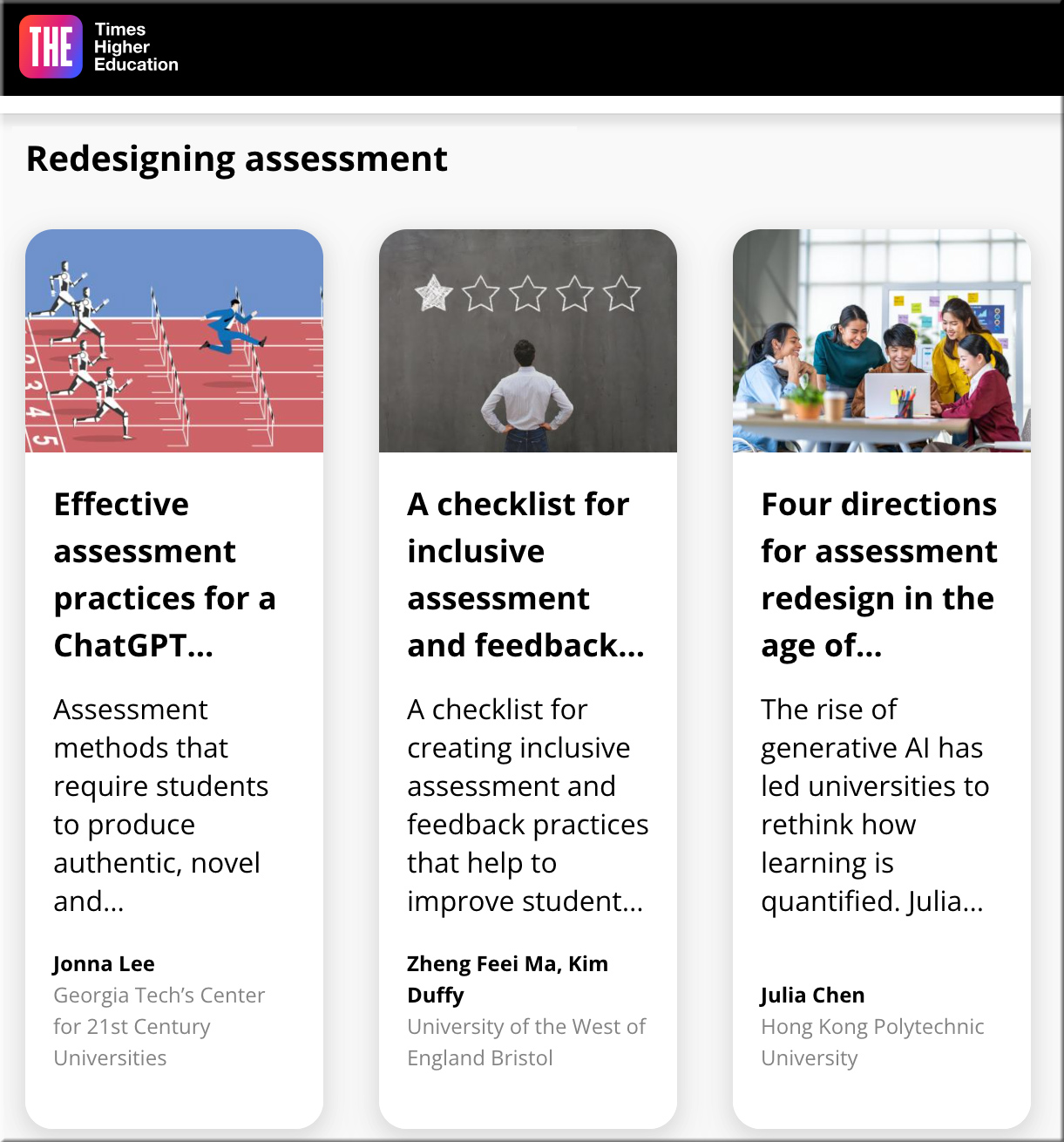
Four directions for assessment redesign in the age of generative AI— from timeshighereducation.com by Julia Chen
The rise of generative AI has led universities to rethink how learning is quantified. Julia Chen offers four options for assessment redesign that can be applied across disciplines
Direction 1: From written description to multimodal explanation and application
Direction 2: From literature review alone to referencing lectures
Direction 3: From presentation of ideas to defence of views
Direction 4: From working alone to student-staff partnership
15 Inspirational Voices in the Space Between AI and Education — from jeppestricker.substack.com by Jeppe Klitgaard Stricker
Get Inspired for AI and The Future of Education.
If you are just back from vacation and still not quite sure what to do about AI, let me assure you that you are not the only one. My advice for you today is this: fill your LinkedIn-feed and/or inbox with ideas, inspirational writing and commentary on AI. This will get you up to speed quickly and is a great way to stay informed on the newest movements you need to be aware of.
My personal recommendation for you is to check out these bright people who are all very active on LinkedIn and/or have a newsletter worth paying attention to. I have kept the list fairly short – only 15 people – in order to make it as easy as possible for you to begin exploring.
Universities say AI cheats can’t be beaten, moving away from attempts to block AI (Australia) — from abc.net.au by Jake Evans
Key points:
- Universities have warned against banning AI technologies in academia
- Several say AI cheating in tests will be too difficult to stop, and it is more practical to change assessment methods
- The sector says the entire nature of teaching will have to change to ensure students continue to effectively learn
Navigating A World of Generative AI: Suggestions for Educators — from nextlevellab.gse.harvard.edu by Lydia Cao and Chris Dede
Understanding the nature of generative AI is crucial for educators to navigate the evolving landscape of teaching and learning. In a new report from the Next Level Lab, Lydia Cao and Chris Dede reflect on the role of generative AI in learning and how this pushes us to reconceptualize our visions of effective education. Though there are concerns of plagiarism and replacement of human jobs, Cao and Dede argue that a more productive way forward is for educators to focus on demystifying AI, emphasizing the learning process over the final product, honoring learner agency, orchestrating multiple sources of motivation, cultivating skills that AI cannot easily replicate, and fostering intelligence augmentation (IA) through building human-AI partnerships.

20 CHATGPT PROMPTS FOR ELA TEACHERS — from classtechtips.com by Dr. Monica Burns
Have you used chatbots to save time this school year? ChatGPT and generative artificial intelligence (AI) have changed the way I think about instructional planning. Today on the blog, I have a selection of ChatGPT prompts for ELA teachers.
You can use chatbots to tackle tedious tasks, gather ideas, and even support your work to meet the needs of every student. In my recent quick reference guide published by ISTE and ASCD, Using AI Chatbots to Enhance Planning and Instruction, I explore this topic. You can also find 50 more prompts for educators in this free ebook.
Professors Craft Courses on ChatGPT With ChatGPT — from insidehighered.com by Lauren Coffey
While some institutions are banning the use of the new AI tool, others are leaning into its use and offering courses dedicated solely to navigating the new technology.
Maynard, along with Jules White at Vanderbilt University, are among a small number of professors launching courses focused solely on teaching students across disciplines to better navigate AI and ChatGPT.
The offerings go beyond institutions flexing their innovation skills—the faculty behind these courses view them as imperative to ensure students are prepared for ever-changing workforce needs.
GPT-4 can already pass freshman year at Harvard | professors need to adapt to their students’ new reality — fast — from chronicle.com by Maya Bodnick (an undergraduate at Harvard University, studying government)
A. A. A-. B. B-. Pass.
That’s a solid report card for a freshman in college, a respectable 3.57 GPA. I recently finished my freshman year at Harvard, but those grades aren’t mine — they’re GPT-4’s.
…
Three weeks ago, I asked seven Harvard professors and teaching assistants to grade essays written by GPT-4 in response to a prompt assigned in their class. Most of these essays were major assignments which counted for about one-quarter to one-third of students’ grades in the class. (I’ve listed the professors or preceptors for all of these classes, but some of the essays were graded by TAs.)
Here are the prompts with links to the essays, the names of instructors, and the grades each essay received…
The impact that AI is having on liberal-arts homework is indicative of the AI threat to the career fields that liberal-arts majors tend to enter. So maybe what we should really be focused on isn’t, “How do we make liberal-arts homework better?” but rather, “What are jobs going to look like over the next 10–20 years, and how do we prepare students to succeed in that world?”
The great assessment rethink — from timeshighereducation.com by
How to measure learning and protect academic integrity in the age of ChatGPT
On 07/29/2023,
in Artificial Intelligence/Agents/LLMs/and Related, career development, change, colleges, community colleges, content development, aggregation, repositories, corporate / business world, corporate universities / corporate training, education, education technology, elearning, emerging technologies, experimentation, future, higher education, innovation, instructional design, intelligent systems, intelligent tutoring, learning ecosystem, Learning Experience Design, tools, training / L&D, trends, United States, universities, vendors, workplace,
by Daniel Christian
Generative AI and the future of work in America — from mckinsey.com by Kweilin Ellingrud, Saurabh Sanghvi, Gurneet Singh Dandona, Anu Madgavkar, Michael Chui, Olivia White, and Paige Hasebe
At a glance
- During the pandemic (2019–22), the US labor market saw 8.6 million occupational shifts, 50 percent more than in the previous three-year period.
- By 2030, activities that account for up to 30 percent of hours currently worked across the US economy could be automated—a trend accelerated by generative AI.
- Federal investment to address climate and infrastructure, as well as structural shifts, will also alter labor demand.
- An additional 12 million occupational transitions may be needed by 2030.
- The United States will need workforce development on a far larger scale as well as more expansive hiring approaches from employers.
Employers will need to hire for skills and competencies rather than credentials, recruit from overlooked populations (such as rural workers and people with disabilities), and deliver training that keeps pace with their evolving needs.
The AI-Powered, Totally Autonomous Future of War Is Here — from wired.com by Will Knight
Ships without crews. Self-directed drone swarms. How a US Navy task force is using off-the-shelf robotics and artificial intelligence to prepare for the next age of conflict.
From DSC:
Hhhhmmmmm…..not good. Is anyone surprised by this? No, I didn’t think so either. That’s why the United States and China are so heated up about semiconductor chips.
AI puts glitch in graduates’ employment plans — from hrdive.com by Ginger Christ
Recent grads are worried how AI will affect their career prospects, a new survey found.
Excerpt:
- The proliferation of new technologies like generative artificial intelligence is making recent graduates uneasy, a new study released Thursday found. A third of the 1,000 people who graduated in the past year said they are second-guessing their career choice, while roughly half reported questioning their workforce preparedness and feeling threatened by AI, according to the 2023 Employability Report by Cengage Group, a global education technology company.
“The workplace has changed rapidly in the last few years, and now we are witnessing a new shift as AI begins to reshape worker productivity, job requirements, hiring habits and even entire industries,” Michael Hansen, Cengage Group CEO, said in a news release.
Along these lines, also see:
AI Boom Creates Concerns for Recent Graduates — from insidehighered.com by Lauren Coffey
More than half of recent graduates question whether they are properly prepared for the workforce in light of the rise of artificial intelligence, a survey finds.
…
There is also more of a preference for skills training credentials. Among employers, nearly 40 percent said skills training credentials are most important, while only 19 percent ranked a college degree as most important.
…
However, recent graduates did cite an issue with most higher education institutions’ ability to teach employability skills. In 2023, 43 percent of students said their degree program taught them the necessary skills for their first job, down 20 percentage points from 2022.
Instructure, Khan Academy Announce Major Partnership On AI Tutoring, Teaching
— from forbes.com by Derek Newton
The news is that Instructure, one of the few public education companies and the market leader in learning management with their signature product Canvas, struck a partnership with Khan Academy to create an AI-powered tutoring and teaching assistant tool – merging Khan’s innovative instructional content and Instructure’s significant reach, scale, and data insights. The partnership and related tools will be known as Khanmigo, according to the announcement.
On brand names alone, this is a big deal. On potential impact, it could be even bigger.
How To Use AI to Write Scenarios — from christytuckerlearning.com by Christy Tucker
How can you use AI to write scenarios for learning? Read this example with prompts and results using ChatGPT and Bard.
Excerpts:
So far, I have found these tools helpful in generating ideas, writing first drafts, and summarizing. They work better for general knowledge tasks than really specific topics unless I provide more details to them, which makes sense.
This post isn’t going to give you “5 magical prompts to instantly write scenarios for you” or anything like that. Instead, this is a “working out loud” post where I’ll share some prompts I have used.
Christy’s posting includes:
- “The Meeting from Hell”
- “The Backstabbing Coworker”
- “The Boss from Hell”
- “The Office Romance Gone Wrong”
- “The New Hire with Attitude”
Some potential tools for you to check out:
- 15 Best AI Tools for Education in 2023 — finance.yahoo.com by Maliha Shaikh
DC: I’m sympathetic to those who are supposed to be making policy when what we’re dealing with continues to evolve/change so quickly. https://t.co/1KB8dSFWaO
— Daniel Christian (he/him/his) (@dchristian5) July 27, 2023
The Rise of the Talent Economy — from drphilippahardman.substack.com by Dr. Philippa Hardman
How Education & Training Will Dictate the Future & Impact of AI
“Talent, more than capital, will represent the critical factor of production.”
…
In short, the demand for AI skills requires a significant transformation in training and education models. To bridge the global skills gap, educational institutions, online learning providers, and employers must design and deliver training programs that cater to the rapidly evolving AI-driven labor market.
How ChatGPT killed my discussion boards and prompted new prompts — from timeshighereducation.com by Sara Cline; per Robert Gibson on LinkedIn
Advice on learning and discussion prompts that require students to think beyond the remit of AI responses
Excerpts:
To combat this problem, we modified some of our prompts this summer to try to prevent students from using AI to avoid learning. I’m sharing some of our strategies in the hope that they help you out as you adapt your course to a world of generative AI.
- Use prompts that force a personal opinion.
- Have students include their source(s) as an attachment.
- Use current or local events.
- Have them take and caption a photo.
- Draw a diagram or chart.
- Build and explain a 3D model.
- Include timestamps from lecture videos.
- Scrap the discussion boards.
Dark web ChatGPT is here… — from therundown.ai
The Rundown: A new cybercrime generative AI tool called FraudGPT is being advertised on the Dark web and Telegram channels, offering offensive capabilities like crafting spear-phishing emails and creating undetectable malware.
…
Why it matters: Scammers can now look more realistic than ever before and at a larger scale. The sad truth is that the emergence of cybercrime AI tools like FraudGPT is just beginning.
From DSC:
If true and if it could help build and/or contribute to cloud-based learner profiles, this could be huge.
#Linkedin is working on LinkedIn Coach!
It’s an AI ASSISTANT that helps you apply for JOBS, learn new SKILLS, and find more ways to CONNECT with your network! pic.twitter.com/jKBrPmEFJt
— Nima Owji (@nima_owji) July 27, 2023
Wayfair’s AI tool can redraw your living room and sell you furniture — from theverge.com by Wes Davis
The home decoration company’s new Decorify AI remodeling tool is clumsy but could be effective for visualization while remodeling.
:format(webp)/cdn.vox-cdn.com/uploads/chorus_asset/file/24807167/Screenshot_2023_07_24_at_3.34.42_PM.png)
On 07/29/2023,
in Artificial Intelligence/Agents/LLMs/and Related, Daniel S. Christian, digital learning, education, education technology, emerging technologies, experimentation, human-computer interaction (HCI), ideas, innovation, instructional design, intelligent systems, K-12 related, learning, learning ecosystem, Learning Experience Design, more voice more choice more control, pedagogy, student teaching/teacher education, student-related, teachers,
by Daniel Christian

22 Classroom-Focused Resources on AI from Teachers Everywhere — from coolcatteacher.com by Vicki Davis; via GSV
***
I get weary of AI hype auto-generated by *gasp* ChatGPT without any real applicability to the classroom. I’m collecting blogs of teachers who are in the classroom actually use AI and have practical, real examples to share. Got links for those teachers? Enough of the junk.
— Vicki Davis (@coolcatteacher) July 25, 2023
Back to School Survey: 44% of Teens “Likely” to Use AI To Do Their Schoolwork for Them This School Year — from prnewswire.com by Junior Achievement
Research by Junior Achievement Shows 60% of Teens Consider the Use of AI to Do Their Schoolwork for Them as “Cheating”
Excerpt:
COLORADO SPRINGS, Colo., July 26, 2023 /PRNewswire/ — A new survey of teens conducted for Junior Achievement by the research firm Big Village shows that nearly half of teens (44%) are “likely” to use AI to do their schoolwork instead of doing it themselves this coming school year. However, most teens (60%) consider using AI in this way as “cheating.” The survey of 1,006 13- to 17-year-olds was conducted by Big Village from July 6 through 11, 2023.
From DSC:
In a competitive society as we have in the U.S. and when many of our K-12 learning ecosystems are designed to create game players, we shouldn’t be surprised to see a significant amount of our students using AI to “win”/game the system.
As it becomes appropriate for each student, offering more choice and control should help to allow more students to pursue what they want to learn about. They won’t be as interested in gaming the system if they truly want to learn about something.
On 07/28/2023,
in Artificial Intelligence/Agents/LLMs/and Related, Augmented Reality (AR), innovation, instructional design, intelligent systems, mobile technologies, technology (general), trends, vendors, Virtual Reality (VR) / worlds / learning, XR - extended reality,
by Daniel Christian
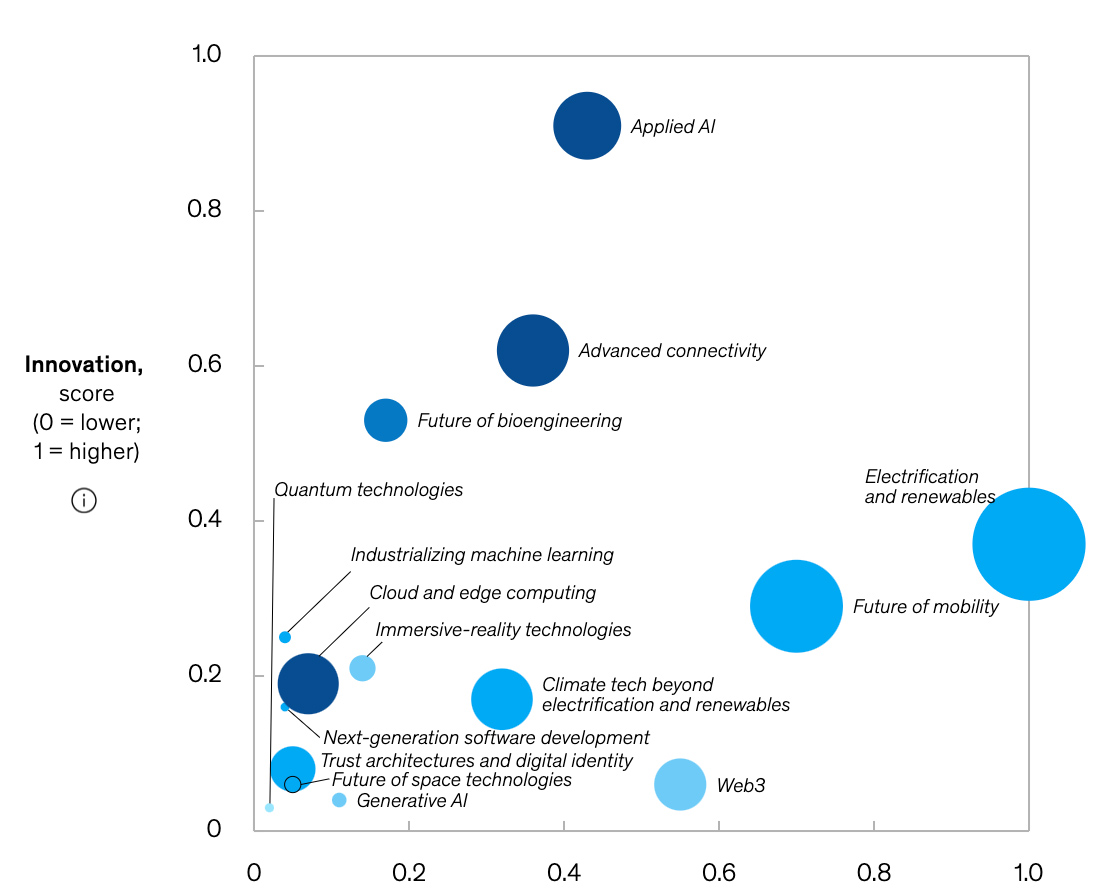
McKinsey Technology Trends Outlook 2023 — from mckinsey.com
Excerpt:
Which technology trends have the most momentum in an accelerating world? We ranked the top cross-industry trends that matter most for companies and executives.
On 07/14/2023,
in 21st century, 24x7x365 access, Access to Justice (A2J), Artificial Intelligence/Agents/LLMs/and Related, Bias | Diversity Equity & Inclusion (DE&I), Canada, intelligent systems, law schools, Legal operations, legal reform, legal technologies, legislatures / government / legal, productivity / tips and tricks, society, United States,
by Daniel Christian
The Future of Law: Embracing AI in the Legal Profession — from ethicalailawinstitute.com by Trent Kubasiak
Excerpt:
Improving Access to Justice:
One significant advantage of AI in the legal profession is its potential to improve access to justice. The high costs associated with legal services have traditionally created barriers for individuals with limited financial means. However, AI-powered solutions can help bridge this gap by providing affordable and accessible legal information and guidance. Virtual legal assistants and chatbots can assist individuals with legal queries, empowering them to navigate legal processes more effectively and make informed decisions. By leveraging AI, the legal profession can become more inclusive and ensure that legal services are available to a broader segment of society.
Also relevant/see:
Law Unlimited: Welcome to the re-envisioned legal profession — from jordanfurlong.substack.com by Jordan Furlong
Will Generative AI destroy law firms? Only if lawyers are too fixed in their ways to see the possibilities that lie beyond who we’ve always been and what we’ve always done.

Excerpt:
The immediate impact of Gen AI on legal services will be to introduce unprecedented efficiency to the production of countless legal documents and processes. For most of the last century, lawyers have personally performed this work, spending and billing hours or parts of hours to accomplish each task. Law firms have used this production method to provide on-the-job training for inexperienced lawyers and have leveraged those hours to generate profits for their partners. But LLMs can now do the same work in seconds, as effectively as lawyers can today and much better in the near future. This is, among other things, a very serious problem for law firms’ business models and talent development practices, not to mention a real challenge to lawyer education and training and potentially a revolution in access to justice.
On 07/13/2023,
in 21st century, 24x7x365 access, adjunct faculty, Artificial Intelligence/Agents/LLMs/and Related, assessment, change, colleges, community colleges, computer science, education, education technology, emerging technologies, experimentation, faculty/staff, future, future of higher education, game-changing environment, generational differences, global, Google, higher education, human-computer interaction (HCI), instructional design, intelligent systems, intelligent tutoring, journalism, K-12 related, learning, learning ecosystem, Learning Experience Design, Learning from the Living [Class] Room, learning preferences, lifelong learning, platforms, productivity / tips and tricks, professional development, programming, research, science, student-related, teachers, teaching & learning, tools, trends, United States, universities, vendors, vision/possibilities,
by Daniel Christian
YouTube tests AI-generated quizzes on educational videos — from techcrunch.com by Lauren Forristal

YouTube is experimenting with AI-generated quizzes on its mobile app for iOS and Android devices, which are designed to help viewers learn more about a subject featured in an educational video. The feature will also help the video-sharing platform get a better understanding of how well each video covers a certain topic.
Incorporating AI in Teaching: Practical Examples for Busy Instructors — from danielstanford.substack.com by Daniel Stanford; with thanks to Derek Bruff on LinkedIn for the resource
Since January 2023, I’ve talked with hundreds of instructors at dozens of institutions about how they might incorporate AI into their teaching. Through these conversations, I’ve noticed a few common issues:
- Faculty and staff are overwhelmed and burned out. Even those on the cutting edge often feel they’re behind the curve.
- It’s hard to know where to begin.
- It can be difficult to find practical examples of AI use that are applicable across a variety of disciplines.
To help address these challenges, I’ve been working on a list of AI-infused learning activities that encourage experimentation in (relatively) small, manageable ways.
September 2023: The Secret Intelligent Beings on Campus — from stefanbauschard.substack.com by Stefan Bauschard
Many of your students this fall will be enhanced by artificial intelligence, even if they don’t look like actual cyborgs. Do you want all of them to be enhanced, or just the highest SES students?
How to report better on artificial intelligence — from cjr.org (Columbia Journalism Review) by Syash Kapoor, Hilke Schellmann, and Ari Sen
In the past few months we have been deluged with headlines about new AI tools and how much they are going to change society.
Some reporters have done amazing work holding the companies developing AI accountable, but many struggle to report on this new technology in a fair and accurate way.
We—an investigative reporter, a data journalist, and a computer scientist—have firsthand experience investigating AI. We’ve seen the tremendous potential these tools can have—but also their tremendous risks.
As their adoption grows, we believe that, soon enough, many reporters will encounter AI tools on their beat, so we wanted to put together a short guide to what we have learned.

.
DSC:
Something I created via Adobe Firefly (Beta version)
The 5 reasons L&D is going to embrace ChatGPT — from chieflearningoffice.com by Josh Bersin
Does this mean it will do away with the L&D job? Not at all — these tools give you superhuman powers to find content faster, put it in front of employees in a more useful way and more creatively craft character simulations, assessments, learning in the flow of work and more.
And it’s about time. We really haven’t had a massive innovation in L&D since the early days of the learning experience platform market, so we may be entering the most exciting era in a long time.
Let me give you the five most significant use cases I see. And more will come.
AI and Tech with Scenarios: ID Links 7/11/23 — from christytuckerlearning.com by Christy Tucker
As I read online, I bookmark resources I find interesting and useful. I share these links periodically here on my blog. This post includes links on using tech with scenarios: AI, xAPI, and VR. I’ll also share some other AI tools and links on usability, resume tips for teachers, visual language, and a scenario sample.
It’s only a matter of time before A.I. chatbots are teaching in primary schools — from cnbc.com by Mikaela Cohen
Key Points
- Microsoft co-founder Bill Gates saying generative AI chatbots can teach kids to read in 18 months rather than years.
- Artificial intelligence is beginning to prove that it can accelerate the impact teachers have on students and help solve a stubborn teacher shortage.
- Chatbots backed by large language models can help students, from primary education to certification programs, self-guide through voluminous materials and tailor their education to specific learning styles [preferences].
The Rise of AI: New Rules for Super T Professionals and Next Steps for EdLeaders — from gettingsmart.com by Tom Vander Ark
Key Points
- The rise of artificial intelligence, especially generative AI, boosts productivity in content creation–text, code, images and increasingly video.
- Here are six preliminary conclusions about the nature of work and learning.
The Future Of Education: Embracing AI For Student Success — from forbes.com by Dr. Michael Horowitz
Unfortunately, too often attention is focused on the problems of AI—that it allows students to cheat and can undermine the value of what teachers bring to the learning equation. This viewpoint ignores the immense possibilities that AI can bring to education and across every industry.
The fact is that students have already embraced this new technology, which is neither a new story nor a surprising one in education. Leaders should accept this and understand that people, not robots, must ultimately create the path forward. It is only by deploying resources, training and policies at every level of our institutions that we can begin to realize the vast potential of what AI can offer.
AI Tools in Education: Doing Less While Learning More — from campustechnology.com by Mary Grush
A Q&A with Mark Frydenberg
Why Students & Teachers Should Get Excited about ChatGPT — from ivypanda.com with thanks to Ruth Kinloch for this resource
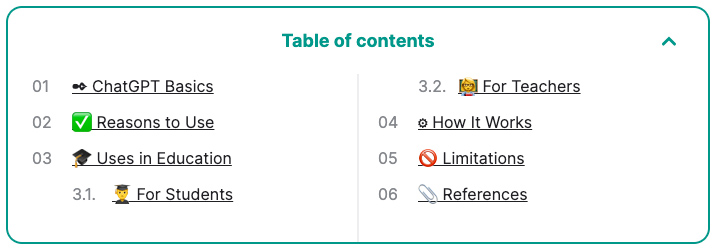
Excerpt re: Uses of ChatGPT for Teachers
- Diverse assignments.
- Individualized approach.
- Interesting classes.
- Debates.
- Critical thinking.
- Grammar and vocabulary.
- Homework review.
SAIL: State of Research: AI & Education — from buttondown.email by George Siemens
Information re: current AI and Learning Labs, education updates, and technology
Why ethical AI requires a future-ready and inclusive education system — from weforum.org
A specter is haunting higher education — from aiandacademia.substack.com by Bryan Alexander
Fall semester after the generative AI revolution
In this post I’d like to explore that apocalyptic model. For reasons of space, I’ll leave off analyzing student cheating motivations or questioning the entire edifice of grade-based assessment. I’ll save potential solutions for another post.
Let’s dive into the practical aspects of teaching to see why Mollick and Bogost foresee such a dire semester ahead.
Items re: Code Interpreter
Code Interpreter becoming available for all ChatGPT Plus users over the next week. Really amazing for any data science use case: https://t.co/hpel8xKyEg pic.twitter.com/Fd3SnPvVmT
— Greg Brockman (@gdb) July 6, 2023
I put together an initial prompt to set up Code Interpreter to create useful data visualizations. It gives it some basic principles of good chart design & also reminds it that it can output many kinds of files.
It is a first draft, feel free to improve: https://t.co/m4yAdKROiJ pic.twitter.com/r5A7PznqSC
— Ethan Mollick (@emollick) July 10, 2023
- What AI can do with a toolbox… Getting started with Code Interpreter — from oneusefulthing.org by Ethan Mollick
Democratizing data analysis with AI
Code Interpreter continues OpenAI’s long tradition of giving terrible names to things, because it might be most useful for those who do not code at all. It essentially allows the most advanced AI available, GPT-4, to upload and download information, and to write and execute programs for you in a persistent workspace. That allows the AI to do all sorts of things it couldn’t do before, and be useful in ways that were impossible with ChatGPT.
.
BREAKING: Code Interpreter is FINALLY rolling out to all ChatGPT Plus users.
It’s the most powerful feature OpenAI has released since GPT-4. It makes everyone a data analyst.
Here are 15 mind-blowing use cases of Code Interpreter: pic.twitter.com/qX0txynENS
— Aakash Gupta ? Product Growth Guy (@aakashg0) July 7, 2023
Legal items
- 2 authors say OpenAI ‘ingested’ their books to train ChatGPT. Now they’re suing, and a ‘wave’ of similar court cases may follow. — from businessinsider.com by Gabriel Rivera
- Authors Are Suing OpenAI & Meta For Copyright Infringement — from theneurondaily.com by Noah Edelman
MISC items
- America’s first law regulating AI bias in hiring takes effect this week — from downes.ca by Stephen Downes
- Eric Schmidt: This is how AI will transform the way science gets done — from technologyreview.com by Eric Schmidt
Science is about to become much more exciting—and that will affect us all, argues Google’s former CEO. - Microsoft unveils first professional certificate for generative AI skills — from zdnet.com/ by Lance Whitney
With the new AI Skills Initiative, people can take free online training via LinkedIn to learn concepts of AI good toward a Career Essentials certificate. - What is Claude 2? How to access this ChatGPT competitor. — from mashable.com by Cecily Mauran
It’s a decent alternative, and it’s easy to use. - Claude 2 — from anthropic.com
On 07/07/2023,
in 21st century, 24x7x365 access, adjunct faculty, Artificial Intelligence/Agents/LLMs/and Related, Asia, assessment, Australia, bots, change, cloud-based computing / apps / other cloud-related, colleges, community colleges, content development, aggregation, repositories, digital learning, digital textbooks, education, education reform, education technology, educational games / serious games, emerging technologies, ethics, experimentation, faculty/staff, future, future of higher education, game-changing environment, higher education, homeschooling/homeschoolers, human-computer interaction (HCI), ideas, innovation, instructional design, intelligent systems, intelligent tutoring, K-12 related, learning, learning ecosystem, Learning Experience Design, Learning from the Living [Class] Room, library / librarians, morals/values, multimedia, new media literacies, online media, personalized/customized learning, platforms, productivity / tips and tricks, skills, society, staying relevant, student teaching/teacher education, student-related, teachers, teaching & learning, the downsides of how people use tech, tools, United States, universities, vendors, vision/possibilities, youth,
by Daniel Christian
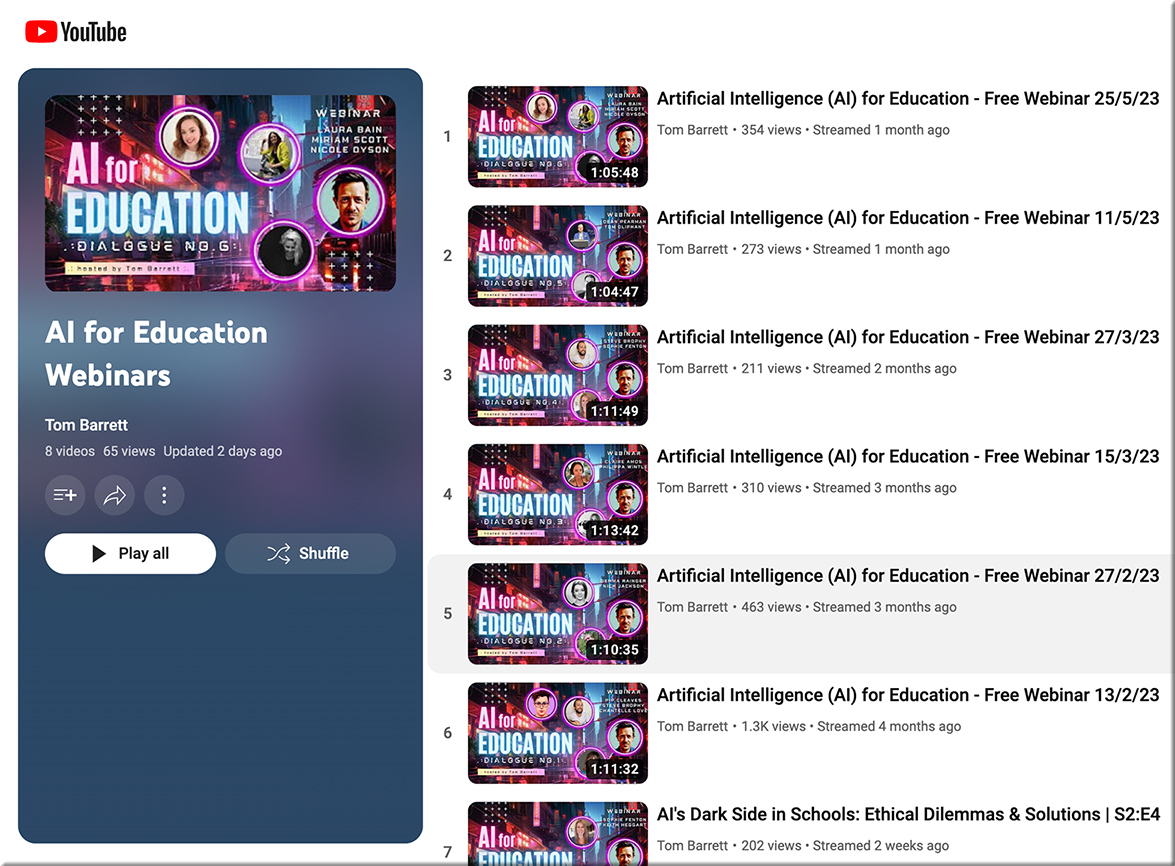
AI for Education Webinars — from youtube.com by Tom Barrett and others
Post-AI Assessment Design — from drphilippahardman.substack.com by Dr. Philippa Hardman
A simple, three-step guide on how to design assessments in a post-AI world
Excerpt:
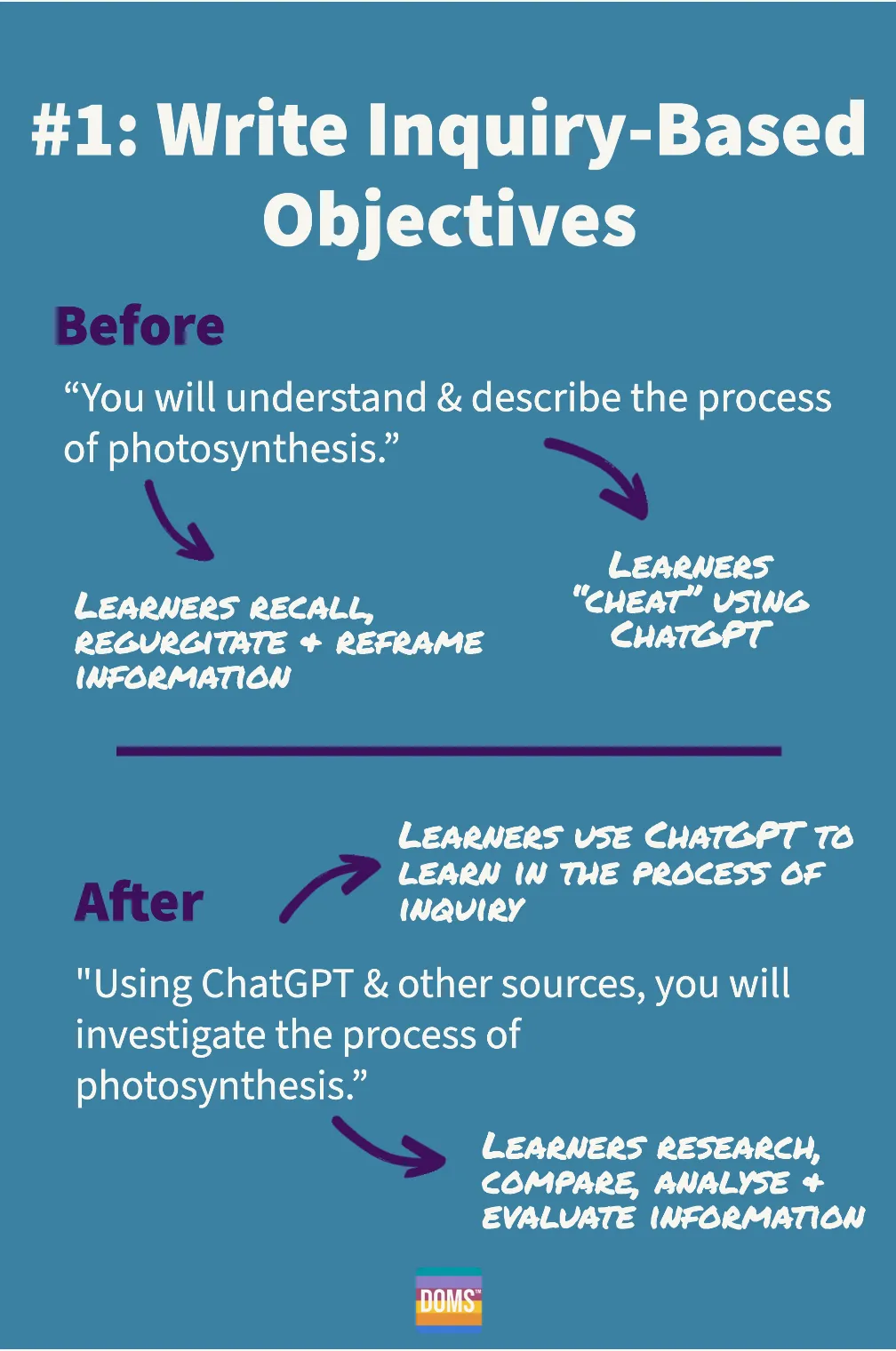
Step 1: Write Inquiry-Based Objectives
Inquiry-based objectives focus not just on the acquisition of knowledge but also on the development of skills and behaviours, like critical thinking, problem-solving, collaboration and research skills.
They do this by requiring learners not just to recall or “describe back” concepts that are delivered via text, lecture or video. Instead, inquiry-based objectives require learners to construct their own understanding through the process of investigation, analysis and questioning.
.
Massive Disruption Now: What AI Means for Students, Educators, Administrators and Accreditation Boards
— from stefanbauschard.substack.com by Stefan Bauschard; via Will Richardson on LinkedIn
The choices many colleges and universities make regarding AI over the next 9 months will determine if they survive. The same may be true for schools.
Excerpts:
Just for a minute, consider how education would change if the following were true –
- AIs “hallucinated” less than humans
- AIs could write in our own voices
- AIs could accurately do math
- AIs understood the unique academic (and eventually developmental) needs of each student and adapt instruction to that student
- AIs could teach anything any student wanted or need to know any time of day or night
- AIs could do this at a fraction of the cost of a human teacher or professor
Fall 2026 is three years away. Do you have a three year plan? Perhaps you should scrap it and write a new one (or at least realize that your current one cannot survive). If you run an academic institution in 2026 the same way you ran it in 2022, you might as well run it like you would have in 1920. If you run an academic institution in 2030 (or any year when AI surpasses human intelligence) the same way you ran it in 2022, you might as well run it like you would have in 1820. AIs will become more intelligent than us, perhaps in 10-20 years (LeCun), though there could be unanticipated breakthroughs that lower the time frame to a few years or less (Benjio); it’s just a question of when, not “if.”
On one creative use of AI — from aiandacademia.substack.com by Bryan Alexander
A new practice with pedagogical possibilities
Excerpt:
Look at those material items again. The voiceover? Written by an AI and turned into audio by software. The images? Created by human prompts in Midjourney. The music is, I think, human created. And the idea came from a discussion between a human and an AI?
…
How might this play out in a college or university class?
Imagine assignments which require students to craft such a video. Start from film, media studies, or computer science classes. Students work through a process:
Generative Textbooks — from opencontent.org by David Wiley
Excerpt (emphasis DSC):
I continue to try to imagine ways generative AI can impact teaching and learning, including learning materials like textbooks. Earlier this week I started wondering – what if, in the future, educators didn’t write textbooks at all? What if, instead, we only wrote structured collections of highly crafted prompts? Instead of reading a static textbook in a linear fashion, the learner would use the prompts to interact with a large language model. These prompts could help learners ask for things like:
- overviews and in-depth explanations of specific topics in a specific sequence,
- examples that the learner finds personally relevant and interesting,
- interactive practice – including open-ended exercises – with immediate, corrective feedback,
- the structure of the relationships between ideas and concepts,
- etc.
Also relevant/see:
.
Generating The Future of Education with AI — from aixeducation.com
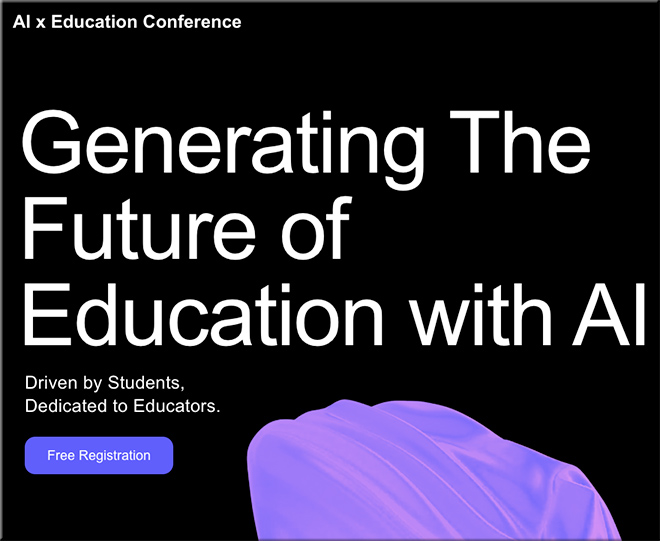
Designed for K12 and Higher-Ed Educators & Administrators, this conference aims to provide a platform for educators, administrators, AI experts, students, parents, and EdTech leaders to discuss the impact of AI on education, address current challenges and potentials, share their perspectives and experiences, and explore innovative solutions. A special emphasis will be placed on including students’ voices in the conversation, highlighting their unique experiences and insights as the primary beneficiaries of these educational transformations.
How Teachers Are Using ChatGPT in Class — from edweek.org by Larry Ferlazzo
Excerpt:
The use of generative AI in K-12 settings is complex and still in its infancy. We need to consider how these tools can enhance student creativity, improve writing skills, and be transparent with students about how generative AI works so they can better understand its limitations. As with any new tech, our students will be exposed to it, and it is our task as educators to help them navigate this new territory as well-informed, curious explorers.
Japan emphasizes students’ comprehension of AI in new school guidelines — from japantimes.co.jp by Karin Kaneko; via The Rundown
Excerpt:
The education ministry has emphasized the need for students to understand artificial intelligence in new guidelines released Tuesday, setting out how generative AI can be integrated into schools and the precautions needed to address associated risks.
Students should comprehend the characteristics of AI, including its advantages and disadvantages, with the latter including personal information leakages and copyright infringement, before they use it, according to the guidelines. They explicitly state that passing off reports, essays or any other works produced by AI as one’s own is inappropriate.
AI’s Teachable Moment: How ChatGPT Is Transforming the Classroom — from cnet.com by Mark Serrels
Teachers and students are already harnessing the power of AI, with an eye toward the future.
Excerpt:
Thanks to the rapid development of artificial intelligence tools like Dall-E and ChatGPT, my brother-in-law has been wrestling with low-level anxiety: Is it a good idea to steer his son down this path when AI threatens to devalue the work of creatives? Will there be a job for someone with that skill set in 10 years? He’s unsure. But instead of burying his head in the sand, he’s doing what any tech-savvy parent would do: He’s teaching his son how to use AI.
In recent months the family has picked up subscriptions to AI services. Now, in addition to drawing and sculpting and making movies and video games, my nephew is creating the monsters of his dreams with Midjourney, a generative AI tool that uses language prompts to produce images.
The AI Dictionary for Educators — from blog.profjim.com
To bridge this knowledge gap, I decided to make a quick little dictionary of AI terms specifically tailored for educators worldwide. Initially created for my own benefit, I’ve reworked my own AI Dictionary for Educators and expanded it to help my fellow teachers embrace the advancements AI brings to education.
7 Strategies to Prepare Educators to Teach With AI — from edweek.org by Lauraine Langreo; NOTE: Behind paywall
On 06/28/2023,
in Africa, Artificial Intelligence/Agents/LLMs/and Related, Asia, assessment, Australia, Canada, creativity, digital learning, education, education technology, educational games / serious games, emerging technologies, engagement / engaging students, entrepreneurship, Europe, experimentation, graphics, human-computer interaction (HCI), ideas, India, innovation, instructional design, intelligent systems, intelligent tutoring, K-12 related, learning, learning ecosystem, Learning Experience Design, participation, platforms, presentations, productivity / tips and tricks, professional development, project-based learning, skills, student-related, teachers, tools, UK, United States, vendors, vision/possibilities, visualizing information, writing, youth,
by Daniel Christian
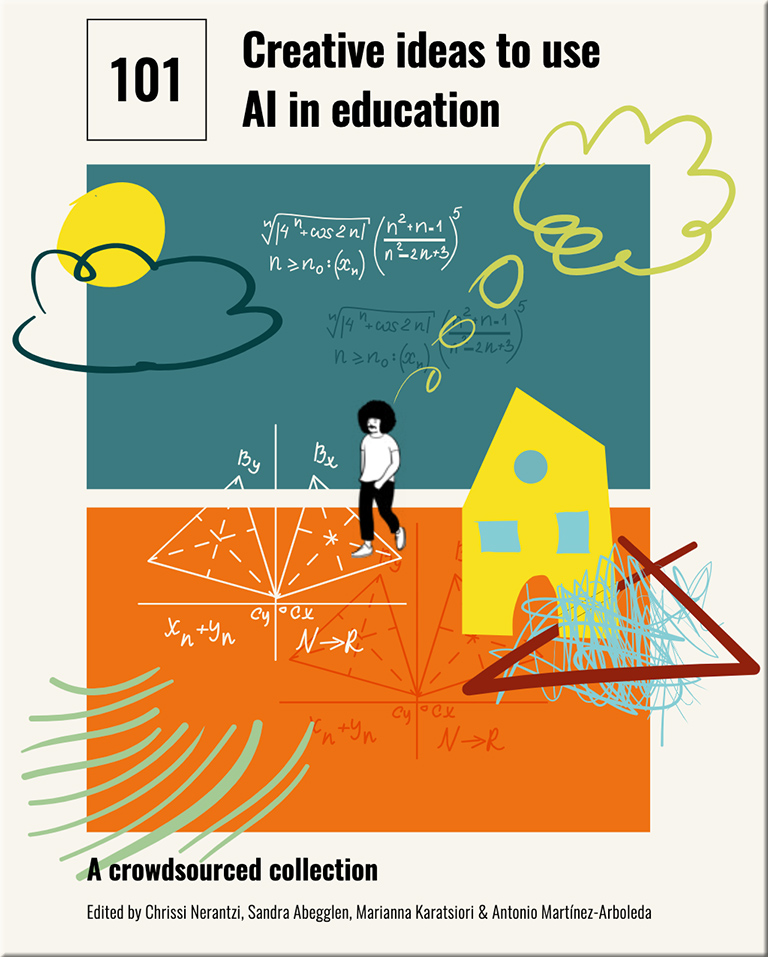
101 creative ideas to use AI in education, A crowdsourced collection — from zenodo.org by Chrissi Nerantzi, Sandra Abegglen, Marianna Karatsiori, & Antonio Martínez-Arboleda (Eds.); with thanks to George Veletsianos for this resource
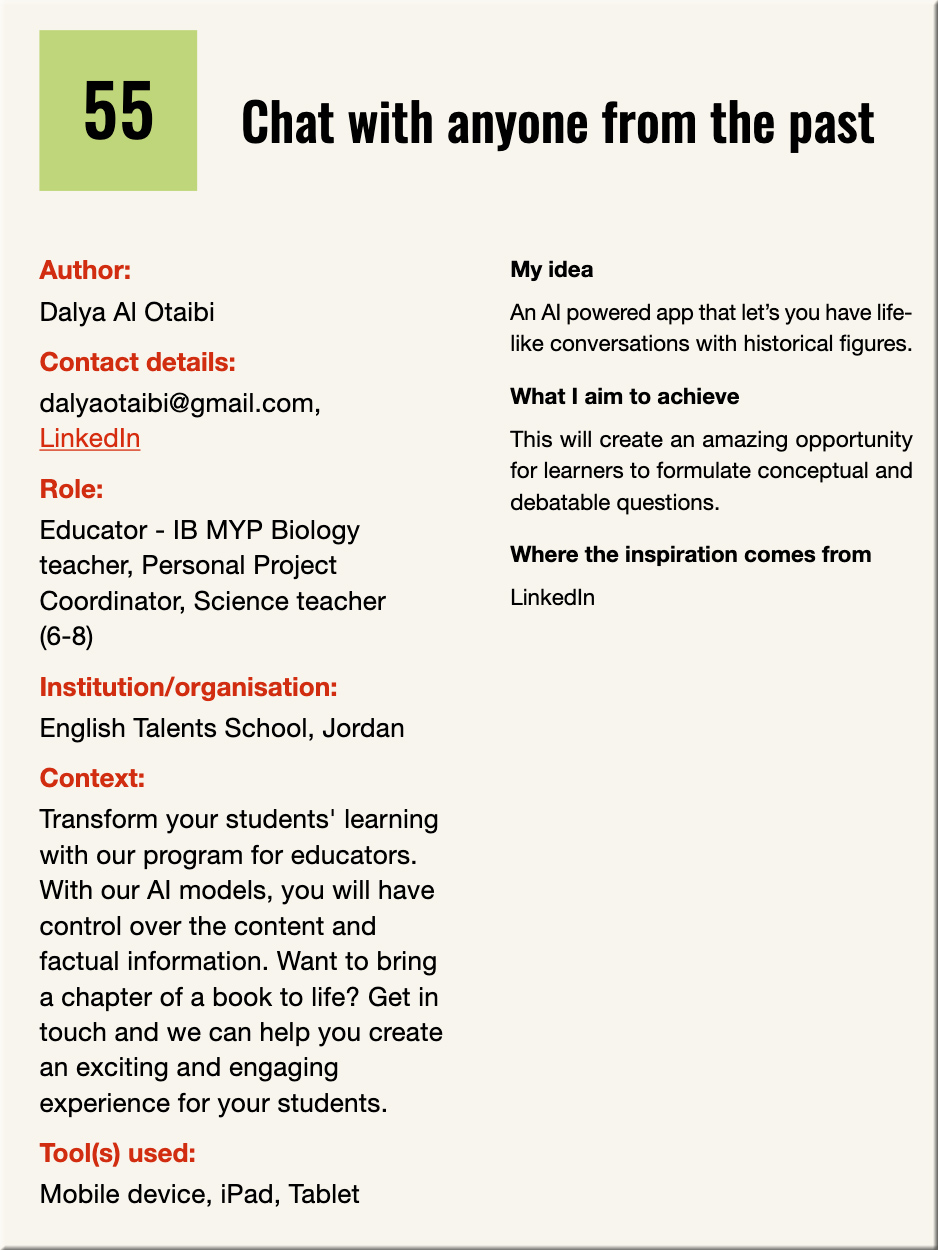
As an example, here’s one of the ideas from the crowdsourced collection:
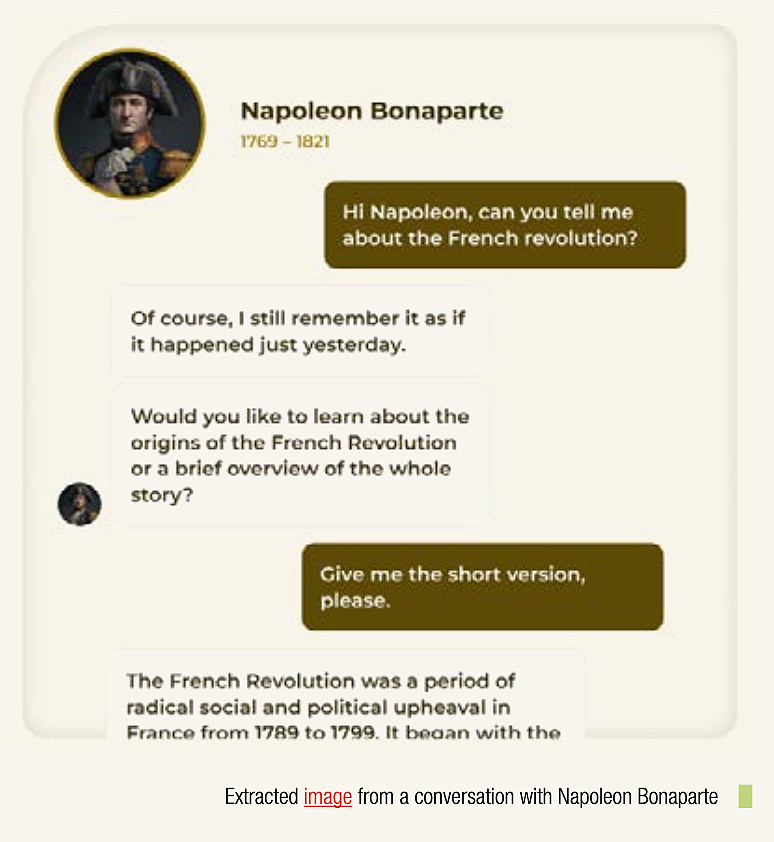
On a somewhat related note, also see:
Merlyn Mind launches education-focused LLMs for classroom integration of generative AI — from venturebeat.com by Victor Dey
Excerpt:
Merlyn Mind, an AI-powered digital assistant platform, announced the launch of a suite of large language models (LLMs) specifically tailored for the education sector under an open-source license.
Designing courses in an age of AI — from teachinginhighered.com by Maria Andersen
Maria Andersen shares about designing courses in an age of artificial intelligence (AI) on episode 469 of the Teaching in Higher Ed podcast.
With generative AI, we have an incredible acceleration of change happening.
Maria Andersen