Next month Microsoft Corp. will start making its artificial intelligence features for Office widely available to corporate customers. Soon after, that will include the ability for it to read your emails, learn your writing style and compose messages on your behalf.

From DSC:
As readers of this blog know, I’m generally pro-technology. I see most technologies as tools — which can be used for good or for ill. So I will post items both pro and con concerning AI.

But outsourcing email communications to AI isn’t on my wish list or to-do list.


180 Degree Turn: NYC District Goes From Banning ChatGPT to Exploring AI’s Potential — from edweek.org by Alyson Klein (behind paywall)

New York City Public Schools will launch an Artificial Intelligence Policy Lab to guide the nation’s largest school district’s approach to this rapidly evolving technology.


The Leader’s Blindspot: How to Prepare for the Real Future — from preview.mailerlite.io by the AIEducator
The Commonly Held Belief: AI Will Automate Only Boring, Repetitive Tasks First

The Days of Task-Based Views on AI Are Numbered
The winds of change are sweeping across the educational landscape (emphasis DSC):

  1. Multifaceted AI: AI technologies are not one-trick ponies; they are evolving into complex systems that can handle a variety of tasks.
  2. Rising Expectations: As technology becomes integral to our lives, the expectations for personalised, efficient education are soaring.
  3. Skill Transformation: Future job markets will demand a different skill set, one that is symbiotic with AI capabilities.

Teaching: How to help students better understand generative AI — from chronicle.com by Beth McMurtrie
Beth describes ways professors have used ChatGPT to bolster critical thinking in writing-intensive courses

Kevin McCullen, an associate professor of computer science at the State University of New York at Plattsburgh, teaches a freshman seminar about AI and robotics. As part of the course, students read Machines of Loving Grace: The Quest for Common Ground Between Humans and Robots, by John Markoff. McCullen had the students work in groups to outline and summarize the first three chapters. Then he showed them what ChatGPT had produced in an outline.

“Their version and ChatGPT’s version seemed to be from two different books,” McCullen wrote. “ChatGPT’s version was essentially a ‘laundry list’ of events. Their version was narratives of what they found interesting. The students had focused on what the story was telling them, while ChatGPT focused on who did what in what year.” The chatbot also introduced false information, such as wrong chapter names.

The students, he wrote, found the writing “soulless.”


7 Questions with Dr. Cristi Ford, VP of Academic Affairs at D2L — from campustechnology.com by Rhea Kelly

In the Wild West of generative AI, educators and institutions are working out how best to use the technology for learning. How can institutions define AI guidelines that allow for experimentation while providing students with consistent guidance on appropriate use of AI tools?

To find out, we spoke with Dr. Cristi Ford, vice president of academic affairs at D2L. With more than two decades of educational experience in nonprofit, higher education, and K-12 institutions, Ford works with D2L’s institutional partners to elevate best practices in teaching, learning, and student support. Here, she shares her advice on setting and communicating AI policies that are consistent and future-ready.


AI Platform Built by Teachers, for Teachers, Class Companion Raises $4 Million to Tap Into the Power of Practice — from prweb.com

“If we want to use AI to improve education, we need more teachers at the table,” said Avery Pan, Class Companion co-founder and CEO. “Class Companion is designed by teachers, for teachers, to harness the most sophisticated AI and improve their classroom experience. Developing technologies specifically for teachers is imperative to supporting our next generation of students and education system.”


7 Questions on Generative AI in Learning Design — from campustechnology.com by Rhea Kelly
Open LMS Adoption and Education Specialist Michael Vaughn on the challenges and possibilities of using artificial intelligence to move teaching and learning forward.

The potential for artificial intelligence tools to speed up course design could be an attractive prospect for overworked faculty and spread-thin instructional designers. Generative AI can shine, for example, in tasks such as reworking assessment question sets, writing course outlines and learning objectives, and generating subtitles for audio and video clips. The key, says Michael Vaughn, adoption and education specialist at learning platform Open LMS, is treating AI like an intern who can be guided and molded along the way, and whose work is then vetted by a human expert.

We spoke with Vaughn about how best to utilize generative AI in learning design, ethical issues to consider, and how to formulate an institution-wide policy that can guide AI use today and in the future.


10 Ways Technology Leaders Can Step Up and Into the Generative AI Discussion in Higher Ed — from er.educause.edu by Lance Eaton and Stan Waddell

  1. Offer Short Primers on Generative AI
  2. Explain How to Get Started
  3. Suggest Best Practices for Engaging with Generative AI
  4. Give Recommendations for Different Groups
  5. Recommend Tools
  6. Explain the Closed vs. Open-Source Divide
  7. Avoid Pitfalls
  8. Conduct Workshops and Events
  9. Spot the Fake
  10. Provide Proper Guidance on the Limitations of AI Detectors


Canva’s new AI tools automate boring, labor-intensive design tasks — from theverge.com by Jess Weatherbed
Magic Studio features like Magic Switch automatically convert your designs into blogs, social media posts, emails, and more to save time on manually editing documents.


Canva launches Magic Studio, partners with Runway ML for video — from bensbites.beehiiv.com by Ben Tossell

Here are the highlights of launched features under the new Magic Studio:

  • Magic Design – Turn ideas into designs instantly with AI-generated templates.
  • Magic Switch – Transform content into different formats and languages with one click.
  • Magic Grab – Make images editable like Canva templates for easy editing.
  • Magic Expand – Use AI to expand images beyond the original frame.
  • Magic Morph – Transform text and shapes with creative effects and prompts.
  • Magic Edit – Make complex image edits using simple text prompts.
  • Magic Media – Generate professional photos, videos and artworks from text prompts.
  • Magic Animate – Add animated transitions and motion to designs instantly.
  • Magic Write – Generate draft text and summaries powered by AI.


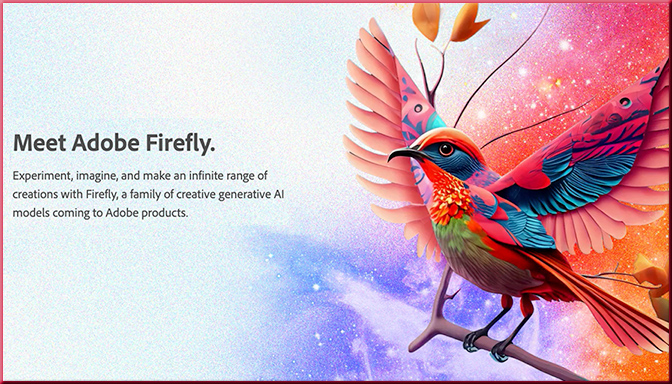
Adobe Firefly

Meet Adobe Firefly -- Adobe is going hard with the use of AI. This is a key product along those lines.


Addendums on 10/11/23:


Adobe Releases New AI Models Aimed at Improved Graphic Design — from bloomberg.com
New version of Firefly is bigger than initial tool, Adobe says Illustrator, Express programs each get own generative tools


As AI Chatbots Rise, More Educators Look to Oral Exams — With High-Tech Twist — from edsurge.com by Jeffrey R. Young

To use Sherpa, an instructor first uploads the reading they’ve assigned, or they can have the student upload a paper they’ve written. Then the tool asks a series of questions about the text (either questions input by the instructor or generated by the AI) to test the student’s grasp of key concepts. The software gives the instructor the choice of whether they want the tool to record audio and video of the conversation, or just audio.

The tool then uses AI to transcribe the audio from each student’s recording and flags areas where the student answer seemed off point. Teachers can review the recording or transcript of the conversation and look at what Sherpa flagged as trouble to evaluate the student’s response.


Humane’s ‘Ai Pin’ debuts on the Paris runway — from techcrunch.com by Brian Heater

“The [Ai Pin is a] connected and intelligent clothing-based wearable device uses a range of sensors that enable contextual and ambient compute interactions,” the company noted at the time. “The Ai Pin is a type of standalone device with a software platform that harnesses the power of Ai to enable innovative personal computing experiences.”


Also relevant/see:


AI Meets Med School— from insidehighered.com by Lauren Coffey
Adding to academia’s AI embrace, two institutions in the University of Texas system are jointly offering a medical degree paired with a master’s in artificial intelligence.

Doctor AI

The University of Texas at San Antonio has launched a dual-degree program combining medical school with a master’s in artificial intelligence.

Several universities across the nation have begun integrating AI into medical practice. Medical schools at the University of Florida, the University of Illinois, the University of Alabama at Birmingham and Stanford and Harvard Universities all offer variations of a certificate in AI in medicine that is largely geared toward existing professionals.

“I think schools are looking at, ‘How do we integrate and teach the uses of AI?’” Dr. Whelan said. “And in general, when there is an innovation, you want to integrate it into the curriculum at the right pace.”

Speaking of emerging technologies and med school, also see:


Though not necessarily edu-related, this was interesting to me and hopefully will be to some profs and/or students out there:


How to stop AI deepfakes from sinking society — and science — from nature.com by Nicola Jones; via The Neuron
Deceptive videos and images created using generative AI could sway elections, crash stock markets and ruin reputations. Researchers are developing methods to limit their harm.


Exploring the Impact of AI in Education with PowerSchool’s CEO & Chief Product Officer — from michaelbhorn.substack.com by Michael B. Horn

With just under 10 acquisitions in the last 5 years, PowerSchool has been active in transforming itself from a student information systems company to an integrated education company that works across the day and lifecycle of K–12 students and educators. What’s more, the company turned heads in June with its announcement that it was partnering with Microsoft to integrate AI into its PowerSchool Performance Matters and PowerSchool LearningNav products to empower educators in delivering transformative personalized-learning pathways for students.


AI Learning Design Workshop: The Trickiness of AI Bootcamps and the Digital Divide — from eliterate.usby Michael Feldstein

As readers of this series know, I’ve developed a six-session design/build workshop series for learning design teams to create an AI Learning Design Assistant (ALDA). In my last post in this series, I provided an elaborate ChatGPT prompt that can be used as a rapid prototype that everyone can try out and experiment with.1 In this post, I’d like to focus on how to address the challenges of AI literacy effectively and equitably.


Global AI Legislation Tracker— from iapp.org; via Tom Barrett

Countries worldwide are designing and implementing AI governance legislation commensurate to the velocity and variety of proliferating AI-powered technologies. Legislative efforts include the development of comprehensive legislation, focused legislation for specific use cases, and voluntary guidelines and standards.

This tracker identifies legislative policy and related developments in a subset of jurisdictions. It is not globally comprehensive, nor does it include all AI initiatives within each jurisdiction, given the rapid and widespread policymaking in this space. This tracker offers brief commentary on the wider AI context in specific jurisdictions, and lists index rankings provided by Tortoise Media, the first index to benchmark nations on their levels of investment, innovation and implementation of AI.


Diving Deep into AI: Navigating the L&D Landscape — from learningguild.com by Markus Bernhardt

The prospect of AI-powered, tailored, on-demand learning and performance support is exhilarating: It starts with traditional digital learning made into fully adaptive learning experiences, which would adjust to strengths and weaknesses for each individual learner. The possibilities extend all the way through to simulations and augmented reality, an environment to put into practice knowledge and skills, whether as individuals or working in a team simulation. The possibilities are immense.


Learning Lab | ChatGPT in Higher Education: Exploring Use Cases and Designing Prompts — from events.educause.edu; via Robert Gibson on LinkedIn

Part 1: October 16 | 3:00–4:30 p.m. ET
Part 2: October 19 | 3:00–4:30 p.m. ET
Part 3: October 26 | 3:00–4:30 p.m. ET
Part 4: October 30 | 3:00–4:30 p.m. ET


Mapping AI’s Role in Education: Pioneering the Path to the Future — from marketscale.com by Michael B. Horn, Jacob Klein, and Laurence Holt

Welcome to The Future of Education with Michael B. Horn. In this insightful episode, Michael gains perspective on mapping AI’s role in education from Jacob Klein, a Product Consultant at Oko Labs, and Laurence Holt, an Entrepreneur In Residence at the XQ Institute. Together, they peer into the burgeoning world of AI in education, analyzing its potential, risks, and roadmap for integrating it seamlessly into learning environments.


Ten Wild Ways People Are Using ChatGPT’s New Vision Feature — from newsweek.com by Meghan Roos; via Superhuman

Below are 10 creative ways ChatGPT users are making use of this new vision feature.


Comparing Online and AI-Assisted Learning: A Student’s View — from educationnext.org by Daphne Goldstein
An 8th grader reviews traditional Khan Academy and its AI-powered tutor, Khanmigo

Hi everyone, I’m Daphne, a 13-year-old going into 8th grade.

I’m writing to compare “regular” Khan Academy (no AI) to Khanmigo (powered by GPT4), using three of my own made-up criteria.

They are: efficiency, effectiveness, and enjoyability. Efficiency is how fast I am able to cover a math topic and get basic understanding. Effectiveness is my quality of understanding—the difference between basic and advanced understanding. And the final one—most important to kids and maybe least important to adults who make kids learn math—is enjoyability.


7 Questions on Generative AI in Learning Design — from campustechnology.com by Rhea Kelly
Open LMS Adoption and Education Specialist Michael Vaughn on the challenges and possibilities of using artificial intelligence to move teaching and learning forward.

The potential for artificial intelligence tools to speed up course design could be an attractive prospect for overworked faculty and spread-thin instructional designers. Generative AI can shine, for example, in tasks such as reworking assessment question sets, writing course outlines and learning objectives, and generating subtitles for audio and video clips. The key, says Michael Vaughn, adoption and education specialist at learning platform Open LMS, is treating AI like an intern who can be guided and molded along the way, and whose work is then vetted by a human expert.

We spoke with Vaughn about how best to utilize generative AI in learning design, ethical issues to consider, and how to formulate an institution-wide policy that can guide AI use today and in the future.


First Impressions with GPT-4V(ision) — from blog.roboflow.com by James Gallagher; via Donald Clark on LinkedIn

On September 25th, 2023, OpenAI announced the rollout of two new features that extend how people can interact with its recent and most advanced model, GPT-4: the ability to ask questions about images and to use speech as an input to a query.

This functionality marks GPT-4’s move into being a multimodal model. This means that the model can accept multiple “modalities” of input – text and images – and return results based on those inputs. Bing Chat, developed by Microsoft in partnership with OpenAI, and Google’s Bard model both support images as input, too. Read our comparison post to see how Bard and Bing perform with image inputs.

In this guide, we are going to share our first impressions with the GPT-4V image input feature.


ChatGPT can now see, hear, and speak — from openai.com
We are beginning to roll out new voice and image capabilities in ChatGPT. They offer a new, more intuitive type of interface by allowing you to have a voice conversation or show ChatGPT what you’re talking about.

Voice and image give you more ways to use ChatGPT in your life. Snap a picture of a landmark while traveling and have a live conversation about what’s interesting about it. When you’re home, snap pictures of your fridge and pantry to figure out what’s for dinner (and ask follow up questions for a step by step recipe). After dinner, help your child with a math problem by taking a photo, circling the problem set, and having it share hints with both of you.

We’re rolling out voice and images in ChatGPT to Plus and Enterprise users over the next two weeks. Voice is coming on iOS and Android (opt-in in your settings) and images will be available on all platforms.


OpenAI Seeks New Valuation of Up to $90 Billion in Sale of Existing Shares — from wsj.com (behind paywall)
Potential sale would value startup at roughly triple where it was set earlier this year


The World’s First AI Cinema Experience Starring YOU Is Open In NZ And Buzzy Doesn’t Cover It — from theedge.co.nz by Seth Gupwell
Allow me to manage your expectations.

Because it’s the first-ever on Earth, it’s hard to label what kind of entertainment Hypercinema is. While it’s marketed as a “live AI experience” that blends “theatre, film and digital technology”, Dr. Gregory made it clear that it’s not here to make movies and TV extinct.

Your face and personality are how HyperCinema sets itself apart from the art forms of old. You get 15 photos of your face taken from different angles, then answer a questionnaire – mine started by asking what my fave vegetable was and ended by demanding to know what I thought the biggest threat to humanity was. Deep stuff, but the questions are always changing, cos that’s how AI rolls.

All of this information is stored on your cube – a green, glowing accessory that you carry around for the whole experience and insert into different sockets to transfer your info onto whatever screen is in front of you. Upon inserting your cube, the “live AI experience” starts.

The AI has taken your photos and superimposed your face on a variety of made-up characters in different situations.


Announcing Microsoft Copilot, your everyday AI companion — from blogs.microsoft.com by Yusuf Mehdi

We are entering a new era of AI, one that is fundamentally changing how we relate to and benefit from technology. With the convergence of chat interfaces and large language models you can now ask for what you want in natural language and the technology is smart enough to answer, create it or take action. At Microsoft, we think about this as having a copilot to help navigate any task. We have been building AI-powered copilots into our most used and loved products – making coding more efficient with GitHub, transforming productivity at work with Microsoft 365, redefining search with Bing and Edge and delivering contextual value that works across your apps and PC with Windows.

Today we take the next step to unify these capabilities into a single experience we call Microsoft Copilot, your everyday AI companion. Copilot will uniquely incorporate the context and intelligence of the web, your work data and what you are doing in the moment on your PC to provide better assistance – with your privacy and security at the forefront.


DALL·E 3 understands significantly more nuance and detail than our previous systems, allowing you to easily translate your ideas into exceptionally accurate images.
DALL·E 3 is now in research preview, and will be available to ChatGPT Plus and Enterprise customers in October, via the API and in Labs later this fall.


How new AI chatbots could help teachers with their toughest problems — from fastcompany.com by Greg Toppo
At least two groups are working on bots that would make peer-reviewed research, buried in expensive academic journals, accessible for everyday use.

But this fall, a few educators are quietly charting a different course they believe could change everything: At least two groups are pushing to create new AI chatbots that would offer teachers unlimited access to sometimes confusing and often paywalled peer-reviewed research on the topics that most bedevil them.

Their aspiration is to offer new tools that are more focused and helpful than wide-ranging ones like ChatGPT, which tends to stumble over research questions with competing findings. Like many juveniles faced with questions they can’t answer, it has a frustrating tendency to make things up.

Using ChatGPT Custom Instructions for Fun and Profit — from every.to by Dan Shipper
How to 10x ChatGPT with personalized answers 

Then, I turned Custom Instructions on and gave it the same starting prompt. Here are a few of the responses (emphases are mine):

“Purpose: What’s the primary goal of the course? Is it to augment your existing offerings at Every, serve as a standalone product, or something else?”

“Content Depth: Given your love for detailed, intellectual writing, how in-depth will you go on each topic?”

“Guest Contributions: Do you plan to involve guest experts, perhaps even some of your writing heroes or team members like Kate Lee and Evan Armstrong?”

“Time Investment: Given that you’re already grappling with being too opportunistic and dutiful, how will you allocate time for this without sidelining your creative work or burdening yourself?”

AI for comics — from aiandacademia.substack.com by Bryan Alexander
Exploring an entertaining new Hugging Face application

As generative AI grows, more uses appear. Beyond text and images, other domains for creation pop up as companies, groups, and individuals try out new functions.

Today’s case in point is AI Comic Factory from Hugging Face.* This service will generate a couple of comic book pages based on your text input. It gives you choices of comic style and page layout as well.

Items from Tom Barrett’ Promptcraft: AI for a better learning ecosystem

This new AI video tool clones your voice in 7 languages — and it’s blowing up  — from sg.news.yahoo.com by Christoph Schwaiger

How many languages do you speak? Thanks to AI, that number could be as many as seven. Los Angeles-based AI video platform HeyGen has launched a new tool that clones your voice from a video and translates what you’re saying into seven different languages. If that wasn’t enough, it also syncs your lips to your new voice so the final clip looks (and sounds) as realistic as possible.

Microsoft and Project Gutenberg release over 5,000 free audiobooks — from the-decoder.com by Matthias Bastian

Microsoft and Project Gutenberg have used AI technologies to create more than 5,000 free audiobooks with high-quality synthetic voices.

For the project, the researchers combined advances in machine learning, automatic text selection (which texts are read aloud, which are not), and natural-sounding speech synthesis systems.


Introductory comments from DSC:

Sometimes people and vendors write about AI’s capabilities in such a glowingly positive way. It seems like AI can do everything in the world. And while I appreciate the growing capabilities of Large Language Models (LLMs) and the like, there are some things I don’t want AI-driven apps to do.

For example, I get why AI can be helpful in correcting my misspellings, my grammatical errors, and the like. That said, I don’t want AI to write my emails for me. I want to write my own emails. I want to communicate what I want to communicate. I don’t want to outsource my communication. 

And what if an AI tool summarizes an email series in a way that I miss some key pieces of information? Hmmm…not good.

Ok, enough soapboxing. I’ll continue with some resources.


ChatGPT Enterprise

Introducing ChatGPT Enterprise — from openai.com
Get enterprise-grade security & privacy and the most powerful version of ChatGPT yet.

We’re launching ChatGPT Enterprise, which offers enterprise-grade security and privacy, unlimited higher-speed GPT-4 access, longer context windows for processing longer inputs, advanced data analysis capabilities, customization options, and much more. We believe AI can assist and elevate every aspect of our working lives and make teams more creative and productive. Today marks another step towards an AI assistant for work that helps with any task, is customized for your organization, and that protects your company data.

Enterprise-grade security & privacy and the most powerful version of ChatGPT yet. — from openai.com


NVIDIA

Nvidia’s Q2 earnings prove it’s the big winner in the generative AI boom — from techcrunch.com by Kirsten Korosec

Nvidia Quarterly Earnings Report Q2 Smashes Expectations At $13.5B — from techbusinessnews.com.au
Nvidia’s quarterly earnings report (Q2) smashed expectations coming in at $13.5B more than doubling prior earnings of $6.7B. The chipmaker also projected October’s total revenue would peak at $16B


MISC

OpenAI Passes $1 Billion Revenue Pace as Big Companies Boost AI Spending — from theinformation.com by Amir Efrati and Aaron Holmes

OpenAI is currently on pace to generate more than $1 billion in revenue over the next 12 months from the sale of artificial intelligence software and the computing capacity that powers it. That’s far ahead of revenue projections the company previously shared with its shareholders, according to a person with direct knowledge of the situation.

OpenAI’s GPTBot blocked by major websites and publishers — from the-decoder.com by Matthias Bastian
An emerging chatbot ecosystem builds on existing web content and could displace traditional websites. At the same time, licensing and financing are largely unresolved.

OpenAI offers publishers and website operators an opt-out if they prefer not to make their content available to chatbots and AI models for free. This can be done by blocking OpenAI’s web crawler “GPTBot” via the robots.txt file. The bot collects content to improve future AI models, according to OpenAI.

Major media companies including the New York Times, CNN, Reuters, Chicago Tribune, ABC, and Australian Community Media (ACM) are now blocking GPTBot. Other web-based content providers such as Amazon, Wikihow, and Quora are also blocking the OpenAI crawler.

Introducing Code Llama, a state-of-the-art large language model for coding  — from ai.meta.com

Takeaways re: Code Llama:

  • Is a state-of-the-art LLM capable of generating code, and natural language about code, from both code and natural language prompts.
  • Is free for research and commercial use.
  • Is built on top of Llama 2 and is available in three models…
  • In our own benchmark testing, Code Llama outperformed state-of-the-art publicly available LLMs on code tasks

Key Highlights of Google Cloud Next ‘23— from analyticsindiamag.com by Shritama Saha
Meta’s Llama 2, Anthropic’s Claude 2, and TII’s Falcon join Model Garden, expanding model variety.

AI finally beats humans at a real-life sport— drone racing — from nature.com by Dan Fox
The new system combines simulation with onboard sensing and computation.

From DSC:
This is scary — not at all comforting to me. Militaries around the world continue their jockeying to be the most dominant, powerful, and effective killers of humankind. That definitely includes the United States and China. But certainly others as well. And below is another alarming item, also pointing out the downsides of how we use technologies.

The Next Wave of Scams Will Be Deepfake Video Calls From Your Boss — from bloomberg.com by Margi Murphy; behind paywall

Cybercriminals are constantly searching for new ways to trick people. One of the more recent additions to their arsenal was voice simulation software.

10 Great Colleges For Studying Artificial Intelligence — from forbes.com by Sim Tumay

The debut of ChatGPT in November created angst for college admission officers and professors worried they would be flooded by student essays written with the undisclosed assistance of artificial intelligence. But the explosion of interest in AI has benefits for higher education, including a new generation of students interested in studying and working in the field. In response, universities are revising their curriculums to educate AI engineers.


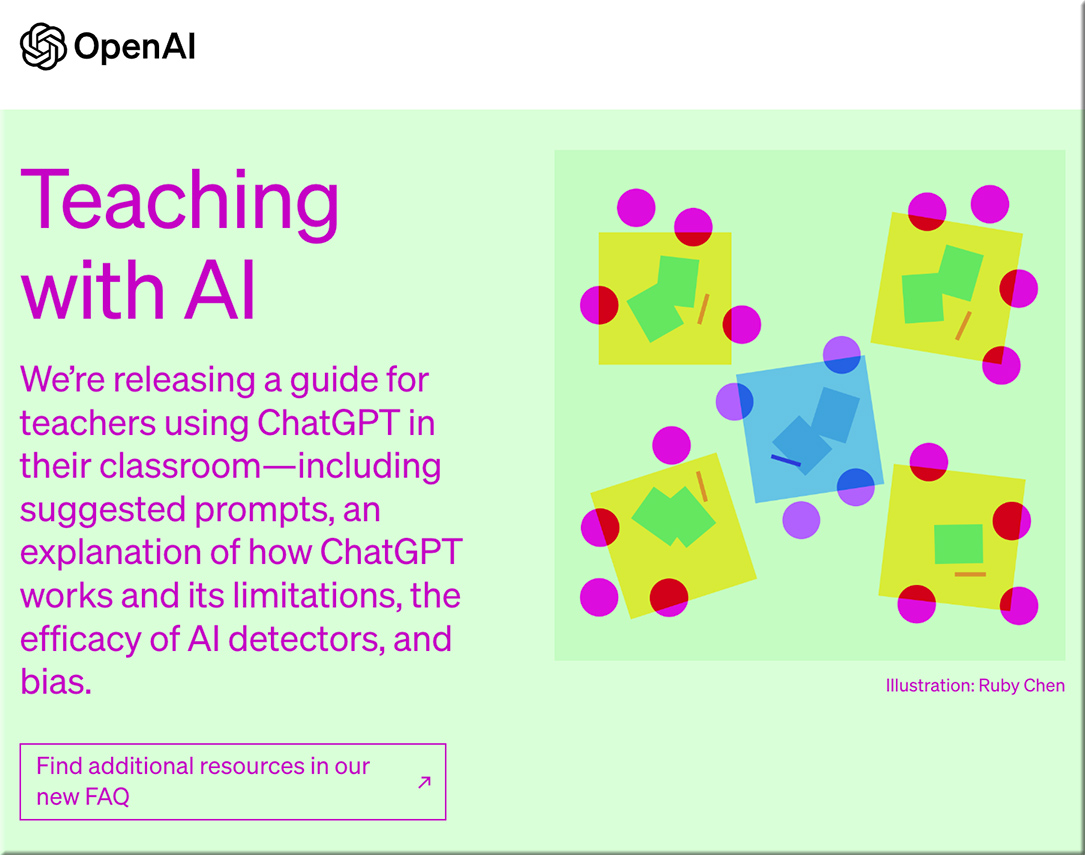
OpenAI angles to put ChatGPT in classrooms with special tutor prompts — from techcrunch.com by Devin Coldewey

Taking the bull by the horns, the company has proposed a few ways for teachers to put the system to use… outside its usual role as “research assistant” for procrastinating students.
.

Teaching with AI -- a guide from OpenAI


Q2 Earnings Roundup – EdTech Generative AI — from aieducation.substack.com by Claire Zau
A roundup of LLM and AI discussions from Q2 EdTech Earnings

In this piece, we’ll be breaking down how a few of edtech’s most important companies are thinking about AI developments.

  • Duolingo
  • Powerschool
  • Coursera
  • Docebo
  • Instructure
  • Nerdy
 

From DSC:
Yesterday, I posted the item about Google’s NotebookLM research tool. Excerpt:

What if you could have a conversation with your notes? That question has consumed a corner of the internet recently, as companies like Dropbox, Box, Notion, and others have built generative AI tools that let you interact with and create new things from the data you already have in their systems.

Google’s version of this is called NotebookLM. It’s an AI-powered research tool that is meant to help you organize and interact with your own notes.

That got me to thinking…

What if the presenter/teacher/professor/trainer/preacher provided a set of notes for the AI to compare to the readers’ notes? 

That way, the AI could see the discrepancies between what the presenter wanted their audience to learn/hear and what was actually being learned/heard. In a sort of digital Socratic Method, the AI could then generate some leading questions to get the audience member to check their thinking/understanding of the topic.

The end result would be that the main points were properly communicated/learned/received.


Google’s AI-powered note-taking app is the messy beginning of something great — from theverge.com by David Pierce; via AI Insider
NotebookLM is a neat research tool with some big ideas. It’s still rough and new, but it feels like Google is onto something.

Excerpts (emphasis DSC):

What if you could have a conversation with your notes? That question has consumed a corner of the internet recently, as companies like Dropbox, Box, Notion, and others have built generative AI tools that let you interact with and create new things from the data you already have in their systems.

Google’s version of this is called NotebookLM. It’s an AI-powered research tool that is meant to help you organize and interact with your own notes. 
…
Right now, it’s really just a prototype, but a small team inside the company has been trying to figure out what an AI notebook might look like.


10 Ways Artificial Intelligence Is Transforming Instructional Design — from er.educause.edu by Robert Gibson
Artificial intelligence (AI) is providing instructors and course designers with an incredible array of new tools and techniques to improve the course design and development process. However, the intersection of AI and content creation is not new.

What does this mean for the field of instructional and course design? I have been telling my graduate instructional design students that AI technology is not likely to replace them any time soon because learning and instruction are still highly personalized and humanistic experiences. However, as these students embark on their careers, they will need to understand how to appropriately identify, select, and utilize AI when developing course content.

Here are a few interesting examples of how AI is shaping and influencing instructional design. Some of the tools and resources can be used to satisfy a variety of course design activities, while others are very specific.


GenAI Chatbot Prompt Library for Educators — from aiforeducation.io
We have a variety of prompts to help you lesson plan and do adminstrative tasks with GenAI chatbots like ChatGPT, Claude, Bard, and Perplexity.

Also relevant/see:

AI for Education — from linkedin.com
Helping teachers and schools unlock their full potential through AI


Google Chrome will summarize entire articles for you with built-in generative AI — from theverge.com by Jay Peters
Google’s AI-powered article summaries are rolling out for iOS and Android first, before coming to Chrome on the desktop.

Google’s AI-powered Search Generative Experience (SGE) is getting a major new feature: it will be able to summarize articles you’re reading on the web, according to a Google blog post. SGE can already summarize search results for you so that you don’t have to scroll forever to find what you’re looking for, and this new feature is designed to take that further by helping you out after you’ve actually clicked a link.


A Definitive Guide to Using Midjourney — from every.to by Lucas Crespo
Everything you need to know about generating AI Images

In this article, I’ll walk you through the most powerful and useful techniques I’ve come across. We’ll cover:

  • Getting started in Midjourney
  • Understanding Midjourney’s quirks with interpreting prompts
  • Customizing Midjourney’s image outputs after the fact
  • Experimenting with a range of styles and content
  • Uploading and combining images to make new ones via image injections
  • Brainstorming art options with parameters like “chaos” and “weird”
  • Finalizing your Midjourney output’s aspect ratio

And much more.


Report: Potential NYT lawsuit could force OpenAI to wipe ChatGPT and start over — from arstechnica.com by Ashley Belanger; via Misha da Vinci
OpenAI could be fined up to $150,000 for each piece of infringing content.

Weeks after The New York Times updated its terms of service (TOS) to prohibit AI companies from scraping its articles and images to train AI models, it appears that the Times may be preparing to sue OpenAI. The result, experts speculate, could be devastating to OpenAI, including the destruction of ChatGPT’s dataset and fines up to $150,000 per infringing piece of content.

NPR spoke to two people “with direct knowledge” who confirmed that the Times’ lawyers were mulling whether a lawsuit might be necessary “to protect the intellectual property rights” of the Times’ reporting.


Midjourney Is Easily Tricked Into Making AI Misinformation, Study Finds — from bloomberg.com (paywall)


AI-generated art cannot be copyrighted, rules a US Federal Judge — from msn.com by Wes Davis; via Tom Barrett


Do you want to Prepare your Students for the AI World? Support your Speech and Debate Team Now — from stefanbauschard.substack.com by Stefan Bauschard
Adding funding to the debate budget is a simple and immediate step administrators can take as part of developing a school’s “AI Strategy.”


© 2025 | Daniel Christian