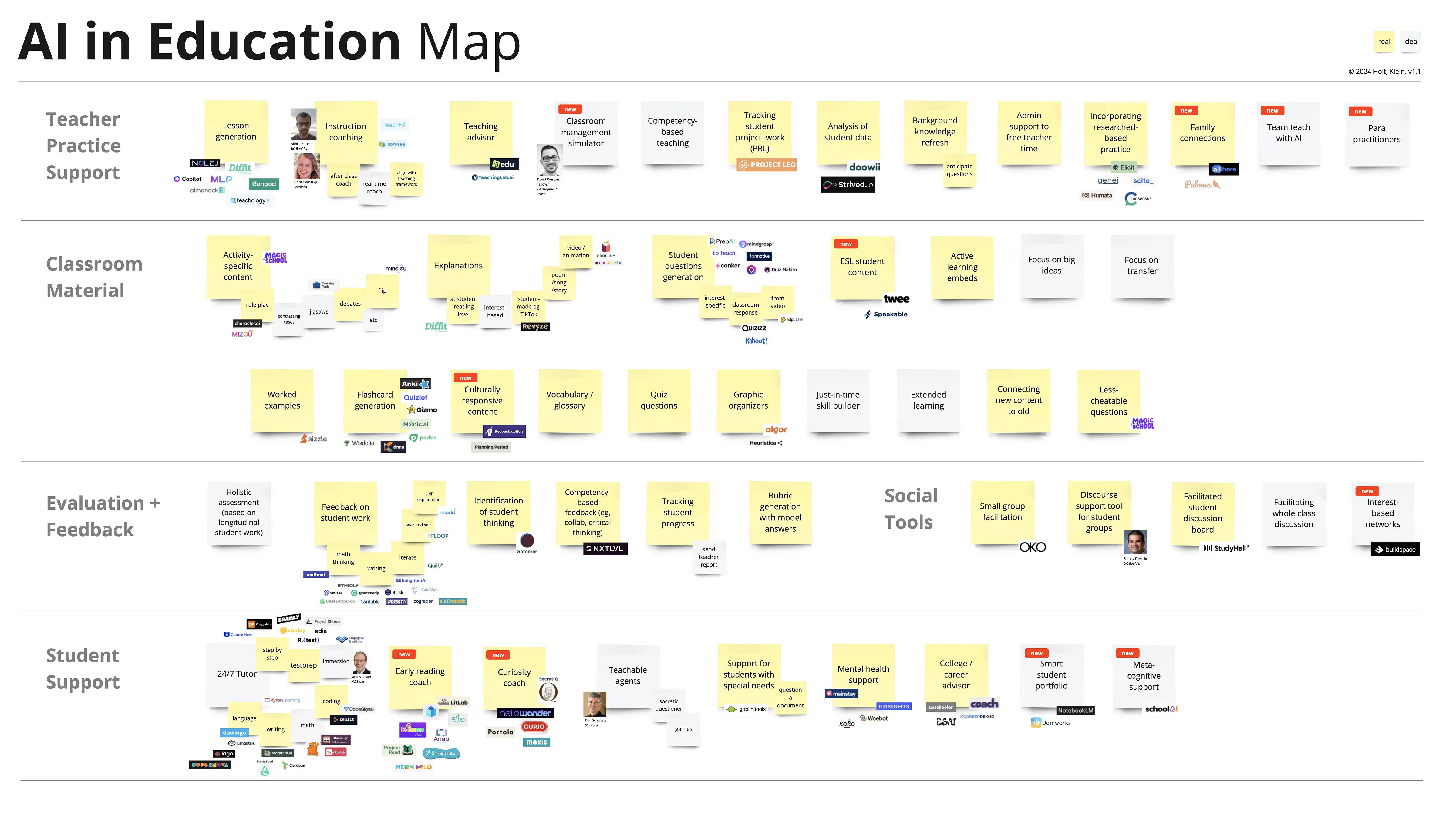
AI Resources and Teaching | Kent State University offers valuable resources for educators interested in incorporating artificial intelligence (AI) into their teaching practices. The university recognizes that the rapid emergence of AI tools presents both challenges and opportunities in higher education.
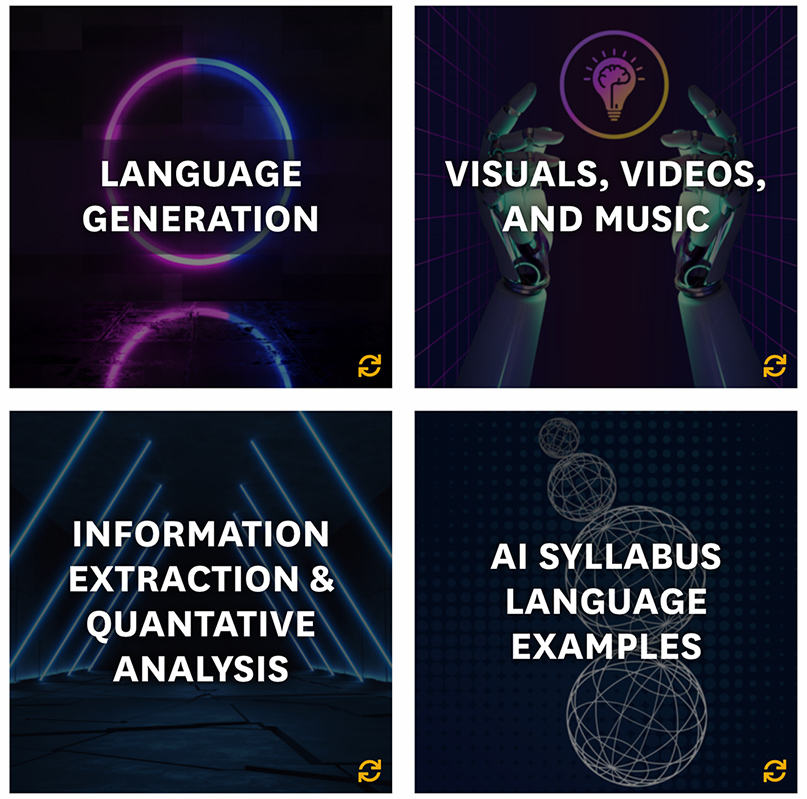
The AI Resources and Teaching page provides educators with information and guidance on various AI tools and their responsible use within and beyond the classroom. The page covers different areas of AI application, including language generation, visuals, videos, music, information extraction, quantitative analysis, and AI syllabus language examples.
For all its jaw-dropping power, Watson the computer overlord was a weak teacher. It couldn’t engage or motivate kids, inspire them to reach new heights or even keep them focused on the material — all qualities of the best mentors.
It’s a finding with some resonance to our current moment of AI-inspired doomscrolling about the future of humanity in a world of ascendant machines. “There are some things AI is actually very good for,” Nitta said, “but it’s not great as a replacement for humans.”
His five-year journey to essentially a dead-end could also prove instructive as ChatGPT and other programs like it fuel a renewed, multimillion-dollar experiment to, in essence, prove him wrong.
…
To be sure, AI can do sophisticated things such as generating quizzes from a class reading and editing student writing. But the idea that a machine or a chatbot can actually teach as a human can, he said, represents “a profound misunderstanding of what AI is actually capable of.”
Nitta, who still holds deep respect for the Watson lab, admits, “We missed something important. At the heart of education, at the heart of any learning, is engagement. And that’s kind of the Holy Grail.”
From DSC: This is why the vision that I’ve been tracking and working on has always said that HUMAN BEINGS will be necessary — they are key to realizing this vision. Along these lines, here’s a relevant quote:
Another crucial component of a new learning theory for the age of AI would be the cultivation of “blended intelligence.” This concept recognizes that the future of learning and work will involve the seamless integration of human and machine capabilities, and that learners must develop the skills and strategies needed to effectively collaborate with AI systems. Rather than viewing AI as a threat to human intelligence, a blended intelligence approach seeks to harness the complementary strengths of humans and machines, creating a symbiotic relationship that enhances the potential of both.
Per Alexander “Sasha” Sidorkin, Head of the National Institute on AI in Society at California State University Sacramento.
AWS, Educause partner on generative AI readiness tool — from edscoop.com by Skylar Rispens Amazon Web Services and the nonprofit Educause announced a new tool designed to help higher education institutions gauge their readiness to adopt generative artificial intelligence.
Amazon Web Services and the nonprofit Educause on Monday announced they’ve teamed up to develop a tool that assesses how ready higher education institutions are to adopt generative artificial intelligence.
Through a series of curated questions about institutional strategy, governance, capacity and expertise, AWS and Educause claim their assessment can point to ways that operations can be improved before generative AI is adopted to support students and staff.
“Generative AI will transform how educators engage students inside and outside the classroom, with personalized education and accessible experiences that provide increased student support and drive better learning outcomes,” Kim Majerus, vice president of global education and U.S. state and local government at AWS, said in a press release. “This assessment is a practical tool to help colleges and universities prepare their institutions to maximize this technology and support students throughout their higher ed journey.”
Speaking of AI and our learning ecosystems, also see:
At a moment when the value of higher education has come under increasing scrutiny, institutions around the world can be exactly what learners and employers both need. To meet the needs of a rapidly changing job market and equip learners with the technical and ethical direction needed to thrive, institutions should familiarize students with the use of AI and nurture the innately human skills needed to apply it ethically. Failing to do so can create enormous risk for higher education, business and society.
What is AI literacy?
To effectively utilize generative AI, learners will need to grasp the appropriate use cases for these tools, understand when their use presents significant downside risk, and learn to recognize abuse to separate fact from fiction. AI literacy is a deeply human capacity. The critical thinking and communication skills required are muscles that need repeated training to be developed and maintained.
Assessment of Student Learning Is Broken — from insidehighered.com by Zach Justus and Nik Janos And generative AI is the thing that broke it, Zach Justus and Nik Janos write.
Generative artificial intelligence (AI) has broken higher education assessment. This has implications from the classroom to institutional accreditation. We are advocating for a one-year pause on assessment requirements from institutions and accreditation bodies.
… Implications and Options
The data we are collecting right now are literally worthless. These same trends implicate all data gathered from December 2022 through the present. So, for instance, if you are conducting a five-year program review for institutional accreditation you should separate the data from before the fall 2022 term and evaluate it independently. Whether you are evaluating writing, STEM outputs, coding, or anything else, you are now looking at some combination of student/AI work. This will get even more confounding as AI tools become more powerful and are integrated into our existing production platforms like Microsoft Office and Google Workspace.
The burden of adapting to artificial intelligence has fallen to faculty, but we are not positioned or equipped to lead these conversations across stakeholder groups.
What about course videos? Professors can create them (by lecturing into a camera for several hours hopefully in different clothes) from the readings, from their interpretations of the readings, from their own case experiences – from anything they like. But now professors can direct the creation of the videos by talking – actually describing – to a CustomGPTabout what they’d like the video to communicate with their or another image. Wait. What?They can make a video by talking to a CustomGPT and even select the image they want the “actor” to use? Yes. They can also add a British accent and insert some (GenAI-developed) jokes into the videos if they like. All this and much more is now possible. This means that a professor can specify how long the video should be, what sources should be consulted and describe the demeanor the professor wants the video to project.
From DSC: Though I wasn’t crazy about the clickbait type of title here, I still thought that the article was solid and thought-provoking. It contained several good ideas for using AI.
Excerpt from a recent EdSurge Higher Ed newsletter:
There are darker metaphors though — ones that focus on the hazards for humanity of the tech. Some professors worry that AI bots are simply replacing hired essay-writers for many students, doing work for a student that they can then pass off as their own (and doing it for free).
From DSC: Hmmm…the use of essay writers was around long before AI became mainstream within higher education. So we already had a serious problem where students didn’t see the why in what they were being asked to do. Some students still aren’t sold on the why of the work in the first place. The situation seems to involve ethics, yes, but it also seems to say that we haven’t sold students on the benefits of putting in the work. Students seem to be saying I don’t care about this stuff…I just need the degree so I can exit stage left.
My main point: The issue didn’t start with AI…it started long before that.
This financial stagnation is occurring as we face a multitude of escalating challenges. These challenges include but are in no way limited to, chronic absenteeism, widespread student mental health issues, critical staff shortages, rampant classroom behavior issues, a palpable sense of apathy for education in students, and even, I dare say, hatred towards education among parents and policymakers.
…
Our current focus is on keeping our heads above water, ensuring our students’ safety and mental well-being, and simply keeping our schools staffed and our doors open.
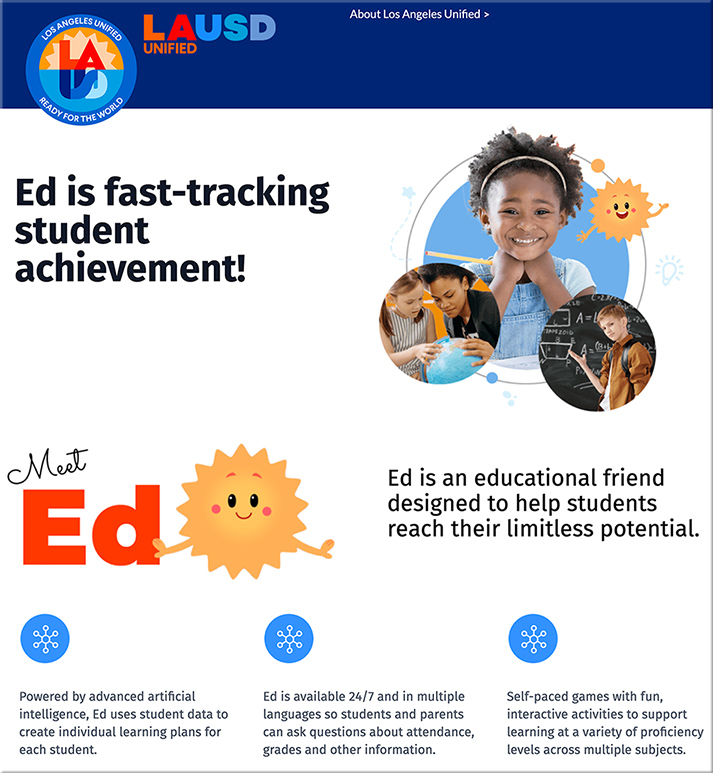
What is Ed? An easy-to-understand learning platform designed by Los Angeles Unified to increase student achievement. It offers personalized guidance and resources to students and families 24/7 in over 100 languages.
Also relevant/see:
Los Angeles Unified Bets Big on ‘Ed,’ an AI Tool for Students — from by Lauraine Langreo
The Los Angeles Unified School District has launched an AI-powered learning tool that will serve as a “personal assistant” to students and their parents.The tool, named “Ed,” can provide students from the nation’s second-largest district information about their grades, attendance, upcoming tests, and suggested resources to help them improve their academic skills on their own time, Superintendent Alberto Carvalho announced March 20. Students can also use the app to find social-emotional-learning resources, see what’s for lunch, and determine when their bus will arrive.
Could OpenAI’s Sora be a big deal for elementary school kids?— from futureofbeinghuman.com by Andrew Maynard Despite all the challenges it comes with, AI-generated video could unleash the creativity of young children and provide insights into their inner worlds – if it’s developed and used responsibly
Like many others, I’m concerned about the challenges that come with hyper-realistic AI-generated video. From deep fakes and disinformation to blurring the lines between fact and fiction, generative AI video is calling into question what we can trust, and what we cannot.
And yet despite all the issues the technology is raising, it also holds quite incredible potential, including as a learning and development tool — as long as we develop and use it responsibly.
I was reminded of this a few days back while watching the latest videos from OpenAI created by their AI video engine Sora — including the one below generated from the prompt “an elephant made of leaves running in the jungle”
…
What struck me while watching this — perhaps more than any of the other videos OpenAI has been posting on its TikTok channel — is the potential Sora has for translating the incredibly creative but often hard to articulate ideas someone may have in their head, into something others can experience.
Can AI Aid the Early Education Workforce? — from edsurge.com by Emily Tate Sullivan During a panel at SXSW EDU 2024, early education leaders discussed the potential of AI to support and empower the adults who help our nation’s youngest children.
While the vast majority of the conversations about AI in education have centered on K-12 and higher education, few have considered the potential of this innovation in early care and education settings.
At the conference, a panel of early education leaders gathered to do just that, in a session exploring the potential of AI to support and empower the adults who help our nation’s youngest children, titled, “ChatECE: How AI Could Aid the Early Educator Workforce.”
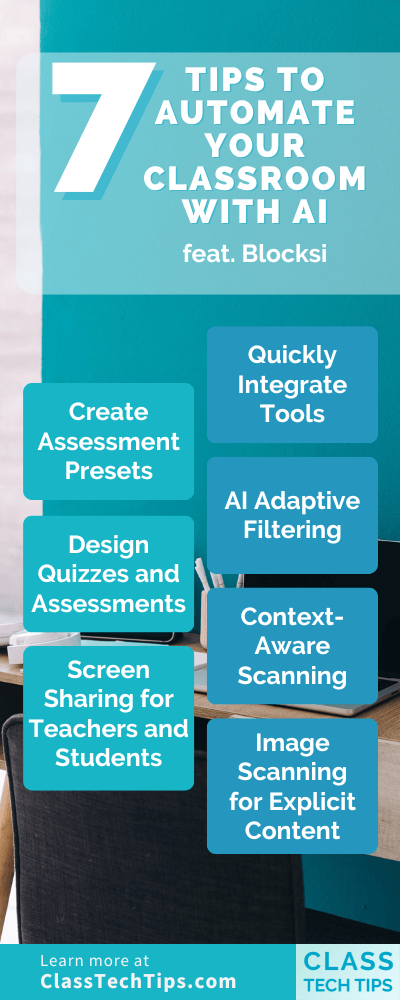
Hau shared that K-12 educators are using the technology to improve efficiency in a number of ways, including to draft individualized education programs (IEPs), create templates for communicating with parents and administrators, and in some cases, to support building lesson plans.
Educators are, perhaps rightfully so, cautious about incorporating AI in their classrooms. With thoughtful implementation, however, AI image generators, with their ability to use any language, can provide powerful ways for students to engage with the target language and increase their proficiency.
While AI offers numerous benefits, it’s crucial to remember that it is a tool to empower educators, not replace them. The human connection between teacher and student remains central to fostering creativity, critical thinking, and social-emotional development. The role of teachers will shift towards becoming facilitators, curators, and mentors who guide students through personalized learning journeys. By harnessing the power of AI, educators can create dynamic and effective classrooms that cater to each student’s individual needs. This paves the way for a more engaging and enriching learning experience that empowers students to thrive.
In this article, seven teachers across the world share their insights on AI tools for educators. You will hear a host of varied opinions and perspectives on everything from whether AI could hasten the decline of learning foreign languages to whether AI-generated lesson plans are an infringement on teachers’ rights. A common theme emerged from those we spoke with: just as the internet changed education, AI tools are here to stay, and it is prudent for teachers to adapt.
Even though it’s been more than a year since ChatGPT made a big splash in the K-12 world, many teachers say they are still not receiving any training on using artificial intelligence tools in the classroom.
More than 7 in 10 teachers said they haven’t received any professional development on using AI in the classroom, according to a nationally representative EdWeek Research Center survey of 953 educators, including 553 teachers, conducted between Jan. 31 and March 4.
From DSC: This article mentioned the following resource:
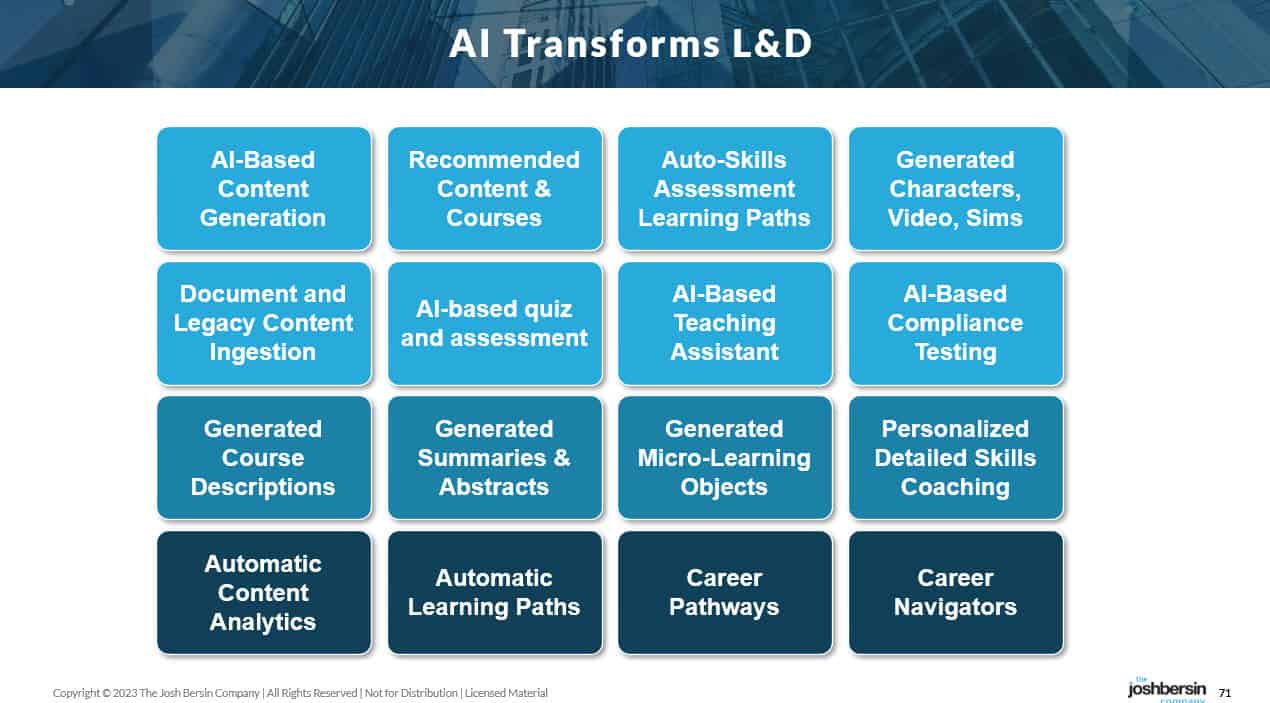
What if, for example, the corporate learning system knew who you were and you could simply ask it a question and it would generate an answer, a series of resources, and a dynamic set of learning objects for you to consume? In some cases you’ll take the answer and run. In other cases you’ll pour through the content. And in other cases you’ll browse through the course and take the time to learn what you need.
And suppose all this happened in a totally personalized way. So you didn’t see a “standard course” but a special course based on your level of existing knowledge?
This is what AI is going to bring us. And yes, it’s already happening today.
One problem, of course, is that it’s prohibitively expensive to hire a tutor for every average or struggling student, or even one for every two or three of them. This was the two-sigma “problem” that Bloom alluded to in the title of his essay: how can the massive benefits of tutoring possibly be scaled up? Both Khan and Zuckerberg have argued that the answer is to have computers, maybe powered by artificial intelligence, serve as tutors instead of humans.
From DSC: I’m hoping that AI-backed learning platforms WILL help many people of all ages and backgrounds. But I realize — and appreciate what Natalie is saying here as well — that human beings are needed in the learning process (especially at younger ages).
But without the human element, that’s unlikely to be enough. Students are more likely to work hard to please a teacher than to please a computer.
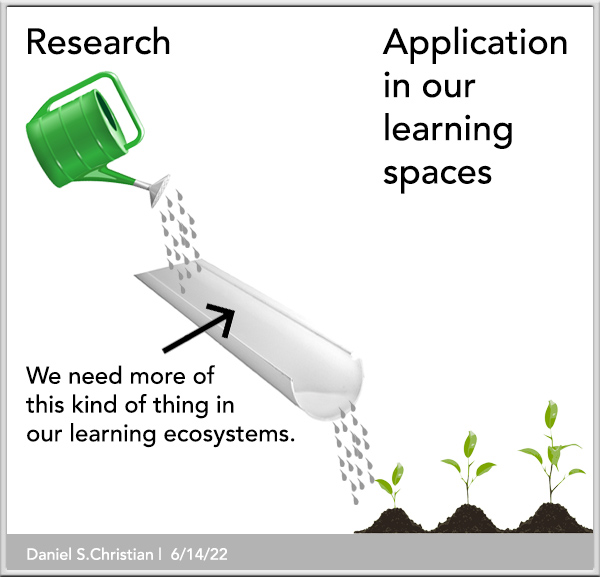
Natalie goes on to talk about training all teachers in cognitive science — a solid idea for sure. That’s what I was trying to get at with this graphic: .
.
But I’m not as hopeful in all teachers getting trained in cognitive science…as it should have happened (in the Schools of Education and in the K12 learning ecosystem at large) by now. Perhaps it will happen, given enough time.
And with more homeschooling and blended programs of education occurring, that idea gets stretched even further.
Parents are looking for a different kind of education for their children.A 2024 poll of parents reveals that 72% are considering, 63% are searching for, and 44% have selected a new K-12 school option for their children over the past few years. So, what type of education are they seeking?
Additional polling data reveals that 49% of parents would prefer their child learn from home at least one day a week.While 10% want full-time homeschooling, the remaining 39% of parents desire their child to learn at home one to four days a week, with the remaining days attending school on-campus. Another parent poll released this month indicates that an astonishing 64% of parents indicated that if they were looking for a new school for their child, they would enroll him or her in a hybrid school.
NVIDIA Digital Human Technologies Bring AI Characters to Life
Leading AI Developers Use Suite of NVIDIA Technologies to Create Lifelike Avatars and Dynamic Characters for Everything From Games to Healthcare, Financial Services and Retail Applications
Today is the beginning of our moonshot to solve embodied AGI in the physical world. I’m so excited to announce Project GR00T, our new initiative to create a general-purpose foundation model for humanoid robot learning.
As the FlexOS research study “Generative AI at Work” concluded based on a survey amongst knowledge workers, ChatGPT reigns supreme. … 2. AI Tool Usage is Way Higher Than People Expect – Beating Netflix, Pinterest, Twitch. As measured by data analysis platform Similarweb based on global web traffic tracking, the AI tools in this list generate over 3 billion monthly visits.
With 1.67 billion visits, ChatGPT represents over half of this traffic and is already bigger than Netflix, Microsoft, Pinterest, Twitch, and The New York Times.
Something unusual is happening in America. Demand for electricity, which has stayed largely flat for two decades, has begun to surge.
Over the past year, electric utilities have nearly doubled their forecasts of how much additional power they’ll need by 2028 as they confront an unexpected explosion in the number of data centers, an abrupt resurgence in manufacturing driven by new federal laws, and millions of electric vehicles being plugged in.
The tumult could seem like a distraction from the startup’s seemingly unending march toward AI advancement. But the tension, and the latest debate with Musk, illuminates a central question for OpenAI, along with the tech world at large as it’s increasingly consumed by artificial intelligence: Just how open should an AI company be?
…
The meaning of the word “open” in “OpenAI” seems to be a particular sticking point for both sides — something that you might think sounds, on the surface, pretty clear. But actual definitions are both complex and controversial.
In partnership with the National Cancer Institute, or NCI, researchers from the Department of Energy’s Oak Ridge National Laboratory and Louisiana State University developed a long-sequenced AI transformer capable of processing millions of pathology reports to provide experts researching cancer diagnoses and management with exponentially more accurate information on cancer reporting.
At this moment, as a college student trying to navigate the messy, fast-developing, and varied world of generative AI, I feel more confused than ever. I think most of us can share that feeling. There’s no roadmap on how to use AI in education, and there aren’t the typical years of proof to show something works. However, this promising new tool is sitting in front of us, and we would be foolish to not use it or talk about it.
…
I’ve used it to help me understand sample code I was viewing, rather than mindlessly trying to copy what I was trying to learn from. I’ve also used it to help prepare for a debate, practicing making counterarguments to the points it came up with.
AI alone cannot teach something; there needs to be critical interaction with the responses we are given. However, this is something that is true of any form of education. I could sit in a lecture for hours a week, but if I don’t do the homework or critically engage with the material, I don’t expect to learn anything.
Survey: K-12 Students Want More Guidance on Using AI — from govtech.com by Lauraine Langreo Research from the nonprofit National 4-H Council found that most 9- to 17-year-olds have an idea of what AI is and what it can do, but most would like help from adults in learning how to use different AI tools.
“Preparing young people for the workforce of the future means ensuring that they have a solid understanding of these new technologies that are reshaping our world,” Jill Bramble, the president and CEO of the National 4-H Council, said in a press release.
1. AI already plays a central part in the instructional design process A whopping 95.3% of the instructional designers interviewed said they use AI in their day to day work. Those who don’t use AI cite access or permission issues as the primary reason that they haven’t integrated AI into their process.
2. AI is predominantly used at the design and development stages of the instructional design process
When mapped to the ADDIE process, the breakdown of use cases goes as follows:
Analysis: 5.5% of use cases
Design: 32.1%
Development: 53.2%
Implementation: 1.8%
Evaluation: 7.3%
Speaking of AI in our learning ecosystems, also see:
The majority of educators expect use of artificial intelligence tools will increase in their school or district over the next year, according to an EdWeek Research Center survey.
Applying Multimodal AI to L&D — from learningguild.com by Sarah Clark We’re just starting to see Multimodal AI systems hit the spotlight. Unlike the text-based and image-generation AI tools we’ve seen before, multimodal systems can absorb and generate content in multiple formats – text, image, video, audio, etc.
Last month, I discussed a GPT that I had created around enhancing prompts. Since then, I have been actively using my Prompt Enhancer GPT to much more effective outputs. Last week, I did a series of mini-talks on generative AI in different parts of higher education (faculty development, human resources, grants, executive leadership, etc) and structured it as “5 tips”. I included a final bonus tip in all of them—a tip that I heard from many afterwards was probably the most useful tip—especially because you can only access the Prompt Enhancer GPT if you are paying for ChatGPT.
Effectively integrating generative AI into higher education requires policy development, cross-functional engagement, ethical principles, risk assessments, collaboration with other institutions, and an exploration of diverse use cases.
Creating Guidelines for the Use of Gen AI Across Campus— from campustechnology.com by Rhea Kelly The University of Kentucky has taken a transdisciplinary approach to developing guidelines and recommendations around generative AI, incorporating input from stakeholders across all areas of the institution. Here, the director of UK’s Center for the Enhancement of Learning and Teaching breaks down the structure and thinking behind that process.
That resulted in a set of instructional guidelines that we released in August of 2023 and updated in December of 2023. We’re also looking at guidelines for researchers at UK, and we’re currently in the process of working with our colleagues in the healthcare enterprise, UK Healthcare, to comb through the additional complexities of this technology in clinical care and to offer guidance and recommendations around those issues.
My experiences match with the results of the above studies. The second study cited above found that 83% of those students who haven’t used AI tools are “not interested in using them,” so it is no surprise that many students have little awareness of their nature. The third study cited above found that, “apart from 12% of students identifying as daily users,” most students’ use cases were “relatively unsophisticated” like summarizing or paraphrasing text.
For those of us in the AI-curious bubble, we need to continually work to stay current, but we also need to recognize that what we take to be “common knowledge” is far from common outside of the bubble.
Despite general familiarity, however, technical knowledge shouldn’t be assumed for district leaders or others in the school community. For instance, it’s critical that any materials related to AI not be written in “techy talk” so they can be clearly understood, said Ann McMullan, project director for the Consortium for School Networking’s EmpowerED Superintendents Initiative.
To that end, CoSN, a nonprofit that promotes technological innovation in K-12, has released an array of AI resources to help superintendents stay ahead of the curve, including a one-page explainer that details definitions and guidelines to keep in mind as schools work with the emerging technology.
“The world is adapting to seismic shifts from generative AI,” says Luben Pampoulov, Partner at GSV Ventures. “AI co-pilots, AI tutors, AI content generators—AI is ubiquitous, and differentiation is increasingly critical. This is an impressive group of EdTech companies that are leveraging AI and driving positive outcomes for learners and society.”
Workforce Learning comprises 34% of the list, K-12 29%, Higher Education 24%, Adult Consumer Learning 10%, and Early Childhood 3%. Additionally, 21% of the companies stretch across two or more “Pre-K to Gray” categories. A broader move towards profitability is also evident: the collective gross and EBITDA margin score of the 2024 cohort increased 5% compared to 2023.
Selected from 2,000+ companies around the world based on revenue scale, revenue growth, user reach, geographic diversification, and margin profile, this impressive group is reaching an estimated 3 billion people and generating an estimated $23 billion in revenue.
Why are we doing this work? Over the past two years, the U.S. Department of Education has been committed to maintaining an ongoing conversation with educators, students, researchers, developers — and the educational community at large — related to the continuous progress of Artificial Intelligence (AI) development and its implications for teaching and learning.
Many educators are seeking resources clarifying what AI is and how it will impact their work and their students. Similarly, developers of educational technology (“edtech”) products seek guidance on what guardrails exist that can support their efforts. After the release of our May 2023 report Artificial Intelligence and the Future of Teaching and Learning, we heard the desire for more.
Moving from reaction to action, higher education stakeholders are currently exploring the opportunities afforded by AI for teaching, learning, and work while maintaining a sense of caution for the vast array of risks AI-powered technologies pose. To aid in these efforts, we present this inaugural EDUCAUSE AI Landscape Study, in which we summarize the higher education community’s current sentiments and experiences related to strategic planning and readiness, policies and procedures, workforce, and the future of AI in higher education.
Educational administrators should not worry about every AI development, but should, instead focus on the big picture, as those big picture changes will change the entire world and the educational system.
AI and related technologies (robotics, synthetic biology, and brain-computer interfaces) will continue to impact society and the entire educational system over the next 10 years. This impact on the system will be greater than anything that has happened over the last 100 years, including COVID-19, as COVID-19 eventually ended and the disruptive force of these technologies will only continue to develop.
AI is the bull in the China Shop, redefining the world and the educational system. Students writing a paper with AI is barely a poke in the educational world relative to what is starting to happen (active AI teachers and tutors; AI assessment; AI glasses; immersive learning environments; young students able to start their own business with AI tools; AIs replacing and changing jobs; deep voice and video fakes; intelligence leveling; individualized instruction; interactive and highly intelligent computers; computers that can act autonomously; and more).
WASHINGTON, Feb. 6, 2024 /PRNewswire/ — While three-quarters of higher-education trustees (83%), faculty (81%) and administrators (76%) agree that generative artificial intelligence (GenAI) will noticeably change their institutions in the next five years, community college trustees are more optimistic than their community college counterparts, with (37%) saying their organization is prepared for the change coming compared to just 16% of faculty and 11% of administrator respondents.
Those findings are from the 2023-2024 Digital Learning Pulse Survey conducted by Cengage and Bay View Analytics with support from the Association of Community College Trustees (ACCT), the Association of College and University Educators (ACUE), College Pulse and the United States Distance Learning Association (USDLA) to understand the attitudes and concerns of higher education instructors and leadership.
From DSC: It takes time to understand what a given technology brings to the table…let alone a slew of emerging technologies under the artificial intelligence (AI) umbrella. It’s hard enough when the technology is fairly well established and not changing all the time. But its extremely difficult when significant change occurs almost daily.
The limited staff within the teaching & learning centers out there need time to research and learn about the relevant technologies and how to apply those techs to instructional design. The already stretched thin faculty members need time to learn about those techs as well — and if and how they want to apply them. It takes time and research and effort.
Provosts, deans, presidents, and such need time to learn things as well.
Bottom line: We need to have realistic expectations here.
AI Adoption in Corporate L&D — from drphilippahardman.substack.com by Dr. Philippa Hardman Where we are, and the importance of use cases in enabling change
The headline of the report is that we’ve never seen a technology adopted in enterprise as fast as generative AI. As of November 2023, two-thirds (67%) of survey respondents reported that their companies are using generative AI.
However, the vast majority of AI adopters in enterprise are still in the early stages; they’re experimenting at the edges, rather than making larger-scale, strategic decisions on how to leverage AI to accelerate our progress towards org goals and visions.
The single biggest hurdle to AI adoption in large corporates is a lack of appropriate use cases.





.webp)